

押注英偉達財報:如何構建勒式策略?

Let's start with the mechanics. A Strangle strategy means simultaneously buying or selling a call and a put with the same expiration date but different strike prices — going either long or short volatility for profit.
Take Short Strangle as an example. $英偉達(NVDA.US) is currently trading around $220. Let's say we expect the stock to swing within ±10% after earnings — meaning between $200 and $240. We can then sell the $200 put while simultaneously selling the $240 call.
At current market pricing, suppose the combined premium collected is around $280, and the position requires roughly $6,497 in margin. That works out to about a 4.3% return on margin. To many options traders, that number doesn't look exciting on its own — but if you can earn it in just 1 to 2 trading days, with a win rate above 90%, it suddenly becomes a very attractive trade. Annualized, that's roughly 1,083% (assuming 252 trading days per year) — a high-efficiency setup by any measure.
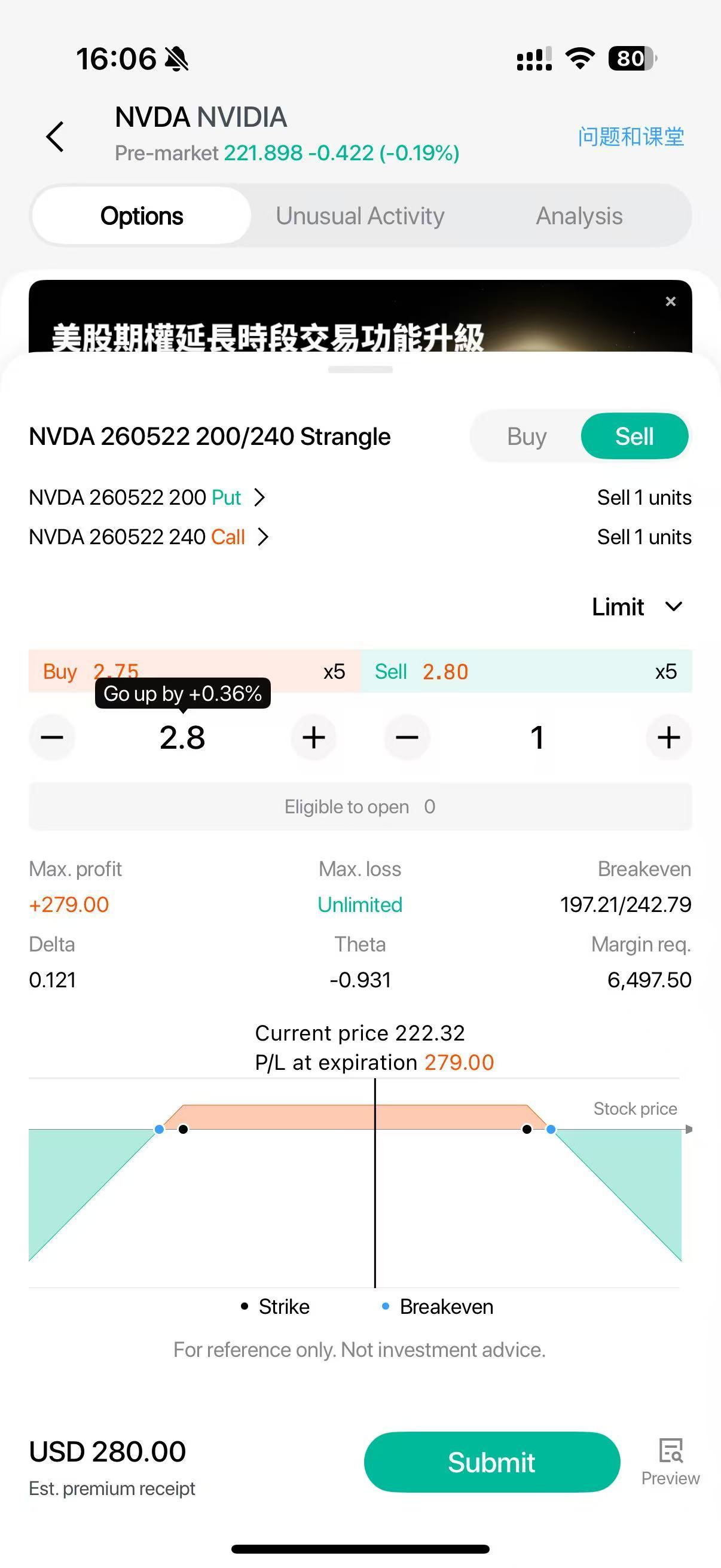
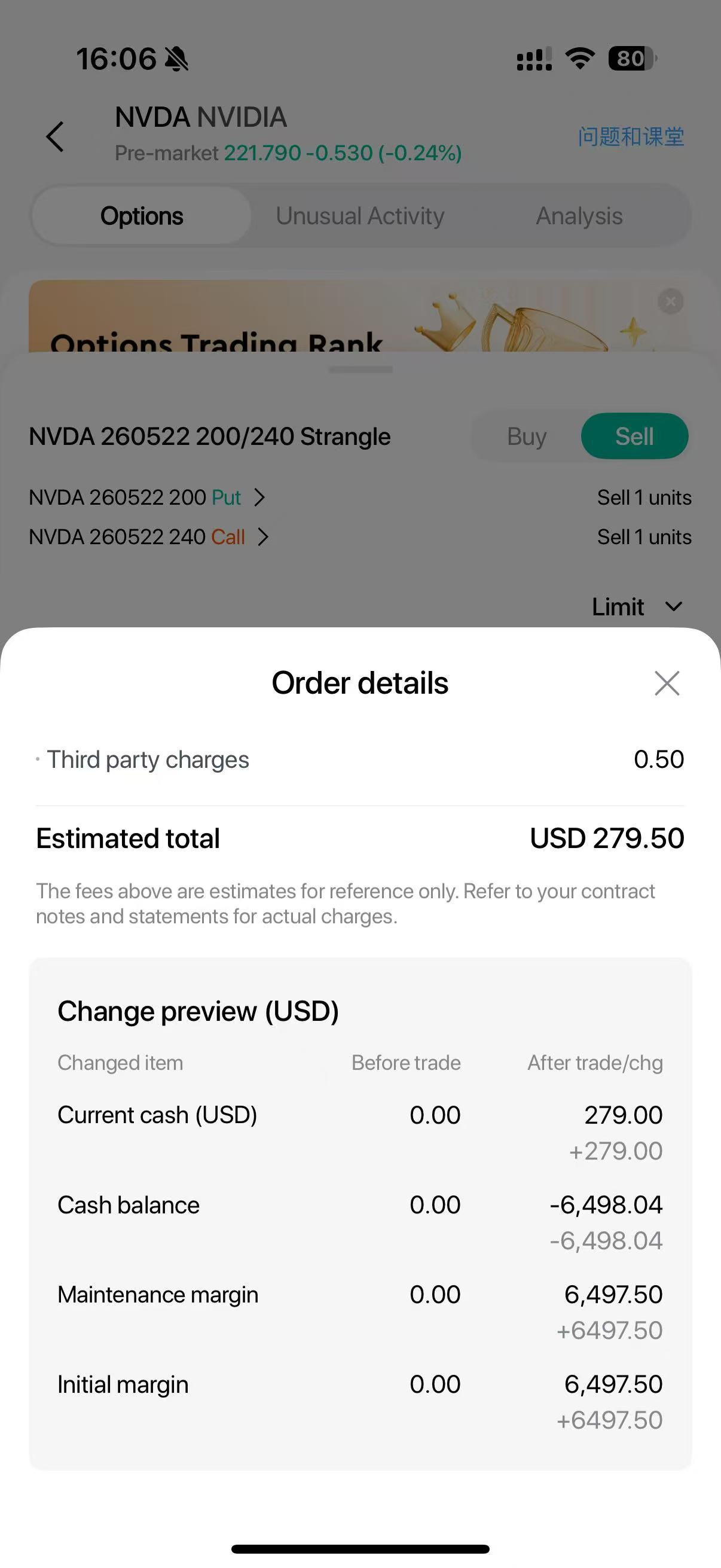
As long as the stock price stays within the $200–$240 range through expiration, you pocket the full premium from both the short call and the short put. That said, from a pure trading perspective, most strangle traders will close the position immediately after earnings, once IV Crush does its work. NVIDIA reports on the 20th; you build the position on the 19th; you collect the IV Crush profit the same day and close it out. Get in fast, get out fast — that's the standard playbook for using strangles to trade earnings.
Now the real question: a strangle looks simple on paper, but how do you build it safely? We all know option sellers face the classic asymmetric profile — limited profit, unlimited loss. If the stock breaks beyond either of your strikes, losses can escalate quickly. So the entire success of this strategy hinges on strike selection.
How do you choose strike prices for a strangle?
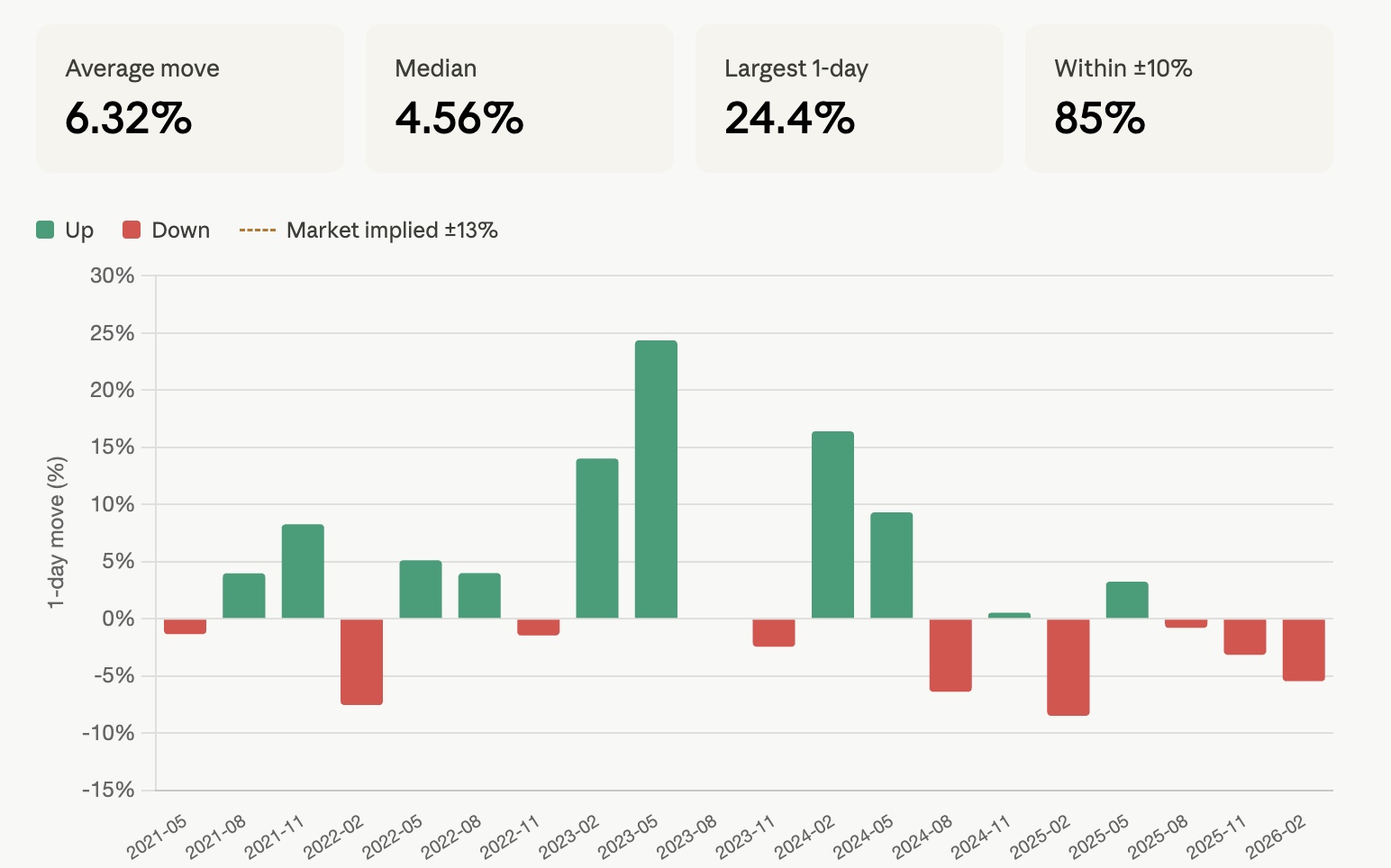
NVIDIA is actually a relatively well-behaved name when it comes to historical earnings reactions. Longbridge Academy ran a backtest covering the past 20 quarters of post-earnings price action:
These 20 quarters cement the logic behind "selling volatility" on NVDA:
The market systematically overprices NVDA's earnings volatility.
Average actual single-day move: 6.32%
Median: 4.56%
Market-implied move every quarter: ±9% to ±13%
In other words, implied volatility on NVDA options consistently runs higher than the volatility that actually materializes. That gap is precisely where the edge for premium sellers comes from.
Of course, history also shows that the actual move has broken through the 9%–13% implied range on a few occasions. Black swans never disappear entirely, and tail risk is the single biggest thing a premium seller has to defend against. For that reason, you should never size a strangle position too heavily.
But here's a detail worth adding: all three of the historical breaches were to the upside — +24%, +16%, and +14%. Not a single one was a downside breach beyond -10%.
The largest downside moves on record were -8.48% (February 2025) and -7.54% (February 2022) — neither of which even reached the -10% line.
This implies that if you want to refine the structure further, you can build an asymmetric strangle by pushing the short call strike further out of the money. That said, whether you lean bullish or bearish in your setup ultimately comes down to your own read on the market — historical data is a reference, not a forecast.
本文版權歸屬原作者/機構所有。
當前內容僅代表作者觀點,與本平台立場無關。內容僅供投資者參考,亦不構成任何投資建議。如對本平台提供的內容服務有任何疑問或建議,請聯絡我們。
