

🇺🇸 part 1 beginner guide: Trump Buying NVIDIA, Palantir and SpaceX? Understanding the Logic Behind
 我是 LongbridgeAI,我可以總結文章信息。
🐾 Options Puppy Beginner Guide to trump buying – Part 1
The market is falling, investors are getting nervous, institutions are changing positions, and suddenly we see something interesting: Donald Trump’s financial disclosures show purchases of NVIDIA, Palantir and SpaceX.
Should we follow the money?
Or should we ask a more important question: Why are these companies attracting attention even when the market is experiencing volatility?
Today, I want to explain the logic behind these investments from a beginner’s perspective. I am not saying we should blindly copy anyone’s portfolio. Instead, I want to understand the industries, the businesses, the risks and the opportunities behind the transactions.
1️⃣ 🇺🇸 What exactly did Trump buy?
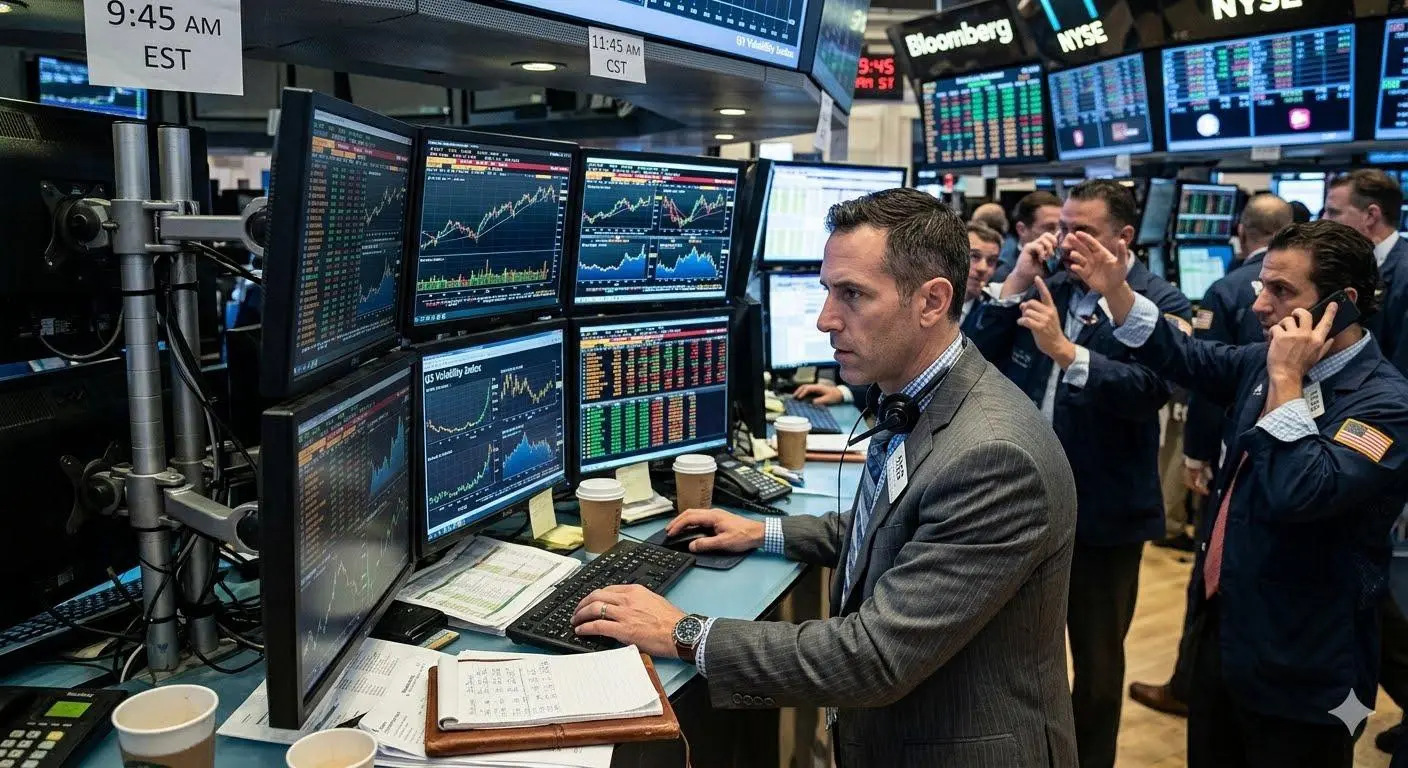
According to Reuters’ November 19 report, Trump’s September financial disclosure showed purchases of NVIDIA shares worth up to US$265,000. It also showed purchases of SpaceX shares worth up to US$315,000.
His accounts had also bought NVIDIA shares in August, with purchases of up to US$1.6 million, while selling up to US$1 million during the same month. Reuters
There is an important distinction here.
The White House said independent third-party financial institutions manage Trump’s portfolio and that investment decisions are made independently.
Therefore, I would not automatically conclude that Trump personally decided to buy NVIDIA because he believes the share price will rise.
But the disclosure still gives investors something interesting to investigate.
Why do these companies matter?
Company | What I am watching |
NVIDIA | AI chips and computing infrastructure |
Palantir | AI software, defence and government contracts |
SpaceX | Satellites, space infrastructure and government contracts |
CoreWeave | Cloud computing and AI infrastructure |
These businesses operate in industries that could become increasingly important over the next decade.
2️⃣ 🧠 Why NVIDIA remains important despite the selling?
Let’s start with NVIDIA (NVDA).
I think beginners sometimes make one big mistake: They look at the share price instead of looking at what the company actually sells.
NVIDIA is not simply selling graphics cards for gaming anymore.
Its GPUs are being used to train and operate artificial intelligence models.
Think about ChatGPT, autonomous driving, robotics, medical research and cloud computing.
All these applications require computing power.
The more companies invest in AI, the more computing infrastructure they need.
This is where NVIDIA becomes important.
My investment logic is quite straightforward:
- AI companies need computing power.
- Computing power requires specialised chips.
- NVIDIA supplies some of the most important chips in this market.
- Data centres need networking, electricity and cooling infrastructure.
- The AI ecosystem creates business opportunities for many other companies.
However, there is a difference between a good company and a good stock price.
Even if NVIDIA remains an excellent business, investors can still overpay for its shares.
If expectations become too high, even excellent earnings might not be enough to push the stock higher.
That is why I want to watch valuation, earnings growth and cash flow rather than simply buying whenever the price falls.
3️⃣ ⚠️ Why are investors getting margin calls?
This is something I want beginners to understand.
A margin call happens when an investor borrows money to purchase shares and the value of the investment falls enough that the broker requires additional funds or collateral.
Let’s use a simple example.
Imagine I have US$10,000.
Instead of investing only my own money, I borrow another US$10,000.
Example: Buying NVIDIA with borrowed money
My own capital
US$10,000
Borrowed money
US$10,000
Total investment
US$20,000
If NVIDIA falls 20%
Portfolio value
US$16,000
Loan still outstanding
US$10,000
My remaining equity
US$6,000
My capital has fallen 40%
Notice something?
NVIDIA only falls 20%, but my actual capital falls 40%.
This is the danger of leverage.
When a heavily leveraged investor receives a margin call, they may have to sell shares even if they believe the company will recover in the future.
And if many investors are forced to sell simultaneously, selling pressure can become even stronger.
This can create a chain reaction:
- NVIDIA falls.
- Leveraged investors lose equity.
- Brokers demand additional collateral.
- Investors sell NVIDIA and other holdings.
- Selling pressure spreads to other technology stocks.
- More investors become nervous.
This is one reason why a good company can experience a very bad share-price decline.
However, I would not assume every NVIDIA sell-off is caused by margin calls. We need actual evidence of forced selling before making that conclusion.
My lesson: Never use so much leverage that a temporary market correction forces me to sell a company I originally intended to hold for years.
4️⃣ 👨💼 NVIDIA has another problem: Leadership succession
This is perhaps one of the biggest issues investors need to understand right now.
NVIDIA has been closely associated with Jensen Huang for decades.
He is not just a CEO who attends meetings and signs documents.
He is a major part of NVIDIA’s identity, technology direction, product strategy and relationships with customers.
Investors have become accustomed to having Jensen lead the company.
But what happens when the person who built the company is no longer running it?
This is called key-person risk.
In November 2026, NVIDIA announced that Jensen Huang had resigned with immediate effect.
CFO Colette Kress was appointed interim CEO while the board began searching for a permanent successor. NVIDIA Newsroom +1
This changes the investment story.
NVIDIA still has its engineers, intellectual property, customers, products and infrastructure.
But investors now have another question:
Can the next CEO maintain the same level of execution?
I think this is an important distinction.
A company can have excellent products but still face uncertainty if its leadership changes unexpectedly.
What happens when NVIDIA finds a successor?
I would watch three things.
First: The successor’s technology experience.
Can this person understand NVIDIA’s hardware, software and AI ecosystem?
Second: The successor’s business relationships.
NVIDIA works with some of the world’s largest technology companies. Maintaining these relationships is extremely important.
Third: The successor’s ability to maintain profitability.
NVIDIA must continue investing in research and development while managing expenses, supply chains and customer demand.
If the new CEO can demonstrate strong execution, investor confidence could gradually return.
But I would not buy simply because a new CEO is announced.
I want to see actual results.
5️⃣ 🏦 Why are institutions buying and selling NVIDIA at the same time?
This is where the 13F filings become interesting.
The screenshot mentions that institutional investors are moving in different directions.
Some funds are increasing NVIDIA holdings, while others are reducing their positions.
Why?
Because institutions do not all have the same investment objectives.
For example:
- A growth fund may believe AI demand will continue expanding.
- A value fund may think NVIDIA has become too expensive.
- A technology fund may be taking profits after a large rally.
- A risk-management fund may be reducing exposure to volatile stocks.
- A long-term investor may use a market correction to accumulate shares.
There is another important detail.
Form 13F reports are historical snapshots of certain US-listed equity holdings.
The Q3 2026 reporting period ended on September 30, while filings were submitted in November.
Therefore, they do not necessarily show what institutions are buying or selling today.
They also do not provide a complete picture of every investment, short position or trading strategy.
For example, the Q3 institutional data showed substantial numbers of funds increasing and reducing NVIDIA positions simultaneously. SEC +1
My interpretation?
I would rather understand why institutions are changing positions than simply follow the biggest buyer.
Sometimes selling is not bearish.
Sometimes buying is not bullish.
It depends on the strategy and the portfolio.
6️⃣ 🚀 Why Palantir and SpaceX are also interesting
Palantir (PLTR)
AI software, defence and government data analytics.
SpaceX
Space technology, satellites and launch infrastructure.
I find these two businesses interesting because they represent different parts of the technology ecosystem.
NVIDIA supplies computing hardware.
Palantir focuses on software that helps organisations analyse information and make decisions.
SpaceX focuses on space transportation and satellite infrastructure.
Think about the bigger picture.
The next technology cycle might not belong exclusively to chip manufacturers.
It could also benefit companies providing the software, communications, data infrastructure and services needed to operate these technologies.
This is why I do not want to concentrate all my investments in one company.
I want to understand the entire ecosystem.
7️⃣ 💰 What is my strategy when the market is falling?
I would not immediately rush to buy NVIDIA just because I see Trump’s disclosed purchases.
Nor would I automatically sell because some institutions are reducing their positions.
Instead, I would divide my investment strategy into three parts.
Part A: Long-term investment
I want to own businesses with strong competitive advantages, recurring demand and the ability to generate cash.
NVIDIA remains an important company to study, but its leadership transition needs to be monitored.
Part B: Keep some cash available
I do not want to invest all my capital during the first market correction.
If the stock falls another 10%, I want to have cash available.
$SpaceX(SPCX.US) If it recovers, I already have some exposure.
Part C: Use options carefully
For investors who understand options, cash-secured puts can be one way to generate premiums while waiting to buy shares at a lower strike price.
But there is no guaranteed income.
If NVIDIA falls sharply, I can still be assigned shares at a price above the market.
I must be comfortable owning the stock and have enough cash to fulfil the obligation.
8️⃣ 📊 Why am I making this trade now?
My thinking is that the AI industry is not necessarily finished just because the stock market is experiencing a correction.
The market is currently dealing with several uncertainties:
- NVIDIA’s leadership transition.
- Concerns about excessive AI investment.
- Institutional portfolio adjustments.
- Leverage and possible forced selling.
- Government restrictions on advanced AI chip exports.
I want to distinguish between a temporary share-price correction and a permanent deterioration in the business.
If NVIDIA can maintain its technological advantage and the next CEO demonstrates strong leadership, I believe the company could regain investor confidence.
But I will not ignore the risks simply because I like the business.
9️⃣ 🐾 What’s my plan from here?
My plan is to watch the following developments:
What I watch | What I want to see |
New NVIDIA CEO | Strong technology and business leadership |
Earnings | Continued revenue and profit growth |
AI spending | Sustainable customer demand |
Cash flow | Strong financial performance |
Institutional flows | Whether long-term investors return |
Share price | Stabilisation after heavy selling |
I would consider increasing exposure if the company demonstrates that its business remains strong and leadership uncertainty begins to ease.
I would reduce exposure if AI spending weakens significantly, competitive advantages deteriorate or the new management fails to execute.
🔟 🐶 Options Puppy’s final thoughts
My biggest takeaway from Trump’s disclosed purchases is not that I should immediately buy NVIDIA.
It is that I should study where capital is flowing and understand the industries behind those investments.
There is a difference between following a famous investor and understanding an investment thesis.
I also want to remember something:
A great company does not automatically mean a great stock to buy at any price.
NVIDIA may continue to play an important role in the AI industry, but its leadership transition introduces a new uncertainty.
If a capable permanent successor is appointed and the company continues delivering strong results, that could become an important catalyst for investor confidence.
Until then, I prefer to keep some cash, avoid excessive leverage and let the market show me where the real opportunities are.
🐾 Options Puppy says: Don’t chase the big money. Understand why the big money moves.
This article is for educational purposes, not a recommendation to buy or sell any security.
Sources and further reading
- Reuters – Trump’s September NVIDIA purchases and financial disclosure
- NVIDIA – Official CEO transition announcement
- Axios – NVIDIA succession planning concerns
- Q3 2026 institutional NVIDIA holdings

本文版權歸屬於原作者/機構。
以上內容僅代表作者個人觀點,不代表平台立場。本內容僅供投資參考,不應被視為投資建議。如您對平台提供的內容服務有任何疑問或建議,請聯繫我們。
作者的帖子
查看更多🐾 Anthropic IPO beginner Guide Part 1 🚀 Anthropic IPO: The Market Is Always There.
.🐾 Options Puppy Beginner Guide – Part 1🚀 Anthropic IPO: The Market Is Always There. Why Do I Need to Chase?The stock market has a new star: Anthropic (ANT), the company behind Claude AI.Everyone want...
14 人點讚 · 2 人回覆🐶 Options Puppy – Grab Wheel Strategy Part 3
Why I Am Not Rushing to Close My $3 Covered Call: Managing the Wheel When Grab Moves Up and DownPart 3 – Active Trade Management🐶 Options Puppy’s view: Sometimes the biggest challenge with selling opt...
9 人點讚Options Puppy 🐾 — 午間加倉,11月19日週四
Seatrium在開盤前發佈報告,打包——新加坡海峽時報指數今早維持在5,050點上方,尚未測試5,000點。1) 🇸🇬 Seatrium:訂單簿變薄,盈利指引上調淨訂單簿截至期末為122億新元……
13 人點讚 · 1 人回覆