Tonc
$Invesco QQQ Trust(QQQ.US)$Invesco Nasdaq 100 ETF(QQQM.US)After two weeks of relentless gap-ups, last week was probably frustrating for most QQQ investors. The index didn‘t collapse, but the experience beneath the surface was much worse than the headline suggested. Unless you were heavily concentrated in semiconductor and AI hardware names, it felt like you were constantly losing ground.
The market has pushed the hardware trade to an extreme, with capital becoming more concentrated than ever. That kind of positioning rarely stays comfortable for long. Whether it’s profit-taking, macro headlines, or earnings, it won‘t take much to trigger bigger swings.
The uptrend may still be intact, but this feels like a market entering a much more volatile phase, where stock selection matters far more than simply owning the index.
@Bridge Buzz SG
$NVIDIA(NVDA.US)The recent performance of the Magnificent 7 has been a good reminder that there may be no permanent moat in a market driven by AI investment. Companies once viewed as untouchable can quickly fall out of favor if they aren’t seen as the biggest beneficiaries of the current capex cycle.
Right now, the market isn‘t rewarding stability or diversification. It’s rewarding whoever captures the largest share of AI infrastructure spending. That has created a clear winner-takes-most environment, where capital keeps concentrating in a handful of names while even high-quality companies struggle to keep pace.
The lesson isn‘t that moats no longer exist, but that in this phase of the cycle, the market cares far more about who is winning today’s AI race than who built yesterday‘s fortress.
@Bridge Buzz SG
$Microsoft(MSFT.US)Microsoft and many software names have definitely felt like the funding source for the AI trade lately. Money keeps flowing into semiconductors, while software gets sold whenever investors need capital for the next AI infrastructure winner.
What‘s frustrating is that the fundamentals haven’t deteriorated nearly as much as the price action suggests. Cloud growth remains solid, cash flow is strong, and AI monetization is still progressing. The problem is that semis offer immediate earnings acceleration, while software is still asking investors to wait.
That doesn‘t mean software is broken forever. Markets rarely reward the same group indefinitely. The issue is timing. As long as capital remains obsessed with chips and hardware, software may continue to underperform even with decent results. Eventually valuation starts to matter, but right now the market is still paying up for certainty and ignoring patience.
@Bridge Buzz SG
$IBM(IBM.US)IBM’s surge after Trump’s comments was hard to watch, but it says a lot about the current market. Investors are willing to aggressively chase anything that carries a clear narrative, policy tailwind, or perceived certainty, regardless of how stretched the move already looks.
Meanwhile, stocks without an obvious catalyst keep getting sold. Software, small caps, and many former growth favorites continue drifting lower even when fundamentals haven’t changed much. The market isn‘t rewarding potential right now—it’s rewarding visibility.
That’s probably the biggest theme underneath the surface. Capital is becoming increasingly concentrated, and anything outside the favored stories struggles to attract buyers. It makes for a frustrating environment, but also explains why some names keep rising while everything else feels stuck in a bear market.
@Bridge Buzz SG
$Alphabet(GOOGL.US)Google finally broke below its previous low after weeks of relentless selling, which is never a great look technically. The frustrating part is that it wasn’t one single event—regulatory pressure, AI competition concerns, advertising worries, and broader market rotation all piled on at the same time.
That said, sentiment now feels far worse than the underlying business. The stock has gone from being viewed as an AI laggard to almost being ignored entirely, despite still owning some of the strongest assets in tech. When expectations fall this much, the bar for positive surprises becomes much lower.
The key question is whether this breakdown attracts real sellers or simply exhausts them. After such a long decline, the risk-reward looks very different from what it did near the highs.
@Bridge Buzz SG
$Invesco QQQ Trust(QQQ.US)$Invesco Nasdaq 100 ETF(QQQM.US)
QQQ spent another week consolidating near the highs, which on the surface looks healthy. The problem is that market breadth continues to narrow. Index performance still looks strong, but an increasing share of the gains is coming from a small group of semiconductor names.
That creates a strange environment where the index appears stable while many investors feel like they’re falling behind. If you aren’t heavily exposed to semis, chances are your experience has been much worse than the benchmark suggests.
The market isn‘t lacking strength, it’s lacking participation. As long as capital remains concentrated in a handful of AI winners, the index can keep grinding higher while most stocks struggle to keep up. That‘s usually not the most comfortable kind of rally.
@Bridge Buzz SG
$IBM(IBM.US)IBM’s reaction after Accenture’s disappointing results was a sharp reminder of how fragile narrative-driven rallies can be. A stock that seemed unstoppable just weeks ago suddenly sliced through multiple support levels, triggering what looked very much like panic selling.
What makes it interesting is how quickly the market went from pricing perfection to questioning everything. The earlier vertical move, fueled by aggressive options activity and excitement around AI and government support, created the impression that IBM had entered a completely new valuation regime. Now the unwind is exposing how much of that rally was driven by positioning rather than fundamentals.
The move lower may be excessive, but it also highlights how unrealistic the previous ascent had become. When a stock rises almost vertically, it often leaves very little real support underneath once sentiment turns.
@Bridge Buzz SG
$Microsoft(MSFT.US)Microsoft’s decline has been especially frustrating because the stock looked ready to lead when IGV squeezed to new highs. Instead, the rally faded almost immediately, and now it’s drifting back toward the same support area it came from.
What this tells me is that the market never truly bought into the software story. The move was more about positioning and short covering than genuine conviction. Once liquidity tightened, capital rushed back into sectors with clearer earnings visibility and stronger momentum.
The fundamentals may not be broken, but price action suggests investors currently prefer certainty over future promises. That’s a tough environment for software.
@Bridge Buzz SG
$Robinhood(HOOD.US)HOOD’s positive reaction to the layoff announcement was quite revealing. A few years ago, workforce reductions were often interpreted as a sign of slowing growth. Today, the market increasingly views them through a different lens: efficiency.
What investors seemed to focus on was not the headcount reduction itself, but the possibility that AI can replace part of the operational workload while preserving growth. In other words, the market is starting to reward companies that can demonstrate productivity gains rather than simply hiring more people.
That shift may be one of the next major themes in tech. The first phase of the AI boom was all about spending—chips, data centers, and infrastructure. The next phase could be about proving that those investments actually reduce costs and improve margins. HOOD‘s reaction suggests investors are beginning to look for exactly that.
@Bridge Buzz SG
$NVIDIA(NVDA.US)NVIDIA finally found some footing as ceasefire optimism improved risk sentiment across the market. After spending weeks drifting lower and testing investors’ patience, the stock is now bouncing right around its weekly tunnel support area, which is exactly where bulls needed to show up.
What makes this move encouraging is that it comes after a long period of digestion rather than straight-line momentum. The company has continued to receive positive news, but price was unable to respond until the broader market backdrop improved. That suggests the problem was less about fundamentals and more about positioning.
For now, the rebound looks more like a reset than a new breakout. Still, holding this support area is far more important than any single headline. Sometimes the chart needs time to catch up with the story.
@Bridge Buzz SG
$Invesco QQQ Trust(QQQ.US)$Invesco Nasdaq 100 ETF(QQQM.US)The rebound in QQQ has been impressive, but the way it happened feels a bit uncomfortable. Instead of gradually rebuilding after the selloff, the market has been jumping higher on a steady stream of positive headlines, leaving very little time for consolidation.
That kind of price action usually looks great while it’s happening, but it can create its own problems. When gains come too quickly, positioning gets crowded and expectations rise just as fast. The market becomes increasingly dependent on the next piece of good news to keep the rally alive.
What worries me isn‘t the strength itself, but the lack of hesitation. Healthy trends usually climb a wall of worry. When every dip is instantly bought and every headline sparks another gap higher, the margin for error starts getting smaller.
@Bridge Buzz SG
$Tesla(TSLA.US)Tesla’s recent weakness is a good reminder that even the strongest narratives can’t completely override market conditions. The excitement around the broader Musk ecosystem, including SpaceX, helped sentiment for a while, but when liquidity tightens and risk appetite fades, investors still head for the exits.
What’s interesting is that the stock hasn’t been falling because of a single headline. It feels more like a gradual reassessment of expectations after a strong run. For months, the market was willing to price in robotaxis, AI, autonomy, and everything else at the same time. Eventually, that creates a very high bar.
The long-term story hasn’t disappeared, but the recent decline shows that narrative alone isn’t enough. Even market favorites need periods where expectations cool down and reality catches up.
@Bridge Buzz SG
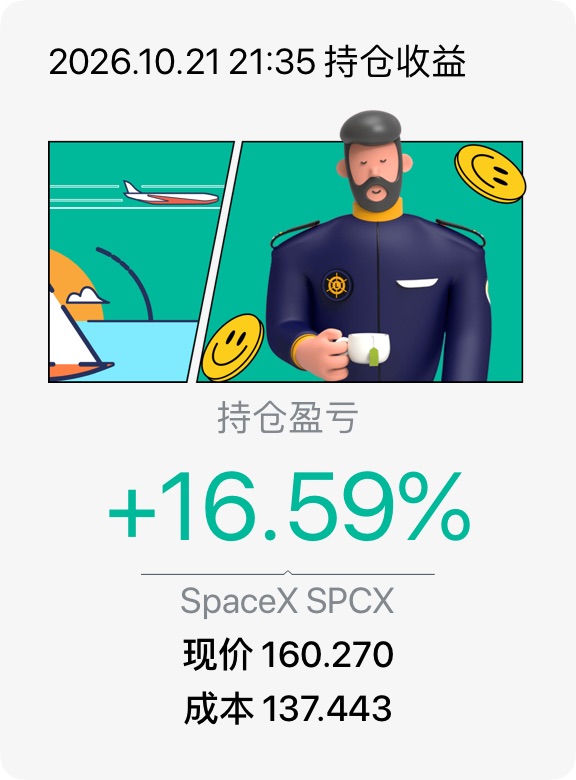
[Bullish] At 95x P/S and a $1.75T valuation, SpaceX is undeniably expensive — arguably priced for perfection. But I'm joining the ride anyway. The massive oversubscription, retail FOMO, and pure-play space scarcityity premium create a short-term momentum setup that's hard to ignore. My plan is to trade the initial momentum with a tight stop-loss and take profits within the first few sessions. Not a long-term hold at this price, but the liquidity event is too big to sit out. Participation over conviction. 🚀
[Bullish] At 95x P/S and a $1.75T valuation, SpaceX is undeniably expensive — arguably priced for perfection. But I'm joining the ride anyway. The massive oversubscription, retail FOMO, and pure-play space scarcityity premium create a short-term momentum setup that's hard to ignore. My plan is to trade the initial momentum with a tight stop-loss and take profits within the first few sessions. Not a long-term hold at this price, but the liquidity event is too big to sit out. Participation over conviction. 🚀
$Alphabet(GOOGL.US)Google has been an interesting case lately. A series of bullish headlines and institutional buying sparked a brief rebound, but the stock quickly gave those gains back and drifted lower again. That kind of price action usually tells you sentiment is still weak, regardless of the news flow.
What makes the current setup more interesting is where it sits on the weekly chart. After months of consolidation and underperformance, the stock has worked its way back toward a major support area. The risk-reward here looks much better than it did during the excitement near the highs.
The market is still obsessed with the obvious AI winners, but Google remains one of the few mega-caps with both AI exposure and relatively restrained expectations. Sometimes the best opportunities appear when the narrative has gone quiet.
@Bridge Buzz SG
$IBM(IBM.US)IBM’s recent pullback feels almost inevitable after the frenzy we saw a few weeks ago. The stock went from being largely ignored to becoming one of the market’s favorite stories overnight, driven by excitement around chips, AI, and government support. At some point, expectations simply ran ahead of reality.
What stands out is that the decline hasn’t been a dramatic collapse. Instead, it’s been a slow grind lower as momentum traders leave and attention shifts elsewhere. That’s often what happens when a narrative-driven rally loses steam. The long-term story may not have changed much, but the easy money has already been made.
The market has a habit of overshooting in both directions. After a move that aggressive, a period of cooling off was probably the most natural outcome.
@Bridge Buzz SG
$Microsoft(MSFT.US)What surprised me most was that IGV and Microsoft offered almost no real defense during the selloff. The idea was that software and quality mega-caps would become a safe harbor once volatility returned, but the market had other plans.
After the drop, capital didn‘t rotate into software. It went straight back into the same crowded “certainty trades” that had been leading all along. Looking back, the strength in IGV now feels less like a genuine leadership change and more like a short squeeze fueled by positioning.
In a market where liquidity is tightening, investors seem unwilling to pay for future possibilities. They want earnings, cash flow, and immediate visibility. Everything else is just a trade.
@Bridge Buzz SG
$Invesco QQQ Trust(QQQ.US)$Invesco Nasdaq 100 ETF(QQQM.US)Last week I mentioned that volatility was starting to creep back into the market, and Friday wasted no time proving the point. The selloff was broad-based, with very few places to hide. What looked like a healthy consolidation quickly turned into a reminder that after a long rally, positioning can unwind much faster than it builds.
My view is that QQQ may still hold its longer-term uptrend, but the excess upside from here probably isn‘t as attractive as it was a month ago. Liquidity conditions are tightening, rates remain elevated, and capital is becoming increasingly concentrated in a small group of winners. That environment tends to produce fewer opportunities and more violent rotations.
The biggest lesson from Friday is that a strong index can hide a weakening market underneath. When liquidity starts becoming selective, stock picking matters more than simply owning beta. The easy gains from the squeeze higher may already be behind us, and the next phase could be much more dependent on discipline than optimism.
@Bridge Buzz SG
$Robinhood(HOOD.US)HOOD has been showing a very different character lately. Normally, when BTC weakens, anything tied to retail trading or crypto sentiment gets dragged down with it. The fact that HOOD can stabilize or even rally while crypto struggles is a sign of genuine relative strength.
What‘s interesting is that the market is starting to treat Robinhood as more than just a crypto proxy. Between options trading, prediction markets, wealth management, and broader platform expansion, investors are increasingly viewing it as a diversified financial platform rather than a pure retail speculation play.
The strongest stocks are often the ones that stop reacting to bad news. When an asset can rise despite a weak backdrop for one of its core businesses, it usually means buyers are looking ahead rather than reacting to current conditions. Whether the move continues or not, HOOD trading well while BTC struggles is definitely a signal worth paying attention to.
@Bridge Buzz SG
$Oklo(OKLO.US)Yesterday was a painful reminder that when liquidity tightens, the market can become brutally selective. Capital rushed into a handful of high-momentum leaders while small caps and BTC-related assets were sold indiscriminately. It wasn’t really about individual fundamentals anymore; it was about reducing risk and chasing relative strength.
The hardest part was the hesitation. I considered taking profits but decided to wait, only to watch the entire gain in OKLO disappear within a single session. Those are the days that hurt the most—not because the thesis changed, but because the market moved faster than expected. Sometimes protecting profits is just as difficult as finding them in the first place.
@Bridge Buzz SG
$NVIDIA(NVDA.US)NVIDIA keeps receiving bullish news, from AI demand to product launches and improving China-related headlines, yet every push toward new highs runs into heavy selling. That suggests the market is no longer debating the story, but the valuation.
The interesting part is that despite the selling pressure, the stock refuses to break down. Buyers continue defending support, showing that long-term conviction remains strong. For now, it feels less like a high-growth momentum trade and more like a mature mega-cap where expectations are already extremely high and every gain has to be earned.
@Bridge Buzz SG
$IBM(IBM.US)IBM has been almost absurd lately. I placed my take-profit order around the previous heavy resistance zone, figuring that after such a sharp run the stock would at least pause and digest gains. Instead, it blasted straight through the area and left my order looking far too conservative.
The move feels less like a normal valuation expansion and more like a complete narrative re-rating. A few months ago IBM was still viewed as a slow-growing dividend tech company. Now the market is suddenly treating it as a strategic AI, semiconductor, and quantum infrastructure asset.
Everyone knows there is a policy angle behind the move, especially with Washington becoming increasingly involved in domestic technology and manufacturing initiatives. But the speed of the repricing is what catches people off guard. When a stock goes from being ignored to becoming a favored national champion narrative, traditional resistance levels often stop working the way they normally would.
Maybe the most frustrating part is that the trade was not wrong. The level made sense, the risk management made sense, and the profit was real. Yet watching the stock continue vertically higher afterwards still feels like selling too early. That’s the kind of market we‘re in right now—sometimes the hardest thing isn’t cutting losses, it‘s accepting that a position can keep running long after it already looks expensive.
@Bridge Buzz SG
$Invesco QQQ Trust(QQQ.US)$Invesco Nasdaq 100 ETF(QQQM.US)QQQ managed to add another strong week, and sentiment is starting to feel almost too comfortable again. The rally has been remarkably resilient, with buyers stepping in on nearly every dip and macro concerns getting pushed into the background.
What’s interesting, though, is that while the market keeps grinding higher, VIX has quietly returned to the rising support area that has been forming over the past few months. That doesn’t automatically mean a selloff is coming, but it does suggest complacency is becoming harder to sustain.
The market is still strong, yet volatility is no longer collapsing the way it was earlier in the rally. That divergence is worth paying attention to. After such a persistent advance, it wouldn‘t take much—a hot inflation print, a rates scare, or geopolitical headlines—to trigger larger swings in both directions.
This month feels less like a trend month and more like a volatility month. The broader uptrend may remain intact, but the days of effortless upside could be giving way to a much rougher ride.
@Bridge Buzz SG
$Circle(CRCL.US)CRCL bounced pretty hard right near support yesterday, which at least shows buyers are still defending the stablecoin/crypto narrative for now.
But the real key is still Bitcoin. Lately CRCL has been trading much more like a liquidity proxy than a pure rates story, so if BTC stabilizes and holds momentum, CRCL probably gets room to recover further too.
If BTC loses structure again though, these high-beta crypto equities can roll over very fast. Right now it still feels more like a technical reset than a full trend break.
@Bridge Buzz SG
$Microsoft(MSFT.US)Microsoft keeps feeling stuck in that “strong but sleepy” phase. Not breaking down, but also not giving the explosive follow-through people got used to during the AI mania.
Part of it is simply size — at this scale, MSFT trades more with rates and macro liquidity than pure excitement now. And with yields still elevated plus AI spending already heavily priced in, the market wants clearer monetization before re-rating it higher again.
So this kind of sideways grind could honestly last a while. It feels less like weakness and more like a giant mega-cap digesting an enormous run.
@Bridge Buzz SG