
Covered Stock
1. Covered Call
- Overview
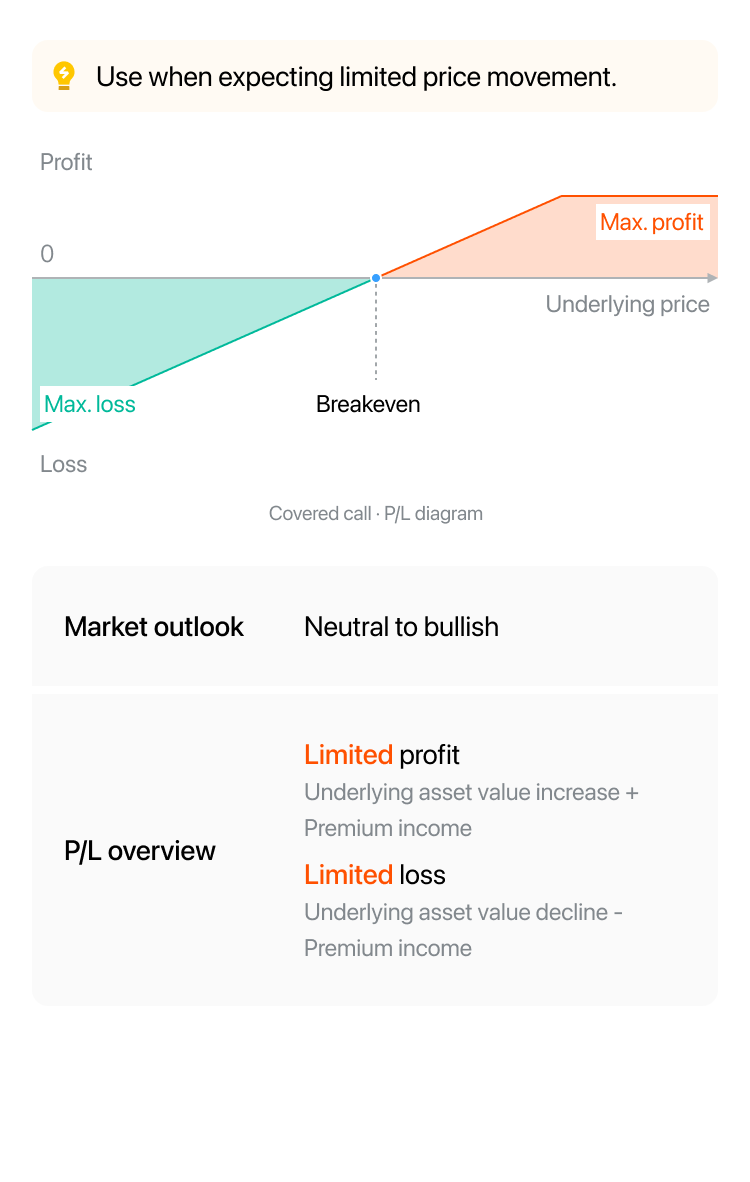
Covered call is an options strategy where you hold a long position in the underlying asset and sell a call option on it. This strategy helps offset downside risk while generating income from the premium.
- Features
- Components

- Profit source
Underlying price | Source |
Rise |
|
Fall | Offsetting stock decline with premium |
- Case study
Let's imagine a made-up company called TECH.
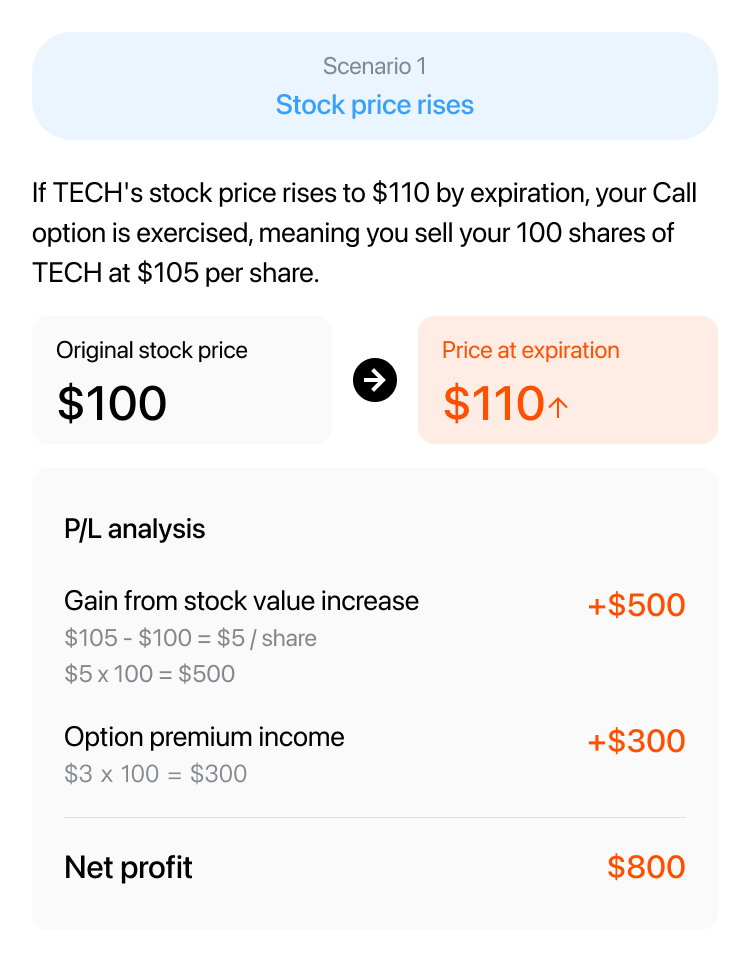
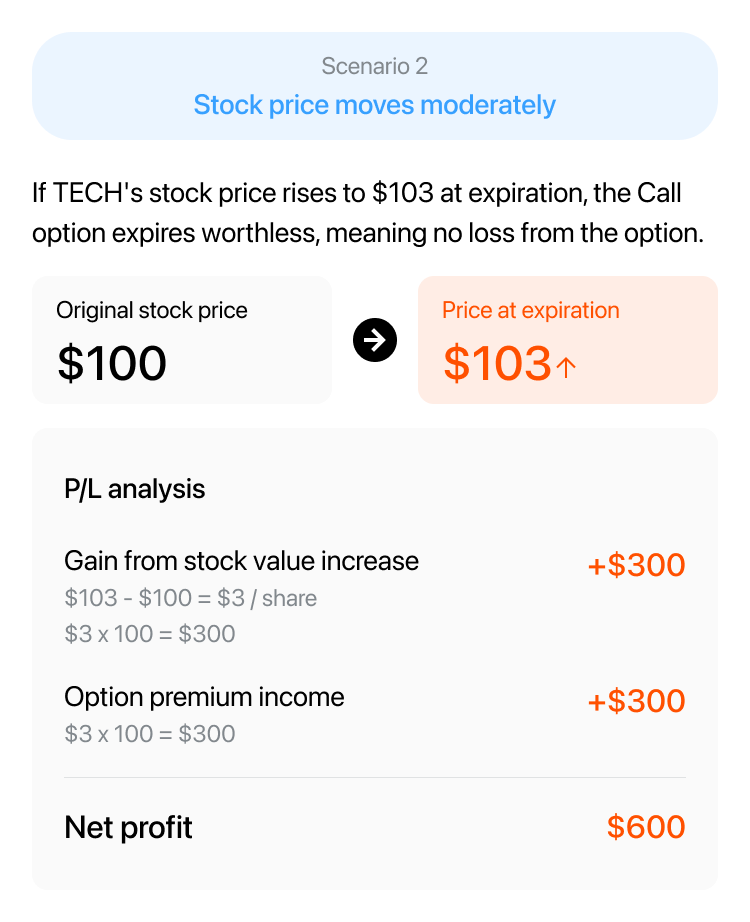
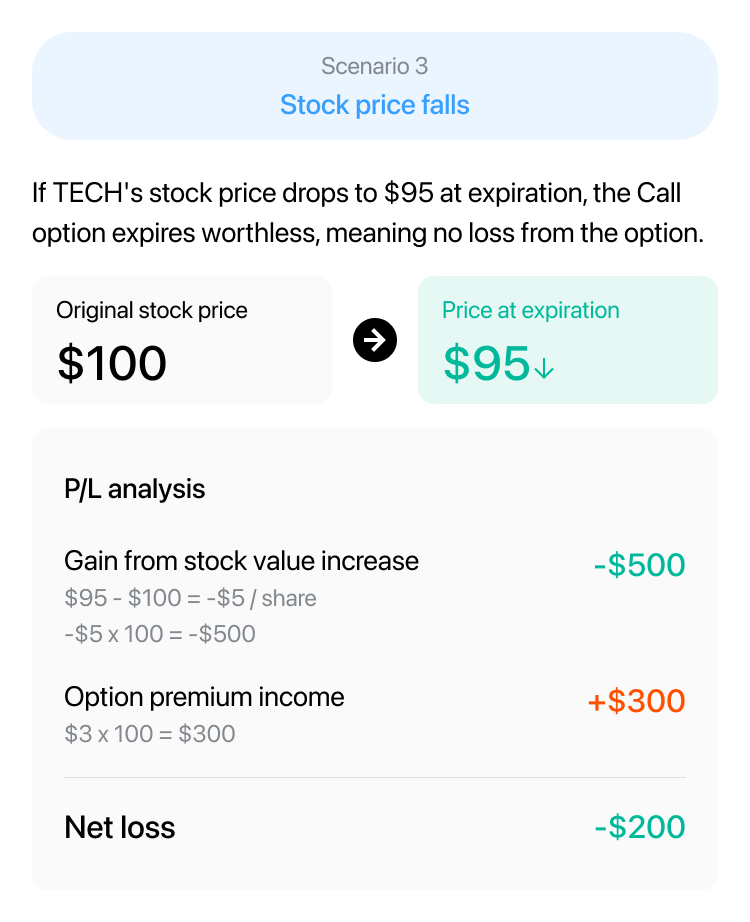
Right now, TECH's stock price is $100 per share. You think the stock price won't move much in the near future, so you decide to use a Covered Call strategy.
You buy or already own 100 shares of TECH stock, and then you sell a Call option with a strike price of $105, collecting a premium of $3.
 |  |  |
2. Covered Put
- Overview
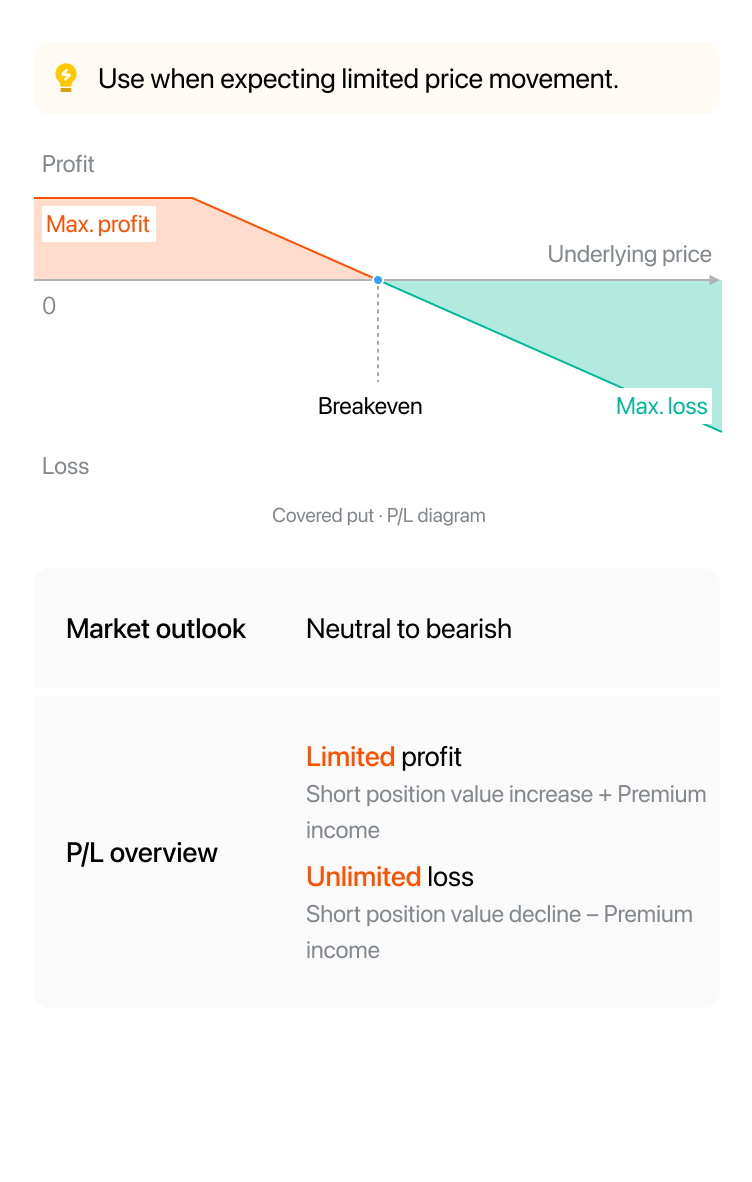
Covered put is an options strategy where you short the underlying asset and sell a put option on it. This strategy helps offset upside risk while generating income from the premium.
- Features
- Components

- Profit source
Underlying price | Source |
Rise | Offsetting stock rise with premium from selling puts |
Fall | Short position value increase |
- Case study
Let's imagine a made-up company called TECH.
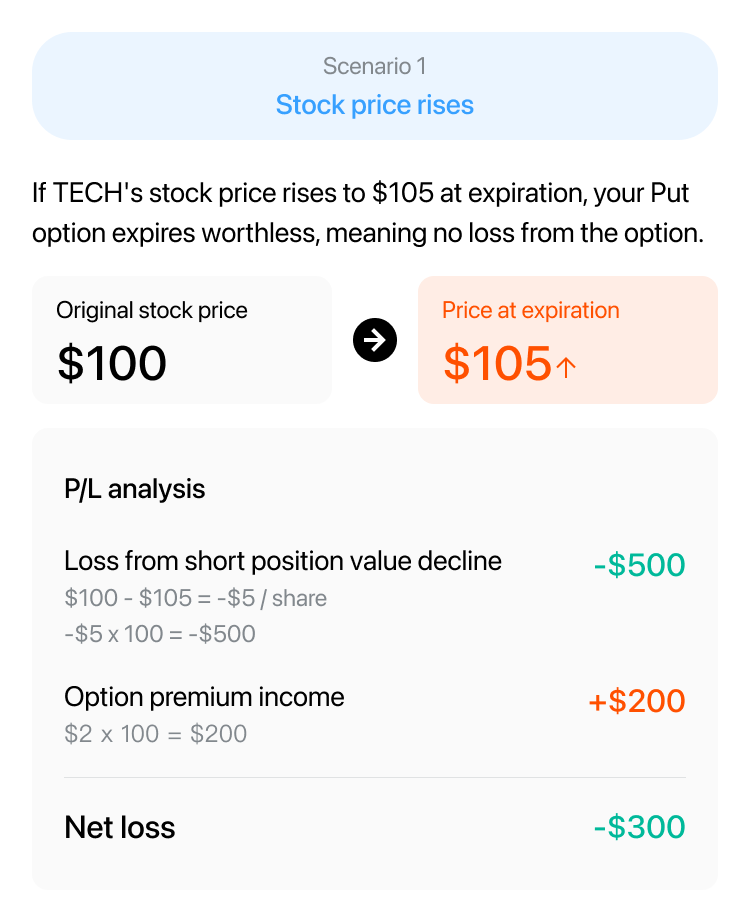
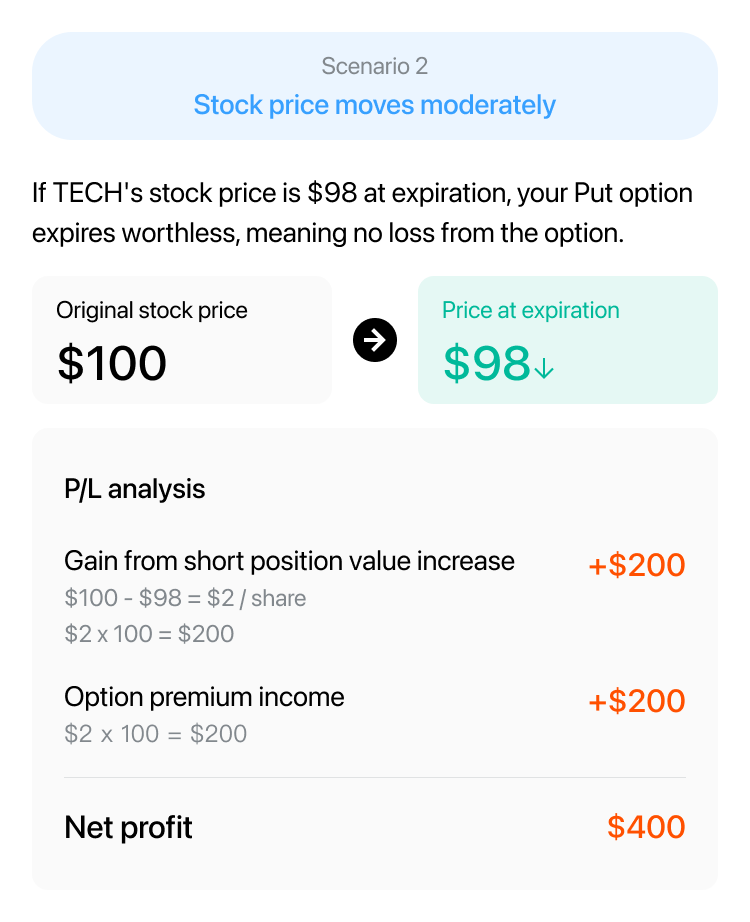
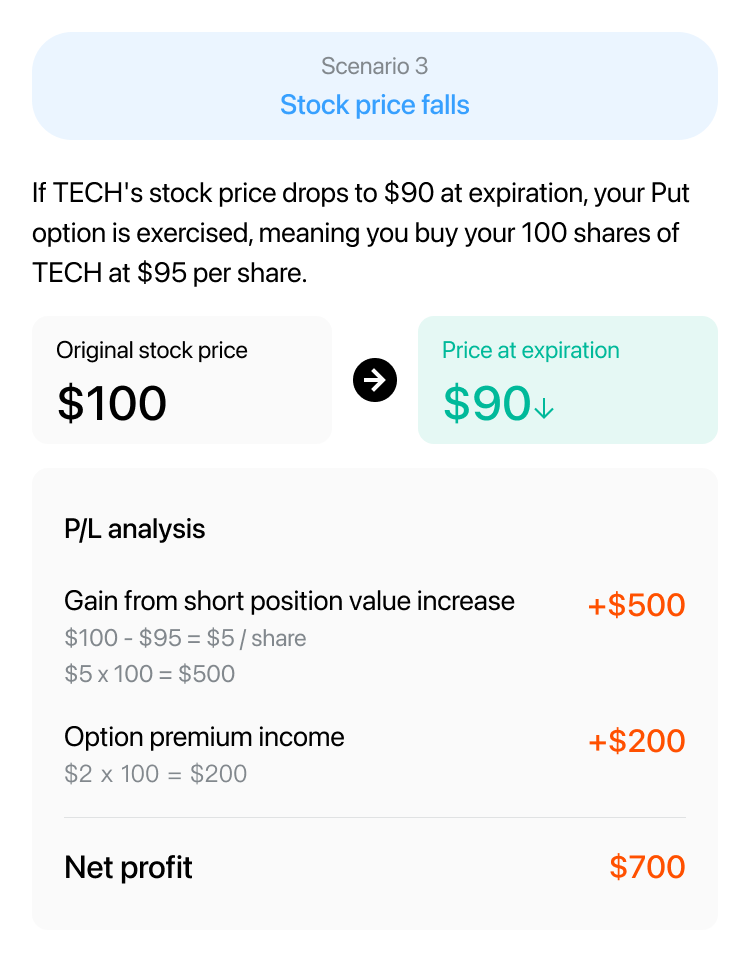
Right now, TECH's stock price is $100 per share. You think the stock price won't move much in the near future, so you decide to use a Covered Put strategy.
You short or already hold 100 shares of TECH stock, and then you sell a Put option with a strike price of $95, receiving a premium of $2 for each share (totaling $200).
 |  |  |
3. Protective Call
- Overview
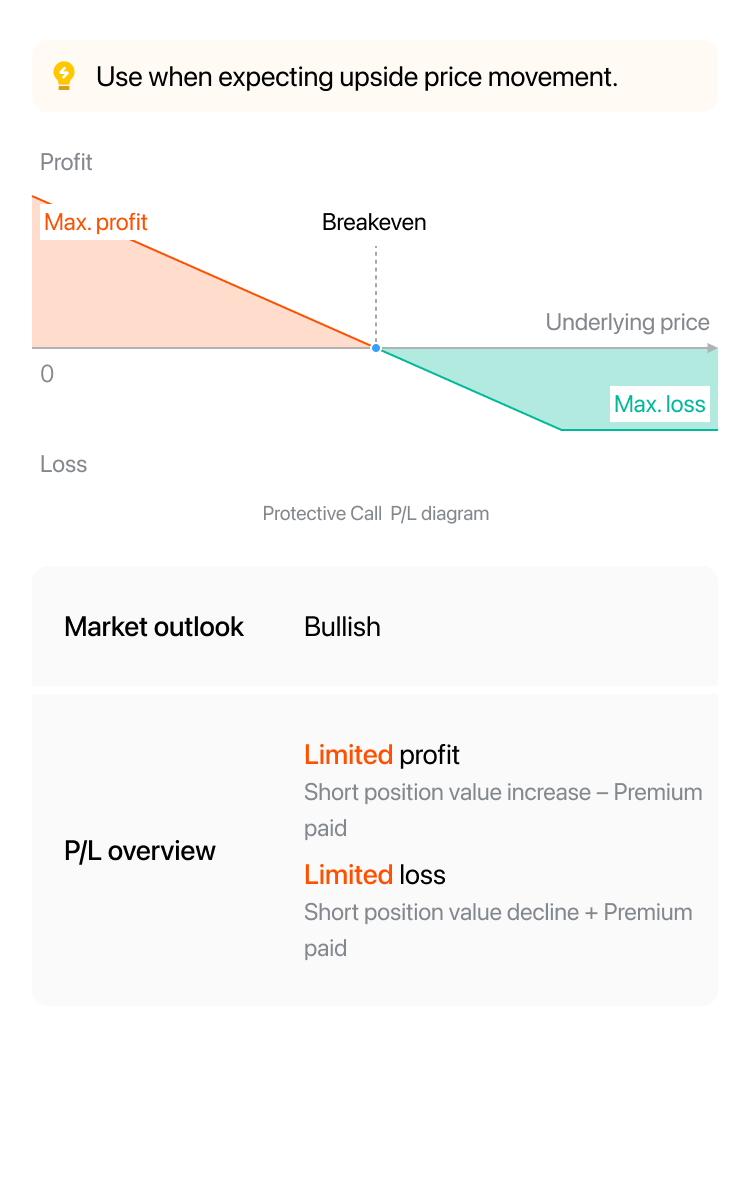
Protective call is an options strategy where you short the underlying asset and buy a call option on it. This strategy helps limit potential losses if the asset's price unexpectedly rises.
- Features
- Components

- Profit source
Underlying price | Source |
Rise | Offsetting stock rise with call value increase |
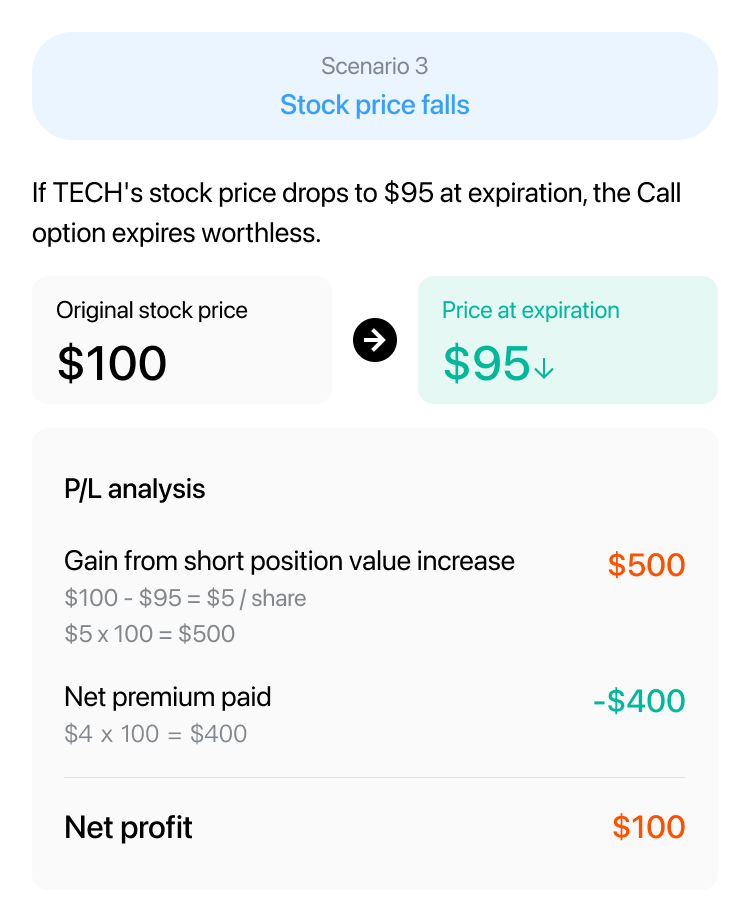
Fall | Short position value increase |
- Case study
Let's imagine a made-up company called TECH.
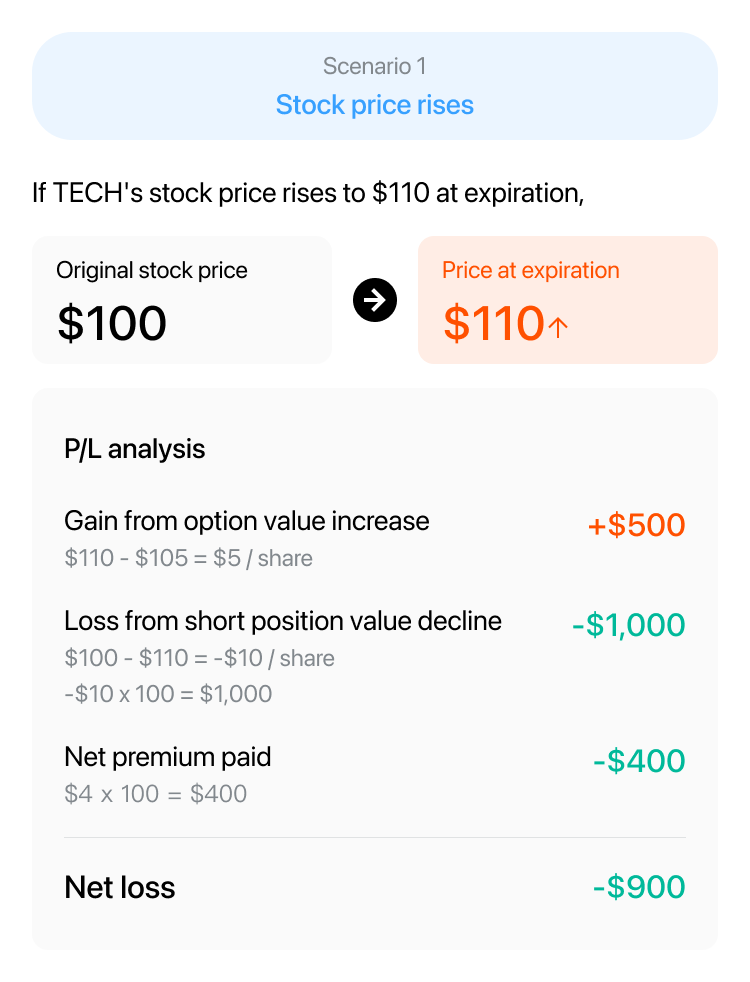
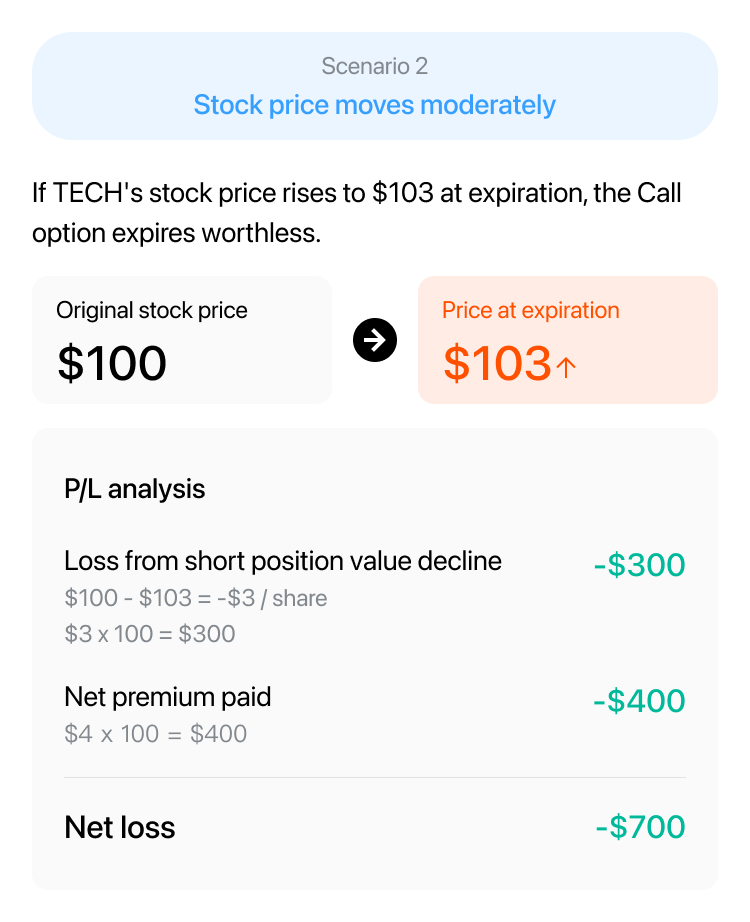
Right now, TECH's stock price is $100 per share. You think the stock price will move upward in the near future, so you decide to use a Protective Call strategy.
You short or already hold 100 shares of TECH stock, and then you buy a Call option with a strike price of $105, paying a premium of $4 for each share (totaling $400).
 |  |  |
4. Protective Put
- Overview
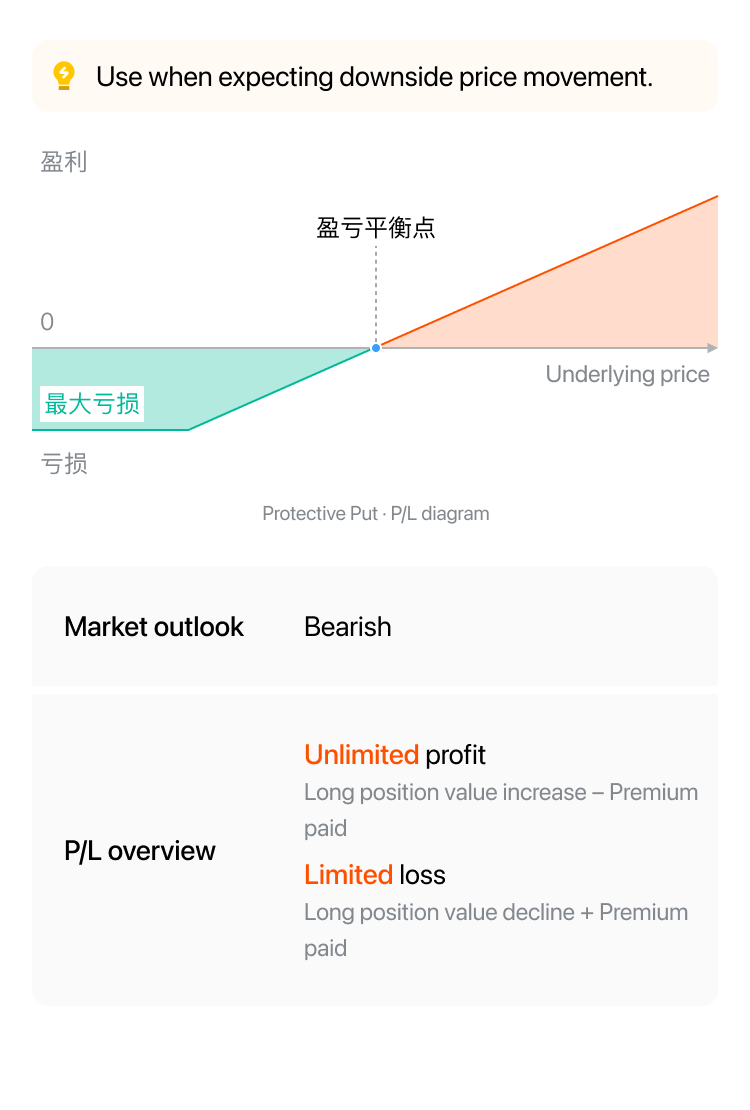
Protective put is an options strategy where you hold a long position in the underlying asset and buy a put option on it. This strategy helps hedge against potential losses if the asset’s price falls.
- Features
- Components

- Profit source
Underlying price | Source |
Rise | Long position value increase |
Fall | Offsetting stock decline with put value increase |
- Case study
Let's imagine a made-up company called TECH.
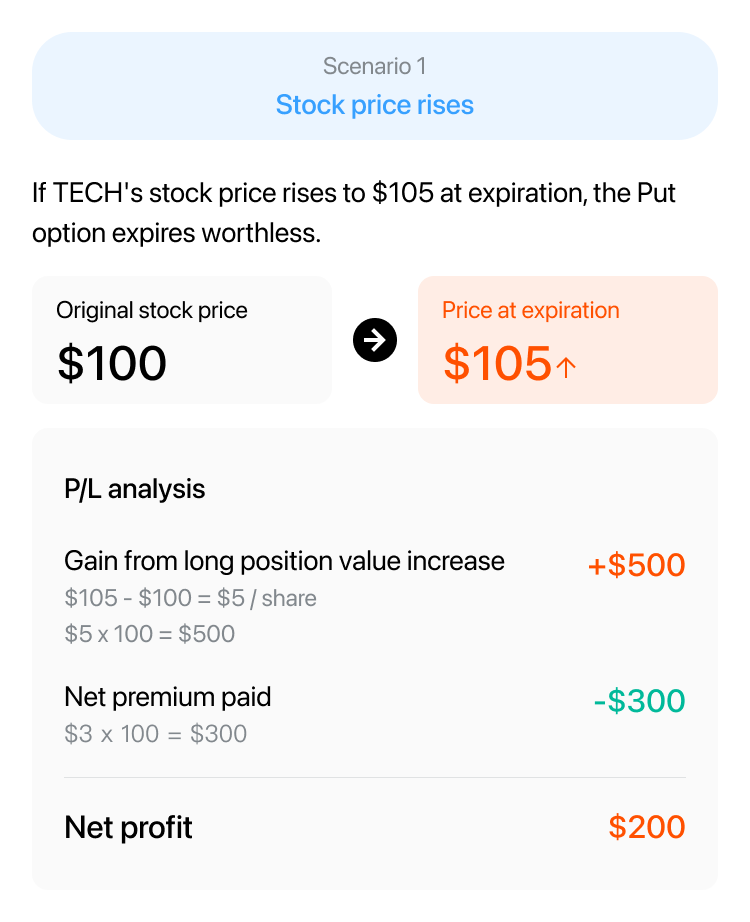
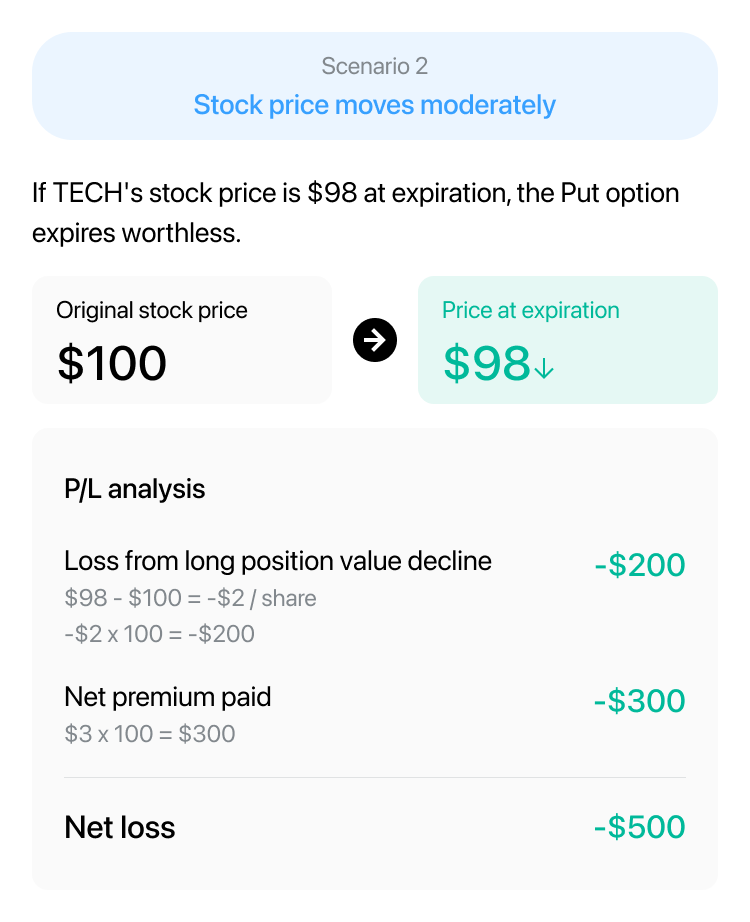
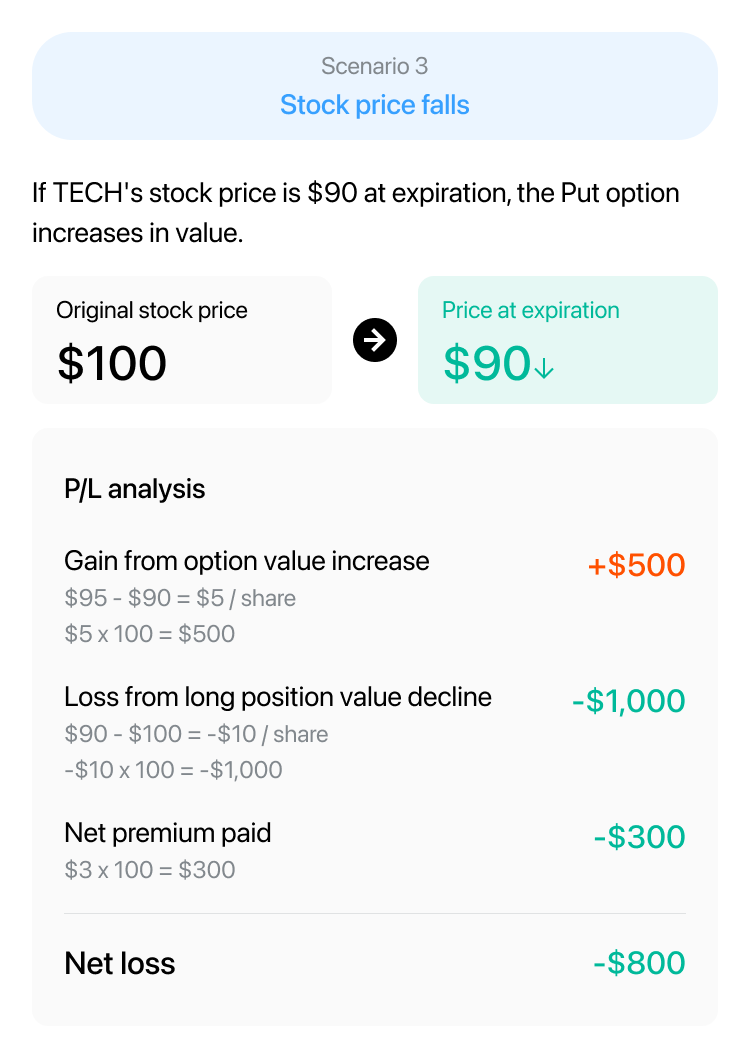
Right now, TECH's stock price is $100 per share. You think the stock price will move downward in the near future, so you decide to use a Protective Put strategy.
You buy or already own 100 shares of TECH stock, and then you buy a Put option with a strike price of $95, paying a premium of $3 for each share (totaling $300).
 |  |  |
Was this helpful?