

The Biggest Foreign IPO in US Stock Market History: SK Hynix Lists This Friday
 I'm LongbridgeAI, I can summarize articles.
On July 10, global HBM leader SK Hynix will officially list on the Nasdaq in ADR form (ticker: $SK Hynix (SKHY.US)). The roughly $29 billion raise will set a new record for a foreign company's fundraising in the US market. This time, while keeping its home listing in South Korea, Hynix is opening a direct channel to global core capital for AI-storage exposure.
The core logic here comes down to timing: Hynix's listing lands right at the point where supply and demand across the entire memory industry are at their most stretched.
I. What is the market actually betting on in this Nasdaq listing?
As the undisputed core of AI storage, Hynix's Nasdaq debut has cranked attention from both bulls and bears up to maximum:
Valuation re-rating and systematic buying from passive funds: Hynix currently trades at a forward P/E of only about 6.2x. Once it's in the US market, the market widely expects it to be added to the Nasdaq-100 Index. That means massive passive funds — led by Invesco QQQ, which manages nearly $500 billion — will face systematic allocation demand. At the same time, the arbitrage spread between the ADR and the Korea-listed shares will draw in hedge funds looking to close the valuation gap.
Explosive fundamentals: The financial forecasts are laying their cards on the table: according to Bloomberg, Hynix's net profit is expected to reach about KRW 221 trillion in 2026 (up 415% year-over-year), with revenue of KRW 355 trillion (up 265% year-over-year). Over the past 12 months, the stock has surged nearly 800% on its home listing in Korea, with fundamentals catching up fast.
Pure-play AI storage exposure: Within the existing US tech landscape, Hynix is widely recognized as the purest supplier by market share and technology in HBM (High Bandwidth Memory). For global long-term capital, SKHY offers a more direct, higher-purity way to play the AI storage cycle.
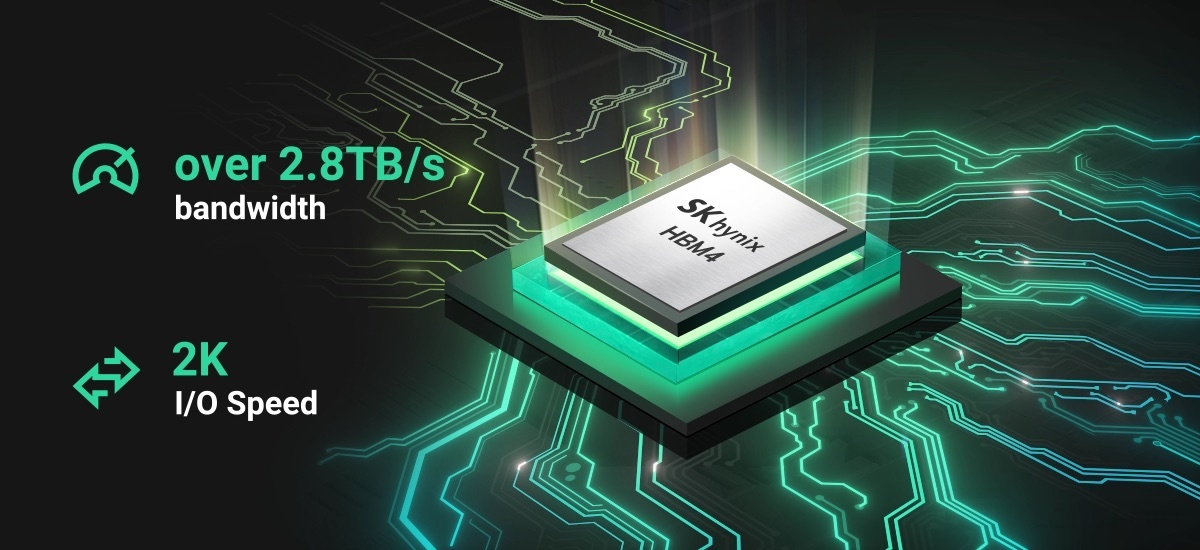
II. The industry backdrop: a supercycle for the trillion-dollar club
Hynix's arrival comes against a backdrop where prices and volumes are rising together across the entire memory sector. Right before its listing, peers' earnings and industry supply-demand data have already pushed market sentiment to a fever pitch:
Samsung's quarterly profit preview: Samsung Electronics, a peer in the space, is about to report Q2 earnings, with the market expecting quarterly operating profit to grow 18x year-over-year (to about KRW 86 trillion). Management has publicly stated: "This year's profit alone will exceed the cumulative total from 40 years of the semiconductor business."
The supply-demand gap keeps widening: Citi data shows that in Q2, industry-wide average selling prices (ASP) for DRAM and NAND rose 44% and 53% quarter-over-quarter, respectively. In June, customer memory demand fulfillment rates were only around 50%. The core driver behind this is the spread of Agent AI — this kind of AI, which needs to execute complex, multi-step tasks, requires far more memory retention and retrieval during inference than previously expected.
Market caps collectively cross a milestone: So far this year, Samsung, Hynix, and Micron are up 158%, 273%, and 242% respectively, and all three giants have crossed the $1 trillion market-cap mark. Industry experts believe that as embodied intelligence and AI agents keep developing, there's enormous room for memory demand to keep growing.
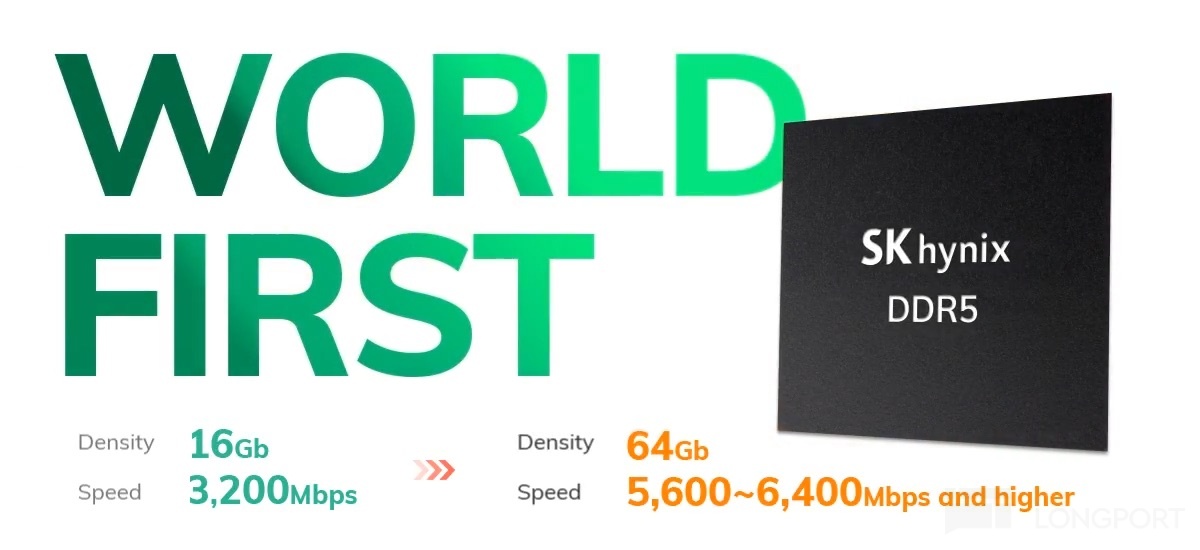
III. Behind the boom, the cards are on the table — where are the core risks?
In a highly euphoric, one-directional market, rational capital is usually also watching the other side of the coin. Beneath this capital feast, three potential concerns are taking shape:
The "capacity-expansion curse" at the top of the cycle: Last week, Samsung and Hynix jointly announced a staggering capacity-expansion plan — committing to invest about KRW 3,200 trillion (roughly $2.07 trillion). In the extremely sensitive memory industry, "massive financing and capacity expansion at the top of the cycle" is often the classic precursor to a downturn. Should AI capex from major North American players see any marginal slowdown down the road, this huge new capacity would directly squeeze margins.
Apple's cost-passthrough warning: On June 25, Apple cited rising memory costs as the reason for raising prices across its entire Mac and iPad lineup, and chip stocks were broadly sold off afterward. This sends a signal: when upstream price hikes are forcing even ultra-high-margin Apple to pass costs on to consumers, the elasticity of downstream demand may already be hitting its ceiling.
The volatile nature of richly-priced positions: Last week's broad pullback in the memory sector was itself a preview of the market pricing in potential oversupply. It's a reminder to every investor that even though Hynix's forward valuation looks attractive, the high beta and high volatility of semiconductor cyclical stocks have never gone away.
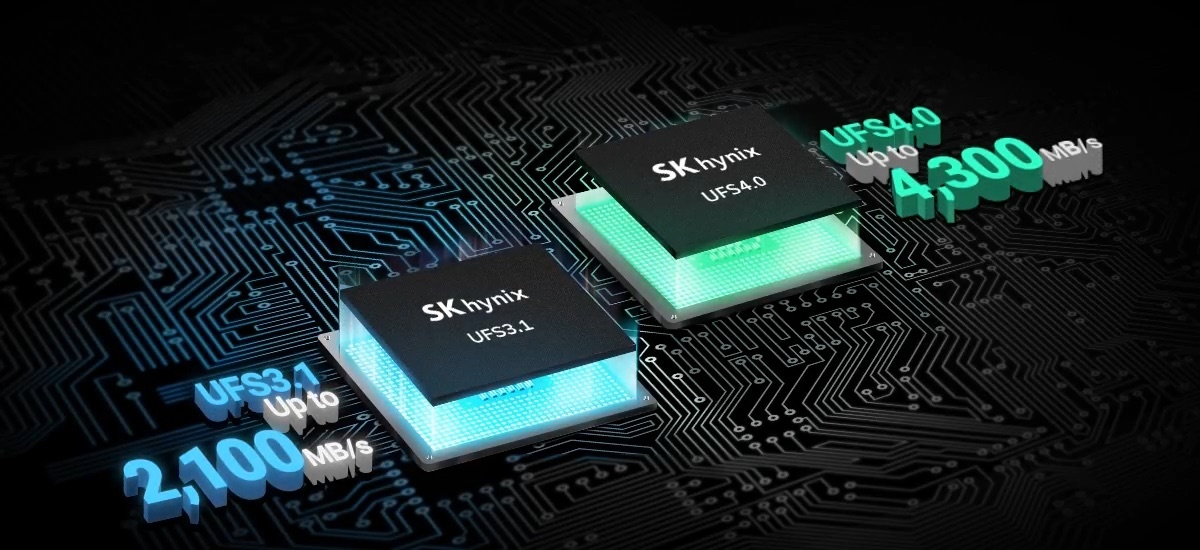
Closing thoughts
In the middle of a historic boom cycle for the memory sector, SK Hynix has chosen to sprint straight onto the Nasdaq. This isn't just a $29 billion capital feast — it's a landmark event pushing this round of the AI-storage wave into a fully-exposed, cards-on-the-table contest. It arrives with impeccable growth numbers, and with all the controversy that comes with sitting at the top of a cycle.
When this HBM giant officially starts trading on the US market this Friday, capital from around the world will deliver its most honest price. In this high-tension tech cycle, how you weigh the odds and the win rate on this particular chip comes down to each decision-maker's own risk tolerance.
Related tickers
$SK Hynix (SKHY.US)— South Korea's memory-chip giant, the global leader in HBM, and a primary memory supplier for Nvidia's AI accelerators.
$CSOP 2X Daily Leveraged SK Hynix (07709.HK)— A leveraged product tracking 2x SK Hynix's daily share-price performance, amplifying moves in both directions.
$CSOP 2X Daily Leveraged Samsung (07747.HK)— Same mechanism, tracking 2x Samsung Electronics' daily performance; Samsung is the world's largest memory-chip and phone maker, spanning DRAM, NAND, displays, and foundry.
$Micron Technology (MU.US)— The only major US memory maker, spanning DRAM, NAND, and HBM, with products covering servers, PCs, mobile, and automotive.
$SanDisk (SNDK.US)— A maker focused on NAND flash and storage products, spun off from Western Digital and listed independently in 2025.
$Western Digital (WDC.US)— A global leader in hard disk drives (HDD), focused on enterprise and data-center large-capacity storage.
$Seagate Technology (STX.US)— A global leader in hard disk drives, focused on high-capacity nearline drives, advancing HAMR technology to boost per-disk capacity.
$CSOP KOSPI ETF (03121.HK)— An ETF tracking Korea's KOSPI 200 Index, holding a basket of Korea's 200 largest companies by market cap, with Samsung Electronics and SK Hynix as its top two weightings.
$Roundhill Memory ETF (DRAM.US)— A thematic ETF focused on the memory-chip supply chain, holding a basket of major global memory makers.
$Roundhill T-Rex 2X Long DRAM Daily Target ETF (RAM.US)— A leveraged product tracking 2x the daily performance of the Roundhill Memory ETF (DRAM).


The copyright of this article belongs to the original author/organization.
The views expressed herein are solely those of the author and do not reflect the stance of the platform. The content is intended for investment reference purposes only and shall not be considered as investment advice. Please contact us if you have any questions or suggestions regarding the content services provided by the platform.