
Expert Takeaways: AMD 1. The rumored 2027 Venice CPU shipment target of 6 million units is inaccurate. Its major bottlen…
Expert Takeaways: AMD
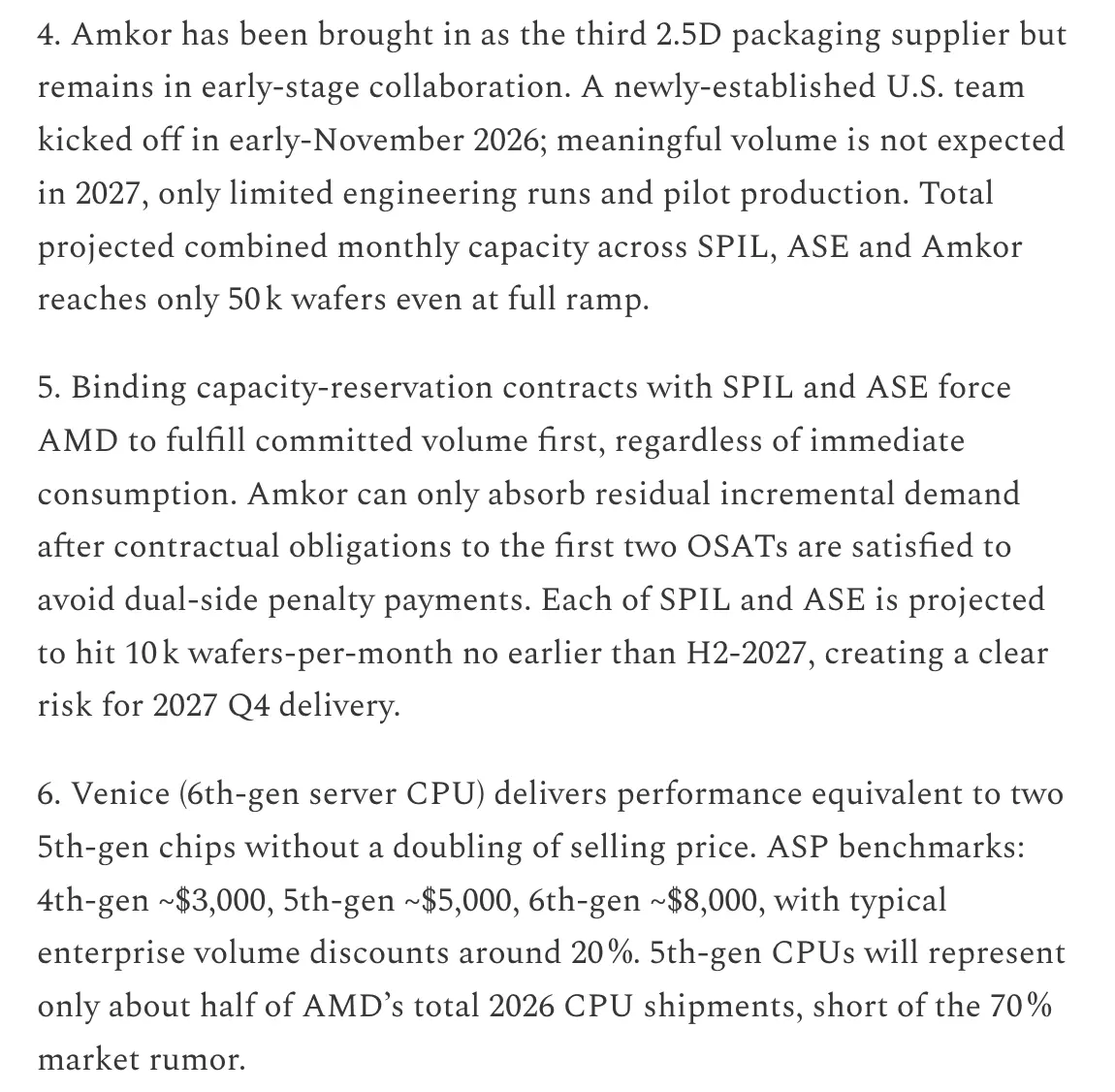
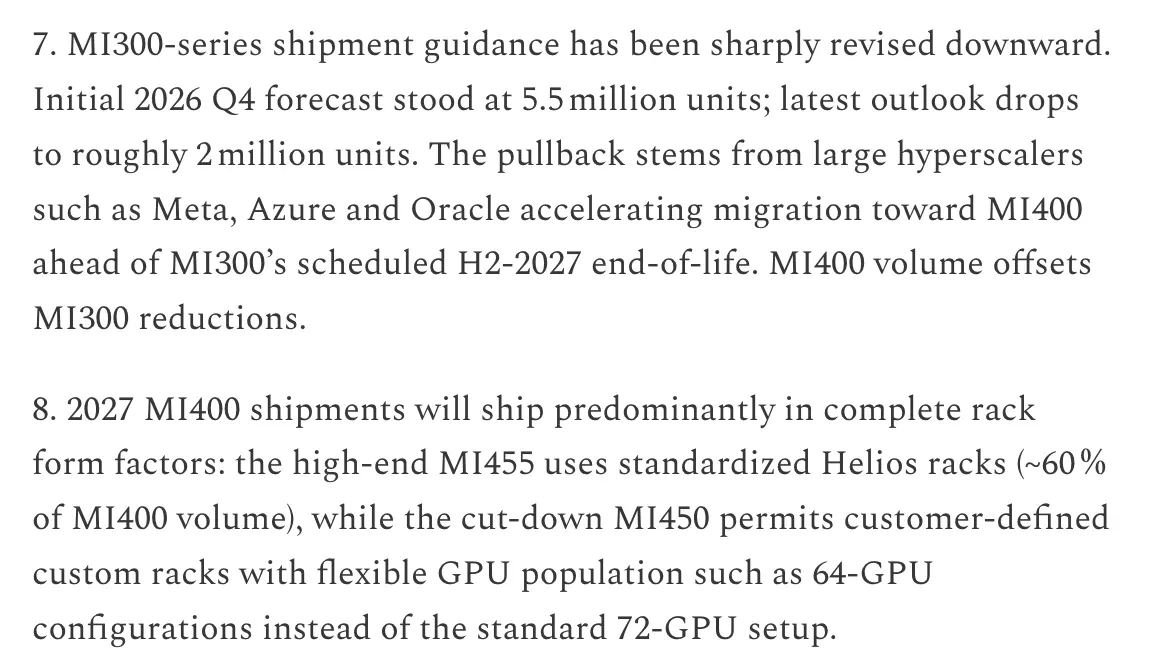
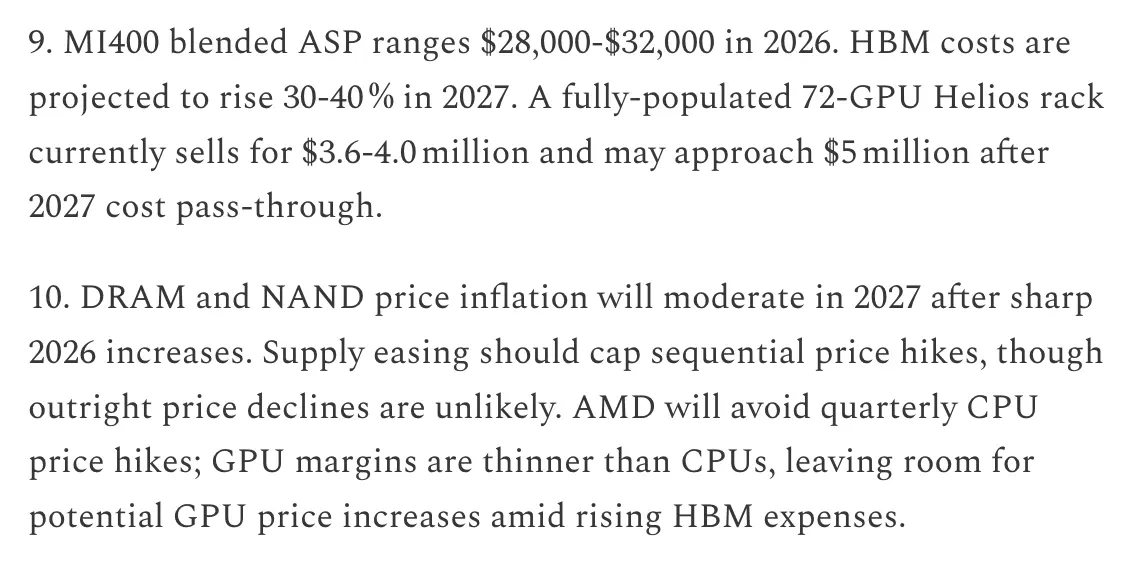
1. The rumored 2027 Venice CPU shipment target of 6 million units is inaccurate. Its major bottleneck lies in 2.5D packaging. SPIL is the primary OSAT partner building a dedicated EFB production line under a Capacity Reservation Agreement; AMD guarantees an 80 % capacity‑utilization rate with financial penalties for either side missing commitments.2. TSMC’s CoWoS capacity prioritizes higher‑margin MI‑series GPUs over Venice CPUs. TSMC CoWoS‑L can technically package Venice but serves only as a short‑term emergency workaround, not a long‑term solution. ASE has been added as the second packaging vendor. The combined 20 k‑wafer‑per‑month target for SPIL and ASE will not materialize until 2028.3. Front‑end wafer output does not translate directly to finished CPU units. Post‑CP‑test yield for IOD and CCD dies stands at roughly 60 %, creating substantial upstream die loss. Back‑end 2.5D packaging yield remains very high above 99 %.4. Amkor has been brought in as the third 2.5D packaging supplier but remains in early‑stage collaboration. A newly‑established U.S. team kicked off in early‑November 2026; meaningful volume is not expected in 2027, only limited engineering runs and pilot production. Total projected combined monthly capacity across SPIL, ASE and Amkor reaches only 50 k wafers even at full ramp.5. Binding capacity‑reservation contracts with SPIL and ASE force AMD to fulfill committed volume first, regardless of immediate consumption. Amkor can only absorb residual incremental demand after contractual obligations to the first two OSATs are satisfied to avoid dual‑side penalty payments. Each of SPIL and ASE is projected to hit 10 k wafers‑per‑month no earlier than H2‑2027, creating a clear risk for 2027 Q4 delivery.6. Venice (6th‑gen server CPU) delivers performance equivalent to two 5th‑gen chips without a doubling of selling price. ASP benchmarks: 4th‑gen ~$3,000, 5th‑gen ~$5,000, 6th‑gen ~$8,000, with typical enterprise volume discounts around 20 %. 5th‑gen CPUs will represent only about half of AMD’s total 2026 CPU shipments, short of the 70 % market rumor.7. MI300‑series shipment guidance has been sharply revised downward. Initial 2026 Q4 forecast stood at 5.5 million units; latest outlook drops to roughly 2 million units. The pullback stems from large hyperscalers such as Meta, Azure and Oracle accelerating migration toward MI400 ahead of MI300’s scheduled H2‑2027 end‑of‑life. MI400 volume offsets MI300 reductions.8. 2027 MI400 shipments will ship predominantly in complete rack form factors: the high‑end MI455 uses standardized Helios racks (~60 % of MI400 volume), while the cut‑down MI450 permits customer‑defined custom racks with flexible GPU population such as 64‑GPU configurations instead of the standard 72‑GPU setup.9. MI400 blended ASP ranges $28,000‑$32,000 in 2026. HBM costs are projected to rise 30‑40 % in 2027. A fully‑populated 72‑GPU Helios rack currently sells for $3.6‑4.0 million and may approach $5 million after 2027 cost pass‑through.10. DRAM and NAND price inflation will moderate in 2027 after sharp 2026 increases. Supply easing should cap sequential price hikes, though outright price declines are unlikely. AMD will avoid quarterly CPU price hikes; GPU margins are thinner than CPUs, leaving room for potential GPU price increases amid rising HBM expenses.Reminder: not all expert provided information may be accurate. Please be advised.$AMD(AMD.US)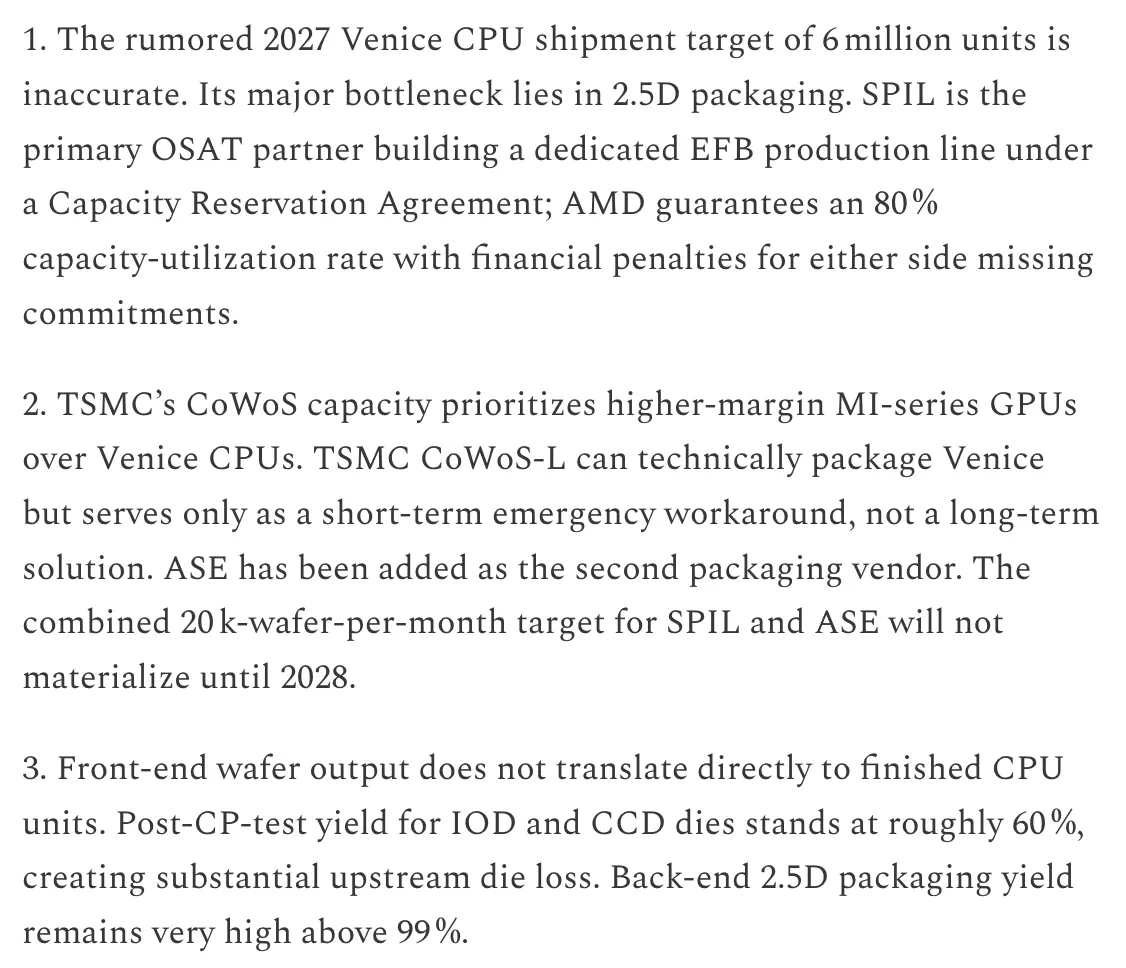
The copyright of this article belongs to the original author/organization.
The views expressed herein are solely those of the author and do not reflect the stance of the platform. The content is intended for investment reference purposes only and shall not be considered as investment advice. Please contact us if you have any questions or suggestions regarding the content services provided by the platform.