
JPMorgan refutes the "peak of the semiconductor cycle" theory. According to JPM, current market pricing for the semicond…
JPMorgan refutes the "peak of the semiconductor cycle" theory.
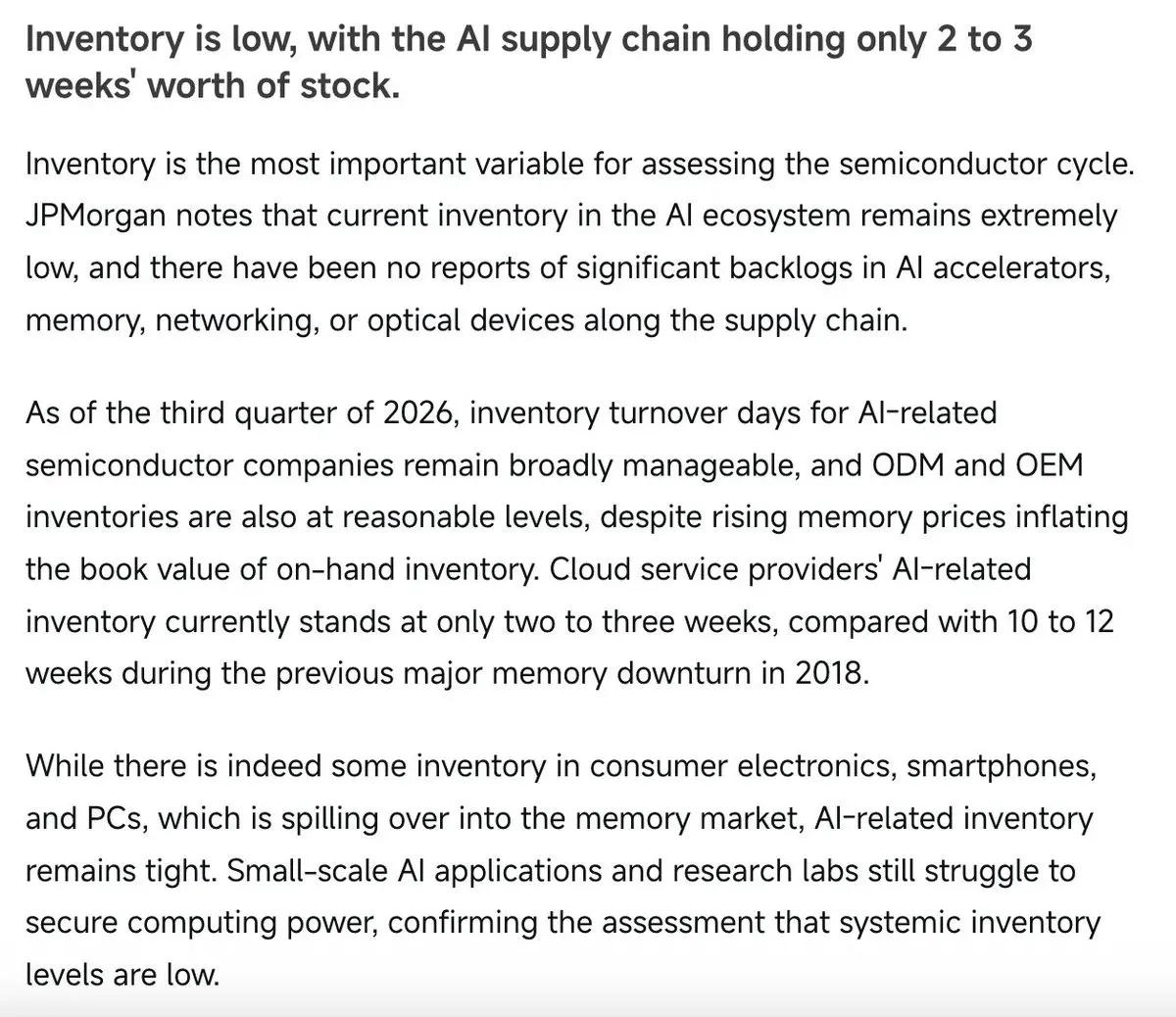
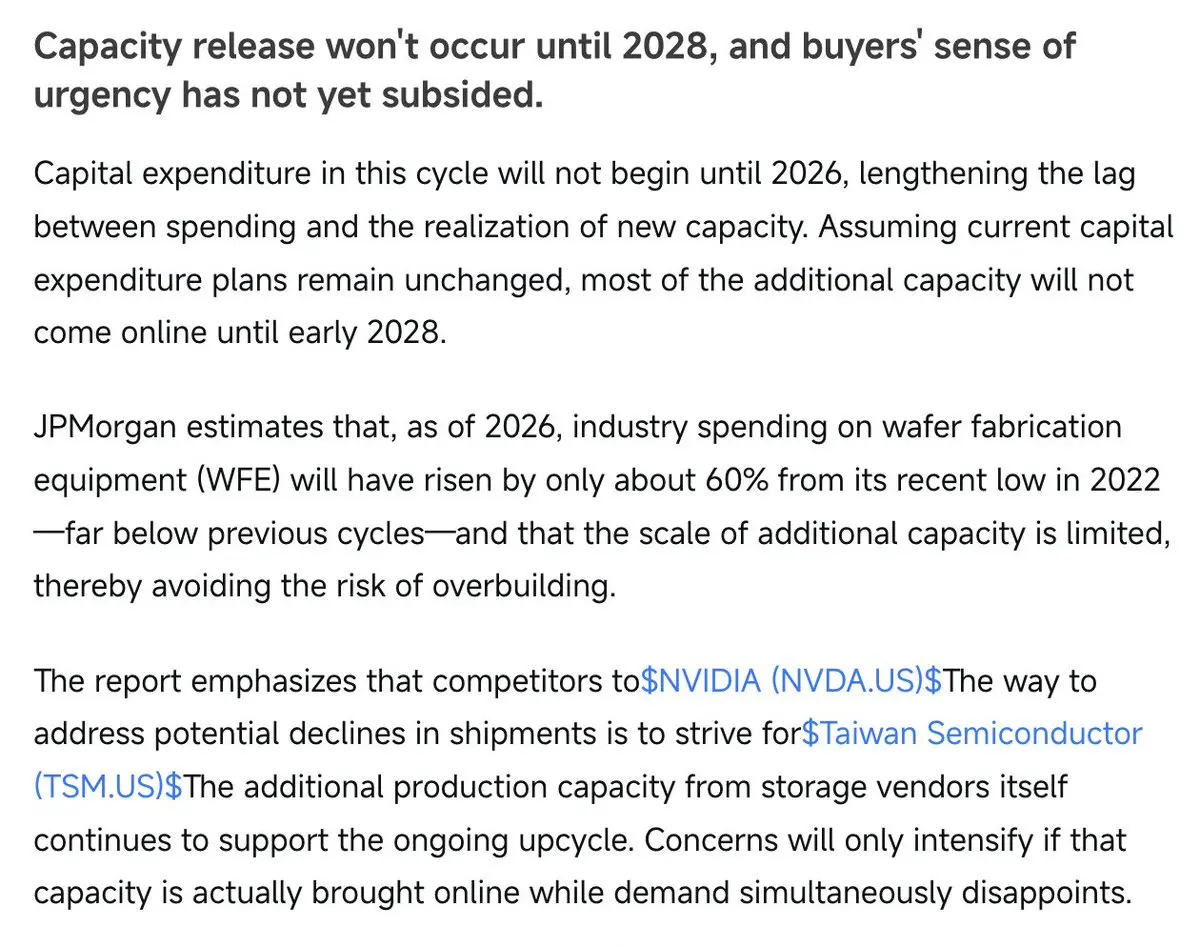
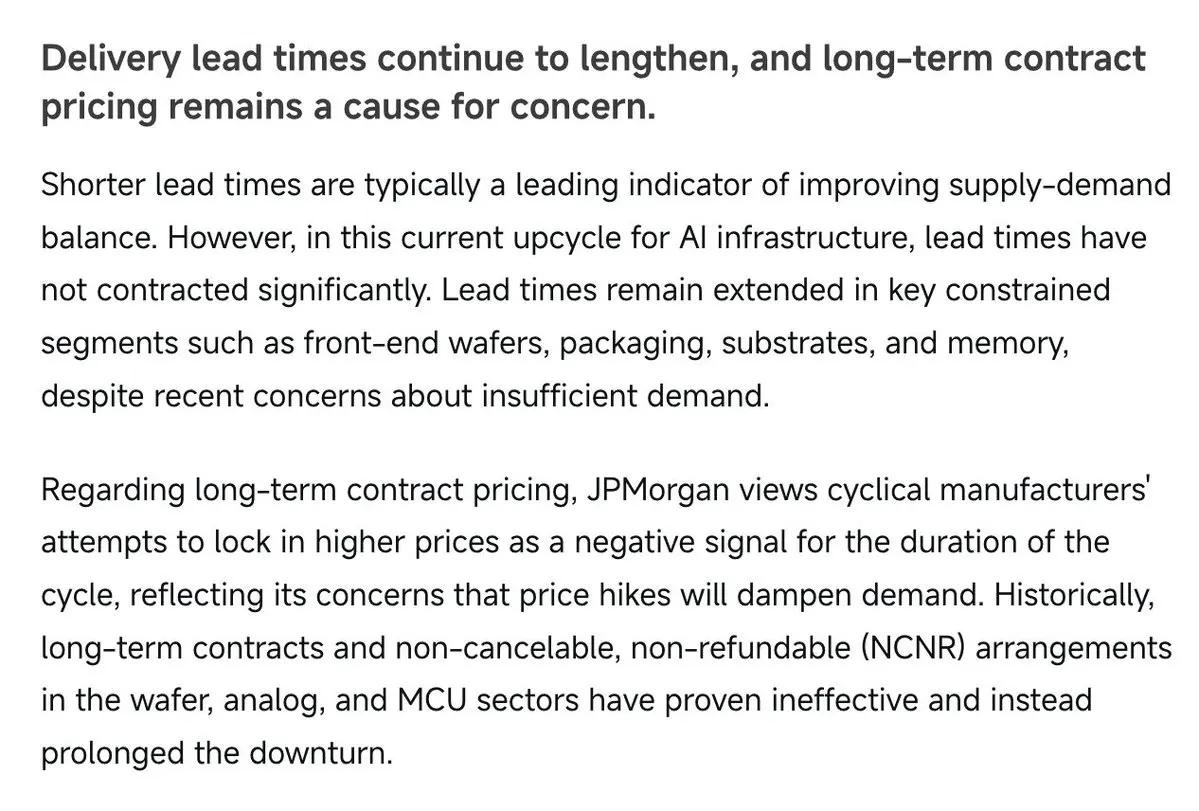
According to JPM, current market pricing for the semiconductor cycle is approaching a "fundamental downtrend" scenario, but the four key indicators—inventory, capacity, lead times, and long-term contract pricing—have yet to exhibit typical peak characteristics.The firm believes that, against the backdrop of structurally driven growth in AI computing demand, even a 5% to 10% softening in certain segments would not be enough to trigger a broad reversal in buy-side sentiment. The sector could remain on an upward trajectory through 2028, and the probability of the significant EPS revisions currently priced into the market over the next three to four months is low.1. InventoryAs of the third quarter of 2026, inventory turnover days for AI-related semiconductor companies remain broadly manageable, and ODM and OEM inventories are also at reasonable levels, despite rising memory prices inflating the book value of on‑hand inventory. Cloud service providers' AI‑related inventory currently stands at only two to three weeks, compared with 10 to 12 weeks during the previous major memory downturn in 2018.2. CapExCapital expenditure in this cycle will not begin until 2026, lengthening the lag between spending and the realization of new capacity. Assuming current capital expenditure plans remain unchanged, most of the additional capacity will not come online until early 2028.JPMorgan estimates that, as of 2026, industry spending on wafer fabrication equipment (WFE) will have risen by only about 60% from its recent low in 2022—far below previous cycles—and that the scale of additional capacity is limited, thereby avoiding the risk of overbuilding.3. Lead TimesShorter lead times are typically a leading indicator of improving supply-demand balance. However, in this current upcycle for AI infrastructure, lead times have not contracted significantly. Lead times remain extended in key constrained segments such as front-end wafers, packaging, substrates, and memory, despite recent concerns about insufficient demand.Regarding long-term contract pricing, JPMorgan views cyclical manufacturers' attempts to lock in higher prices as a negative signal for the duration of the cycle, reflecting its concerns that price hikes will dampen demand. Historically, long-term contracts and non-cancelable, non-refundable (NCNR) arrangements in the wafer, analog, and MCU sectors have proven ineffective and instead prolonged the downturn.$Meta Platforms(META.US) $Microsoft(MSFT.US) $NVIDIA(NVDA.US) $SpaceX(SPCX.US) $Oracle(ORCL.US) $Amazon(AMZN.US) $Alphabet(GOOGL.US)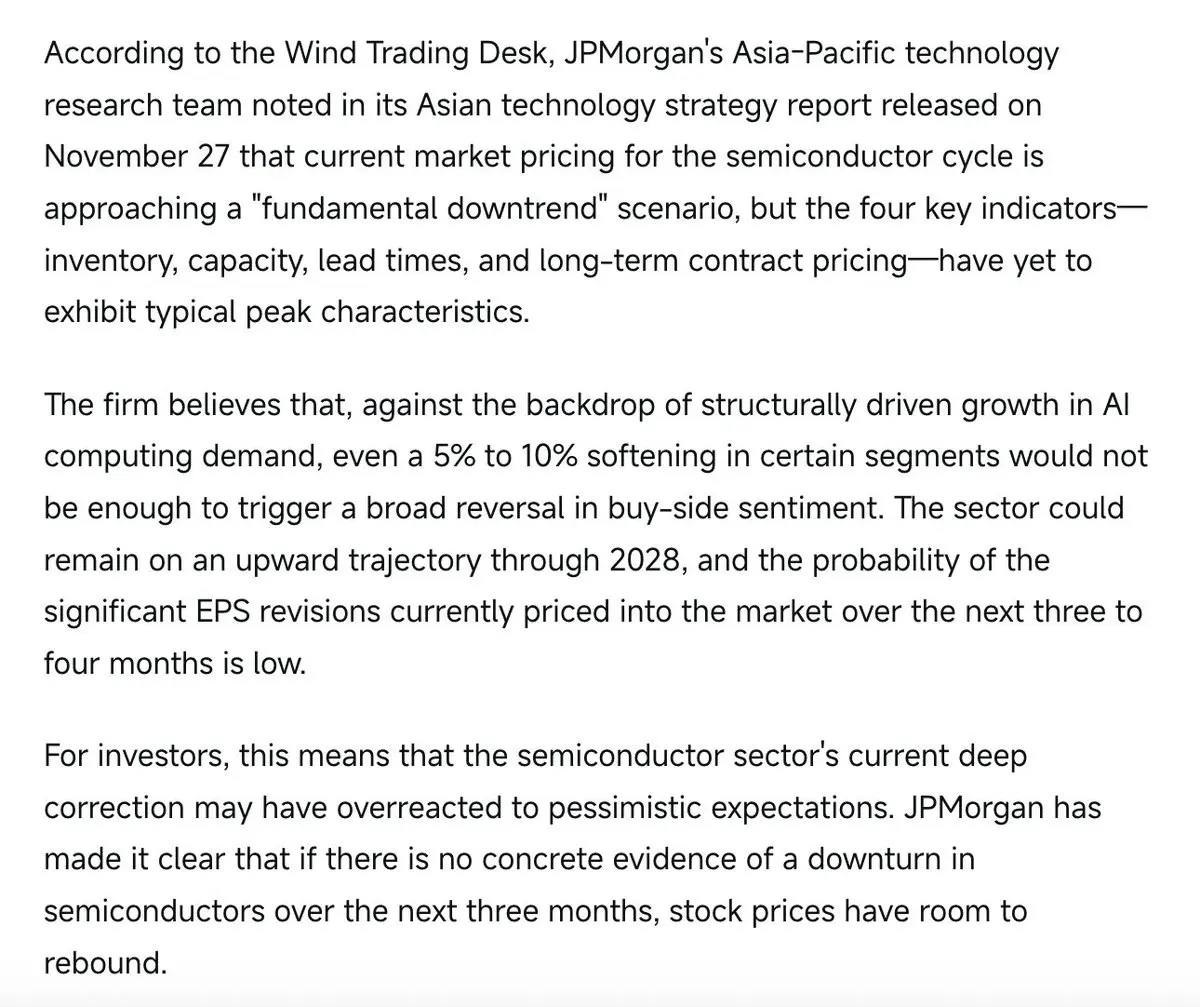
The copyright of this article belongs to the original author/organization.
The views expressed herein are solely those of the author and do not reflect the stance of the platform. The content is intended for investment reference purposes only and shall not be considered as investment advice. Please contact us if you have any questions or suggestions regarding the content services provided by the platform.