

 Posts
Posts Likes Received
Gross profit margin turns positive, is Leap Motor finally crossing the "life and death line"?

Has Leap Motor finally crossed the line of life and death with a successful gross margin turnaround?
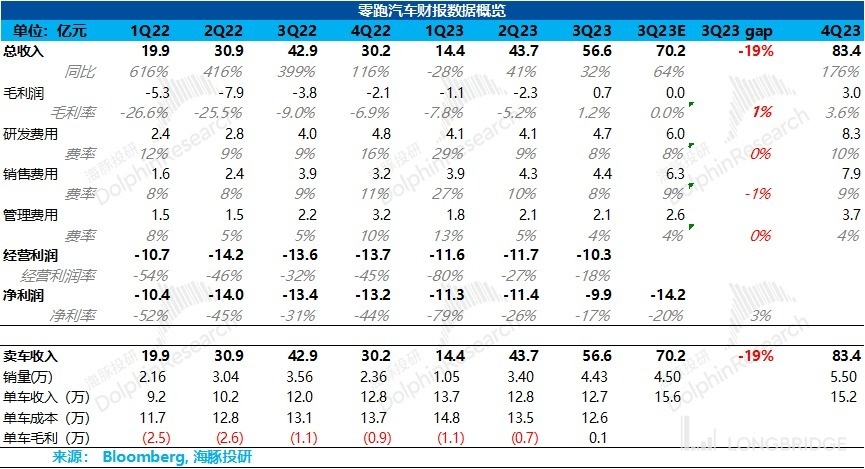
Leap Motor Auto (9863.HK) released its third-quarter earnings report for 2023 after the Hong Kong stock market closed on the evening of October 16th. This time, Leap Motor's gross margin successfully turned positive ahead of schedule, breaking market doubts. Let's take a look at the key information:
1. Gross margin turned positive in the third quarter: The key to the positive turnaround in the gross margin in the third quarter lies in the launch of extended-range models and the cost savings brought by the self-developed technology, which resulted in a MoM increase in the gross margin to 1.2%.
2. Gross margin is expected to continue to rise in the fourth quarter with the launch of super extended-range models: With the launch of two super extended-range models in the C series, the sales proportion of the C series will continue to increase, leading to an increase in unit price. Leap Motor will continue to strengthen the differentiation and competitiveness of pure electric range, which is expected to further increase the delivery volume. With the release of economies of scale, the reduction of amortization and procurement costs, the reduction of sales rebates for dealers, and the improvement of gross margin brought by the hot sales of extended-range versions, there is still room for the gross margin to continue to rise.
3. Release of operating expense leverage effect: The increase in Leap Motor's sales volume has brought about the release of the operating expense leverage effect. Although the sales and management expenses have increased slightly this quarter, they are still very "frugal" compared to peers. In terms of research and development, Leap Motor insists on self-development, but the focus is more on electrification, and the results of intelligence are average. In terms of sales, the company's positioning is more manufacturing-oriented, and the brand strength is still insufficient. The long-term brand upgrade requires the dual efforts of research and development and marketing.
4. Cash flow safety issues still exist: Although Leap Motor's operating cash flow turned positive for the second time this quarter, according to the calculation of the actual cash consumption rate, if there is no continued financing, Leap Motor may still have only a little over a year left. Seeking cooperation with established automakers may be the best solution to Leap Motor's cash flow shortage. Once cooperation is reached, it will not only directly solve the urgent problem of Leap Motor's cash flow shortage, but also open up a high-gross-margin new model for technology monetization. At the same time, the recognition and endorsement of Leap Motor by established automakers will enhance its brand strength, which will be beneficial to Leap Motor in every aspect.
Dolphin Research's overall view:
Regarding Leap Motor, Dolphin Research previously mentioned that the investment opportunity should be when the price is low enough to find a turning point in the positive gross margin, and this turning point opportunity has arrived.
The continued increase in sales of extended-range models and the incremental gross margin brought by the cost reduction from self-developed technology are expected to continue. The success of the "price for volume" strategy and the "increase range to expand sales" strategy make it not difficult to achieve the target of delivering 15,000 to 20,000 vehicles in the fourth quarter.
However, Leap Motor is still struggling with cost-effectiveness and low brand value, coupled with a lack of expertise in internet marketing, resulting in a lack of brand appeal. The long-term brand upgrade still requires the dual efforts of research and development and marketing.However, the issue of Leap Motor's cash flow security still exists. Although the continuous increase in sales and the positive gross profit margin have given the market some confidence, seeking cooperation with traditional automakers can not only solve the cash flow problem but also open up a new high-margin model for technology monetization. Once the cash flow problem is resolved, Leap Motor's stock price safety cushion can truly be established.
Here is a detailed analysis:
1. Gross profit margin finally turned positive, is the future of Leap Motor coming?
1) Gross profit margin turned positive ahead of schedule
As the leader of the second-tier new forces, Leap Motor has always been criticized by the market for its consistently negative gross profit margin. However, this quarter, Leap Motor successfully broke through the market's doubts. The company had previously expected to achieve a positive gross profit margin by the end of the year, but this time it was achieved in the third quarter.
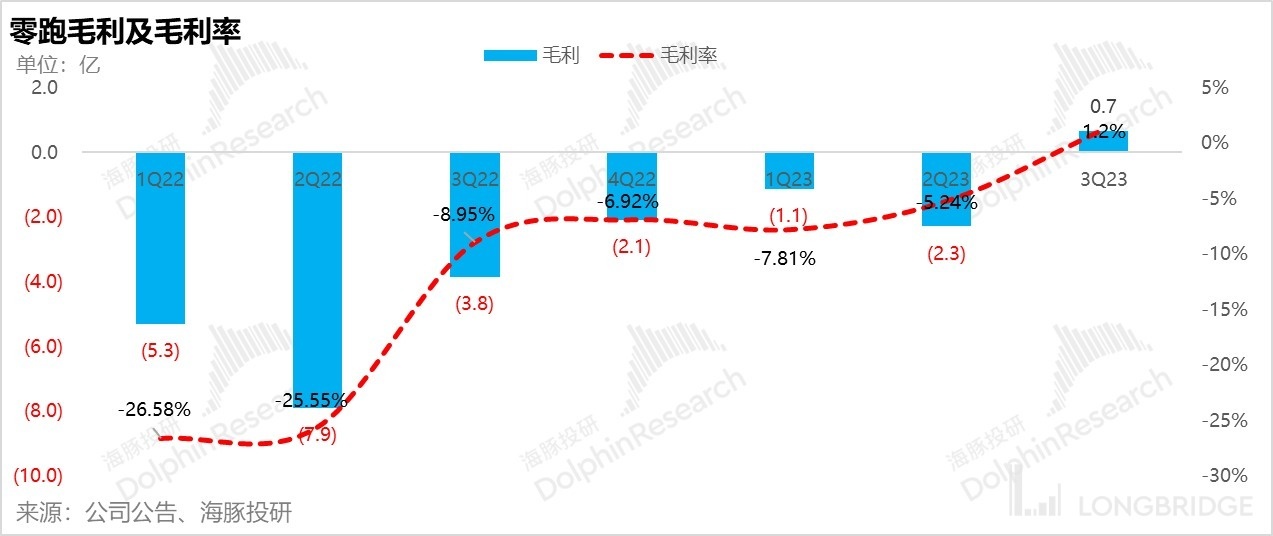
In the third quarter, Leap Motor's automotive business gross profit margin was 1.2% (excluding service business), an increase of 6.4% compared to the gross profit margin of -5.2% in the first quarter. The increase in gross profit margin is mainly due to cost savings in per vehicle.
As Dolphin Research mentioned in the previous earnings report, Leap Motor includes the sales rebate given to dealers in the per vehicle price in its accounting treatment. Once sales volume increases significantly, Leap Motor can not only enjoy fixed amortization expenses and purchase premiums but also provide dealers with lower sales rebates to further improve the level of gross profit margin. The elasticity of gross profit margin is even greater.
According to the disclosed sales rebate of Leap Motor, it is around 8%-10%. Based on this calculation, the actual gross profit margin in the third quarter is actually 8.5%, which is even slightly better than Xiaopeng Motors.
2) Strong sales of extended-range models + significant reduction in per vehicle cost through independent research and development
Dolphin Research will start by analyzing the per vehicle price and cost to explain the surprising gross profit margin of Leap Motor this quarter:
a) Per vehicle average price remained stable:
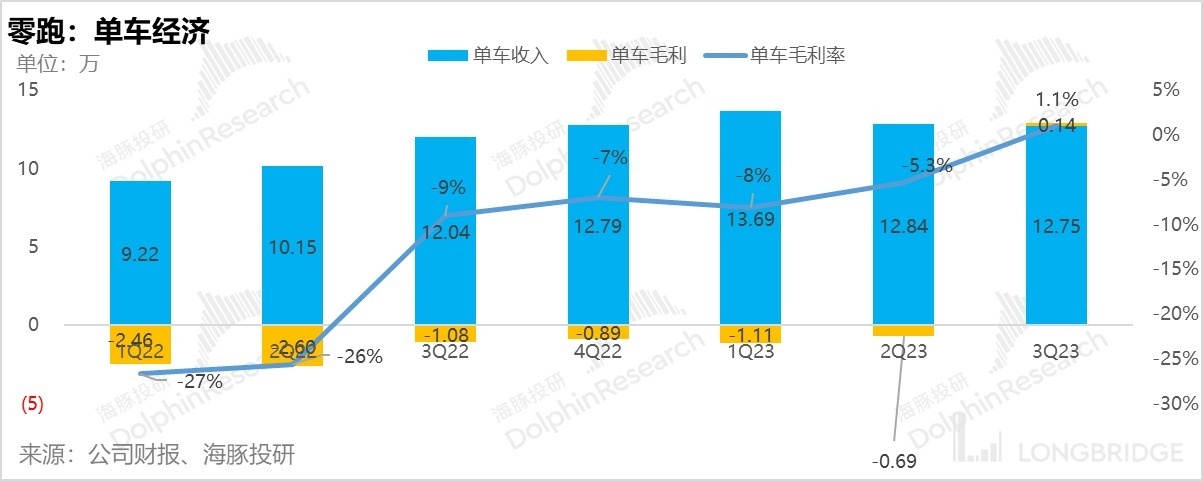
In the third quarter, the average price per vehicle was 127,000 yuan, slightly lower by 1,000 yuan compared to the second quarter, but still significantly lower than the market's expectation of 156,000 yuan. The decrease in price mainly came from the decrease in the proportion of C series deliveries this quarter and the price reduction of some C series models.
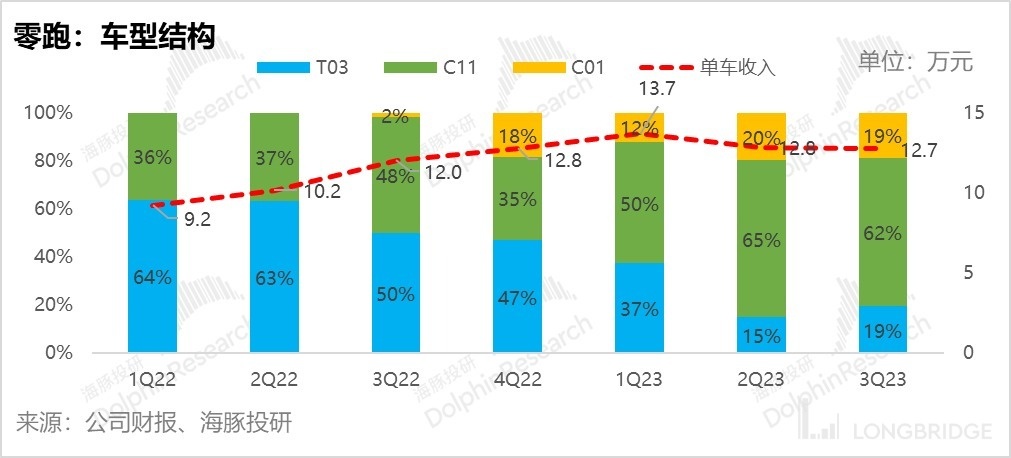
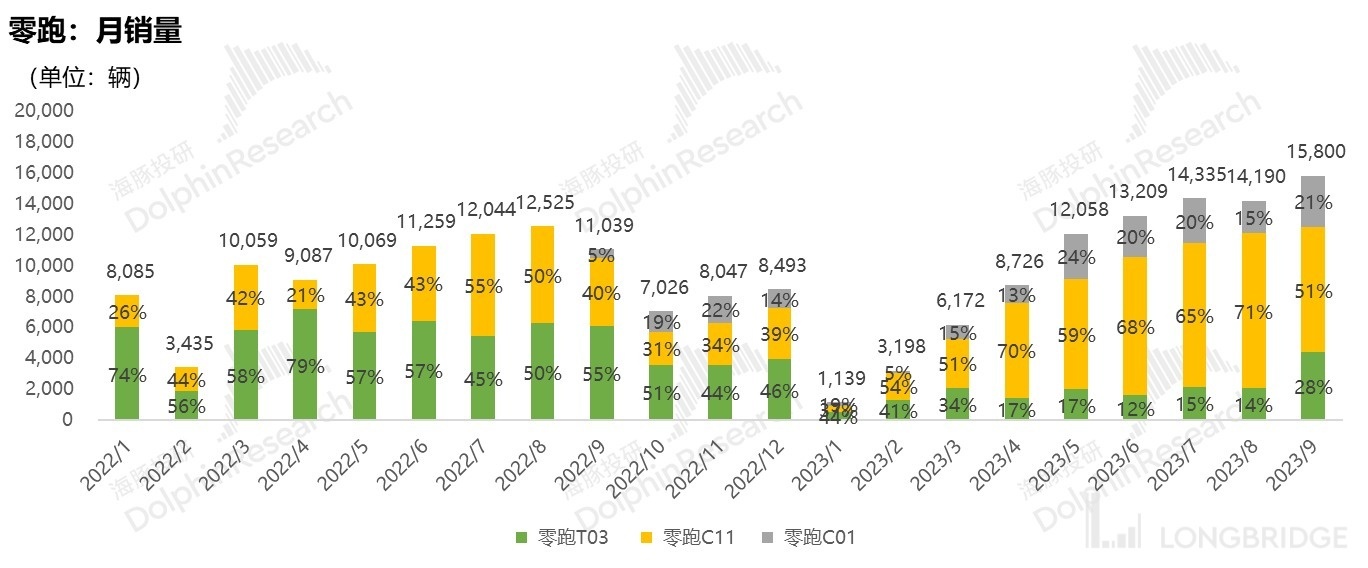
In terms of sales structure, the proportion of C01+C11 priced around 150,000-200,000 yuan decreased from 85% in the second quarter to 80.6% in the third quarter. The decrease was mainly due to the company's limited-time discount of up to 10,000 yuan for the T03 low-priced small car in September.
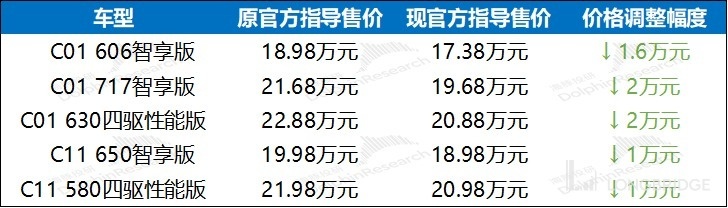
In addition, Leap Motor publicly announced a price reduction for some models in the C series in early August, including three C01 models and two C11 models, with an average price reduction of 5%-10%.
However, Dolphin Research estimates that the decrease in sales rebates given to dealers due to the increase in sales volume offset these two unfavorable factors, resulting in a per vehicle price that is basically the same as the second quarter.
b) Significant cost savings for bicycles:
The cost of bicycles in the third quarter was 126,000 yuan, a decrease of 9,000 yuan compared to the previous quarter. The improvement in gross margin this quarter is mainly due to the decrease in bicycle costs.
In addition to the dilution of depreciation and amortization expenses brought about by the increase in sales volume, as well as the decrease in the cost of lithium carbonate, Dolphin Research estimates that the significant cost savings in this quarter's bicycles mainly come from the launch of the Leap Motor extended-range model and the cost reduction brought about by the self-developed technology of Leap Motor (the performance of Leap Motor will disclose a cost reduction of about 15% this year due to technological cost reduction).
The launch of the Leap Motor extended-range model has a positive impact on gross margin improvement. Because the price range focused by Leap Motor is between 150,000 and 200,000 yuan, pure electric models in this price range face significant cost and gross margin pressures due to lithium battery costs.
According to the fact that battery costs account for about 40% of the total cost, and the extended-range version developed on this basis reduces the battery capacity by about half compared to the original pure electric version, it is estimated that the extended-range version will bring a decrease of 20,000 to 30,000 yuan in BOM cost per bicycle. Currently, the price of the extended-range version is only 4,000 to 6,000 yuan cheaper than the pure electric version, which can bring an increase in gross margin of 16,000 to 24,000 yuan.
c) Positive gross margin for bicycles:
Although the average price of bicycles has decreased by 10,000 yuan, the cost savings of 90,000 yuan have resulted in a gross margin improvement of 1.2% compared to the previous quarter, achieving a positive gross margin for the first time.
3) Gross margin expected to continue to increase in the fourth quarter with the launch of the super extended-range model
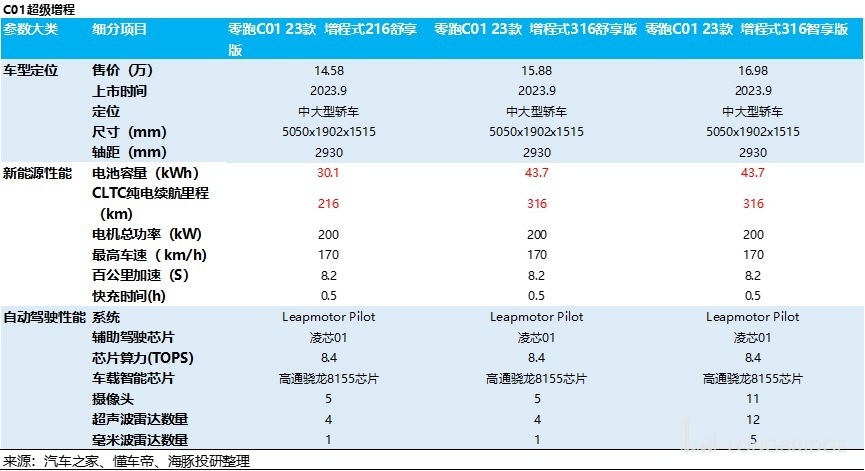
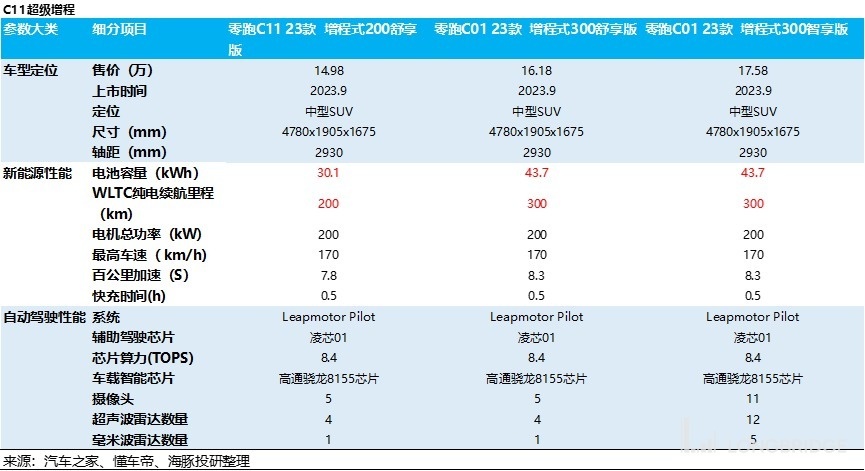
Following the launch of the C11 extended-range model in March, Leap Motor seized the advantage of addressing range anxiety for extended-range vehicle owners, resulting in continuous sales growth. In September, Leap Motor introduced the C01 and C11 super extended-range models, further strengthening this advantage. The high-end version of the extended-range model has increased the pure electric range to over 300 kilometers (CLTC cycle), compared to the general range of 100 to 200 kilometers for extended-range vehicles in the market. Leap Motor has achieved a differentiated advantage in the competition of extended-range vehicles.
For Leap Motor, the keyword for 2023 is "increasing sales volume." The company's monthly sales target for the fourth quarter is 15,000 to 20,000 units, and the extended-range models will be key to achieving volume expansion and continuous gross margin improvement.
Leap Motor has previously stated that there is still room for further price reductions as competition intensifies. The newly launched C11 super extended-range model is also a "hidden price reduction," with prices slightly lower than the previous model (the 300 Comfort and 300 Smart versions have decreased by 4,000 yuan and 10,000 yuan, respectively), but it brings an increase in range.However, the increase in battery life is not achieved by replacing larger batteries, but by replacing lighter and more efficient engines and simultaneously optimizing the efficiency of the electric drive system to reduce energy consumption. This not only saves costs but also improves product competitiveness, and the gross profit margin is not affected by the price reduction.
With the launch of two super extended-range models in the C series, the sales proportion of the C series will continue to increase, and the sales structure is expected to further improve, resulting in an increase in unit price.
The strengthening of Leap Motor's differentiated competitiveness in extended-range vehicles is expected to further increase delivery volume. With the release of economies of scale, reduced amortization and procurement costs, reduced sales rebates for dealers, and improved gross profit due to the hot sales of extended-range versions, there is still room for the gross profit margin to continue to rise. In September, Leap Motor achieved a gross profit margin of 5%, and the expected gross profit margin for next year is above 5%-10%.
Third, the successful implementation of the "price for volume" strategy and the "use of extended-range to expand sales growth" strategy continue to drive revenue growth.
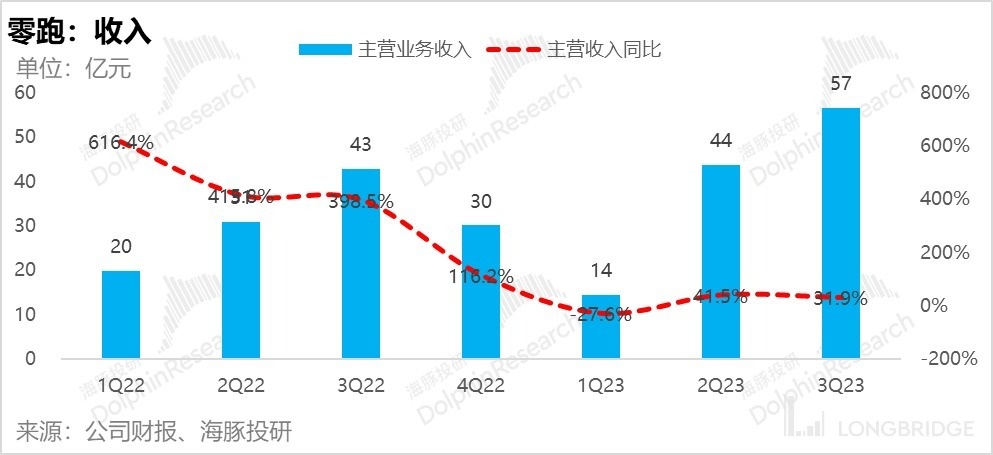
In the third quarter, Leap Motor's total revenue was 5.66 billion, a year-on-year increase of 32%, but lower than the market's expected 8.34 billion, mainly due to the significantly lower than expected single vehicle revenue.
Although single vehicle revenue declined on a MoM basis, it increased by 6% YoY, mainly due to the hot sales of the C series. The sales proportion of the C series priced between 150,000 and 210,000 has increased from 50% in the third quarter of last year to 80.5% in this quarter, reflecting Leap Motor's successful transition from the T series to the C series.
The YoY increase in revenue mainly comes from the increase in sales volume. In this quarter, the sales volume was 44,300 vehicles, a YoY increase of 24.5%, and the delivery volume has continued to increase for 9 consecutive months. In September, the sales volume reached 15,800 vehicles, surpassing Xiaopeng and NIO to rank second among new energy vehicle companies, reflecting the success of Leap Motor's "price for volume" strategy and the "use of extended-range to expand sales growth" strategy.
In the fourth quarter, Leap Motor's delivery target is 15,000 to 20,000 vehicles. Currently, production capacity is not a limitation for Leap Motor, as the production capacity of the Jinhua factory has been upgraded to 30,000 vehicles per month. The key lies in the hot sales of the two super extended-range models in the C series. However, based on the current popularity and growth rate, Dolphin Research estimates that achieving this target will not be difficult.
At the same time, Leap Motor also plans to launch the "Price Butcher Edition" C10 at the end of the year, with an expected price range of 140,000 to 160,000. It is positioned as a mid-to-large-sized SUV and includes both pure electric and extended-range versions. It is built on the Leap 3.0 architecture and may be equipped with lidar, advanced autonomous driving, Qualcomm 8295 chip, and 800V fast charging architecture.It can be said that the configuration is fully loaded, further promoting the upgrade of the Leap Motor brand, and the Leap Motor new model cycle is expected to begin.
4. Release of Operating Expense Leverage
In terms of research and development, Leap Motor insists on self-research in all areas, but self-research focuses more on electrification, and the achievements in intelligence are average. In terms of sales, Leap Motor is more inclined to be a manufacturing-oriented company, and dealers account for almost 86% of the store system (as of the end of 2022). Compared with first-tier new forces, Leap Motor's research and development and sales expenses can be described as very "stingy".
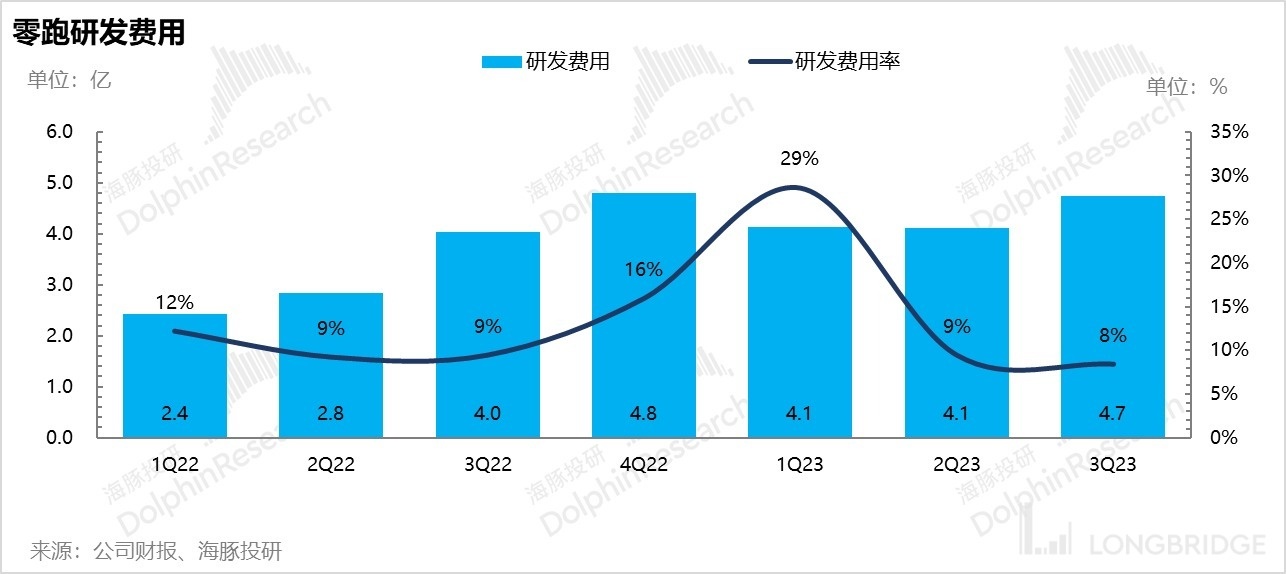
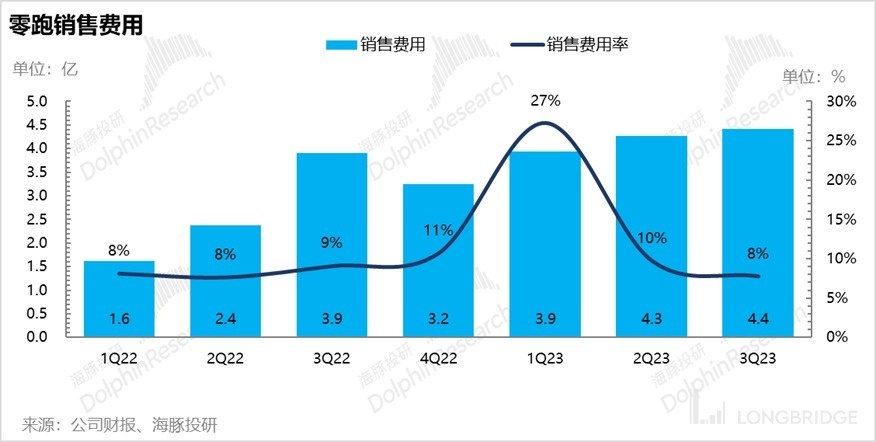
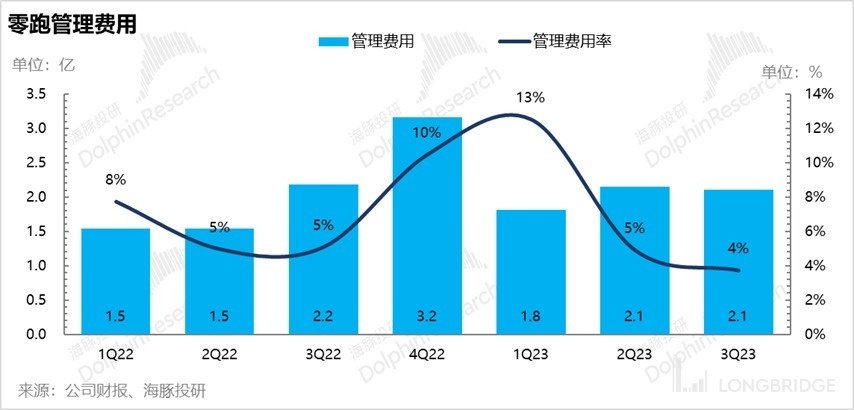
In terms of operating expenses this quarter, the increase in Leap Motor's sales has brought about the release of leverage, and the operating expense ratio has decreased from 24% in the previous quarter to 20% this quarter.
1) R&D expenses:
In terms of research and development, Leap Motor insists on self-research in all areas. In the key three-electric system (except for battery cells), intelligent cockpit, intelligent driving hardware, and algorithms, all are self-developed. In the third quarter, R&D expenses were 470 million yuan, a slight increase of 60 million yuan compared to the previous quarter, but lower than the market expectation of 600 million yuan.
In the third quarter, Leap Motor's R&D investment mainly focused on the electrification and development of new models. With the self-research in all areas, Leap Motor accounted for more than 30% of the BOM cost. The company is also committed to cost reduction through technology, such as the release of the integrated four-leaf clover electronic architecture and CTC 2.0 version, and platform sharing to achieve economies of scale, thereby having the confidence to engage in price wars and withstand the production capacity risks caused by industry component shortages.
However, in terms of intelligence, Leap Motor is still far behind leading new forces such as Xiaopeng. Although the self-developed intelligent driving chips and algorithms are the main focus, the computing power of the intelligent driving chip Lingxin 01 currently only reaches 8.4 TOPS. Currently, neither urban NOA nor highway NOA has been implemented. However, Leap Motor is already working hard to catch up. It is expected that the high-end version of the new model next year will be equipped with the Orin X chip, and the highway NOA and urban commuting system will also be implemented next year.
Leap Motor also insists on building its own factories. The Leap Motor factory in Jinhua currently has a monthly capacity of 30,000 vehicles, and the Qiantang factory is also under construction, with a planned capacity of 400,000 vehicles. The capacity is completely sufficient.
2) Sales expenses:
Leap Motor's sales expenses in the third quarter were 440 million yuan, which was basically flat compared to the previous quarter, with a sales expense ratio of 8%. The sales expenses in this quarter were mainly used for the launch of the C01 and C11 super extended range versions.
The company has made changes in its sales strategy, no longer simply pursuing the expansion of stores (the number of stores will increase by an additional 20% this year), but focusing more on increasing the sales volume per store and adopting a survival of the fittest model for dealers.However, the absolute value of Lixiang's sales expenses has always been relatively low among new energy companies. On the one hand, this is because the company is more focused on being a manufacturing company and has fewer sales personnel. On the other hand, the company mainly adopts a self-operated + franchise sales model, with dealers as the main force, and the rebates given to dealers are deducted from the revenue side rather than recorded as sales expenses.
However, this manufacturing-oriented positioning has obvious drawbacks. Although Lixiang's products are highly cost-effective in the same price range, the low investment in marketing expenses has resulted in insufficient brand power for the company. At the same time, the company's strategy is to first sink and then upgrade the brand, which is obviously more difficult compared to NIO and Xpeng, who have established themselves with high-priced cars before exploring lower prices.
The company's current strategy is to enhance brand power through improving product quality and to gain survival space and time through a price-for-volume strategy. However, this strategy has the drawback that it will be difficult to further increase product prices in the medium and long term. In order to achieve brand upgrade, the company not only needs high product quality brought by R&D investment, but also needs dual efforts in marketing.
3) Operating expenses:
In this quarter, operating expenses were 210 million yuan, which remained flat compared to the previous quarter, but the operating expense ratio decreased from 5% in the previous quarter to 4% in this quarter due to the increase in sales volume.
V. Improved profitability, significant reduction in losses
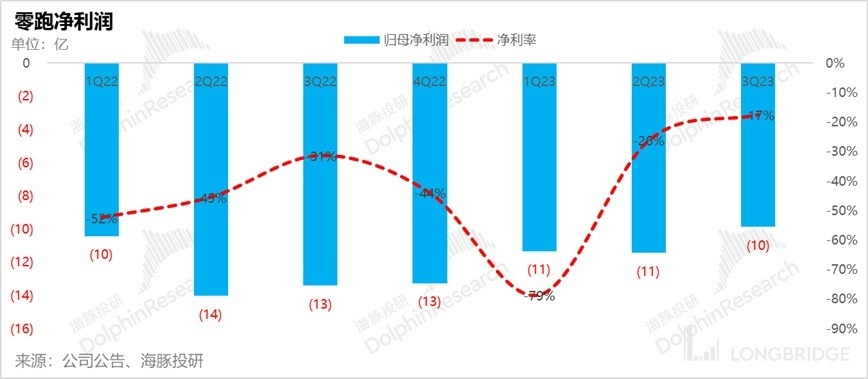
Lixiang's net loss in the third quarter was 986 million yuan, and the net loss ratio continued to improve from -26% in the second quarter to -17%, achieving a significant reduction in losses. The key to the reduction in losses lies in the improvement of gross profit margin and the dilution of R&D and sales management expenses brought by the increase in sales volume, resulting in the release of operating leverage.
VI. Can the cash flow safety issue be resolved?
Lixiang's cash and cash equivalents (including restricted cash) in the third quarter were 11.6 billion yuan, an increase of 1.45 billion yuan compared to the second quarter's 10.2 billion yuan. The market has always been most concerned about Lixiang's liquidity issue, and in this quarter, Lixiang successfully achieved positive operating cash flow for the second time. However, the operating cash flow of 1.4 billion yuan in this quarter is lower than the 2.76 billion yuan in the previous quarter.
However, Dolphin Research has some doubts about the 1.4 billion yuan of operating cash flow, as Lixiang's net profit is still in a continuous loss state. According to Dolphin Research's adjustment of net profit to include depreciation, amortization, and equity-based payment expenses, it is only around -700 million yuan, but the company did not provide a specific explanation. Dolphin Research estimates that most of the 2.1 billion yuan difference comes from advances to suppliers (more likely sister companies/affiliated companies). If the actual cash consumption rate is calculated, without further financing, Lixiang may only have a little over a year left, and it will take 25 years for Lixiang to achieve its self-planned breakeven point.Sales volume has always been the core of maintaining cash flow for car companies. Once sales volume picks up and gains market recognition, financing becomes a natural outcome and also the hope for Leap Motor's survival. Therefore, Leap Motor has always adhered to the strategy of "price for volume" to lower prices and promote sales.
However, Leap Motor's gross profit margin has successfully turned positive this quarter, coupled with continuous growth in sales volume for 9 consecutive months. This undoubtedly gives the market some confidence and reflects the high execution behind the successful adjustment of Leap Motor's strategy.
In addition, Leap Motor can also seek cooperation with established car companies to obtain cash flow and enhance brand power through their recognition. Following Xiaopeng's partnership with Volkswagen, monetizing through technological cooperation has become a new profit model for car companies.
Leap Motor has stated that it currently has four types of technology output cooperation models. The first is the technology output of the main central supercomputer and controller based on the electronic and electrical architecture. The second is the sharing of battery and electric drive technology based on the electronic and electrical architecture. The third is the sharing of technology based on the lower body of the vehicle, including the three-electric system and electrical architecture. The fourth is the sharing of technology at the vehicle platform level. Technological output at this level has higher profit margins compared to simple car sales.
It has been reported that Stellantis and Volkswagen's brand, Jetta, are currently in talks with Leap Motor for cooperation. Compared to other new forces, Leap Motor is more in need of cash flow, making the demand for this cooperation greater. Leap Motor recently announced that it has the ability to export individual core components and vehicle architectures, and has established technological cooperation with two overseas brands.
Once the cooperation is reached, it will not only directly solve Leap Motor's urgent cash flow shortage, but also open up a new high-margin model for technological monetization. At the same time, the recognition and support from established car companies will enhance Leap Motor's brand power, bringing no harm to Leap Motor.
References to Dolphin Research's previous articles:
August 25, 2023: "Leap Motor: Unable to Sustain Positive Gross Profit Margin, When Will it 'Lead the Pack' in the Car Circle?" Link
September 29, 2022: "Leap Motor: After a 30% Plunge in IPO, Is the 'Redmi Version of Xiaopeng' a Trap or a Real Opportunity?" Link
Risk disclosure and statement for this article: Dolphin Research Disclaimer and General Disclosure
The copyright of this article belongs to the original author/organization.
The views expressed herein are solely those of the author and do not reflect the stance of the platform. The content is intended for investment reference purposes only and shall not be considered as investment advice. Please contact us if you have any questions or suggestions regarding the content services provided by the platform.
