

 Posts
Posts Likes Received
TikTok's absence brings a turnaround, is the spring of SEA coming?

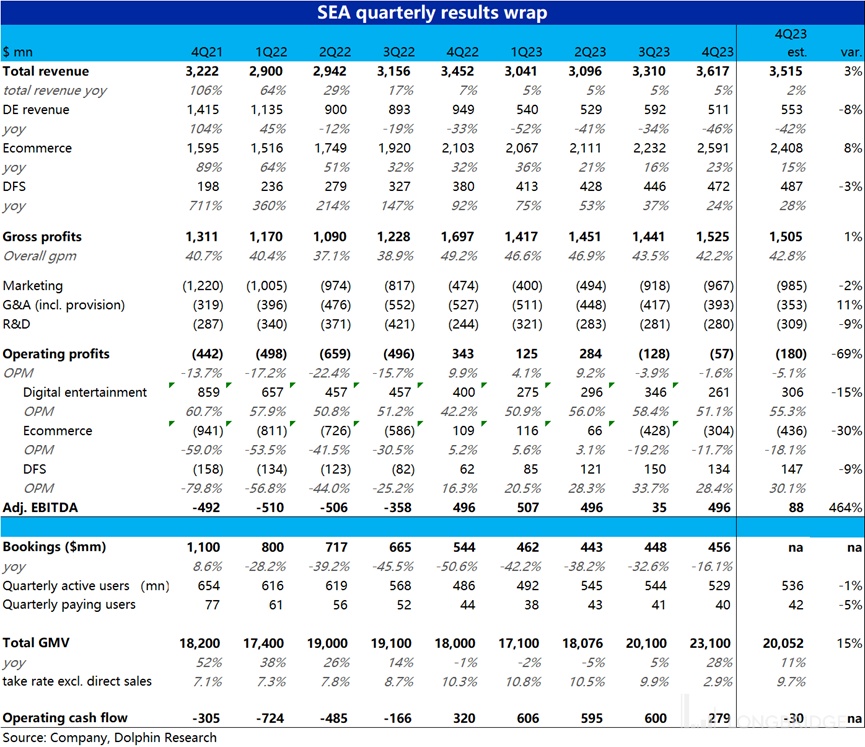
On the evening of March 4th, before the U.S. stock market opened, SEA Donghai Group released its 2023 fourth-quarter earnings report. Boosted by the e-commerce sector this quarter, the revenue and profit performance exceeded expectations compared to the lackluster results of the previous quarter. The key points are as follows:
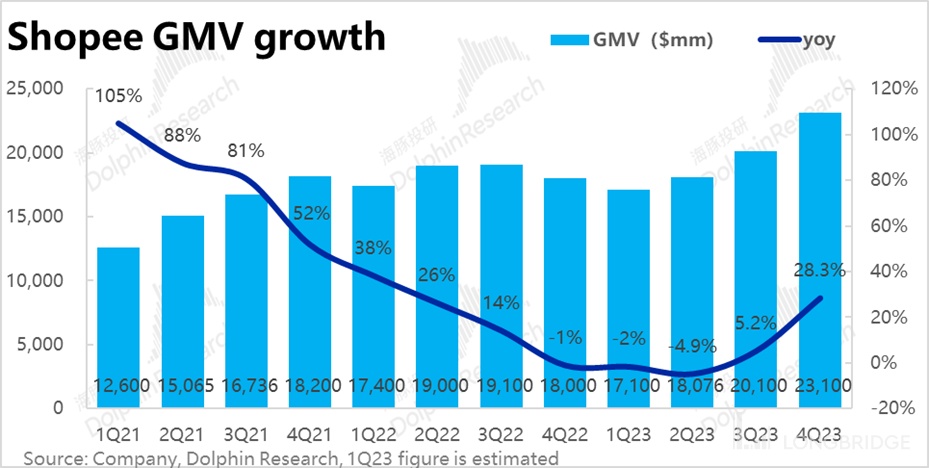
1. Absence of Tiktok, Strong Growth during Dividend Period for Sea: In the fourth quarter, Sea achieved a GMV of $23.1 billion, with a staggering year-on-year growth rate of 28%, far exceeding the market's average expected growth rate of 11%. However, the actual expected growth rate closely tracked by major institutions is generally between 20% to 25%, although the magnitude is no longer exaggerated, Sea still managed to beat expectations.
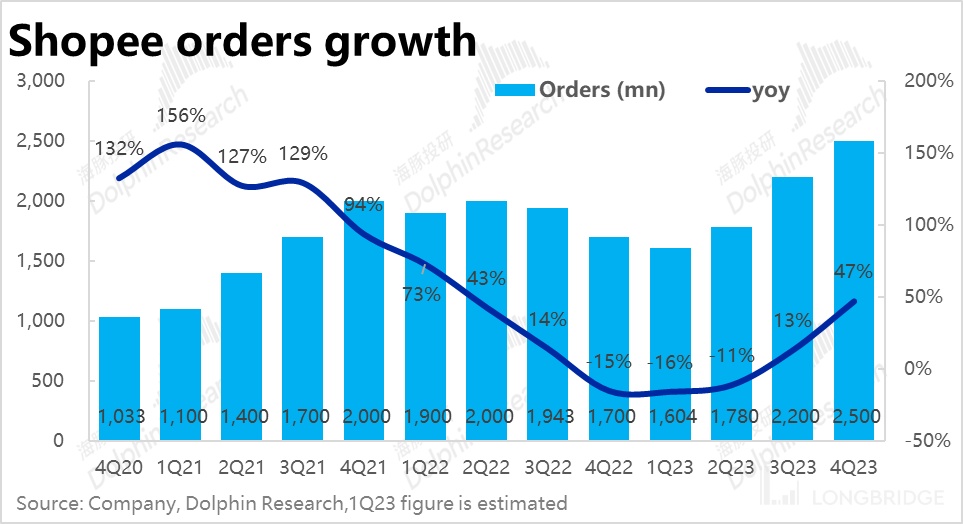
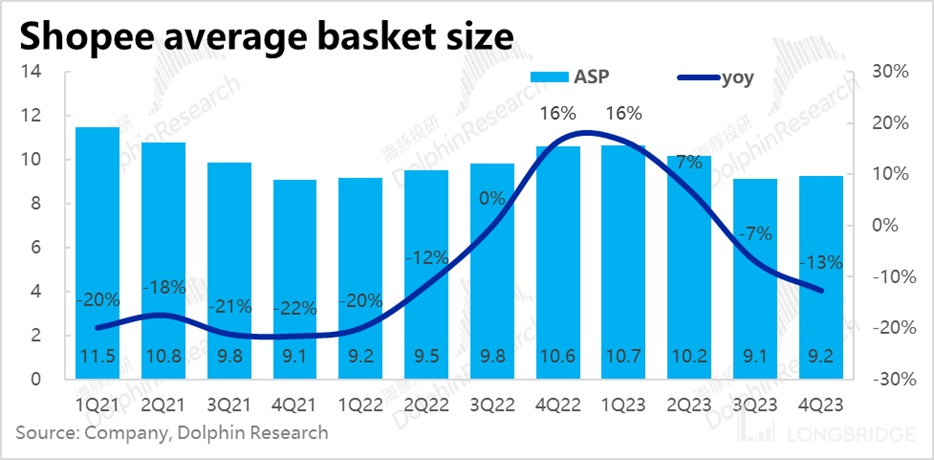
Breaking down the price and volume, the order volume in this quarter surged by 46%, while the average unit price decreased by 13% year-on-year to $9.2. It can be seen that Sea opted for low-price promotions to drive traffic and seize market share during this window of opportunity.
Due to the strong growth in GMV, Sea achieved revenue of $25.9 billion this quarter, with a rebound in year-on-year growth to 23%. Additionally, the monetization rate of the core marketplace increased by 0.1 percentage points to 9.9% compared to the previous quarter, which also benefited revenue.
Dolphin Research believes that Tiktok Shop was completely shut down again from the end of September to December 2023, creating a good window of opportunity for Sea to seize the market, which Sea successfully capitalized on.
2. New Game Release, Can Garena's Bottoming Period End? User data continues to decline, with a decrease of approximately 15 million active users and a slight decline of 1 million paying users compared to the previous quarter. However, the year-on-year decline in revenue has narrowed to 16% as it passes through the high base period, with a 1.7% increase compared to the previous quarter. Although still at the bottom, there are initial signs of a turnaround.
The main improvement is that the revenue contribution of the new game Black Clover M released by Garena in the fourth quarter has reached 13%. This finally alleviates the problem of Garena relying solely on Free Fire and Arena of Valor, the two old games, lacking new game blood. It creates an opportunity for a rebound in the gaming sector.
3. SeaMoney Continues High-Quality Steady Growth: SeaMoney achieved revenue of $470 million, with a 24% year-on-year growth. Although there is a trend of slowing down, the absolute growth rate is still quite considerable. In terms of operational data, the outstanding loan balance for this quarter was $2.5 billion, a slight increase from the previous quarter's $2.4 billion. While growing, the bad debt ratio of over 90 days remains at 1.6%, maintaining a low level despite the growth, indicating good growth quality. SeaMoney's business was disclosed second in the earnings report, indicating the company's emphasis on this sector, second only to the e-commerce business.
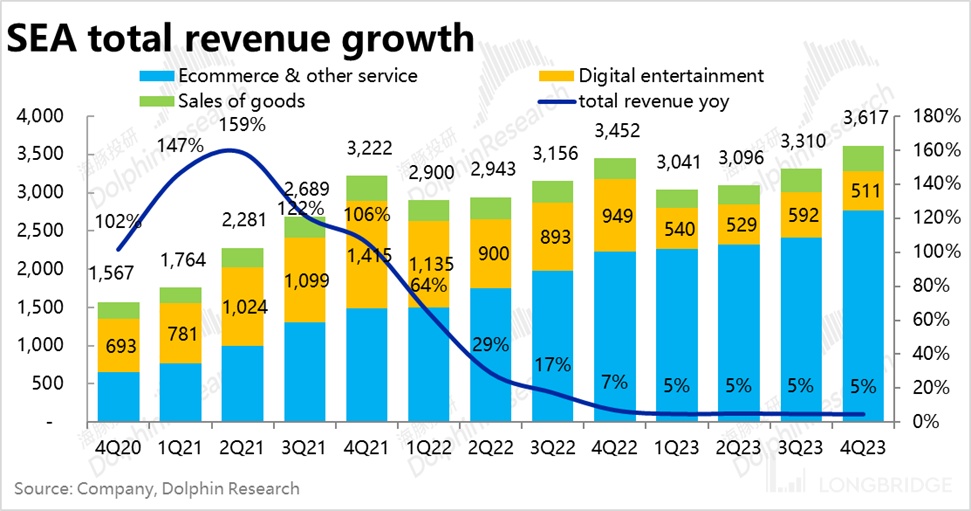
4. Overall Performance: Revenue Exceeds Expectations, Losses Less Than Expected: This quarter, Sea achieved a total revenue of $3.62 billion, exceeding market expectations by 3%, mainly driven by the e-commerce sector's performance surpassing expectations. However, due to new game investments in the Garena sector and margin pressures during low-price promotions in the e-commerce sector, the actual gross profit of $1.53 billion decreased by 10% compared to the same period last year.
On the expense side, with increased investments in e-commerce, gaming, and financial sectors, Sea's marketing expenses for the quarter were $970 million, a MoM increase of nearly $50 million, slightly lower than the market's expected $990 million. Despite the revenue growth, the expense ratio decreased by 1%, and both management and R&D expense ratios also declined MoM.
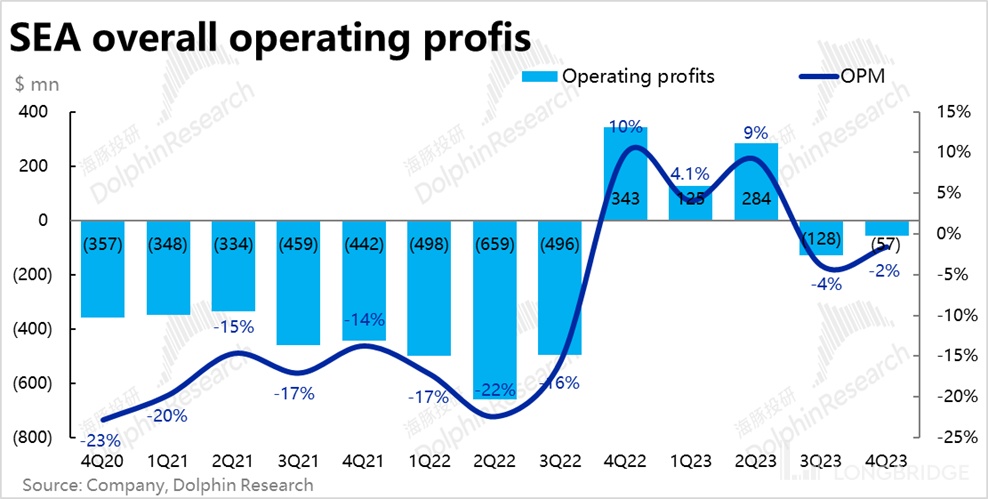
Ultimately, the company recorded an operating loss of $57 million, which was less than the expected $180 million loss, indicating that expenses did not significantly expand despite increased investments in business operations.
5. E-commerce Sector: Increased Revenue and Reduced Losses: In terms of sector profitability, the e-commerce sector recorded an operating loss of $300 million this quarter. Although still in the red, the loss decreased MoM despite rapid GMV growth, significantly lower than the expected $440 million loss, showing a positive trend of increased revenue and reduced losses.
The gaming sector achieved an operating profit of $260 million this quarter, lower than the expected $310 million. This could be attributed to lower revenue recognition and investments in new games leading to the decline in profits.
The DFS financial sector contributed a profit of $130 million, a MoM decline of about 11%, lower than the expected $150 million, indicating a significant decline in profit margins. It is evident that the positive contribution mainly came from the e-commerce sector's reduced losses.
Dolphin Research Insights:
Overall, Sea's previous major flaws or issues included: 1) continuous decline in gaming sector users and revenue, lack of new games, and a lack of new revenue sources after the aging of existing games; 2) intensified competition in the Southeast Asian e-commerce market due to TT Shop, Lazada, and Temu, leading to stagnant growth and profitability for Sea.
However, this quarter, on the growth front, during the dividend period when TT Shop was banned, Sea seized the opportunity by increasing investment and promoting live streaming e-commerce, significantly boosting growth. SeaMoney continued its high-quality growth momentum, while the struggling Garena sector, although still at the bottom, showed initial signs of improvement with the release of new games and addressing product line obsolescence issues. On the profit side, although the e-commerce and financial sectors saw a decline in operating profit this quarter due to the release of new games and increased marketing expenses, falling short of market expectations. However, with competitors absent, the e-commerce sector saw a narrowing of losses despite its rapid growth, a perfect scenario of increased revenue and reduced losses.
In terms of pace, the ban on TT Shop was a positive factor last Q4, but the market did not react. It wasn't until the end of January this year when major overseas analysts began to promote the stock that the market started to react, driving the stock price up. This quarterly report serves as a validation and a signal for hesitant investors to enter the market.
However, it is worth noting that the dividend period from the ban on TT Shop is short-lived. The competition among TikTok, Alibaba, and Pinduoduo's Temu in Southeast Asia will likely become a norm rather than a temporary situation. After the window of opportunity closes, intensified competition is a high probability event.
During the company's performance reversal cycle, it is still necessary to carefully monitor the competitive prospects of the e-commerce market in Southeast Asia.
The following is a detailed interpretation of the financial report:
1. With TikTok absent, Sea seizes the dividend period for strong growth
By the end of September 2023, TikTok Shop was completely banned by the Indonesian government. In December, TikTok officially announced the acquisition of Tokopedia, re-entering Indonesia. Therefore, in the entire last quarter of last year, with the complete absence of TT Shop, Sea seized the opportunity to increase promotion and countermeasures such as live streaming for sales.
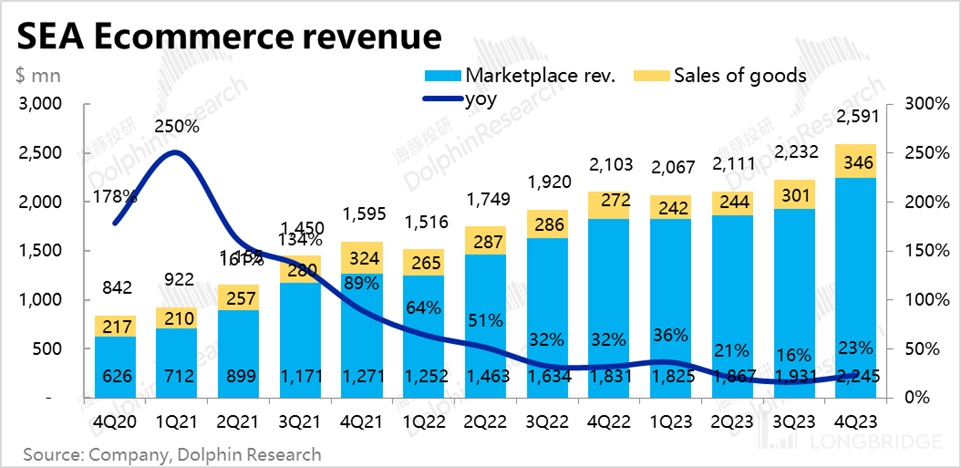
As a result, in the fourth quarter, Sea achieved a GMV of $23.1 billion, with a year-on-year growth rate as high as 28%, far exceeding market expectations. Although the expected growth rate by major analysts closely tracking the company is generally between 20% to 25%, the actual growth rate still beat expectations.
Breaking down the price and volume, the growth rate of order volume this quarter reached a staggering 46%, reflecting Sea's strong growth in the absence of TT Shop, despite the favorable low base from last year.
Considering that the average unit price dropped by 13% to $9.2 (remaining relatively stable compared to the previous quarter), it is evident that facing intensified competition in the Southeast Asian e-commerce market, Sea has opted for low-price promotions to drive traffic and compete for market share.
Due to the robust growth in GMV, Sea achieved a revenue of $25.9 billion this quarter, with a rebound in year-on-year growth to 23%, and core marketplace revenue growth reaching as high as 41%.
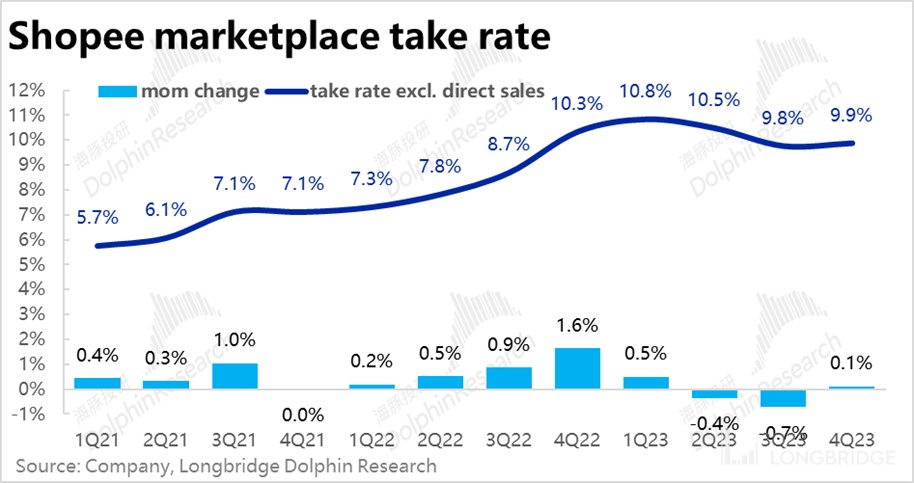
The company claims that in addition to strong GMV growth, the continued improvement in Sea's core marketplace monetization rate in the fourth quarter is also positive news. According to calculations, the monetization rate of the core marketplace increased by 0.1 percentage points to 9.9% MoM. Dolphin Research believes that this is partly due to the absence of TT Shop, and other major players in the market are also improving monetization, creating good opportunities.
Secondly, with the release of new games, can Garena rebound from the bottom?
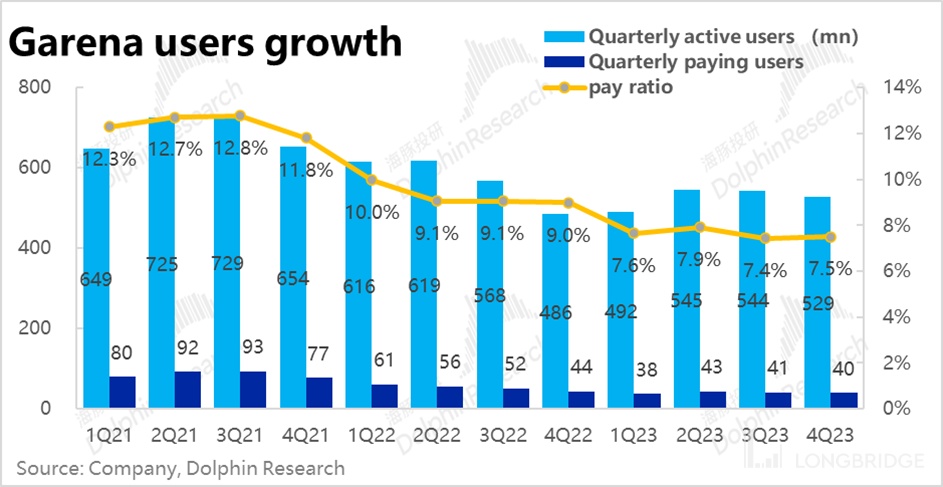
In the Garena gaming sector, although user data initially shows a decline, the number of active users decreased by approximately 15 million MoM, and the number of paying users also slightly decreased by 1 million.
However, the key revenue data shows that as the high base period passes, the YoY decline has narrowed to 16%, with a MoM growth of 1.7%. During this period, Garena released the new game Black Clover M, and according to third-party research, the revenue contribution of new games in the fourth quarter has reached 13%.
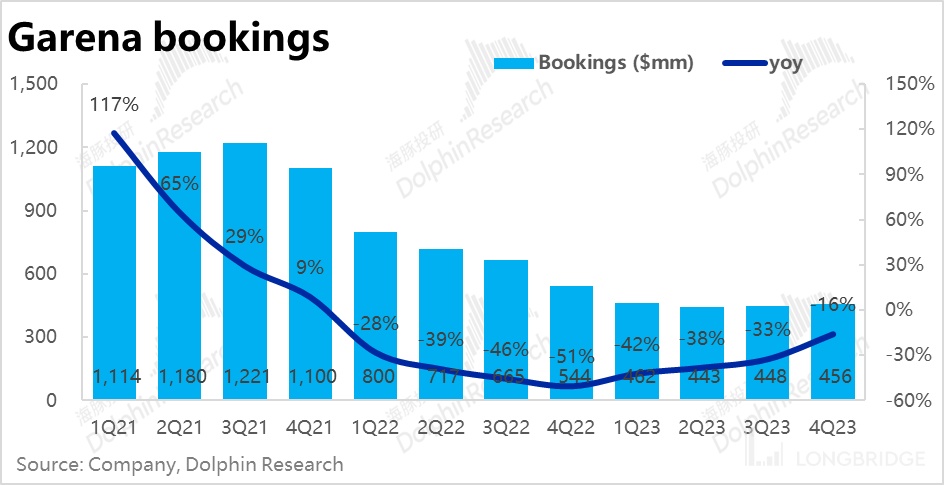

Although game revenue is still in a declining trend, the release of blockbuster new games contributing over 10% has finally alleviated the problem of Garena relying solely on Free Fire and Arena of Valor, lacking new game blood.
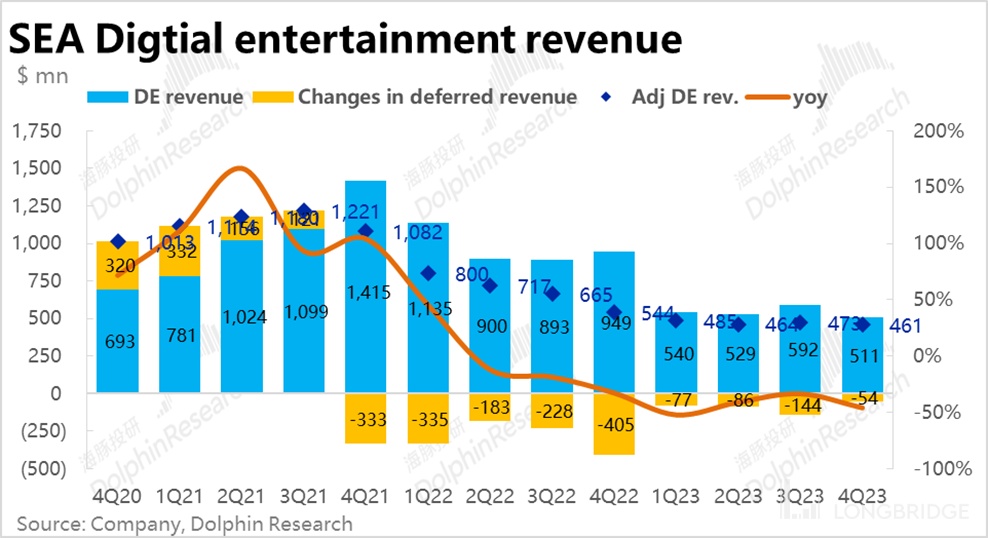
Garena's revenue was 510 million, a 46% YoY decline, which may seem below market expectations, but it is mainly due to a significant reduction in deferred revenue confirmed this quarter, so it is not a major issue. The trend in revenue changes is the key.
SeaMoney Maintains Quality Growth in Digital Finance
In this quarter's earnings report, SeaMoney's business segment was highlighted second, indicating the company's significant emphasis on this sector, just behind the e-commerce business.
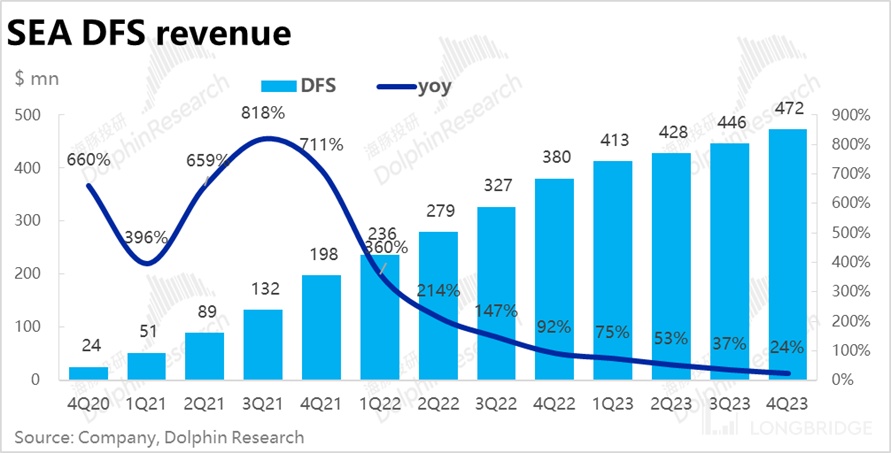
SeaMoney achieved a revenue of 470 million, a 24% year-on-year growth. Although the growth rate is slowing down, the absolute growth speed is still considerable. Operationally, this quarter, the outstanding loan balance reached 2.5 billion US dollars, a slight increase from the previous quarter's 2.4 billion. Concurrently, the bad debt ratio of over 90 days remained at 1.6%, showing a healthy and stable growth trend with a low bad debt ratio, indicating good growth quality.
E-commerce Sector Increases Revenue and Reduces Losses, While Other Sectors Experience a Decline in Profit Margin
Summarizing the above, from a growth perspective, during the dividend period of TT Shop's ban in the e-commerce sector, Sea has seized the growth window, showing significant improvement. SeaMoney continues to maintain a high-quality growth trend; although the Garena sector is still bottoming out, with the release of new games, the issue of outdated product lines has finally shown initial signs of improvement.
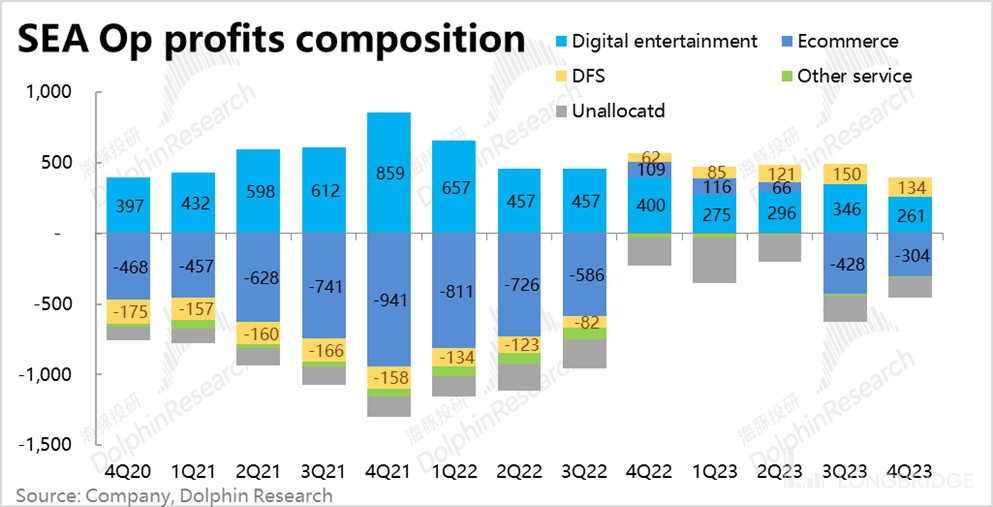
On the profit side, the key e-commerce sector recorded an operating loss of 300 million US dollars this quarter, despite the continued losses due to heavy investments, the loss margin actually decreased compared to the previous quarter, significantly lower than the market's expected loss of 440 million, indicating a good situation of increased revenue and reduced losses.
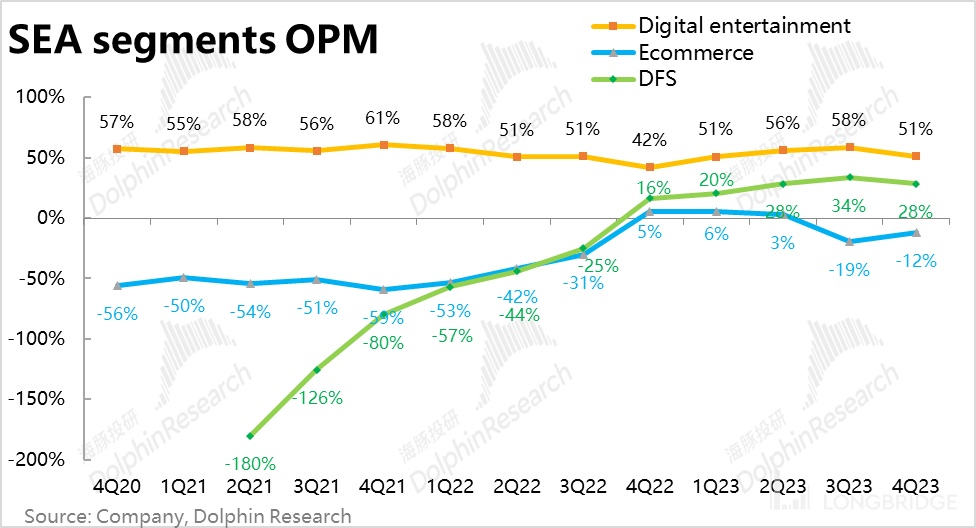
The gaming sector achieved an operating profit of 260 million this quarter, lower than the expected 310 million. We believe this is partly due to lower revenue confirmed by financial criteria and the investment in new games may also be a major reason for the decline in profit.
The DFS financial sector contributed a profit of 130 million, a decrease of about 11% compared to the previous quarter's 150 million, falling below expectations. On the expense side, the marketing expenses of the financial sector increased significantly by 73% year-on-year, likely the main reason dragging down the sector's profit.
Overall Performance: Revenue Exceeds Expectations, Losses Less Than Expected
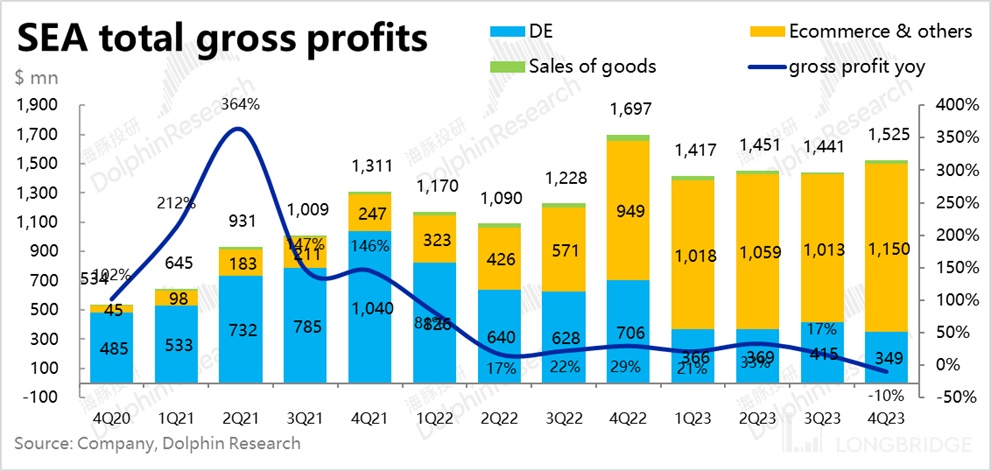
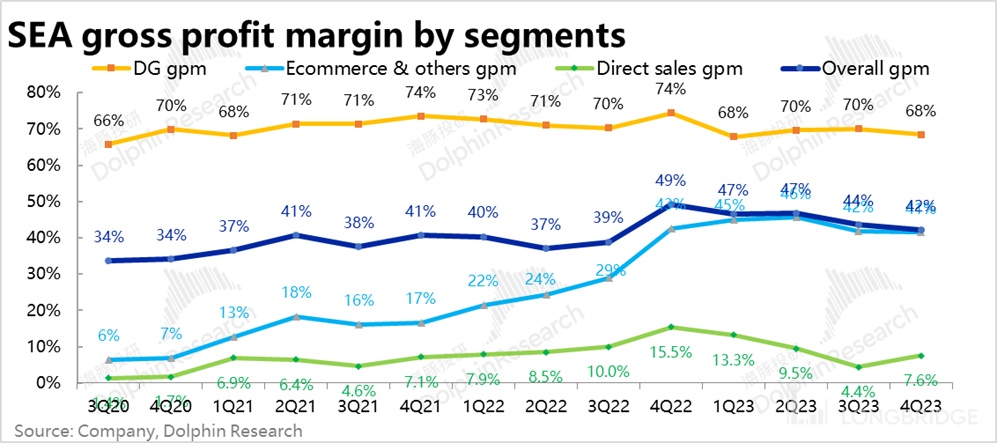
After analyzing the performance of the three core businesses mentioned above, Sea achieved a total revenue of 3.62 billion this quarter, exceeding market expectations by 3%, mainly driven by the e-commerce sector's performance as seen earlier. At the gross profit level, due to the new game investment in the Garena sector and the downward pressure on the gross profit margin of the e-commerce sector during the low-price promotion period, the company achieved a gross profit of 1.53 billion in the fourth quarter, a 10% decrease compared to the same period last year, but it met expectations.
On the expense side, with the company's growth investments in e-commerce, gaming, and financial sectors, Sea's marketing expenses for this quarter reached 970 million, an increase of nearly 50 million compared to the previous quarter, slightly lower than the market's expected 990 million. With the dilution of revenue growth, the expense ratio actually decreased by 1% compared to the previous quarter.
Both management and R&D expense ratios also decreased compared to the previous quarter, indicating that expenses did not expand significantly with the company's increased investments in business.
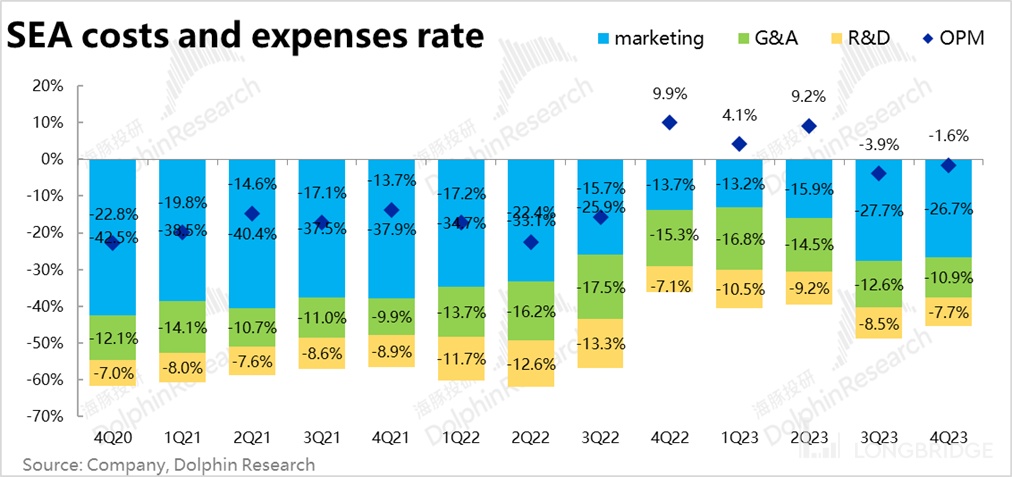
In the end, the company achieved an operating loss of 57 million, which is less than the expected loss of 180 million. Although the profits from the gaming and financial sectors were lower than expected, the e-commerce sector's performance exceeded expectations, and the company's overall equity incentive expenses decreased from 190 million to 130 million compared to the previous quarter, resulting in a lower overall loss than expected.
Dolphin Research's previous research on SEA:
- Financial report review on November 15, 2023: "SEA: Jumping around, successfully playing itself out"
- Conference call on November 15, 2023: "SEA: Seizing the time window, investing heavily in live streaming & logistics facilities"
- Conference call on August 15, 2023: "SEA: Focusing on user scale and engagement, seizing the live streaming opportunity"
- Earnings Report Review on August 15, 2023: "SEA: Facing Backlash after Survival by Cutting Off Limbs ?"
- Conference Call on May 17, 2023: "SEA: Focusing on Long-term Profits rather than Short-term Gains"
- Earnings Report Review on May 17, 2023: "SEA: Dragged into the Abyss by Failing Games Again?"
- Conference Call on March 8, 2023: "SEA: Prioritizing Profits in 2023 without Further Disturbances"
- Earnings Report Review on March 8, 2023: "Survival at All Costs! SEA Struggling for Survival"
- Conference Call on November 16, 2022: "SEA: Tightening the Belt for Survival (3Q22 Summary)"
- Earnings Report Review on November 16, 2022: "Games in a Mess, SEA in Desperation, Can SEA Make a Comeback?"
- Conference Call on August 17, 2022: "SEA: Prioritizing Efficiency over Scale (Conference Call Summary)"
- Earnings Report Review on August 17, 2022: "Struggling without Growth, Sea Facing Huge Losses, How Can SEA Save its Valuation?"
Risk Disclosure and Statement of this Article: Dolphin Research Disclaimer and General Disclosure
The copyright of this article belongs to the original author/organization.
The views expressed herein are solely those of the author and do not reflect the stance of the platform. The content is intended for investment reference purposes only and shall not be considered as investment advice. Please contact us if you have any questions or suggestions regarding the content services provided by the platform.
