

 Posts
Posts Likes Received
Palantir: Exceeded expectations but plummeted? The market is more critical under high valuation

Palantir Technologies (PLTR.US) released its first-quarter 2024 earnings after the market closed on May 6th, Eastern Time. Overall, although the current quarter's revenue and profit exceeded expectations, the post-market reaction was negative, possibly due to three factors: billings below expectations, slowing growth in the US commercial sector (dropping from 70% in the previous quarter to 40% in Q1), and guidance adjustments that did not significantly surpass expectations, failing to meet the positive expectations of investors before the financial report.
Specifically:
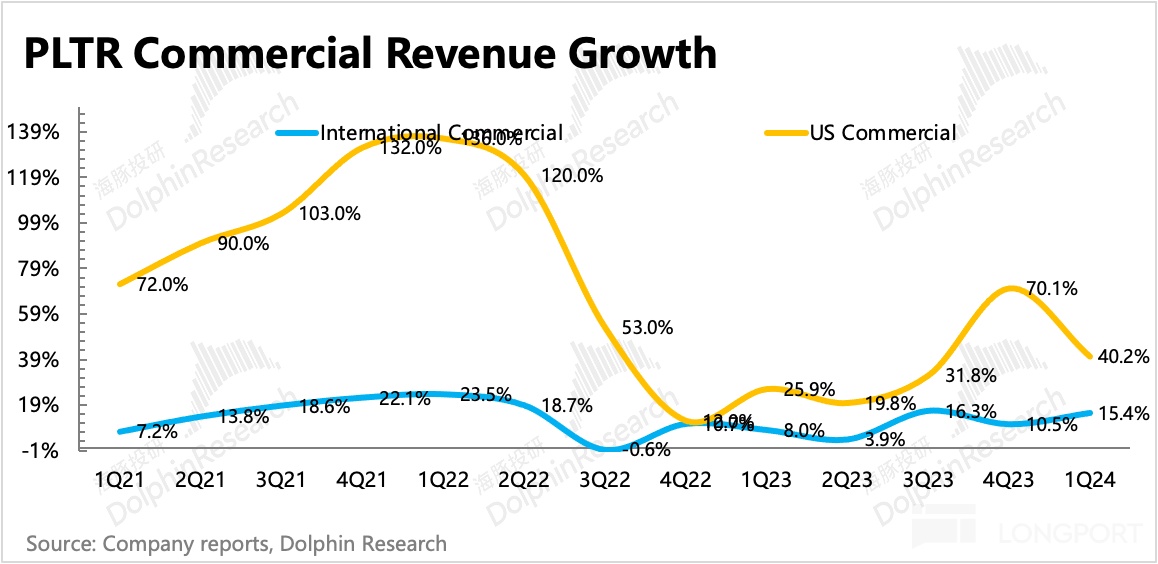
1. Slowing growth in US commercial revenue: Palantir's commercial revenue growth over the past year has been driven mainly by AI products. Nearly half of the commercial revenue comes from the US region, where Palantir's advantages in scalability and profitability are higher. Therefore, the market is mainly concerned about the performance in the US region in the commercial sector.
After achieving a high-speed growth of 70% in Q4 2023, the growth rate in the first quarter quickly dropped to 40%. Although there is an impact from the higher base, the trend of expansion is slowing down on a quarter-over-quarter basis.
International commercial revenue accelerated compared to the previous quarter, reaching a growth rate of 15%, resulting in an overall commercial market revenue growth of 27% year-on-year, meeting market expectations.
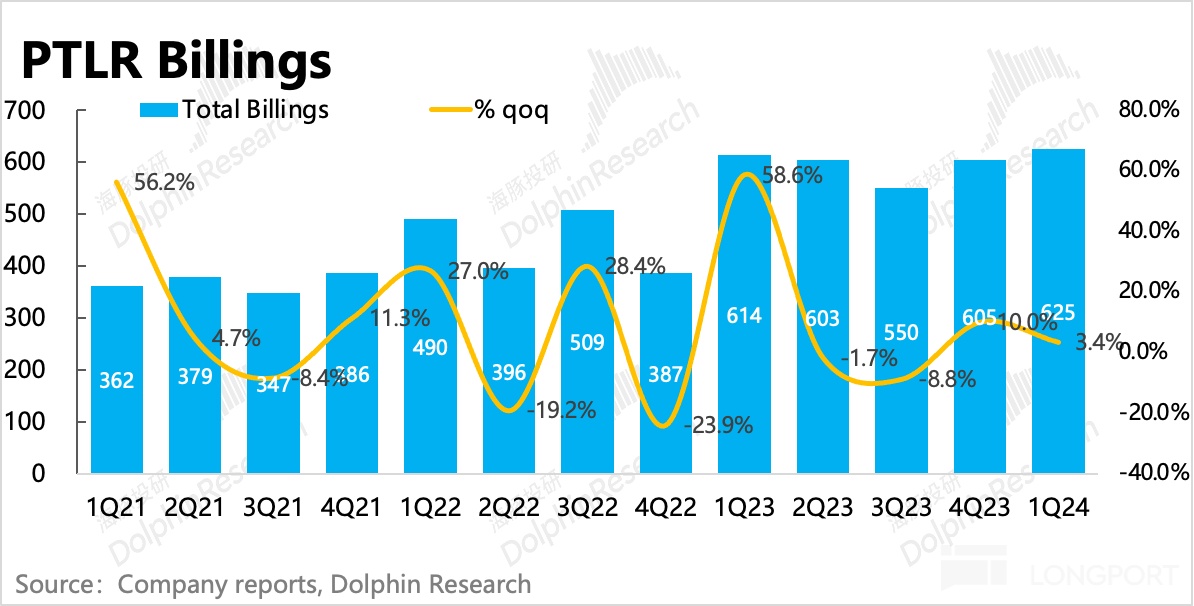
2. Billings below expectations: Palantir mainly provides customized software services to clients, making revenue more predictable in the short term. The company's guidance range is relatively narrow, implying a higher certainty of revenue. However, to reflect Palantir's true business growth, the market pays more attention to indicators related to new contracts, such as TCV (Total Contract Value), RPO (Remaining Performance Obligation), customer count, and Billings. The first three are related to the cooperation cycle and may not directly fit short-term revenue growth guidance, but Billings have higher forward-looking value for short-term growth.
In the first quarter, Palantir's billings only grew by 2% year-on-year, significantly lower than the market's expected 13% growth rate, which may have raised concerns in the market about the slowdown in short-term growth momentum.
3. Revenue guidance adjusted due to AI, but generally in line with expectations: Palantir's revenue guidance for Q2 is around $650 million, implying a growth expectation of 22%, slightly exceeding market expectations. The company also made certain adjustments to the full-year revenue guidance, but market expectations fall within the revised rangeDifferent from the previous quarter's significantly exceeding expectations in short-term and long-term revenue guidance, this time the market seems to have fairly high expectations already. Therefore, under high valuation, the Q1 financial performance may find it difficult to attract more funds.
4. Controlling employee incentives, profitability improvement shines brighter: Although the revenue performance was "average", Palantir's profitability indicators have exceeded expectations. On one hand, costs do not seem to have been burdened too much by incremental costs after the realization of AI products (gross margin only decreased by 0.5% QoQ). On the other hand, there was some control over employee stock incentives in the first quarter, with SBC as a percentage of total revenue decreasing by 2%, ultimately leading to a 2% QoQ increase in operating profit margin and an 11% YoY increase, significantly surpassing market expectations.
Due to the above reasons causing the expectation gap, profit guidance for Q2 and the revised full-year performance are naturally better than market expectations.
5. Medium to long-term forward-looking indicators remain robust: Apart from Billings, forward-looking indicators such as total contract value, remaining non-cancellable contract value, customer count, etc., all showed steady growth in the first quarter, with a trend of further acceleration QoQ.
Therefore, in the short term, the fluctuation in quarterly billings, in the view of Dolphin, does not need to be overly concerned about. Historically, the company's billings have also experienced significant fluctuations during seasonal periods. Considering Palantir's customized services, the cooperation period with customers tends to be more medium to long-term, at least over a one-year horizon. Therefore, if short-term fluctuations do not coincide with a deterioration in medium to long-term indicators, there is no need to be overly worried.
At the same time, in actual news reports:
(1) The U.S. Army has signed multiple cooperation contracts with Palantir since the second half of last year, with the most recent being a two-year contract signed in March confirming Palantir as the supplier of the TITAN solution (next-generation deep sensing capability platform) worth $178 million.
(2) AIP's customer penetration is also steadily progressing. By the end of the first quarter, Palantir had already tested software services for 915 corporate entities, nearly doubling from the disclosed number of 465 in the previous quarter. This customer penetration will further support long-term growth in commercial revenue, rather than immediately reflecting in short-term financial indicators.
6. Performance indicators overview

Dolphin's Viewpoint
After seeing the impact of AI on financial indicators for the first time last quarter (current & guidance), the market has already entered with a fairly high AI expectation—expecting to increase Palantir's old business CAGR growth rate of around 10%-15% to over 20% in the long term.At the same time as the increase in profitability, the market's forward valuation based on future one-year performance expectations has increased from last year's Q3 PS 14x to the current 17x. Combining the company's guidance adjustment with market expectations, Dolphin Jun estimates that the future Forward GAAP P/E corresponding to the closing price on May 6th is 112 times, and the forward PE adjusted for net profit is also 70 times. However, the future three-year profit CAGR after 25 years may only be around 40-50%, indicating that the valuation is still high. Therefore, under such high valuation, any short-term indicators falling short of expectations or fluctuating will lead to strong market reactions.
However, aside from valuation, focusing solely on operational forward-looking indicators, Dolphin Jun can still see Palantir's medium to long-term growth potential in the AI wave. Whether short-term fluctuations will definitively disrupt the growth trend remains uncertain, and it is recommended to pay attention to the management's conference call for more operational information disclosure and outlook.
The detailed analysis is as follows:
I. Revenue Growth Relies on Business AI, but Government Business is Picking Up
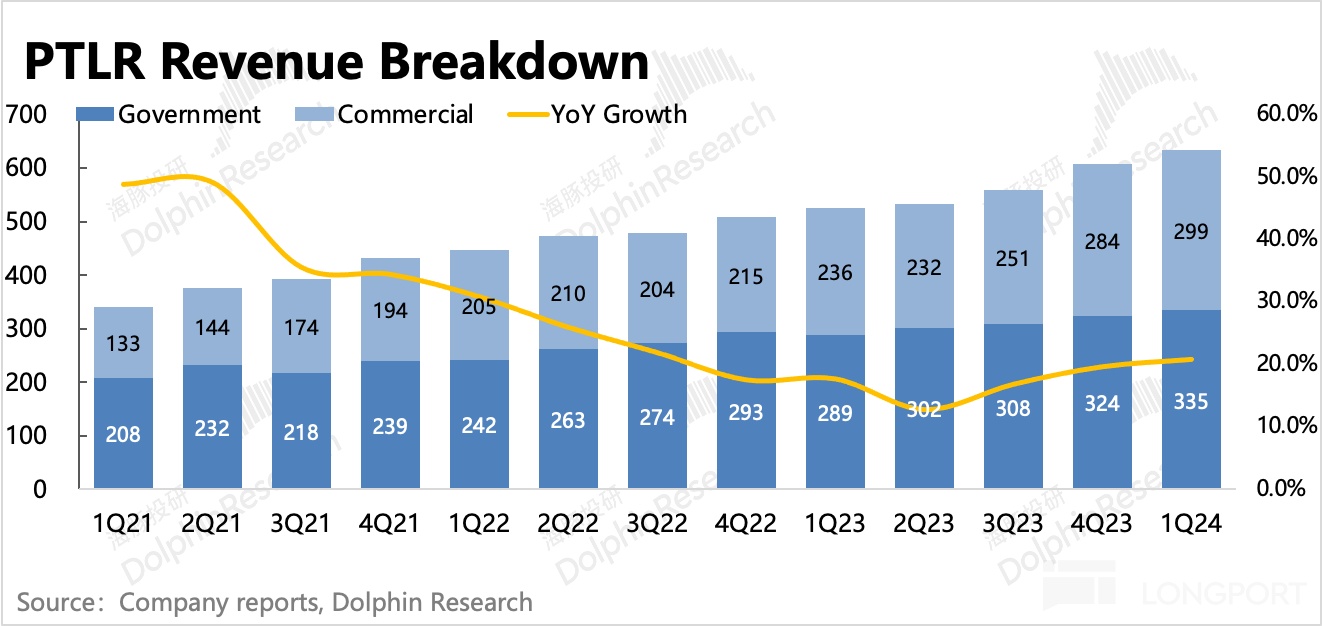
In the first quarter, total revenue reached $634 million, a year-on-year increase of 21%, exceeding market expectations (~$616 million), with the growth rate continuing to rise compared to the previous quarter.
Palantir mainly provides customized software services to clients, hence the revenue can be relatively predictable in the short term, with the company's guidance range being narrow, implying a high level of revenue certainty.
1. Business Segments
(1) Revenue growth in the first quarter was still mainly driven by the high growth of commercial revenue. Q1 commercial revenue increased by 27% year-on-year, with AI being the main incremental driver. Among them, the U.S. region's revenue growth, which accounts for half and is a major concern for the market, was 40%, a significant decline from the 70% in the previous quarter. Apart from the higher base, this also reflects some fluctuations in short-term customer demand.
AIP's customer penetration is steadily progressing, with Palantir having tested software services with 915 companies and institutions by the end of the first quarter, nearly doubling from the disclosed number of 465 in the previous quarter. This customer penetration will further support long-term growth in commercial revenue, rather than immediately reflecting in short-term financial indicators.
(2) Government revenue in the first quarter increased by 15% year-on-year, reversing the trend of declining quarter by quarter. The multiple U.S. military contracts won by the company in the second half of last year have begun to show results this quarter. With ongoing geopolitical tensions this year, it is expected that there will be some uplift in Palantir's government revenue.
2. Regional Breakdown
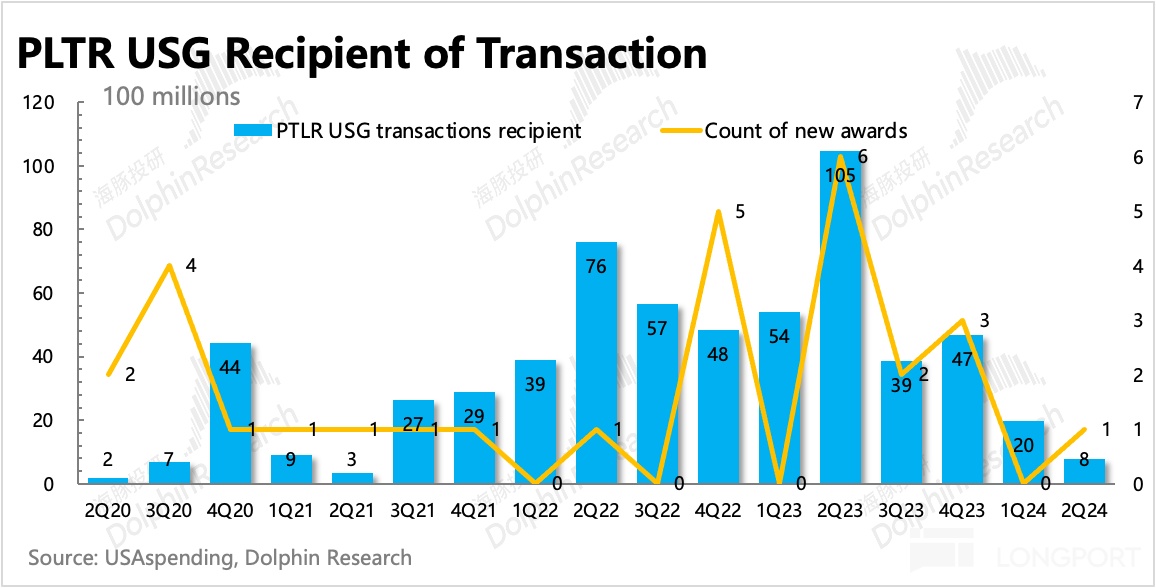
(1) In terms of government revenue, both the U.S. and international regions saw an increase in revenue growth in the first quarter, but since revenue recognition cycles are influenced by various factors, the key is to look at changes in contract signings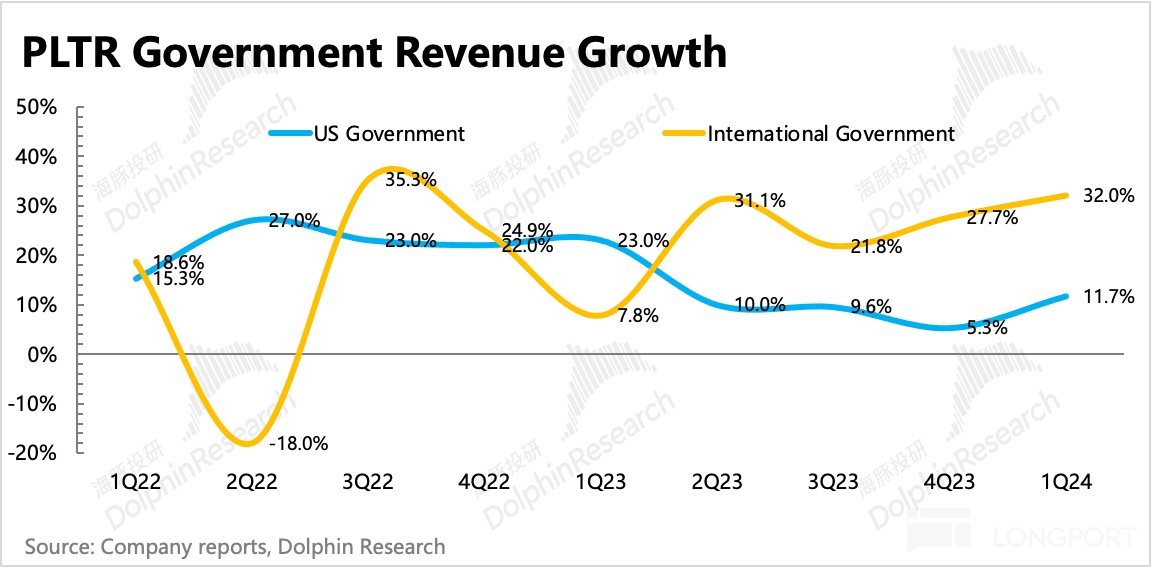
Since the beginning of the second quarter last year, the U.S. government has been cooperating with Palantir continuously, with the scale expanding. In the past 3 months, the U.S. Army once again signed a two-year contract worth $178 million with Palantir, mainly to provide technical solutions for TITAN. Palantir has a significant advantage in providing technical solutions for U.S. government IT systems, and with the support of AI, government departments have also generated some corresponding incremental demand.
However, according to the official website, although Palantir and U.S. government agencies had more new contracts in the third and fourth quarters of last year, there was a certain slowdown in the first quarter overall. Seasonal fluctuations should not be a major concern for now, and it is recommended to continue monitoring data updates.
(2) Business revenue is mainly driven by growth in the U.S. region. As Palantir's main advantage is still in the U.S. region (extended through government contracts and endorsements from large financial companies), revenue from the U.S. region not only accounts for more than half, but also has a relatively high growth rate. The market mainly focuses on the performance of business revenue in the U.S. region. However, the rapid slowdown in U.S. business revenue growth in the first quarter has raised some concerns in the market, possibly being the main reason for the significant post-market decline.
II. Contract Situation: Short-term Fluctuations, Long-term Stability
For software companies, future growth is the core of valuation. However, the revenue confirmed each quarter lags behind, so we recommend focusing on the acquisition of new contracts, mainly reflected in contract situations (RPO, TCV), current billing flow (Billings), and the increase in customer numbers.
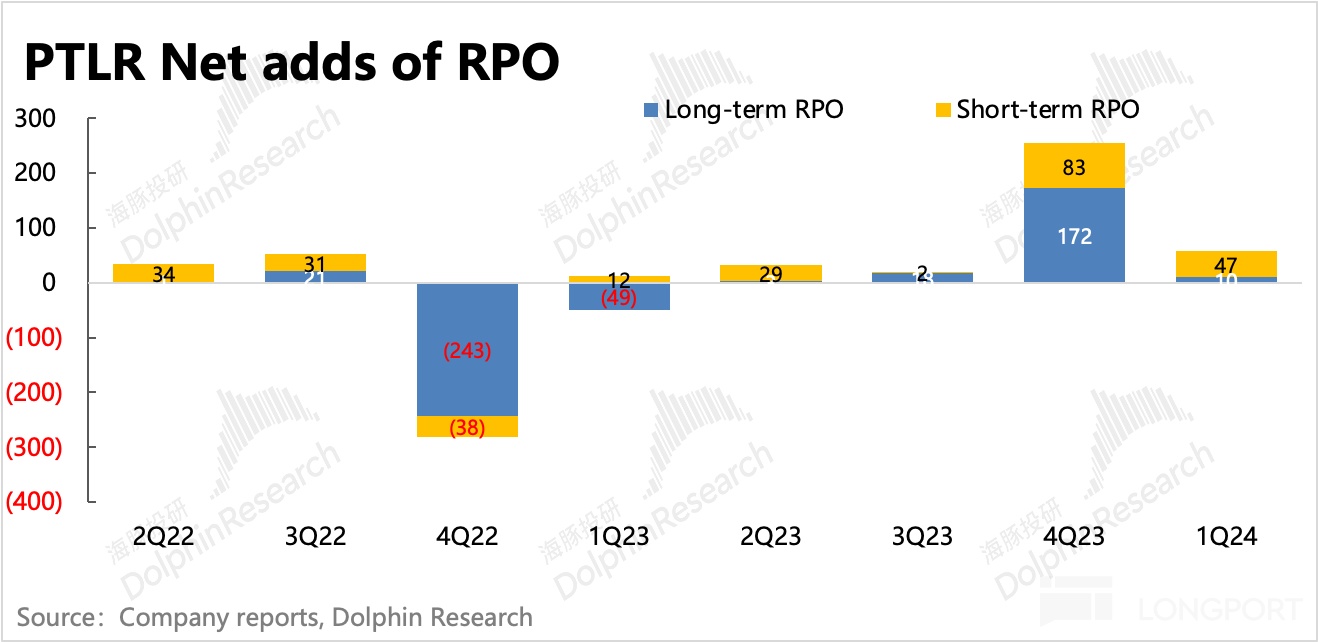
(1) Remaining Performance Obligations (RPO)
In the first quarter, Palantir's remaining contract value was $1.3 billion, an increase of $57 million compared to the previous period, with net growth slowing down. Since most contracts allow for early termination, only relatively short-term contracts are more likely to be locked in. Therefore, the slowing net growth of RPO mainly reflects the average performance of short-term contract growth.
(2) Current Billing Flow (Billings)In the first quarter, the billings amounted to USD 625 million, with a year-on-year growth of only 2% and a nearly flat quarter-on-quarter performance. The contract billing for the period also reflects short-term fluctuations, indicating short-term pressure on Billings growth.
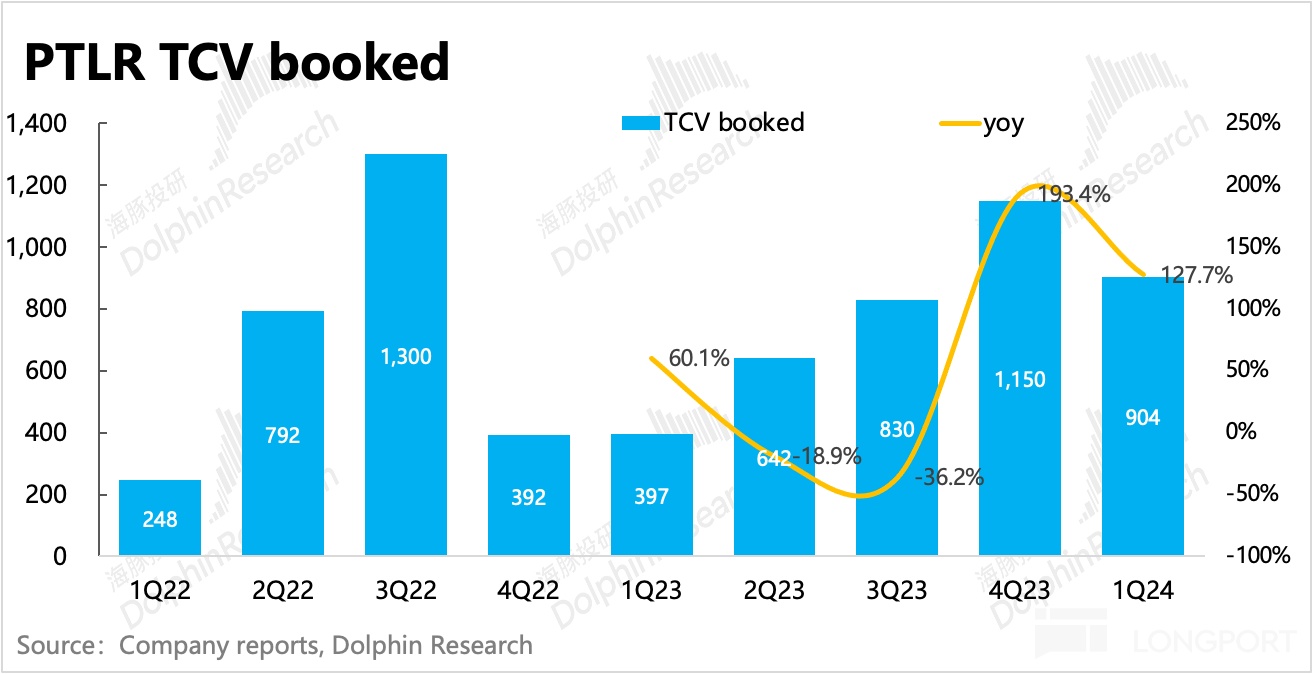
(3) Total Contract Value (TCV)
The newly added TCV in the first quarter was 9 billion, with a 128% year-on-year growth and a slight slowdown quarter-on-quarter. However, the value of commercial contracts in the U.S. was 286 million, a 131% year-on-year growth, showing some acceleration compared to the fourth quarter of last year. This indicates that some contracts are more long-term, reflecting Palantir's product attractiveness and potential medium to long-term growth trends, despite the risk of early termination.
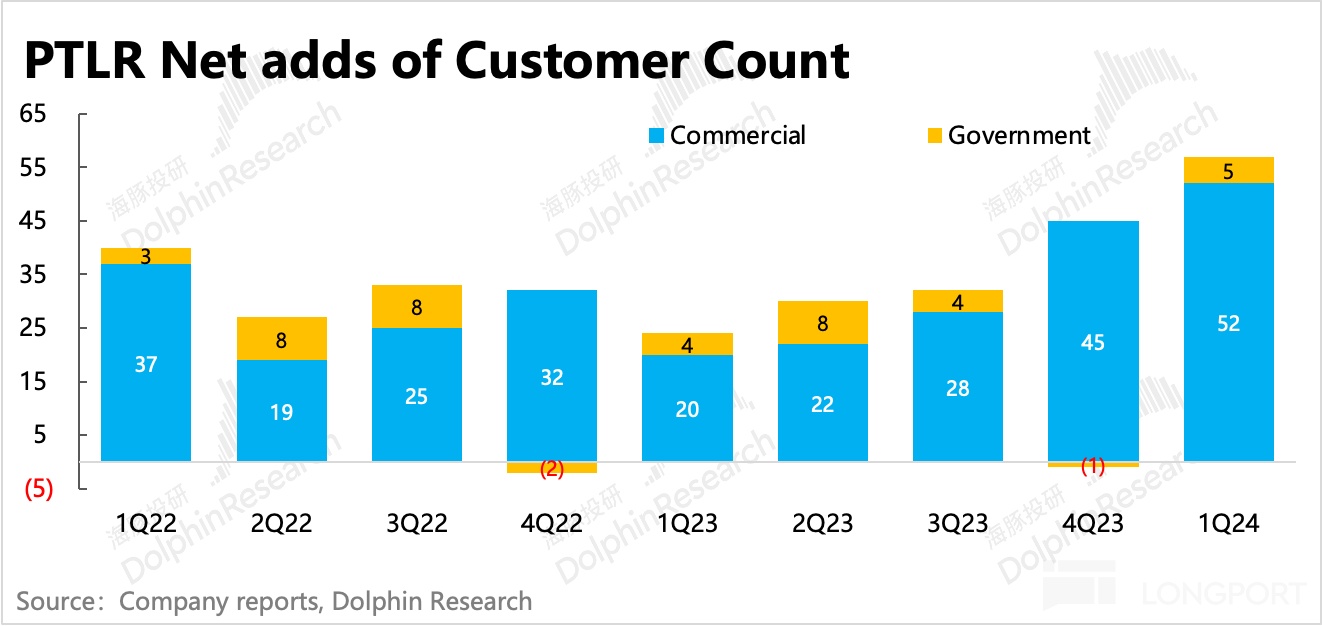
(4) Customer Increment
Looking at the most intuitive customer numbers, which are more medium to long-term indicators, there was a net increase of 57 customers in the first quarter, with 52 coming from commercial customers.
Combining <1-4>, Dolphin believes that forward-looking indicators reflect short-term pressure but an increase in medium to long-term growth potential (especially from commercial customers attracted by AIP). Therefore, there is no need to be overly pessimistic about the possible slowdown in growth at present.
III. Improved Profitability, Guidance Exceeding Expectations
In the first quarter, Palantir continued to benefit from turning losses into profits, significantly increasing operating profit year-on-year to 80 million, compared to just 4 million last year, significantly exceeding market expectations. At the same time, the company continues to raise its profit guidance for 2024, with the lower end of the guidance range also outperforming market expectations.
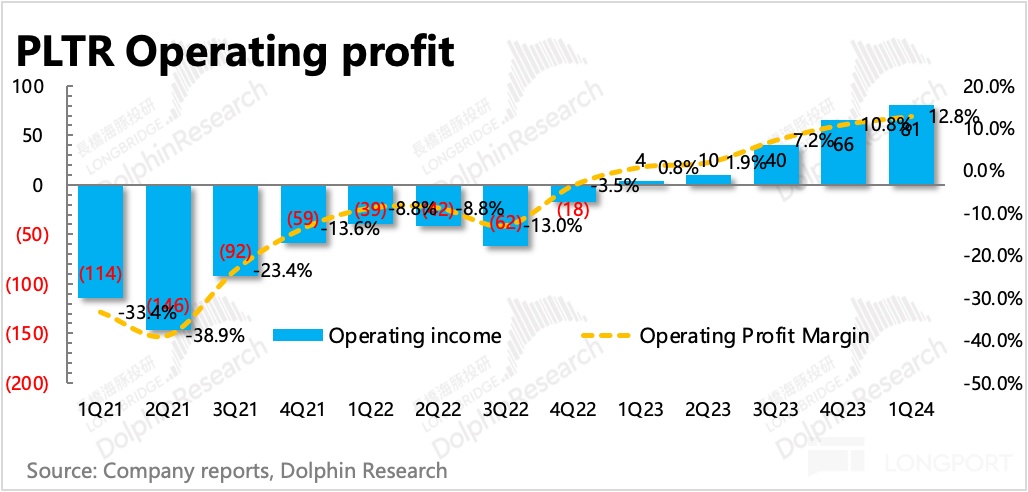
The improvement in Q1 profitability mainly came from the reduction in SBC, with SBC's share of total revenue decreasing by 2 percentage points. Additionally, the recognition of AI-related revenue did not bring much cost burden to the company, with the gross margin decreasing by 0.5 percentage points quarter-on-quarter, remaining relatively stable.
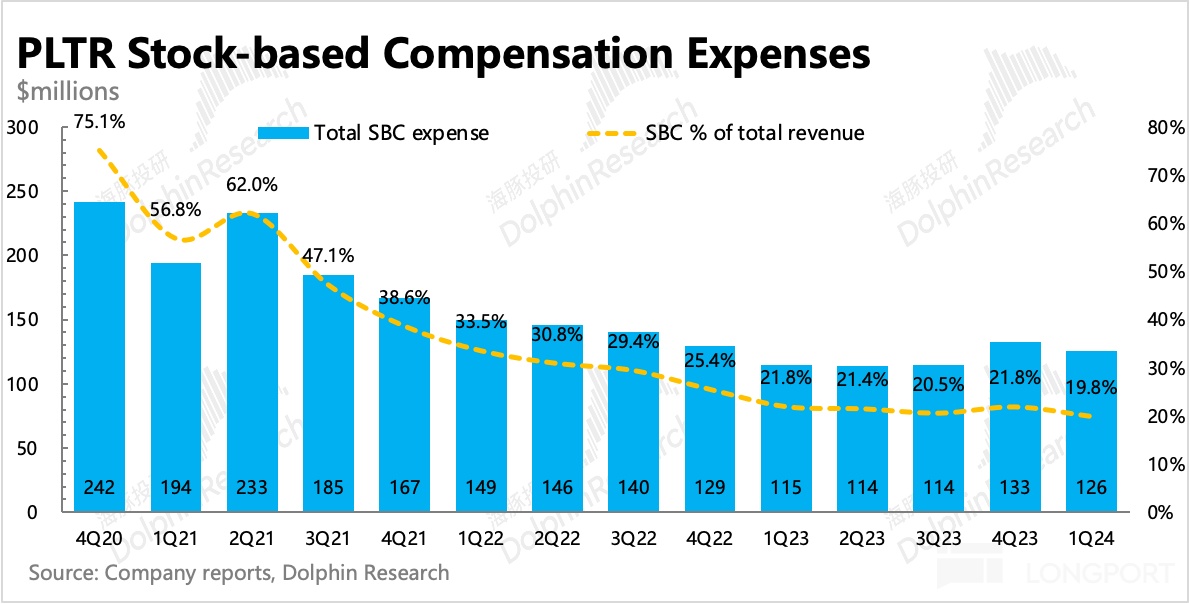
Furthermore, excluding SBC, the expenses that saw significant optimization were sales expenses followed by administrative expenses. After setting the goal of accelerating profitability in 2022, these three expenditures are the main areas of optimization for PalantirAt last, on the indicator of contribution margin (the marginal impact of marketing and promotional expenses on revenue, similar to the gross sales margin of consumer goods companies), it continued to increase to 59.5% in the first quarter, indirectly indicating the improvement of the company's product competitiveness and enhanced realization efficiency.
However, since revenue is essentially driven by the volume of signed contracts, each time a customer is won over to secure a contract, there will be upfront investment in sales expenses. But the period of winning over customers and the actual conversion of contracts may not necessarily occur in the same quarter, so occasional short-term fluctuations in the sales expense ratio cannot be ruled out.
Dolphin Research on "Palantir" History:
Financial Reports
February 6, 2024, Conference Call " The core driver of growth is a business model based on training and continuous investment in product strength (Palantir 4Q23 Conference Call)"
February 6, 2024, Financial Report Review " AI is driving Palantir's new growth cycle"
November 3, 2023, Financial Report Review " Palantir: Growth rate rebounds against the trend, is AI the hero again?"
In-depth Analysis
October 13, 2023, " Palantir: What drives the high valuation?"
September 26, 2023, " Palantir: The 'mysterious' military weapon activated by AI"
Risk Disclosure and Statement in this Article: Dolphin Research Disclaimer and General Disclosure
The copyright of this article belongs to the original author/organization.
The views expressed herein are solely those of the author and do not reflect the stance of the platform. The content is intended for investment reference purposes only and shall not be considered as investment advice. Please contact us if you have any questions or suggestions regarding the content services provided by the platform.
