

 Posts
Posts Likes Received
Has the U.S. consumption locomotive run out of steam? Is a soft landing still possible?

Dolphin Research mentioned in last week's strategy report "Disappointing Retail Sales and a Soft-Landing Economy: Will They Drag Down Chinese Assets?" that the marginal slowdown in U.S. economic growth—particularly in household consumption—is a critical variable for U.S. economic growth expectations.
The gradual weakening of household consumption growth feeds into the soft-landing narrative. If this trend of mild monthly declines continues, an overshoot could spark market fears of an economic recession.
Amid sluggish physical retail in June, how is actual household consumption holding up? Based on last week's household income and expenditure data, is consumption truly weak? Let’s dive in:
1. Why Is Household Consumption So Important?
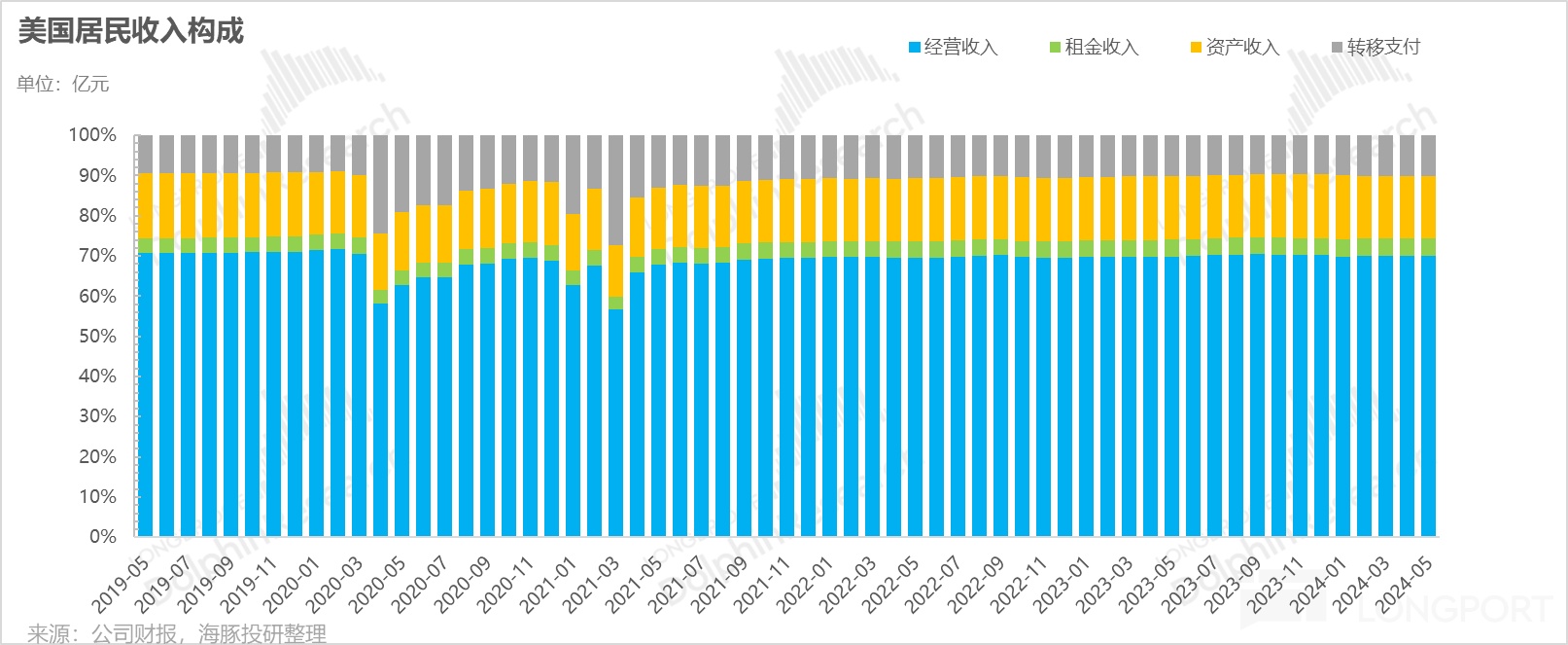
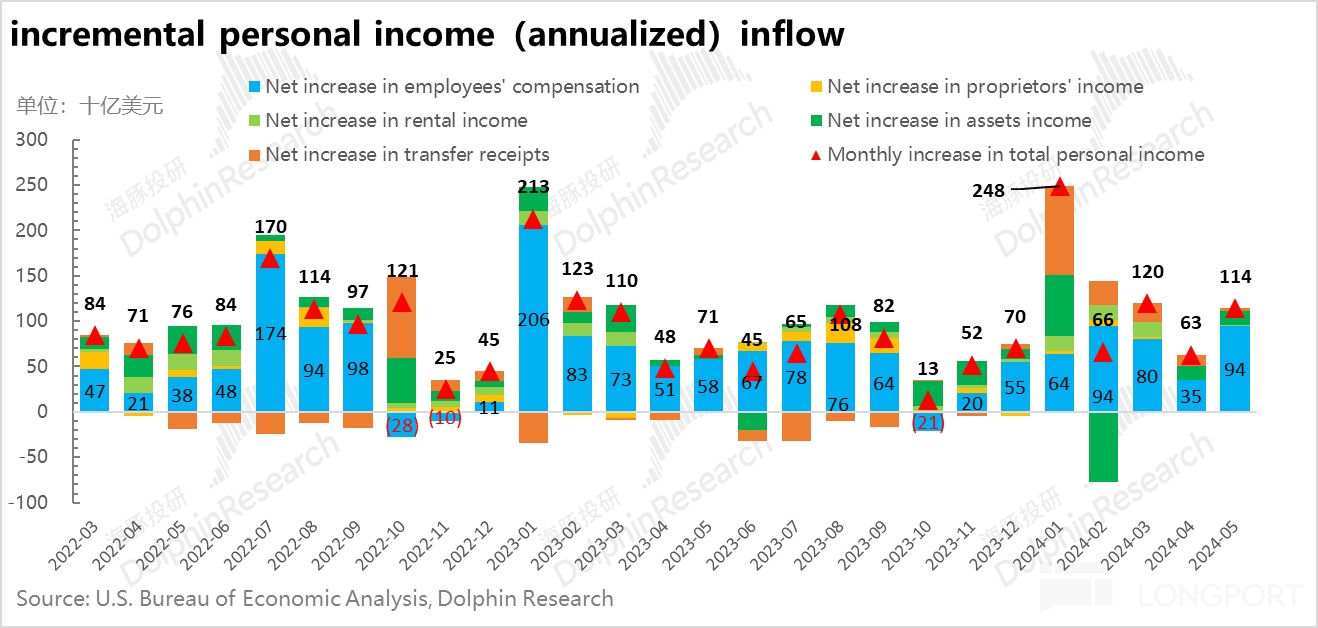
The U.S. releases monthly household sector income and expenditure statements at month-end, which function like corporate profit statements and are straightforward to interpret. The four major income sources at the top represent household earnings:
a. Employee compensation (including company and social security contributions), tied to total employment and per capita wages, accounts for 60%+ of total income—the dominant driver.
b. Self-employment and small business income, contributing ~8%.
c. Rental income, ~4%.
d. Asset (property) income, primarily interest from bonds and dividends from equities, ~15% (second-largest).
e. Transfer income (net value), mainly government redistribution (e.g., social security, welfare). After deducting social security payments, net transfers are ~10% (third-largest).
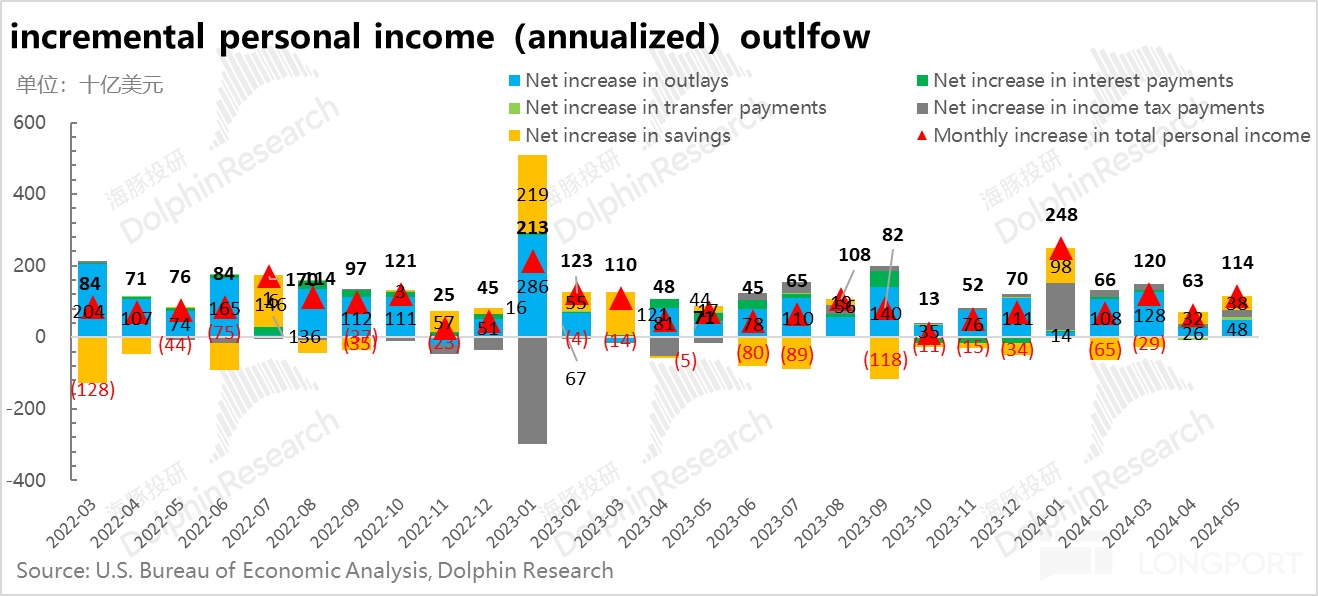
On the outflow side:
a. Income tax: ~12% of pre-tax income.
b. Interest payments (excluding mortgages, which are netted against rental income): only ~2% even amid high rates.
c. Transfer payments (e.g., donations, fines): ~1%, negligible.
d. Consumption (goods + services): 80%+ of outflows.
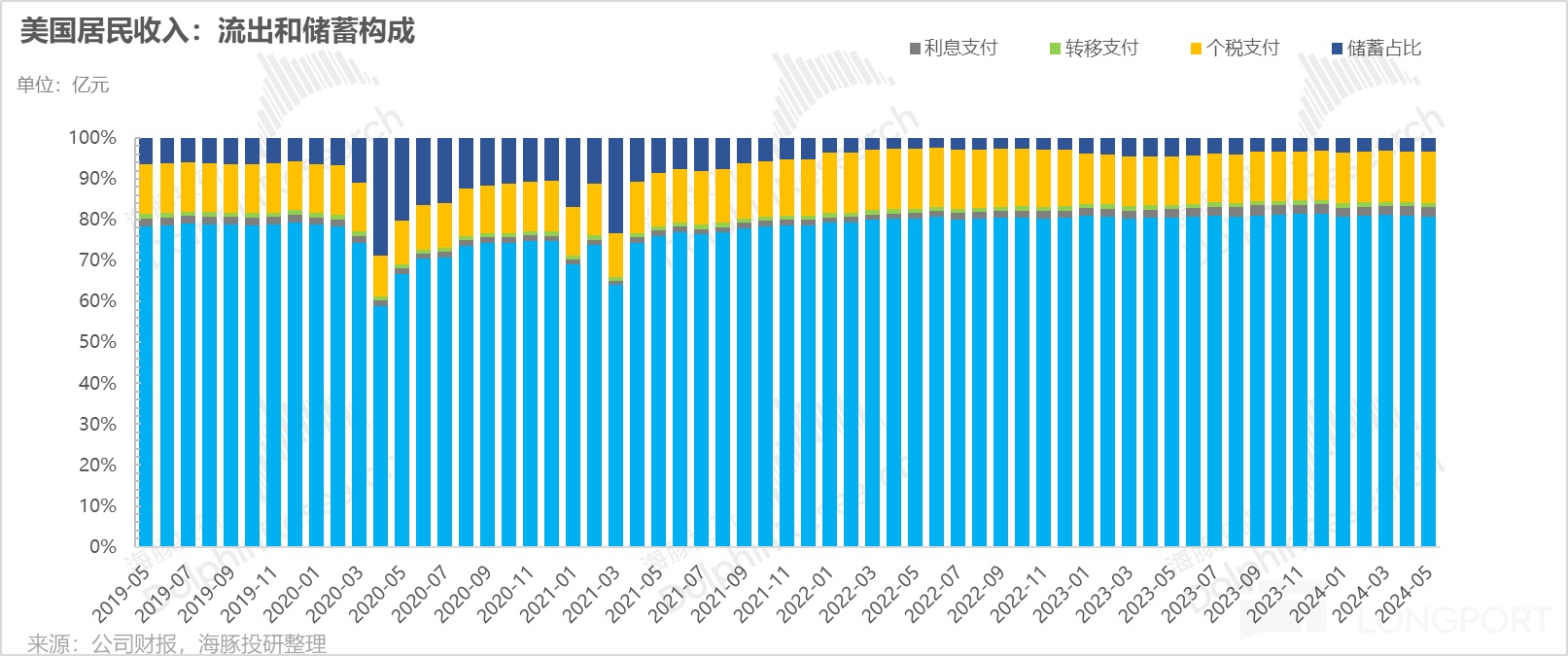
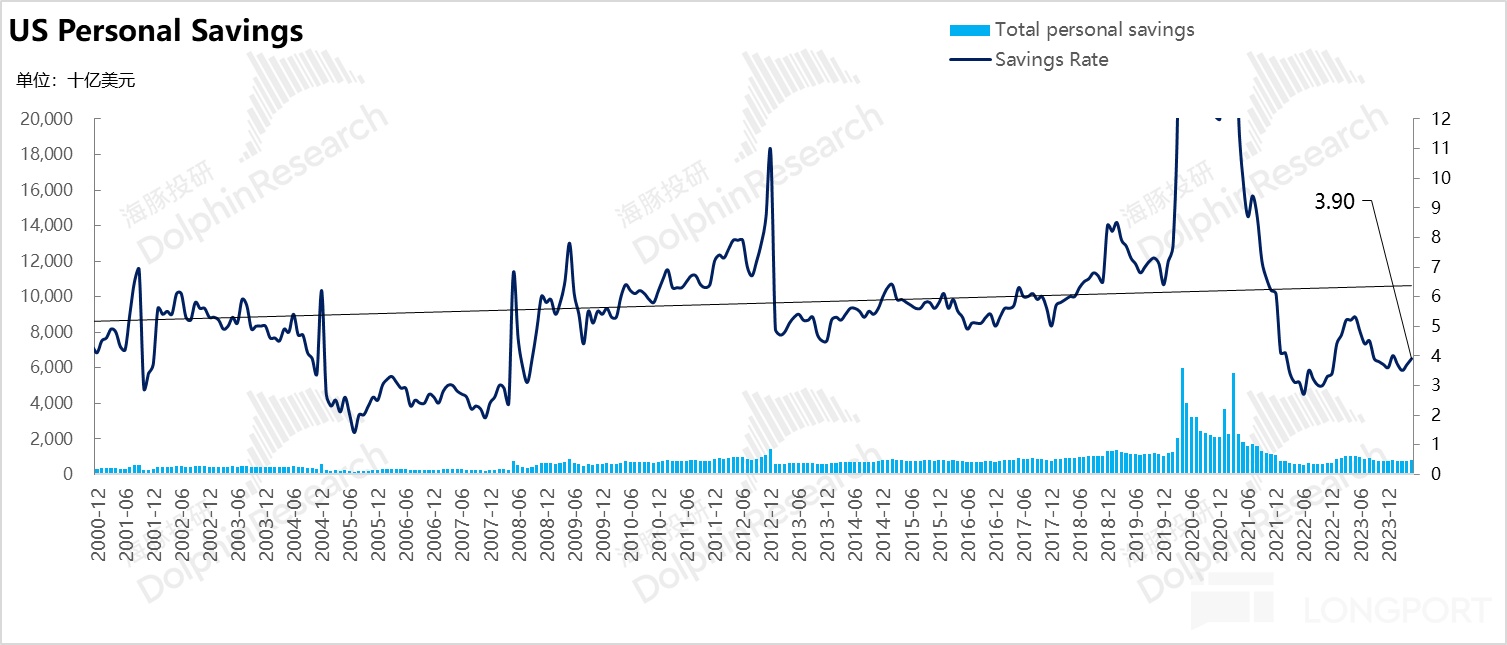
The remainder is savings—akin to corporate retained earnings—whether parked in banks or invested.
Note: Outflows like taxes and transfers are stable, with taxes acting countercyclically. The real economic driver is the shift between consumption and savings.
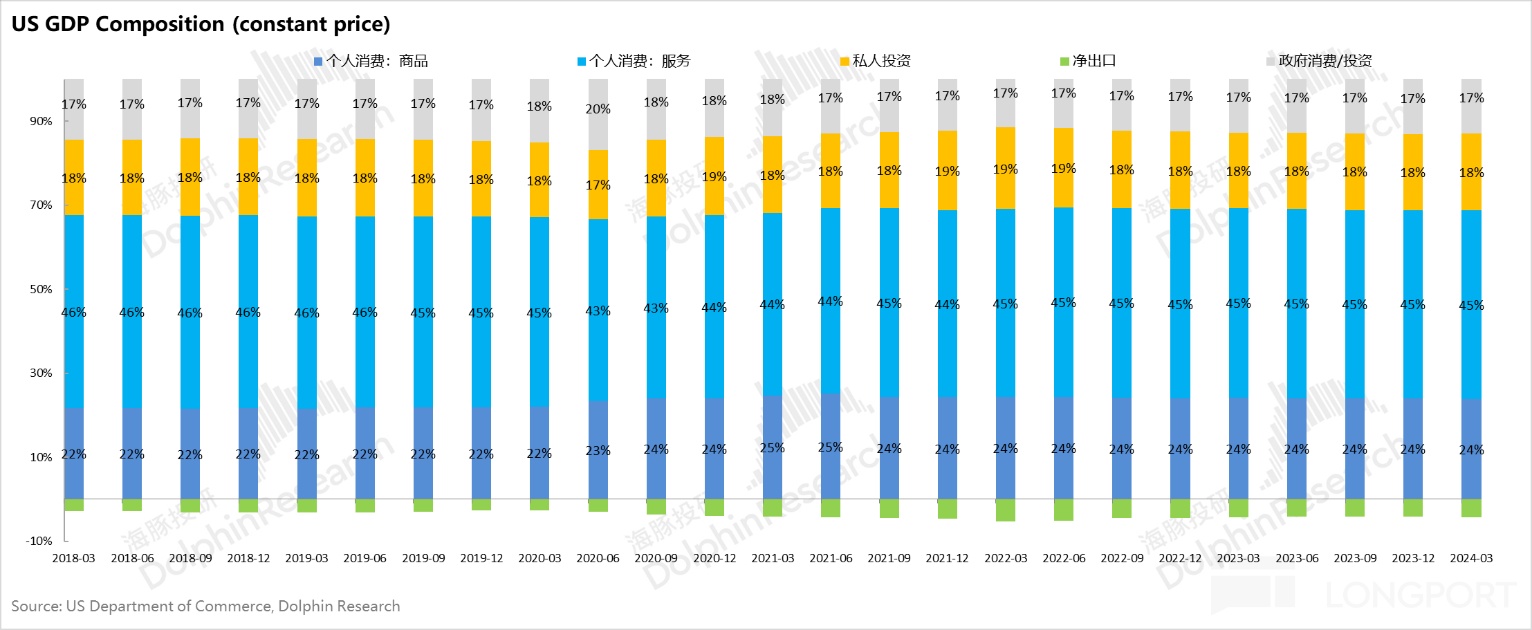
In expansions, rising incomes and optimism boost consumption (outpacing income growth) and suppress savings. With consumption being ~70% of GDP, this fuels faster growth.
This cycle clearly shows U.S. consumption growth persistently exceeding income growth, sustaining economic resilience.
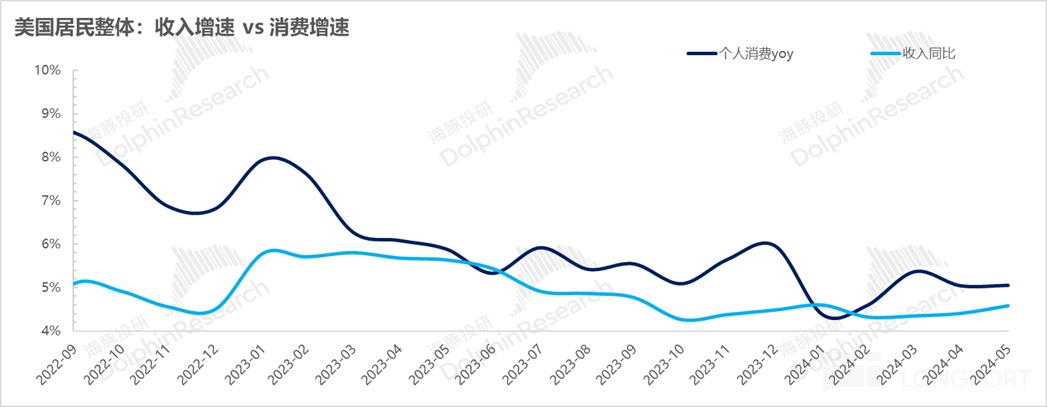
2. Savings Squeeze: Consumption Weakens for Second Straight Month
May data shows weak nominal consumption (+0.25% MoM, 3% annualized—below the 3.5%-4.5% norm) due to rising savings crowding out spending. The savings rate rose while consumption’s share dipped slightly.
3. Strong Income Growth: No Fundamental Issue
Despite weak consumption, nominal income growth remains healthy, supported by high employment, wages, and asset inflation/dividends.
Two marginal risks:
a. The labor market is nearing pre-pandemic balance (1.24 job openings per unemployed person in May vs. 1.1-1.23 in 2019). Sustained 300K+ monthly nonfarm payrolls are unlikely.
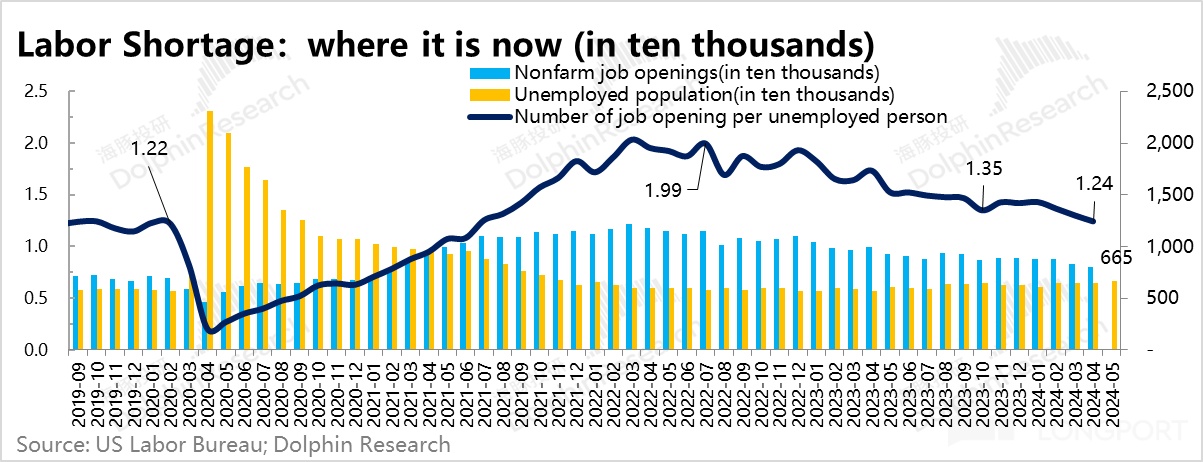
b. While white-collar wages rise with AI demand, blue-collar sectors (e.g., temp work, hospitality) are cooling. With low-income groups exhausting excess savings (rising credit defaults), the savings rebound may signal a trend reversal—consumption growing slower than income.
Dolphin Research still sees a soft landing: income growth is solid, and weak consumption reflects distributional shifts, not shrinking aggregate demand. Tech remains a key opportunity, but high valuations warrant buying on pullbacks.
4. Goods vs. Services: Not What It Seems
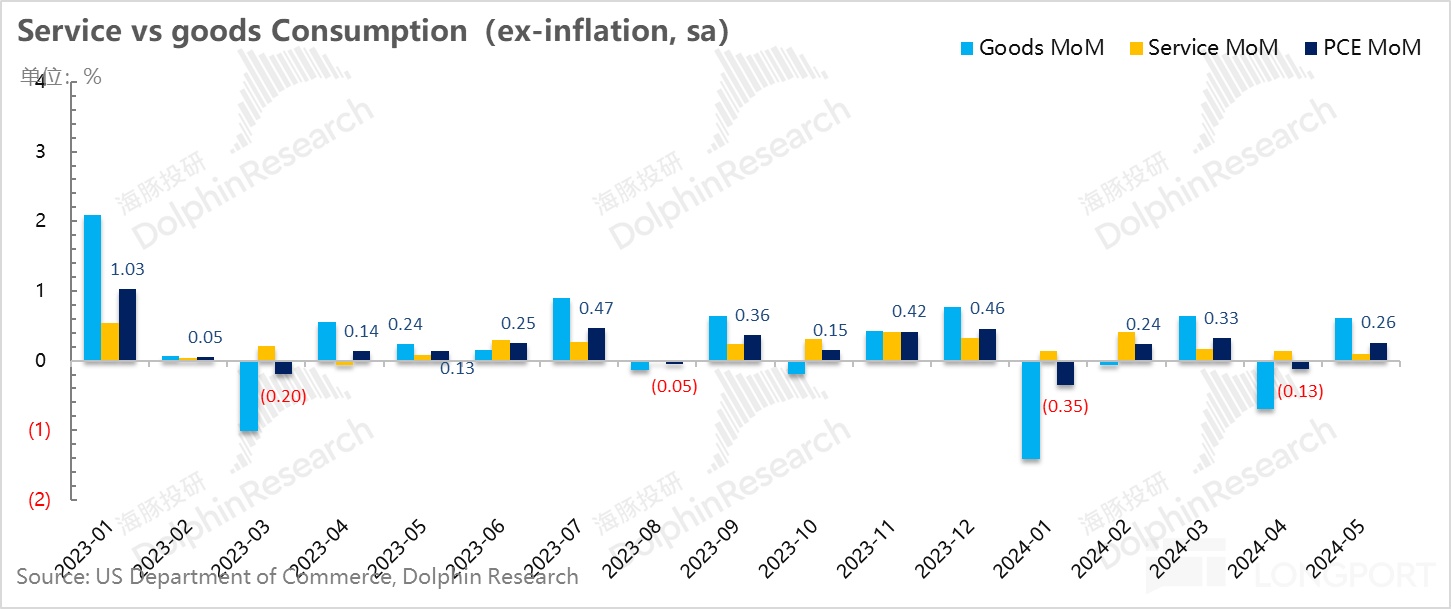
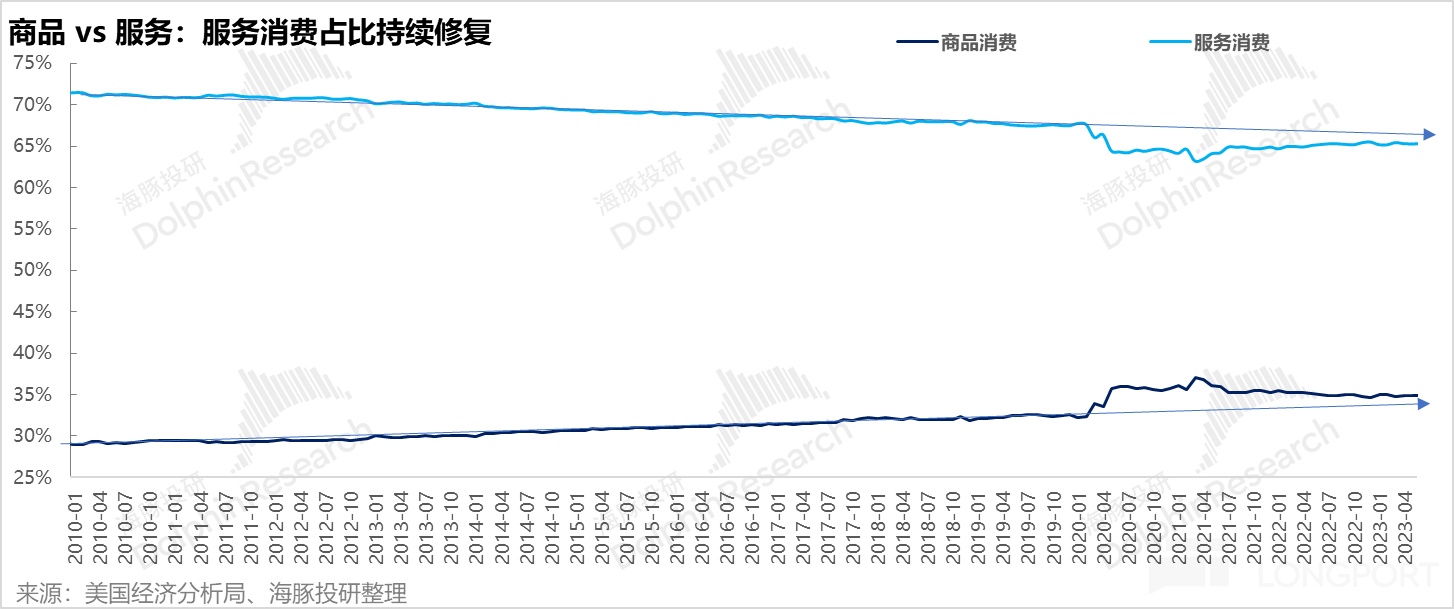
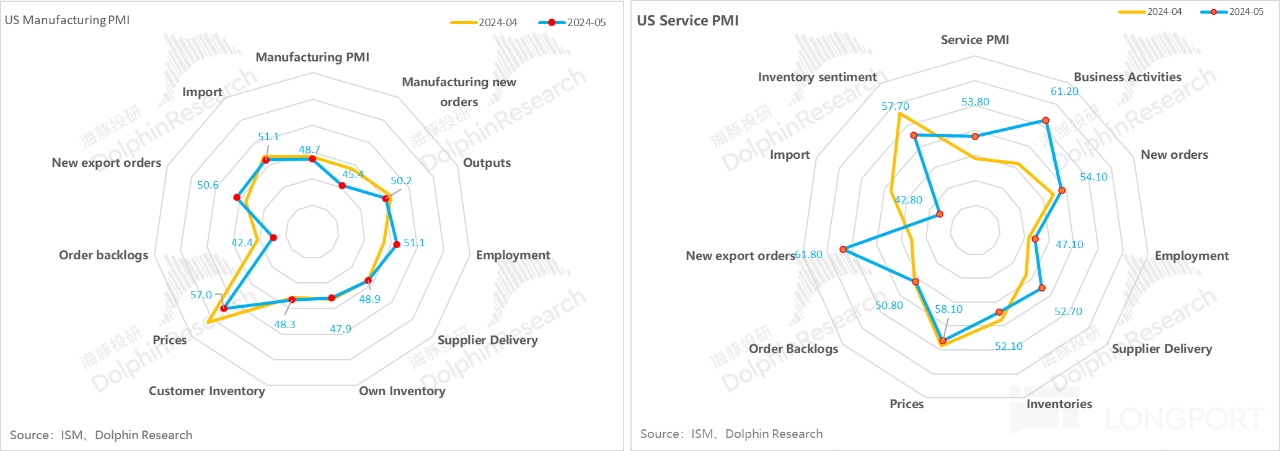
May’s goods consumption (+0.6% MoM) outpaced services (+0.1%), but smoothing April-May data shows goods declining while services grew slightly—aligning with PMI trends.
5. Implications for Chinese Assets
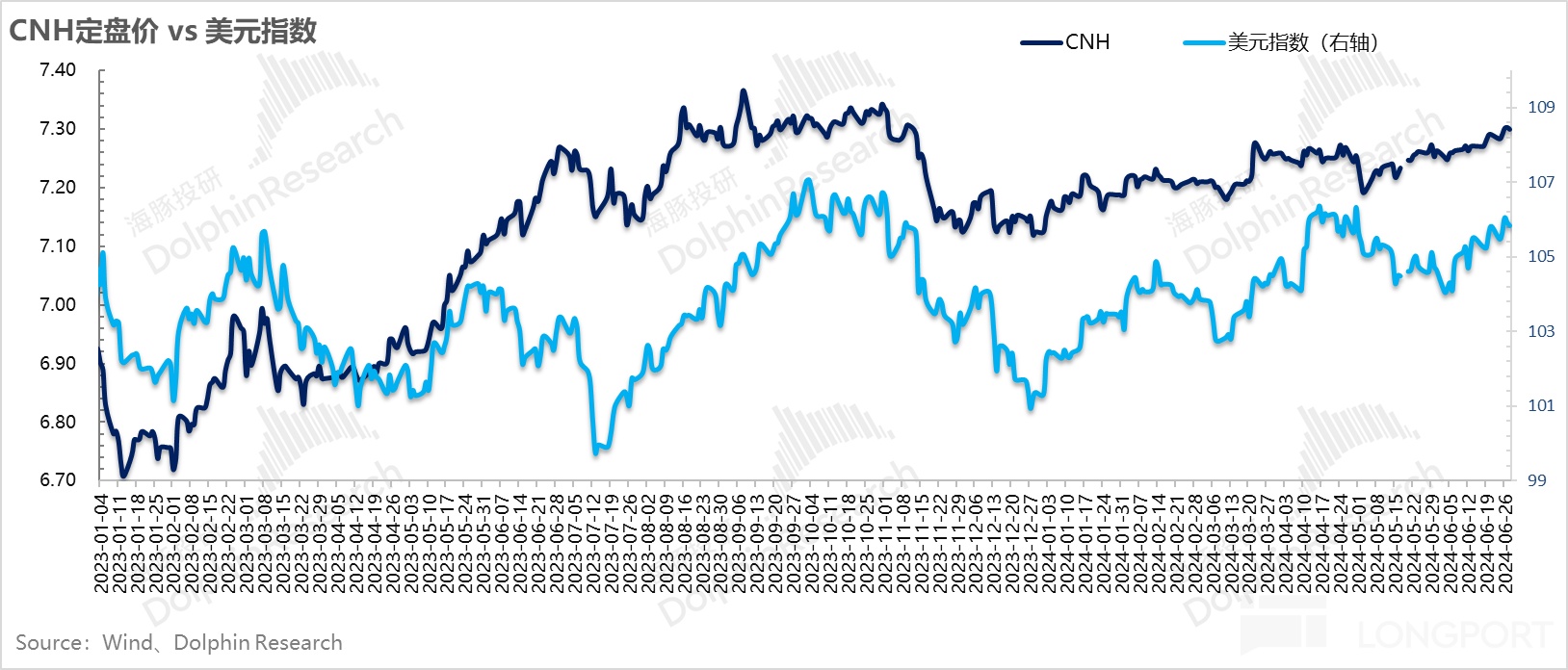
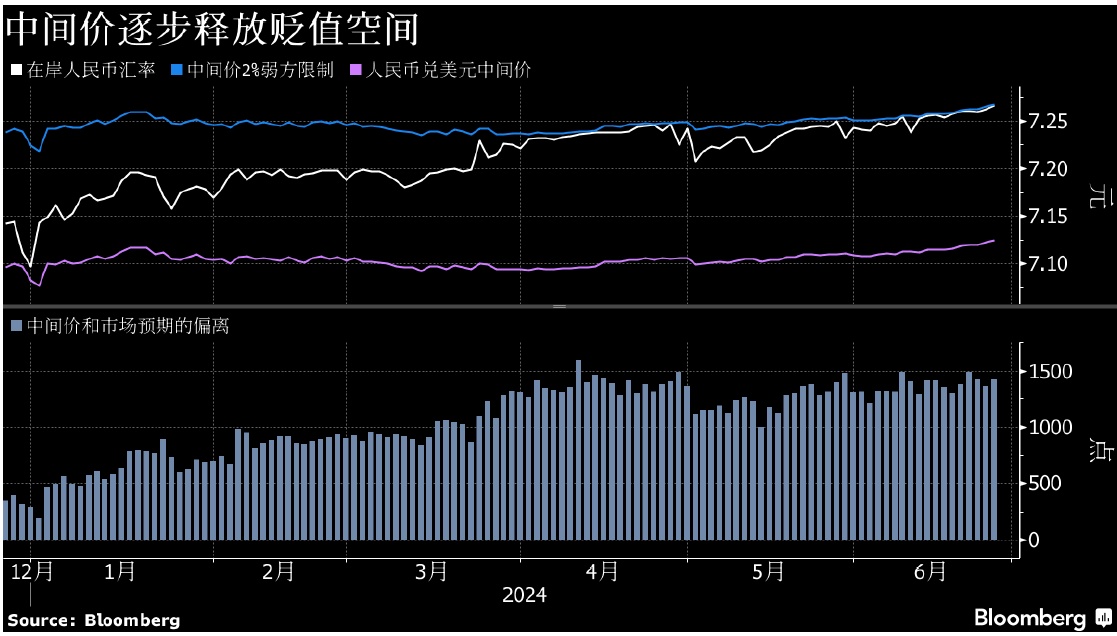
As U.S. growth slows and China’s recovery falters, RMB depreciation pressures persist (exacerbated by PBOC’s midpoint adjustments). With fundamentals weak (property stagnant, export momentum at risk) and FX headwinds, Dolphin Research expects offshore Chinese assets to trade range-bound—opportunities exist in undervalued zones, but rallies should be sold.
6. Portfolio Update
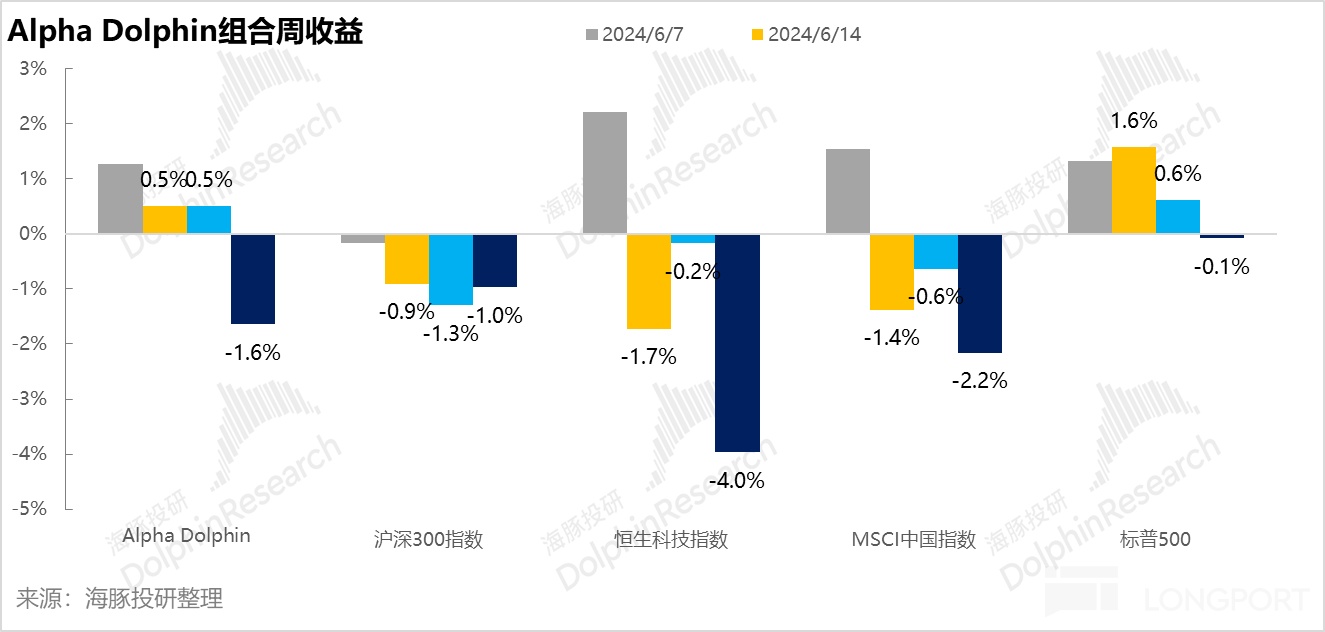
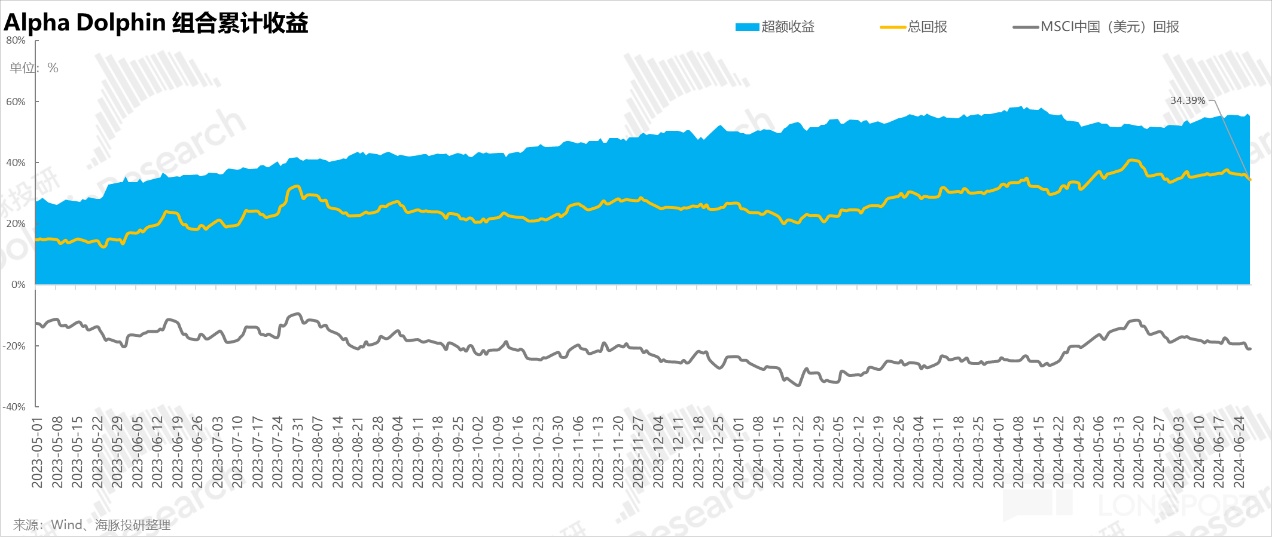
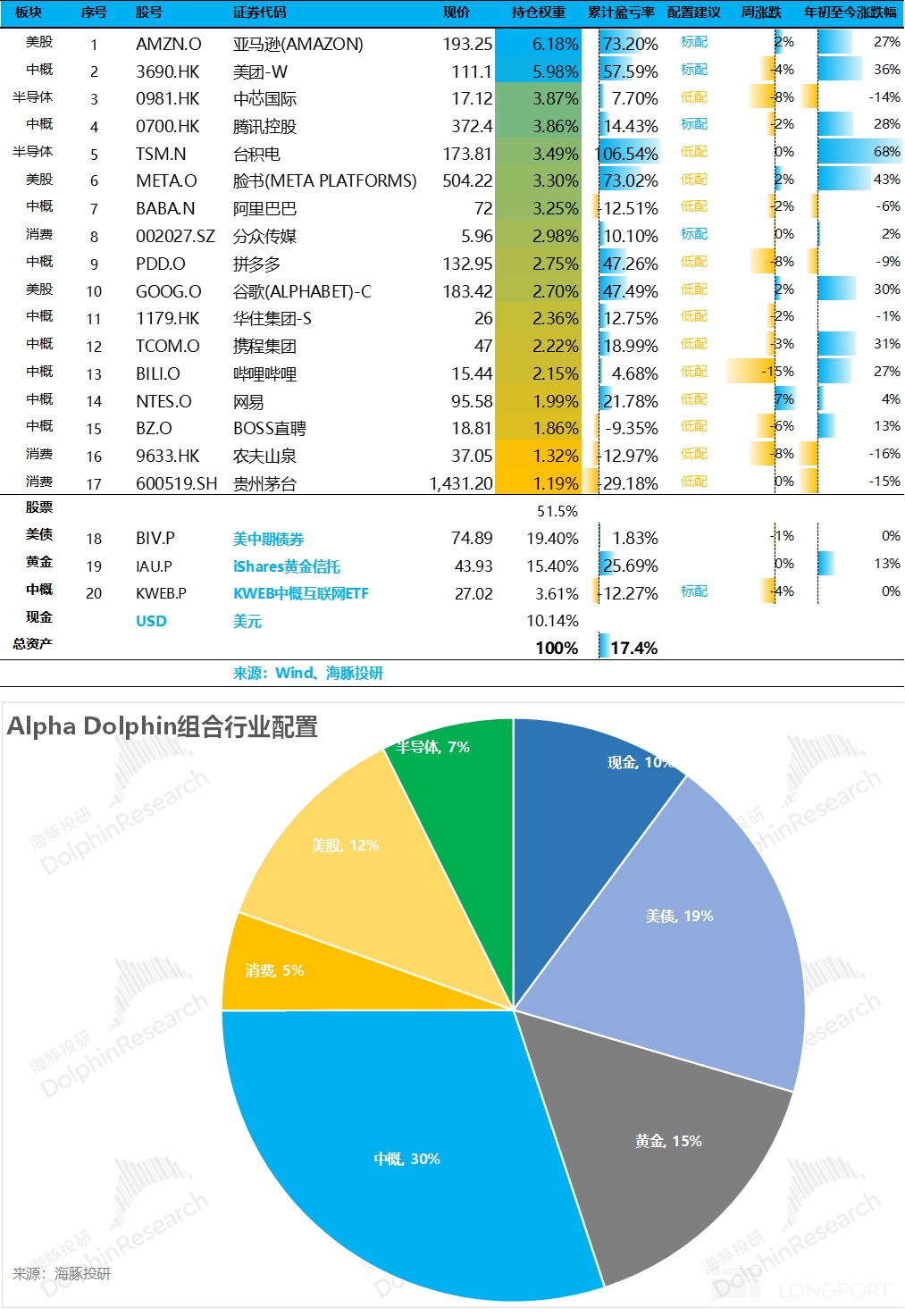
Last week’s portfolio was unchanged. It fell 1.6% (underperforming S&P 500’s -0.1% and CSI 300’s -1% but beating MSCI China’s -2.2% and Hang Seng Tech’s -4%). Since inception, the portfolio is up 34.4% (55% alpha over MSCI China), with virtual NAV at $136M.
7. Top Contributors
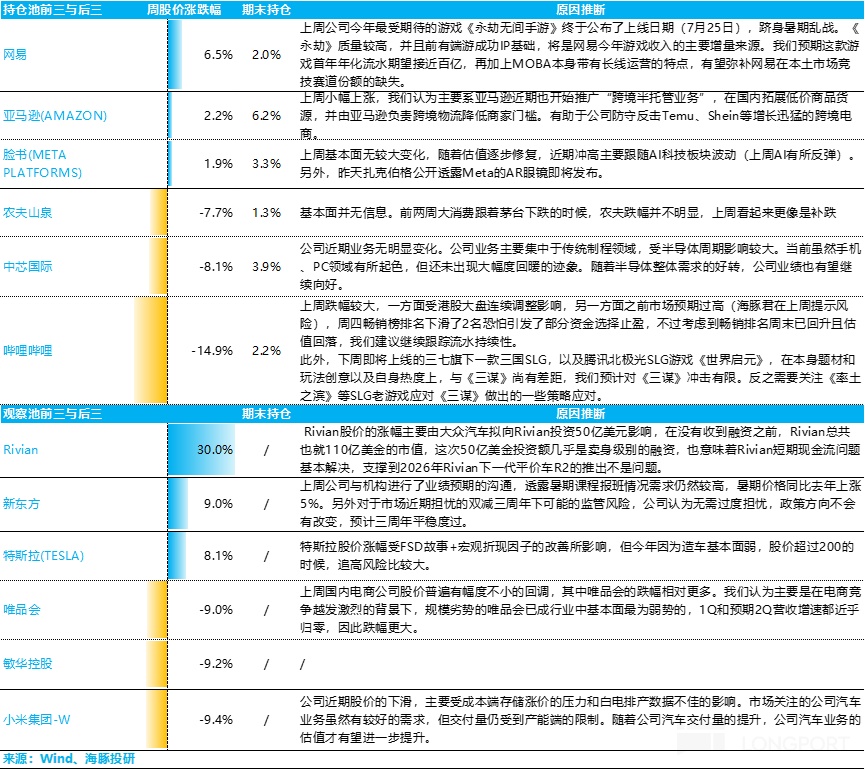
NetEase and Amazon led gains (despite modest rallies), while Bilibili gave back prior gains. Dolphin Research maintains a small Bilibili position, awaiting traction for "Three Kingdoms: Strategic Wars."
8. Asset Allocation
The Alpha Dolphin portfolio holds 20 stocks/ETFs (5 standard positions), plus gold, Treasuries, and USD cash.
<End>
Disclosures: Dolphin Research Disclaimer
Recent reports:
"Disappointing Retail Sales and a Soft-Landing Economy: Will They Drag Down Chinese Assets?"
"U.S. Fiscal Recklessness: Rate-Cut Traders Beware"
"The Fed’s Rate-Cut U-Turn: Is It for Real This Time?"
"Hong Kong Stocks Flash Crash: Time to Flee or Buy?"
"The U.S. Economy’s Financialization: Are Yellen and Powell the New Market Guardians?"
The copyright of this article belongs to the original author/organization.
The views expressed herein are solely those of the author and do not reflect the stance of the platform. The content is intended for investment reference purposes only and shall not be considered as investment advice. Please contact us if you have any questions or suggestions regarding the content services provided by the platform.
