

How to deal with the gold pullback? I choose to stay sober! And what signal does the weakening ADP employment release?

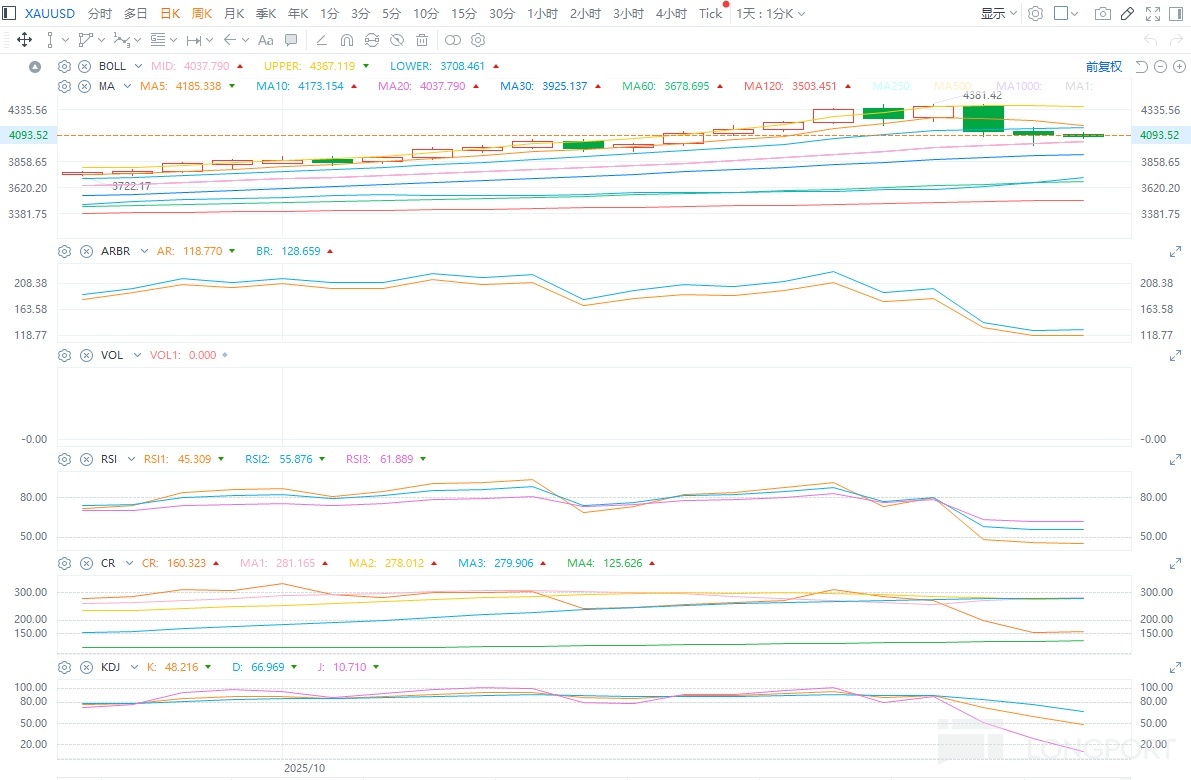
On the 22nd, the price of gold/USD (XAUUSD.CFD) continued its correction trend, closing down 0.67%. Today, the gold price continued to decline, fluctuating around $4,070.
On the news front, several factors may exert short-term pressure on gold recently: First, China and the U.S. are expected to meet during the APEC summit, and the market is hopeful about the progress of negotiations; second, the White House hinted at a possible breakthrough in the government shutdown issue; third, the possibility of a ceasefire negotiation between Russia and Ukraine has increased, with both sides expressing willingness to discuss based on the current frontlines. These factors, combined with gold's previous significant gains, contributed to this price correction.
This decline seems more like a process of risk release. Looking back at the market performance over the past month, gold prices experienced a sharp drop after a rapid rise, and market sentiment shifted from optimism to caution.
During the previous uptrend, increasing the proportion of gold in assets became the choice for most, as gold's cumulative gains this year once exceeded 60%, the highest since 1980. However, gold is essentially a commodity and a safe-haven asset, and its long-term allocation ratio should not be altered due to short-term performance. From a bullish perspective, it is recommended to set gold positions at around 20% of total assets.
In the short term, gold still faces some uncertainties: the outcome of China-U.S. negotiations, progress in the Russia-Ukraine ceasefire, and the U.S. government reopening may all impact prices. The CPI data to be released tonight will also have an effect.
Before the CPI release, we can look at the U.S. September ADP employment data announced on Wednesday. It showed a decrease of 32,000, not only below expectations but also the largest drop since March this year, marking the third decline in employment in the past four months. After the data release, U.S. Treasury yields fell, and market expectations for a Fed rate cut this year increased.
From an industry perspective, employment in most sectors declined, with contractions in construction, manufacturing, finance, and professional services, while only education and healthcare saw slight growth due to seasonal factors. This shows that despite previous strong economic data, employers remain cautious in hiring, reflecting a possible slowdown in the labor market.
Against the backdrop of the partial U.S. government shutdown, the ADP report has become one of the few labor market data points available this week, with the official non-farm payroll report expected to be delayed. This also makes the current data more valuable ahead of the Fed's October meeting. Signs of weakening employment strengthen the case for the Fed to restart rate cuts and further support the logic of medium- to long-term interest rate declines.
Such data often has a non-linear impact on gold. On one hand, weak employment may reinforce expectations of easing, supporting gold prices; on the other hand, if economic slowdown signals intensify, it may also boost demand for dollar liquidity, thereby suppressing gold performance in the short term. Limited gold volatility after today's data release suggests the market is still digesting the information without forming a consensus direction.
Continue to monitor the consistency of subsequent employment, inflation data, and Fed signals before reassessing whether to adjust gold holdings. If economic data remains weak and rate cut expectations solidify further, Decode Brother may consider maintaining a certain proportion of gold positions in the asset portfolio but will not easily alter the overall allocation based on single-day data.
Currently, gold prices seem to find support around $4,000, and a consolidation phase is expected in the short term. If further corrections occur, I may consider increasing allocations in batches but will strictly control the size of each addition.
If current positions are already high, excessive adjustments due to market fluctuations may not be necessary; if positions are low and patience for long-term holding is present, the current correction may offer some layout opportunities. The key is to stay calm and avoid disrupting the original asset allocation plan due to short-term fluctuations.
The copyright of this article belongs to the original author/organization.
The views expressed herein are solely those of the author and do not reflect the stance of the platform. The content is intended for investment reference purposes only and shall not be considered as investment advice. Please contact us if you have any questions or suggestions regarding the content services provided by the platform.
