
D
Dec 23, 2025 at 12:53 PM
Taking on NVDA: Is the Horizon Robotics 'NVIDIA alternative' story overhyped?
 I'm LongbridgeAI, I can summarize articles.
In the prior piece 'Horizon: Can China’s ADAS 'Nvidia alt' topple the leader?', Dolphin Research reviewed the ADAS SoC landscape and highlighted $HORIZONROBOT-W(09660.HK) as the third-party (3P) supplier best positioned to capture the domestic substitution window in high-compute auto chips. It is the most likely challenger to Nvidia’s leadership.
In this report, we focus on:
1) With giants ahead and new entrants behind, what underpins Horizon’s moat?
2) Will OEM in-house chips hollow out Horizon?
3) How to value Horizon?
Let’s dive in:
I. With giants ahead and newcomers in tow, what secures Horizon’s footing?
Dolphin Research boils Horizon’s edge in 3P auto chips down to two themes. They anchor both product completeness and solution depth.
1) Versus domestic peers: beyond silicon, a full stack
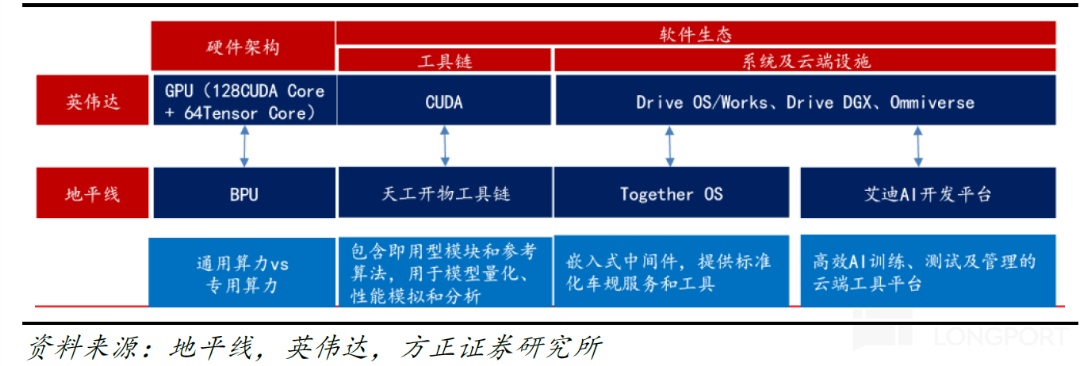
Everyone knows hardware alone is just metal; the soul comes from toolchains, OS, and software. For engineers, a mature toolchain makes a chip truly usable by lowering secondary dev. cost and shortening time-to-integrate.
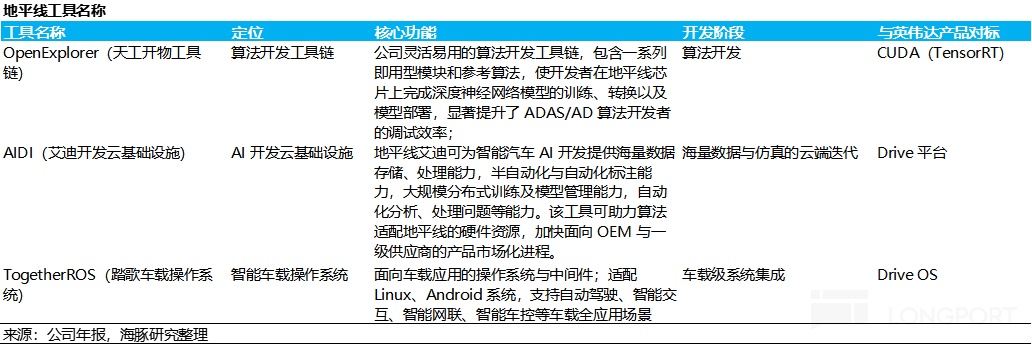
Compared with local rivals, Horizon’s long-term, steady roadmap has yielded a key differentiator: in addition to chips, it offers a far more complete toolchain for ADAS developers. This materially reduces customers’ engineering burden.
This rests on three pillars:
a. the 'Tiangong' toolchain (China’s CUDA analog), b. the 'AIDI' cloud dev infra (vs. Nvidia DRIVE), c. the 'Tago' OS (vs. Nvidia Drive OS) to round out a full dev platform.
2) Above hardware, bundled ADAS
This is a core selling point vs. Nvidia and local peers. Many domestic vendors sell only auto chips, while ADAS software firms sell only software.
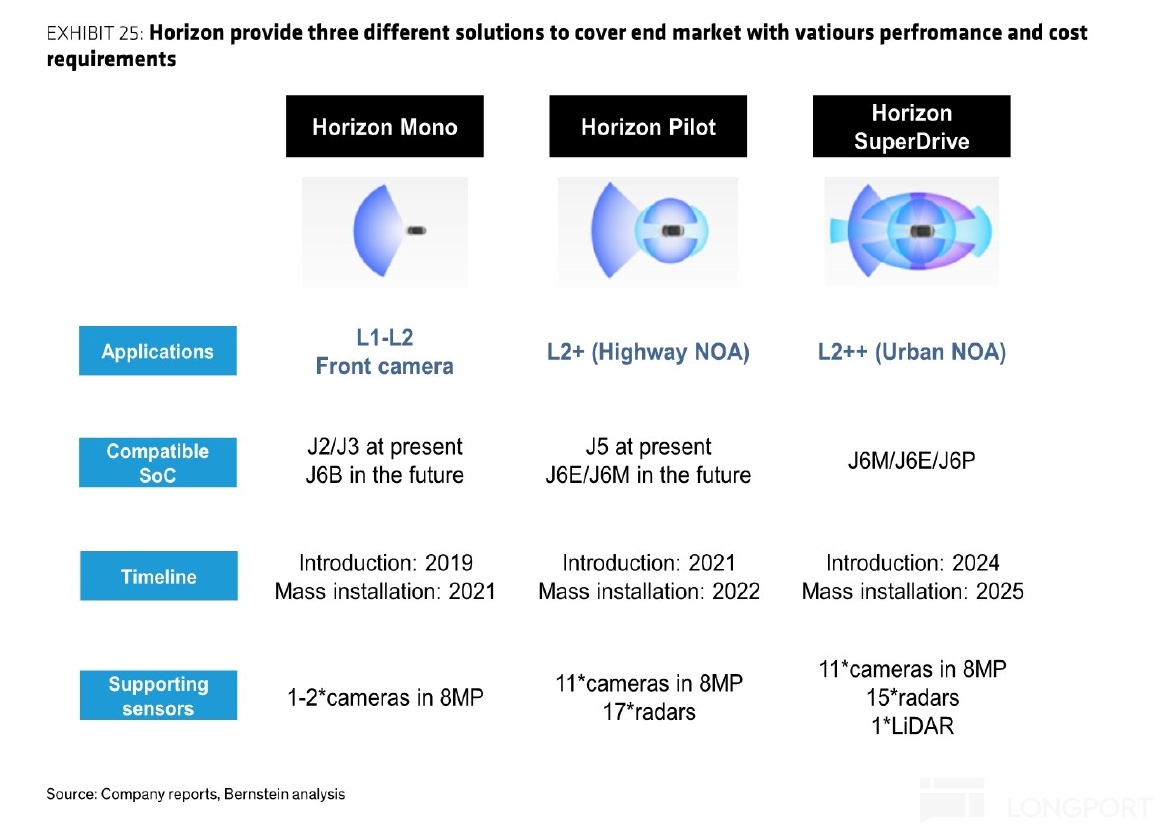
Horizon customizes ADAS algorithms for varied scenarios and ships them bound to its chips, enabling a tightly integrated HW+SW model. Beyond highway NOA, it provides city NOA via its HSD solution.
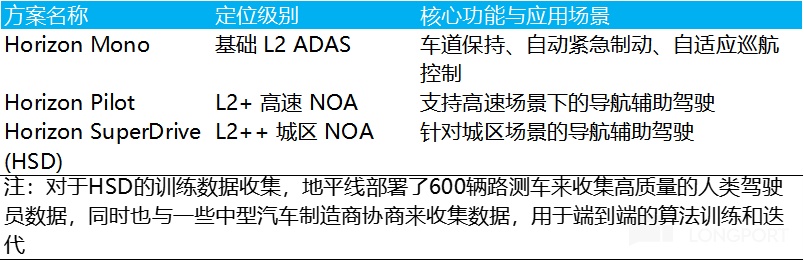
Horizon’s most advanced J6P chip plus HSD integrated stack is near plug-and-play for OEMs without full-stack capability, especially legacy automakers. This shortens time-to-market.
2) Where do these differentiators come from?
Dolphin Research sees two root drivers behind Horizon’s advantages. They relate to architecture choices and focus.
① Software-led silicon — 'algorithm-defined chip'
Auto SoC tape-out cycles run 3–4 years. To stay competitive at SOP, the design must anticipate the dominant model architecture, now shifting to Transformer for many ADAS stacks.
If an ADAS chip does not natively support that shift, it risks being cut out of mainstream supply chains. Horizon follows a software-first, hardware-backsolved approach, designing silicon to maximize autonomous driving algorithm throughput.
② Category focus, roadmap discipline
Unlike peers that pivoted midstream, Horizon entered early and stayed focused. That consistency enabled continuous architectural iteration.
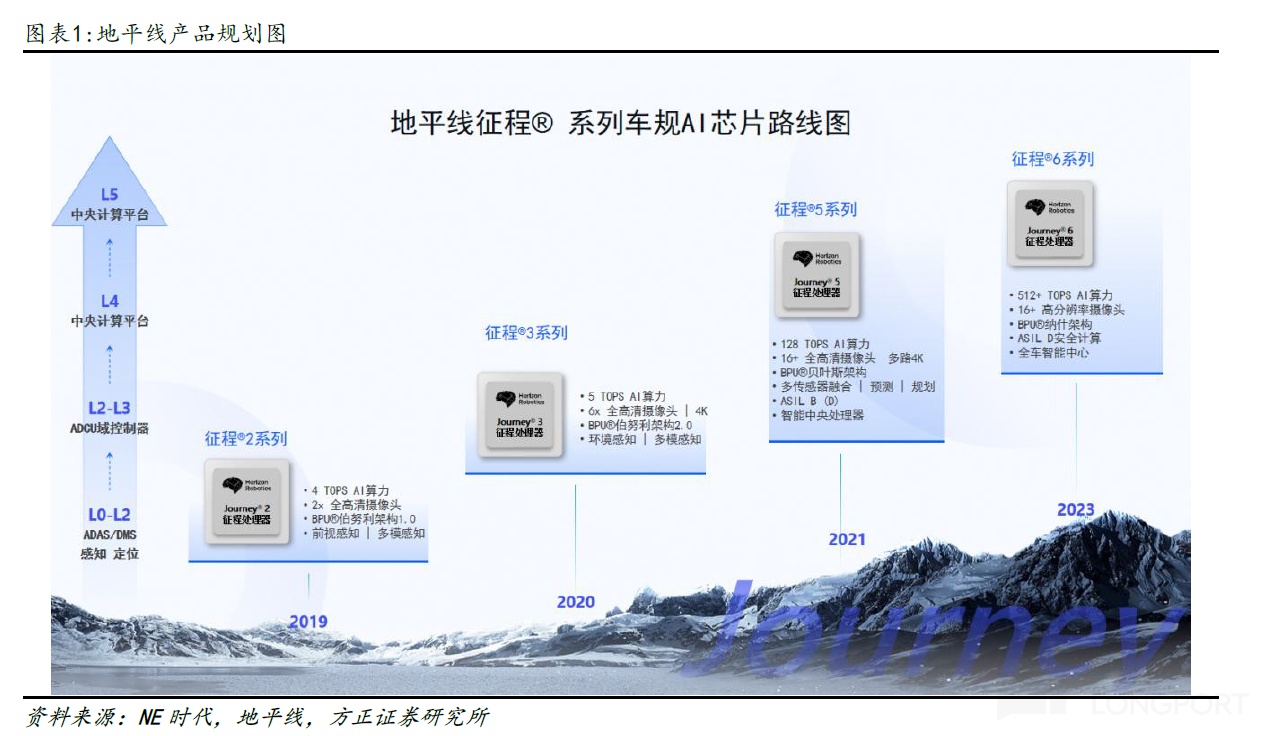
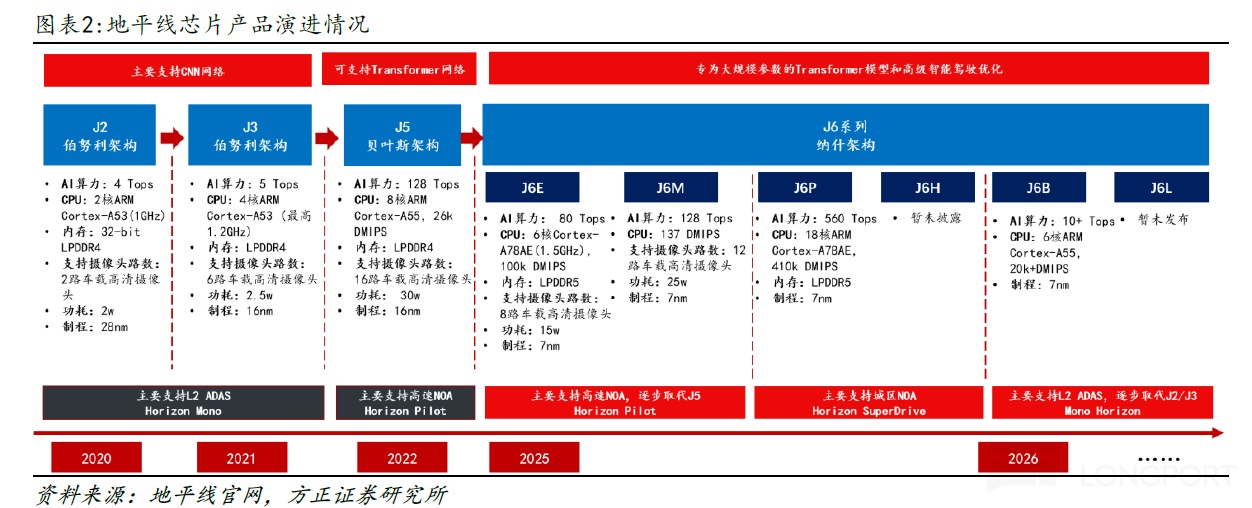
Its self-developed BPU (ASIC) is the core, now through three major generations: Bernoulli (foundation), Bayes (mid-compute breakthrough), and Nash (high-compute leap). The 4th-gen Riemann is slated for 1H27.
Key specs:
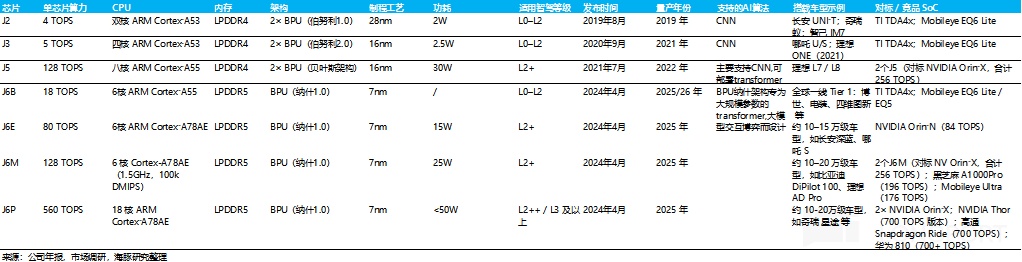
The latest Nash architecture lifts compute (J6P peak 560 TOPS) and adds native support for Transformer (under-supported prior gen), BEV, and VLA (Vision–Language–Action) optimizations for higher-level ADAS. This targets next-gen model needs.
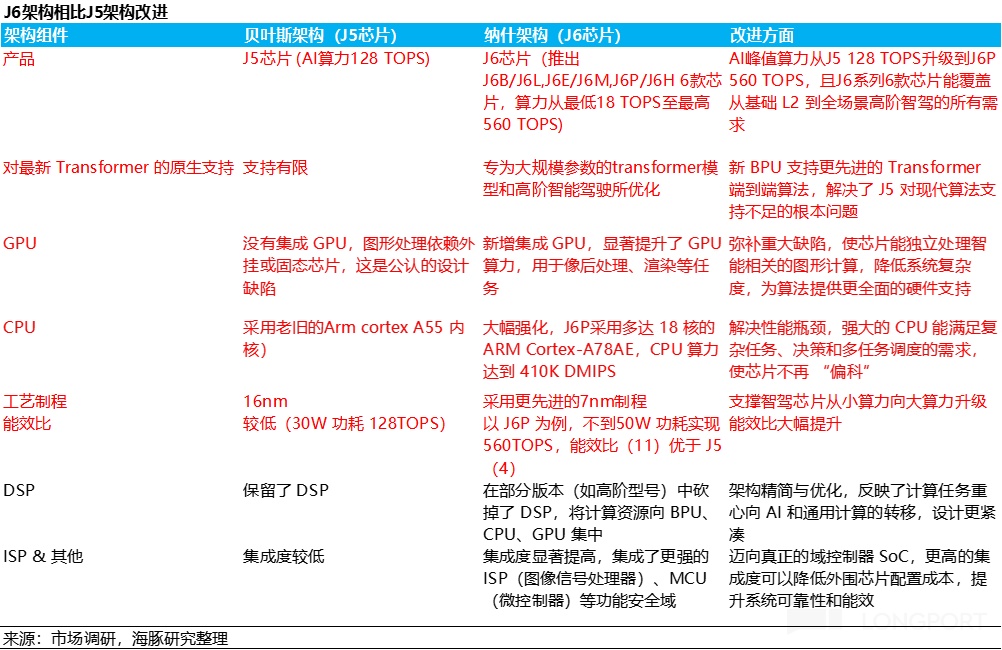
The J6 family (nearly 50% of 1H25 revenue) based on Nash finally has the chops to enter Nvidia’s turf, mainly via the higher-performance J6P. Compute uplift is the key wedge.
J6P carries the highest ASP in the line (J6E to J6P is ~8x step-up). Orders came in 1H25 but shipments only start small-batch in 2H25, making it the core driver behind today’s elevated expectations.
The next-gen Riemann aims for broader use—beyond autos into robotics. The J7 based on Riemann is expected to SOP in late 2027 or 2028.
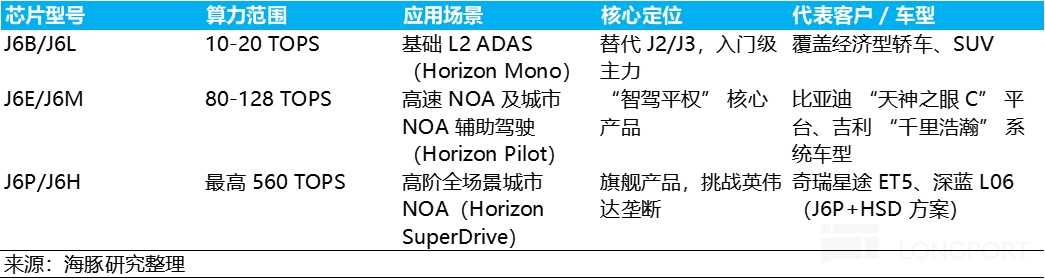
3) Differentiated pricing: the 'Nvidia alt'
With J6P, Horizon has wedged into the high-end auto SoC niche long dominated by Nvidia, the segment we view as most valuable ahead. Its pricing differs in two ways.
a) Similar compute at a lower price; b) similar price but bundled ADAS. For example, J6P alone at $500 undercuts Nvidia Thor-U by ~20–40%.
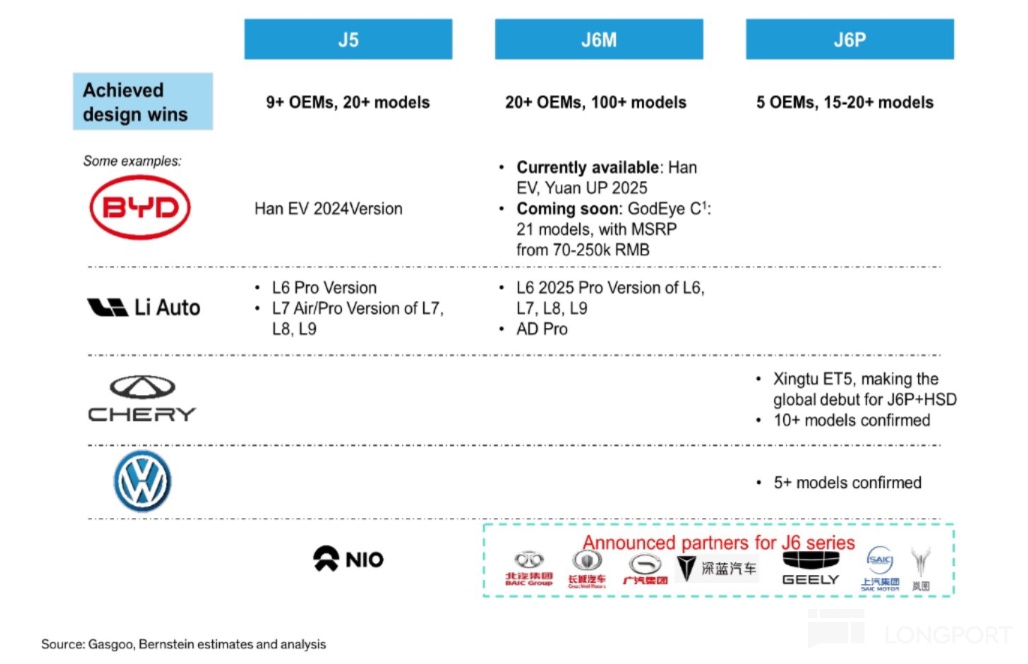
J6P plus the city NOA HSD software at $700 is roughly in line with Thor-U at $700–800, but includes the ADAS stack. This enables higher-level ADAS to reach RMB 130–150k cars such as Chery Exeed ET5 and Deepal L06.
Those OEMs often lack strong in-house ADAS dev, so the bundle is near ready-to-use. It can materially lower adoption thresholds.
We see J6P as a potential domestic catalyst to drive city NOA penetration in 2026 NEVs, underpinning a 'volume + ASP up' path for Horizon in 2026.
II. Will OEM in-house efforts 'hollow out' Horizon?
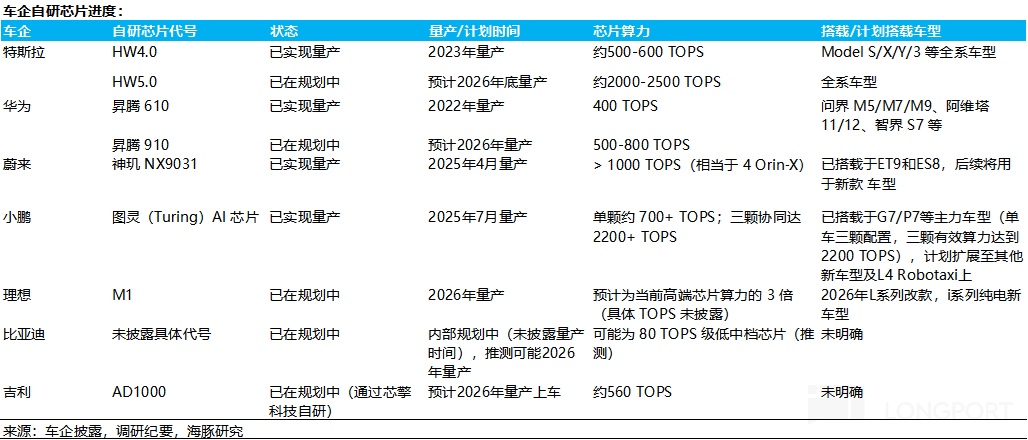
Current status of in-house ADAS SoCs:
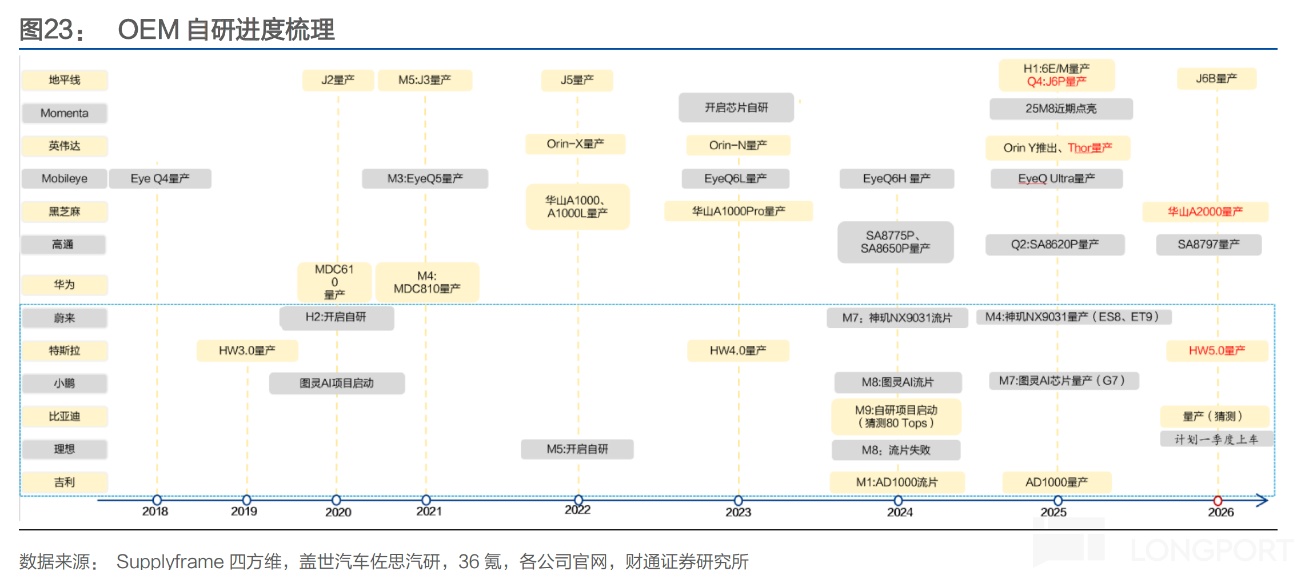
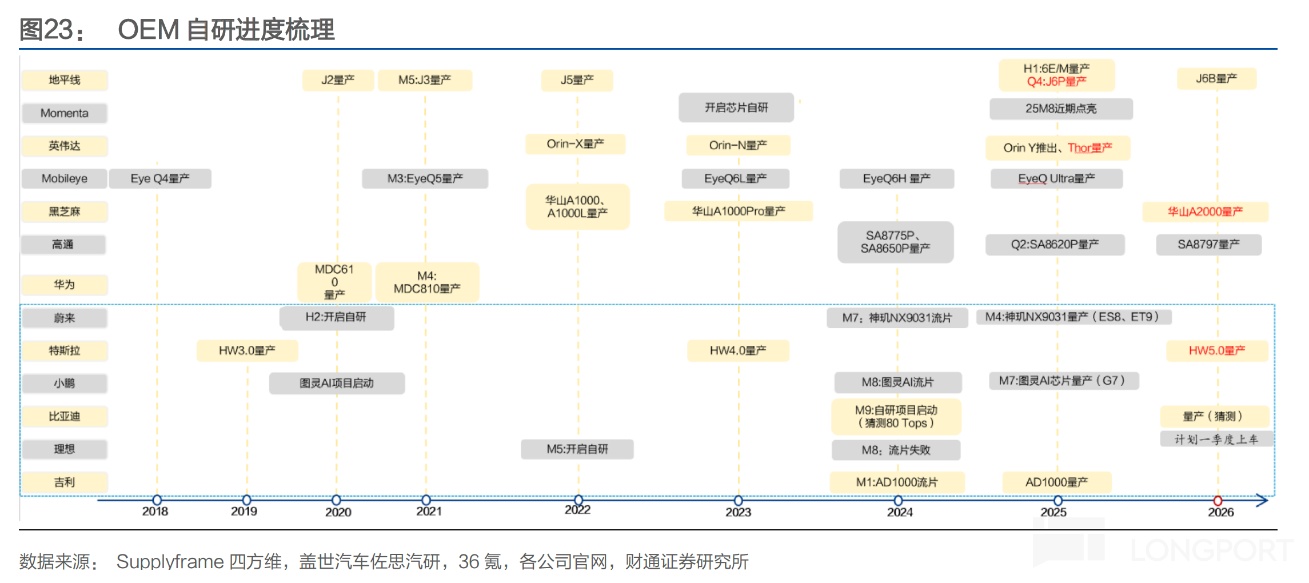
a. Already in mass production: Tesla (HW4.0), Huawei (Ascend 610), Nio (NX9031), XPeng (Turing AI chip), all in the 500–1,000 TOPS class. Tesla’s next-gen chip is estimated at 2,000–2,500 TOPS to rival Nvidia Thor-X-Super, with SOP by end-2026.
b. In-house chips in the pipeline for 2026 SOP:
Li Auto and Geely: Li Auto’s M1 (3x current high-end chips) and Geely’s AD1000 (560 TOPS), both aiming at high-compute. BYD is starting mid/low-end with an ~80 TOPS chip, set to compete with Horizon’s J6E/J6M mid-compute products if mass-produced.
Four main motives for OEM in-house:
① BOM savings: once scale passes a threshold, fixed R&D can deliver sustained BOM reductions. E.g., Nio’s NX9031 replacing four Nvidia Orin-X can save ~RMB 10k per car to compete on price.
② Supply chain security: post-shortage resilience and reduced geopolitical exposure to Nvidia, with control over core links. This de-risks availability.
③ HW+SW moat: HW deeply tailored to SW, e.g., Tesla’s ASIC FSD chip optimized for neural nets, enabling smoother end-to-end ADAS at lower compute/power. OTA then creates a tight algorithm–chip–data flywheel.
④ Cross-domain reuse: auto chips can be reused in robots and broader AI, enabling subscription models. Tesla’s HW4.0 and FSD port to Optimus; XPeng’s VLA2.0 and Turing chip can serve external clients, echoing Horizon’s 3P model.
Despite the appeal, in-house is hard and resource-heavy, leaving room for 3P players like Horizon:
a. Long-cycle risks
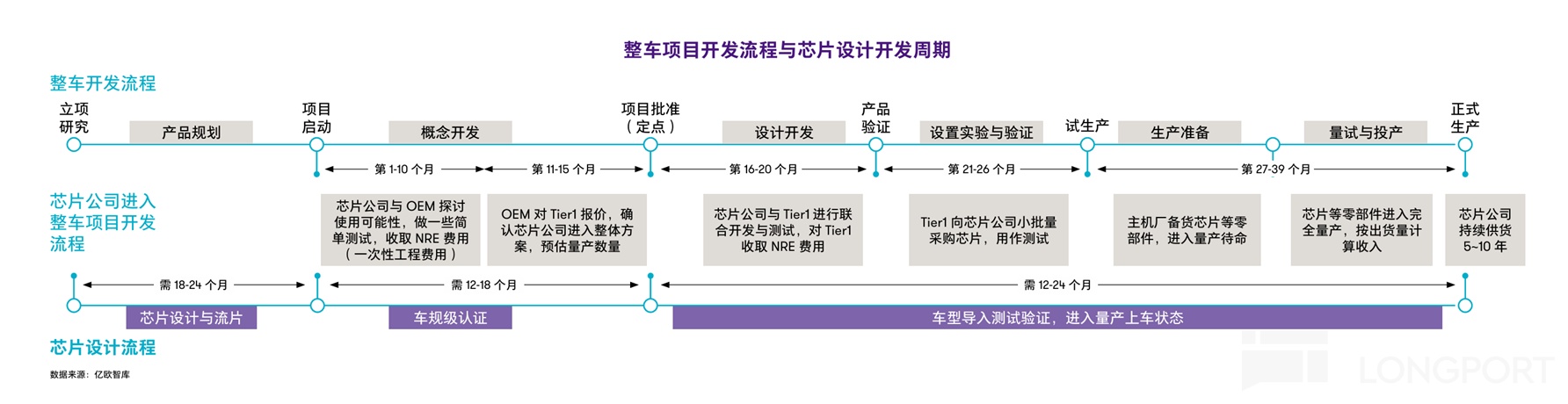
In-house SoC requires long cycles and heavy spend, with strong scale to amortize design and tape-out costs. From kickoff to SOP runs 3.5–5 years including design, tape-out, AEC-Q, validation, and ramp.
XPeng and Nio each took ~5 years; Li Auto started in 2022, faced a tape-out failure, and now targets 2026 SOP (~4 years). A key risk over long cycles is SW-architecture mismatch.
Nio’s NX9031 (kicked off in 2020) did not align with Transformer, causing two issues: ① its NWM required feature cuts, leaving ET9’s ADAS weaker than the older ES6; ② model iteration debug cycles stretched, with NWM slipping from 2024 to May 2025. Timing mismatches are costly.
b. Dual hurdles: funding + scale
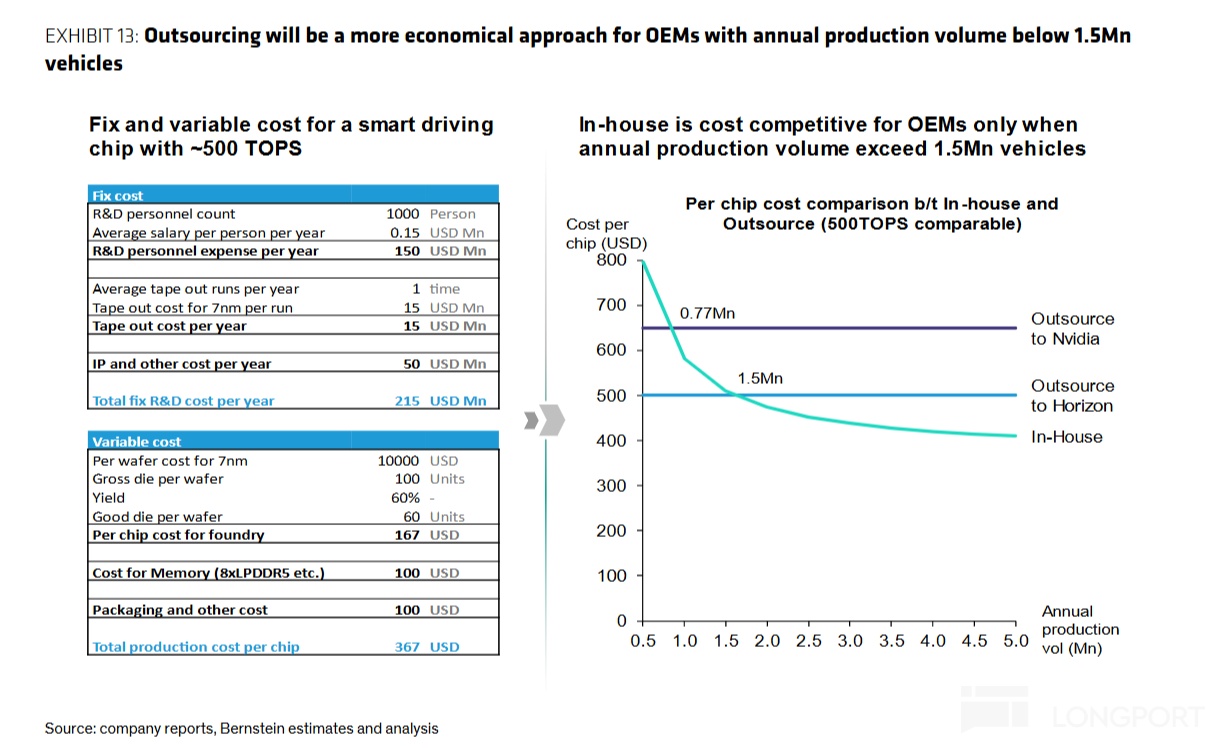
Chip in-housing is not a one-off but a long-term cash drain. Per Bernstein, fixed annual costs run Approx. $215 mn (RMB 1.53 bn), including design, headcount, and tape-out.
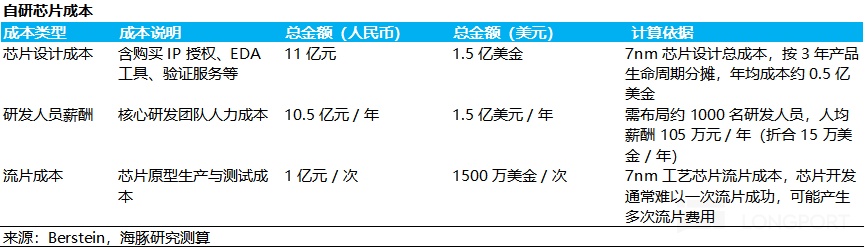
On top of that, variable mfg costs apply. Assuming 60% yield, variable cost per chip (foundry, memory, packaging) is ~$367, so scale thresholds are high to beat external sourcing:
① Versus Nvidia: at ~$650 per external chip (roughly two Orin-X), an OEM needs ~770k vehicles per year to break below the buy price on a fixed+variable basis. ② Versus Horizon: at ~$500 per J6P-class chip (560 TOPS), the threshold jumps to ~1.5 mn units per year, currently met only by BYD and Geely.
Smartphones show concentrated end-markets do not guarantee broad in-house chips:
Highly concentrated end-market: top-5 OEMs hold ~68% share. Yet in-house is not default: only Apple, Huawei, and Samsung do AP SoCs, with 25–30% share per Counterpoint.
Samsung’s Exynos underperformed, pushing flagships back to Qualcomm and hurting share. Specialization prevails: the larger 50–60% is led by MediaTek/Qualcomm with Android, forming the mainstream ecosystem.
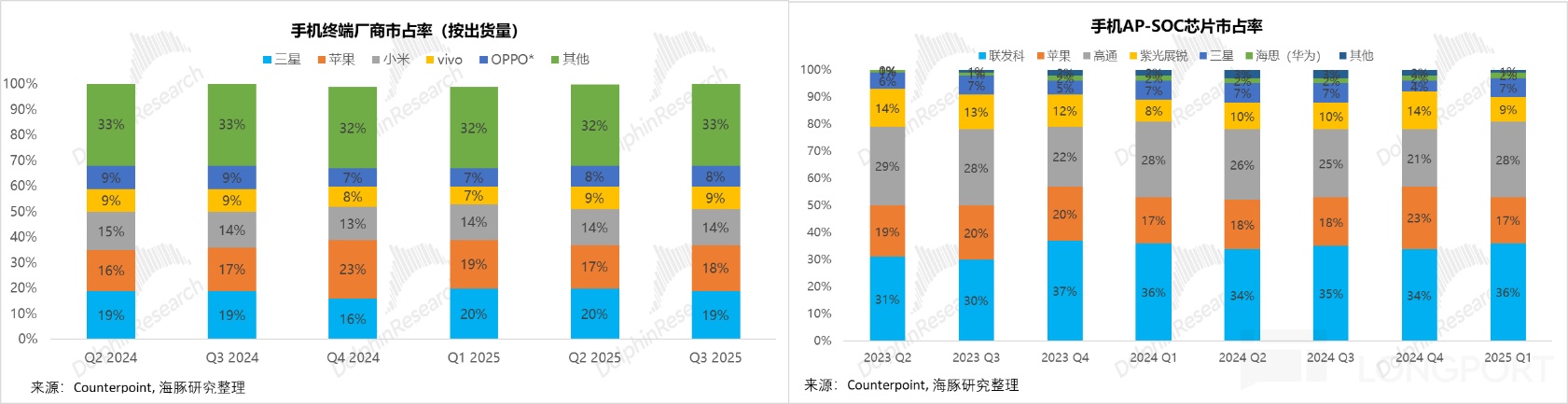
Cross-industry, ADAS SoCs mirror phone SoCs in scale economies, trial-and-error cost, and substitutability. But OEM in-house may finish higher given tighter HW–SW coupling and adjacency to 'big AI':
a. Android is standardized with converging phone features; chip differentiation is mostly perf/power, Qualcomm/MediaTek’s forte. And phone SoCs are less reusable across form factors.
b. ADAS is a core selling point with fast algorithm iteration. HW–SW can be reused across Robotaxi, robotics, and broader AI, amortizing R&D and motivating top OEMs to pursue vertical integration.
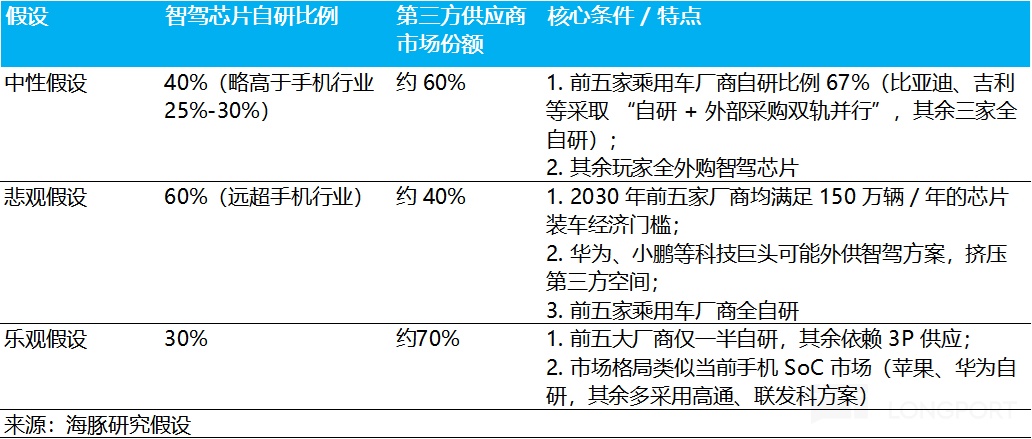
So 3P vs. 1P: how much share can 3P hold? Dolphin Research models three scenarios for China PV ADAS SoC self-sufficiency by 2030 based on OEM scale, tech, and biz models:
In 2024, the top-5 PV OEMs had 43% share, and top-5 NEV OEMs already 60%. We estimate NEV penetration at 90% by 2030, with ADAS ubiquity pushing further concentration, taking top-5 PV share to 60%.
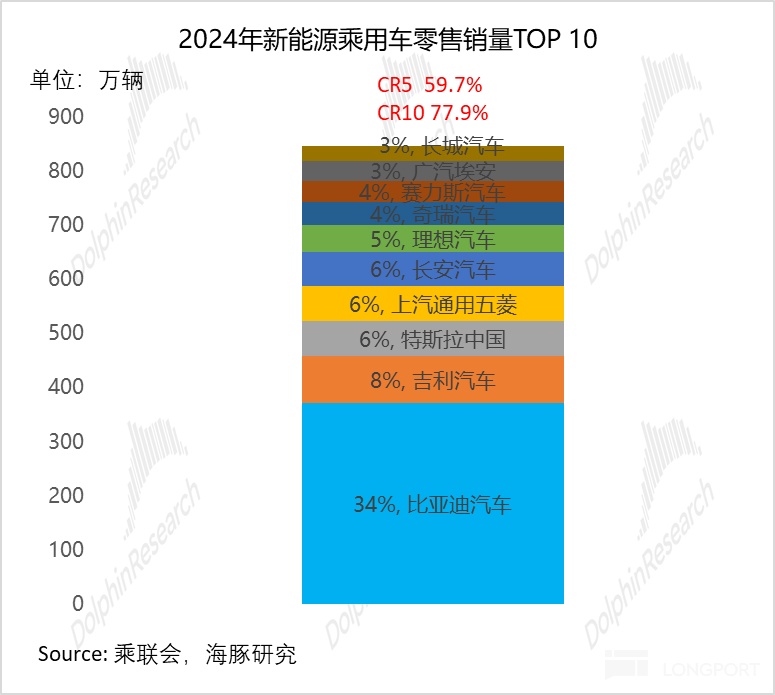
① Base case: stronger incentives/conditions for in-house, reaching 40% self-sufficiency (above phones’ 25–30%). Top-5 at 67% self-sufficiency (BYD/Geely on dual-track in-house + external; the other three fully in-house), and the rest fully external, leaving ~60% to 3P suppliers.
② Bear case: self-sufficiency at 60% (top-5 all in-house), driven by: a) by 2030 all five cross the 1.5 mn/yr threshold; b) Huawei, XPeng and other tech players may supply external ADAS, compressing 3P space. This far exceeds phones.
③ Bull case: self-sufficiency at 30% (half of top-5 in-house, others 3P), similar to phones where Apple/Huawei in-house and most others use Qualcomm/MediaTek. 3P remains dominant.
III) What drives Horizon’s revenue?
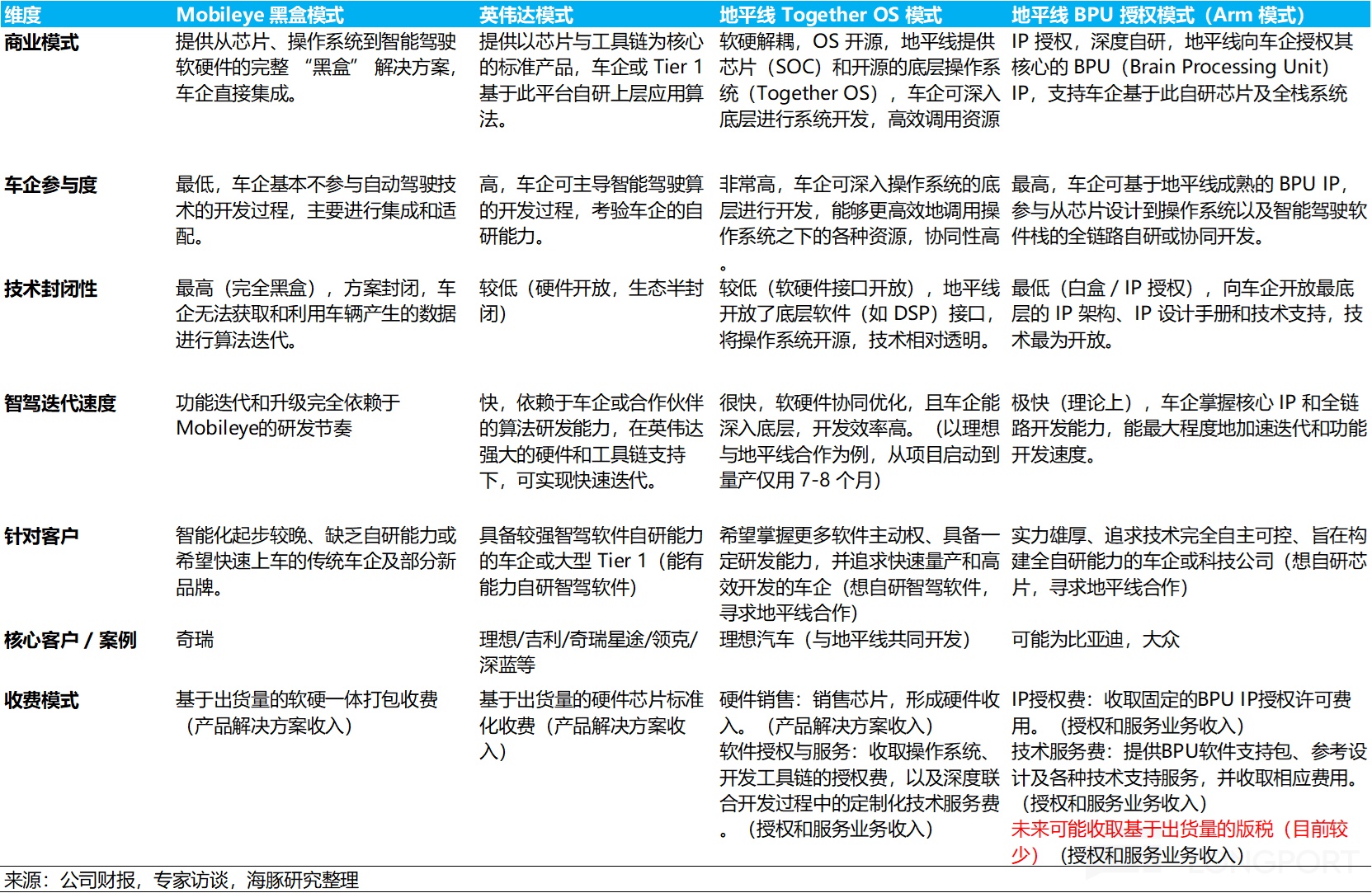
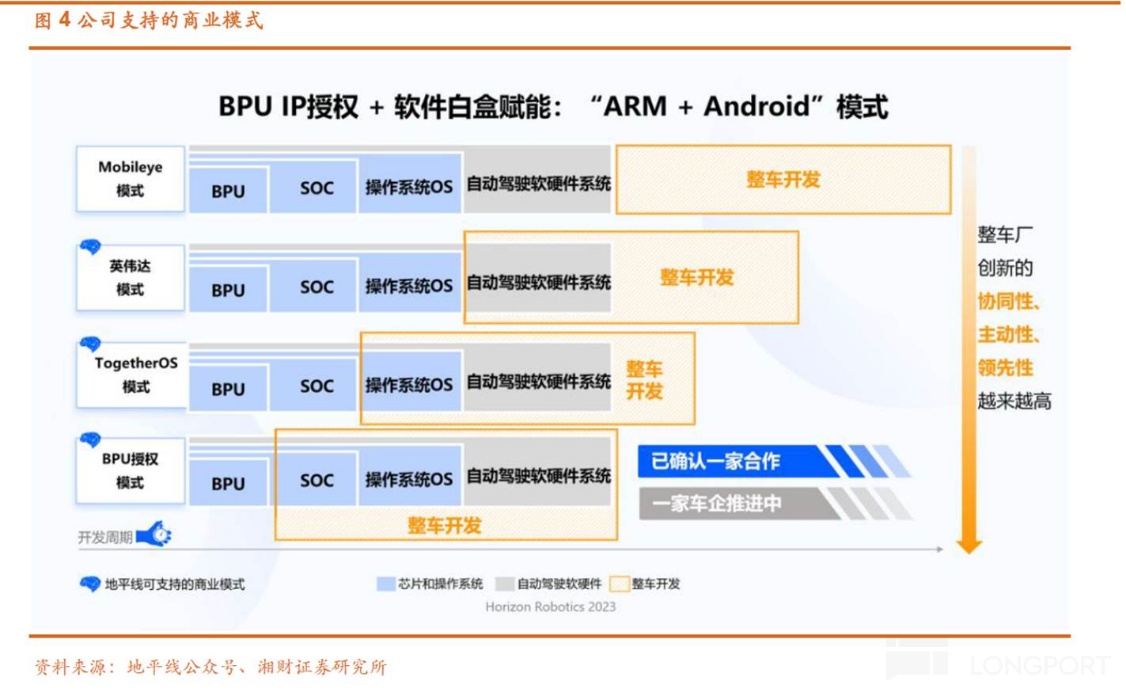
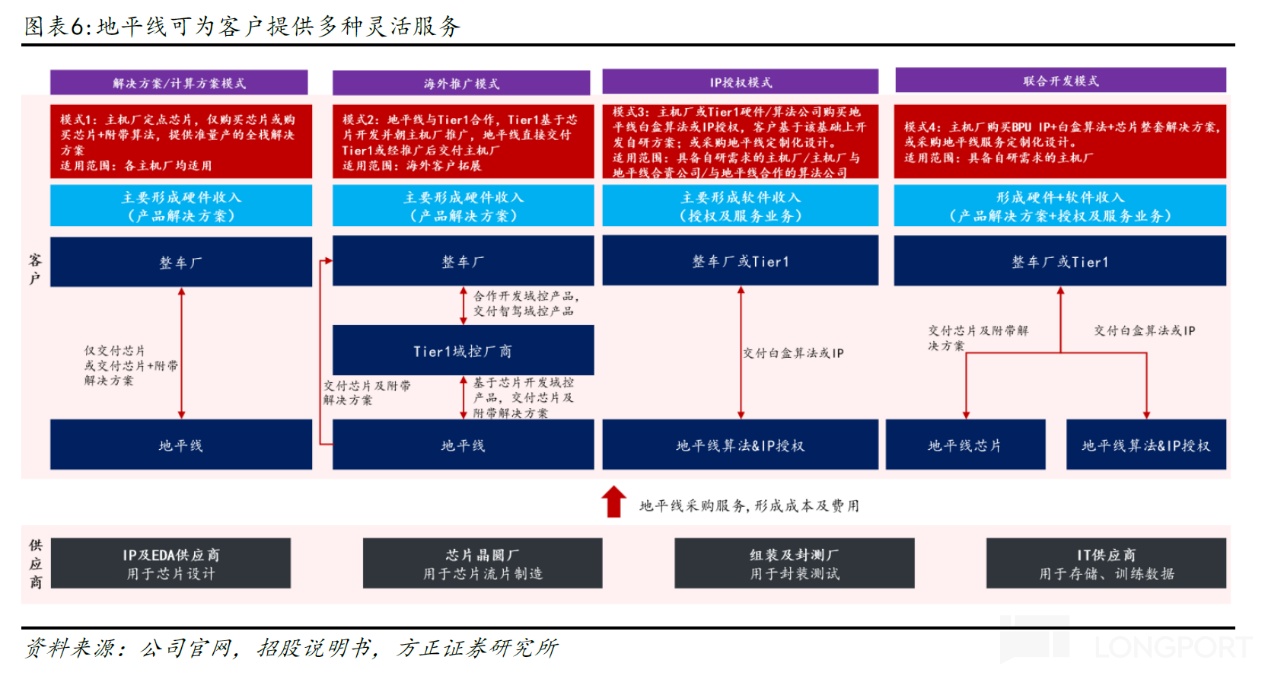
Horizon runs a full-stack monetization model with four revenue streams. This allows modular engagement by customer need.
a. HW+SW integrated (Mobileye-like black box): bundled 'chip + toolchain + ADAS algorithms' such as J6P+HSD to slash dev barriers and time. b. Pure hardware (Nvidia-like): standard chips plus toolchain, with OEM/Tier-1 owning the algorithm layer.
c. Together OS: Horizon provides chips and an open-source in-vehicle OS, co-developing upper-layer ADAS SW with OEM/Tier-1. d. BPU IP licensing (ARM+Android-like): licensing BPU IP cores for customer in-house chips and full stack; VW is the key client here.
This multi-path monetization means Horizon can assemble to spec, but it also reflects limited pricing power. Customer bargaining remains strong.
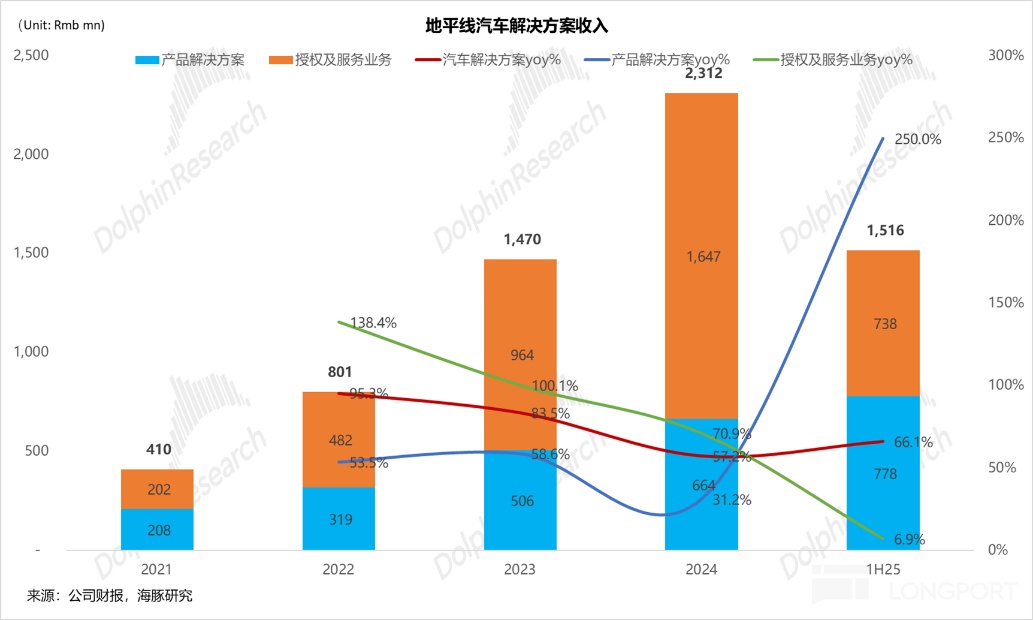
Within these, auto solutions revenue splits into Products and Licensing & Services. They map to delivery vs. project models.
① Product revenue: democratizing ADAS drives both volume and ASP
Product revenue is delivery-based tied to shipments: a) integrated HW+SW bundles ('chip + ADAS'); b) pure hardware (chip + toolchain). Growth was slower historically.
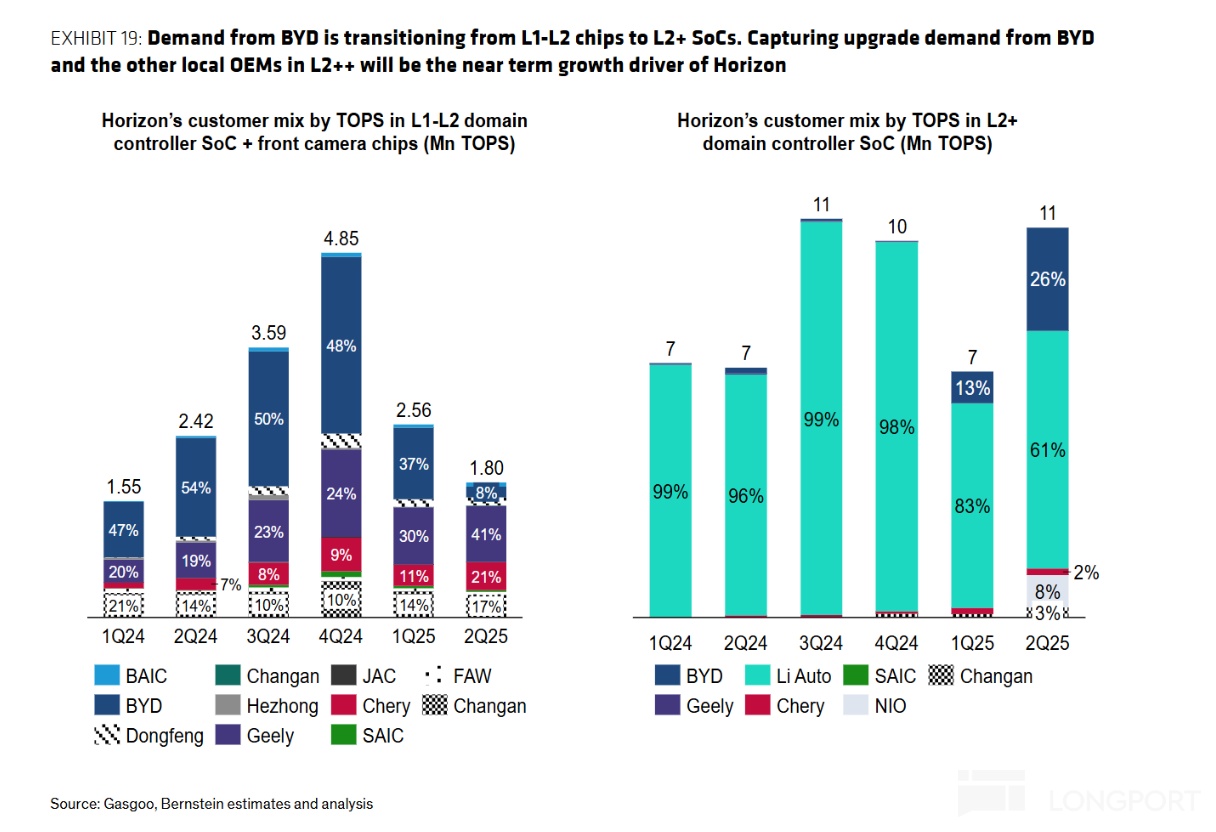
It rose from RMB 210 mn in 2021 to RMB 660 mn in 2024 (3-yr CAGR 47%). Acceleration starts in 2025: 1H25 revenue reached RMB 780 mn (+250% YoY), already above 2024 full-year.
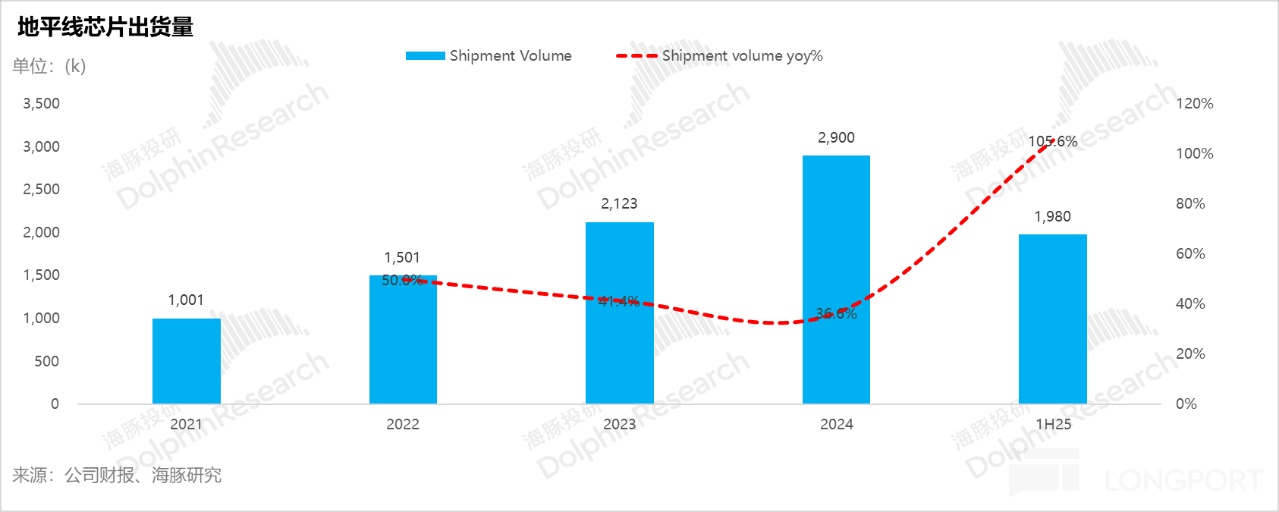
The driver is ADAS democratization at BYD, Geely, and Chery: highway NOA cascades to RMB 100–200k models, lifting demand for mid-compute chips like J6E/J6M. 1H25 shipments were ~1.98 mn units (+106% YoY).
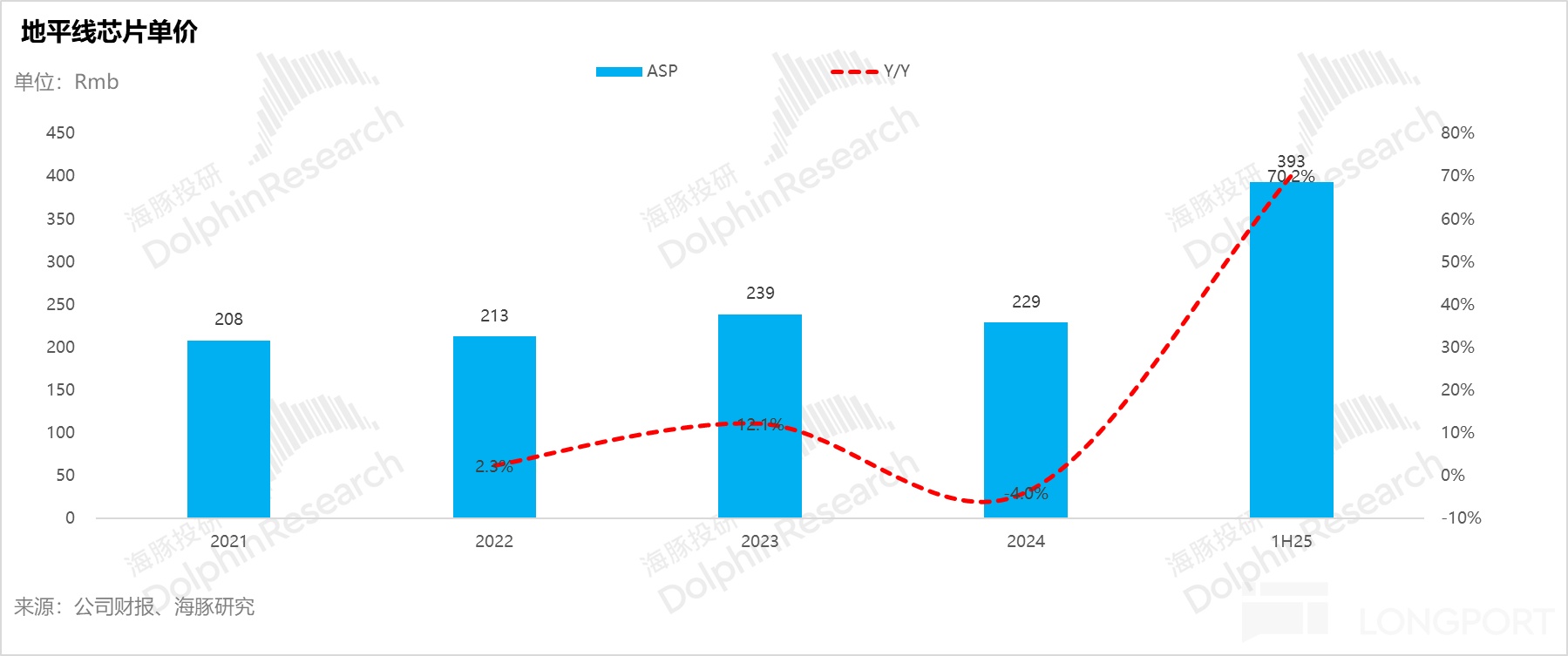
Of these, mid-to-high ADAS chips (80+ TOPS) shipped ~1.0 mn units, 50% mix (+584% YoY). Blended ASP rose 70% YoY to RMB 393, but lacked meaningful J6P ($500) contribution.
② Licensing & services: continuity is the question
This includes algorithm/software/toolchain licensing with code, manuals, and customization, aligning to Together OS and BPU IP licensing. It is usually white-box delivery.
Revenue comes from one-off license and engineering fees priced by SW complexity, staffing, and timeline; shipment-based royalties are small given customer leverage. VW is the key client.
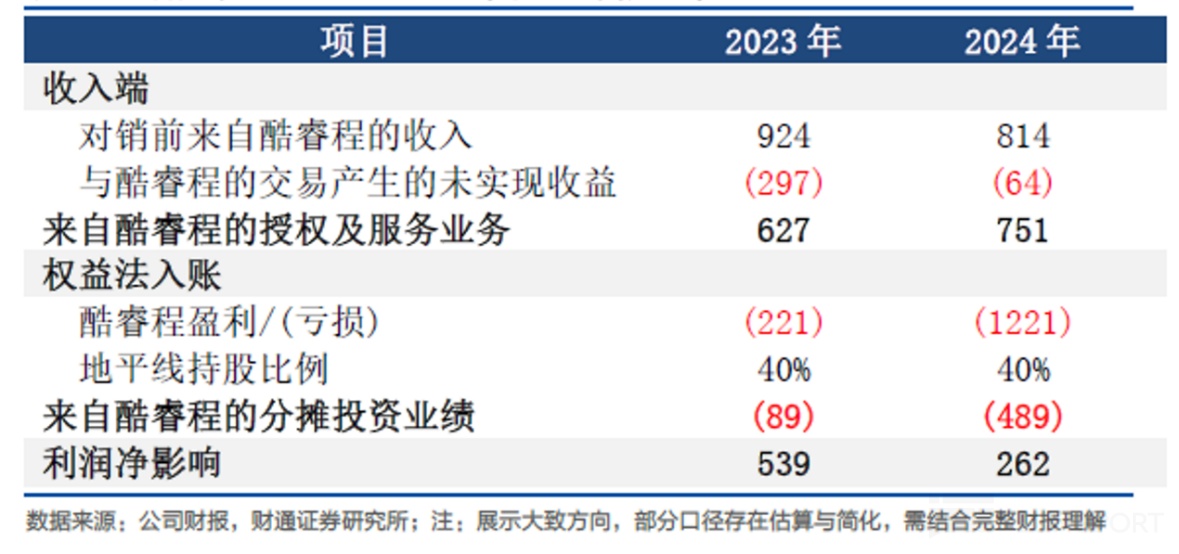
Horizon and VW’s CARIAD formed a JV 'CARIZON' (Horizon owns 40%), to which Horizon licenses algorithms, software, and IP and provides deep tech services. In 2023/2024, CARIZON contributed RMB 630 mn/750 mn, or 65%/46% of services revenue.
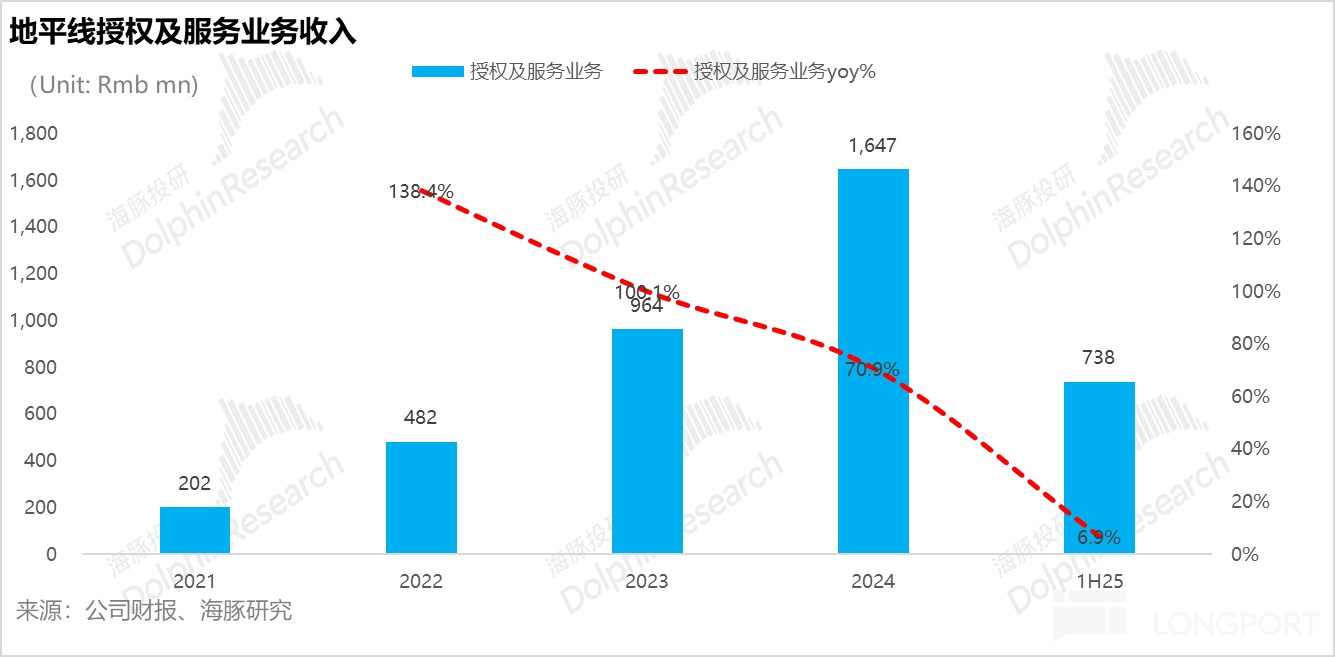
Revenue rose from RMB 200 mn in 2021 to RMB 1.65 bn in 2024 (3-yr CAGR 101%). Given the project-based, concentrated nature, this resembles foundational R&D outsourcing for key accounts.
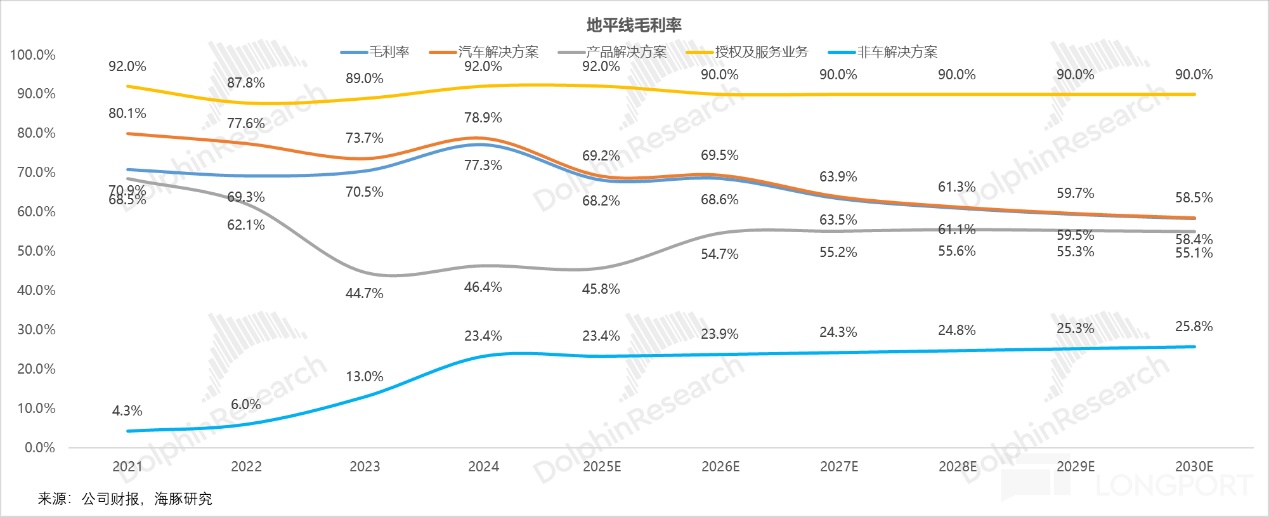
Dependence is high and continuity uncertain despite rich margins (GPM ~90% long term). This limits visibility.
Outside autos, non-auto contributed ~3% in 2024: mainly from the Digua Robotics subsidiary, building a second growth curve. It provides SoCs and dev kits for AIoT, consumer robotics, and embodied AI (e.g., Sunrise series chips, RDK kits).
IV. How to view Horizon’s investment case?
With the high-priced J6P not yet in P&L but already in expectations, we triangulate short- and long-term. Near term is product-led; long term depends on domestic substitution runway.
① Near-term valuation: high expectations via rich P/S
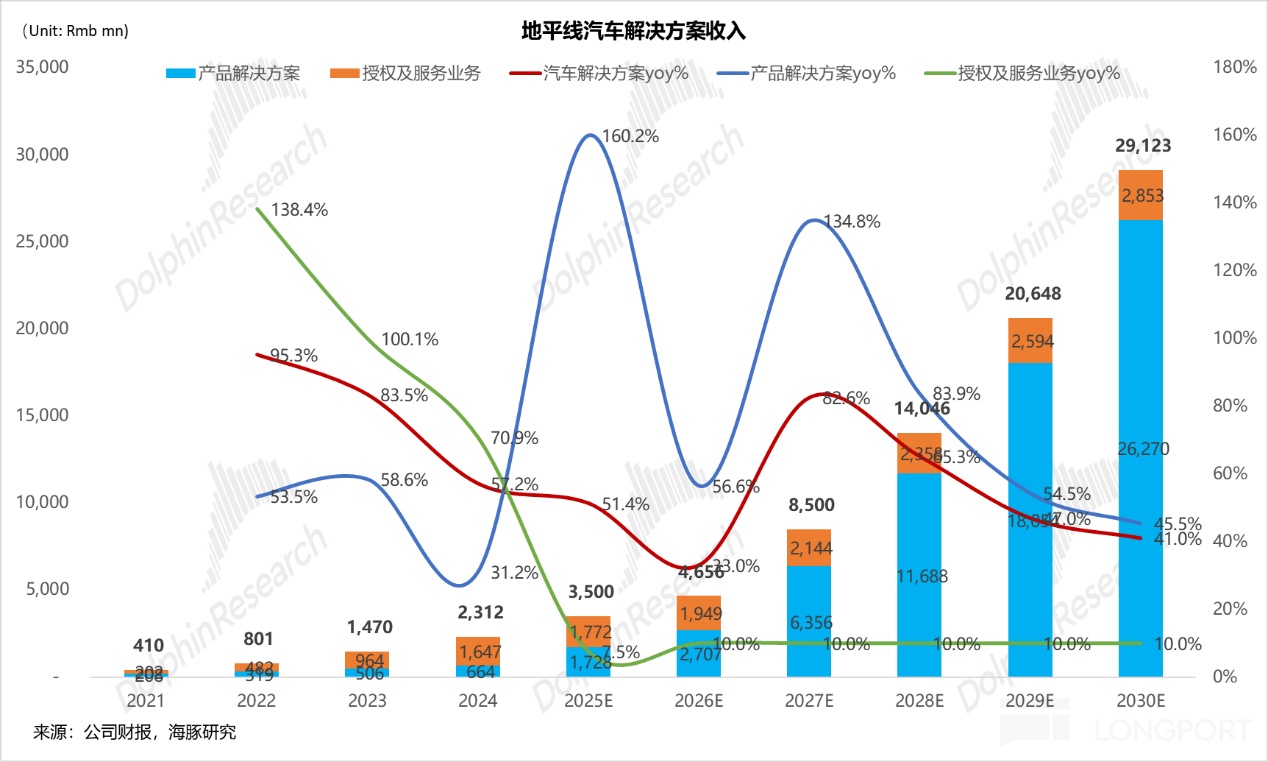
a. Product solutions: for 2025, assuming Horizon holds its 4.0 mn unit shipment guide, we model RMB 1.73 bn revenue (+160% YoY), with chip ASP up ~85% YoY to RMB 423. This implies strong mix uplift.

For 2026, management guides ~5.5 mn units (+30% YoY):
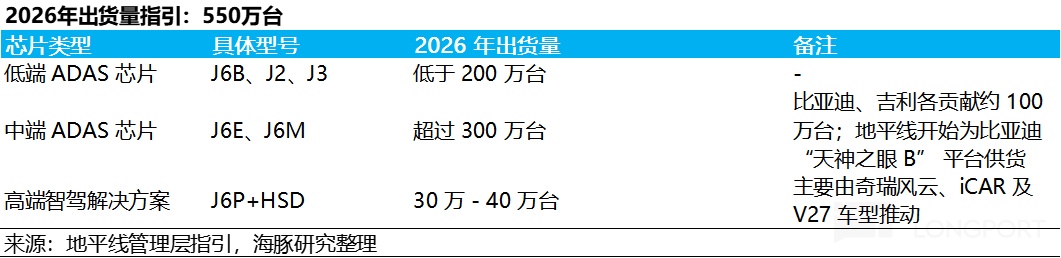
On ASP: management plans three delivery modes for high-end HSD (city NOA), with total HSD shipments at ~400k, over half contributed by HSD+J6P. Mix is the swing factor.

Despite J6P+HSD at ~$700 and HSD’s high margin (~90% GPM), its pull on 2026 ASP is limited mainly because: ① HSD with J6P is ~200k units, just 3.6% of total guided shipments (~5.5 mn), implying J6P has not hit scale. ② Overall HSD at 300–400k is only 5.5–7.3% of total, also pre-scale.
Under this mix, Dolphin Research expects chip ASP to rise ~16.2% YoY to RMB 492. On ~5.5 mn units, 2026 product solutions revenue is estimated at RMB 2.71 bn (+57% YoY).
b. Licensing & services
Given concentration and project nature, product revenue should lead growth ahead. We estimate RMB 1.77 bn in 2025 (+7.5% YoY) and RMB 1.95 bn in 2026 (+10% YoY).
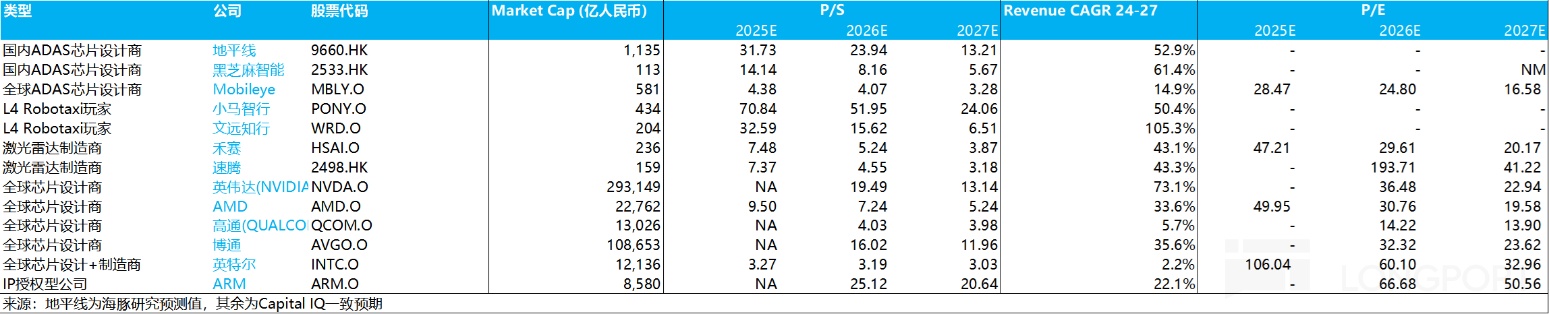
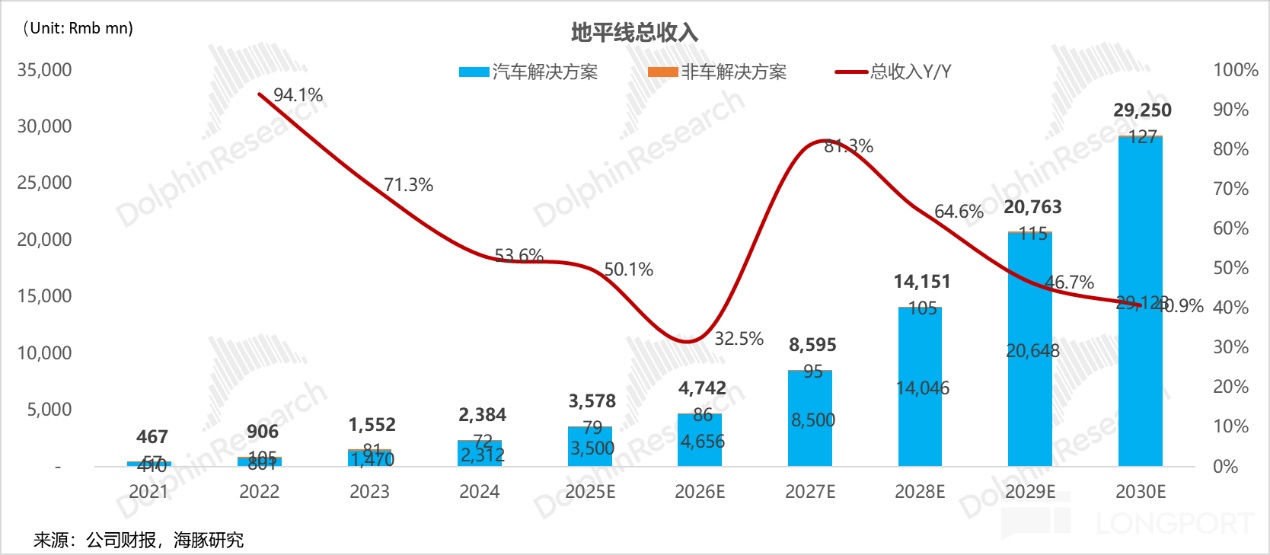
On this basis, total 2026 revenue is projected at RMB 4.74 bn, implying ~24x 2026 P/S for Horizon. Peers remain elevated (e.g., Black Sesame at ~8x P/S in 2026).
In the near term, J6P’s ramp is largely priced in, but we have yet to see broad adoption at BYD, Geely, etc. in 2026. We see limited margin of safety at current levels.
② Long-term valuation: modest base case by 2030
From a long lens, using MediaTek’s 40–50% share in 3P phone SoCs as a reference and assuming smooth progress in high-compute, we estimate as follows. Assumptions center on 3P share and Horizon’s slice.
① Base case:
Market share: Horizon at ~31% overall. Assume 3P suppliers hold 60% of the total market, with Horizon at 47% within 3P.
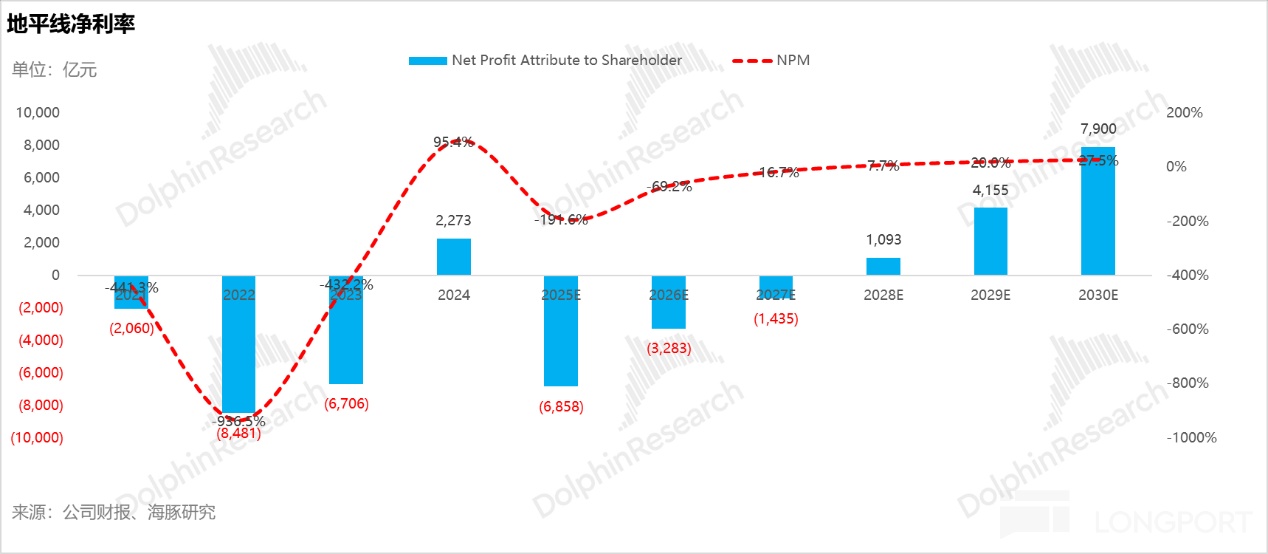
Using 2030 as a steady-state year and 25x PE on 2030 earnings, the 2030 EV is RMB 197.5 bn. Discounted at 9.5% WACC to today, fair value is ~RMB 125.5 bn, only ~10% upside vs. current — not compelling.
③ Bear case:
Market share: Horizon at ~20% overall. Assume 3P suppliers hold 40% of the total, with Horizon at 50% within 3P.
Revenue: ~5.0 mn chip units, ASP RMB 3,000, product solutions at RMB 14.9 bn, total revenue at RMB 17.9 bn. Valuation: at 25% net margin and 22x PE in 2030, implied 2025 EV is ~RMB 62.5 bn, ~45% downside from current.
③ Bull case:
Market share: Horizon at ~35% overall. Assume 3P suppliers hold 70% of the total, with Horizon at 50% within 3P.
Revenue: ~9.29 mn chip units, ASP RMB 3,200, product solutions at RMB 29.7 bn, total revenue at RMB 32.7 bn. Valuation: at 30% net margin and 30x PE in 2030, implied 2025 EV is ~RMB 187 bn, ~65% upside.
Takeaway: near-term priced in; long-term needs a reset for better entry
Bottom line, Horizon is a scarce 'domestic substitution' asset in HW+SW auto chips. With J6P, it has a credible path to 'volume + ASP up' as a practical Nvidia alternative.
But near-term expectations look full, and long-term, absent a robotics second curve, current valuation sits near fair. Upside for excess return is limited.
Given the quality of the asset, Dolphin Research sees better risk/reward below RMB 65.8 bn EV (~HKD 5). That would imply ~14x 2026 P/S for Horizon, still above Black Sesame’s ~8x.

The copyright of this article belongs to the original author/organization.
The views expressed herein are solely those of the author and do not reflect the stance of the platform. The content is intended for investment reference purposes only and shall not be considered as investment advice. Please contact us if you have any questions or suggestions regarding the content services provided by the platform.