
D
Dec 29, 2025 at 07:21 AM
Cracks in US Stocks' 'Perfect Loop': AI mints a bull market, not jobs?
 I'm LongbridgeAI, I can summarize articles.
With the U.S. Gov. now reopened, we can finally take stock of year-end macro trends. The latest prints look 'contradictory'—growth remains solid, inflation is falling quickly, while employment is deteriorating so fast it almost resembles a recession.
How should this data mix be read, and is AI the culprit? Dolphin Research focuses on the key takeaways below.
I. Q3: U.S. growth was strong
Q3 GDP rose 1.0% QoQ (+4.3% ann.), delivering a near-ideal upward path. Timing-wise, it followed tariff relief and the subsequent negotiation/settlement period, so net exports remained noisy.
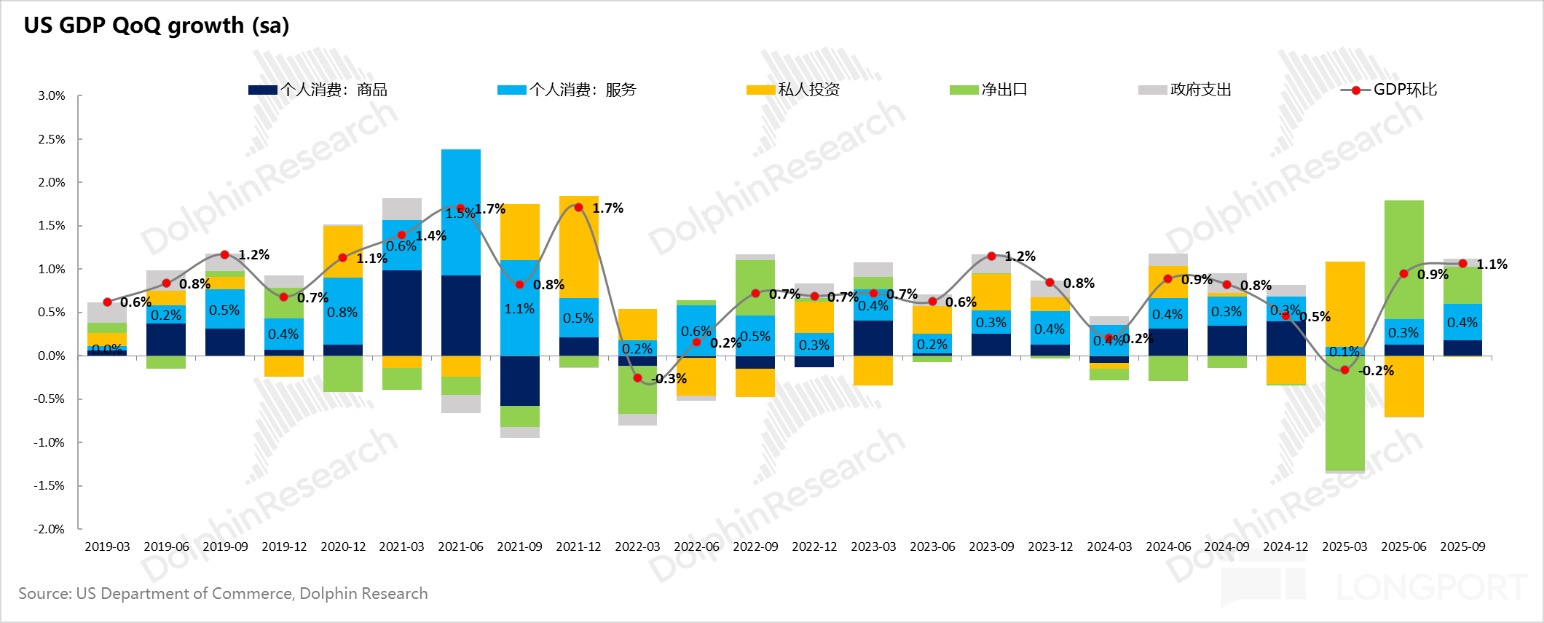
The focus should be domestic demand ex imports. Household consumption across goods and services contributed 0.6% QoQ, accelerating from 0.4% in the prior quarter, keeping consumption the ballast of GDP.
Within private investment, inventories are highly cyclical (a large Q1 build post relief, then destocking in Q2–Q3). The true read on private demand is private fixed investment.
Split by type, residential remains soft under high rates, and traditional structures (offices, logistics facilities, plants) are weak. Non-residential structures are still lackluster.
By contrast, AI-related capex in IP products and equipment stayed firm. These two buckets contributed about 0.7ppt to Q3’s +4.3% ann. growth.
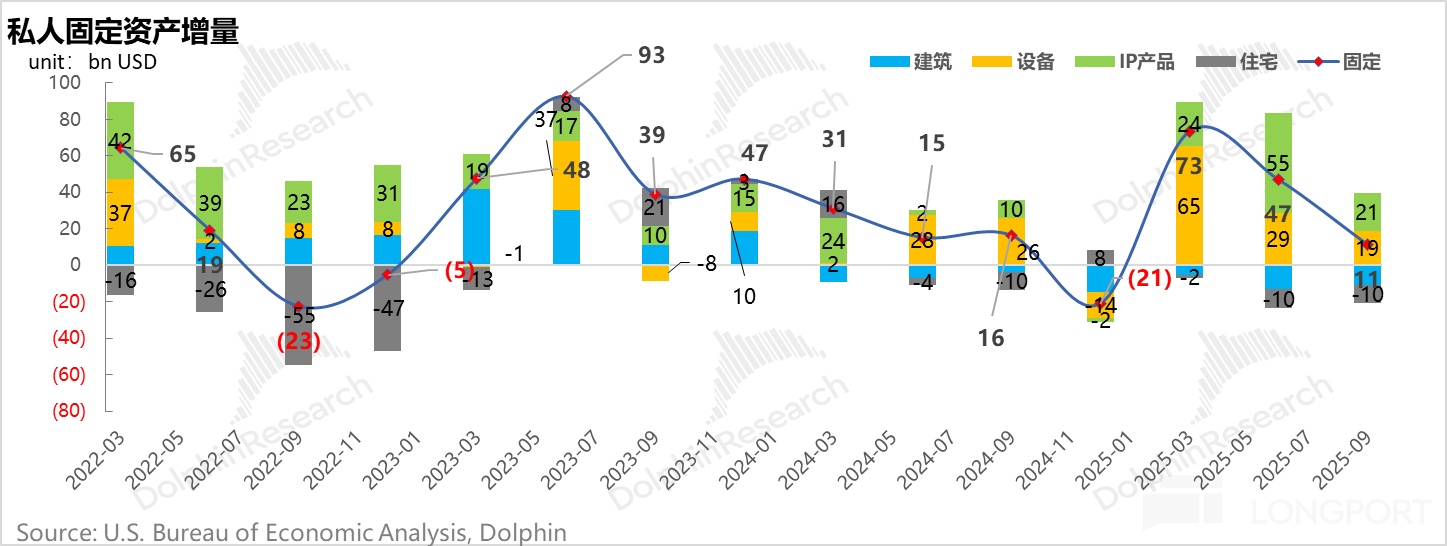
Q3 growth offered a clean read of a soft landing. The narrative looked well supported by the composition.
II. Q4: Softer inflation, weakening jobs—clean path to cuts?
Despite the strong Q3 GDP print, inflation pressure looks limited judging from Oct and Nov CPI. Oct CPI was not published due to the shutdown, but comparing Nov with Sep, core CPI rose just 0.16% over two months—clearly subdued.
Absent shutdown distortions, inflation pressure appears modest. The near-term trend looks benign.
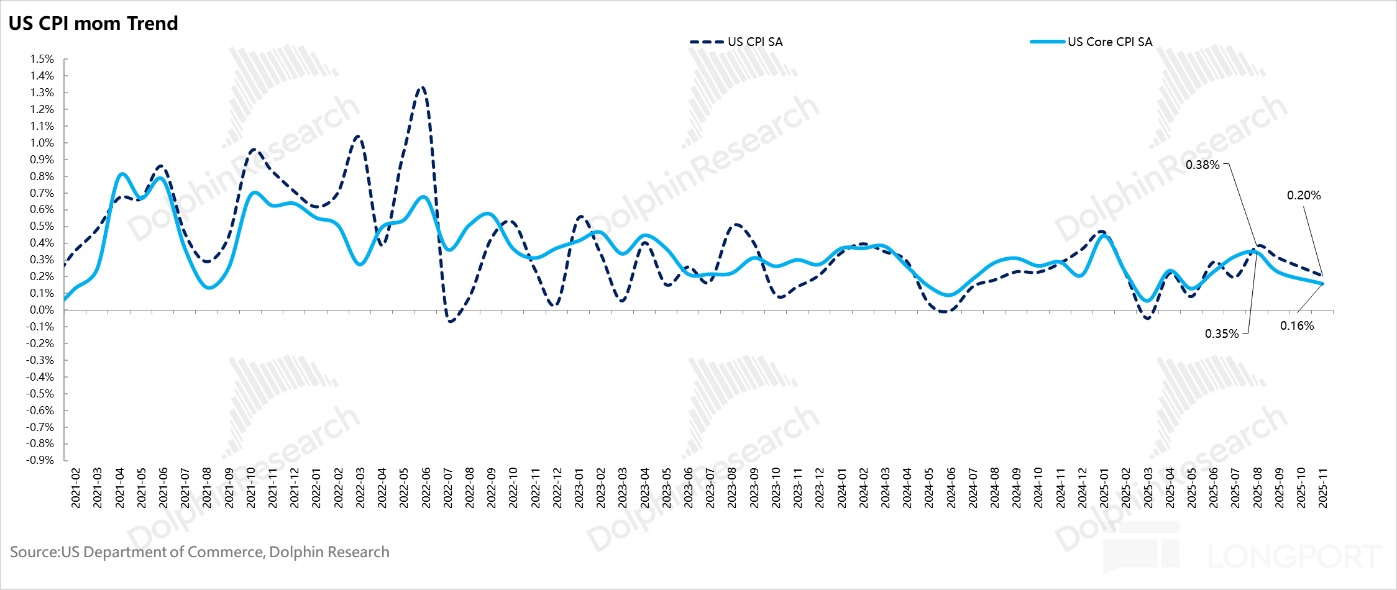
Putting inflation alongside jobs, rate cuts look even more likely. Nov nonfarm payrolls rose by 64k, while Oct saw a net loss of 105k.

With a small uptick in labor-force participation, the Nov jobless rate jumped to 4.56%. That is already above the Fed’s unemployment objective.
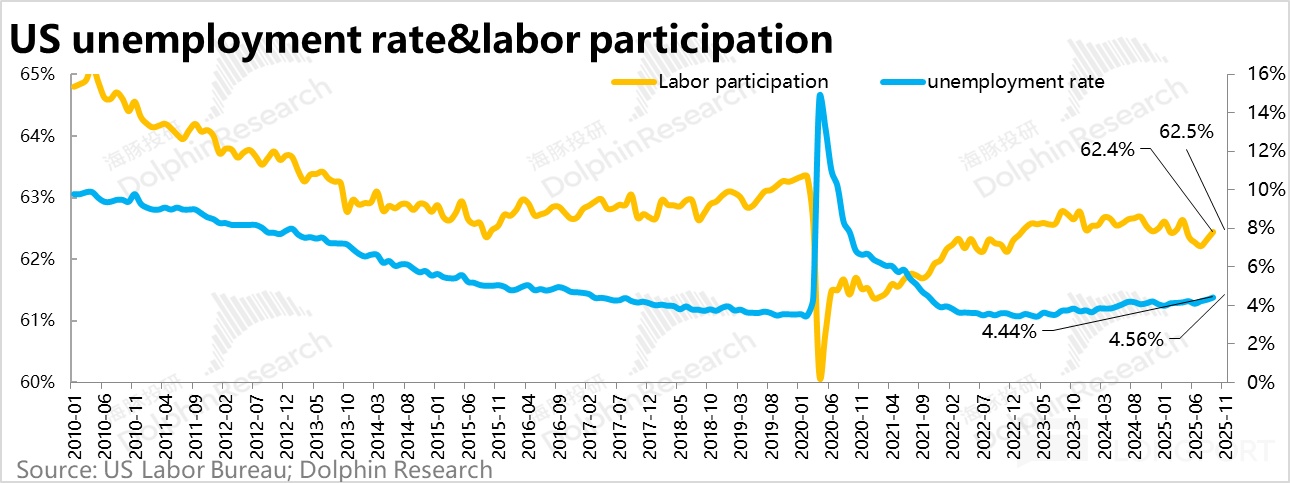
Shutdown-related swings in Gov. jobs are noise. In the private sector, goods-producing employment is shrinking across the board except construction, which stays supported by AI capex; even manufacturing, long touted by Trump, is contracting.
In services, only healthcare remains consistently strong. Elsewhere, hiring is mainly in professional and business services (legal, accounting, architecture, advertising, management, etc.) and retail for home/furnishings/CE, with most other service industries showing negative job growth.
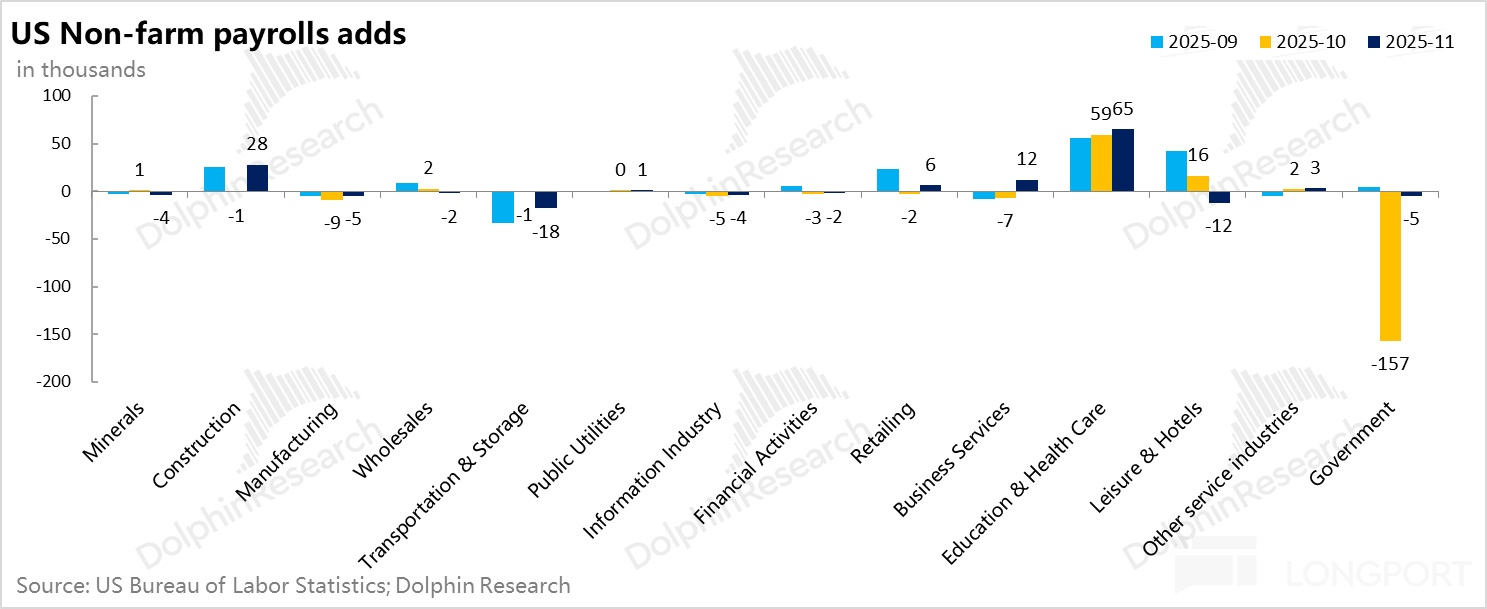
With 2026 approaching, the mix of solid growth, higher unemployment, and softer inflation forces a serious question. Will 2026 still be another year of AI’s high input but low measured output?
a: Firms carrying the AI capex burden are substituting labor with compute to sustain capex growth, leading to ongoing IT layoffs. Notably, employment in computer systems design and related services has contracted for months.
b: Much of the capex is still in data-center buildout or accruing to capex beneficiaries (e.g., NVDA), where incremental revenue needs little incremental hiring. It has yet to translate into economy-wide productivity gains or broad-based job creation.
c: If jobs weaken, why can consumption still anchor growth? Traditionally, weaker employment hits U.S. households hard given thin savings buffers, but this cycle has been uneven: pandemic liquidity repaired balance sheets in one shot, and as excess savings waned, a vulnerable cohort’s delinquency rates have risen quickly.
Yet the core driver this round is the AI revolution, which has not helped near-term employment and may even weigh on it. Meanwhile, a persistent equity bull market has swelled the wealth of asset owners (equities account for ~40% of household assets, direct and indirect), sustaining consumption.
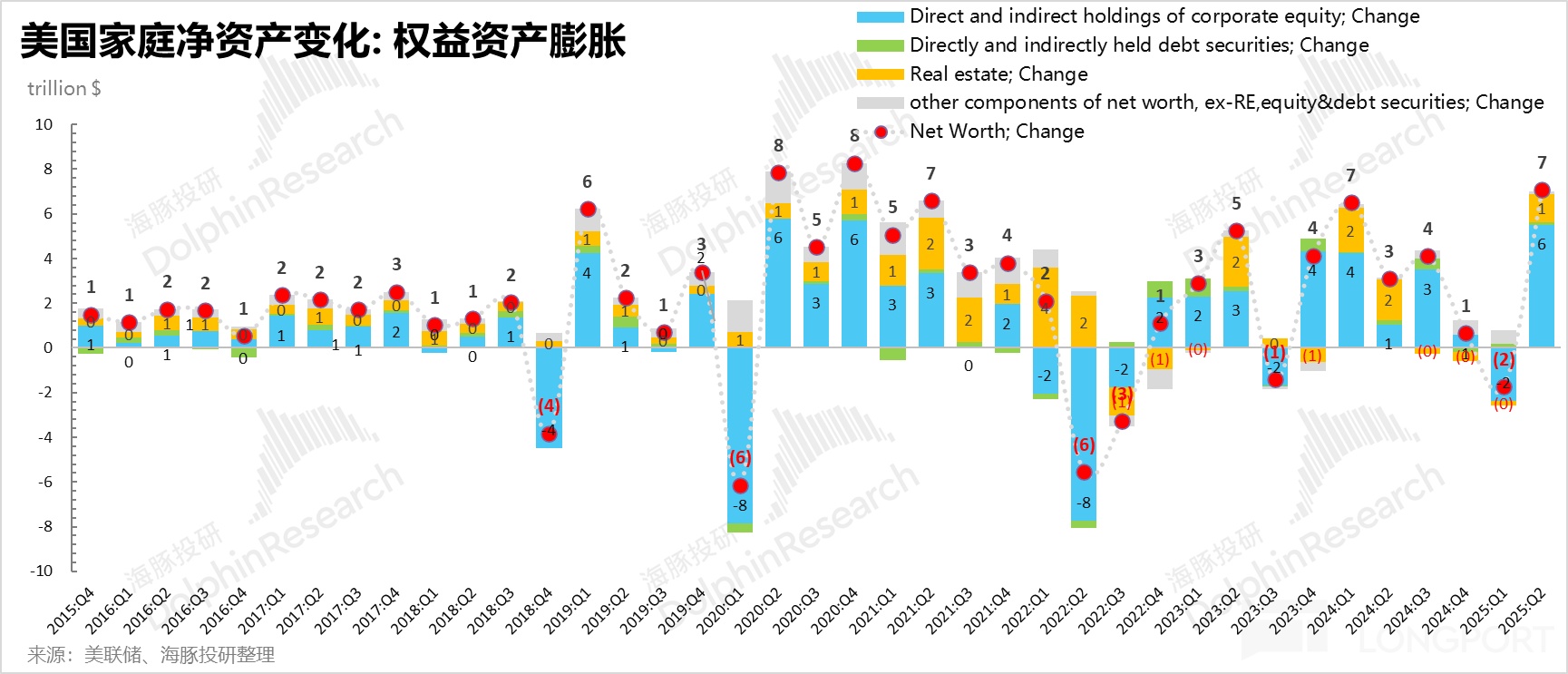
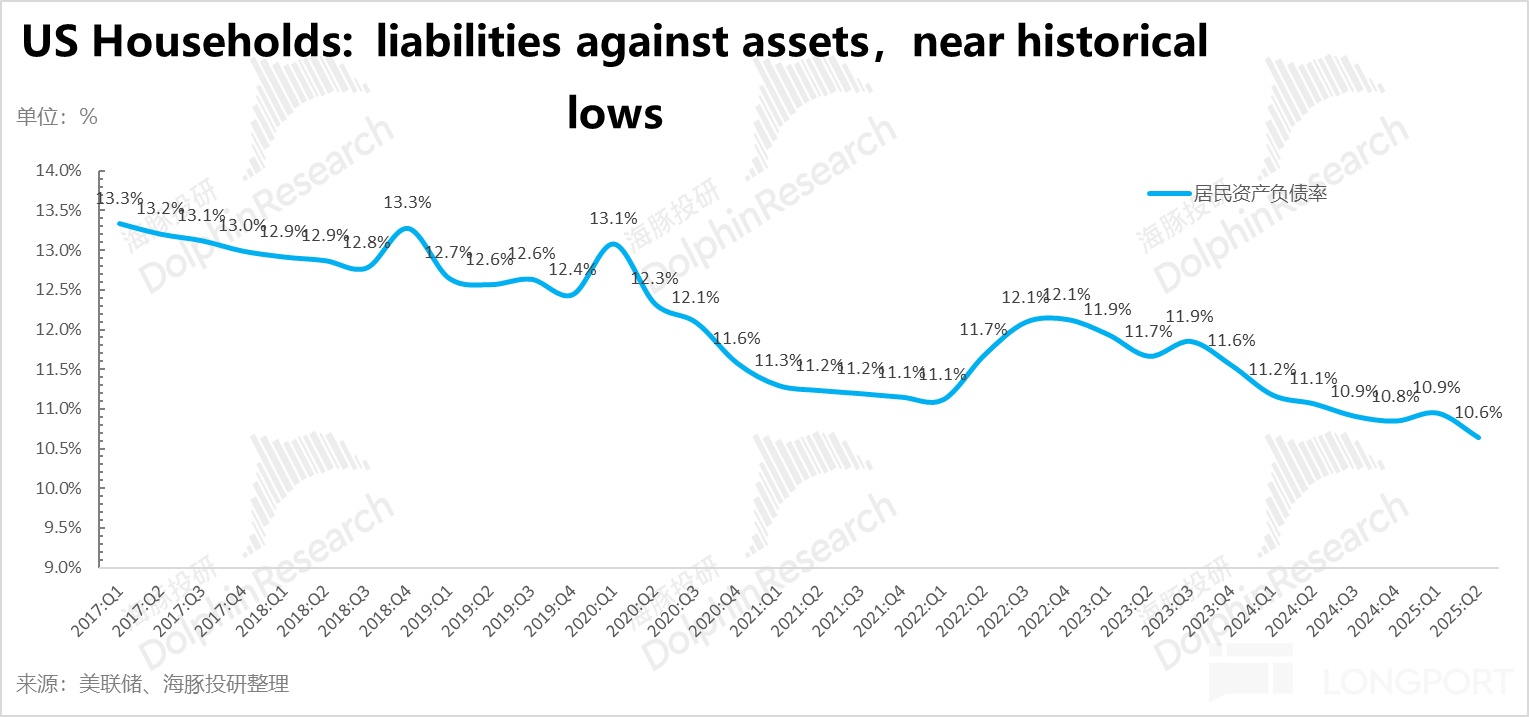
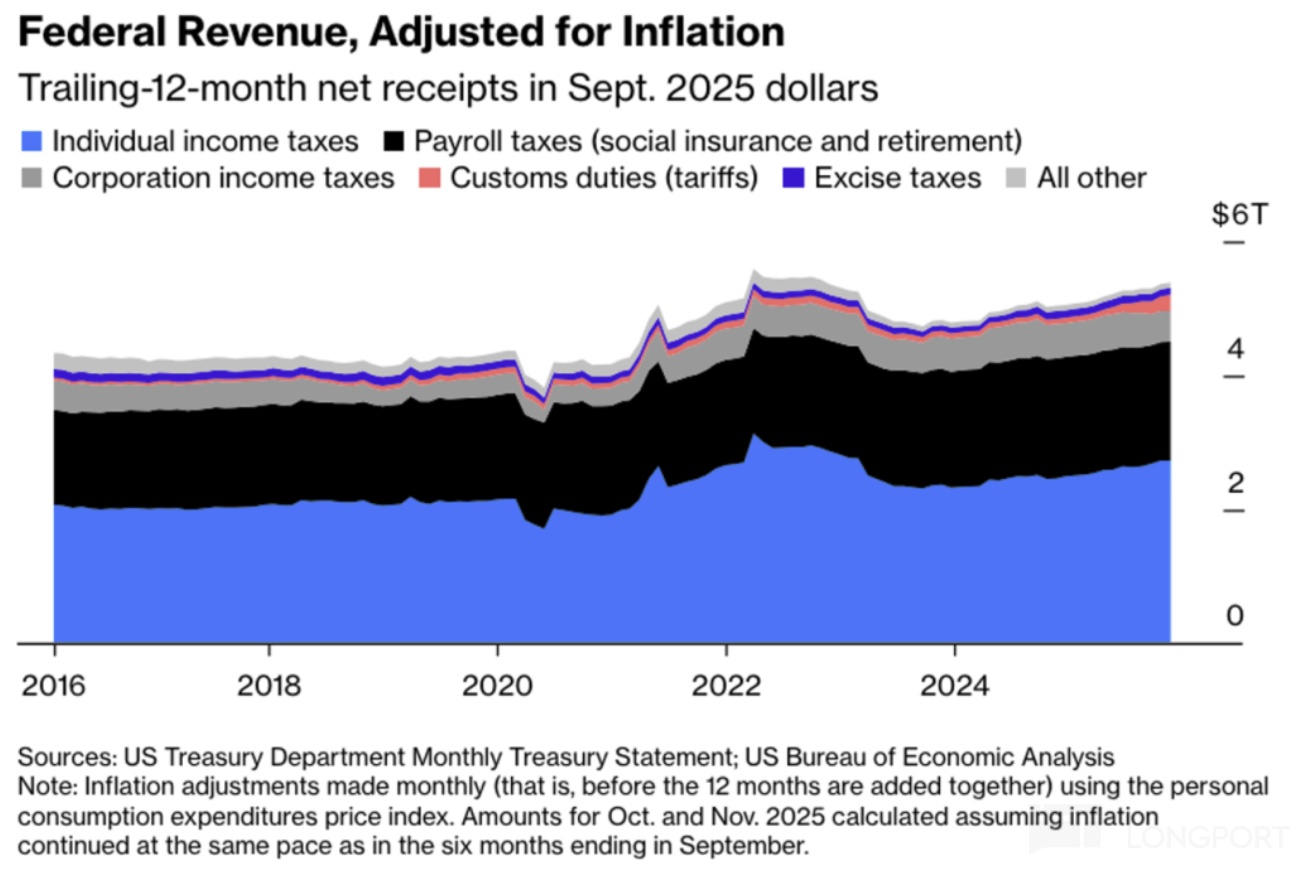
On fiscal receipts, household asset income has outpaced wages. Personal income tax collections are up 26% vs. pre-Covid, while payroll taxes rose 14%, implying capital gains have outstripped wage growth.
Meanwhile, relative to pre-Covid employment, manufacturing ranks second-worst across industries, only ahead of mining. The hoped-for renaissance has not materialized in headcount.
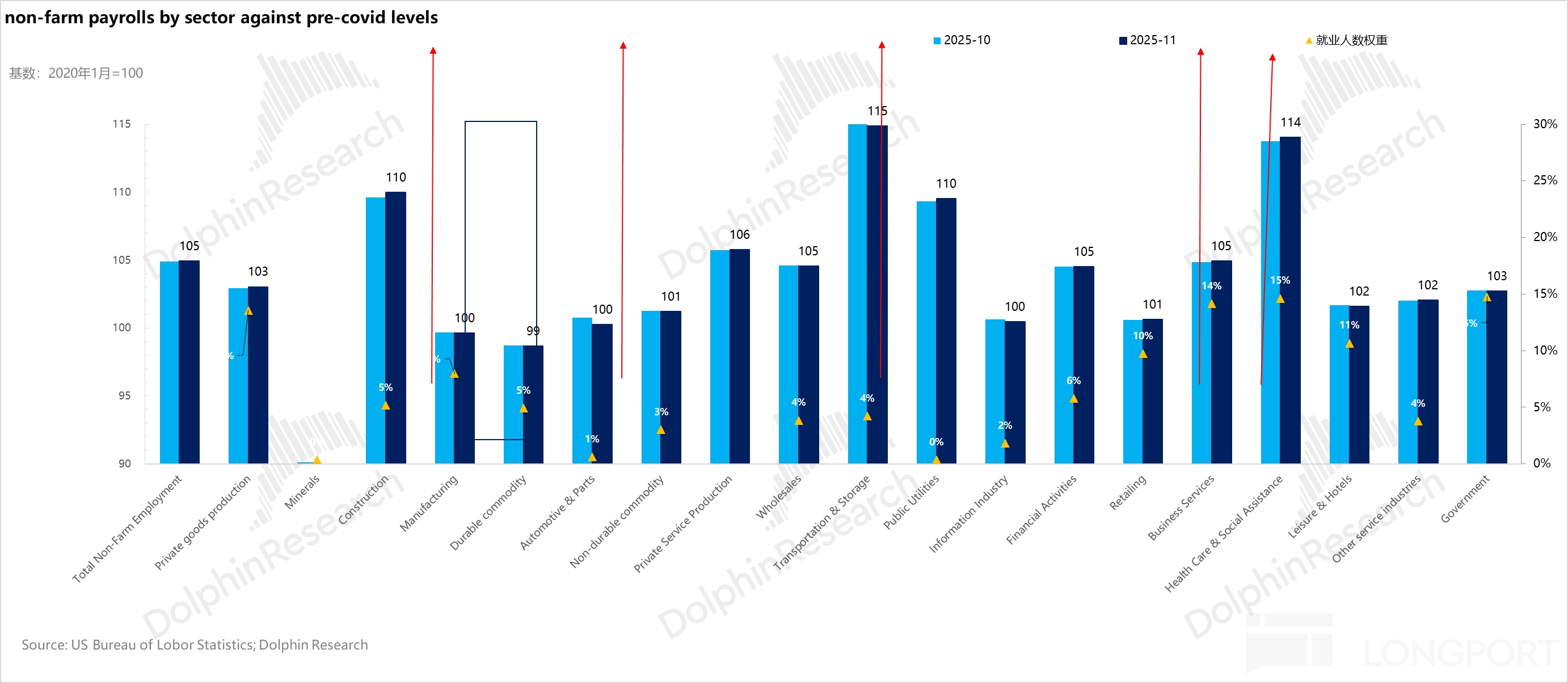
The chain looks clear. AI has not created jobs but has lifted equities—wage income lags equity gains, high equity allocations sustain purchasing power, and consumption stays resilient, allowing a soft landing even as unemployment rises and inflation falls.
Thus, the 2025 U.S. economy may partially close the loop between rising stocks and steady growth. But if AI still fails to deliver in the real economy through 2026, that loop could break.
III. 2026: Multiple expansion vs. EPS—can we still get a double whammy?
If 2026 growth relies more on wealth effects from AI-driven asset inflation, can U.S. equities keep rising? The question matters for both multiples and earnings traction.
In 2024–2025, U.S. equities re-rated for two years in a row. With 2025 valuations well above historical medians (and limited further uplift during 2025), another leg of multiple expansion in 2026 looks tough.
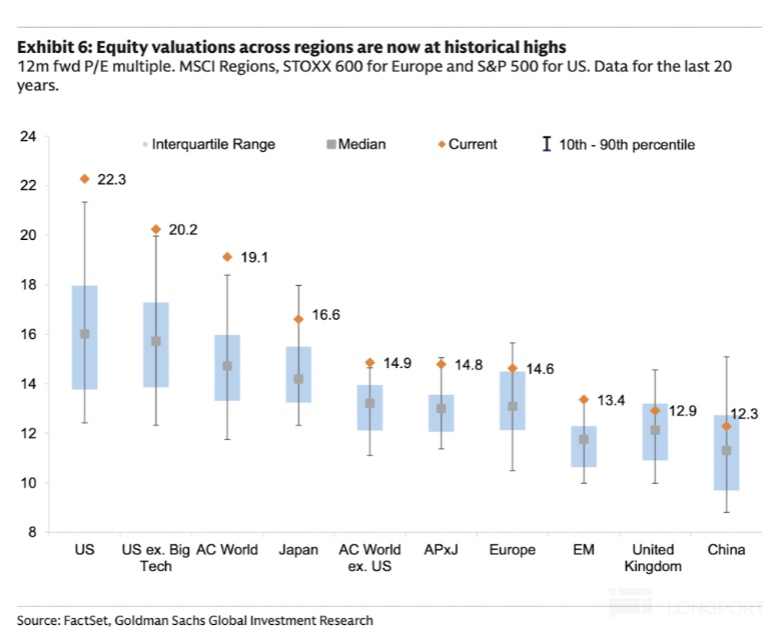
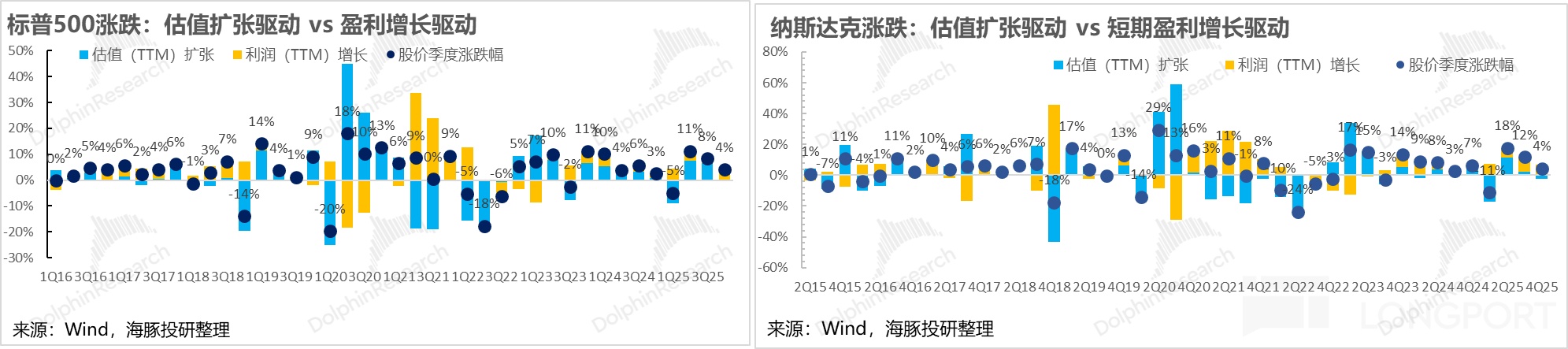
Especially after Q4 liquidity tightened and stocks corrected, the obvious question is whether 2026 will enjoy an easy-liquidity backdrop to support re-rating. Dolphin Research’s read: without a Fed willing to coordinate with Treasury, it will be hard.
The policy bind is that the Fed can cut, but cuts primarily affect the front end while the long end barely moves. The curve stays sticky at the back.

That pushes Treasury toward bills. Yet with the ON RRP largely drained and bank reserves trending lower, heavier bill issuance soaks up short-term liquidity even if front-end rates fall.
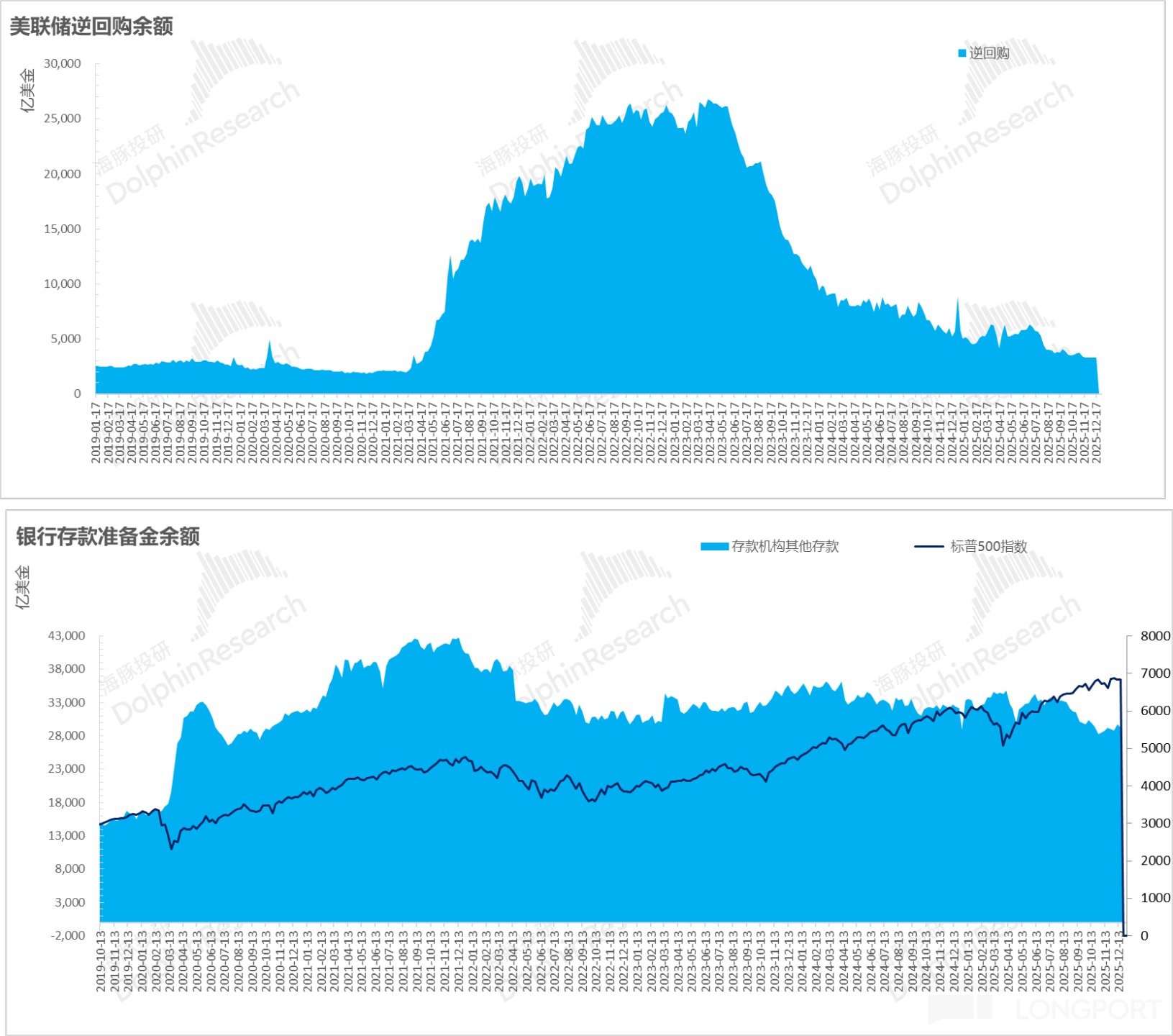
When liquidity is tight, equities rarely rally strongly; Q4 was a case in point. The dilemma is clear: high long yields deter duration issuance, while bill-heavy financing drains liquidity even as it anchors to Fed cuts.
In this setup, the Fed either uses a twist-like operation to push down the long end or buys bills to inject short-term liquidity. Either way, it risks acting as Treasury’s financing arm.
The Fed’s mid-Dec balance sheet shows it chose to buy bills—a mini QE—to accommodate bill issuance. That choice complements Treasury’s tilt to the short end.
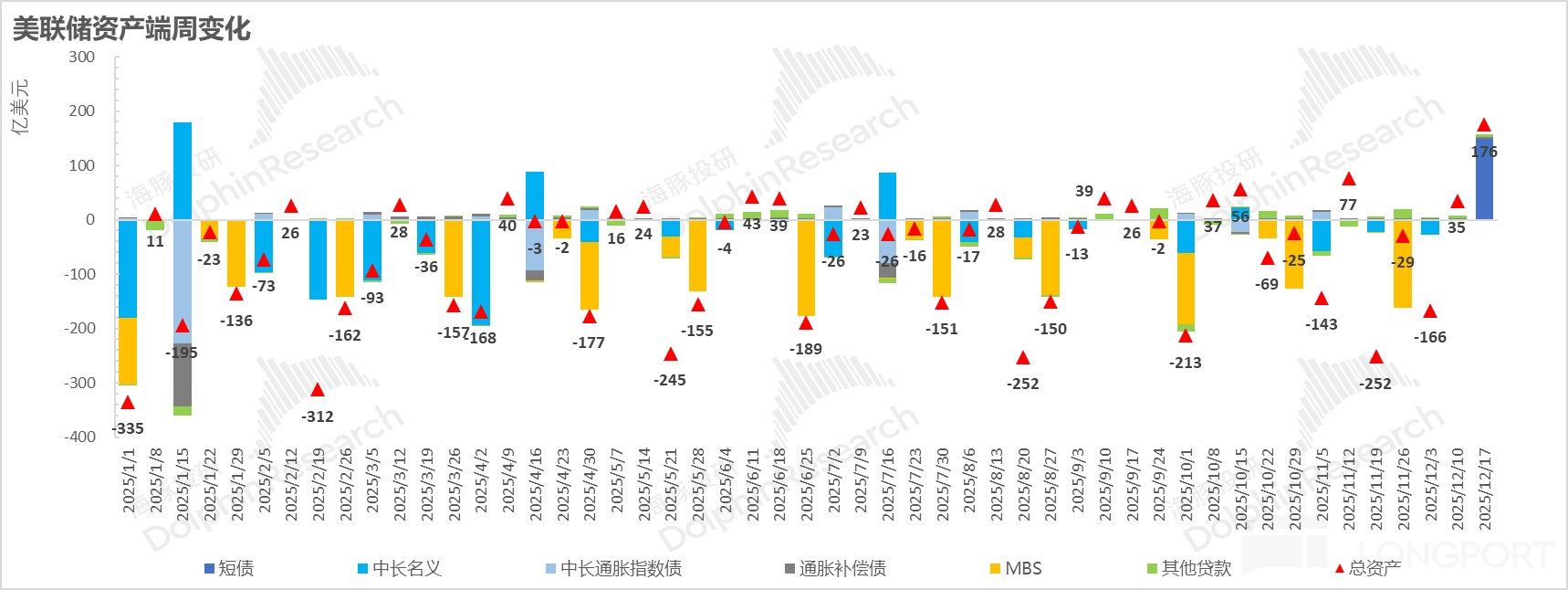
So holding the market multiple in 2026 partly hinges on how willing the incoming Fed chair is to coordinate with fiscal policy. With excess liquidity largely exhausted, liquidity itself has become an additional equity risk.
If AI cannot visibly lift corporate profits and drive EPS higher, the 2026 equity outlook boils down to two questions. The crux is where the incremental impulse will come from.
a. Will fiscal easing (OBBB, or rebating extra tariff revenue to households?) be used to stimulate consumption and, in turn, EPS growth? The channel would run through household demand.
b. Will the Fed be sufficiently cooperative—amid challenges at both the front and back ends of the curve—to help Treasury execute funding and fiscal easing? That cooperation would be critical for market liquidity.
Absent economy-wide productivity gains from AI, 2026 returns will largely depend on these two levers, especially the second one’s upside. Its elasticity could make or break the tape.
Otherwise, equities will have to rely on EPS growth to digest valuations, dampening the wealth effect and its pull on consumption. A weaker market would then not only lag but also weigh on growth.
IV. Portfolio performance
Last week, Dolphin Research’s virtual portfolio Alpha Dolphin made no changes. It rose 1.9%, matching the CSI 300 (+1.9%), beating the MSCI China (+0.4%), the Hang Seng Tech Index (+0.4%), and the S&P 500 (+1.4%). Recent pullbacks have showcased solid defensiveness.
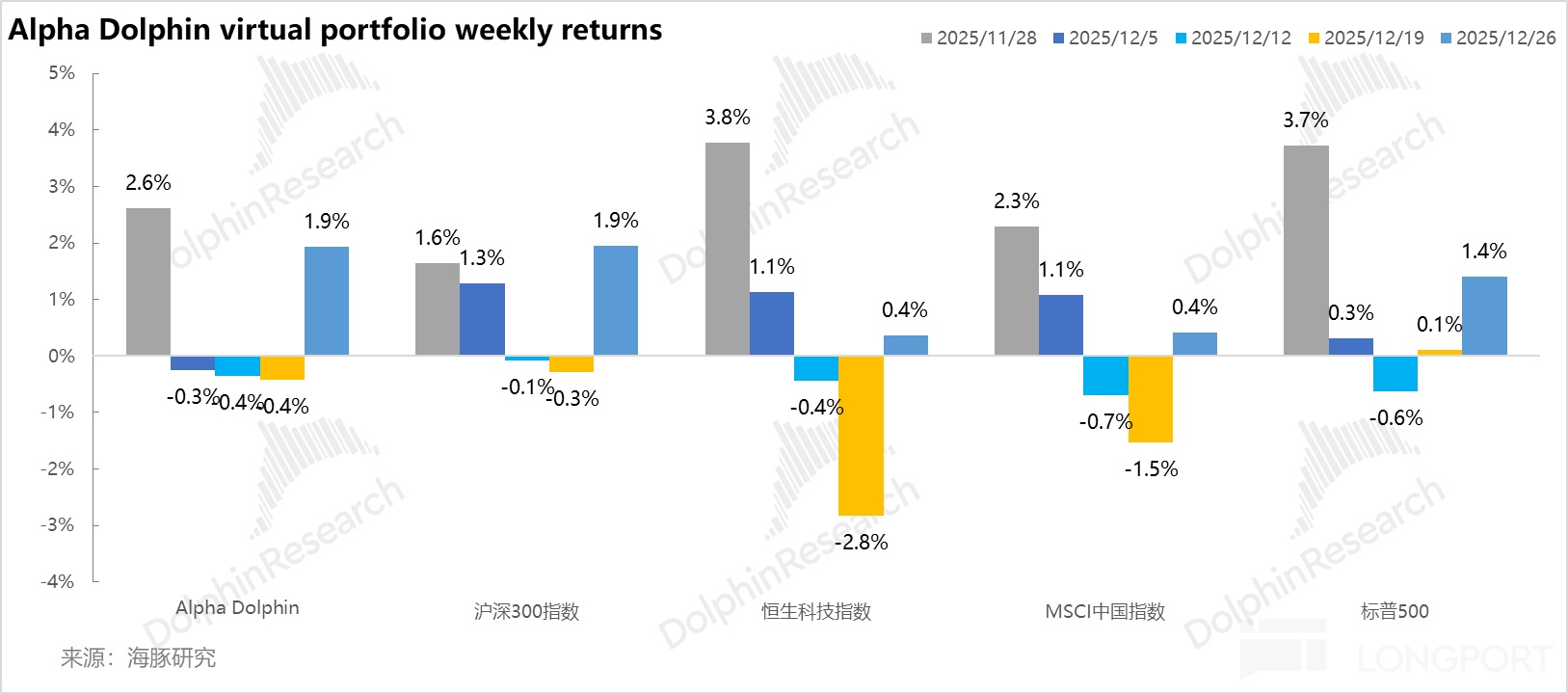
From inception of the test (Mar 25, 2022) through last week, absolute return was 117.5%, with 103% alpha vs. MSCI China. NAV grew from $100mn to over $220mn, ending the year near a record high.

V. Single-stock P&L contribution
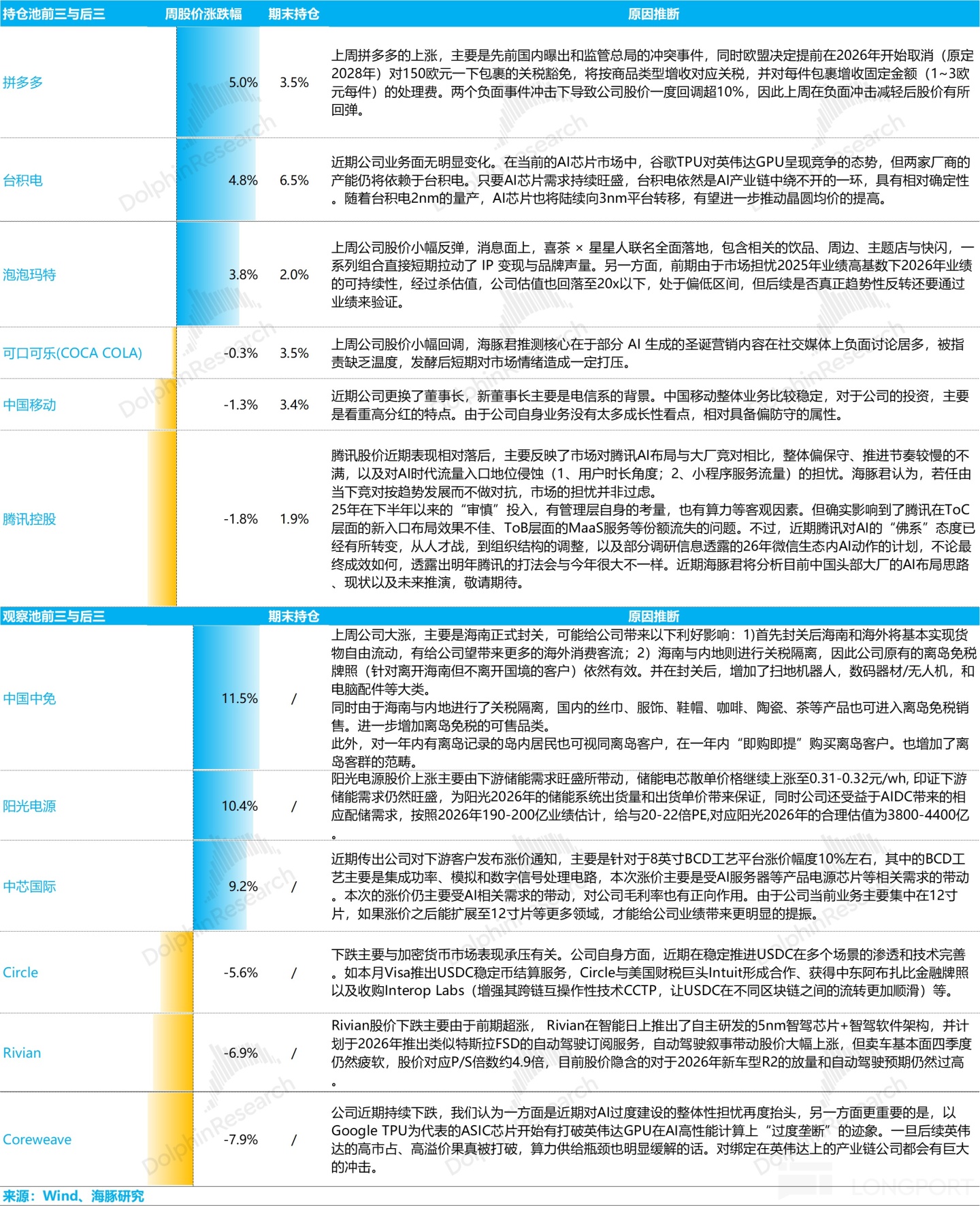
The portfolio outperformed mainly because: a) equity exposure is tilted to steady earners, with PDD and TSM rebounding last week, and fewer small, high-growth names with rich multiples; b) a consistently high allocation to gold. These factors helped during volatility.
VI. Asset allocation
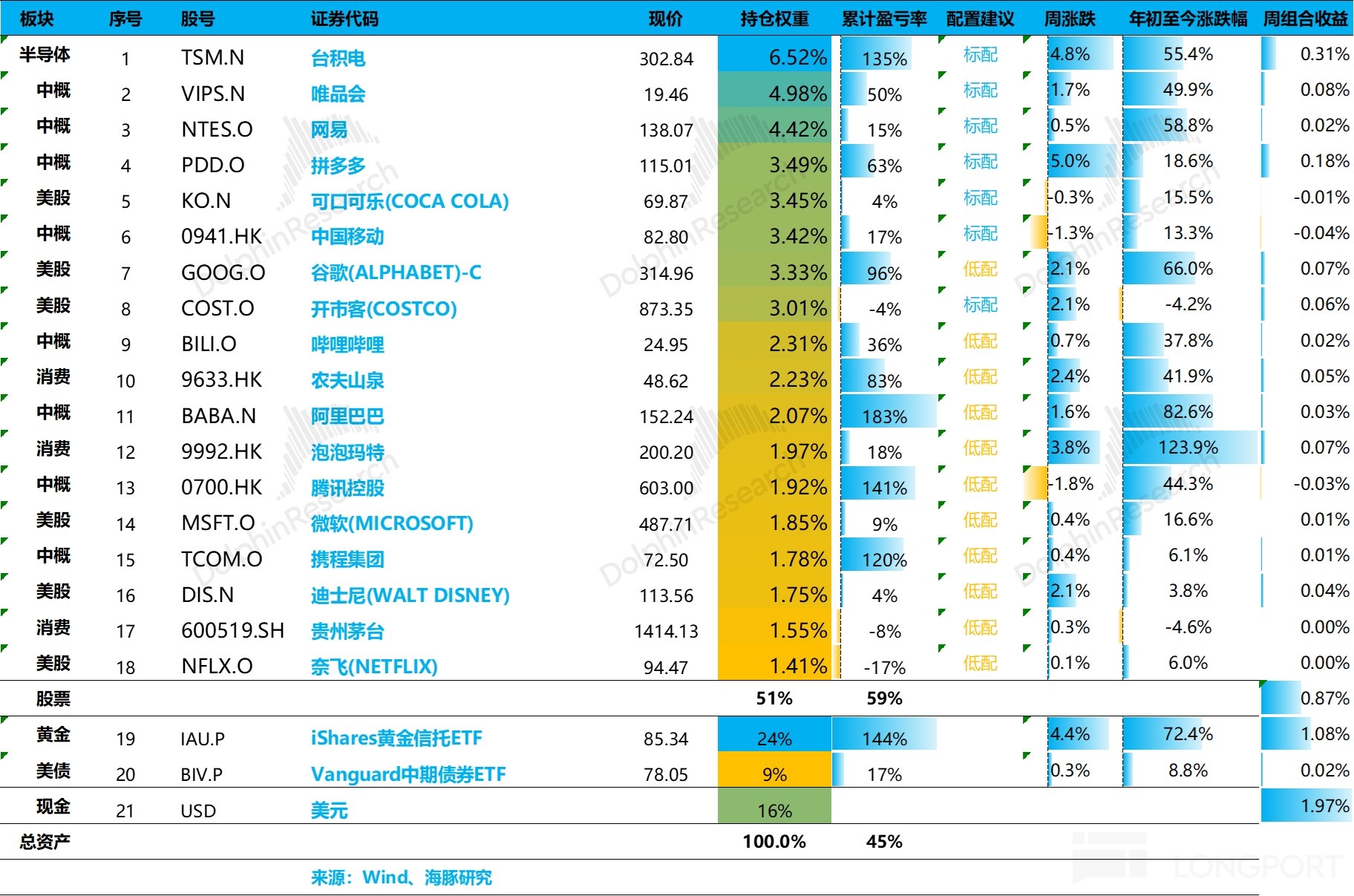
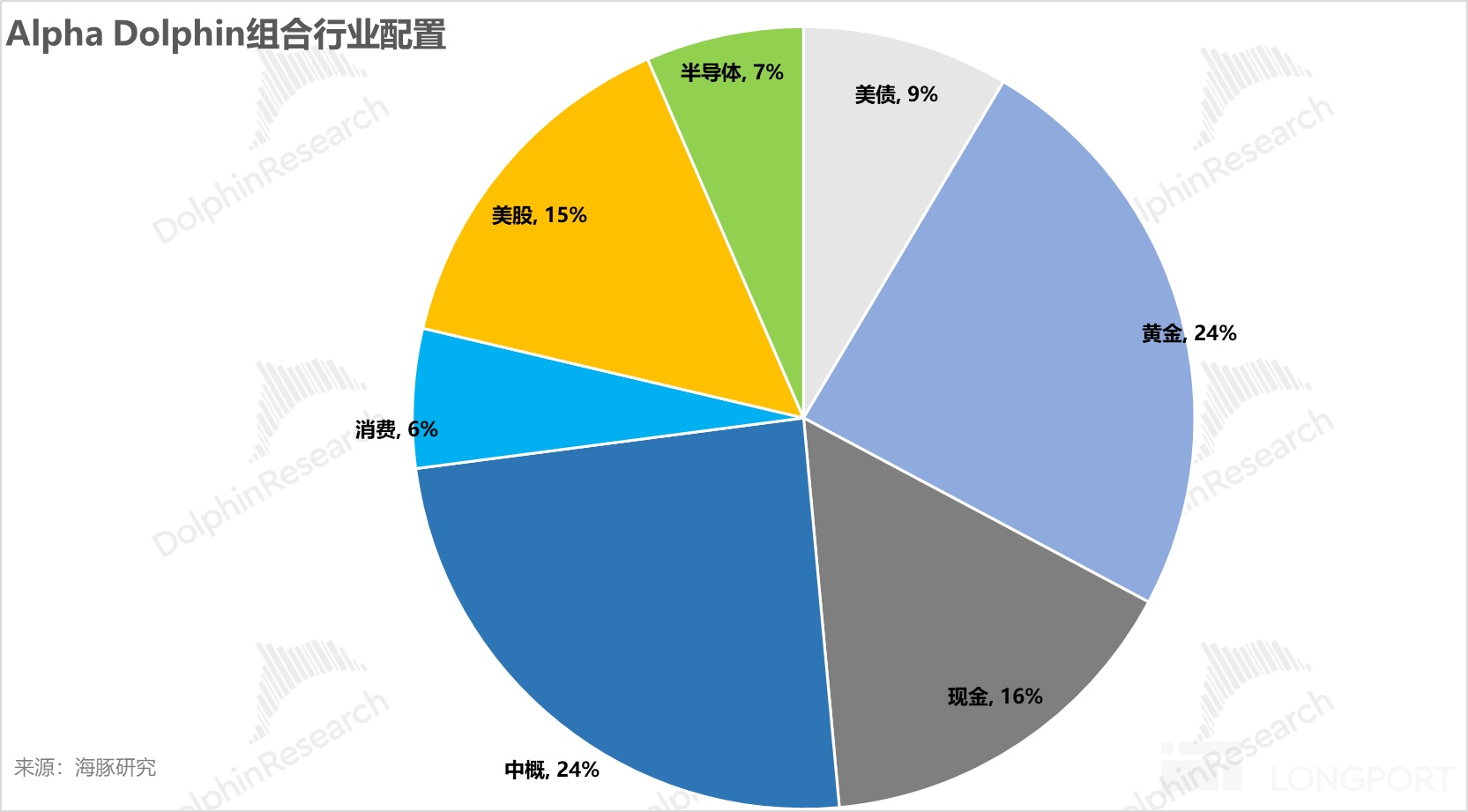
Alpha Dolphin holds 18 single names and equity ETFs in total, with 7 core positions and the rest underweight. Outside equities, exposure is mainly in gold, U.S. Treasuries, and USD cash, with risk vs. defensive at roughly 55:45.
As of last week, the asset mix and equity position weights were as follows. See charts for details.
<End>
Risk disclosure and statements:Dolphin Research disclaimer and general disclosures
For recent weekly portfolio reports by Dolphin Research, please refer to:
‘The most grounded approach: the Dolphin investment portfolio sets off’
The copyright of this article belongs to the original author/organization.
The views expressed herein are solely those of the author and do not reflect the stance of the platform. The content is intended for investment reference purposes only and shall not be considered as investment advice. Please contact us if you have any questions or suggestions regarding the content services provided by the platform.