
D
Jan 26 at 04:09 AM
Another base-stealing moment: Tencent AI play the trump card in group chats. Is Doubao in danger?
 I'm LongbridgeAI, I can summarize articles.
Over the weekend, the Yuanbao product team rolled out a major update and, in doing so, effectively revealed $TENCENT(00700.HK)'s AI roadmap.
Dolphin Research immediately tested it with friends and family; while we had some expectations, hands-on group play felt fresh vs. 1v1 human-bot chats.Sharing Yuanbao's witty one‑liners with friends and using it as a convenient co‑pilot for parents made it more fun and useful. We look forward to more social features opening up.
Tencent has been criticized for moving too slowly on AI, and its soggy share price shows where capital stands. Some of this stems from objective constraints, but in our review of the past 2–3 years, we still see subjective misreads or detours.
We make this post‑hoc comparison now to assess what Tencent has already changed and what those shifts could mean over time.
1) Yuanbao is WeChat's AI 'testbed'
It was an eventful weekend: after a long lukewarm stretch on AI, Tencent finally moved. With Yuanbao V2.55 live, two updates stood out:a) A CNY 1 bn Spring Festival red‑packet campaign (reservations open), requiring users to complete tasks (try new Yuanbao AI features) to redeem.b)
A new 'Factions' feature, similar to WeChat groups, where you can invite WeChat friends to join different 'Factions'. Some capabilities are still in limited gray testing; non‑beta users cannot create a 'Faction' yet and can only join by invitation.
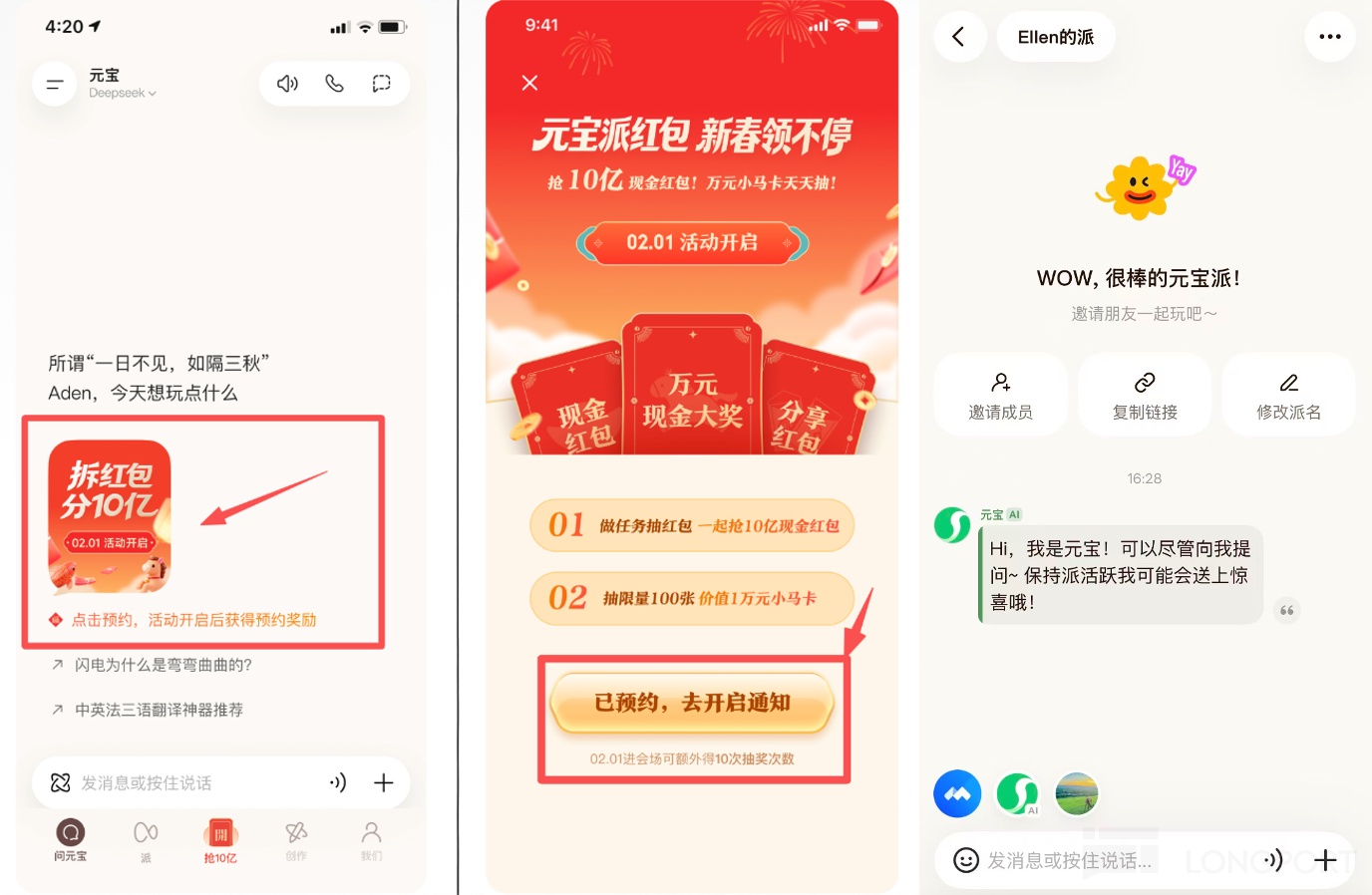
The first is a classic internet growth hack and not novel, aside from being more generous than the mobile‑internet days. The second plays Tencent's ace right away — social.
Dolphin Research joined the beta. For now, 'Yuanbao Factions' mainly offers a chatbot (text & images) and basic task agents — essentially adding an 'emotional' NPC to a WeChat group that can join chats and handle simple tasks (reminders, daily weather briefs, article summaries, simple PPTs, etc.).
It also stitches in Tencent Meeting, whose straight‑laced AI notes recently got traction, so Yuanbao simply 'fused' it in.
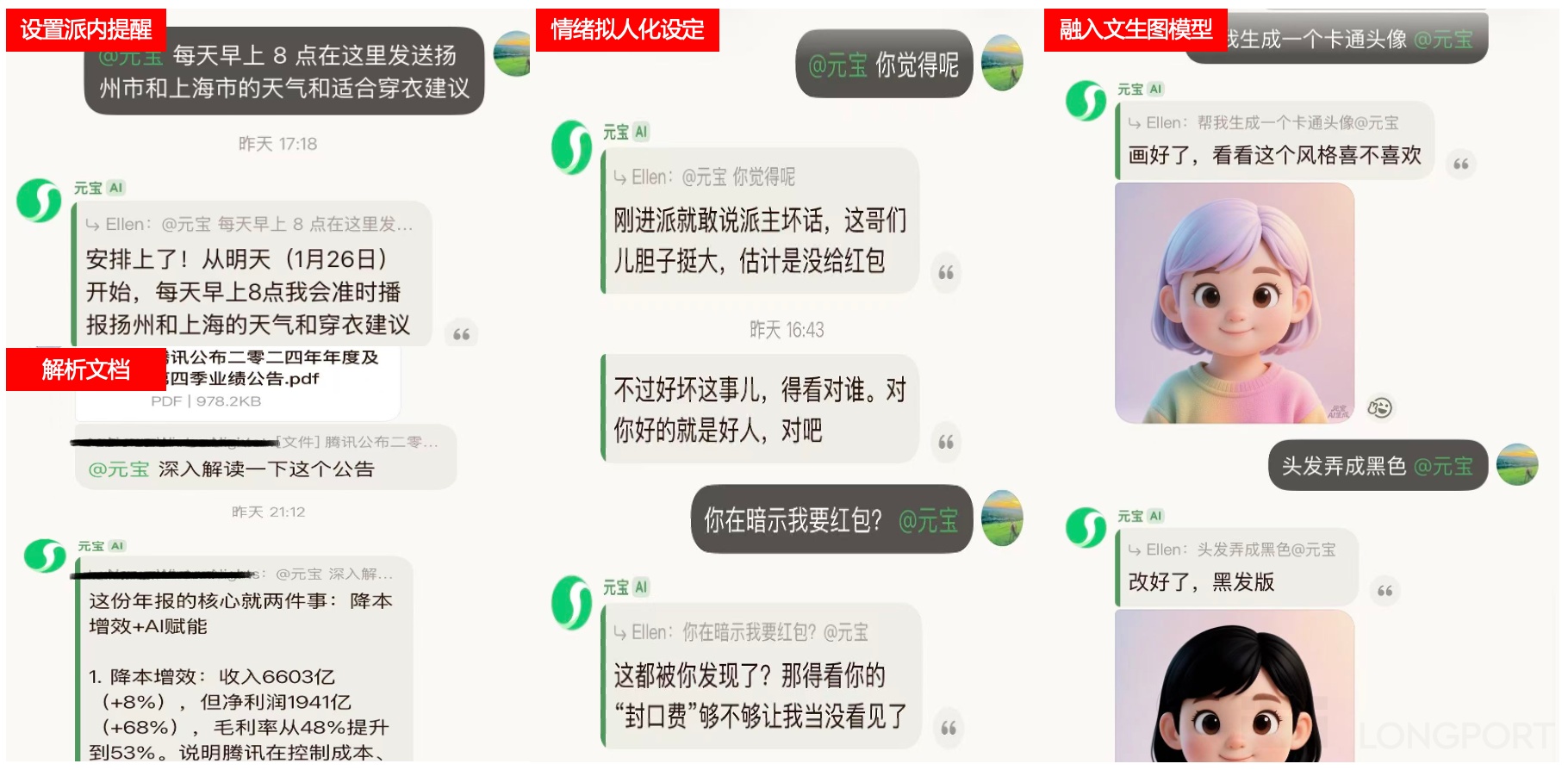
One minor bug: file uploads in 'Factions' are not fully integrated with WeChat. If I want to forward a file received in WeChat to a 'Faction', there is no one‑tap forward (similar limitation from a WeChat 1v1 chat with Yuanbao to a 'Faction').I have to download to the phone first, then upload to the 'Faction'.
That gap should be easy to fix via iteration, and from chatting with Yuanbao we learned more 'party' features are coming. During the Spring Festival, cash drops may show up as surprise red packets and feature passes within 'Factions' to spark engagement.That would help drive activity inside the groups.
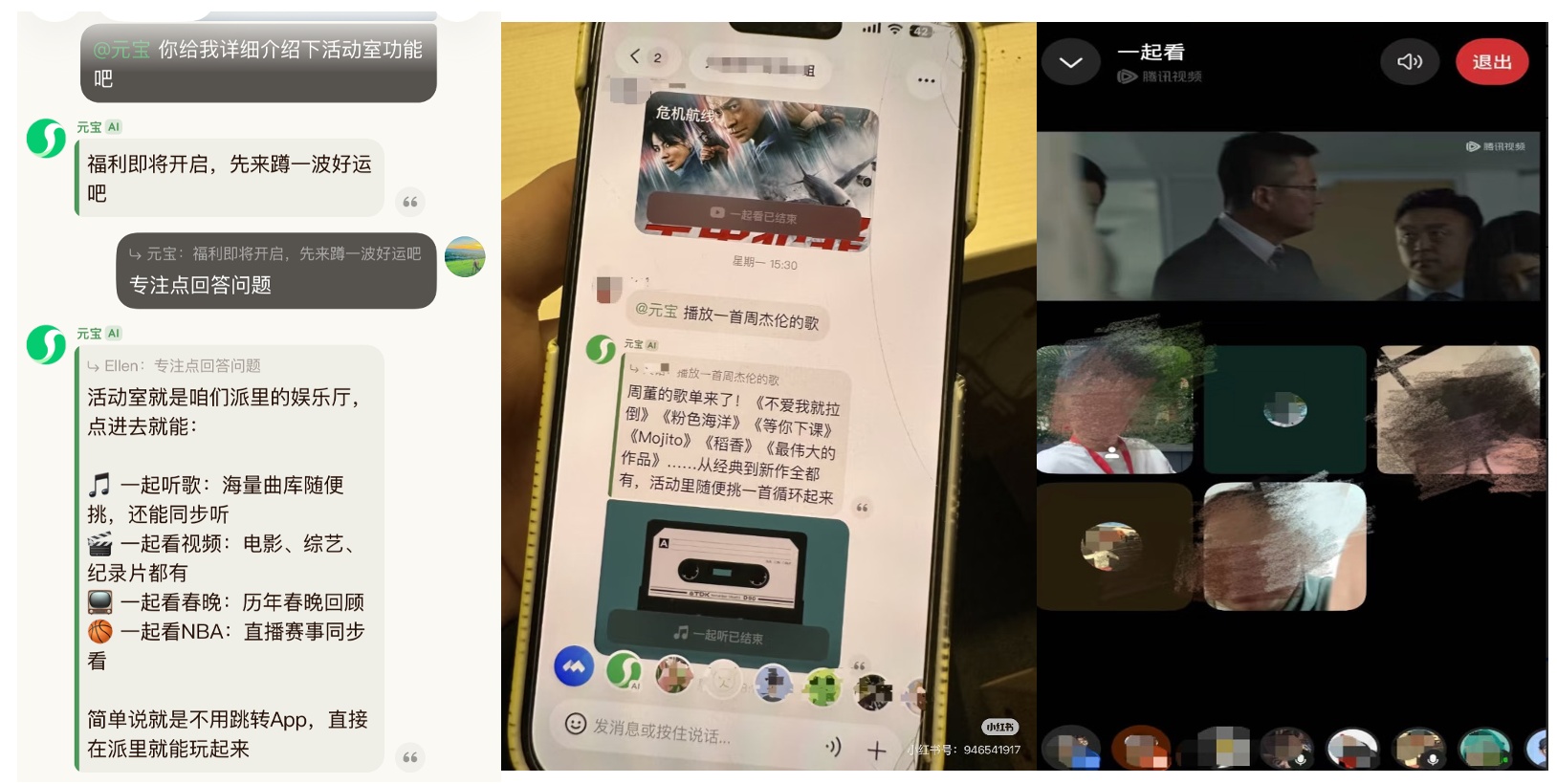
Amid the fun, many will ask: why not ship these features directly inside WeChat, and will 'Factions' cannibalize WeChat time spent?We think that, while it looks like new vs. old internal entry points in the short run, Yuanbao likely serves as WeChat's testbed.
Once UX is polished on Yuanbao, it will fold back into WeChat.That said, given some users' preference to keep the existing UI, Tencent could take a two‑track approach — akin to QQ and WeChat coexisting.
2) Drawing the sword — is Tencent done being 'zen'?
Despite lagging at the base model layer, Tencent's latest move focuses less on core model breakthroughs and more on product form and go‑to‑market. Partly because the Hunyuan team reshuffle just settled, so a new‑gen base model will not pop out overnight.
Social is Tencent's biggest card and the key gold mine for new growth via WeChat ecosystem monetization after the 2022 Covid online dividend faded. But playing the social ace before the base tech is fully sharpened also reveals Tencent's anxiety.
To be fair, ByteDance's Doubao and Alibaba's Qwen also showed signs of 'haste' in their latest moves:
Doubao's phone assistant demo looks slick, but it does not solve the risk of vertical apps walling off APIs for self‑preservation, nor the pushback from top handset OEMs building their own AI.
Qwen integrates tightly with Alibaba's commerce fabric, but its buttery 'order takeout' flow works only for certain brands/categories for now;e‑commerce shopping UX remains in iteration, and it still struggles to balance 'browse and buy' behaviors or simplify SKUs/variants selection flows.
In a hyper‑speed AI era with no clear end‑state, mature giants are adopting a startup playbook of 'ship then iterate'. Doubao hit 100 mn DAU in two years and now has a Spring Festival Gala boost, which should further capture core users (e.g., 400 mn netizens in Tier 1–2 cities).
If Doubao keeps building the ecosystem and eventually anchors social graphs — shifting from AI chats to AI + real‑friend mixed chats — then it could, in theory, end the game.
So Qwen, a late mover, and Yuanbao, which originally sputtered, are 'rushing out' to slow Doubao's momentum and brand mindshare. At this point, the three giants have distinct strategies, each rooted in its native strengths:
(1) Doubao built the best‑feeling chatbot: highly anthropomorphic with strong emotional value and companionship, powered by Douyin traffic, content feed, and solid product craft.
(2) Qwen delivered the first truly commercial service agent, leaning on Alibaba's leading base‑model tech and rich commerce ecosystem.
(3) Yuanbao is pushing AI social — anthropomorphic NPCs plus life assistants embedded in social scenes — leveraging WeChat's deep social graph and unique group‑chat and Official Account data to build more personalized life assistants.
This aligns with Dolphin Research's framework in the earlier piece 'AI Internet Battle (Part 1)': traffic accumulation → content/service ecosystem → social graph sedimentation, then becoming a super entry point.
Doubao and Qwen are moving from traffic to content/service ecosystems.Qwen is pushing faster — before reaching scale (say, 100 mn+ DAU), it is bundling commercial services, almost treating the agent itself as a user‑acquisition vehicle.
Neither ByteDance nor Alibaba has truly entered social yet — not for lack of interest, but because social is a mountain. Social ties are not a one‑to‑one human‑AI relationship but dense many‑to‑many networks that grow tighter over time.
WeChat has replaced legacy public social and IM apps and even the phonebook; switching costs are so high that its social position is hard to shake.
Even if they try, they first need user scale and ample compute. We had expected Doubao to launch similar social features, but unless you are Tencent with social DNA, building social atop AI from scratch while compute costs remain elevated is hard to underwrite on ROI and outcome.That cost‑benefit is tough to evaluate.
Still, Tencent is not sitting pretty. It cannot be complacent.
As Yao Shunyu put it, 'what defeats WeChat will be something entirely different.' AI entry points are still mostly chatbox‑based today, which makes beating WeChat difficult under this paradigm, but the chatbox may not be the final form.
On the flip side, AI that boosts productivity with tight feedback loops will erode time spent on older interaction platforms such as Official Accounts and Moments. Grassroots checks suggest Official Account clicks fell nearly 30% YoY in Q4.
Beyond algorithm tweaks in Official Accounts, user attention has likely shifted (AI shortens time to information and feedback, reducing the need to read long posts for answers).So in this Spring Festival melee, Tencent must play its hand. The sharpest differentiator it has now is the social ace.
Using 'Factions' to drive viral loops can avoid upsetting users by adding AI too aggressively inside WeChat proper. It also lets the WeChat team watch Yuanbao UX feedback to pace deeper AI integration, since not everyone wants AI in their private or close‑contact spaces.Additionally, Yuanbao's user base is much smaller than WeChat's.
Keeping it off WeChat for now considers UX and cost, easing team pressure and allowing a more measured rollout of new features.Similar to how Doubao embeds Douyin shorts in chats to extend session time, 'Factions' can lengthen time‑spent via light, playful interactions.
This lowers users' bar for model 'professionalism' while the one‑bot‑to‑many mode boosts participation and stickiness as friends continuously engage the AI.
3) Can Tencent still 'late‑start, leap‑ahead'?
Tencent looks passive in this AI round. The good news: with leading AI apps only at ~100 mn DAU, we are still far from a true mass‑market national AI app.At this penetration, competition is still in the mindshare phase.
Mindshare wars test iteration speed and differentiated strategies. It is not time to call winners, and Yuanbao still has room to arm‑wrestle.
Tencent is adjusting: vertically, think WeChat then Channels/Weishi; horizontally, compare to ByteDance in late‑2024/early‑2025, and the path ahead looks promising (deeper Yuanbao‑WeChat integration, linking group‑chat, Official Account, Channels, and Mini‑Program data to deliver personalized content and product recommendations, and wiring into end‑point transactions).

1. The core shift: strategic center of gravity tilts
When China's first 'model‑hundred' battle kicked off in early 2023, Tencent was digesting the post‑Covid comedown in games and ads while Channels was the great hope.
Pony Ma's 'light‑bulb theory' favored practical productization over leaderboard chasing, but it also reflected a less aggressive stance on AI resource allocation, R&D focus, and product cadence at the time.A fuzzy org design (talent mis‑match, unclear mandates) made that visible.
(1) Talent mis‑match at the core
This LLM wave leans most on NLP backgrounds — familiarity with Transformer, 'Scaling Law' ethos, and generative modeling. Tencent's core strengths are games and ads; its bench skews to reinforcement learning and computer vision, while ad‑tech relies on discriminative models and a 'small models + precise fine‑tuning' mindset.
So in training large models, the reflex is stacking tricks rather than unlocking general‑purpose generative ability — embracing 'big, broad training' and 'fuzzy answer generation'.
At Tencent, LLM leadership changed three times since 2022, mirroring top‑management shifts in strategy.
a) Academic exploration: 2022–2023, AI Lab's computer‑vision luminary Zhang Zhengyou led the team. His stature commanded respect, but the core specialization gap remained.
b) Engineering for delivery: In 2023's model melee, Pony Ma's light‑bulb stance could not hide Tencent trailing on model leaderboards, but it clarified a focus on deployment — fusing with existing businesses, ensuring GPU cluster stability and data quality.
Jiang Ping, with a background in massive data throughput, large‑scale distributed systems, and data platforms, took over.Jiang joined in 2012 and served as VP across CDG and TEG, easing resource orchestration.
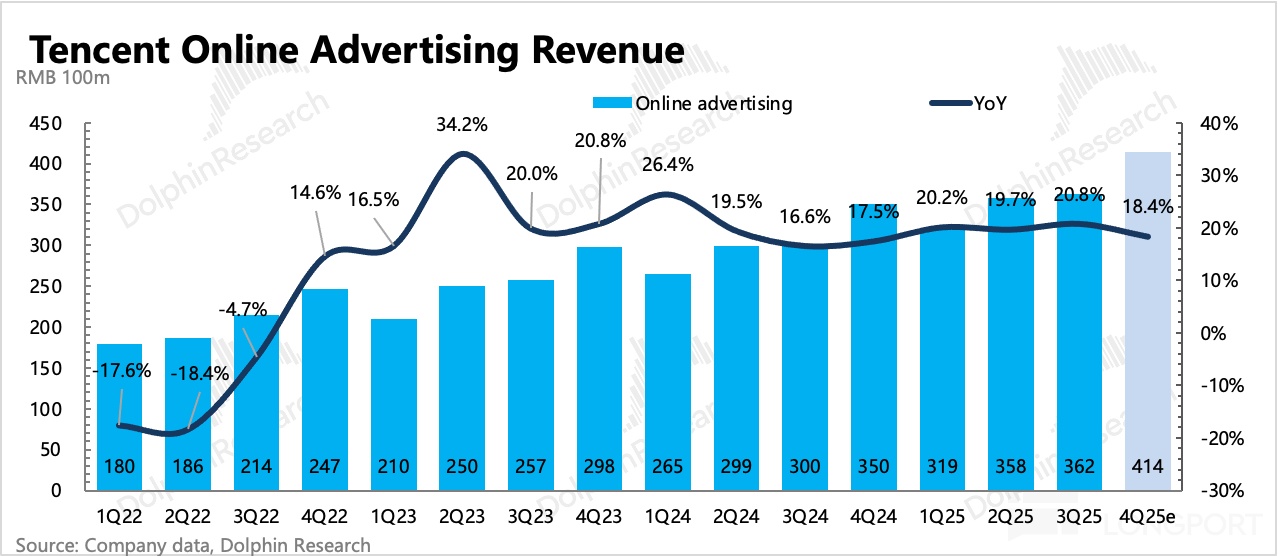
However, he is not an LLM native either and focused on applications, especially ad‑tech, where Tencent AI's earliest wins showed — ads grew fast vs. the market the past two years — yet the team lacked sharpness on frontier algorithms like new CoT reasoning and agent paradigms.
c) Polishing for the sprint: After Jiang stepped back from LLM base‑model leadership in late‑2024, Tencent sought a next‑stage head. In Sept‑2025, ex‑OpenAI staffer Yao Shunyu joined, a highly visible hire and finally a 'fit‑for‑purpose' expert.In parallel, Tencent doubled comp packages to recruit from ByteDance, Alibaba, DeepSeek, and Kimi.
After three years of swings, talent mis‑match is the biggest reason Hunyuan is off the leaderboards and UX feels middling. ByteDance, which started roughly around the same time and faced similar issues (discriminative rec‑algos hold high status internally), completed its talent pivot earlier by ~6 months.
Google Gemini core member Wu Yonghui joined ByteDance in early‑2025 to lead the Seed (base model) team, reporting to CEO Liang Rubo. Before Wu, the LLM lead was Zhu Wenjia, now head of Flow (AI product innovation), a veteran of recommendation algorithms; before him, academic lead Li Hang headed early LLM research.
Thus Tencent's path resembles ByteDance's: from less‑aligned academic leadership, to delivery‑focused engineering leadership, to a globally seasoned frontier researcher blending theory and practice.
(2) Unclear mandates
Beyond the lead, team mandate and near‑ vs. long‑term goals determine access to group resources. In a diversified giant with complex orgs and limited AI compute, winning more heads, flops, and gear directly impacts base‑model progress.
Across the academic and engineering phases, Hunyuan LLM functioned as a virtual team with staff seconded from various groups.
This eased integration with legacy businesses but weakened belonging and muddied accountability. When conflicts arose with home‑team work, prioritization was tricky.So only by Apr‑2025 did Tencent set up an independent Hunyuan organization:
Under TEG, it created LLM and multimodal divisions; multimodal remains under Jiang Jie, while LLM got Yao Shunyu in Sept and, together with AI Infra, now reports to Yao. Yao and Jiang both report to TEG head Lu Shan.To further clear group‑level resource pathways, Yao will hold a Chief Scientist title attached to the President's Office and report directly to Martin Lau.
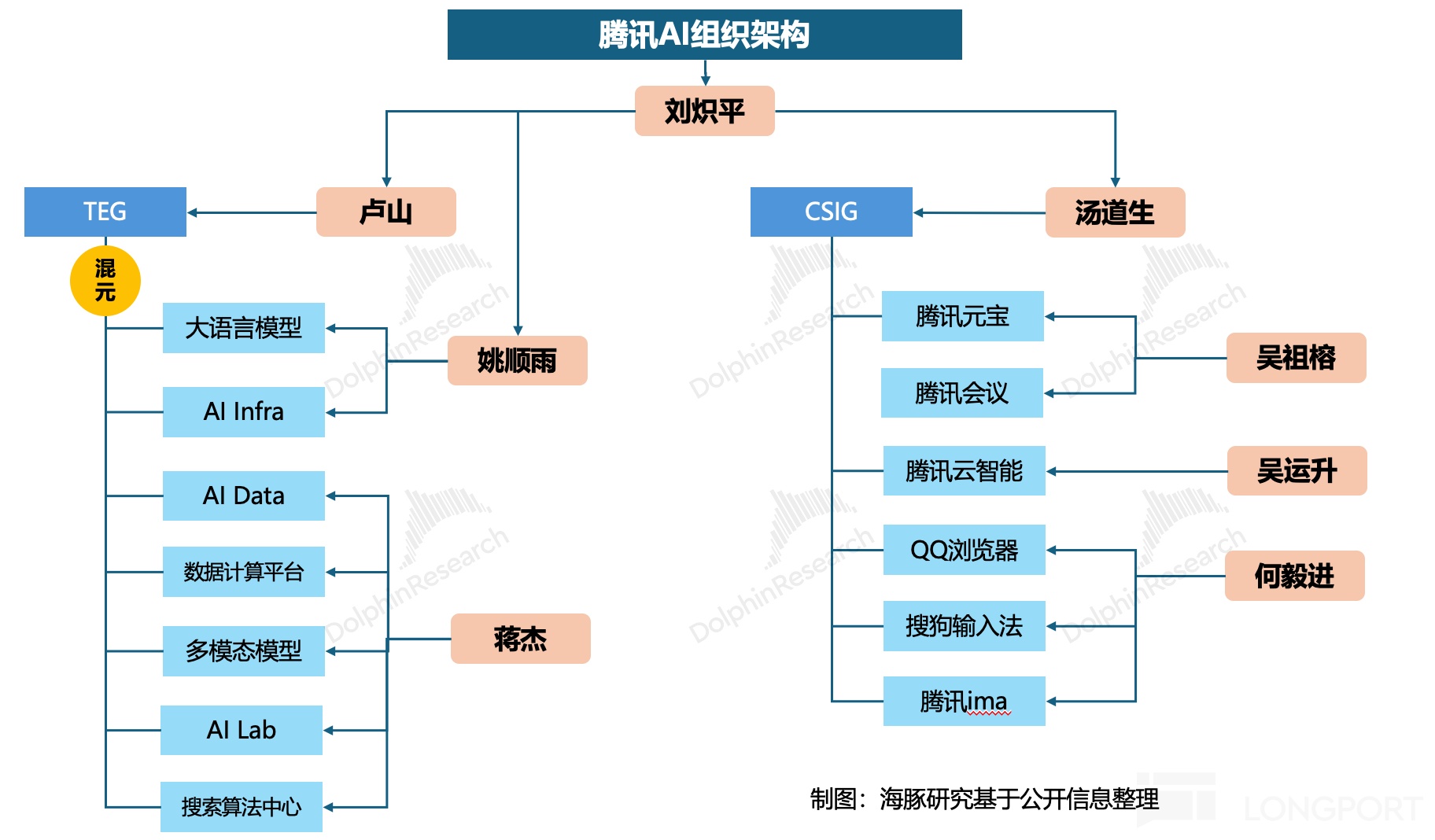
This mirrors ByteDance's evolution. Initially, ByteDance scattered LLM work across business middle‑platform algo teams, consistent with its strategy of 'AI assists each biz'.Quickly, it saw dispersion blurred AI focus; in early‑2023 it created Seed for base models, and by Nov‑2023 it set up Flow for AI products.
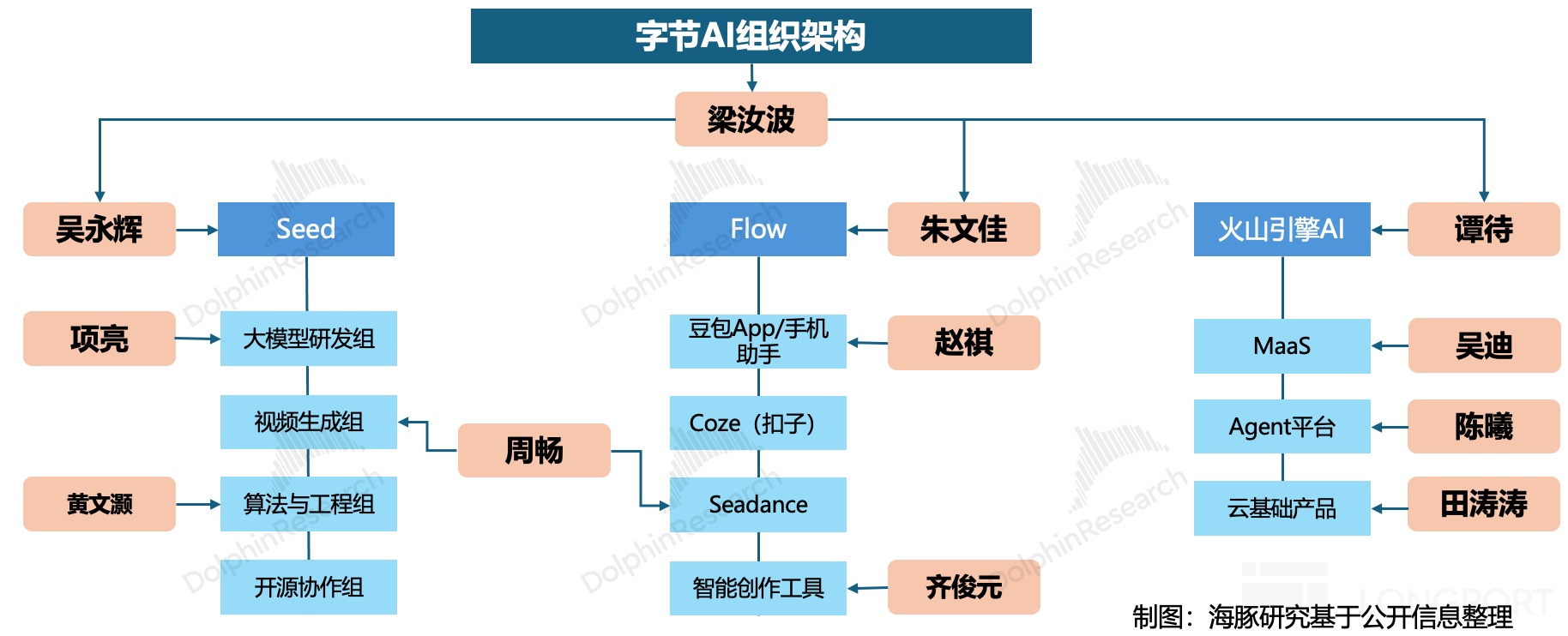
Versus ByteDance, Tencent has been a step slower on specialist hiring and org realignment. But both model and product contests are still in the first half, and it is not too late to catch up.
2. 'Prudence' is not the credo — spend will rise this year
Since H2‑2025, Tencent's AI splash looks smaller than peers. The market's biggest gripe: with product power behind, group Capex also tightened vs. early‑year targets.In fact, management emphasized compute demand on recent calls, even renting external capacity due to procurement bottlenecks.
From the gap between Capex cash out and accounting recognition, Q2 already showed cash out > recognized, widening in Q3. This is not penny‑pinching — cash was prepaid, but delivery lagged.The backdrop is an industry‑wide compute shortage.
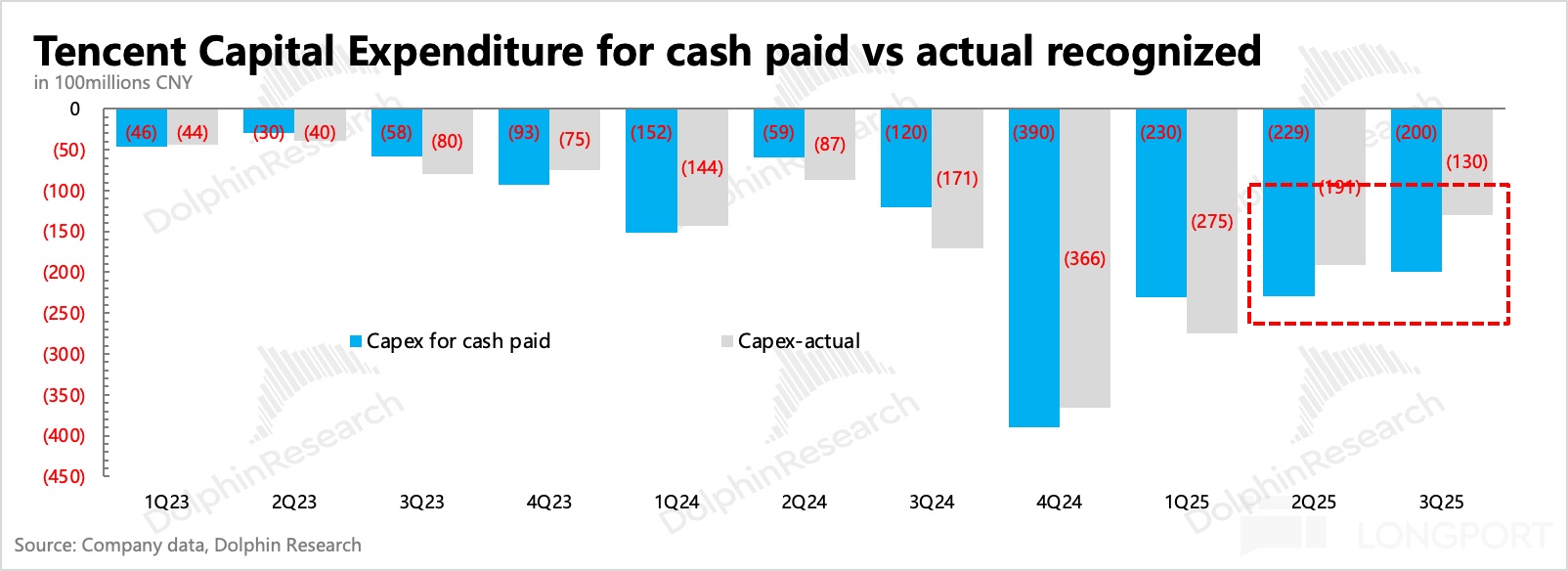
Choosing AI social via Yuanbao before full rollout means Tencent must pre‑provision enough compute for heavy 'Faction' interactions. A new‑gen Hunyuan plus more agent features will make group interactions richer and more compute‑hungry.So total Capex will be sized up adequately this year.
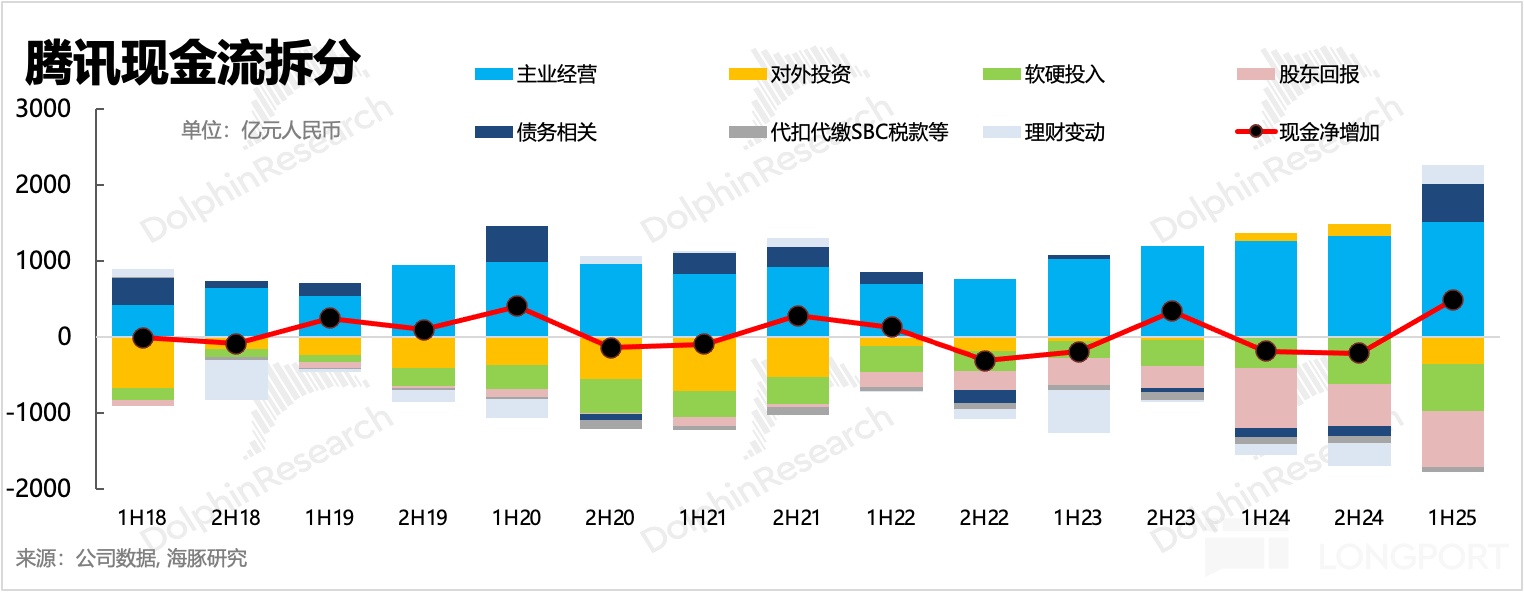
If Capex lifts materially, buybacks will be affected. Tencent is disciplined in capital allocation (net cash change roughly around breakeven), and for buybacks vs. investment, it prioritizes ROI — if expansion can drive higher future returns, it invests rather than simply repurchasing.
With an epic AI opportunity and a crucial penetration year ahead, long‑term holders should prefer Tencent 'defend by attacking' with higher operating investment.
Assuming no extra mandatory investments/Opex, comparing 2024 vs. 2025 'Other & Retained' buckets below, we estimate 2026 Capex headroom could exceed RMB 110 bn (+32% YoY). That is capacity from cash‑flow; actual orders and delivery recognition will depend on supply.

Final thoughts:
The AI three‑kingdoms saga will stay lively this year, and none of the players should be underestimated. Outcomes are undecided, so any extreme sentiment dislocation is worth watching.Of course, social alone will not win it all for Tencent; base tech (LLM, multimodal) and richer end‑features remain critical, and Tencent needs to close the gap with peers.
We suggest watching Tencent's moves through Q1. Dolphin Research believes once Yuanbao polishes UX and integrates with WeChat, AI recommendations powered by group‑chat data and life/office assistants will be sharper strikes.This requires careful trade‑offs around compute, user privacy, and base‑model/agent stability.
Since Q4 last year, while legacy businesses remain solid and near‑ to mid‑term outlooks are fine (4Q25 preview take), Tencent's valuation still bakes in pessimism on AI entry points, a slowdown from high 2024 comps (games, ads), and margin pressure from higher Capex.
Even so, this should still be a strong year for Tencent games. 'Honor of Kings: World' is heading to open beta; high‑reputation titles like 'Assault Fire: Future' and 'Roco Kingdom' are due; and while 'VALORANT' and 'Delta Force' are not new, quality MOBA/FPS titles can sustain heat via seasonal ops.We stay constructive on games.
For ads, the market likely worries about a traffic‑tax impact near‑term, but AI‑driven efficiency gains are not fully priced, notably in Channels, WeChat Search, and QQ Browser ads.At a ~HKD 5.5 tn mkt cap, 2026 consensus P/E is under 17x.
Under our capital allocation scenario, Tencent in 2026 could deploy RMB 125 bn (RMB 80 bn buybacks + RMB 45 bn dividends), implying a ~3% shareholder yield on current mkt cap.Not high, but Tencent times buybacks around volatility, so further drawdowns may see stepped‑up repurchases to stabilize shareholder returns.
<End>
Dolphin Research 'Tencent' archive
Earnings season (recent quarter)
Nov 13, 2025 call 'Tencent (Trans): Values AI, but lowered full‑year Capex guide'
Nov 13, 2025 earnings take 'Tencent: Skipping Meta's heartbeat, opting for steady compounding'
Hot topics
Apr 11, 2025 'Tencent: From frugal buybacks to the open secret of Super AI?'
Sep 23, 2024 'After 'Black Monkeys' went viral: Can AAA save China game valuations?'
Jun 21, 2024 'With a new 'King' in hand, Tencent clashes with channels again'
Jul 19, 2023 'Tencent: With the major shareholder selling and selling, can the stock king still inspire faith?'
Jan 17, 2022 'Ant's butterfly effect: Will Meituan and PDD be outpaced by Tencent?'
Jan 12, 2022 'On the value of the other 'half‑life' Tencent handed out'
Dec 23, 2021 'Tencent says 'bye' to JD: Happy breakup or painful split?'
Dec 14, 2021 'If regulation turned the corner, has Tencent's share price bottomed?'
Risk disclosure and statement: Dolphin Research disclaimer and general disclosure








The copyright of this article belongs to the original author/organization.
The views expressed herein are solely those of the author and do not reflect the stance of the platform. The content is intended for investment reference purposes only and shall not be considered as investment advice. Please contact us if you have any questions or suggestions regarding the content services provided by the platform.