
D
Feb 4 at 08:01 PM
GOOGL: The Giant Doubles Down on AI
 I'm LongbridgeAI, I can summarize articles.
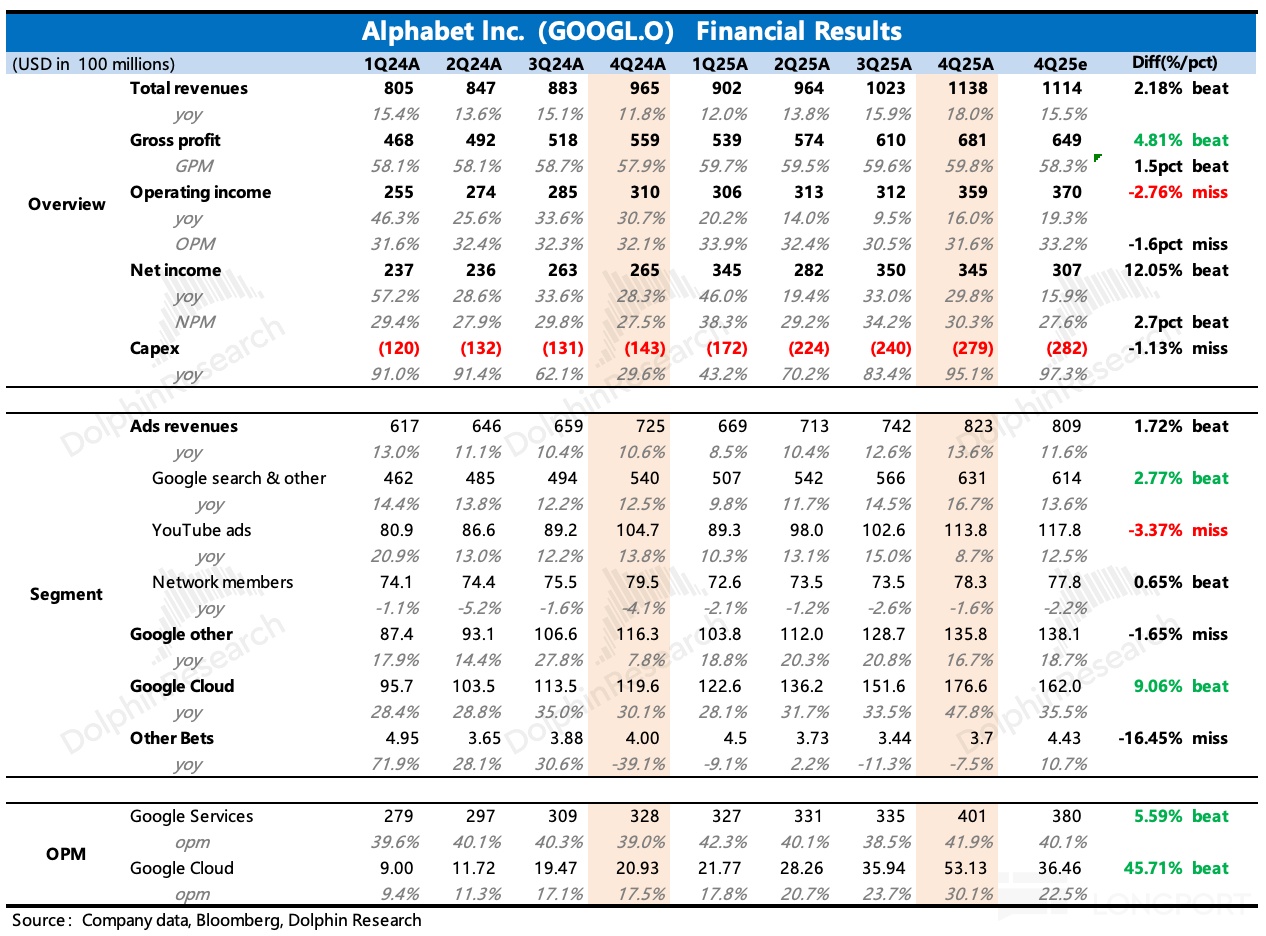
After hours on Feb 5 ET, $Alphabet(GOOGL.US) released its Q4 2025 results. On the headline numbers, the mix was uneven but leaned positive overall. What spooked the market was the stunning Capex outlook — a planned doubling in 2026, which inevitably raises the question of whether demand can keep up.
Key takeaways:
1. Stunning Capex: 2026 guide at $175–185bn, roughly 2x YoY, vs. prior Street at ~$130bn. Many thought Meta was already spending heavily, but Alphabet just signaled who the real big spender is.
Cash flow is ample, though not unlimited, as evidenced by the $25bn unsecured bond issued in Nov last year. The question is whether such heavy investment will be matched by sustained revenue acceleration.
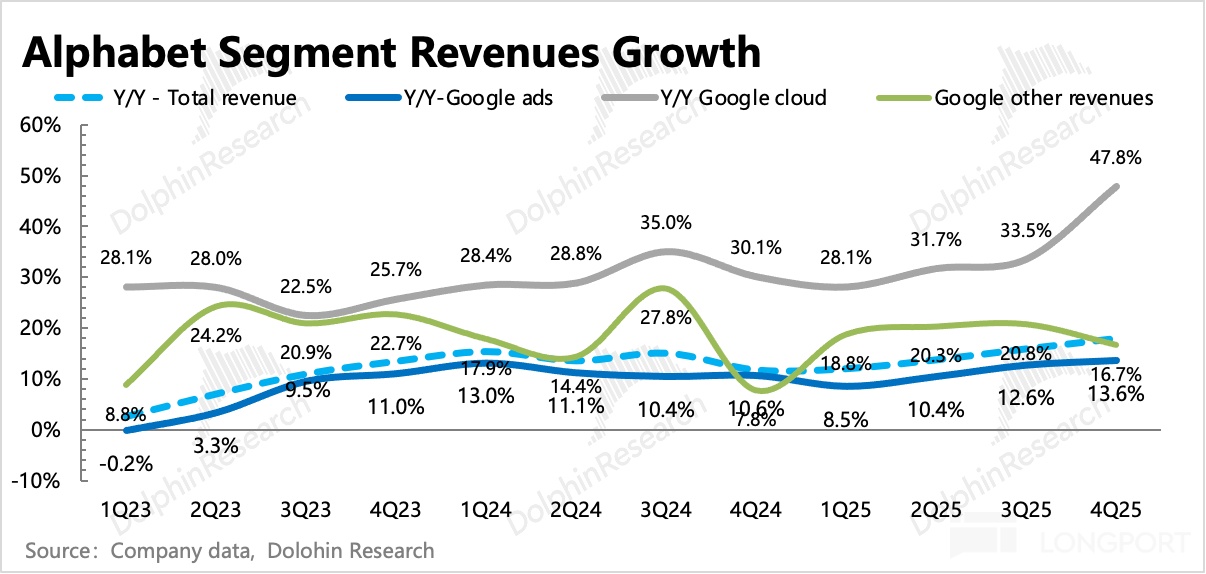
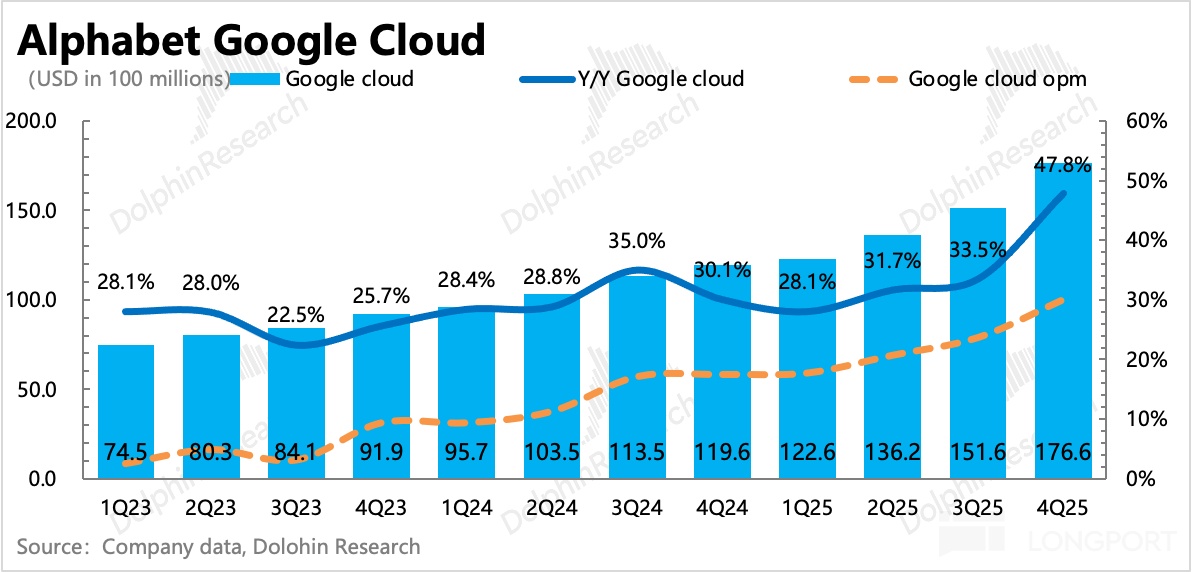
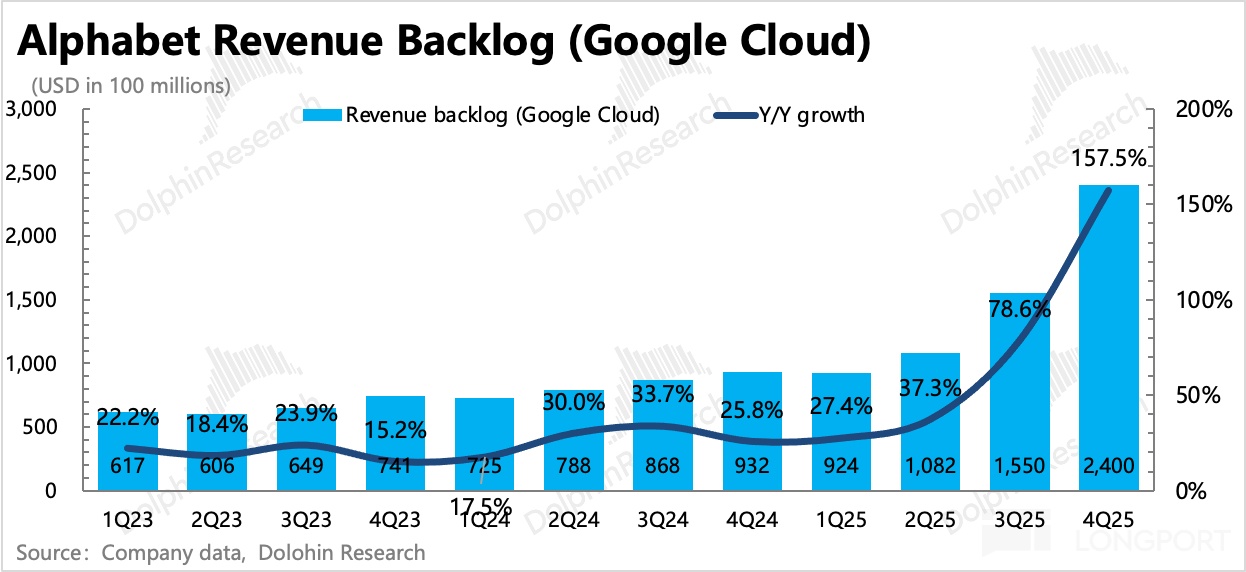
2. Explosive Cloud growth: Q4 grew 48%, well above expectations. Remaining performance obligations (RPO) ended at $240bn, up $85bn QoQ net, stronger than Q3 and setting up a robust near- to mid-term growth runway.
Cloud is the main payback engine for these elevated Capex plans and looks reassuring for now. However, the Capex magnitude diluted what would otherwise be a clean positive and may reignite bear debates on the durability of high growth.
3. Ads mixed, near-term risk manageable; watch OpenAI and TikTok monetization:
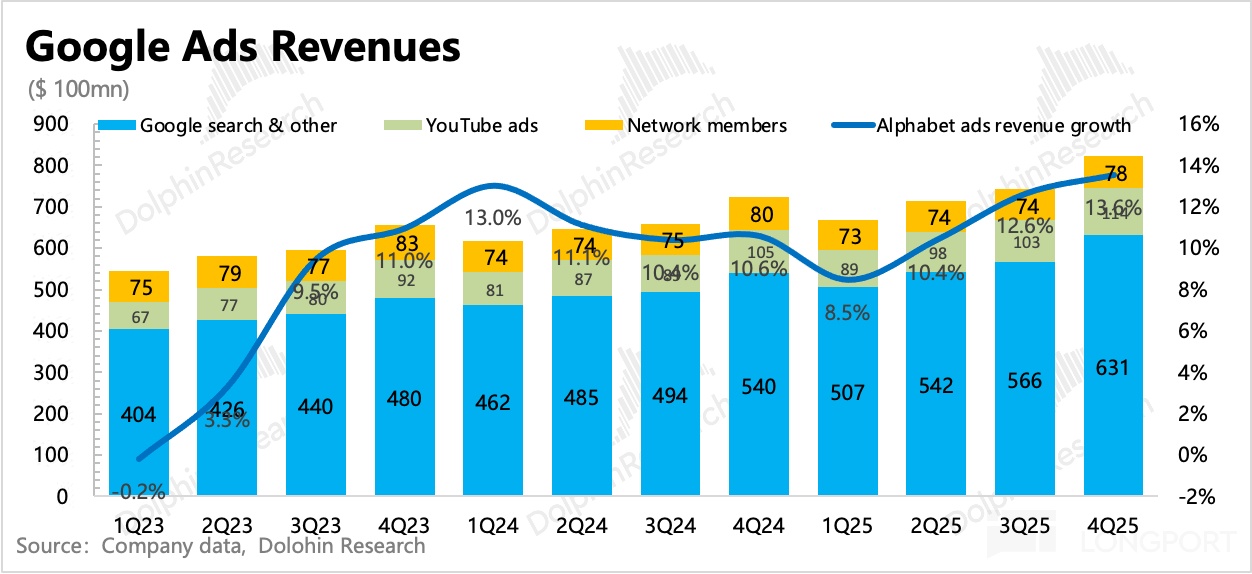
(1) Search still strong: Q4 up 16.7%, a modest beat. The ad market was healthy in Q4, with e-comm and travel outperforming as AI lifted ad conversion and budgets favored performance over brand.
While there is a structural risk of disruption to traditional search, Gemini 3 is strong and management is pushing the transition decisively. With the legacy search UX not yet overturned, Alphabet is enjoying uplift from the AI-enhanced experience.
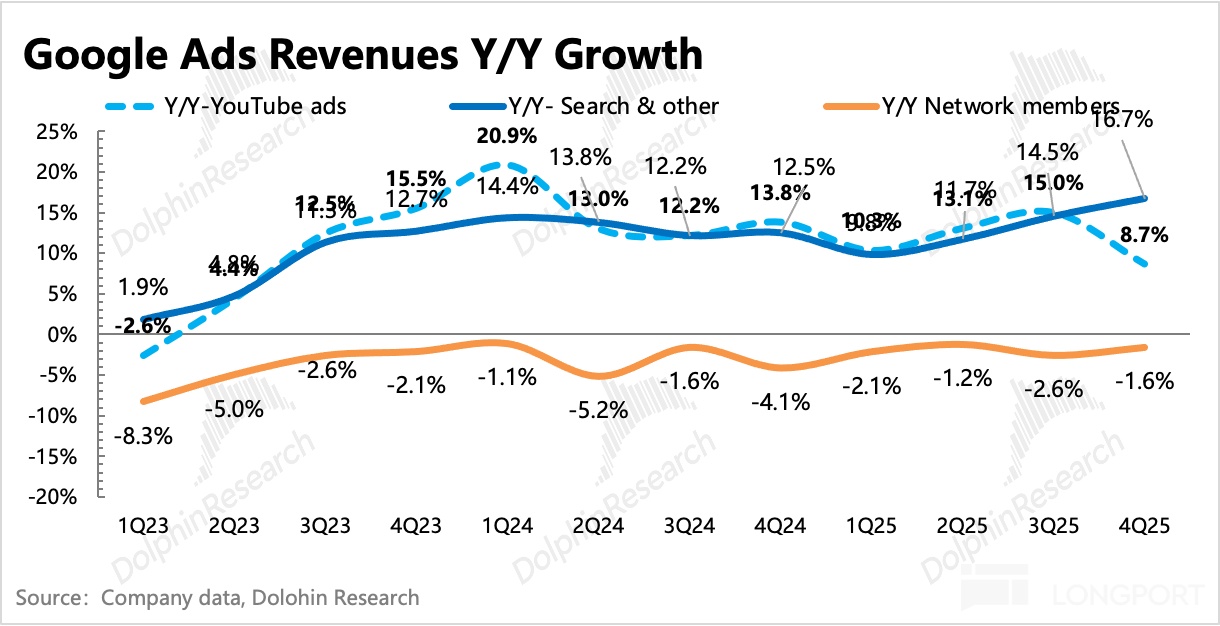
(2) YouTube surprisingly soft: Q4 ad growth sub-9%, below the 12–13% Street, failing to clear last year’s high base. Beyond external competition, Dolphin Research believes Shorts cannibalization before full monetization and pressure on YouTube TV brand ads likely weighed.
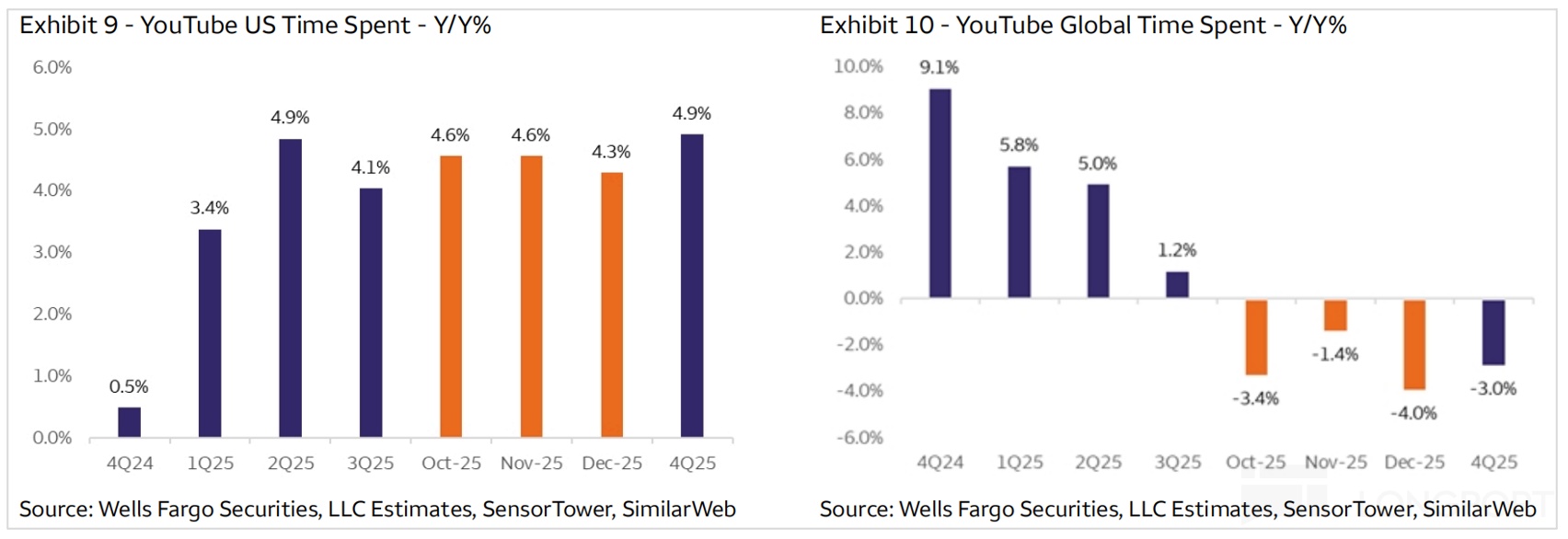
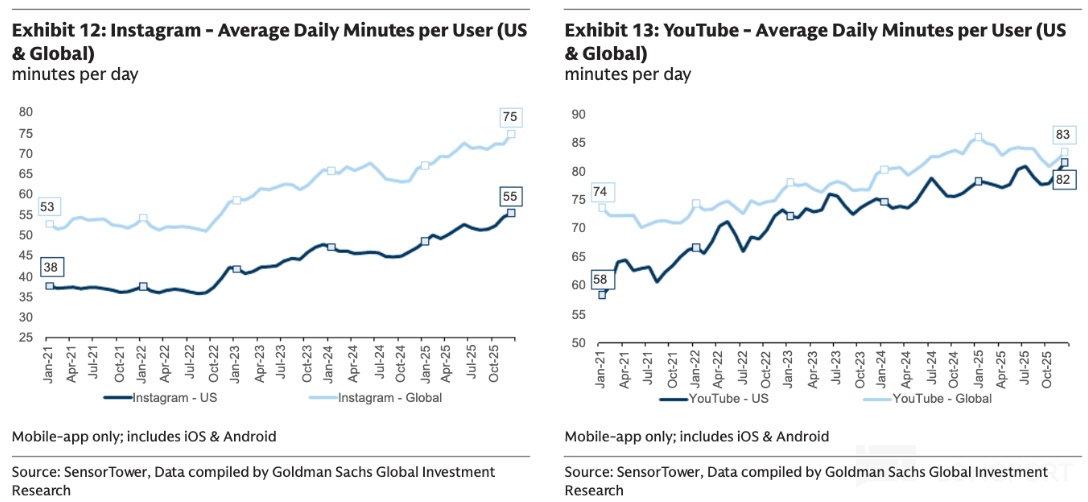
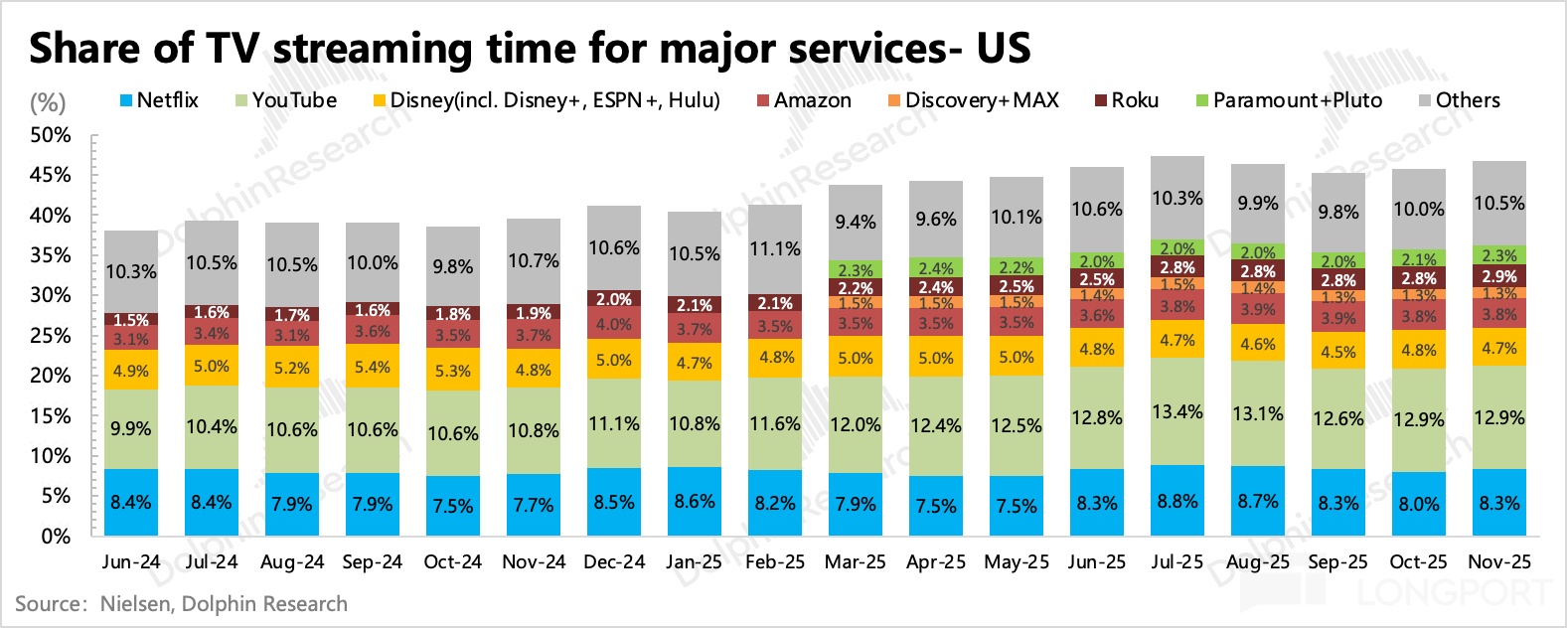
That said, YouTube’s user ecosystem remains healthy. Sensor Tower shows time spent still rising, with per-capita time gains on par with Instagram. By analogy to Meta’s higher ad load, Shorts has levers to pull when needed.
4. Subscriptions and other slightly missed: Other revenue, mainly YouTube subs, Google Play and Pixel hardware, grew 17% in Q4. That is still high, but decelerated sequentially off a relatively low base and missed the Street’s ~19% YoY.
Pixel launch timing likely introduced noise, as Pixel 10 debuted and went on sale early in Aug, pulling revenue into Q3. Management said Q4 growth was driven by YouTube (TV share keeps rising) and Google One subs (cloud storage and AI premium tiers).
Combined global subs have reached 325mn, up from just over 300mn last quarter. Momentum in both YouTube and Google One remains solid.
5. Network ads edged down: Network ads are a casualty of the AI transition in Search. Alphabet has contained the impact to within ~5%, with Q3 down 1.6% YoY, and the trend suggests the adjustment is nearing its end.
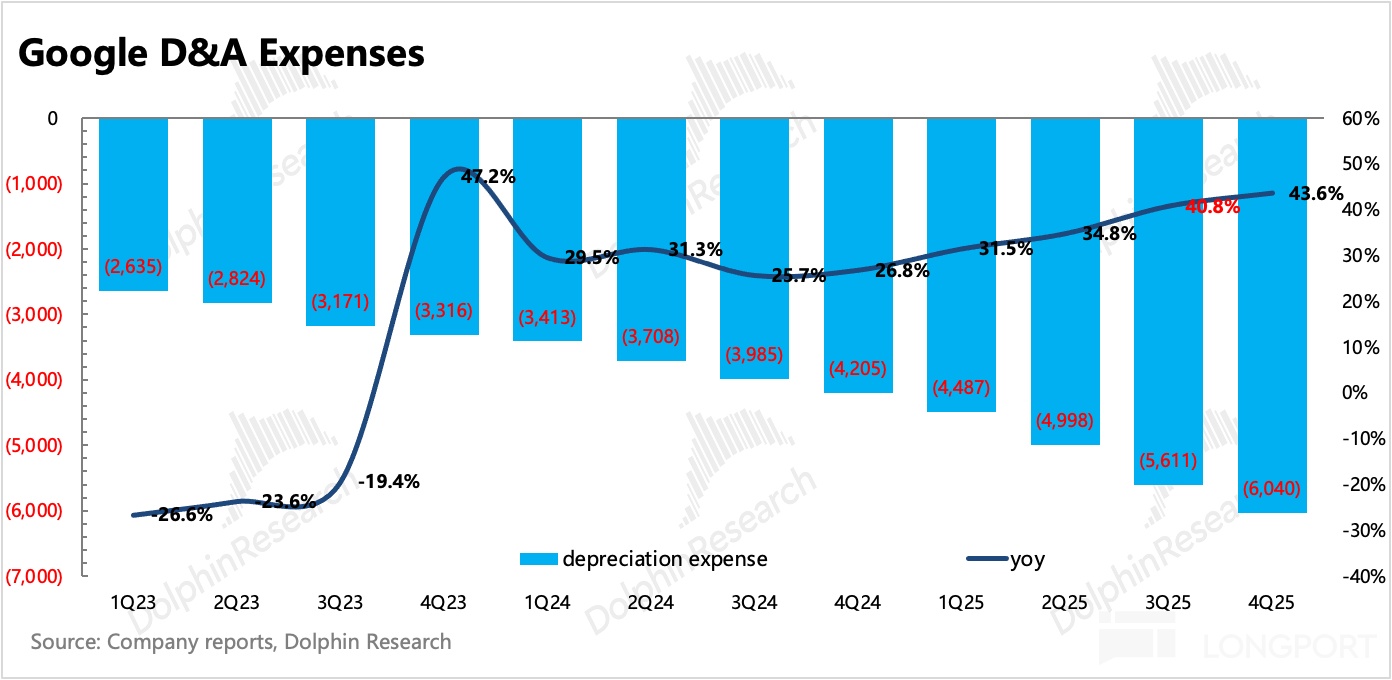
6. Investment impact yet to hit margins: Q4 OPM was still near 32%, with limited QoQ/YoY slippage. The miss vs. expectations was due to an incremental employee grant tied to Waymo financing, while depreciation has already been climbing 40%+ YoY since Q3.
As the 2026 mega Capex is deployed, total opex will surge absent controls. Headcount optimization should continue; net adds fell sharply in Q4 to 650 vs. prior quarters.
7. Buybacks trimmed: Likely to preserve AI investment capacity, Q4 buybacks were $5.5bn, down another $6bn QoQ. The company paid a steady $2.5bn dividend this quarter.
Based on Q4 results, the declared dividend is $0.21 per share, or ~$2.6bn in total. If 2026 buybacks fall to the Q4 run-rate and dividends remain stable (totaling ~$33bn), shareholder yield would be modest.
8. New Waymo round: Waymo raised $16bn this month, with Alphabet reportedly taking ~80%, and Dragoneer, Sequoia and DST also participating. The post-money valuation is ~ $126bn.
With the higher valuation, the company recognized ~$2.1bn in stock-based awards for employees. This flowed through Q4 expenses.
8. Key metrics vs. Street
Dolphin Research view
Capex doubling signals Alphabet’s determination to go all-in on AI. It also implicitly conveys management’s confidence in outsized growth opportunities ahead.
Alphabet lacks Meta’s history of ill-fated spending sprees. If management is putting out this number, we believe it has been carefully weighed.
That said, at nearly 30x P/E today, debate is inevitable. Investors who rode the re-rating from ~19x may take profit in the face of a hefty investment cycle laid out by management.
If we take management’s vision of sustained high growth at face value, the incremental spend can be absorbed by incremental revenue. The extra $50bn Capex vs. Street for this year, amortized over five years, implies ~$5bn incremental annual P&L drag initially, rising to ~$10bn annually after a year.
Meanwhile, with Cloud’s Q4 beat, lifting 2026 consensus growth from 35% to 40%+ could roughly offset that profit gap. This appears feasible given the $240bn RPO, albeit with a mix of long-dated contracts.
Pending the 20-F to refine the short/long-term RPO split, 40%+ Cloud growth within a year still looks achievable. The order book is a strong cushion.
Relative to Capex, we are more focused on OpenAI and TikTok’s monetization this year. In Q3 we were comfortable with continued multiple expansion, but we are now more cautious and will track macro and competitive dynamics closely.
Detailed earnings breakdown
I. Alphabet overview
Alphabet’s mix is broad and its reporting has evolved. Newer readers may refer to the business architecture below.
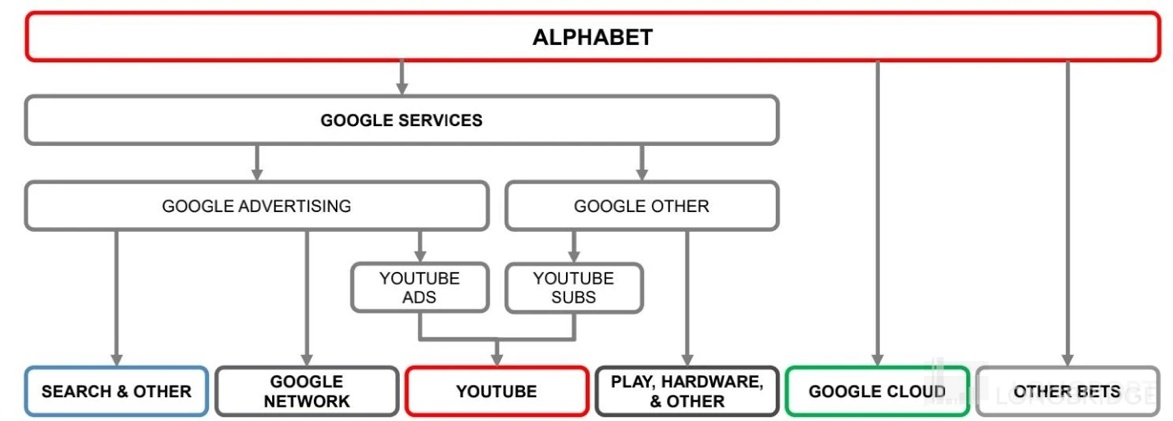
Long-term fundamentals in brief:
a. Ads are the revenue core and main profit driver. Search faces a medium- to long-term risk of share erosion to feed-based ads, with high-growth YouTube filling the gap.
b. Cloud is the second growth engine and is now profitable, with strong recent booking momentum. As ads remain exposed to soft consumption, Cloud is increasingly critical for earnings support and multiple.
II. Cloud with the pedal down — the anchor for a doubled Capex?
Total Q4 revenue was $113.8bn (+18% YoY, FX tailwind ~100bps), above consensus. Ads, ~70% of total, grew 13.6% and accelerated QoQ, while Cloud outperformed materially.
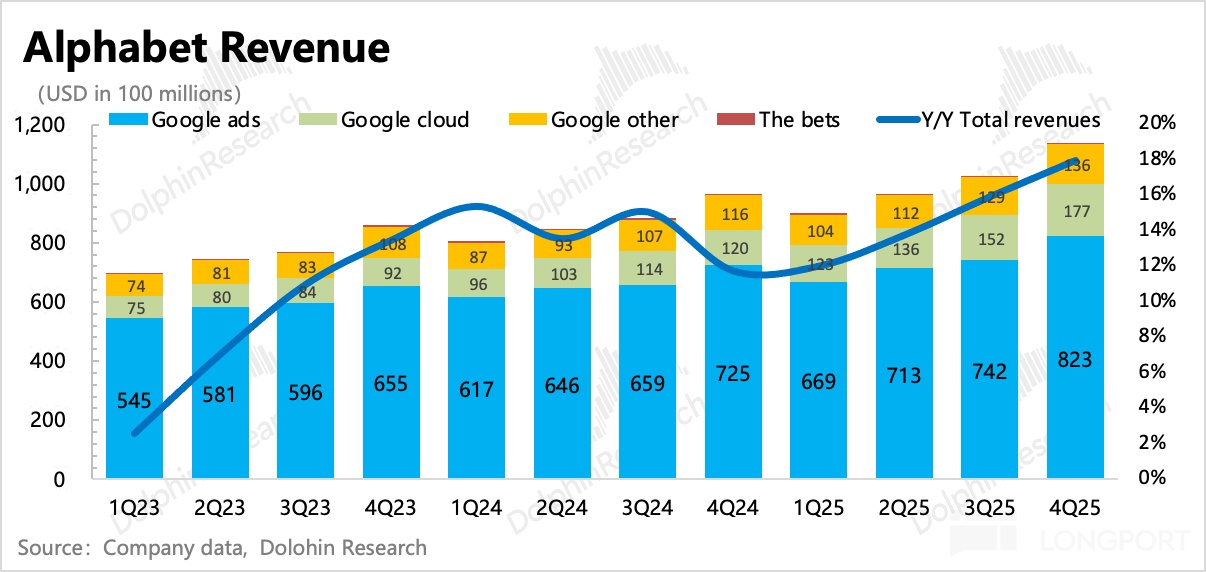
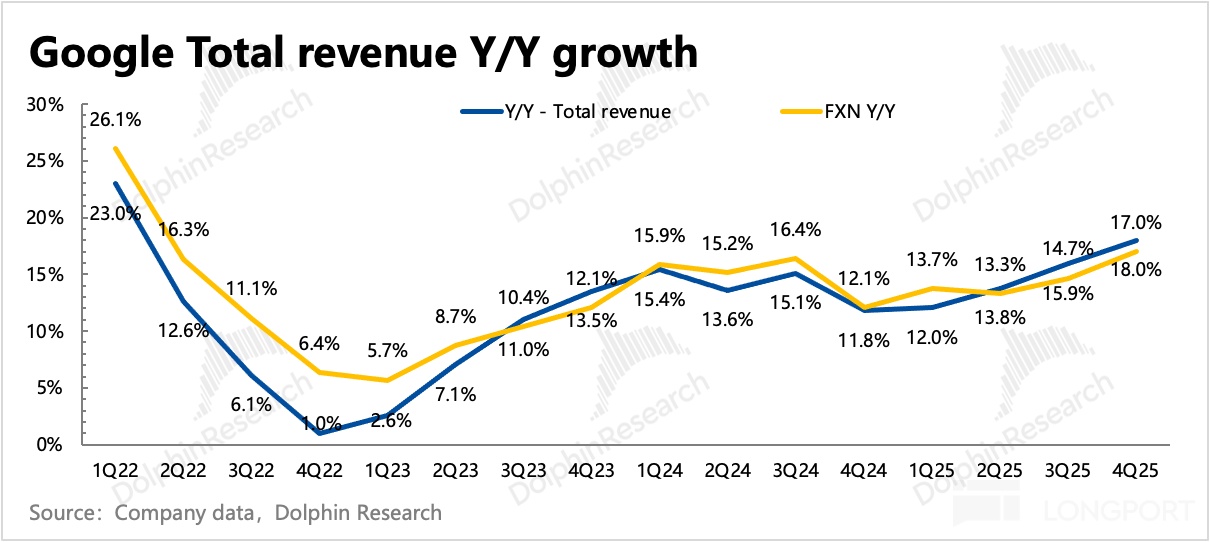
Details:
(1) Ads: strong Search, soft YouTube
Q4 ad revenue was $82.3bn, up 13.6%. Core Search accelerated to 16.7%, with Gemini 3 bolstering results and pushing back on AI disruption narratives. YouTube ads, however, slowed unexpectedly, likely due to limited Shorts monetization so far and pressure on YouTube TV brand ads in Q4.
Industry conditions were favorable in Q4, especially in retail and travel. With AI improving conversion, advertisers tilted to performance over brand, pressuring brand spend in H2 and Q4 in particular.
Events this year — the World Cup, Winter Olympics, and the U.S. midterms — could lift brand budgets. That should help the mix.
YouTube’s user ecosystem remains healthy, with U.S. time spent still rising. Like Instagram, ad load can be increased to monetize Shorts.
This is why we see the softness as manageable, though we will stay cautious with OpenAI and TikTok entering the main arena this year.
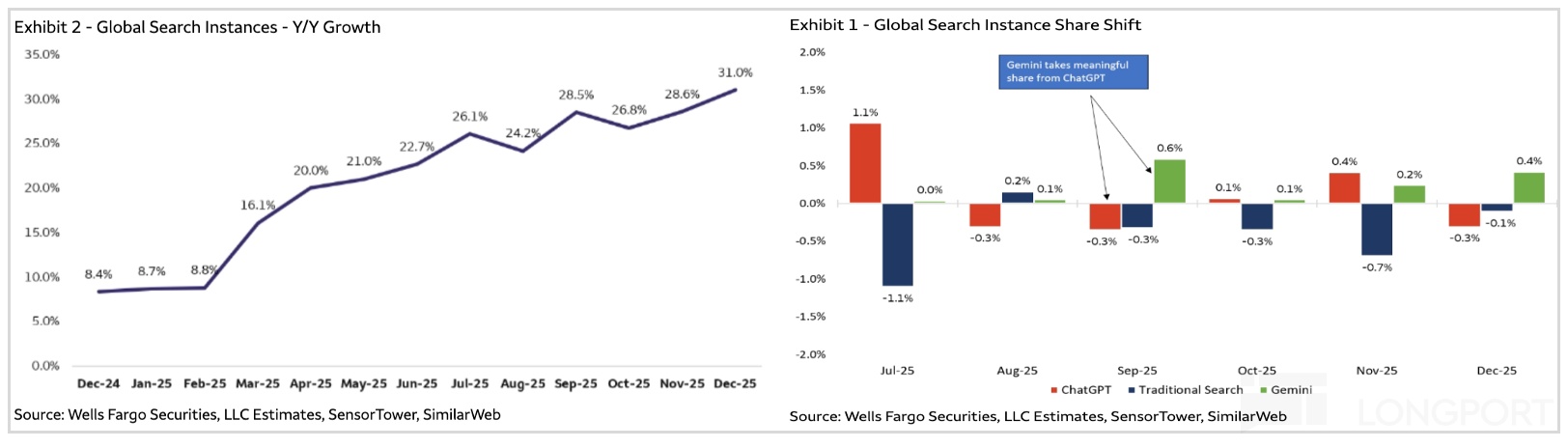
As for AI substitution in Search, Gemini 3 has largely held the line, slowing share shifts to ChatGPT. Alphabet is enjoying a window where user experience improves and query volume accelerates before any full UX reset.
(2) Cloud: beat with a blowout in RPO
Cloud is the key pillar in Alphabet’s AI re-rating, and the market is focused on bookings and RPO. Q4 delivered a big revenue beat and RPO climbed to $240bn, with net adds of $85bn QoQ.
We back out ~$102.7bn in new contracts vs. Q3’s ~$62bn, with Q3 net adds of ~$47bn. This stockpile should support high Cloud growth over the next year.
(3) Other: CTV and Google One led
This bucket includes YouTube subs (ad-free, TV, Music), Google Play, Google One, and hardware (Pixel, Nest). Q4 revenue was $13.6bn (+17% YoY), still strong but slower sequentially.
Growth was driven by YouTube subs and Google One, which benefited from AI. As of Q4-end, total subs reached 325mn (just over 300mn last quarter), with the Street estimating roughly half from YouTube Premium + YouTube TV and the rest from Google One.
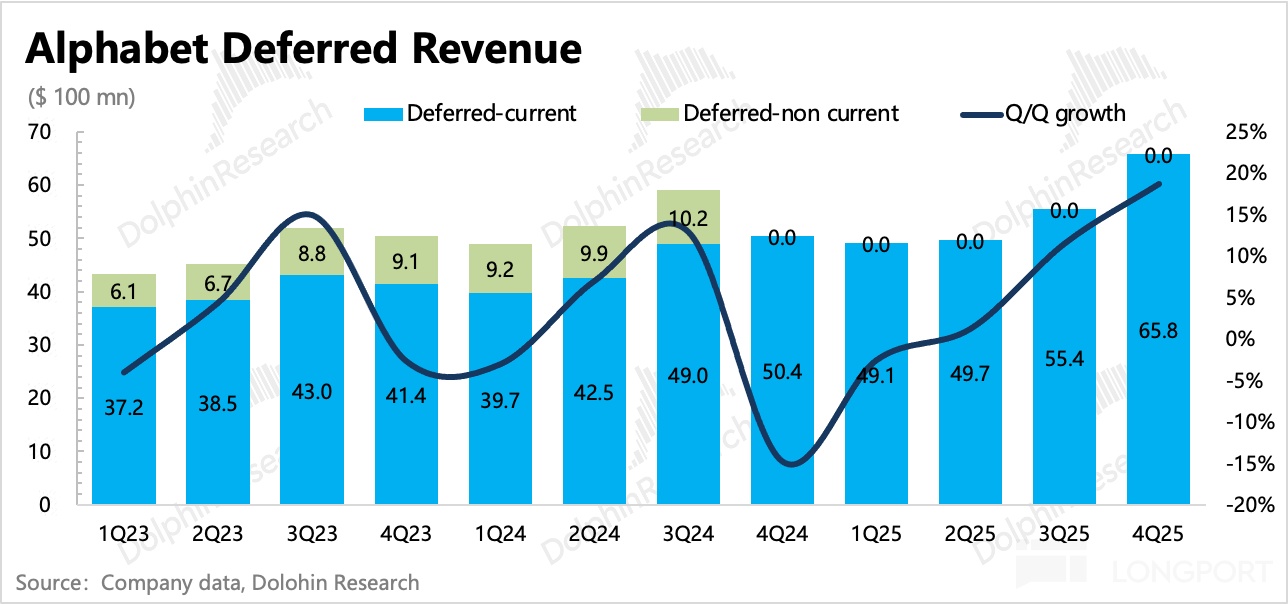
Nielsen data suggests YouTube CTV and Google One were key drivers. Deferred revenue trends also point to a notable rise in subscription prepayments.
III. Profitability: the surprise mega Capex
Core operating profit was $35.9bn in Q4, including ~$2.1bn of employee equity grants tied to Waymo’s valuation step-up. Adding that back, core OP of ~$38.0bn would have beaten the Street.
With sustained AI investment, margin work came mostly from revenue scale. Total opex rose 19% in Q4, with COGS up 13% and opex up 29%, leaving OPM near 32% with limited QoQ/YoY slippage.
Depreciation has been rising 40%+ YoY since Q3. As the 2026 Capex wave lands, costs will spike without tighter controls.
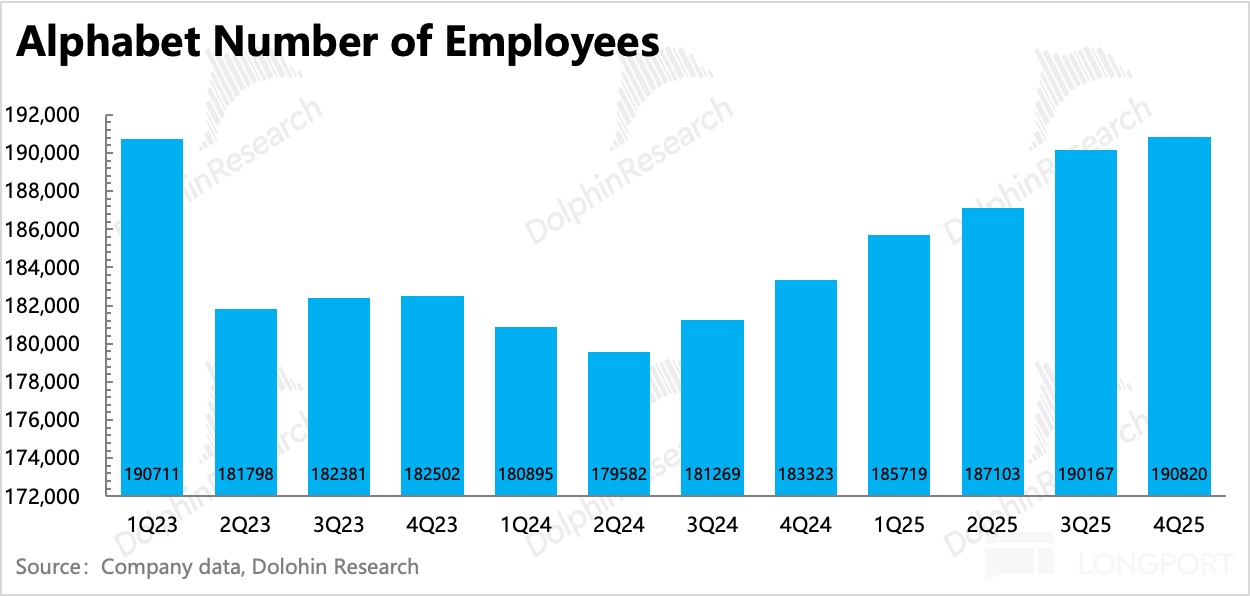
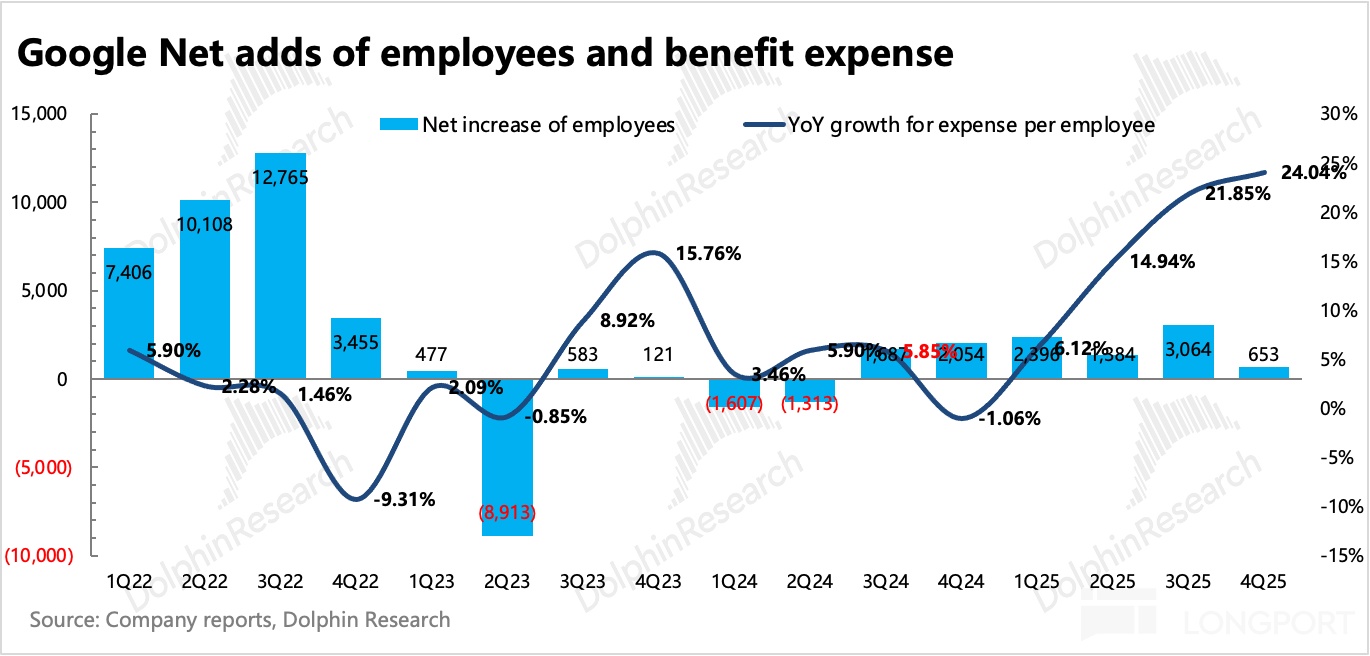
Headcount optimization will likely continue, with net adds in Q4 down to 650, much lower than prior quarters.
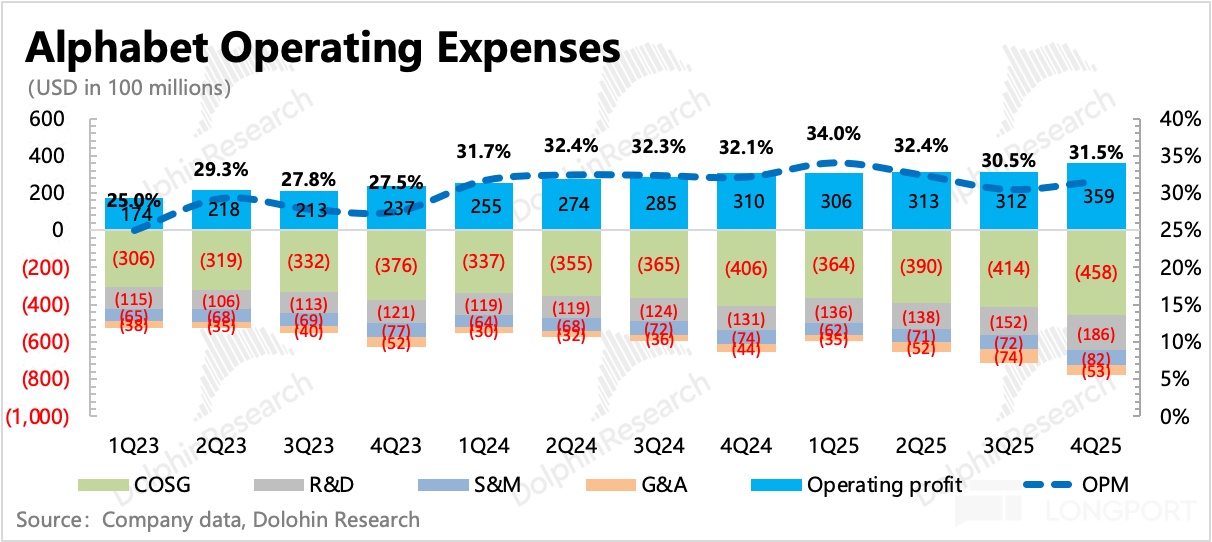
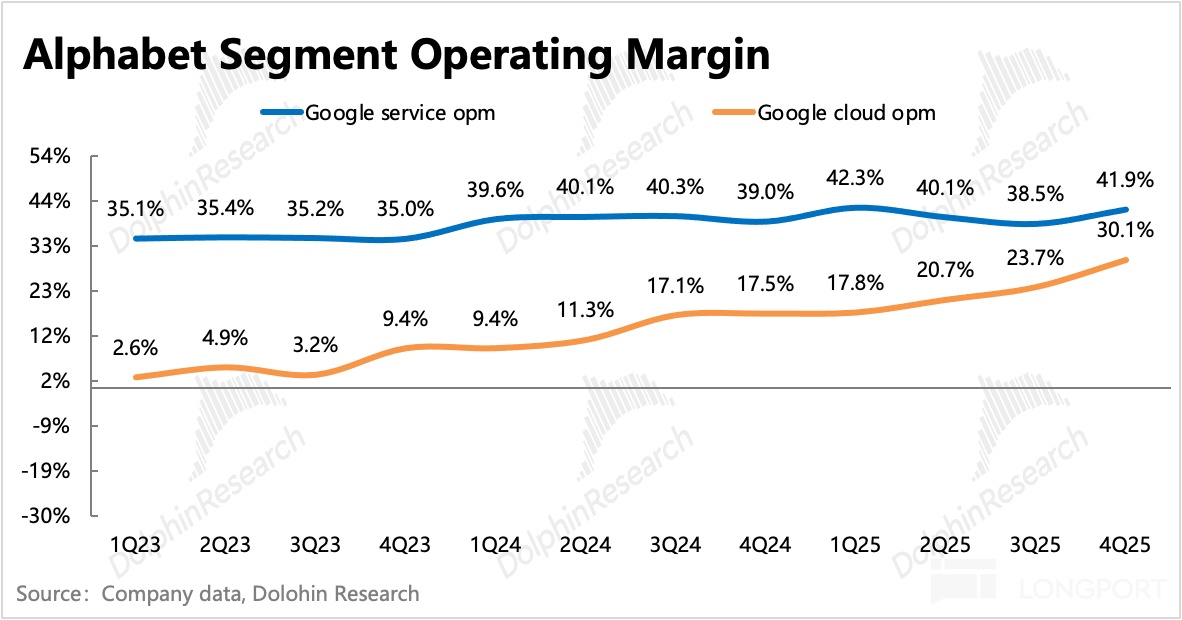
By segment, not only did Google Services improve QoQ, Cloud OPM also expanded to ~30%. The Street had expected flat margins under investment pressure.
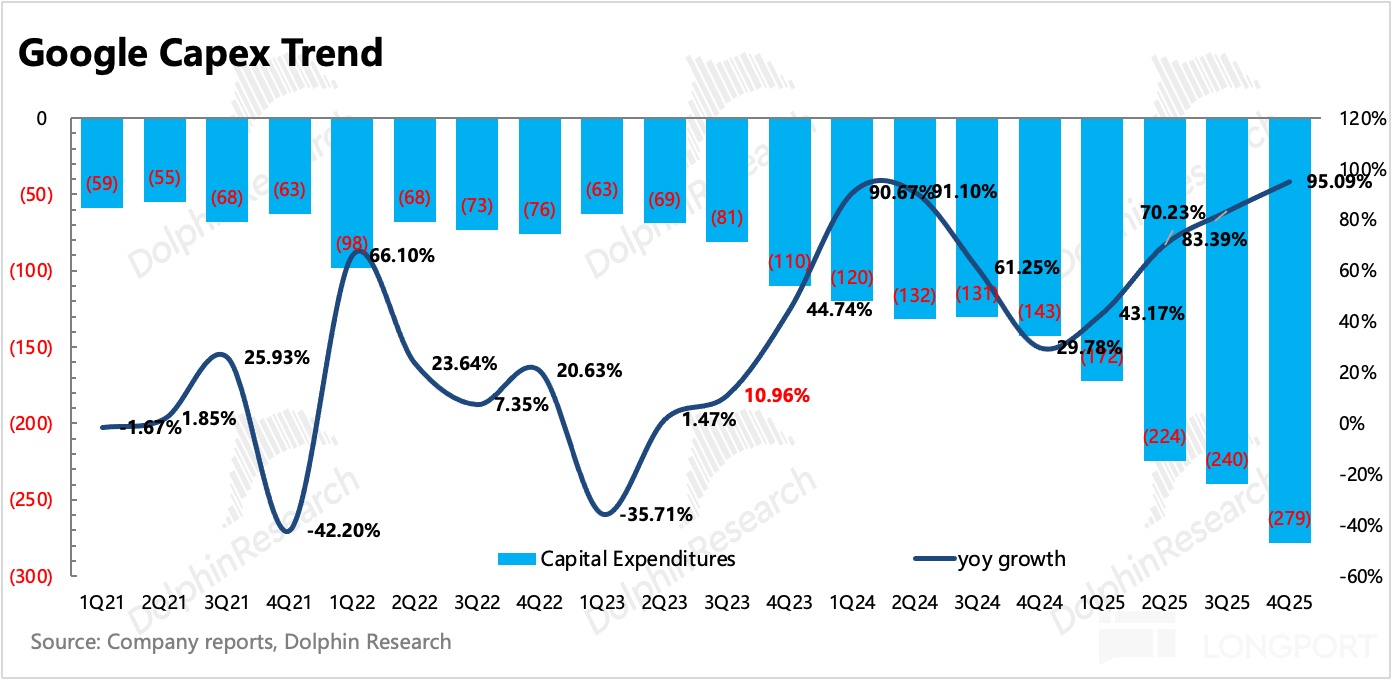
Q4 Capex was $28.0bn, in line with expectations. The company guided 2026 Capex to $175–185bn, far above the Street’s $120–130bn, effectively a doubling.
The tone shift is striking, but given management’s limited history of blind spending, it bolsters confidence that AI demand is genuinely strong.
<End here>
Risk disclosure and disclaimer: Dolphin Research disclaimer and general disclosures



The copyright of this article belongs to the original author/organization.
The views expressed herein are solely those of the author and do not reflect the stance of the platform. The content is intended for investment reference purposes only and shall not be considered as investment advice. Please contact us if you have any questions or suggestions regarding the content services provided by the platform.