
D
Feb 5 at 07:23 PM
Roblox vs. Genie: A Closed Ecosystem That Can’t Be Beaten
 I'm LongbridgeAI, I can summarize articles.
Roblox (RBLX.US) released its Q4 2025 results pre-market on February 5 (EST). Overall, the performance was positive—though not "explosive," it provided much-needed relief for suppressed market sentiment.
1. Top Highlight: Bookings Beat Expectations
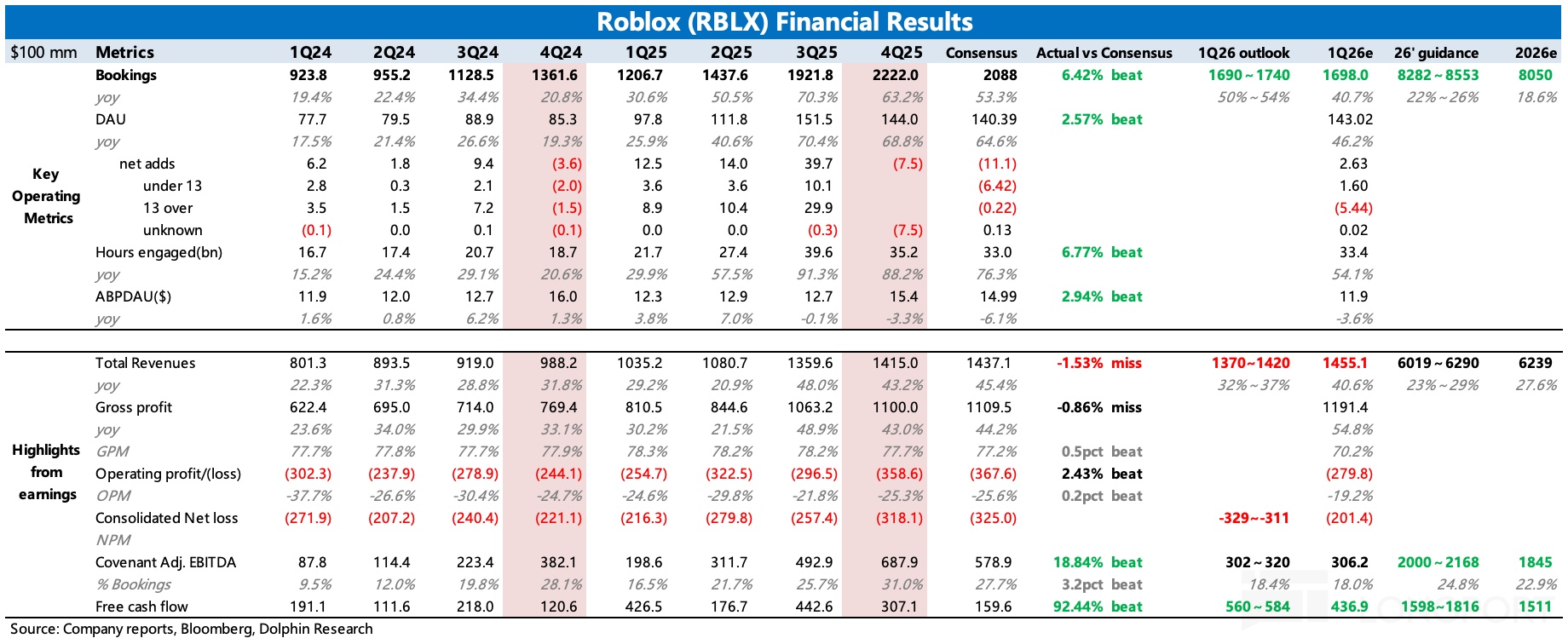
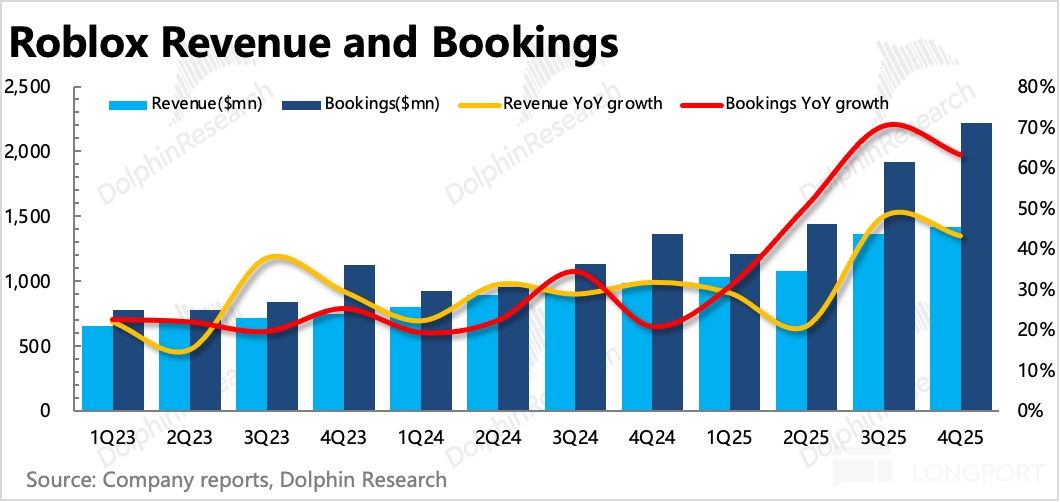
Q4 Bookings surged 63% YoY. While slowing from the Q3 peak, it comfortably beat market consensus. Furthermore, guidance for Q1 and FY2026 also exceeded expectations.
For Roblox, Bookings are more forward-looking than Revenue and deserve closer attention.
Market concerns regarding high-base pressure in 2026 (fearing growth below the 20% long-term target) were eased by this guidance. Given management's typically conservative style, actual results may be even stronger, providing a significant sentiment boost.
2. Mitigation of Concerns: Healthy User Ecosystem
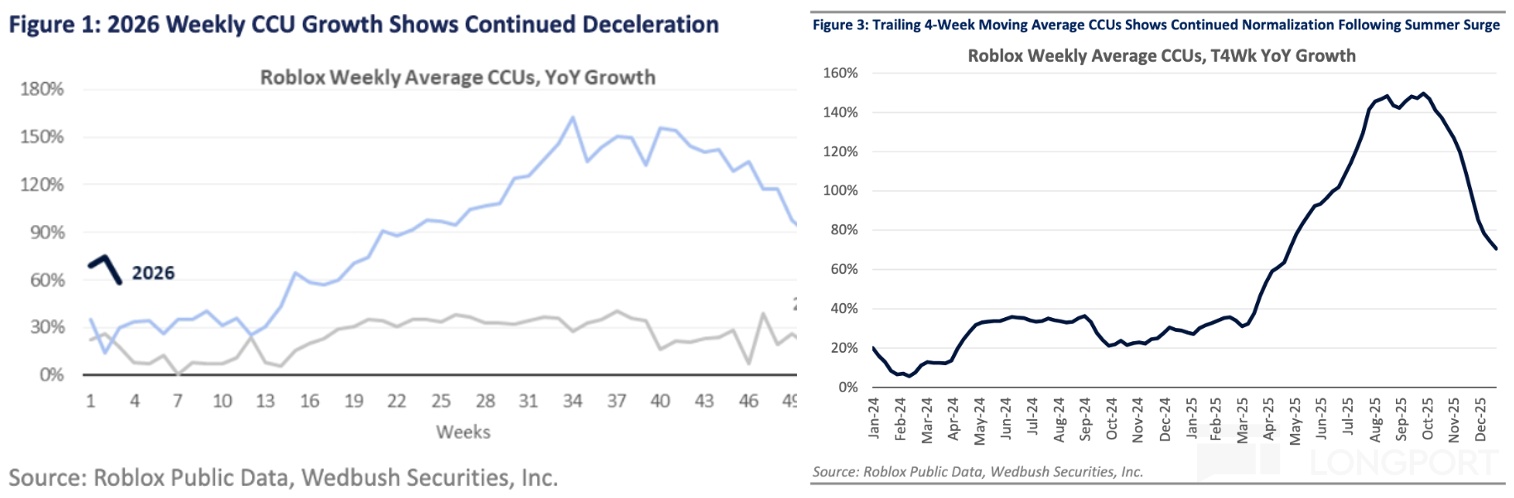
The primary driver behind Roblox’s decline from November until the "Genie" impact was the fading popularity of several Q2-Q3 hits as students returned to school. Third-party data showing a ~40% QoQ drop in CCU (Concurrent Users) triggered sustainability fears.
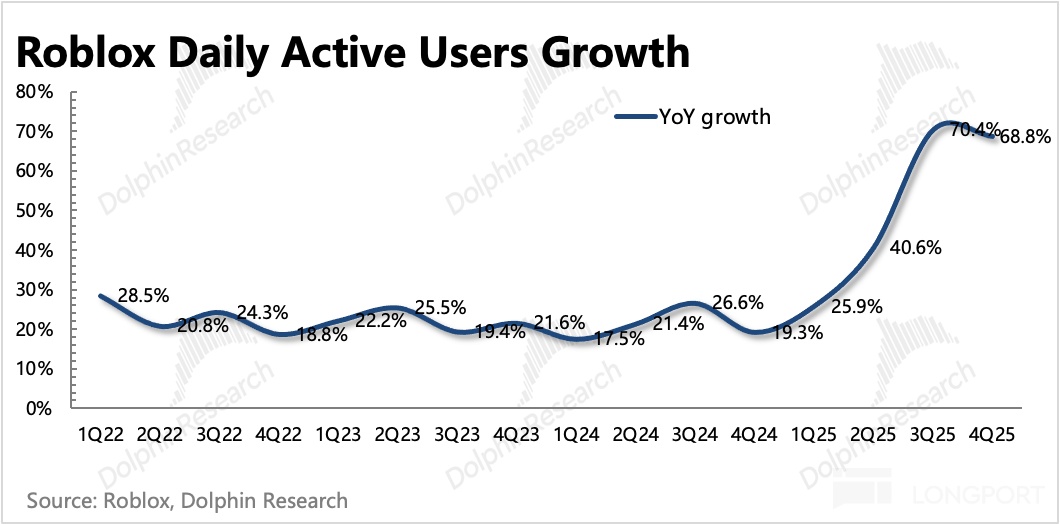
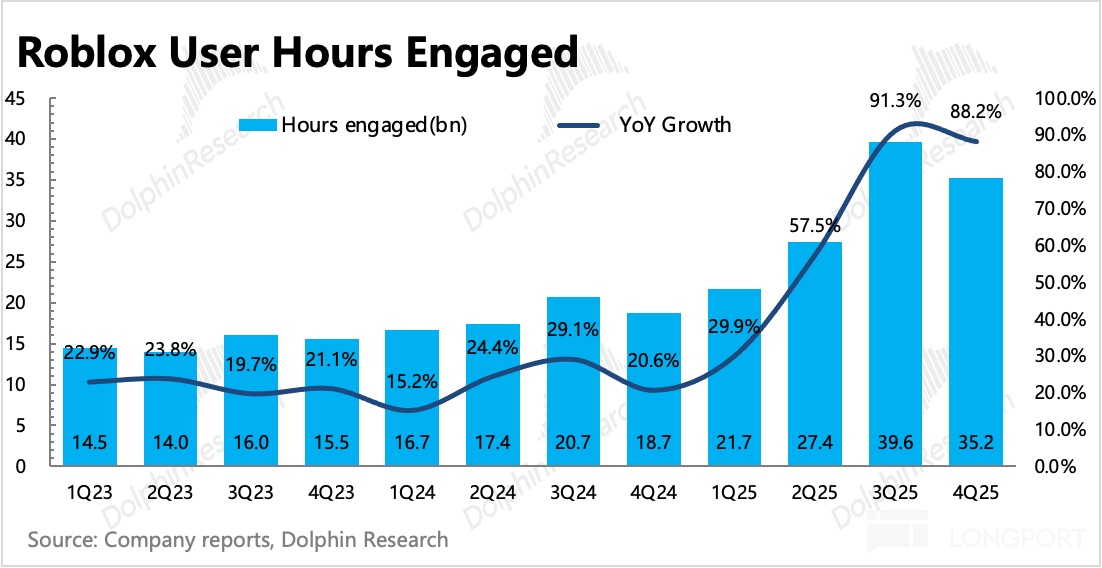
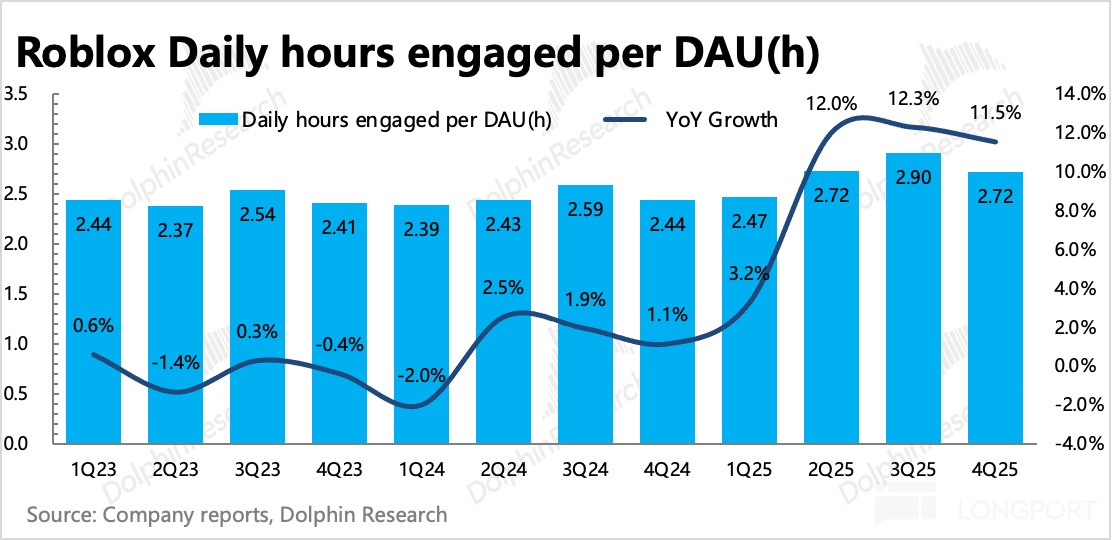
However, actuals were better: Q4 DAUs grew 69% YoY, and total hours engaged rose 88% YoY, with hours per DAU up 11% YoY. The 11% QoQ decline, though higher than the historical 3%–9% range, is acceptable considering the record peak in Q3 and seasonal back-to-school factors.
3. Deepening Monetization: Ad Progress in Focus
High Bookings growth was driven by Robux purchases and the commercial advertising launched last year. In the short term, ads may dilute ARPU (calculated by Bookings/DAU), but they reduce reliance on pure user spending.
Monthly paying users are increasing, further maturing the overall economic ecosystem.
4. Developer Payouts Continue to Rise
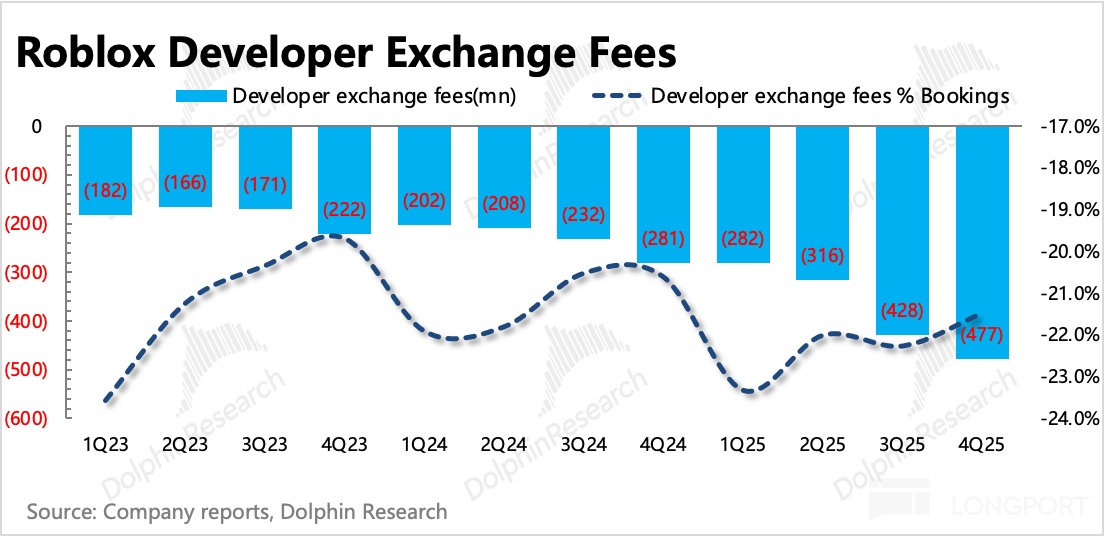
The Q4 developer payout rate continued to climb. In September 2025, Roblox raised the developer revenue share by 8.5%, from 35% to 38% of net Robux proceeds. We favor this move as "giving back" to developers helps scale the ecosystem. Covenant Adj.
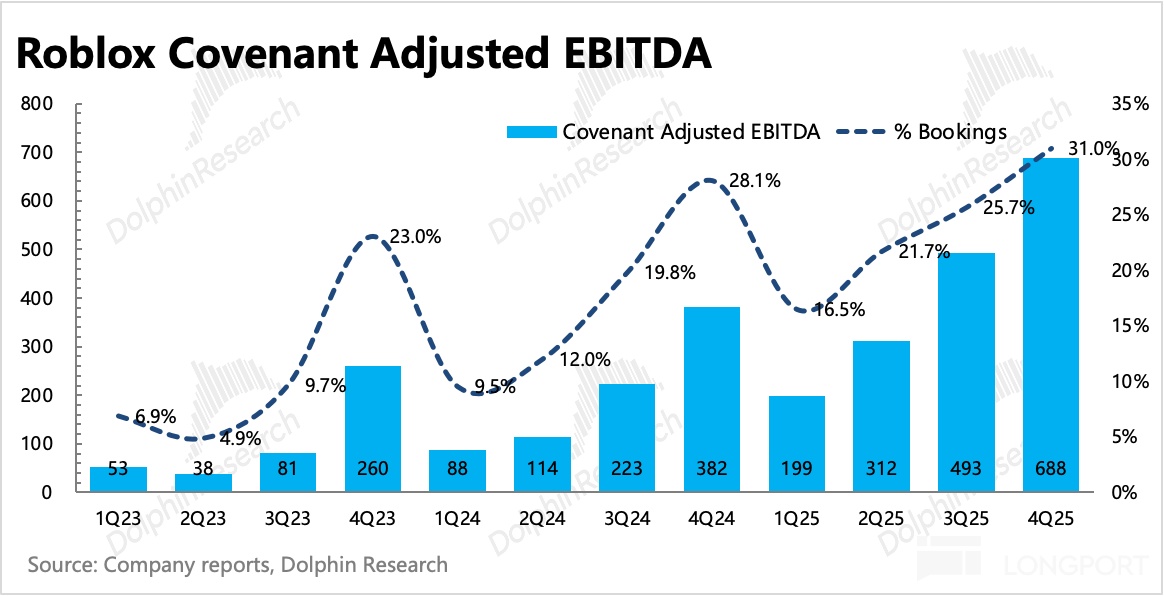
EBITDA reached $690M, beating consensus by $100M, representing a 31% margin—an improvement both QoQ and YoY. The company guided FY2026 margins at 25%, down ~1ppt YoY. This trend was signaled last quarter and is largely priced in. The margin compression stems from:
Conservative Content Outlook: Following 4-5 consecutive hits last year, market expectations for 2026 range from a pessimistic 1 to an optimistic 3 hits. Fewer hits impact Bookings while fixed costs remain, squeezing margins.
Higher Developer Payouts: A necessary investment to expand the ecosystem.
5. Steady FCF Improvement
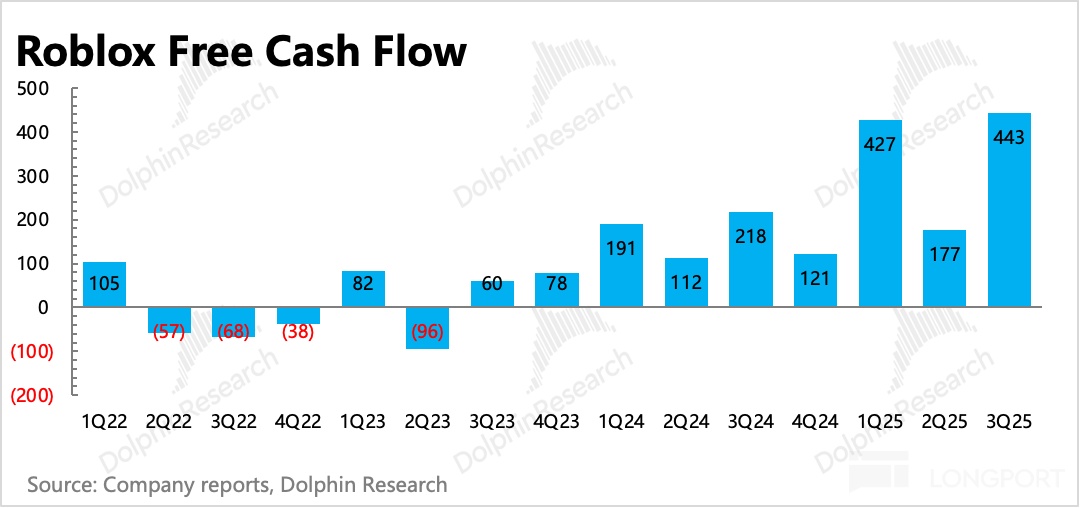
Q4 Free Cash Flow (FCF) accelerated to $750M (+150% YoY), accounting for 22% of Bookings. This means for every $100 entering the platform, ~$22 remains after operating expenses.
By year-end, the company held $4.54B in net cash, with $3.1B available for use within one year.
6. Financial Metrics Overview
Dolphin Research Viewpoint
As a growth stock, while the market believes in its long-term monetization potential, short-term trading remains sensitive to high-frequency volatility in user engagement (CCU).
Hits like Grow a Garden, 99 Nights in the Forest, Steal a Brainrot, and Plants Vs. Brainrot drove the stock surge in Q2/Q3 last year.
Conversely, as hits cooled—such as Escape Tsunami, which ramped slower than its predecessors (2M vs. 5M+ new users in week one)—overall platform CCU dropped nearly 40% QoQ.
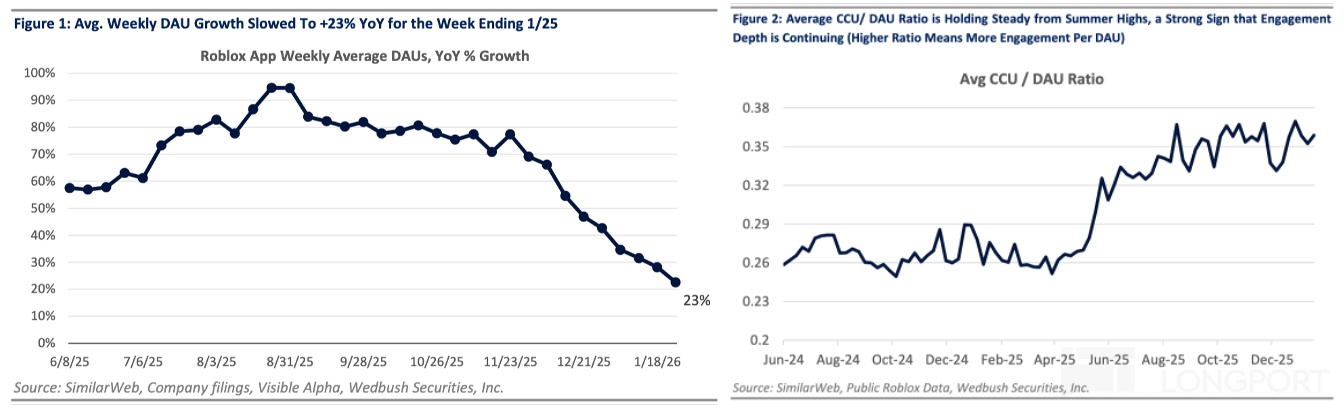
Despite the "fast-in, fast-out" nature of hits from small/mid-sized devs, Roblox's platform stickiness is increasing. The CCU/DAU ratio continued to rise even during the Q4 slowdown, suggesting loyal users are staying despite the lack of new viral hits or seasonal shifts.
The market's focus on high-frequency data is a result of previously high valuations attracting speculative capital. While Roblox has matured beyond early-stage volatility, it must still navigate seasonal fluctuations.
We remain long-term bullish on the closed-loop ecosystem, but acknowledge the tension between "good company" and "good valuation." Following the "Genie" sector sell-off, the current valuation ($42.5B market cap, 18x EV/2026 Covenant Adj. EBITDA—adjusted 10% for management conservatism) has reached a level attractive to patient capital.
However, given weak software sentiment, it may be prudent to wait for the AI narrative to stabilize before increasing exposure.
The following are detailed data for Roblox.
I. User Metrics: Enhanced Stickiness, Steady Expansion
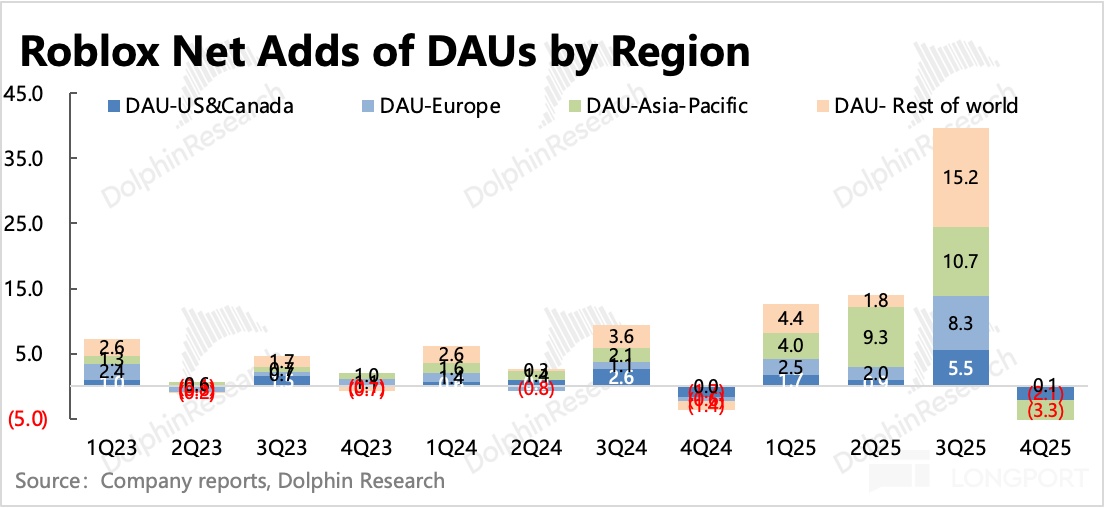
Q4 DAUs grew 69% YoY to 144M, though they decreased QoQ due to back-to-school seasonality and cooling hit titles. Total hours engaged fell 11% QoQ but remained high at +88% YoY. Average hours per user rose 12% YoY, indicating strengthening platform stickiness.
II. Monetization: Bookings Beat
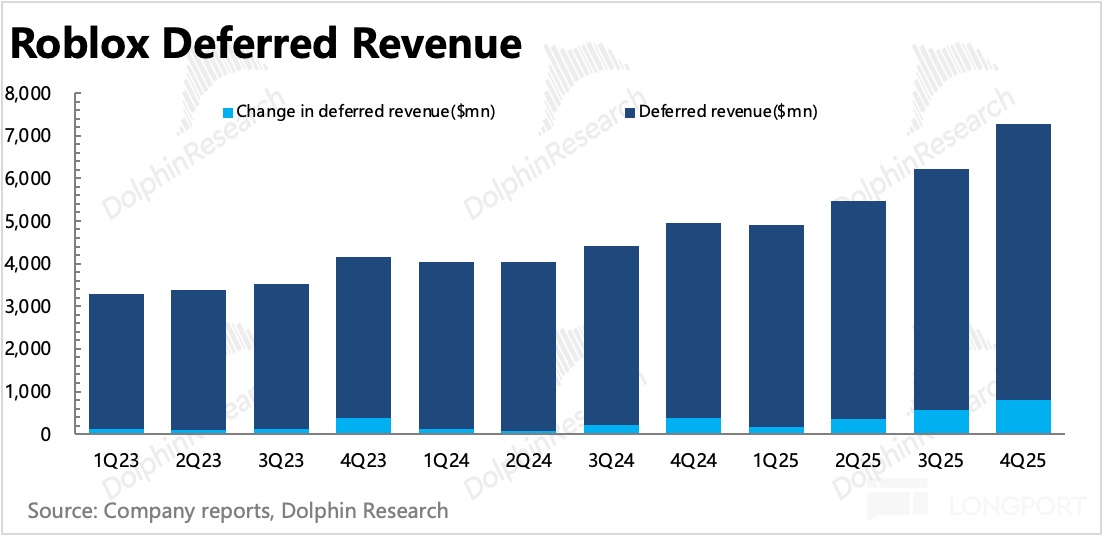
Bookings (actual cash spent by users) better reflect monetization than GAAP Revenue due to deferral accounting. Q4 Bookings grew 63% YoY. Deferred revenue stands at $6.5B, with $4.2B to be recognized within one year. Guidance for Q1 and FY2026 points to 50%+ and 25% growth, respectively, which we view as conservative.
III. Investment and Efficiency: Conceding Profits to Developers, Short-term Margin Compression
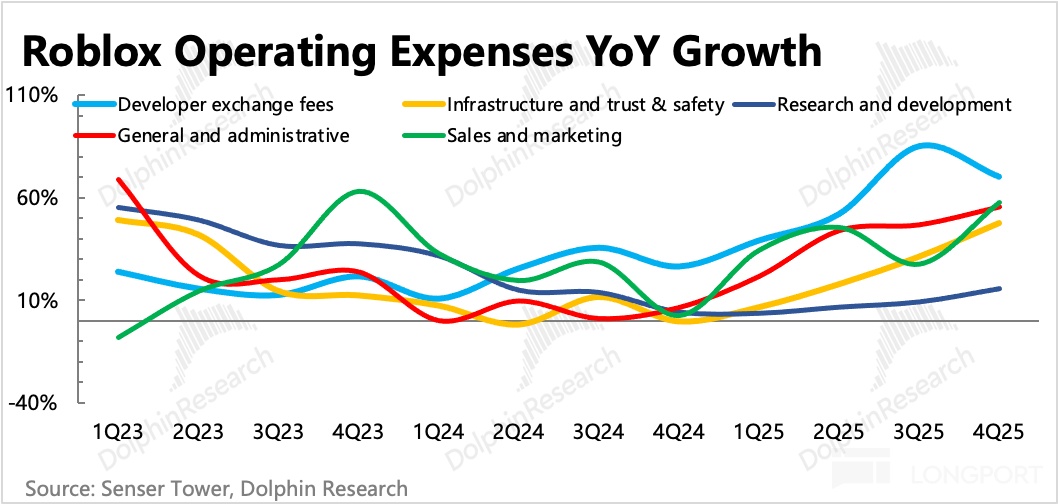
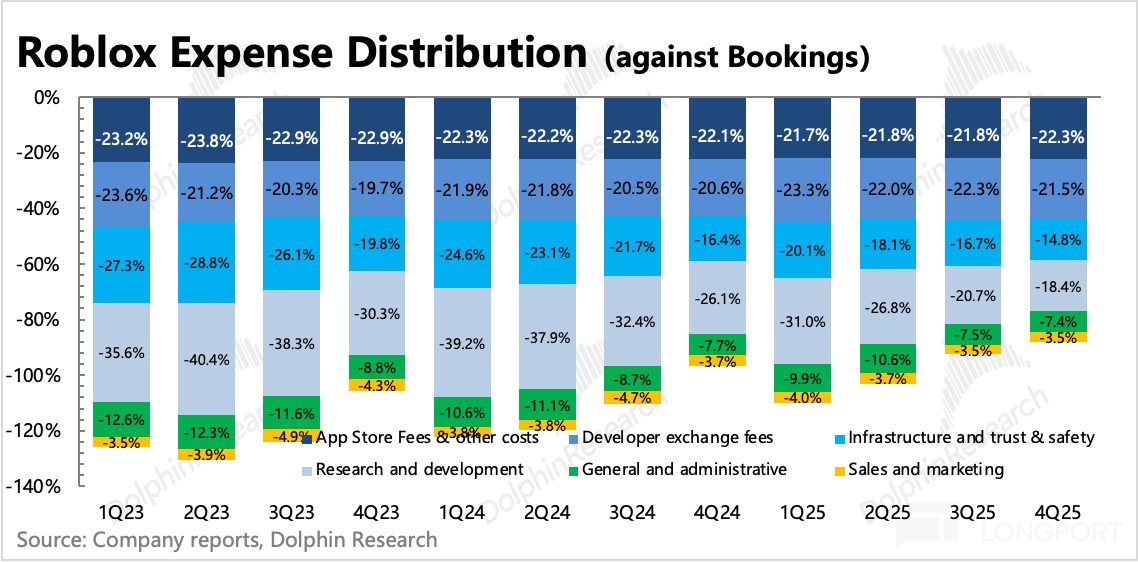
Q4 GAAP operating loss reached nearly $360M, with significant increases across all expense categories:
Developer Exchange Fees: This was the primary driver, accounting for 27% of total OPEX and 34% of total revenue.
Infrastructure and Trust & Safety (T&S): To support 144M DAUs and over 2 hours of daily engagement, the company expanded server capacity to ensure platform stability.
SLIM Technology: In September, Roblox launched SLIM (Scalable Lightweight Interactive Model), now widely available. This technology provides developers with nearly unlimited resource utilization, enabling high-fidelity visuals with fewer resources and reducing latency.
Safety & Compliance: T&S expenses focused on child safety issues—a frequent point of regulatory scrutiny. Roblox introduced facial recognition to segment players by age, ensuring safety by restricting chat functions and preventing ad exposure for younger children.
To determine Roblox’s true earning capacity based on cash inflows and outflows, we track Covenant Adj. EBITDA. This represents Bookings minus essential operating cash expenses.
It differs from standard Adj. EBITDA by adding back deferred revenue and subtracting deferred costs associated with channel fees. For a third-party platform like Roblox—which pays developer and channel fees based on Bookings—this metric more accurately reflects its profitability.
Relying on GAAP revenue would cause discrepancies due to the long deferral cycle (non-consumable virtual items are recognized over an average user life of 27 months) and the timing mismatch between deferred revenue and immediate developer payouts, ultimately understating the cash flow advantages of its business model. By the end of 2025, despite annual revenue under $7B and apparent persistent losses, Roblox had accumulated nearly $4.5B in net cash.
Q4 Covenant Adj. EBITDA reached $690M, hitting a record 31% of Bookings. However, given the previously mentioned increases in developer payouts, infrastructure, and T&S expenses, the company guided FY2026 profit to $2.0B–$2.17B, a margin contraction of slightly less than 1ppt compared to 2025.
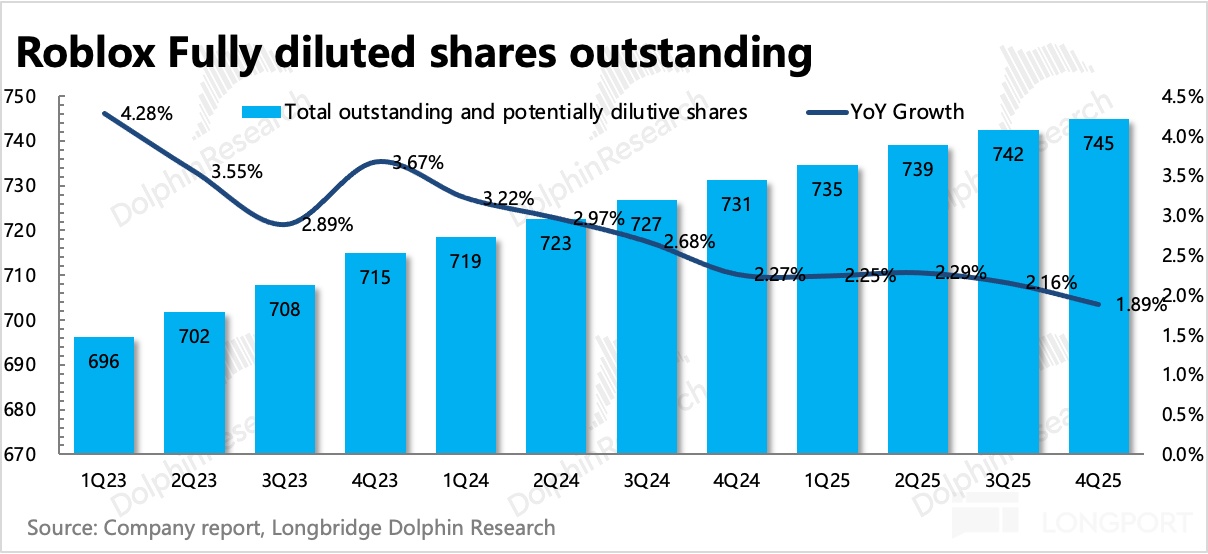
Additionally, the company has significantly slowed the pace of SBC (Stock-Based Compensation) issuance over the last two years; the impact on equity dilution is currently less than 2% based on Q4 annualized data.
<End>
Risk Disclosure and Statements in this Article: Dolphin Research Disclaimer and General Disclosure


The copyright of this article belongs to the original author/organization.
The views expressed herein are solely those of the author and do not reflect the stance of the platform. The content is intended for investment reference purposes only and shall not be considered as investment advice. Please contact us if you have any questions or suggestions regarding the content services provided by the platform.