
D
Feb 24 at 03:47 AM
Musk drops another ace: Can SpaceX remake space economics?---
 I'm LongbridgeAI, I can summarize articles.
Musk plays another ace: Can SpaceX remake the economics of space?
Since late 2025, commercial space has surged in investor attention. This report traces the drivers and implications to frame investable opportunities in the sector.
The immediate catalyst is SpaceX’s plan to tap capital markets, with its reusable rockets slashing satellite launch costs. We use SpaceX as the entry point and examine the following:
1) How did SpaceX scale, and how much do reusable rockets cut costs? What are the mechanics behind its reuse model?
2) Why is SpaceX eager to list, a stark shift from Musk’s prior stance against an IPO? What changed in the interim?
3) How feasible is Musk’s vision for ‘space compute,’ and where is the industry today? What milestones have been reached?
Body:
I. SpaceX’s growth: Falcon 9 achieves first-stage reuse; Starship targets full reuse
1) Building rockets and satellites, winning NASA contracts
In 2002, Musk founded SpaceX in California, inspired by science fiction and his aspiration to reach Mars. He believed advancing humanity toward becoming a multi-planet species would extend civilization’s longevity.
He argued the barrier wasn’t core physics or engineering, but launch costs, and set out to cut them by making rockets reusable, like aircraft. The aim was practical: reduce costs via reuse and commercialize launches first, monetizing Earth orbit before pursuing Mars.
Rockets alone wouldn’t suffice, so SpaceX also moved into satellites. In 2005, it acquired SSTL, known for low-cost small sats and fast delivery, fitting SpaceX’s needs.
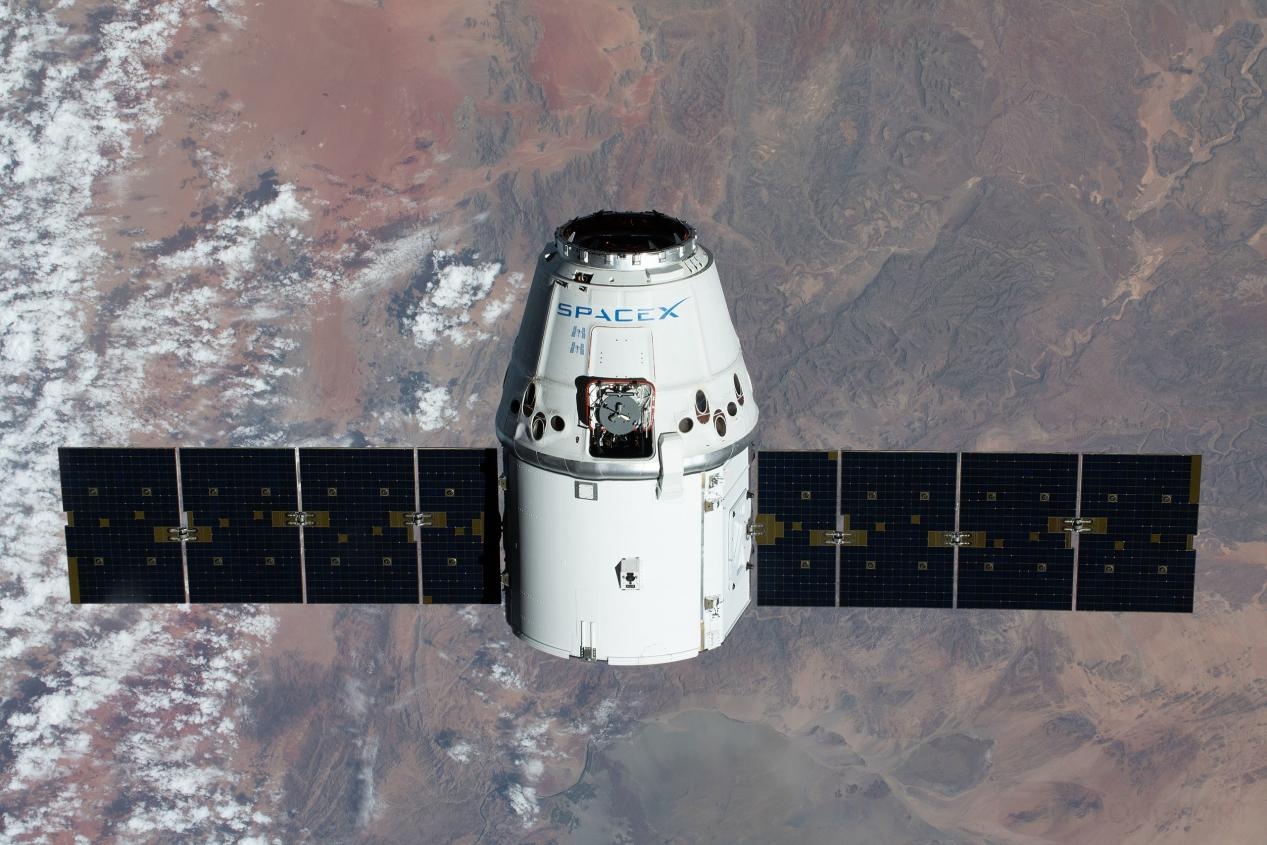
In 2006, amid NASA’s post-Columbia challenges—Shuttle retirement leaving ISS resupply and crew transport exposed—SpaceX won NASA’s COTS award (Commercial Orbital Transportation Services). That year, SpaceX also commenced Dragon capsule development.
Image: SpaceX Dragon
Source: Wikipedia, Dolphin Research
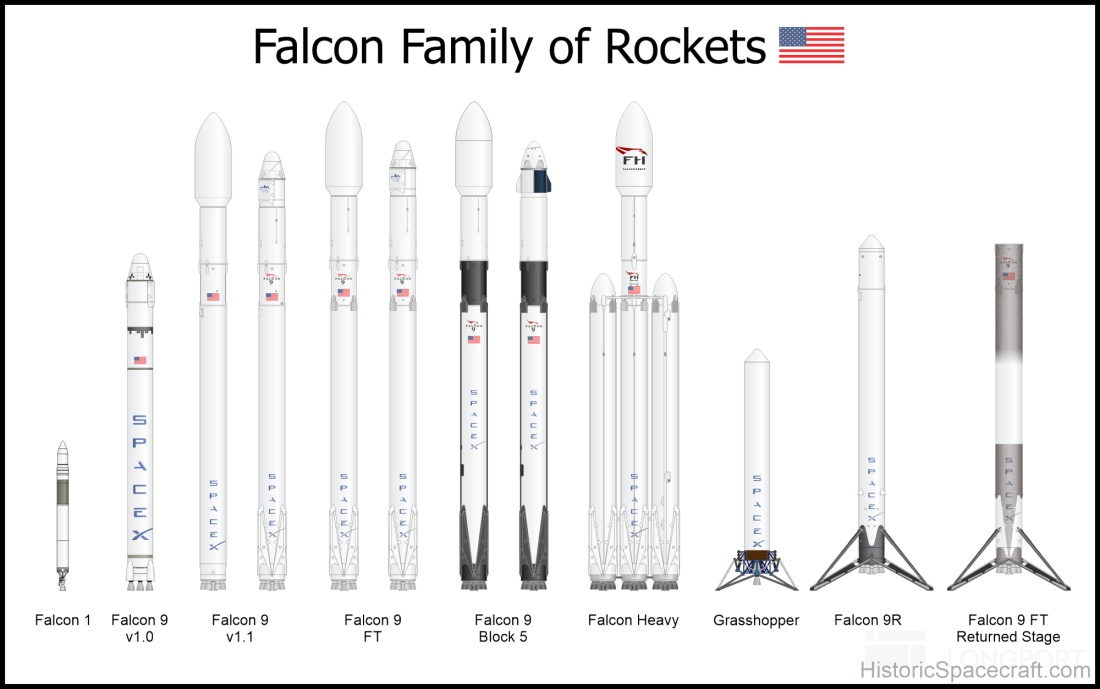
In 2008, the fourth Falcon 1 flight finally succeeded. SpaceX then secured a $1.6bn Commercial Resupply Services (CRS) contract from NASA.
Image: Falcon Family
Source: Historic Spacecraft, Dolphin Research
2) Falcon 9 achieves first-stage reuse
In 2010, Dragon reached orbit and was recovered on Falcon 9’s maiden flight; by 2012, Dragon docked with the ISS and returned. SpaceX became a core NASA contractor.
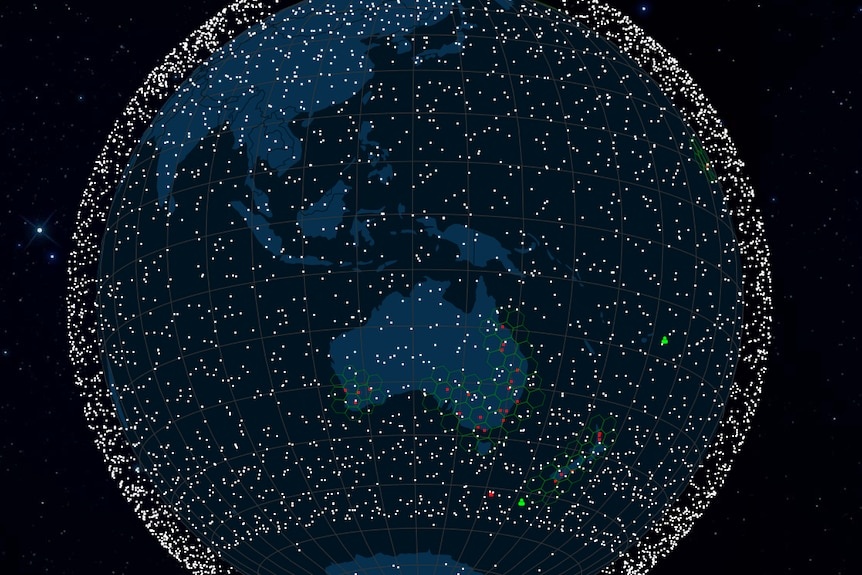
In 2014, SpaceX formally launched Starlink. Designed to provide long-term cash flow predicated on reusable launches, Starlink has since become SpaceX’s primary cash engine.
Image: the Location of Starlink in Orbit Around the Earth
Source: ABC, Dolphin Research
In 2015, Falcon 9 achieved its first terrestrial landing and recovery of the first stage post-launch. The defining difference vs. traditional rockets is first-stage reuse.
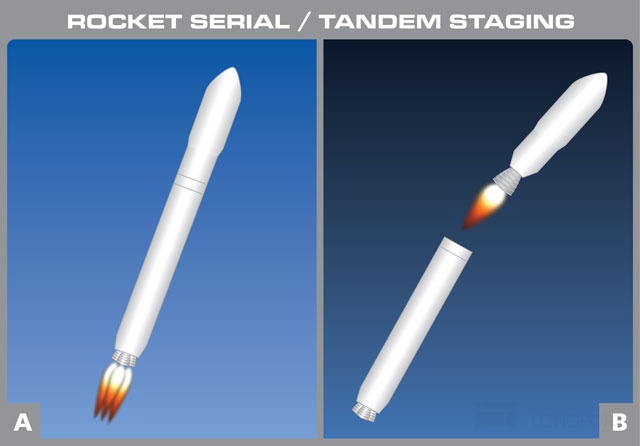
In total rocket economics, manufacturing dominates unit cost, while propellant is a relatively minor share. Liquid-fueled rockets typically use a two-stage architecture—fairing, upper stage, and first stage—with the first stage the costliest element.
On ascent, the first stage ignites, then separates once through dense atmosphere; the upper stage ignites to insert payload to target orbit, after fairing jettison. Reuse of the first stage drives meaningful cost reductions.
Image: Two-stage liquid rocket architecture—operations schematic
Source: Head for Space, Dolphin Research
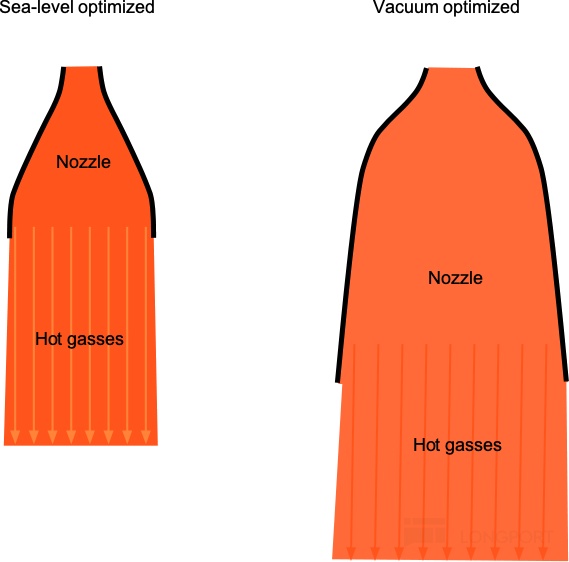
Two-stage design maximizes efficiency by shedding weight and enabling engine specialization. Sea-level engines favor shorter, wider nozzles, while vacuum engines use larger bell-shaped nozzles optimized for low ambient pressure.
Image: Sea-level vs. vacuum rocket engines
Source: Embry-Riddle Aeronautical University, Dolphin Research
It follows that reusing the first stage multiple times creates substantial savings. We quantify this later.
3) Marching toward full reuse
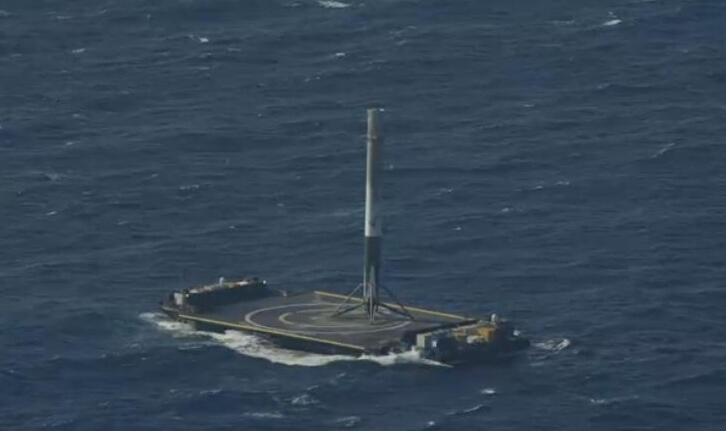
In 2016, Falcon 9 first-stage recovery succeeded on an autonomous droneship at sea. Sea recovery widens mission flexibility, especially for higher-energy or heavy payload profiles.
Image: Falcon 9 first-stage recovery on droneship
Source: SpaceX, Dolphin research
In 2017, SpaceX flew and recovered a previously flown booster, taking reuse into operational reality. SpaceX also led global commercial satellite launches that year.
By 2018, the latest rocket program, Starship, began with the Starhopper prototype and short-hop tests. Starship targets full reuse—both stages—while drastically increasing lift, with a goal of cutting LEO launch costs to ~$100/kg.
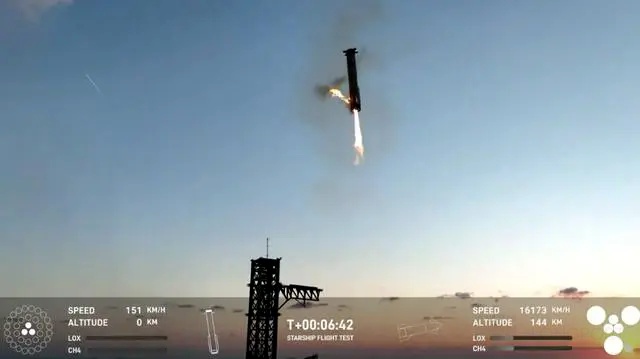
In 2020, Dragon ferried two astronauts to the ISS, validating crew capability. From 2021 onward, Starship SN prototypes and V1/V2 variants have advanced testing, including first-stage ‘chopstick’ capture and vertical ocean splashdown trials for the upper stage.
V3 has completed ground tests, with the first flight targeted for Mar 2026. V3 focuses on recovery tech and on-orbit refueling—an essential capability for deep-space missions.
Image: Starship first-stage ‘chopstick’ capture
Source: SpaceX, Dolphin research
4) How much do Falcon 9 and Starship cut costs?
We model the economics below. Estimates rely on indicative inputs due to limited public cost disclosure and are for reference only.
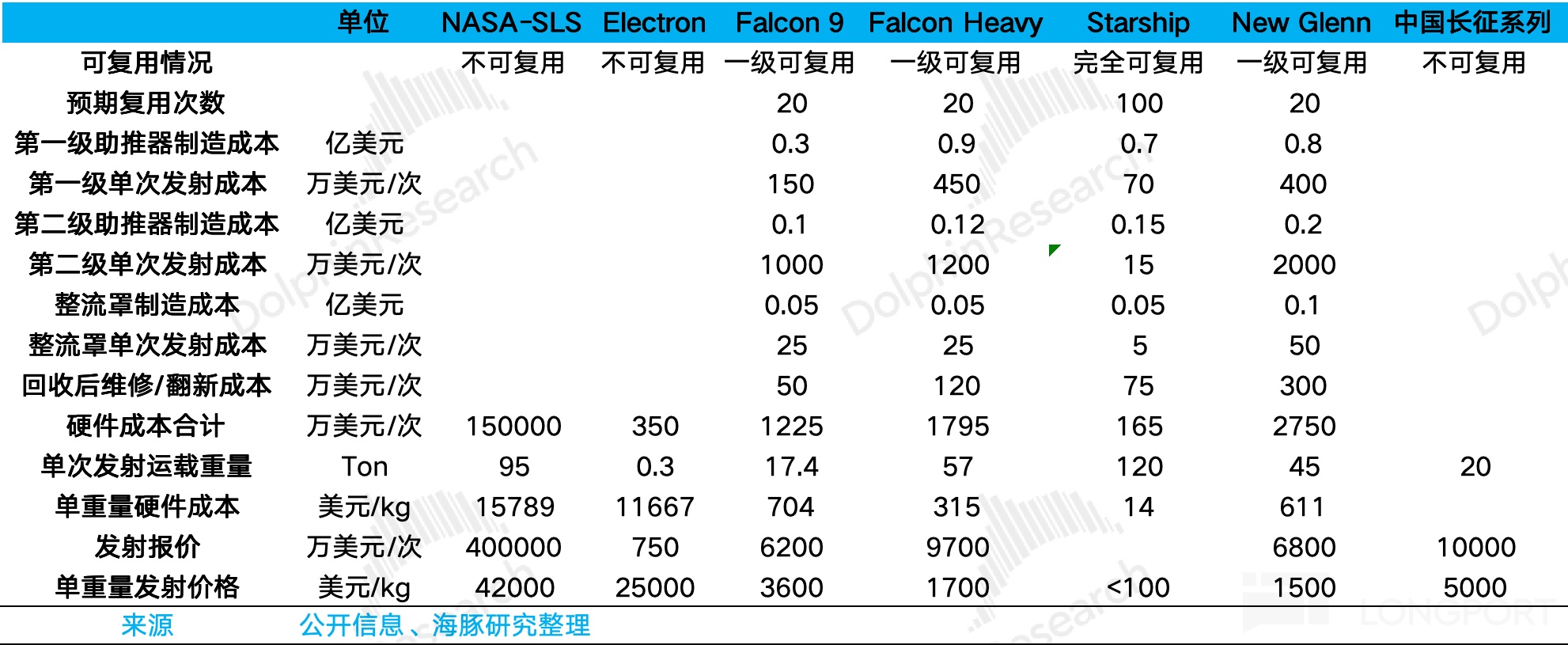
Falcon’s edge stems from market-driven execution, vertical integration, and first-stage reuse. First-stage reuse materially lowers cost but does not yet change the order of magnitude; full reuse of Starship with higher reuse counts could deliver another step-change.
Image: Full-reuse rocket launch and recovery schematic
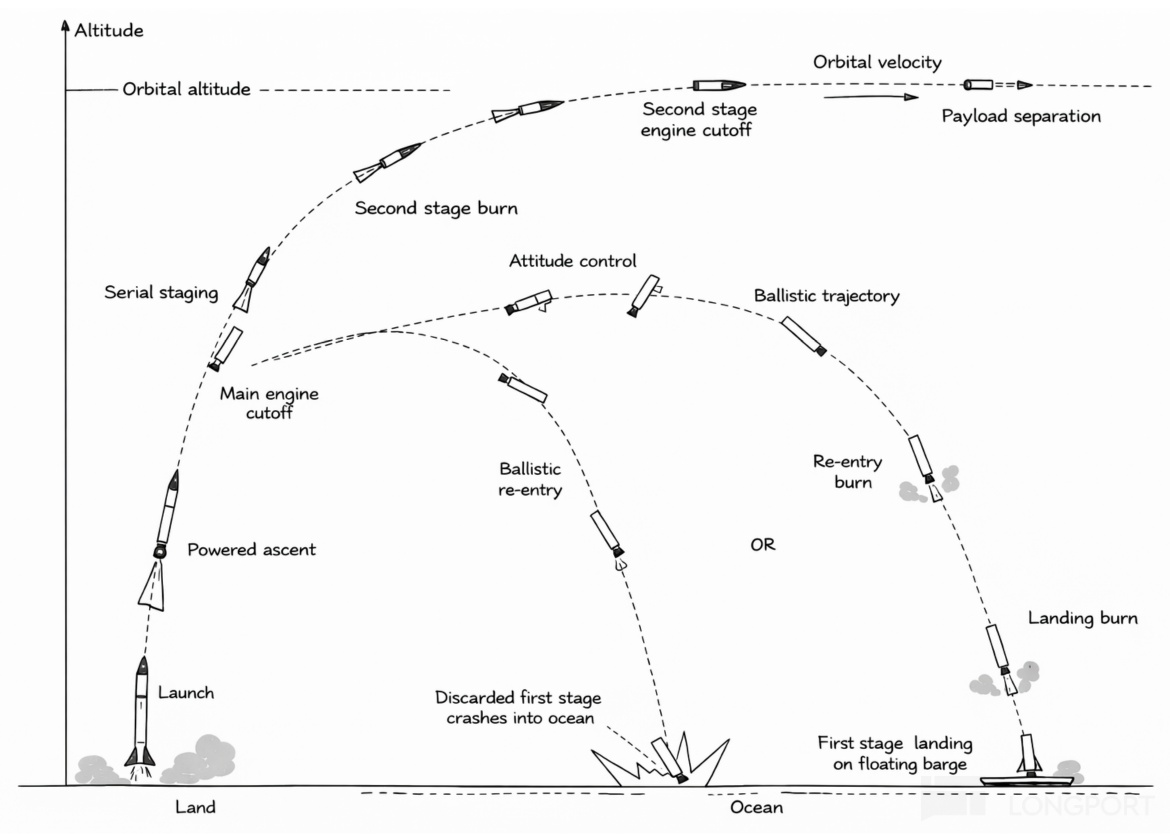
Source: Space AI Leveraging Artificial Intelligence for Space to Improve Life on Earth, Ziyang Wang, Dolphin Research
Downstream demand for SpaceX’s launches clusters into Starlink, commercial sat orders, and U.S. Gov./military contracts. Future optionality includes space compute.
II. Why is SpaceX pushing to list?
Rather than surveying all demand vectors, we follow a central thread to connect cause and effect. SpaceX’s listing chatter has refocused markets on commercial space.
Musk previously opposed an IPO, arguing public markets would pressure short-term profits at the expense of mission. Those risks persist, so the pivot likely reflects new, material changes in external realities.
To understand the shift, we look at Musk’s recent public remarks. They outline his current logic.
1) The biggest change: compute bottlenecks
(1) Convergence of technologies: space exploration needs AI
In Musk’s tech blueprint, information tech including AI boosts ‘software’ efficiency, while humanoid robotics lifts ‘hardware’ productivity. He expects rapid convergence to propel civilization to a new stage.
His business bets span autonomous driving, then humanoids; brain–computer interfaces; OpenAI and later xAI; Twitter; and SpaceX in space. The next phase is to fuse these efforts.
SpaceX’s announced merger with xAI exemplifies this integration. It signals intent to align AI and space.
(2) How to interpret the fusion? A simple illustration—
Musk’s multi-planet vision draws on Kardashev’s I–II–III civilizational scales, where Type I masters planetary energy and Type II masters stellar energy. Becoming interplanetary nudges humanity toward Type II, though Type I remains unmet today.
The aim is to extend civilization’s longevity by reducing single-planet fragility. A planet-bound species is vulnerable to planetary catastrophes, risking total cultural loss.
Science fiction also fuels Musk’s curiosity to uncover cosmic truths. Remaining Earth-bound may constrain scientific leaps and keep the universe’s nature distant.
Hence the focus on Mars exploration. Starship’s core mission includes enabling Mars migration.
In his plan, humanoid robots precede humans to Mars as a more feasible path. Such robots must be AI-native.
Image: SpaceX’s envisioned ‘Mars civilization’
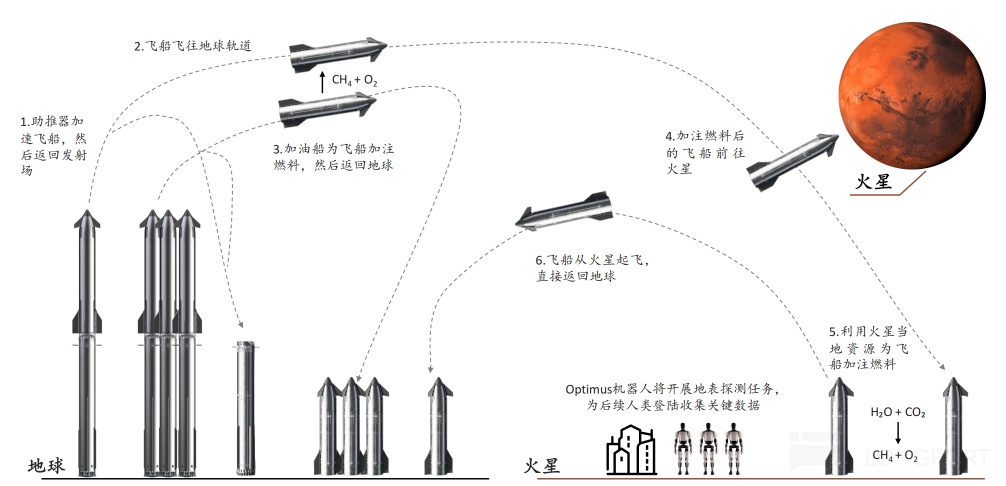
Source: SpaceX, Dolphin Research
SpaceX, humanoids, and AI are thus tightly linked. The strategy is mutually reinforcing.
(3) Rapid AI progress meets a power bottleneck
AI is advancing faster than many expected, and Musk has stressed the pace repeatedly. To win the AI race, he must deploy compute more efficiently than rivals.
That hinges on U.S. data center investment and build-out, which we do not detail here. Critical context: America faces an energy bottleneck in grid transmission, distribution, and generation, widely noted by leaders including Jensen Huang.
(4) Break the energy bottleneck first, and you can leapfrog
Musk’s proposal: place data centers in space to bypass terrestrial constraints. Space-based solar offers a vastly higher duty cycle.
In geosynchronous orbit, solar arrays can generate power 24/7, unlike ground PV with ~4 effective hours per day. Solar irradiance is higher in space without atmospheric losses, and orbital assets avoid U.S. grid delays.
Imagine massive solar panels in space—a conceptual cousin to Freeman Dyson’s thought experiment en route to Kardashev Type II, the ‘Dyson sphere.’ The analogy is illustrative, not literal.
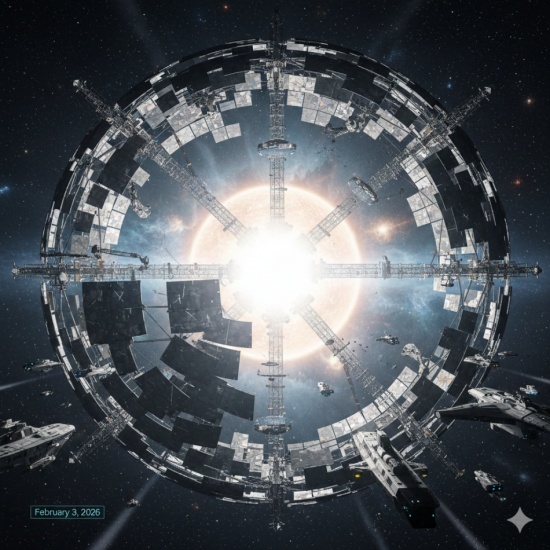
Image credit: Gemini
SpaceX has moved quickly: Musk plans to launch AI satellites within 2–3 years. A recent FCC filing outlines an ‘orbital data center system’ covering up to 1 million satellites, alongside a push into large-scale solar targeting 100GW of capacity.
This implies massive capex and likely explains the urgency to raise funds. Other factors may also be at play.
2) External pressures on SpaceX
(1) Starlink: capex keeps expanding
Market data suggest Starlink contributes ~50–80% of SpaceX revenue. Starlink is a global sat-broadband network using large LEO constellations as relay, switching, and access nodes.
Its advantage is independence from ground geography, serving remote areas, maritime, and aircraft globally. Satellites fly over any point on Earth’s surface.
How does Starlink differ from traditional satcom? Scale—thousands of V1 satellites and tens of thousands for V2—requires reuse; legacy launch economics would be prohibitive.
U.S. communications infrastructure lags—sparse rural build-out and high-cost fiber, with oligopolistic pricing. Relative to China, sat-broadband holds greater utility in the U.S.
Space compute is years away, so Starlink is the here-and-now cash source. Its maturity also strengthens SpaceX’s case for U.S. Gov./mil contracts.
We model Starlink below. Assumptions are indicative.
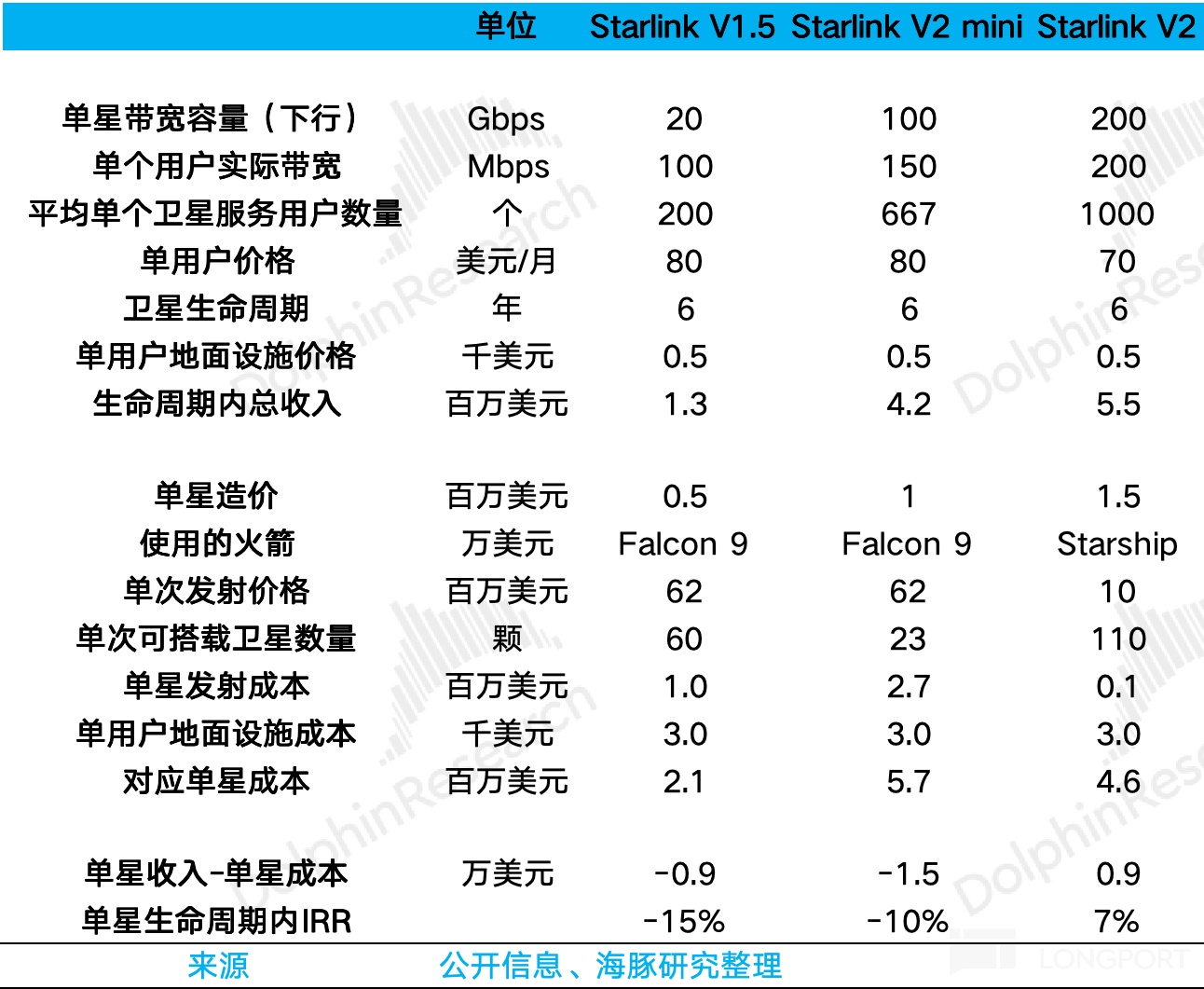
Starlink’s in-service fleet is primarily V1 (V1.5 and V2 mini), now challenged by bandwidth constraints as users surge, degrading experience and slowing adds. SpaceX plans to launch V2 to expand capacity materially.
Our estimates suggest V2 capacity could jump, but capex would soar—e.g., V1.5 satellite costs at ~$1.5bn for the set, while V2 could exceed $60bn. These are theoretical constructs and will face competitive realities.
Starlink will not remain unchallenged, so V2 profitability assumptions may prove optimistic. Competition will compress returns.
(2) Competitive pressure is real
SpaceX’s global connectivity faces Jeff Bezos’s challenge, with China also accelerating. Its D2D (direct-to-device) service competes with players like $AST SpaceMobile(ASTS.US).
Spectrum and orbital slots are finite, with Starlink’s wartime utility highlighting military value. Thus, competition for orbits and spectrum is urgent and tied to national security, not just commerce.
We will detail rivals’ roadmaps and progress in the next piece. The landscape is evolving fast.
(3) Gov. contracts carry political and program risk
NASA ties are not risk-free: after Musk clashed with Trump, threats emerged to cancel SpaceX’s multi-billion-dollar ‘subsidies and contracts’ and to withdraw support for Musk’s NASA administrator nomination. Starship test failures pushed Artemis timelines, prompting NASA acting leadership to re-open lunar lander awards to Blue Origin and others.
SpaceX also faces stringent reviews from the FAA and other regulators on Starship. A listing could amplify its narrative, confer scale, and raise the ‘too big to fail’ bar.
III. Can space compute really happen?
1) Early experimental progress in the U.S. and China
Several entities have begun initial layouts, mostly experiments and tech validation, concentrated in the U.S. and China. Examples are summarized below.
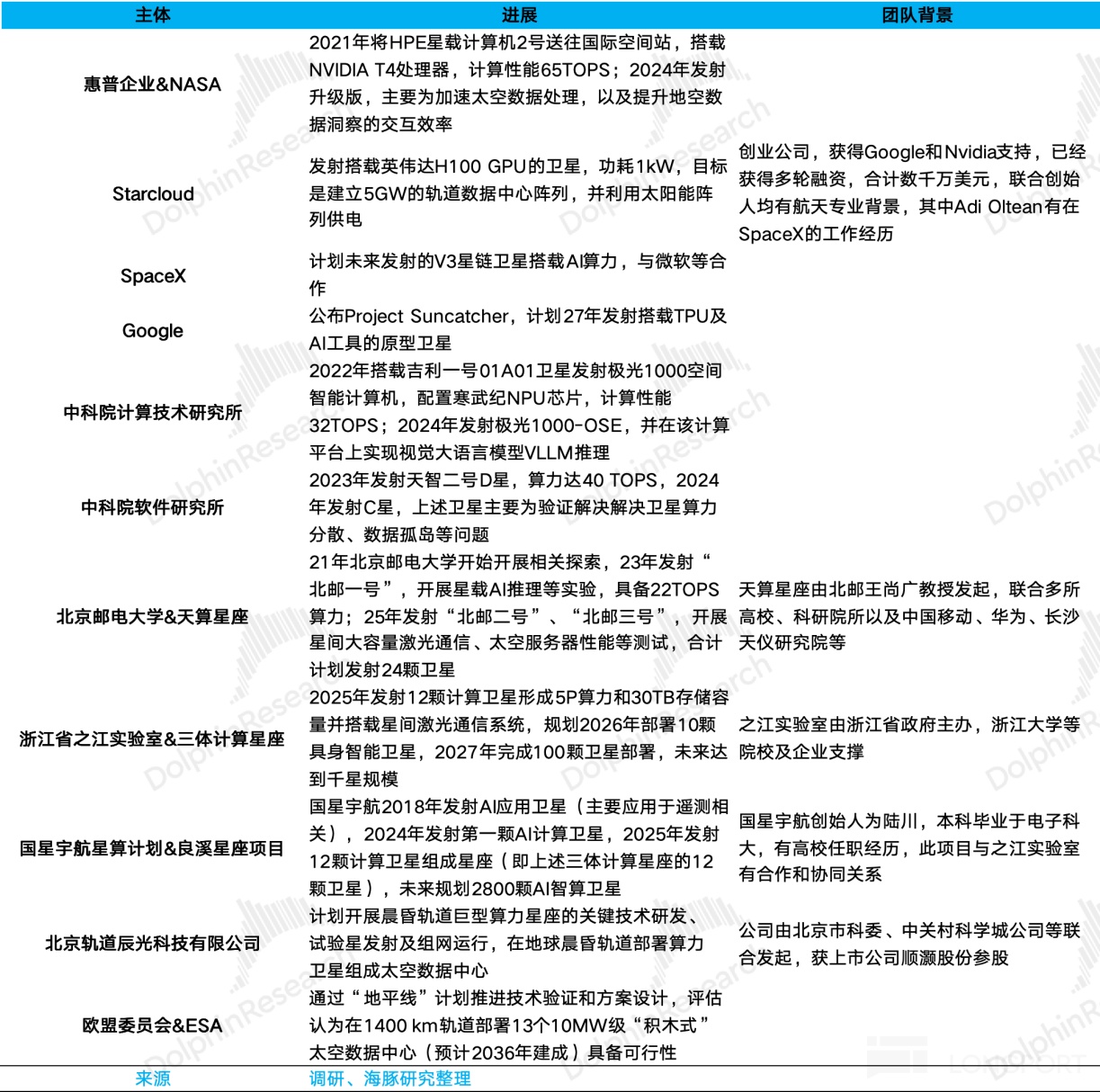
2) Key bottlenecks to solve
(1) Launch cost
This is exactly what SpaceX aims to solve. A Google paper suggests LEO launch costs below $200/kg make orbital data centers economically viable.
Its modeling implies Starlink V2-based systems at ~$810–7,500/kW/year, vs. U.S. ground DC energy costs at ~$570–3,000/kW/year. They are in the same order of magnitude below the $200/kg threshold.
(2) Radiation hardening
Space is saturated with cosmic rays and high-energy particles, causing TID (total ionizing dose) and SEEs (single-event effects) that induce bit errors. Radiation-hard chips add cost, and traditional larger-node chips reduce susceptibility but cap performance.
Advanced nodes demand robust fault tolerance, which hits efficiency. Still, Google’s tests with V6e Trillium cloud TPUs and AMD hosts showed only HBM with higher TID sensitivity—disordering at 2 krad(Si), three times the lower-bound spec.
End-to-end compute remained operational. SEE tests showed similar patterns for HBM and the system, indicating resilience.
Image: Radiation-hardened processors vs. mature ground COTS
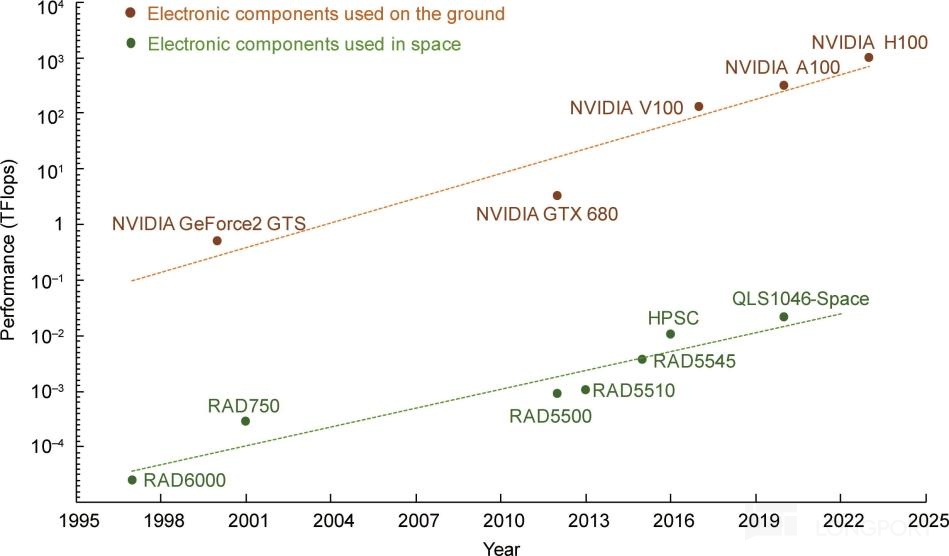
Source: Computing over Space: Status, Challenges, and Opportunities, Yaoqi Liu and others, Dolphin Research
Image: Locating chips and radiators on the shaded side of solar arrays to reduce solar radiation
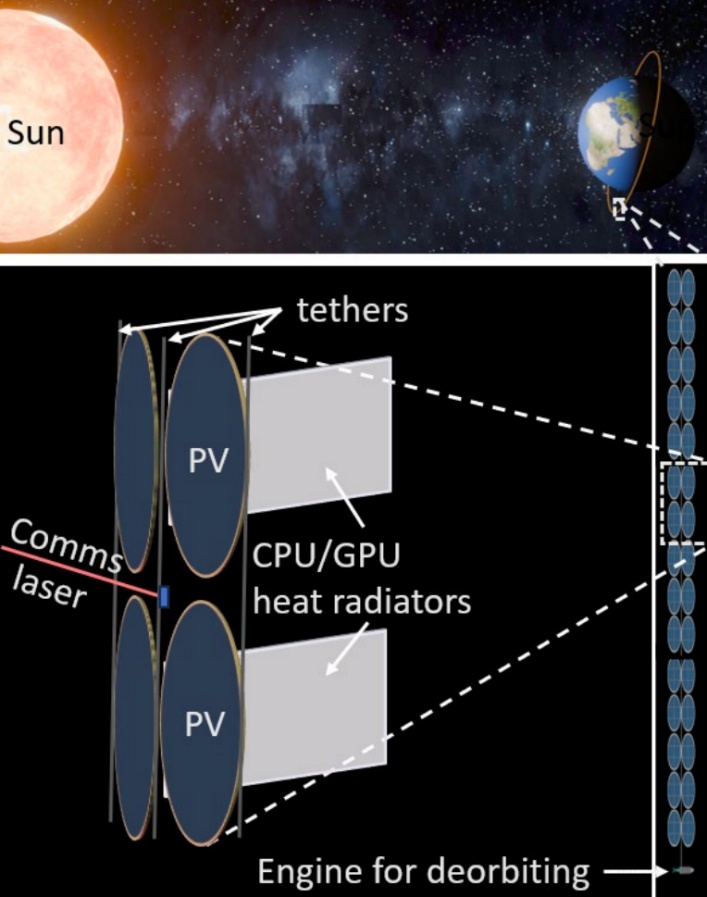
Source: Tether-Based Architecture for Solar-Powered Orbital AI Data Centers, Igor Bargatin and others, Dolphin Research
(3) Thermal management in vacuum
With no air in space, heat rejection relies on radiation, which is inefficient. Fluid loops plus large radiators are the leading approach.
Radiators offset low emissive efficiency via surface area but add cost, while fluid-loop tech has hurdles to overcome. Engineering maturity is still developing.
Image: Thermal management system for space data centers
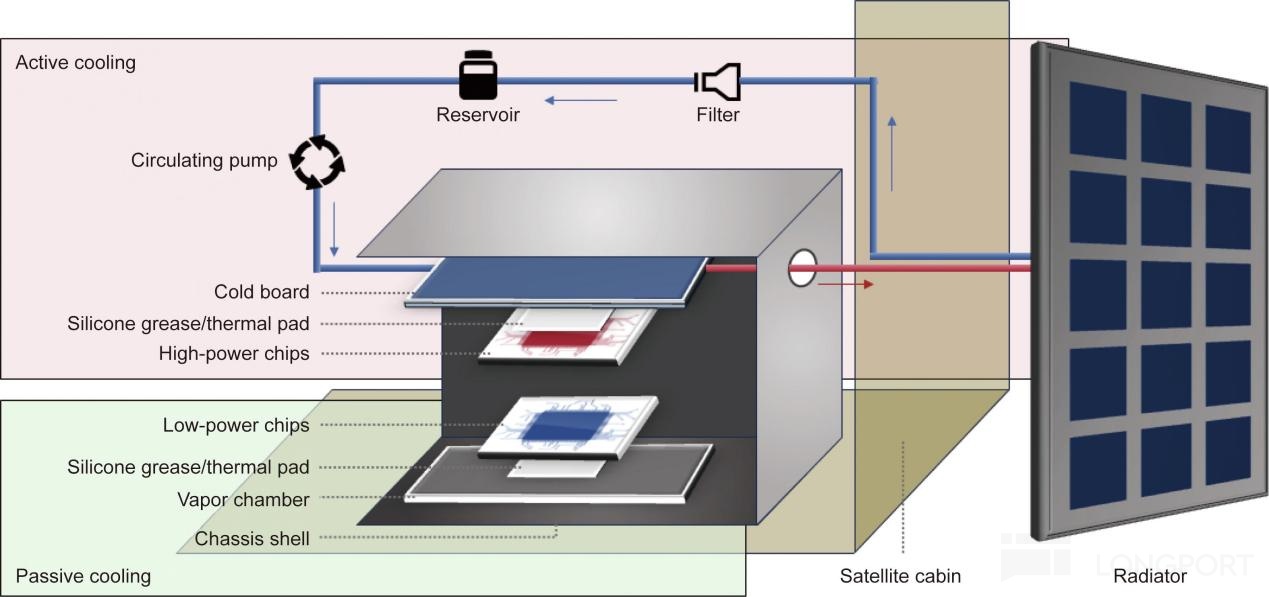
Source: Computing over Space: Status, Challenges, and Opportunities, Yaoqi Liu and others, Dolphin Research
(4) Power supply
GEO arrays can, in theory, deliver continuous power at higher efficiency than ground PV. But deploying large orbital solar fields is hard, and space-rated arrays differ materially from ground units.
GaAs is currently favored for high-temp, vacuum, radiation environments; future options may include p-type HJT or perovskites. Costs will exceed terrestrial modules.
(5) Data transmission
Starlink sats already use laser links up to ~100Gbps, with China progressing similar capabilities. This still falls short for compute clusters that may need 10–100Tbps.
Adding many laser terminals raises mass and cost. Google suggests COTS DWDM transceivers can hit ~10Tbps per link over short distances, enabling close-proximity satellite formations to reduce cost.
Image: Google’s bandwidth vs. distance approach for inter-satellite links
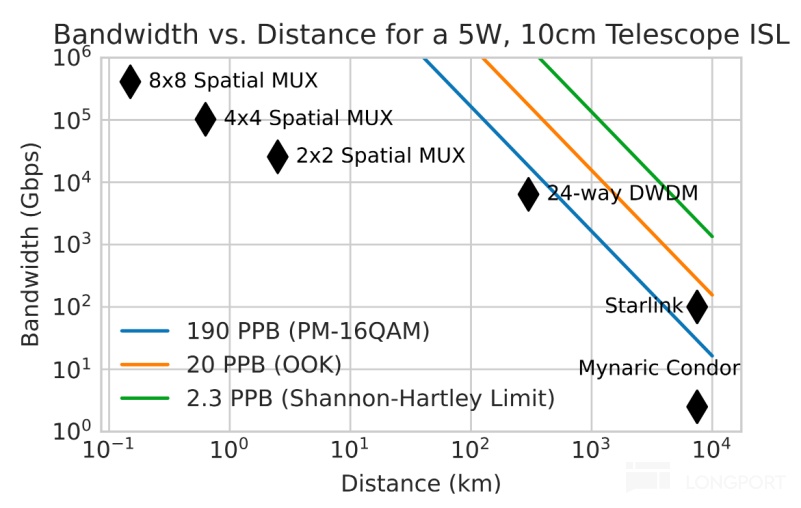
Source: Google, Dolphin Research
(6) In-orbit maintenance
Robotic servicing remains experimental. Satellites need self-diagnosis and repair to avoid frequent replacements, and compute upgrades require swapping entire satellites, not chips—raising costs.
In summary, most bottlenecks have plausible solutions in theory. The core hurdle is economics—can the model pencil out.
IV. Conclusion
On demand, Starlink proves a viable profit model for commercial space and satellites, while the race to secure orbital and spectrum resources underpins growth visibility. Space compute adds an option value amid U.S. power constraints, reinforcing a constructive outlook for demand.
On industry execution, SpaceX has validated the reusable rocket path—materially lowering costs with feasible tech and business models. This creates growth certainty for the sector and opens fast-follower opportunities; we will map players and competitive dynamics in the next note.
<End>





The copyright of this article belongs to the original author/organization.
The views expressed herein are solely those of the author and do not reflect the stance of the platform. The content is intended for investment reference purposes only and shall not be considered as investment advice. Please contact us if you have any questions or suggestions regarding the content services provided by the platform.