
D
Apr 30 at 04:13 PM
Post-breakup pains: when will MSFT stage a comeback?
 I'm LongbridgeAI, I can summarize articles.
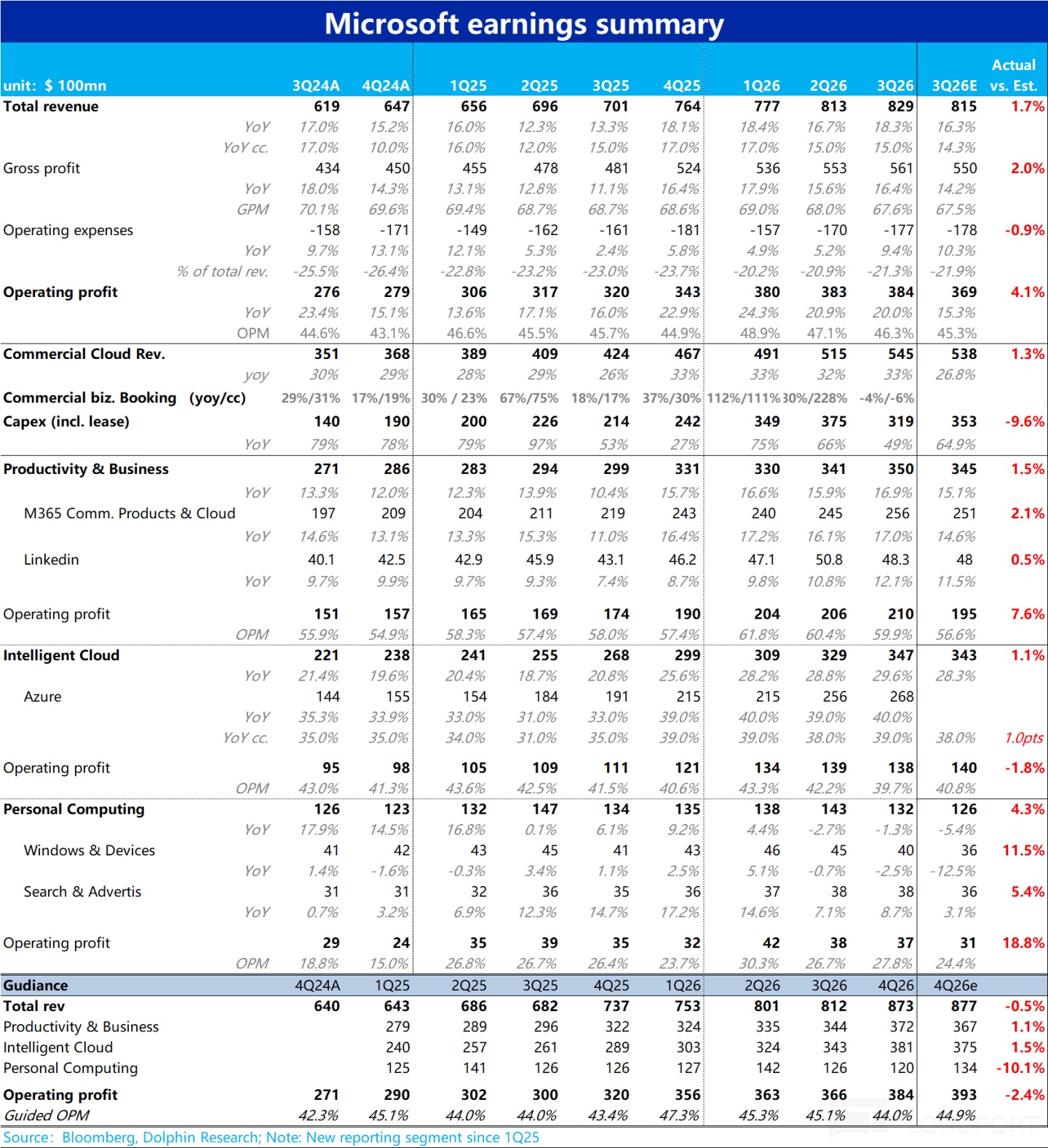
$Microsoft(MSFT.US) posted its Q3 FY26 results (quarter ended Mar) after the U.S. close on 4/30. Overall, the print was steady: most core metrics beat, but there were few true standouts. Details below:
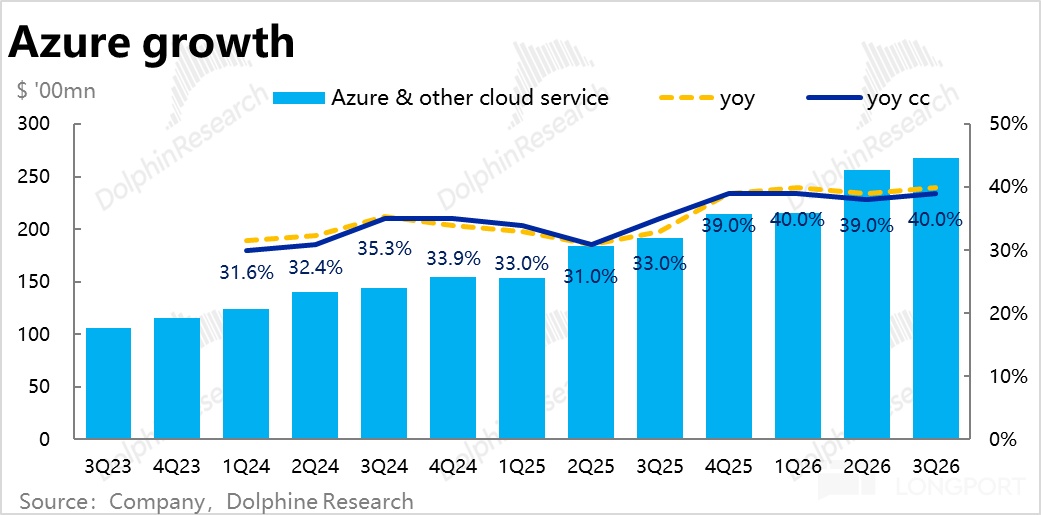
1) Azure re-accelerated, but no upside surprise: The most-watched Azure business delivered +40% YoY revenue growth, or +39% ex-FX, up 1ppt QoQ. Re-acceleration is a positive signal. However, versus the sharper step-ups at AWS and GCP this quarter, Azure still underperformed.
Dolphin Research believes the key driver was further unwinding of the Microsoft–OpenAI tie-up, with OAI shifting compute orders to other CSPs. Management also indicated compute would be prioritized for 1P offerings (e.g., Copilot) and internal model development, which likely weighed on 3P capacity.
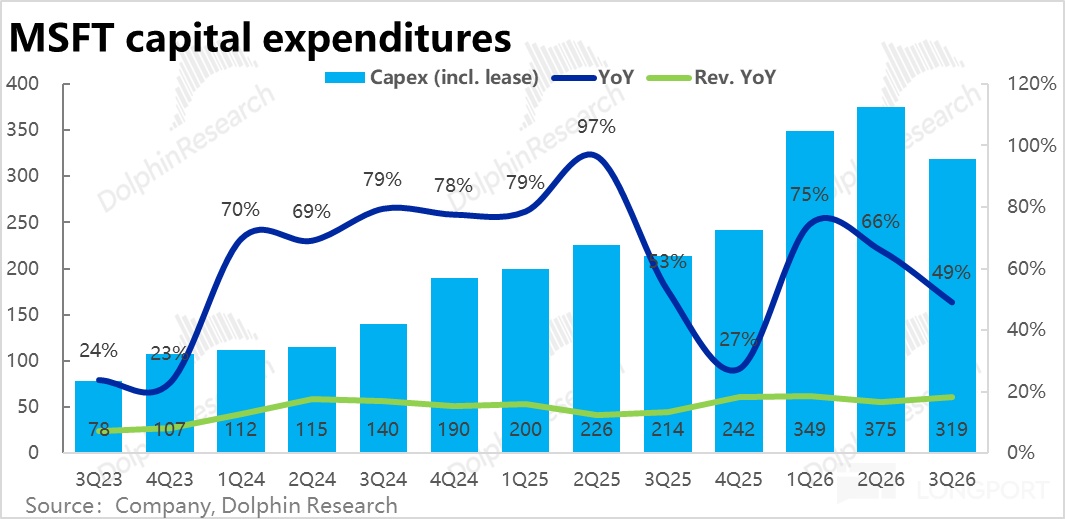
2) Capex came in light, aligned with Azure growth: With Azure in a mid-cycle pace, further de-scoping of the OpenAI partnership, and fewer net-new orders, Microsoft’s Capex (incl. leases) was $31.9bn, down over $5bn QoQ and below street.
This shows spend dynamically tracks front-end demand. With management expecting Azure growth to re-accelerate in 2H CY26, next-quarter Capex is guided to $40bn and full-year CY26 to $190bn, implying an Avg. >$50bn per quarter over the remaining three quarters, a sizable ramp.
3) Office steady volumes, pricing-led growth: In Productivity, Office (commercial and consumer) again saw largely stable seats, with pricing doing the heavy lifting.
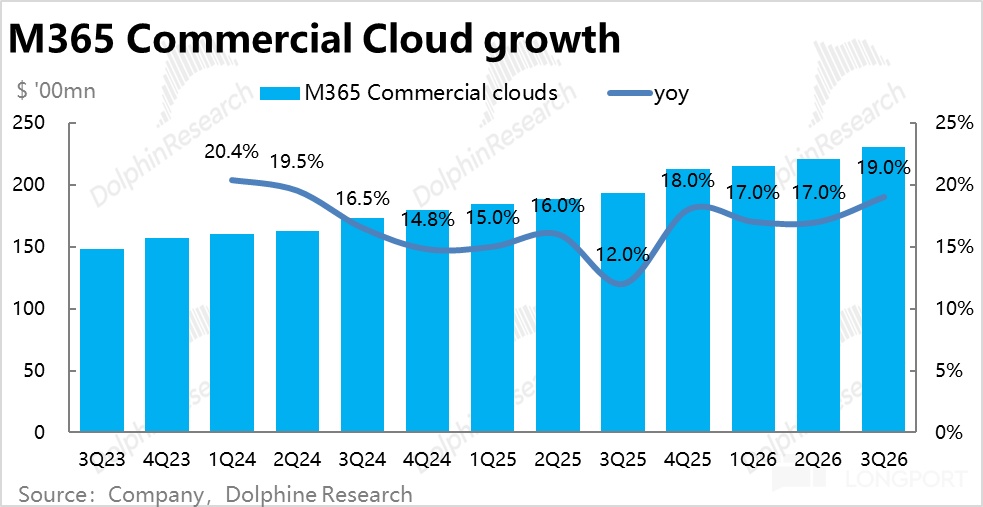
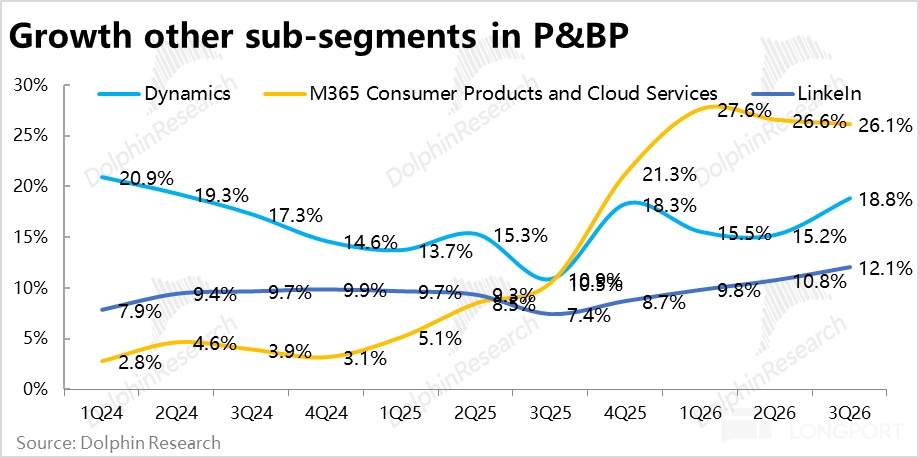
Specifically, Microsoft 365 Commercial Cloud grew 19% YoY, +2ppts vs. last quarter. Ex-FX, the true acceleration was about 1ppt.
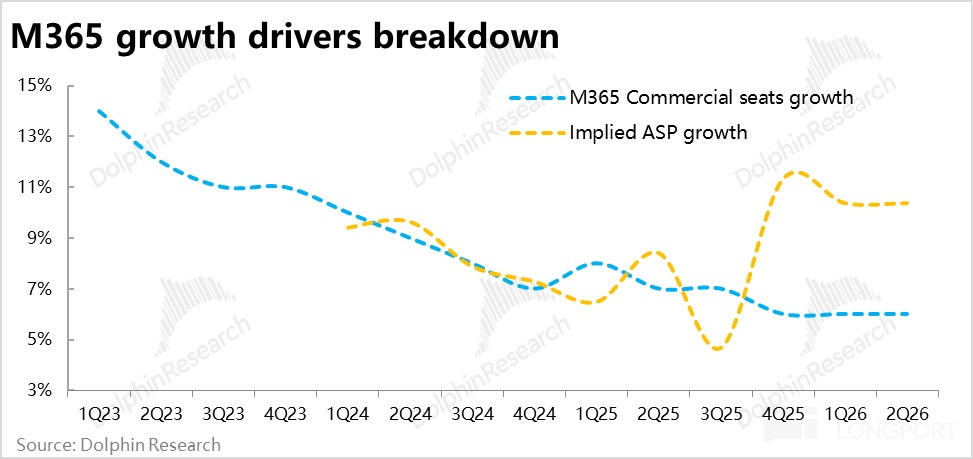
By price/volume, M365 commercial seats rose 6% YoY, flat QoQ; implied ARPU was up ~12% YoY, likely from mix upgrades and FX tailwinds.
Other lines were broadly soft, so Productivity ex-FX grew 13%, down 1ppt QoQ.
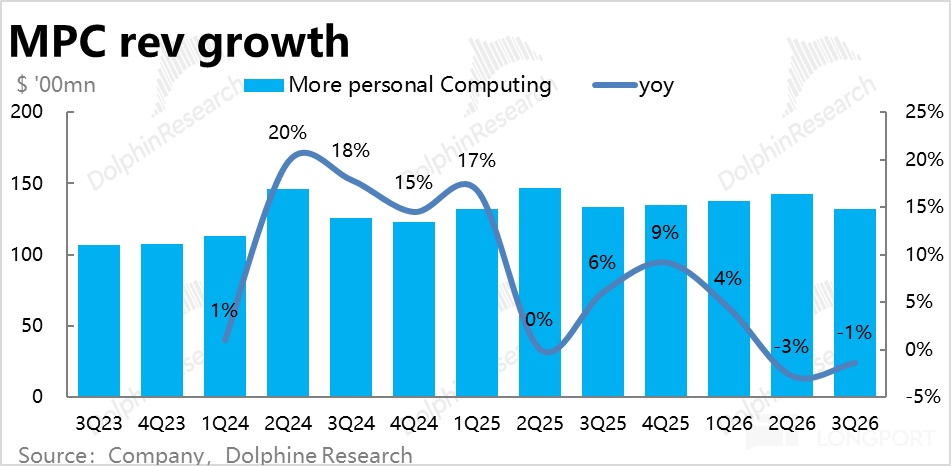
4) More Personal Computing weak, but better than guide: The segment stayed sluggish, with revenue down 1% YoY, better than the prior -5% guide, a low-bar beat.
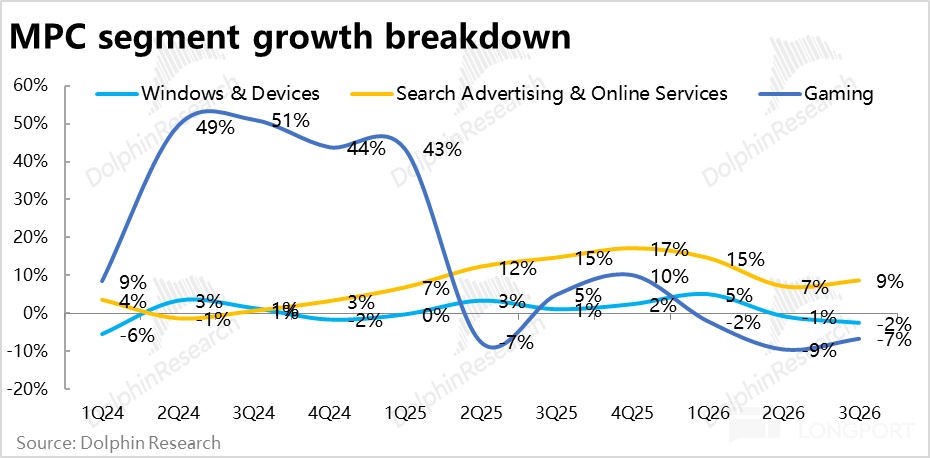
Windows and hardware fell 2.5% vs. a -10% guide, in line with market checks showing PC shipments +2% to +4% YoY in Q1. Conditions were not as bad as feared.
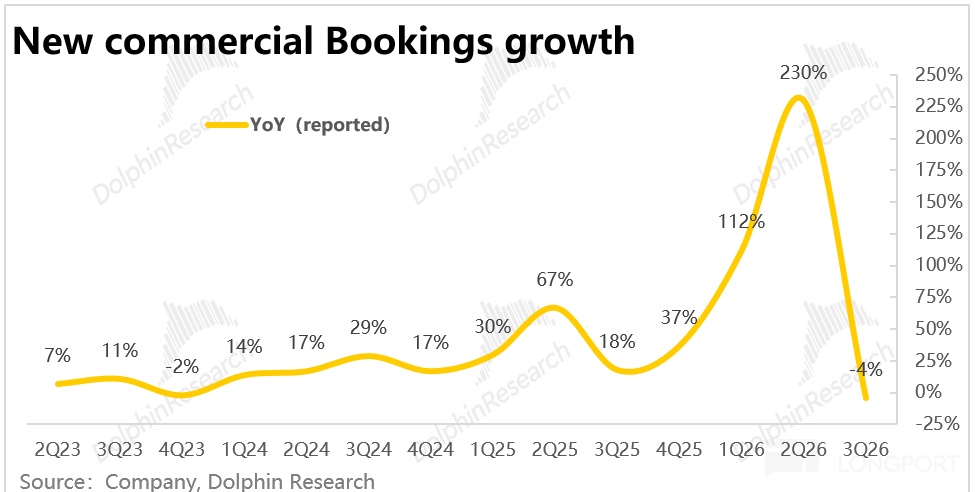
5) OpenAI order shift? New bookings turned negative: New enterprise contract value fell 4% YoY, versus +230% YoY last quarter, a sharp swing. We think after the re-cut OAI agreement, OAI stopped placing large new orders. Ex-OAI, new bookings rose ~7% YoY.
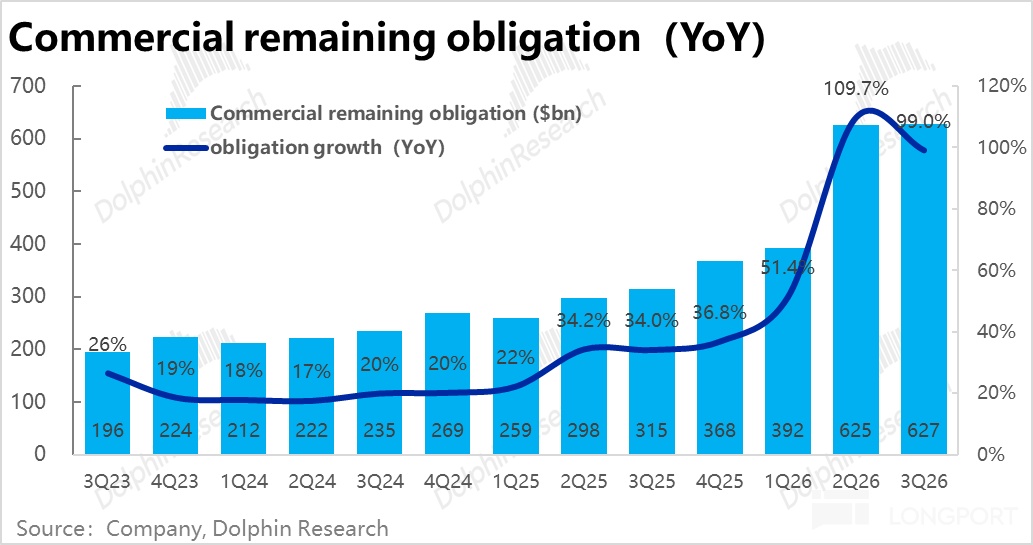
Similarly, RPO reached $627bn, up just $2bn QoQ. Ex-OAI, RPO grew 29% YoY.
Clearly, after ‘losing’ OAI as a mega customer, landing new orders got harder.
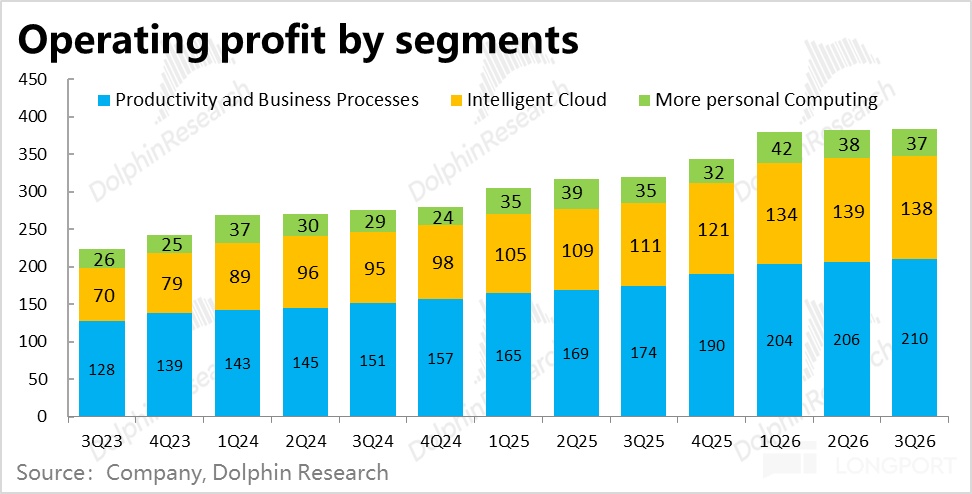
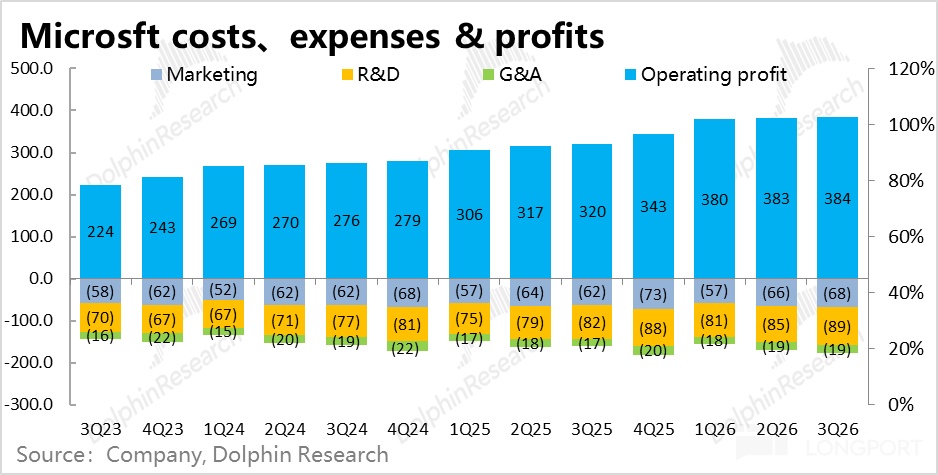
6) Profit also underwhelming: Operating profit was $39.4bn, +20% YoY, apparently outpacing revenue growth and suggesting margin expansion. Ex-FX, OP grew 16% vs. revenue +15% ex-FX, only a slight beat, implying margins were roughly flat YoY.
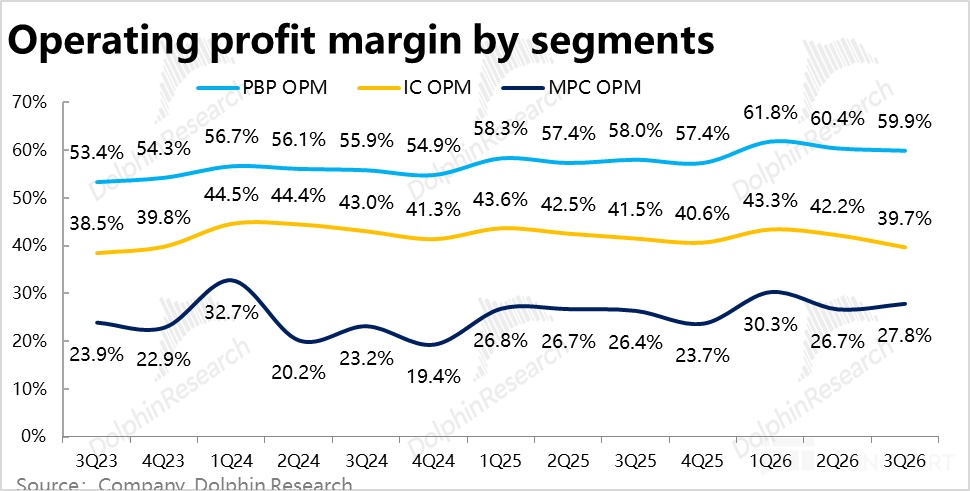
By segment, Intelligent Cloud OPM was 39.7%, -1.8ppts YoY, with the decline widening from -0.3ppt last quarter as Capex pressure mounted. Productivity & Business Processes and More Personal Computing saw slight OPM improvement ex-FX.
7) GPM under pressure, opex still offsetting: GPM was 67.6%, -110bps YoY, a wider decline than last quarter (-70bps). The drag came entirely from Intelligent Cloud GPM (down 500bps YoY), while the other two segments held flat to slightly better.
Cost control continued to cushion margins, with S&M+R&D+G&A up just 9.4% YoY (+8% ex-FX), below revenue growth, cutting the opex ratio by ~170bps YoY. That said, opex growth accelerated vs. +5% last quarter, led by higher S&M and G&A.
Dolphin Research view:
1) Stability first, few highlights: In short, the quarter was fine but unexciting: beats without breakthroughs. In a market where standing still is falling behind, Microsoft’s print looks middling vs. GOOG and AMZN, which effectively reads as weak.
New, unanticipated takeaways: a) After the OAI partnership downgrade, the impact on new orders was material and visible immediately; b) Intelligent Cloud GPM fell by a full 500bps YoY, far worse than AWS’s margin compression.
2) Azure guide improving:
1) Total revenue guide for next quarter is +13% to +15% YoY, with FX tailwind easing to ~1ppt. At the high end, ex-FX revenue growth is ~14%, about 1ppt slower QoQ.
The key: Azure ex-FX growth guided to 39%–40%, i.e., flat to slightly faster vs. this quarter. The direction is positive, though the magnitude of improvement is still modest. Management also expects further Azure acceleration in 2H CY26, which is encouraging but needs to be sized.
Dolphin Research thinks the guide is likely achievable, as Capex ramps materially from here and compute allocation to 3P workloads is set to increase via dynamic rebalancing. Productivity mid-point revenue guide is 12%, roughly in line. More Personal Computing looks conservatively guided, with the mid-point implying -10% YoY, below expectations.
2) On profit, the upper end of guidance implies $38.8bn OP, below the ~$39.3bn street. At the high end, OP growth of ~13% YoY trails revenue growth, pointing to greater margin pressure next quarter.
At the mid-point, implied OP margin of ~44% is down ~90bps YoY. Cost pressure is the driver—guided costs up 22%–23% YoY (incl. ~120bps from layoffs), well above revenue growth, while opex growth stays low at ~7%.
3) Growing pains of a strategic pivot
Historically, Microsoft’s investment case has been tightly linked to OpenAI. Since Oct FY25, the two re-cut their agreement (see prior review ‘After a cosmetic split with OpenAI, is Microsoft still compelling’ for details). Recently, further changes emerged:
a) Microsoft no longer has exclusive distribution/use rights to OpenAI models; Amazon gained similar rights
b) Microsoft remains OAI’s ‘primary’ compute provider, but OAI is reducing dependency and awarding more new orders to Oracle, Amazon, and CoreWeave
c) Microsoft can keep using OAI models and other IP through 2032 and will no longer share revenue when distributing OAI IP, a modest GPM tailwind
d) Conversely, OAI’s revenue share to Microsoft (as a shareholder) ends in 2030, with a new cumulative cap agreed (undisclosed)
The partnership downgrade has been a key reason for MSFT’s recent underperformance—near term it capped Azure growth; longer term, by losing exclusive access to OAI’s model advantage, Microsoft faces gaps across model, cloud, and silicon.
Against Google’s full stack and Amazon’s cloud+silicon, Microsoft looks relatively weaker. Hence the urgency to develop a competitive in-house frontier model and/or ASIC.
Another shift: AI monetization is moving from consumer-facing (e-comm/ads) to enterprise-facing (productivity gains). The threat has migrated from search, e-comm, OTA to workplace software.
Thus, beyond weaker cloud competitiveness, Microsoft’s Productivity & Processes could itself face AI substitution risk. These are core issues for the MSFT thesis.
4) Microsoft’s responses: Beyond ramping Capex to monetize Azure and investing in in-house models and ASICs, there is one immediate lever.
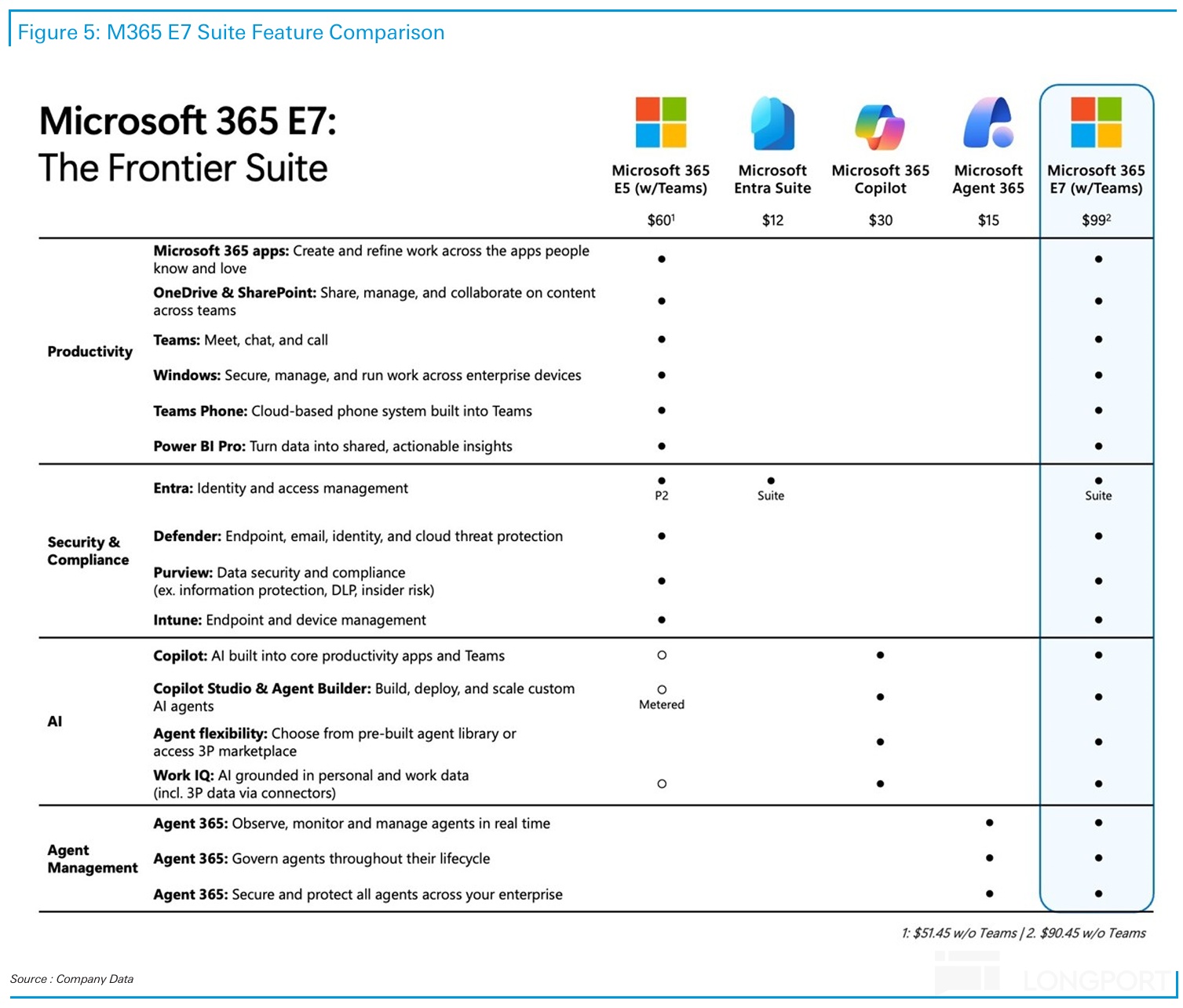
Microsoft launched M365 E7 above the current top-tier E5, bundling Copilot, Agent 365, Entra, etc. Base price rises from $60 (E5) to $99, a >50% hike.
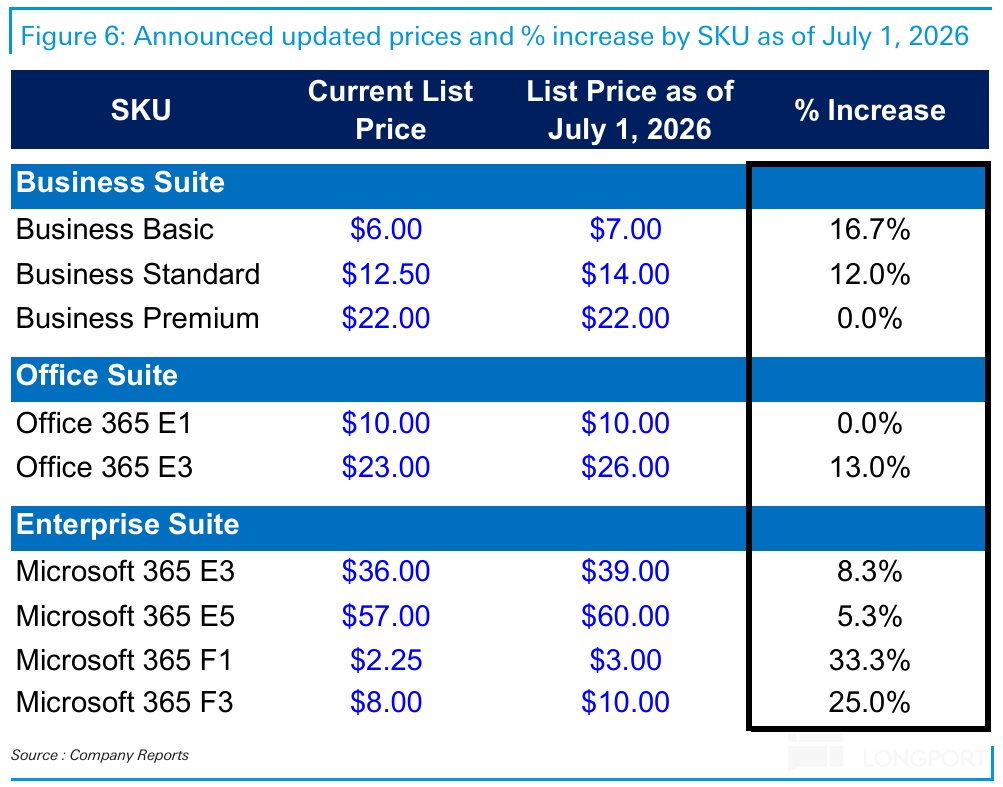
In addition to E7, Microsoft will also raise prices across other existing products starting 7/1; see the chart below for the specifics.
5) Valuation:
Basing on FY27, with management indicating double-digit growth in both revenue and OP for FY27 (likely 10%–20%), FY27 OP of $176bn implies ~21x post-tax OP. That is indeed below AMZN and GOOG, reflecting a weaker narrative for MSFT at present.
Net-net, we maintain our prior view: MSFT is in a transition with growing pains. Better to wait for progress on in-house models, ASIC optimization, or landing a large OAI replacement, then act.
Detailed earnings review follows:
I. Changes to reporting segments
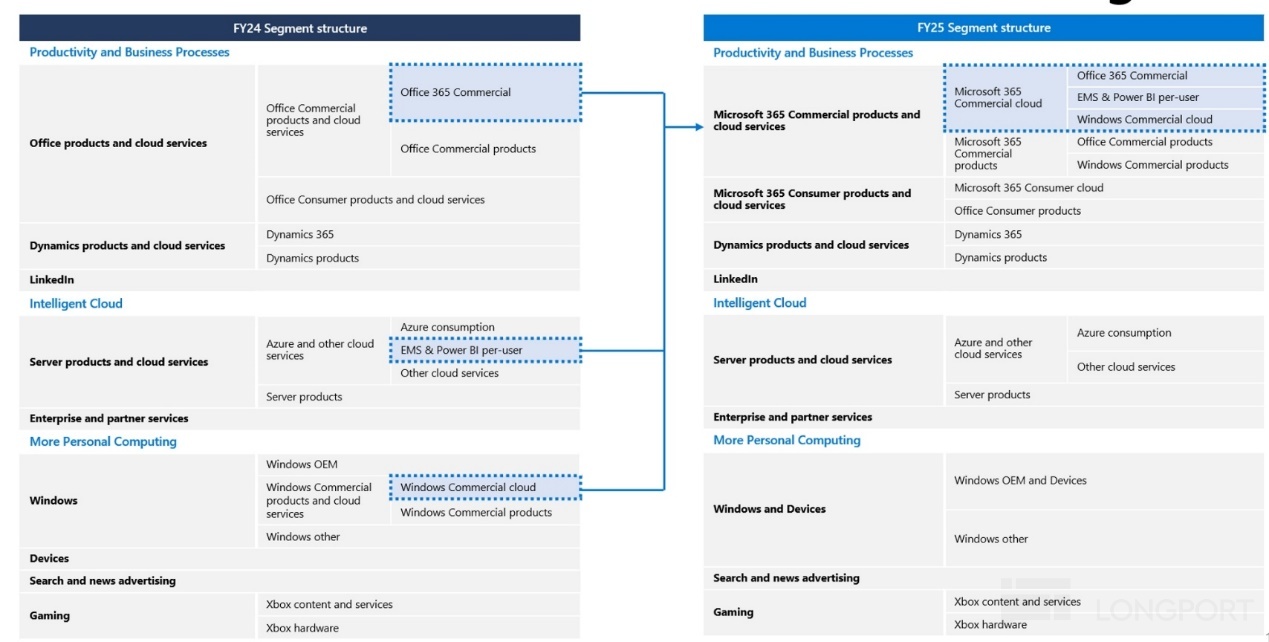
Starting FY25, Microsoft made notable changes to segment disclosures. The idea: move enterprise-facing 365 services—Commercial Office 365, Windows 365, Security 365—into Productivity & Business Processes (PBP). For specifics and our views, see the 1Q25 review. Summary chart below.
II. Segment results: Slight beats, little excitement
1.1 Azure stabilized, but still lagged peers
Azure grew 40% YoY, or 39% ex-FX, up 1ppt QoQ, broadly in line with consensus. This ended the prior deceleration trend, a mild positive. But versus the sharp acceleration at AWS and GCP, Azure still underperformed.
Dolphin Research sees the main reason as further decoupling from OpenAI, with OAI shifting some compute orders to other CSPs. Management’s prioritization of 1P workloads and internal R&D also constrained external capacity. Given OAI is no longer tied to Microsoft—and may even compete—MSFT has urgency to build a first-tier large model.
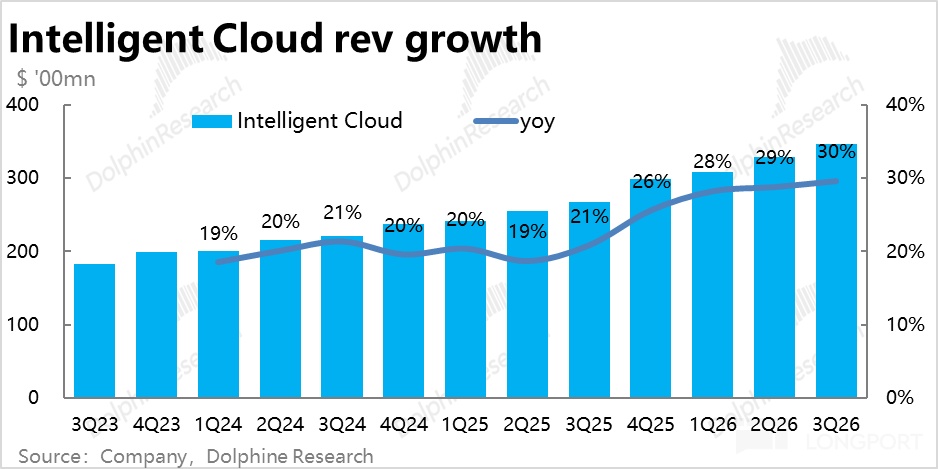
Intelligent Cloud revenue rose ~30% YoY, up ~1ppt QoQ, largely on FX tailwinds.
1.2 Productivity: steady but easing, pricing-driven
Microsoft 365 Commercial Cloud grew 19% YoY, +2ppts QoQ. Ex-FX, acceleration was ~1ppt.
By drivers, commercial seats rose 6% YoY, flat QoQ; the uplift came from ~12% YoY ARPU expansion, likely via mix upgrades (e.g., E3 to E5) and add-ons (e.g., Copilot).
Overall, Office 365 growth has not fundamentally re-accelerated, suggesting add-ons like Copilot are not yet widely adopted.
Elsewhere in Productivity, Dynamics 365 grew 22% YoY, a notable step-up but mostly FX-related; ex-FX growth of 17% was flat QoQ. LinkedIn remained sluggish, up 9% ex-FX, -1ppt QoQ.
Consumer M365 benefited from prior price hikes, with revenue up ~26% YoY; users rose 7% YoY, +1ppt QoQ. Note the price hike started in FY25 Q4, so its tailwind ends next quarter absent new hikes.
Ex-FX, most Productivity sub-lines were stable to slightly slower, so segment growth ex-FX was 13%, down 1ppt QoQ.

1.3 More Personal Computing: broadly weak, but above guide
Segment revenue fell 1% YoY, vs. a -5% guide.
1) Windows and hardware outperformed the conservative -10% guide, down just 2.5%, consistent with industry checks. 2) Ad revenue ex-traffic acquisition grew 12% YoY, or 9% ex-FX, flat QoQ; over one year, ads are still >20% YoY. 3) In Gaming, Xbox hardware was down 33% YoY; content fell 5% YoY, both soft.
IV. Lost OpenAI as a mega customer? New bookings fell YoY
Total revenue was $82.9bn, +18% YoY, slightly above the ~16.3% street. Ex-FX, revenue grew 15% YoY, roughly flat QoQ. Across segments, there were no standout growth drivers.
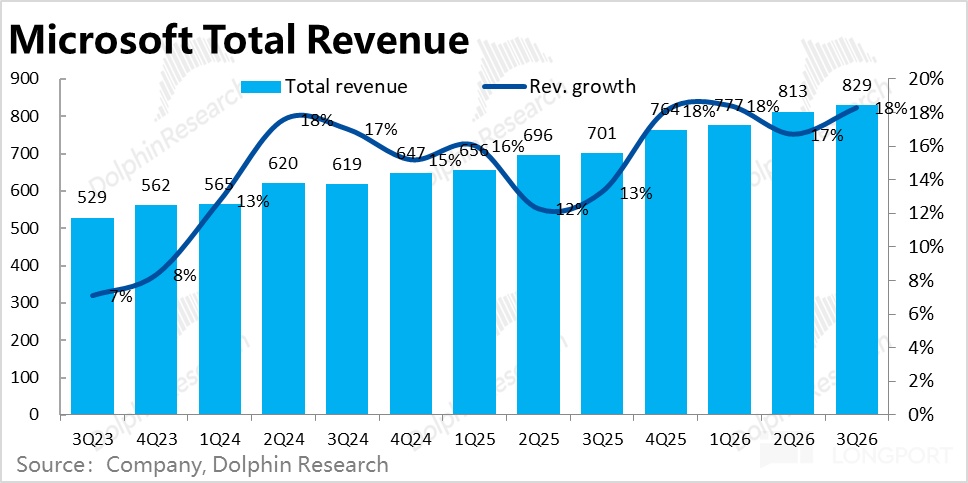
Leading indicators shifted. New enterprise contract value fell 4% YoY, vs. +230% YoY last quarter. The main reason: after the revised OAI deal, OAI no longer placed large new orders. Ex-OAI, new bookings rose ~7% YoY.
Similarly, RPO was $627bn, up just $2bn QoQ. Ex-OAI, RPO grew 29% YoY vs. +99% including OAI.
Both metrics indicate the significant hit to order intake after losing OAI, which we see as a key reason for Azure’s recent underwhelming growth.
V. Capex moderated, tracking Azure’s cadence
Capex (incl. leases) was $31.9bn, down >$5bn QoQ and below the $35bn street. We see this as reflecting the further downgrade of the OAI relationship and a smaller OAI order pipeline.
About two-thirds went to short-lifecycle gear like GPUs/CPUs. Capex downshift aligns with recent Azure growth. With expected Azure acceleration in 2H CY26, next-quarter Capex is guided to $40bn and full-year CY26 to $190bn.
VI. GPM pressure building; opex still offsets
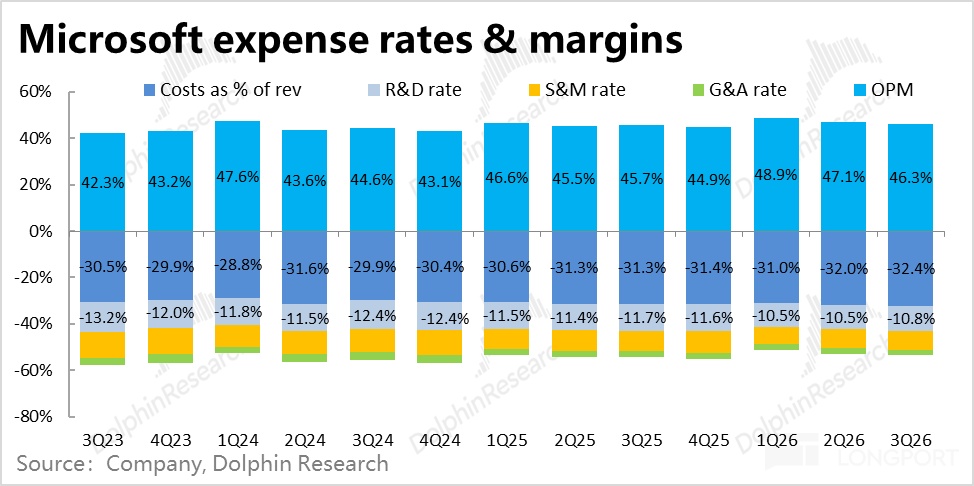
Profit was slightly better than revenue, but not stellar. 1) OP was $39.4bn, +20% YoY, seemingly ahead of revenue, suggesting margin expansion. Ex-FX, OP grew 16% vs. revenue +15% ex-FX, so margins were roughly flat YoY.
2) Intelligent Cloud OPM was 39.7%, -1.8ppts YoY, a wider drop than last quarter’s -0.3ppt, underscoring mounting Capex-driven pressure.
Productivity & Processes and More Personal Computing OPMs improved slightly ex-FX.
3) GPM was 67.6%, -110bps YoY, with the decline widening from -70bps last quarter, driven entirely by Intelligent Cloud GPM down 500bps YoY; the other two segments were flat to slightly better.
2) With GPM headwinds, opex control continued to offset pressure; total opex rose 9.4% YoY (8% ex-FX), well below revenue growth, cutting opex ratio by ~170bps YoY. Sequentially, opex growth accelerated from 5%, mainly on higher S&M and G&A, partly from an easy base.
<End of text>
Past Dolphin Research coverage on Microsoft:
Earnings reviews
Oct 30, 2025 Transcript: Microsoft (Trans): Not a steward for a single mega customer
Oct 30, 2025 Review: After a cosmetic split with OpenAI, is Microsoft still compelling
Jul 31, 2025 Transcript: Microsoft (Trans): $30bn Capex in Q1, front-half loaded for the year
Jul 31, 2025 Review: Azure growth limitless? Microsoft as AI’s top bellwether
May 1, 2025 Transcript: Microsoft (Trans): Capex guide intact; supply bottlenecks in Q4
May 1, 2025 Review: Azure rises again; Microsoft reclaims AI pillar status
Jan 30, 2025 Transcript: Microsoft: Balancing current spend vs. future upside is the key question for all AI players
Jan 30, 2025 Review: Microsoft: The disconnect between sober reality and grand vision
Risk disclosure and statement: Dolphin Research disclaimer and general disclosures


The copyright of this article belongs to the original author/organization.
The views expressed herein are solely those of the author and do not reflect the stance of the platform. The content is intended for investment reference purposes only and shall not be considered as investment advice. Please contact us if you have any questions or suggestions regarding the content services provided by the platform.