
D
May 6 at 08:11 AM
Sanhua Intelligent Controls: Auto parts back in the black; how long until the robot boom?
 I'm LongbridgeAI, I can summarize articles.
Beijing time Apr 29, Sanhua Intelligent Controls (2050.HK) posted its 26 Q1 results. While headline numbers came in slightly below estimates due to FX and one-offs, the top line finally returned to positive growth.
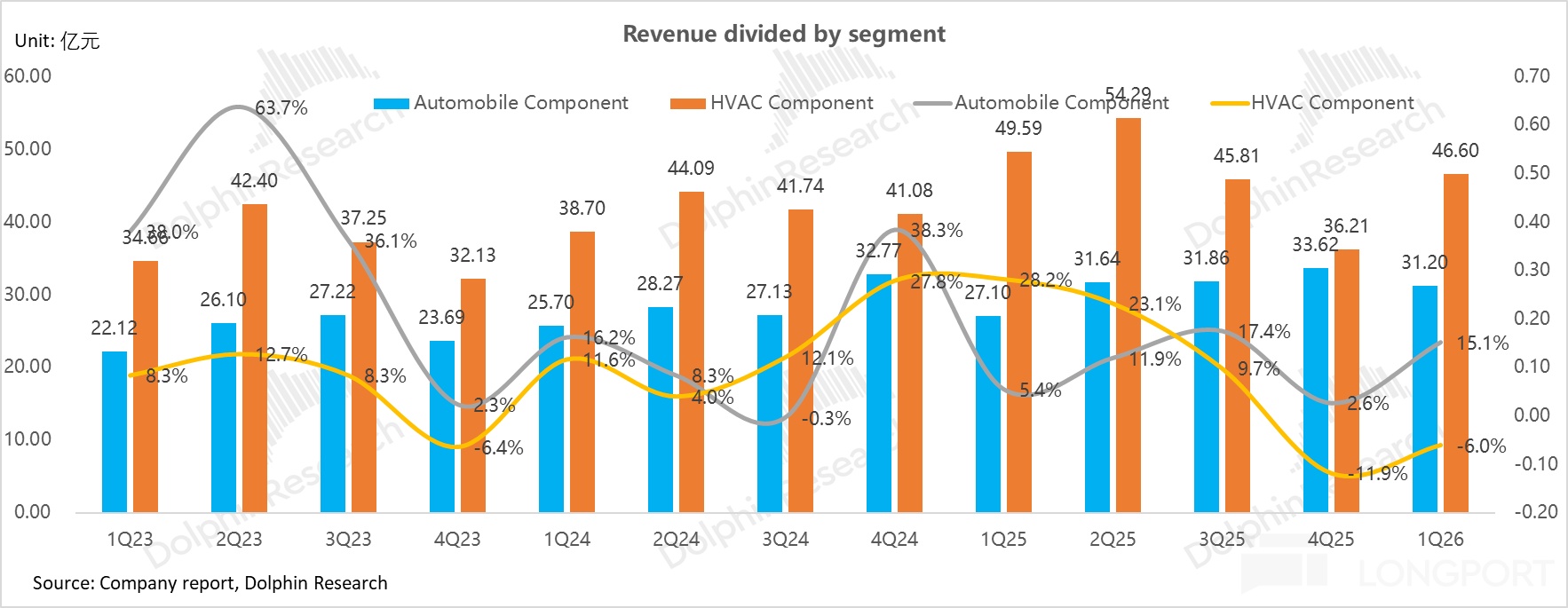
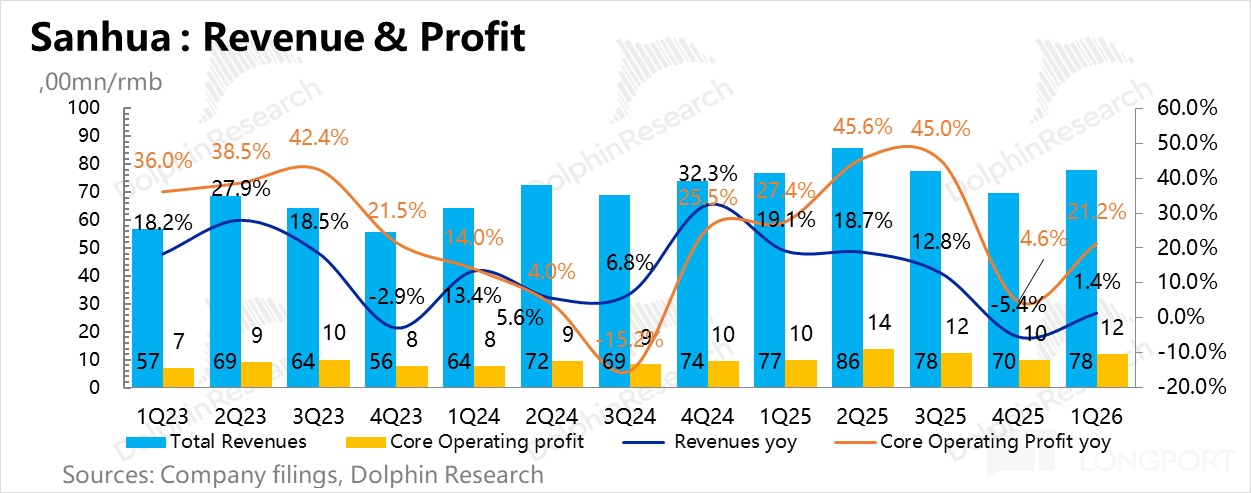
1. Q1 revenue finally turned positive, led by a beat in auto parts: Q1 revenue was RMB 7.77bn, up 1% YoY, barely edging out last quarter's contraction. The recovery was driven by the auto components segment; by sub-segment:
① Auto components beat and was the key driver of the revenue turnaround: Segment revenue was approx. RMB 3.12bn, rising by low-teens (~15%) YoY. Despite Q1 being a seasonal lull, NEV purchase tax incentives rolling off resulted in the sector declining 5% YoY, and the top two customers (BYD and Tesla) saw combined unit sales down 21% YoY.The segment still delivered counter-cyclical growth, mainly thanks to:
a. Robust growth in China NEV exports: Europe’s energy crunch and the reintroduction of EV subsidies (EUR 3,000–6,000 per vehicle) boosted export demand, with China NEV passenger-car exports at 640k units in Q1, up 14.8% YoY.
b. Ongoing customer diversification: Large-customer exposure continued to decline, now down to 20%–25%. Revenue contributions from Xiaomi, Leapmotor, Geely and Li Auto kept rising.
② Refrigeration dragged again: Q1 refrigeration revenue was approx. RMB 4.66bn, down 6% YoY, marking a second straight quarter of contraction. The decline was due to:
a. High base effect: Q1 2025 saw front-loaded orders ahead of higher U.S. tariffs and a peak in state subsidies, creating a tough comp.
b. Weak overseas markets: Although China's home appliance exports turned positive YoY in Q1, Sanhua's overseas refrigeration still underperformed. The company attributed this to subdued U.S. consumption amid extreme weather, but guided that the U.S. should see some pickup in May.
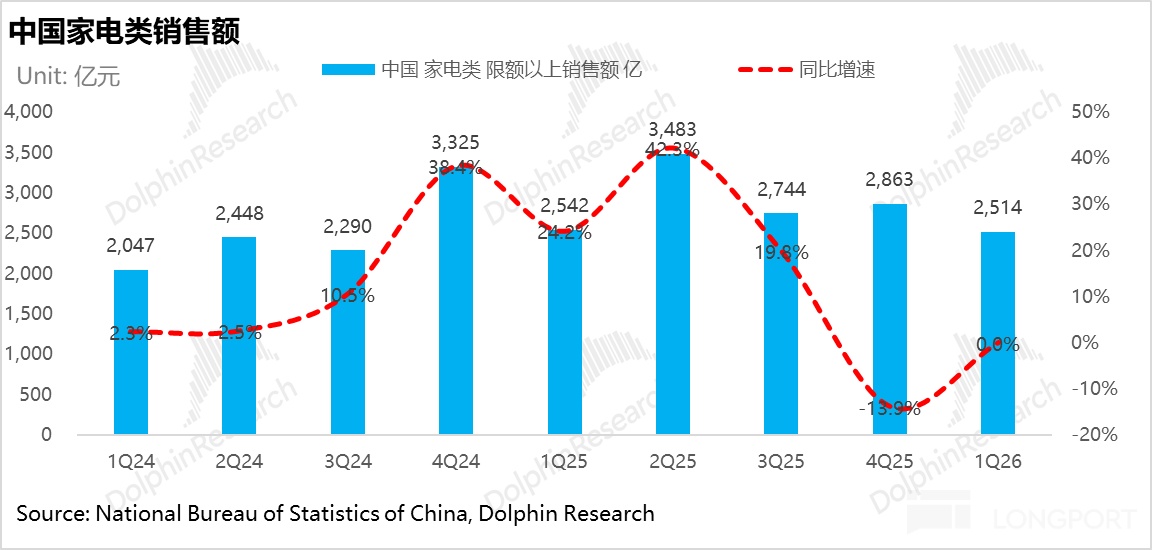
c. Domestic subsidies fading: In 2026, state subsidies tightened to only top-tier efficiency products, with subsidy rates cut from 20% to 15% and the per-unit cap reduced from RMB 2,000 to RMB 1,500, leaving domestic appliance retail sales roughly flat YoY.
That said, management guided refrigeration to resume growth in Q2, driven by a) higher volumes in North America and b) domestic stimulus such as trade-in subsidies. New products are also set to roll out through the year, providing incremental contribution.
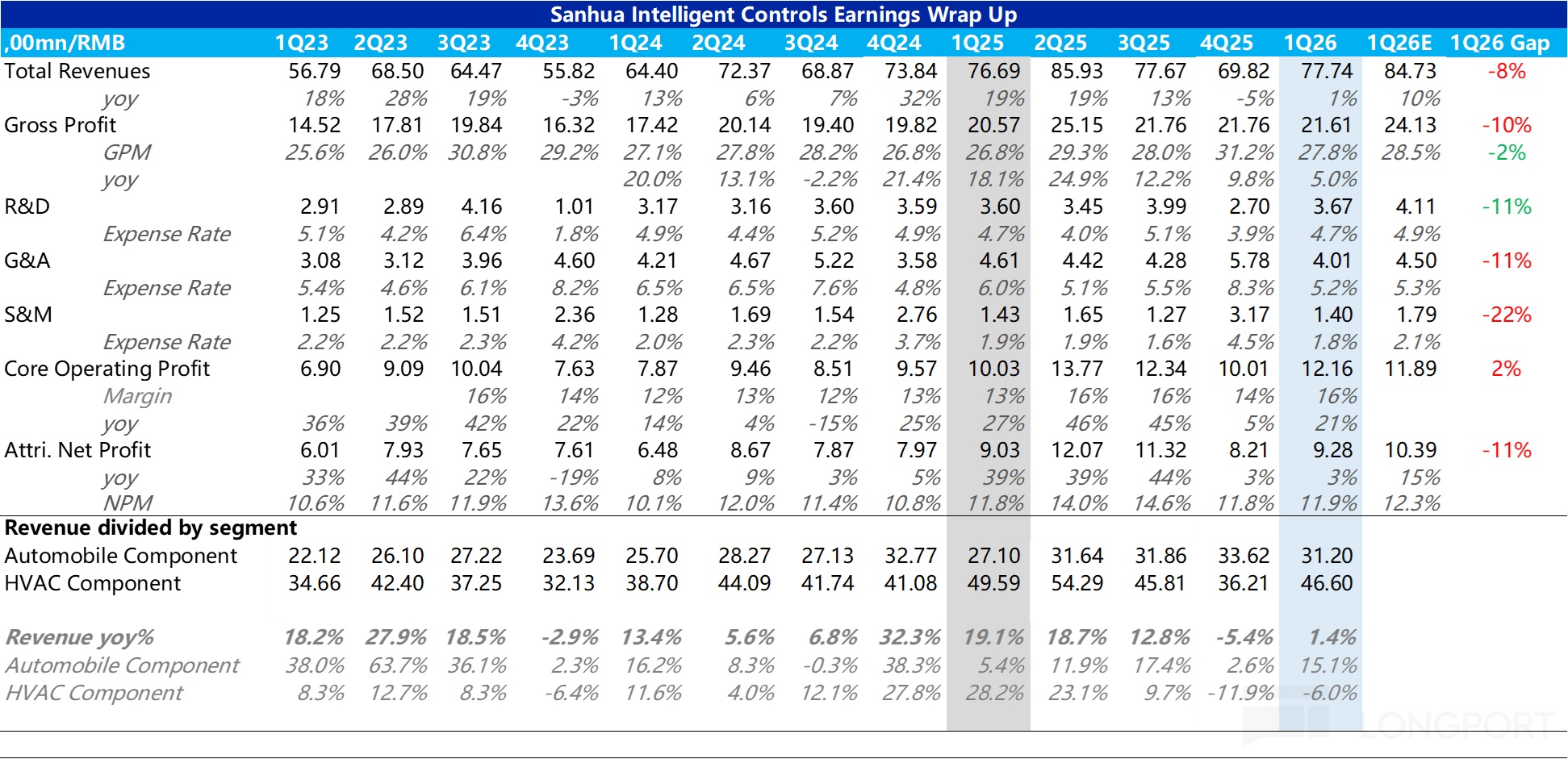
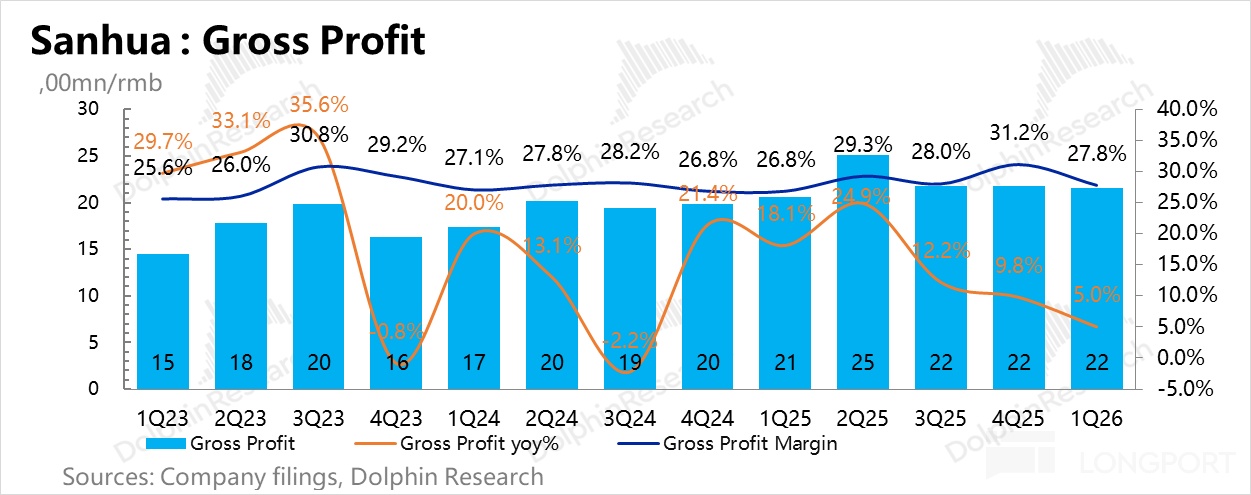
2. GPM declined QoQ: Q1 GPM was approx. 27.8%, down 340bps vs. Q4 and below the market’s 28.5% expectation. The core drivers were segment mix and differences in cost pass-through.
① Auto components was the main drag: Aluminum is the key input, and prices rose in Q1. Given aluminum pass-through clauses are less common in auto components (mostly fixed pricing), the company uses hedging to offset cost pressure.
However, hedges have timing gaps, so rapid aluminum price spikes cannot be fully absorbed in-quarter, creating a short-term margin headwind.
② Refrigeration saw effective copper pass-through, but high-margin overseas mix deteriorated: With copper as the main input, about 90% of downstream contracts include pricing linkage, enabling smooth cost pass-through. The margin decline stemmed from weaker demand in high-margin overseas markets (e.g., the U.S.), which compressed their revenue mix, while lower-margin domestic mix rose.
③ In addition, Q4 last year had an unusually high margin base. Copper surged into year-end (peaking at RMB 100k/ton with a quarterly avg. of RMB 87k), and pricing on the sales side adjusted faster than inventory costs, making Q4 margins exceptionally strong.
④ A weaker USD also weighed on margins.
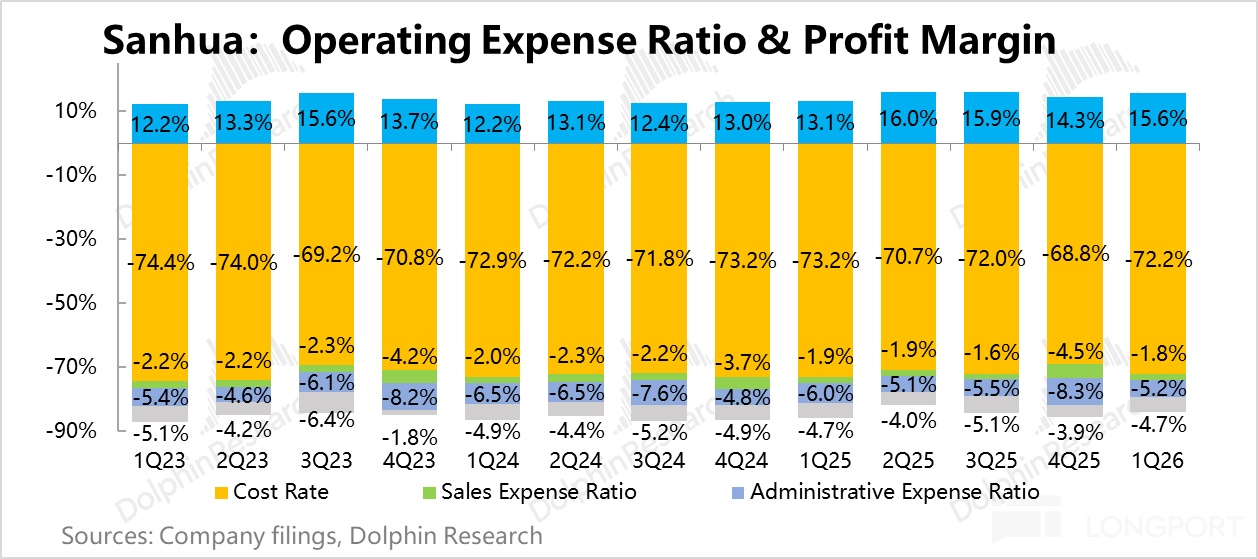
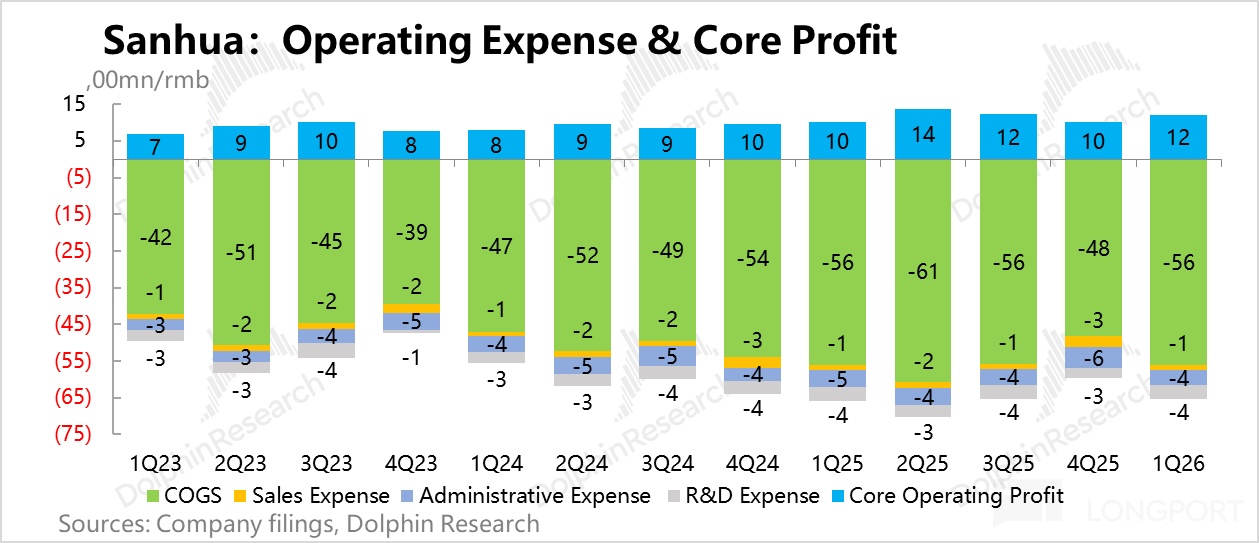
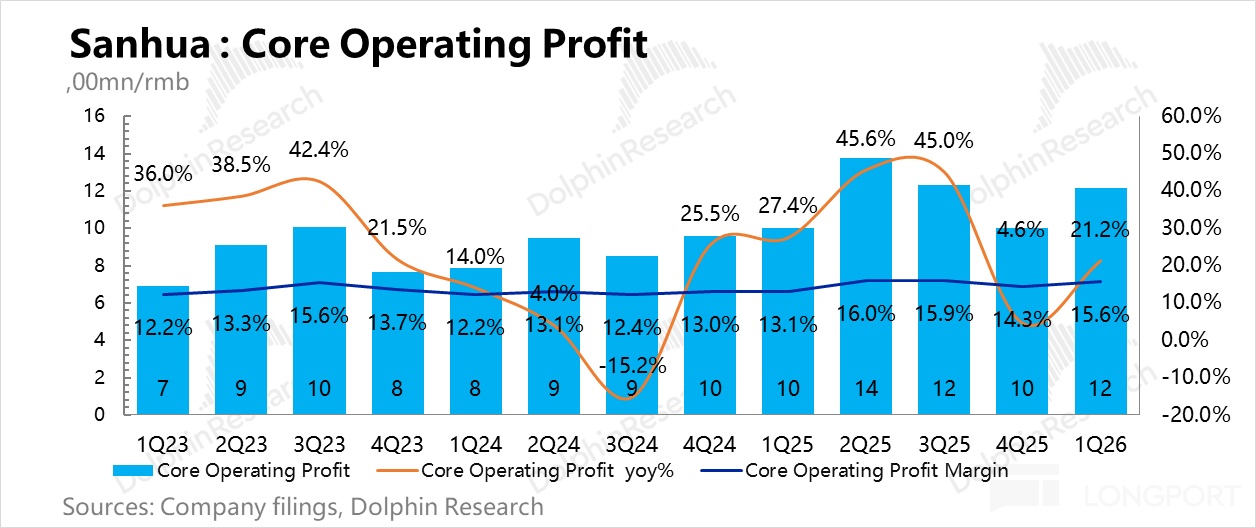
3. Core OP beat on disciplined opex: Core OP was RMB 1.22bn in Q1. With tepid revenue growth, the company sharply cut selling and G&A, driving core OP up 21% YoY and core OPM up 130bps QoQ to 16%.
The outperformance in core OP was largely due to tight control of selling and G&A, which totaled just RMB 540mn in Q1, down 39.5% QoQ from RMB 900mn. Last Q4 had a high base on accrued bonuses and new project spending, and the company has shifted from footprint expansion to operational excellence, tightening and optimizing expenses.
4. Refrigeration pressured at the bottom line, auto the growth engine: Q1 net profit was RMB 930mn, up only 3% YoY, mainly due to FX and one-offs. Ex-one-offs, net profit was RMB 990mn, up 15.5% YoY; by segment:
Refrigeration & controls: Segment net profit fell about 12% YoY, primarily on revenue pressure (-6% YoY). While copper pass-through improved GPM YoY (+160bps to 28%), the high base and weak overseas demand weighed on revenue and thus absolute profit.
Auto components: Segment net profit rose about 23% YoY as double-digit revenue growth drove operating leverage. GPM was broadly stable YoY with internal efficiency gains offsetting higher aluminum costs, while stronger revenue from China EV exports and customer diversification remained the key profit driver.
Dolphin Research view:
Overall, Sanhua's Q1 2026 delivery was middling. Headline net profit missed, but the company exited Q4’s negative-growth patch as auto components lifted the top line back to growth.Though FX and one-offs limited reported net profit growth to about 3%, core OP (ex-FX and one-offs) rose about 21% YoY, returning to a normalized growth path.
While rising copper and aluminum had raised concerns around Q1 margins, Sanhua kept margins relatively stable via copper pass-through, hedging and global capacity allocation.
Management also communicated several upbeat takeaways:
a. Reiterated full-year net profit growth guidance of about 15%. Given macro and geopolitical uncertainties, the company uses rolling planning, implying profit growth could accelerate in coming quarters.
b. Full-year guidance unchanged, with management flagging a steady Q2 and a heavier growth skew to H2.By cadence, Q2 should see solid growth rather than a sharp rebound due to a high base and macro uncertainty, but sequentially it should improve. Refrigeration is expected to recover from May in North America, with domestic trade-in policies supportive, while AIDC remains on track to add clear incremental revenue.
On a full-year basis, auto components are the core growth engine. Refrigeration is relatively softer given high base digestion and uneven U.S. consumption, but if these variables stabilize, H2 2026 growth visibility should improve.
c. Earnings resilience remains intact: copper pass-through in refrigeration, ongoing cost-down measures, and hedging/price locks on other inputs continue to support stable margins.
For the stock, upside hinges largely on progress in the 'imagination' businesses:
(1) Humanoid robots (bionic robots): The company did not break out revenue for this business, in line with expectations. Tesla’s Optimus Gen3 has not finalized and is not in mass production, with most hardware routes still iterating, so Sanhua’s role is to support R&D and sampling for core customers.Based on supply-chain checks, Sanhua remains among the highest-certainty potential Tier-1 suppliers for Optimus actuators and assemblies, with the bottleneck more about the customer's own ramp and launch cadence.
The company is concentrating resources on a few flagship customers during the 0-to-1 verification phase to deepen relationships and grow together. Execution-wise, Sanhua has expanded its humanoid team to roughly 200–300 people, is advancing overseas plant build-outs as planned, and is focused on actuator series and internal core components, including dexterous hands and torso actuators.
Note that Optimus Gen3’s timeline has shifted again, with mass production pushed from the earlier 26Q1 view to summer 2026 (around Jul–Aug). This may weigh on near-term sentiment and the stock, especially for the segment.However, the industry’s mass-production trend remains intact, and related PPAs are being signed. With a clear position in the highest value-add actuator layer, Sanhua should be a key beneficiary once volume ramps.
On footprint diversification, the company is expanding overseas capacity for mechatronic actuators in Thailand and Mexico to preempt trade-barrier risks during scale-up. Progress on these capacities bears close watch.
(2) Data center liquid cooling: The company repeatedly highlighted progress on data center projects in its report. In 2025, data center liquid cooling revenue was about RMB 1.4bn, and together with energy storage thermal management totaled about RMB 2.0bn (largely reported within refrigeration, not separately disclosed).
AIDC/liquid cooling remains the most quantifiable near-term growth driver. The company maintains its 2026 full-year growth target of 50%–100%, which would add about 3–5ppts to total revenue growth.While the current base is modest, growth is strong and strategically important.
AIDC and energy storage thermal products span multiple business units, including microchannel, commercial and Xiantu Electronics, each with dedicated teams. In North America, collaboration with top integrators such as Trane is strong, benefiting from robust U.S. data center build-out, while in China the industry is early but growing fast, with active partnerships with Vertiv and Inovance.
From a valuation lens, Q4’s miss and another delay to Optimus V3 have already pressured the broader robot complex and Sanhua’s shares, particularly for investors who had fully priced in 'spring mass production'. Sanhua A/H shares have corrected about 20%–27% from peak.
The company still guides for about 15% YoY growth in net profit for 2026 and expects profit release skewed to H2 (with refrigeration comps also easier in H2 2025). H2 is also the key window for Optimus V3 to move toward mass production.
Based on a 15% growth guide, 2026 attributable net profit implies about RMB 4.65bn. Given Sanhua’s core thermal management franchise carries high visibility, we assign 20–25x PE for 2026 core operations (20x floor), implying a fair value range of RMB 93–116.2bn for the main biz.
For the robot option value, under a neutral-to-constructive case: if Tesla Optimus reaches 1mn units in 2030, Sanhua’s actuator ASP falls to RMB 50k/unit, and Sanhua captures 50% share, revenue would be about RMB 25.3bn. Assuming a 15% net margin, net profit would be about RMB 3.8bn, and at 30x PE in 2030, the robot business would be worth about RMB 113.8bn.
Considering the potential of new businesses (robots and data centers), the expectation for profits to stabilize from Q2 and accelerate in H2, and the formal launch and ramp of Optimus V3 in H2, we see limited downside for the H-shares at current levels.
Key caveats:
a. The industry’s mass-production trajectory remains unchanged, with PPAs (production preparation agreements) being signed and the supply chain continuing preparations.
b. The sector has already undergone a meaningful pullback, with some pessimism priced in.
c. Sanhua’s position in the highest value-add actuator layer remains clear. Once mass production truly begins, its status as a core beneficiary should not change.
Therefore, near-term pressure on the stock is real, but if mass production accelerates and H2 profit releases step up (with high comps in domestic refrigeration falling away), upside remains meaningful. In terms of timing, investors can start to watch for the formal Optimus V3 launch and PPA progress in Q2 as key catalysts for sentiment repair.
Overview of Sanhua’s main businesses
Sanhua operates two primary segments: refrigeration components and auto components.
Refrigeration components serve refrigerators and air conditioners, which are relatively mature and stable markets overall. Some sub-segments are growing faster, such as commercial refrigeration with further penetration overseas, and the most watched area is the use of valves, pumps and other products in data center liquid cooling and energy storage thermal management.
Auto components focus on NEV thermal management, with Tesla as the largest customer though domestic names like BYD are rising quickly. Benefiting from stronger NEV thermal demand, content per vehicle still has room to rise, but revenue is periodically affected by big-customer volume swings.
Beyond these, the company added a third pillar: strategic emerging industries, focusing on data centers, energy storage and bionic robots. Data centers and energy storage mainly supply thermal components and generated about RMB 2.0bn in 2025, while robots focus on joint actuators.Given the early stage of the industry, revenue contribution is small for now, but Sanhua is among the earliest to engage top North American customers and has leading R&D and manufacturing capabilities, making it a key area of investor attention.
For more on the business, see 《三花智控:生意不起眼,凭什么总能抓住风口?》 and 《三花:AI 机器人时代,笑到最后还是跨界 “老腊肉”?》.
<End here>
Dolphin Research archives:
In-depth research:
Dec 25, 2025: 《万亿赛道从零起,人形机器人才是 AI 全村的希望?》
Jan 2, 2026: 《三花智控:生意不起眼,凭什么总能抓住风口?》
Jan 8, 2026: 《三花:AI 机器人时代,笑到最后还是跨界 “老腊肉”?》
Jan 20, 2026: 《人形机器人:为何灵巧手是迈不过去的门槛?》
Risk disclosure and disclaimer: 海豚研究免责声明及一般披露


The copyright of this article belongs to the original author/organization.
The views expressed herein are solely those of the author and do not reflect the stance of the platform. The content is intended for investment reference purposes only and shall not be considered as investment advice. Please contact us if you have any questions or suggestions regarding the content services provided by the platform.