

 Likes Received
“Crowd-Out”——6 月 12 日,$750 亿要从市场抽走

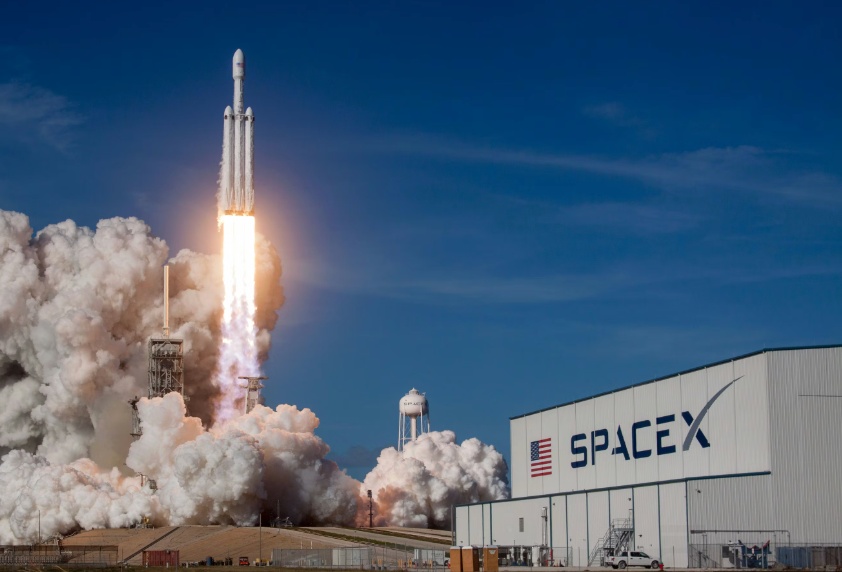
June 12, Nasdaq. SpaceX is about to go public, ticker $SpaceX(SPCX.US). Target valuation $1.8 trillion, raising $75 billion – this is the largest IPO in human history, nearly three times the size of Saudi Aramco's 2019 offering ($25.6 billion).
Let me emphasize the meaning of this number: $75 billion is roughly 90% of Apple's annual free cash flow, equivalent to Buffett taking out a quarter of Berkshire Hathaway's entire cash pile, or buying the entire Disney company.
This money will be drained from the market on June 12.
Who pays? It may seem unrelated to you, but it is. It's called Crowd-Out – the crowding-out effect.
What is "Crowd-Out"?
This term in economics originally referred to government borrowing – when the government borrows too much from the market, private enterprises can't get loans, called the crowding-out effect.
The capital market borrowed this term, meaning this: when an ultra-large IPO lands, the total market liquidity is limited; no one magically has an extra $75 billion. To gather the money to buy SpaceX, funds will come out of other assets originally held.
This is the core of crowd-out – new money doesn't appear out of thin air; it's squeezed from old money.
For example. When Alibaba went public in 2014, raising $21.8 billion, U.S. tech stocks collectively fluctuated for 30 days after the IPO – many institutional investors sold some Facebook, Google, and Apple to make room for Alibaba. This rebalancing might only be a 1-2% impact on annual returns, but it's visible in trading volume on IPO day.
The 2019 Saudi Aramco IPO ($25.6 billion) had a less obvious effect – because it was mainly on the Saudi domestic exchange, its impact on global U.S. stock liquidity was limited.
But SpaceX is different. It lands directly on Nasdaq – the core capital pool of U.S. stocks. $75 billion is 3.4 times Alibaba's offering back then.
Honestly, there's no precedent for a crowd-out of this scale in the entire market.
$75 Billion Doesn't Appear Out of Thin Air
Breaking down crowd-out, it's actually three layers happening simultaneously.
The first layer is direct crowding-out – institutional investors wanting to buy SPCX must sell other things to raise money. The first positions to be cut are theoretically the most expensive valuations + the stocks most correlated with SpaceX's business – Tesla is the first to bear the brunt (Musk's story just changed vehicles); followed by NVDA, CoreWeave, and other AI computing concept stocks (SpaceX is also an "AI computing + aerospace" hybrid, overlapping stories).
The second layer is passive ETF crowding-out – once SPCX goes public, the Nasdaq will inevitably include it. Hundreds of indices like the Nasdaq 100$Invesco QQQ Trust(QQQ.US), Russell 1000, and MSCI Global must allocate weight to SPCX based on market cap. This means all passive funds tracking these indices (SPY, QQQ, IVV, etc.) must sell a small portion of their existing holdings to make room.
The third layer is liquidity crowding-out – this is the most subtle. After SpaceX's IPO, the free float will only be 3-4% (the vast majority of shares are locked up by Musk, PIF, early employees, Tera, Founders Fund, and other institutions). A 3-4% free float means SPCX's own volatility will be extreme – Morningstar analysts predict 20-30% single-day volatility, double that of Tesla.
Such wild swings will, in turn, affect the entire market's risk appetite – hedge funds for index ETFs will reduce holdings of anti-volatility assets, and new selling pressure will transmit to the Mag 7.
With these three layers combined, U.S. stocks cannot help but tremble on June 12.
Who Will Buckle First?
I can clearly tell you the positions most likely to have funds drained –
$Tesla(TSLA.US). Musk's Tesla and SpaceX have always been "two versions of the same story." It's most natural for institutional holders of Tesla to switch to SPCX – Dan Ives gives an 80% probability of a Tesla-SpaceX merger by 2027, so why not just buy SPCX now.
$NVIDIA(NVDA.US). Seems unrelated to aerospace, but SpaceX itself is a major customer of NVDA (data centers + AI training), and SpaceX has taken GPU demand from Anthropic and xAI through its Colossus data center – to some extent, SpaceX's story is stealing NVDA's "customer story."
The entire Mag 7. Passive fund rebalancing essentially takes a bit from the Mag 7 to give to SPCX – the Mag 7 now accounts for about 35% of the S&P 500, and none can escape.
$Coreweave(CRWV.US). CoreWeave is also a neocloud company, but it directly competes with SpaceXAI (SpaceX's Colossus). SPCX going public means the market has another neocloud option, putting pressure on CoreWeave's valuation premium.
Positions less likely to be drained: financials, consumer staples, energy, pharmaceuticals – they are unrelated to the SpaceX story; funds won't shift from these places.
The Answer Isn't That Simple
The most subtle part is this: Crowd-Out isn't over in a day.
The fund drainage on IPO day is obvious. But over the next three months – institutions will continuously rebalance their positions. As SPCX enters more and more indices, passive funds rebalance monthly, so the crowding effect will drip like water wearing away stone for months.
Historical precedents: After Facebook's 2012 IPO, the entire tech sector fell for 30 consecutive days; after Alibaba's 2014 IPO, U.S. tech stocks underperformed the broader market.
This time might be more intense – because SpaceX is much larger than Facebook or Alibaba back then, and the market hasn't been trained for a crowd-out of this scale.
Liquidity is the market's oxygen, not air. Air seems inexhaustible, but oxygen is limited. $75 billion of oxygen is being extracted; someone is bound to feel suffocated.
The cut on June 12 will affect everyone holding U.S. stocks, more or less. Not because of SpaceX the company itself, but because the market is only so big. $75 billion going from here must come out from there.
The copyright of this article belongs to the original author/organization.
The views expressed herein are solely those of the author and do not reflect the stance of the platform. The content is intended for investment reference purposes only and shall not be considered as investment advice. Please contact us if you have any questions or suggestions regarding the content services provided by the platform.
