

Why is XBI able to rise despite interest rate hike expectations?

Recently, everyone's attention may be on global tech stocks, but in fact, besides tech stocks, there's another sector in the US stock market that has been performing quite well. It's more suitable for investors who are a bit fearful of the high US stock market and want to switch from high to low. This sector is the US biotech and healthcare sector.
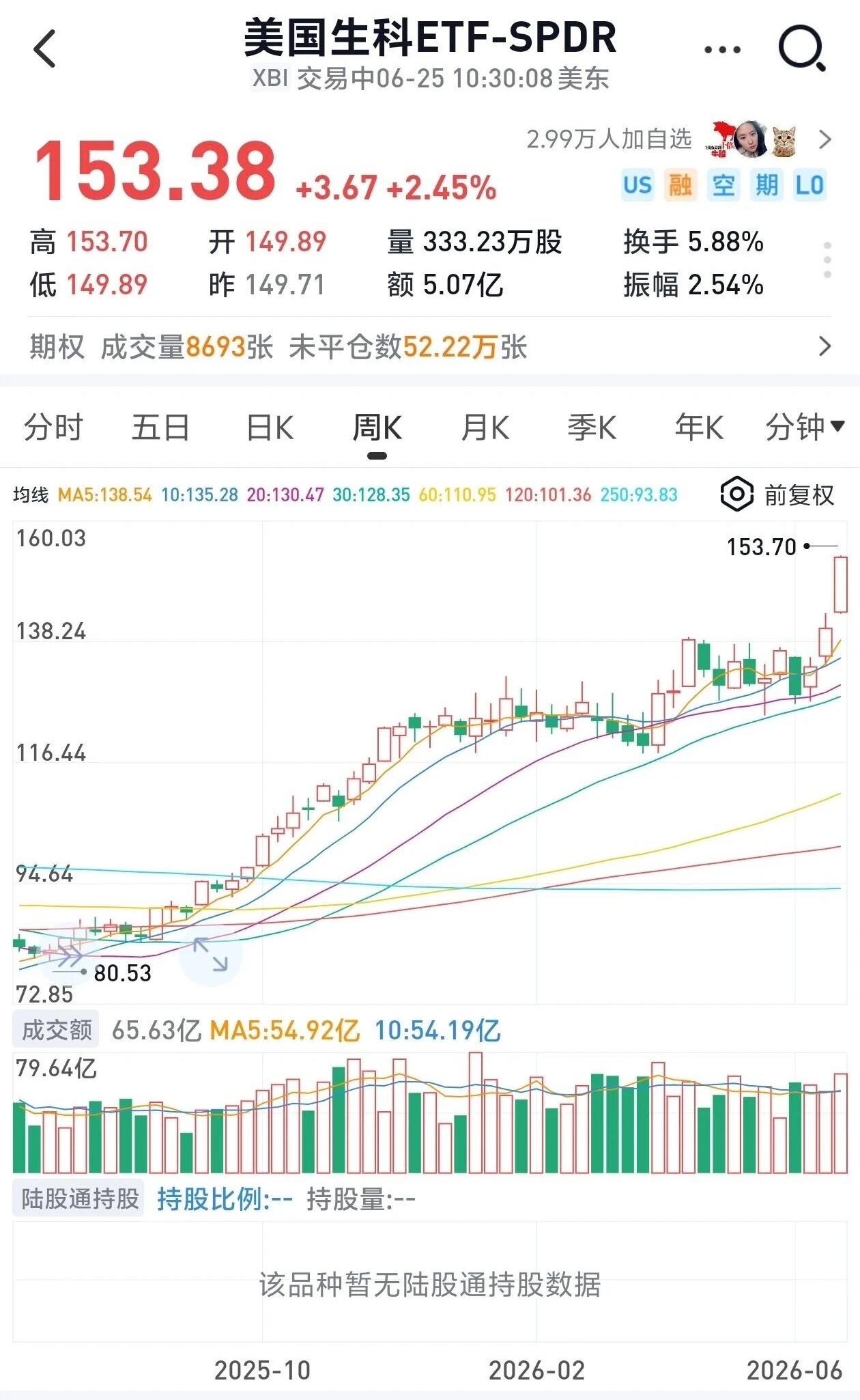
The US biotech ETF (XBI) has been hitting new highs, with the current price standing above $150 and the weekly chart breaking previous highs. However, what's rather strange is that the US biopharma sector is famously "interest rate sensitive," so how can it ignore interest rate fluctuations and strengthen against the trend? Isn't the expectation for interest rate hikes relatively strong recently? Let's talk about it yesterday.
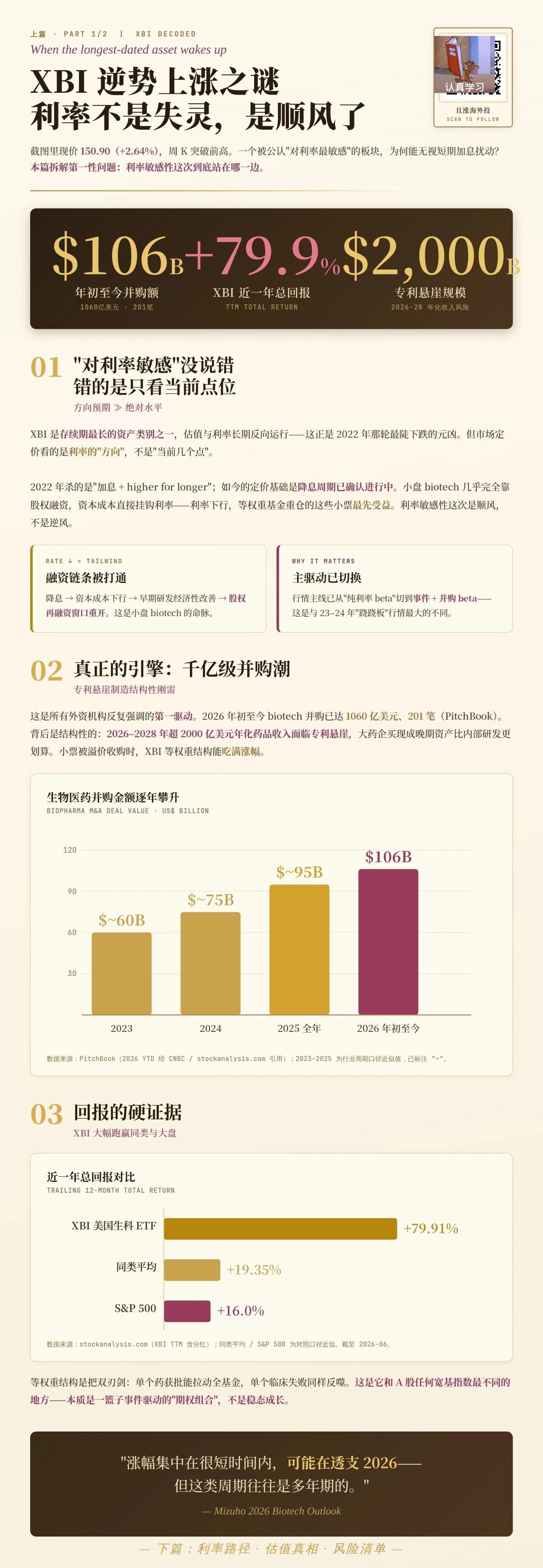
First, US small and mid-cap pharma companies like XBI are indeed long-duration, interest-rate-sensitive assets, and it's true that valuations are inversely related to interest rates in the long run. But more importantly, we need to look at the absolute value of interest rates, as this directly affects the financing levels of these small and mid-cap pharma companies. Currently, although the Fed suggests a certain expectation of interest rate hikes, at least it has already experienced over a year of interest rate cut cycles, with rates falling from the absolute high of 5.5% to around 3.5%.
Secondly, even more solid than interest rates are two fundamental themes.
The first is the $100 billion-level M&A wave forced out by the patent cliff. From 2026 to date, biopharma M&A has reached $106 billion across 201 deals. Behind this is a structural rigid demand: over $200 billion in annualized drug revenue from 2026–2028 faces patent expiration. Large pharma companies' internal pipelines cannot fill the gap, making buying ready-made late-stage biotech assets an easier and faster way to plug the hole, leading to continued premium acquisitions of small and mid-cap innovative drug companies.
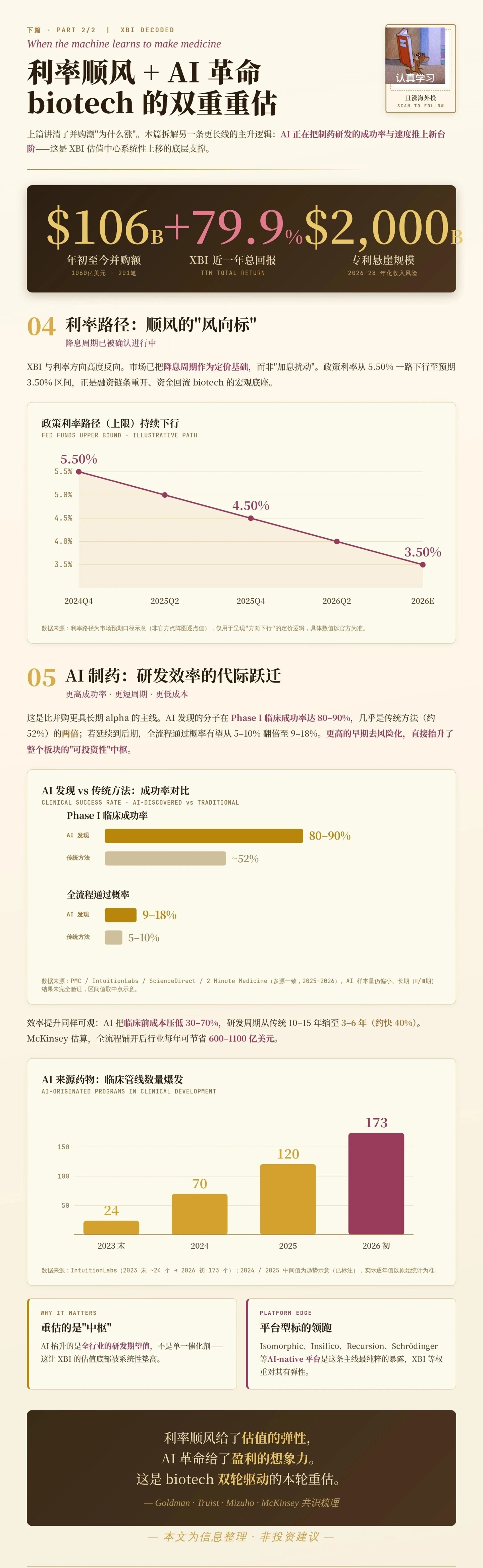
The second is AI pushing drug R&D to a new level. With AI empowerment, the new drug R&D cycle is expected to be compressed from 10–15 years to 3–6 years. The clinical pipeline of AI-sourced drugs has surged from about 24 at the end of 2023 to 173 at the beginning of 2026. The central expectation for R&D across the entire pharma industry is expected to rise, systematically raising the valuation floor for XBI.
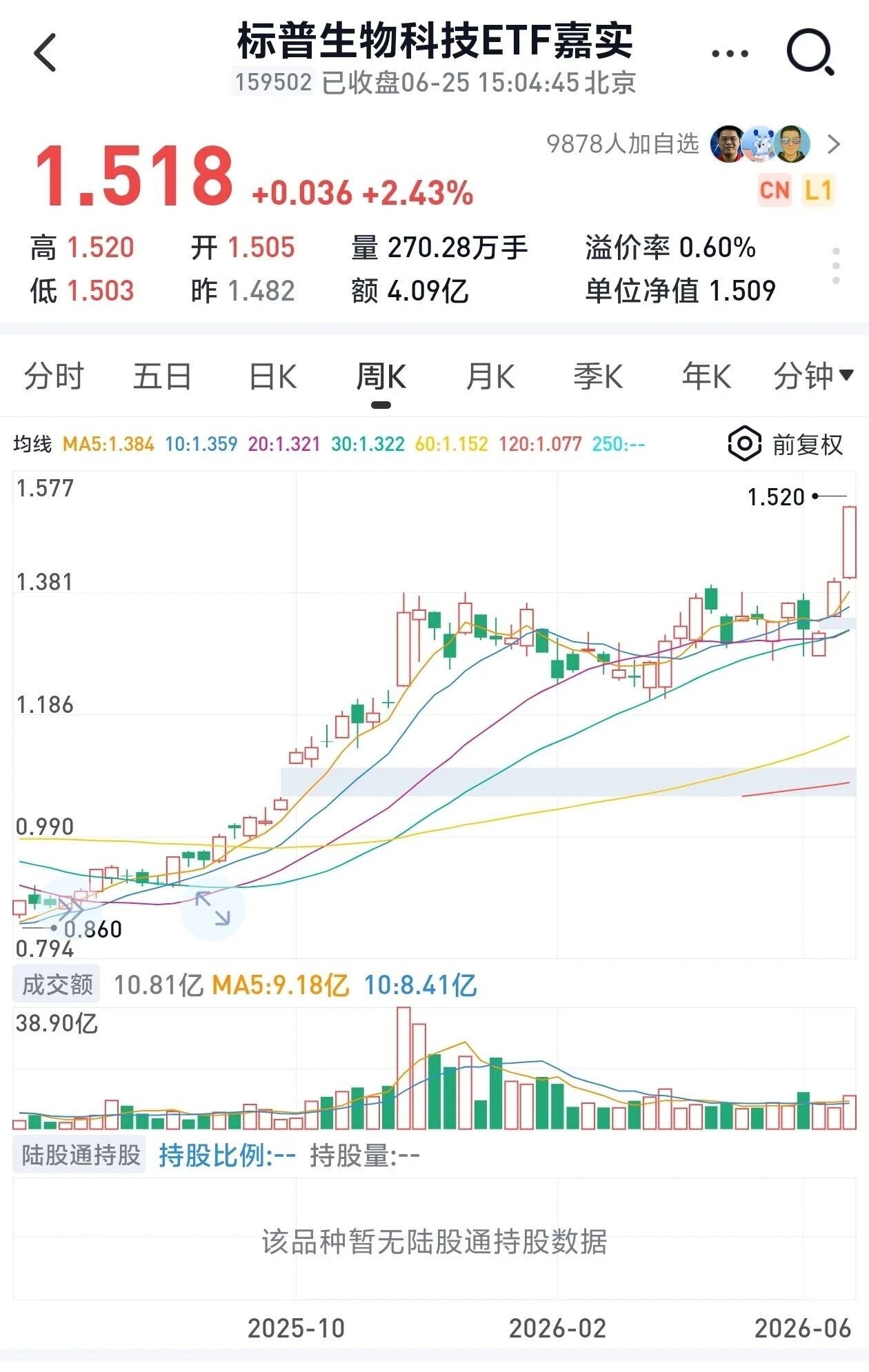
Domestically, the Hong Kong-listed innovative drug sector has recently shown some signs of starting to emerge from the bottom. Domestic Hong Kong-listed innovative drug companies may not have seen particularly obvious AI empowerment in terms of new drug R&D, but the advantages such as the domestic engineer dividend are still quite obvious. Domestic innovative drugs are also increasingly going overseas. However, many large overseas pharma companies are also making the acquisition of Chinese new drug pipelines one of their main battlefields.
(Not as investment advice)
$SPDR S&P Biotech(XBI.US) $Harvest S&P Biotechnology Selected Industry ETF(QDII)(159502.SZ) $Yinhua CNI HK Connect Innovative Drugs ETF(159567.SZ)
The copyright of this article belongs to the original author/organization.
The views expressed herein are solely those of the author and do not reflect the stance of the platform. The content is intended for investment reference purposes only and shall not be considered as investment advice. Please contact us if you have any questions or suggestions regarding the content services provided by the platform.
