


As @彩子 said, we are here to make money. Therefore, you need to know exactly what you are doing. It is a great fortune to have so many Longbridge community members sharing, but the final decision and execution are yours.
A few days ago, @价值&投资's post said that value speculation is also fine. Buying long-term options after a significant drop in a well-researched target is still the best choice for most people.
From the current perspective, my investments are divided into three categories:
1. Value investment: Find a target that may multiply several times.
2. Value speculation: When a prince falls into great trouble, buy leaps.
3. Pure speculation: Such as QQQ zero-day options.
Sharing my thoughts during operation, not investment advice.
For $AMD(AMD.US), it has consistently exhibited volatile characteristics.
Therefore, I have two sets of operations:
1. Earn rent: Sell calls when the price rises high, sell 560 or even 600 calls.
Sell puts after a drop.
2. Find a suitable entry point to buy calls; the recent few times were at 500. Yesterday, I bought at 510 and made a profit.
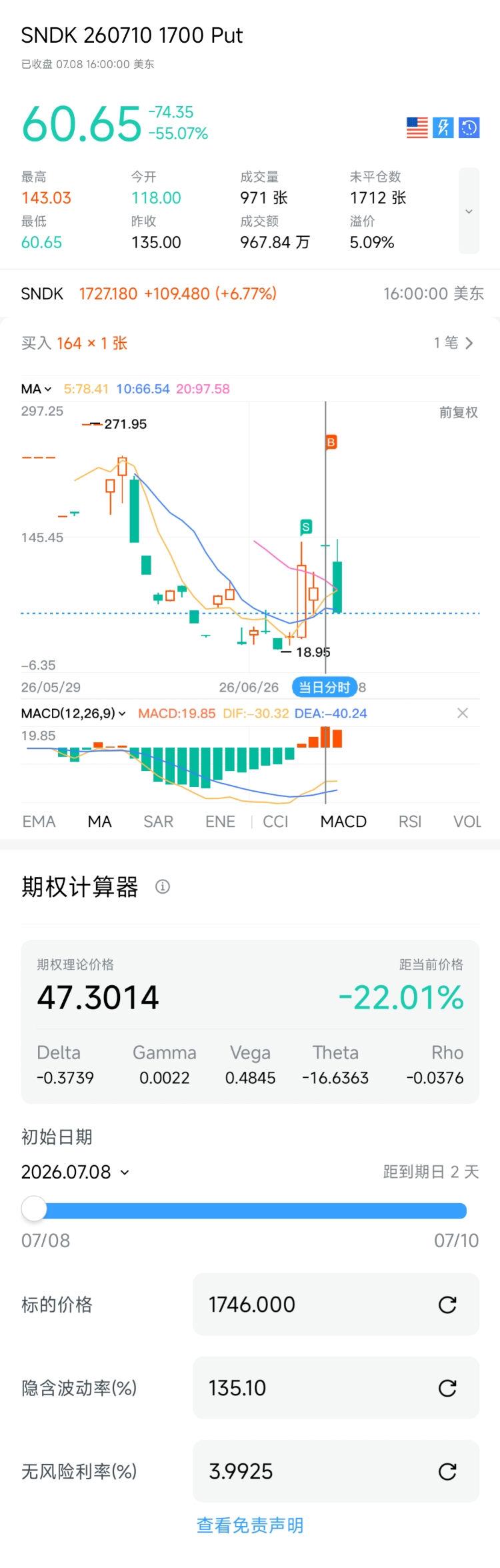
For $Sandisk(SNDK.US), I sold the 0710 1700 and 1750 puts during last week's big drop. My total profit from selling should be around $13,000. According to my normal projection, it should be able to return to around 1750.
But Monday's drop was too sharp. There is a chance to return to 1750, and it looks like it's almost back today. I don't want to bear the risk of losing $40,000 to $50,000 to earn $13,000. At the same time, its implied volatility is very high, around 150%. After rolling over, I continued to sell the 0717 1450 put, which can basically offset the loss. So I executed the operation. Although from today's perspective, I bought back a bit early, the stock market is unpredictable.
QQQ's zero-day program is quite useful during trend days, within 2 hours of market open, with a high win rate. But QQQ profits mainly depend on judgment of trends and stock behavior, which also requires research, not just buying calls or puts at market open. The machine can easily be washed out by small fluctuations. Yesterday, for humans, it was a big V-shaped reversal; for the machine, it was an increase in volatility, which might even trigger reverse orders.
Therefore, last night at the end of the reversal, I manually placed orders 3 more times, making $2k, and also understood the limitations of my program.
$SNDK 260710 1700 Put(SNDK260710P1700000.US)
For $Micron Tech(MU.US)
I sold the 0710 850 put. During the big drop, I bought the 0710 1100 call and 1070 call. My current operation is to hold them like lottery tickets. There are two reasons: First, I've already lost over $10,000, so the remaining $2k might as well be gambled. Second, there's a probability it can return to 1100.
Also, I remembered the question @輸棟樓的韭菜 asked me, roughly meaning: why do you invest yourself? Are you smarter than institutional people, have more information, a better methodology, or other advantages?
It requires more time to research. At least I understand how I make money, control drawdowns, and make precise judgments on trends. Most people can't do this, including the many financial bloggers I hear on Himalaya. For A-shares, perhaps when trading volume breaks new highs, it's time to exit.
A-shares have drawn down 40%, US stocks have drawn down 90%. A-share technology is still the main theme, and a reversal should come soon.
The impact of Changxin's listing needs attention. Will it suck blood like SpaceX, or will it, like Moore and others listing, promote new highs in the industry chain? That's a question. I previously leaned towards the latter.
 Long Image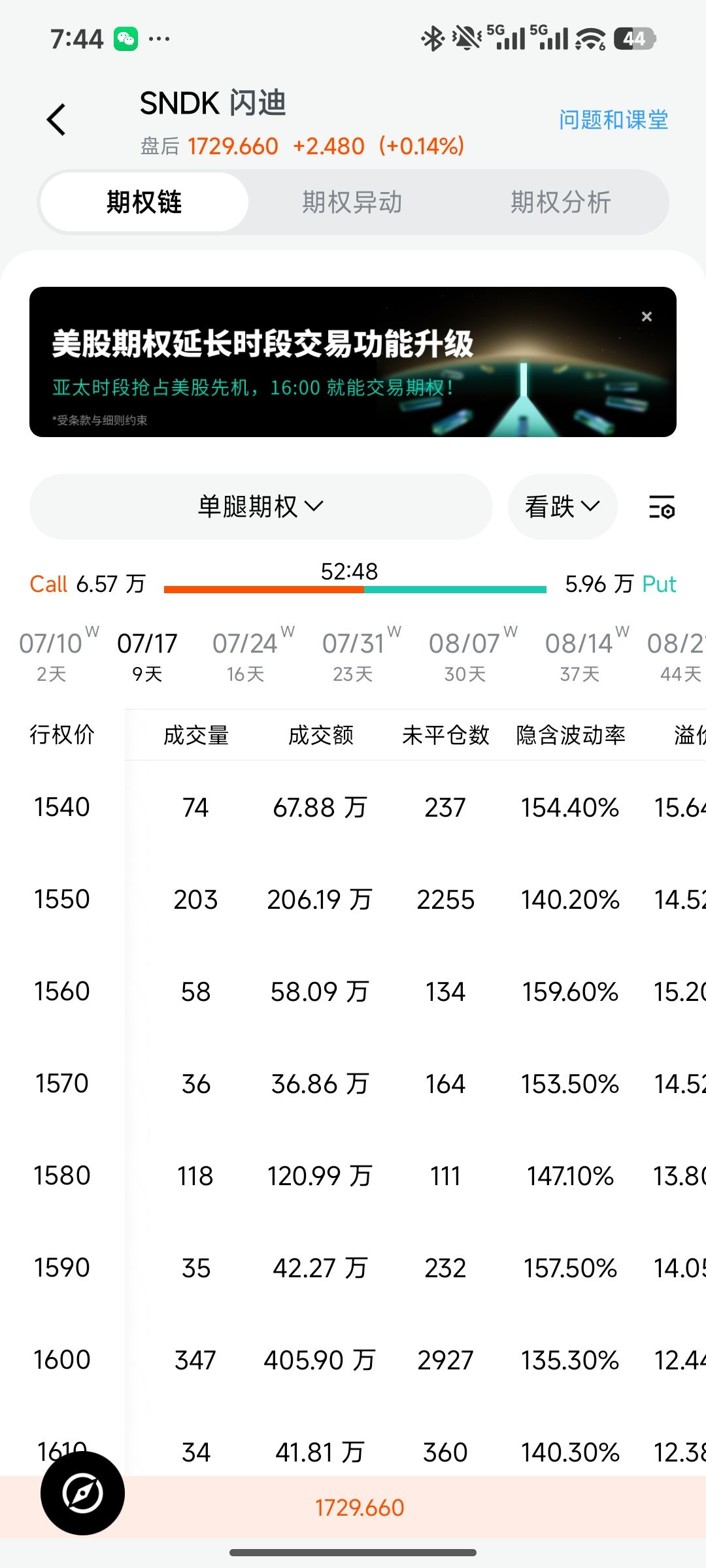
The copyright of this article belongs to the original author/organization.
The views expressed herein are solely those of the author and do not reflect the stance of the platform. The content is intended for investment reference purposes only and shall not be considered as investment advice. Please contact us if you have any questions or suggestions regarding the content services provided by the platform.
