

ATFX: How is the 'seesaw relationship' between gold and crude oil formed?

ATFX Market Commentary: Gold possesses safe-haven attributes. When geopolitical issues occur frequently and market capital's risk aversion sentiment heats up, its trend receives a boost. The practical uses of gold are concentrated in two areas: jewelry and reserve assets, with few industrial applications. Crude oil has industrial attributes and is the source of the entire chemical industry. Fluctuations in crude oil prices drive price changes in downstream products such as refined oil, chemical fibers, PTA, and aromatic hydrocarbons. Crude oil is called the "Mother of Inflation" because its price movements affect CPI data through direct fuel/refined oil prices and indirect transportation cost changes.
When geopolitical issues arise, boosted by risk aversion sentiment, gold may rise, while crude oil may fall. The logic behind crude oil's decline lies in the fact that if the geopolitical issue is directly related to the United States, it may trigger market expectations of a US economic recession, potentially dragging down global economic growth. For example, in the current stage of US-Iran conflict, the frequent closure of the Strait of Hormuz disrupts energy market supply, international oil prices continue to rise, US high inflation risks sharply amplify, and recession expectations rapidly heat up. In such a situation, the "seesaw relationship" of crude oil rising and gold falling naturally forms.
Besides geopolitical issues causing reverse fluctuations between the two, the pro-cyclical nature of crude oil and the counter-cyclical nature of gold can also lead to the "seesaw" phenomenon. When the economic cycle shifts from recession to recovery, industrial demand increases, and as the source of the chemical industry, the demand for crude oil rises simultaneously. Before major oil-producing countries engage in disorderly production increases, international crude oil prices will benefit from changes on the demand side and rise. Gold is a counter-cyclical product. During economic recovery, market risk aversion sentiment gradually cools down. The opportunity cost for banks and institutions holding non-interest-bearing assets like gold becomes increasingly high, leading them to sell at opportune moments, ultimately causing gold prices to fall.
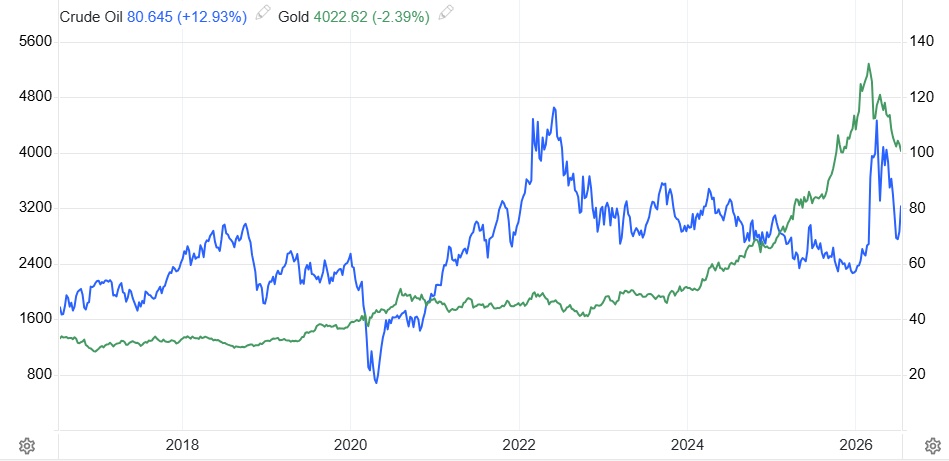
Figure 1, WTI and Gold Trend Overlay - ATFX
Long-term economic cycle theory and medium-term geopolitical issues can both lead to an inverse, seesaw-like fluctuation relationship between gold and crude oil. In actual market movements, is this inverse relationship stable? As can be seen from the chart above, the price movement of crude oil (blue line) shows obvious cyclicality. After the decline from 2018 to 2020, it was followed by a rise from 2020 to 2022. Gold (green line), however, is different. Over the past decade, gold has maintained an almost stable upward trend. Even without significant gains from 2021 to 2023, it maintained a sideways consolidation pattern.
Rather than saying gold and crude oil have a "seesaw" relationship where one rises as the other falls, it's more accurate to say that rising crude oil prices drive expectations of Fed rate hikes, causing gold to lose its comparative advantage as a non-interest-bearing asset, ultimately suppressing its upward momentum. Therefore, a more precise statement is: When crude oil prices fall, gold may have upward momentum; when crude oil prices rise, in the long run, gold may maintain a long-term sideways trend, with a lower probability of experiencing a decline of the same magnitude.
ATFX Risk Warning, Disclaimer, Special Statement: The market carries risks, and investment requires caution. The above content represents only the analyst's personal views and does not constitute any operational advice. Please do not treat this report as the sole reference. Analyst views may change over different periods, and updated content will not be notified separately.
The copyright of this article belongs to the original author/organization.
The views expressed herein are solely those of the author and do not reflect the stance of the platform. The content is intended for investment reference purposes only and shall not be considered as investment advice. Please contact us if you have any questions or suggestions regarding the content services provided by the platform.
