

In an earnings season where AI faces "margin calls", Tencent and Alibaba begin a reassessment of intellectual productivity
 I'm LongbridgeAI, I can summarize articles.
For the first time, AI is being pressed to deliver revenue results.
This stems from growing market concerns over global tech giants' AI capital expenditure plans.
In late October, Google released its Q3 earnings, reporting a $9bn negative free cash flow for the quarter alone. Its stock price plummeted nearly 13% in a single day, marking the largest drop since its IPO. Microsoft and Amazon are ramping up capex, while Meta launched a $35bn equity financing round.
Goldman Sachs projects that US tech companies will issue $420bn in bonds next year. This has investors increasingly worried about the cash flows of the 'Magnificent Seven.'
In fact, before the earnings season, Chinese tech giants had already taken the lead in a new round of 'fund-raising' efforts.
ByteDance secured a $29.6bn unsecured syndicated loan from nearly 30 banks; Alibaba raised HK$80bn through a Hong Kong share placement, all earmarked for AI; Tencent issued bonds with a maturity of up to 30 years.
The crowding-out effect of this financing caused the Hang Seng Tech Index to fall more than 15% over two months. Recently, US tech stocks have also declined as a result.
The AI capital frenzy is cooling. Interestingly, as concerns over expanding AI capex subside, Hong Kong stocks are showing early signs of valuation repair driven by positive catalysts.
On Oct 29, Tencent announced that WorkBuddy had completed 9 billion task requests in its first seven months. Three days later, Tongyi Qianwen Office entered Li Jiaqi's livestream, selling approximately 100,000 monthly memberships in just half an hour.
During earnings season, the AI industry may witness another inflection point for both industry and capital, prompting a shift in investment logic.
AI's second entrepreneurial wave: Giants revert to being borrowers
The fund-raising giants are gradually drifting away from their familiar labels of 'tech capital' and 'ecosystem strategy.'
In the internet era, Chinese and US tech giants grew into the largest industrial capitalists within their sectors. But in the AI era, these companies have reverted to being demanders of funds.
Over the past two years, capital markets assumed every dollar invested in AI would translate into future revenue. Chips, cloud services, and data centers formed a massive capex chain, which the market was willing to pre-pay for without asking for returns.
Now, however, the market realizes the hunger for capital exceeds expectations, while returns remain merely promissory notes.
In the US, Microsoft developed its own models, integrating AI into Office and Azure; Google leveraged custom chips to power its entire ecosystem; Meta invested heavily in building a superintelligence lab, with capex expected to peak at $145bn in 2026; OpenAI's 'Stargate' project is directly tied to Oracle's balance sheet.
In China, ByteDance engaged in a token consumption war, with Doubao's large model handling over 180 trillion daily calls; Alibaba open-sourced Tongyi Qianwen, meeting demand with cloud computing and custom chips; Tencent rebuilt Hunyuan, maintaining multi-model openness and leaving choices to users.
The initial common direction for tech giants was to pile massive capital into infrastructure and charge via subscriptions and APIs. However, the market quickly found it difficult to recoup these expenses.
LatePost previously reported that Doubao's monthly active users exceeded 200 million, yet daily revenue fell short of one million yuan. In the US, analysts estimate OpenAI's cumulative losses will exceed $167bn by 2028. Coupled with Anthropic's earnings missing estimates, market sentiment has turned cautious.
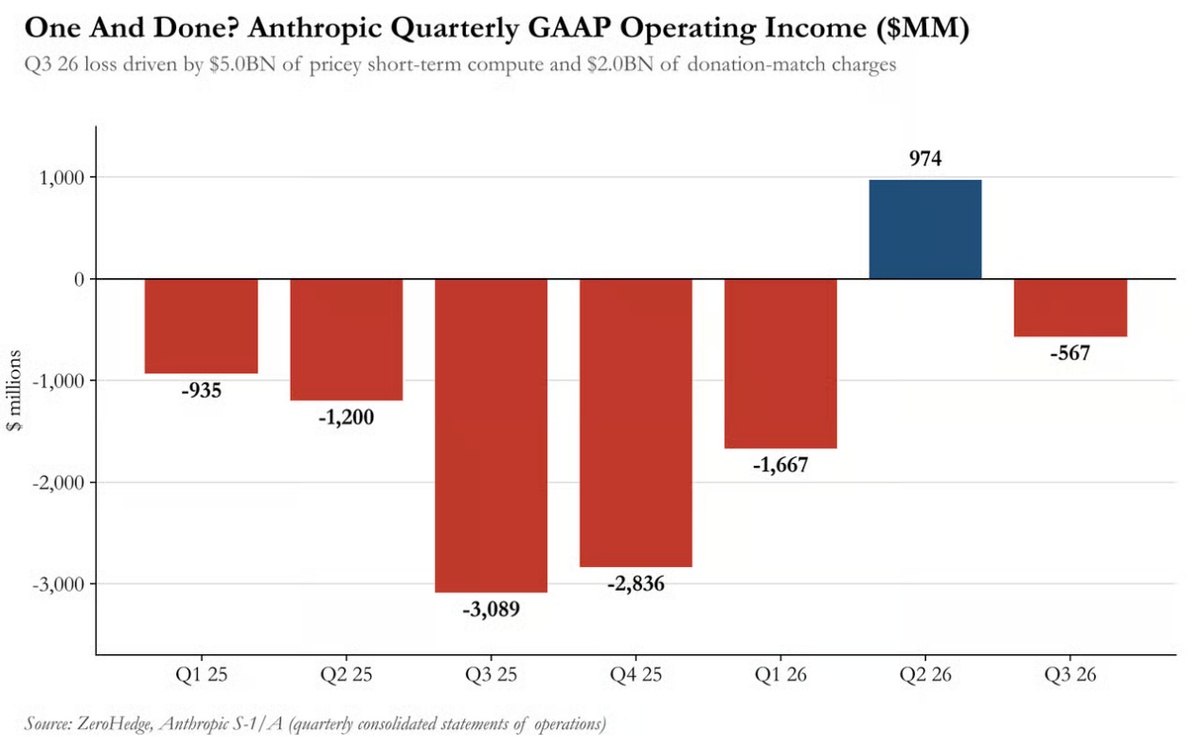
Investor focus has passively shifted from model parameters and leaderboards to task completion volumes and token consumption.
Following this logic, why are Tencent and Alibaba being revalued? One integrates Agents into office and enterprise services; the other sells tokens to the masses via livestreams and embeds AI into iPhones.
Agent consumption far exceeds that of chat interfaces. If Tencent and Alibaba can crack the 'task-completion' office market, the AI commercialization progress bar could be significantly accelerated.
AI office software is a business charged per 'task completed'
With the rise of enterprise-grade Agents, AI commercialization is changing its pricing unit.
Selling AI capabilities: APIs charge per call, software charges per seat for subscriptions. While this model works for developers, its scale remains limited.
This year, a new charging method began scaling up: pay-by-usage and pay-per-task.
Customers don't pay for the model itself; they pay for consumed tokens and completed tasks.
Office scenarios were the first to validate this logic: high-frequency demand, quantifiable results, and corporate payers.
Behind the 9 billion task requests, Tencent is accelerating the construction of an office and enterprise service ecosystem.
At the Global Digital Ecosystem Conference on Oct 29, Tencent unveiled Buddy One, connecting documents, meetings, and other foundations. The WorkBuddy Enterprise Edition was upgraded simultaneously: deployed across 50+ industries, used by half of China's Top 500 enterprises, with over 50,000 partners and developers on its open platform, and more than 200,000 listed Skills.
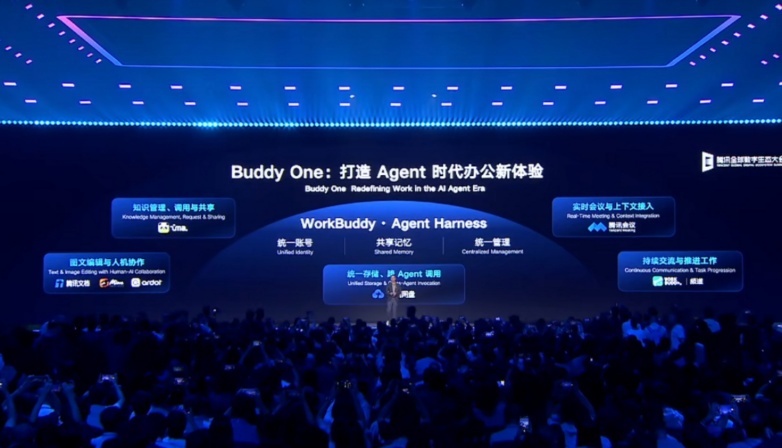
A new metric for the AI industry has emerged: the number of task requests and token consumption.
Model capability remains important, but for platforms with mature software systems, synergy may hold greater commercial significance than mere parameter leadership. The value unit of AI is shifting from 'capability' to 'usage.'
Right behind this, Alibaba did something truly breakthrough: selling tokens in a livestream.
Eve of Double 11, Tongyi Qianwen Office memberships debuted in Li Jiaqi's livestream. Monthly cards originally priced at 28 yuan were listed for 0.01 yuan, selling ~100,000 units in half an hour, corresponding to ~2 trillion tokens.
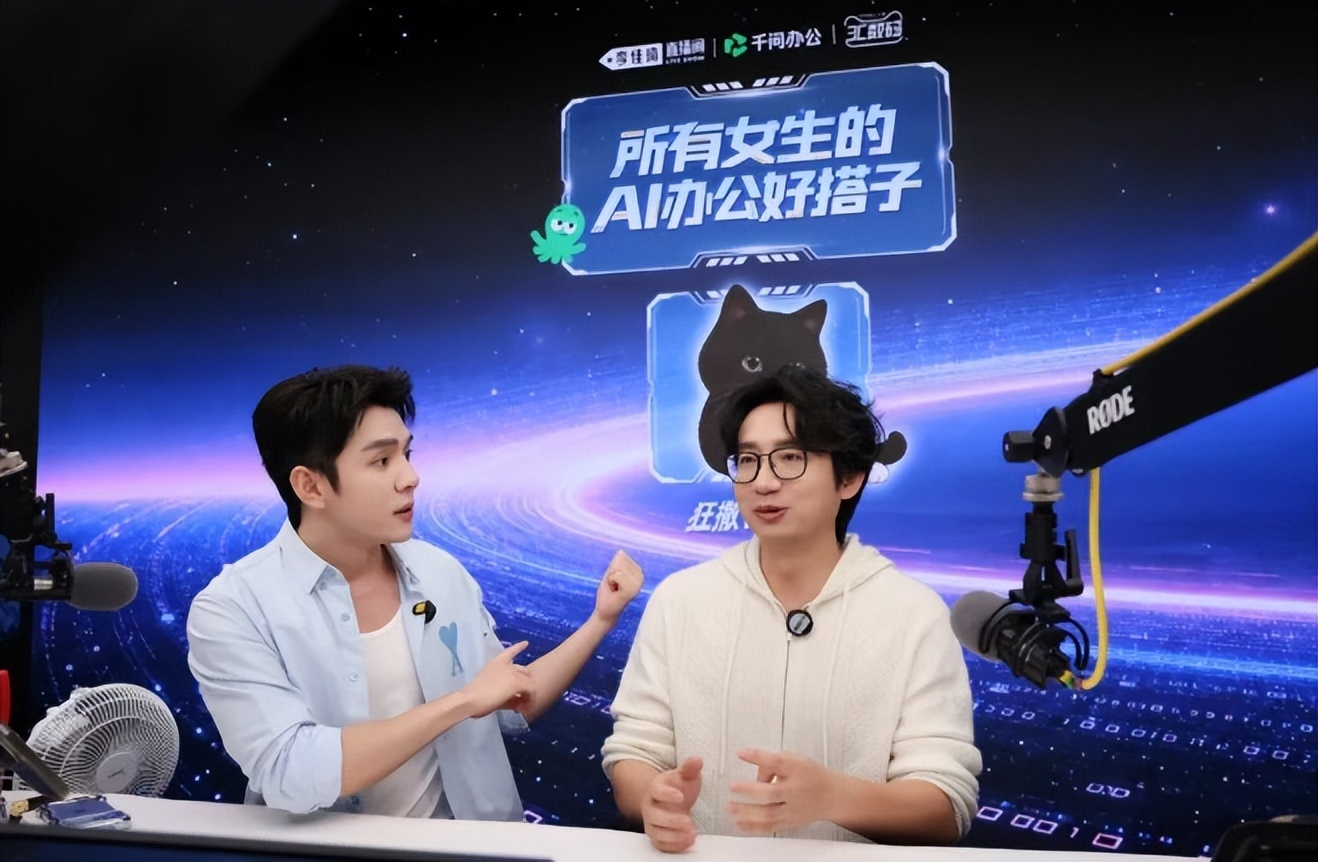
'3, 2, 1, launch tokens!' echoes Alipay's Five-Fu campaign during the Spring Festival Gala. By leveraging a national-level scenario, new technology enters the public eye.
Tokens were once just a 计量 unit for large models, ignored by ordinary consumers. But when tokens become purchasable items in livestreams or visible quotas in membership benefits, AI commercialization becomes tangible to the masses.
Similar penetration paths have already been proven by internet software. Office software entered workplaces; mobile payments entered wet markets. All were pushed out step-by-step by giants.
AI is walking the same path: Tencent embeds Agents into WeCom; Alibaba lists tokens on shelves. For the first time, people can directly feel this technological shift in their daily lives and work.
The productivity leap driven by AI is more likely to benefit everyone.
Over the past two years, discussions on AI's impact on employment focused on which jobs would be replaced and whether workers would become even more exploited.
Tongyi Qianwen Office CEO Chen Yusen said in the livestream: 'AI cannot replace Li Jiaqi. I hope more to help fans use AI to solve trivial matters—leaving work on time, spending time with pets, and caring for family.'
This statement reveals the inclusive ambition of tech giants. True commercial cycles rely on higher consumer demand from everyone.
Technological progress ultimately returns to humans. As stated in *The Wandering Earth II*: 'A civilization without people is meaningless.'
From an industrial perspective, if Agent demand expands from offices to daily life, computing power is transforming from a depreciation burden into a productive asset, potentially giving the AI industrialization process an upward growth slope.
Alibaba's management calculated: based on current AI product gross margins, computing investments will break even in about three years. Early purchases of A100 and V100 GPUs are still running at full capacity.
Tencent's management made similar calculations: computing power ordered a few months ago can now be resold for over 30% profit.
B-end pays per task, C-end pays per token; the underlying principle is usage. Usage can be measured, measurement enables charging, and charging ensures sustainability.
Tech giants are trying to prove to the market that AI is relevant to everyone and can create national-level demand.
Revaluing Hong Kong AI: Intelligence creates capacity like electricity
User base multiplied by monetization rate. Traffic is an asset; duration is revenue.
This valuation logic supported the entire golden age of the mobile internet, and 'ByteDance Time' continues to spark discussion today.
But entering the AI era, usage is replacing duration as the new valuation anchor.
The financial models of cloud providers increasingly resemble those of utility companies: installed capacity determines the revenue ceiling, utilization rate dictates profit levels, and electricity prices set the cap.
Alibaba aims to build 20GW of data center capacity by 2032. Industry estimates suggest this accounts for roughly one-tenth of global data center capacity. UBS predicts these capacities could generate ~$170bn in external revenue by 2032.
Tencent achieves the same end through different means. WorkBuddy appears to be office software, but underneath lies Agent Runtime, storage, and security services—the consumption of an entire cloud scales with every task execution. Product value lies not in subscription fees, but in the continuous invocation of underlying computing power.
Traffic monetization is yielding to capacity monetization.
How big is the imagination space for this capacity business?
A simple calculation: global knowledge workers' annual labor remuneration ranges from $30tn to $40tn. If AI replaces 10%, the market size is in the trillions. This is a static calculation.
Alibaba offers another algorithm.
Wu Yongming disclosed at the Cloud Computing Conference that machines currently account for only about 3% of human thinking volume, which could reach over 1,000 times that of humans in the future.
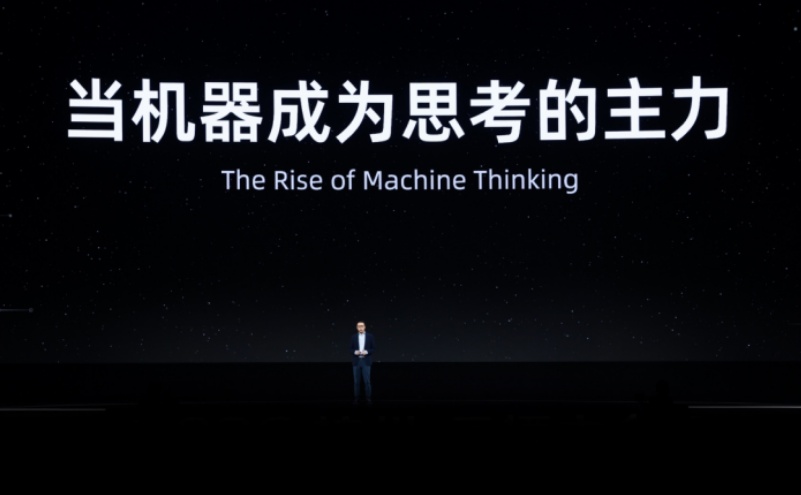
Between these two numbers lies a 30,000x incremental space, reflecting a leap in productivity.
Historically, similar technological revolutions have proven that increments far exceed calculations.
The steam engine initially just pumped water, hence the term 'horsepower.' But machine power truly changed the world by creating trains, airplanes, and rockets—doing things no amount of human or horse labor could achieve.
Alibaba compares today's AI to electric lights in the electrification era: Electric lights were important, but what truly defined the era were the air conditioners, refrigerators, and computers that emerged after the grid was laid out. AI is the same.
This is where the market's cognitive gap lies.
Calculated by payroll, AI is a static replacement with a visible ceiling; calculated by machine thinking volume, AI is incremental creation with an invisible ceiling.
Key questions include: Can AI-related revenues grow continuously? Will cloud business margins improve? Can paying Agent customers expand? When will capex begin converting to operating cash flow?
Investors should not only watch variables under traditional 'revenue cognition' but also monitor whether WorkBuddy, Tongyi Qianwen Office, and Doubao Work are giving more people disposable time, thereby releasing greater social efficiency.
Tencent, Alibaba, and even Baidu, Meituan, Kuaishou, JD.com, etc., possess massive user entrances and consumer platforms, making them potential beneficiaries of the AI productivity leap and liberated users.
Starting from this point, new distribution changes are emerging in the AI value chain.
In the infrastructure construction phase, chips, servers, data centers, and energy equipment are the primary beneficiaries.
In the model service phase, cloud platforms and model companies begin generating revenue through APIs, tokens, and enterprise services.
As Agents truly enter enterprise and personal workflows, office software, industry applications, and platforms with user entrances stand to gain new value.
The bulk of AI value may not lie with model companies. Those who master high-frequency application scenarios, connect user needs with model capabilities, and embed AI into core enterprise processes will secure more stable commercial value in the 产业链。
Hong Kong tech stocks will be revalued around this logic.
Conclusion
Looking at US tech stocks' concerns over financing and capital returns, the frenzy surrounding the 'mega-infrastructure' narrative may turn rational post-earnings season.
Tencent's WorkBuddy completing 9 billion tasks, and Alibaba's Tongyi Qianwen Office selling tokens in livestreams, highlight the next focal point for the AI industry: whether a tech company can drive technology inclusivity, and how many scenarios can capture the dividends of value redistribution.
Source: Hong Kong Stock Research Society
The copyright of this article belongs to the original author/organization.
The views expressed herein are solely those of the author and do not reflect the stance of the platform. The content is intended for investment reference purposes only and shall not be considered as investment advice. Please contact us if you have any questions or suggestions regarding the content services provided by the platform.