
Earnings Snapshot: AMAT vs. NBIS — AI Demand Continues to Surge, Yet Profitability and Cash Flow Diverge Sharply
 I'm LongbridgeAI, I can summarize articles.
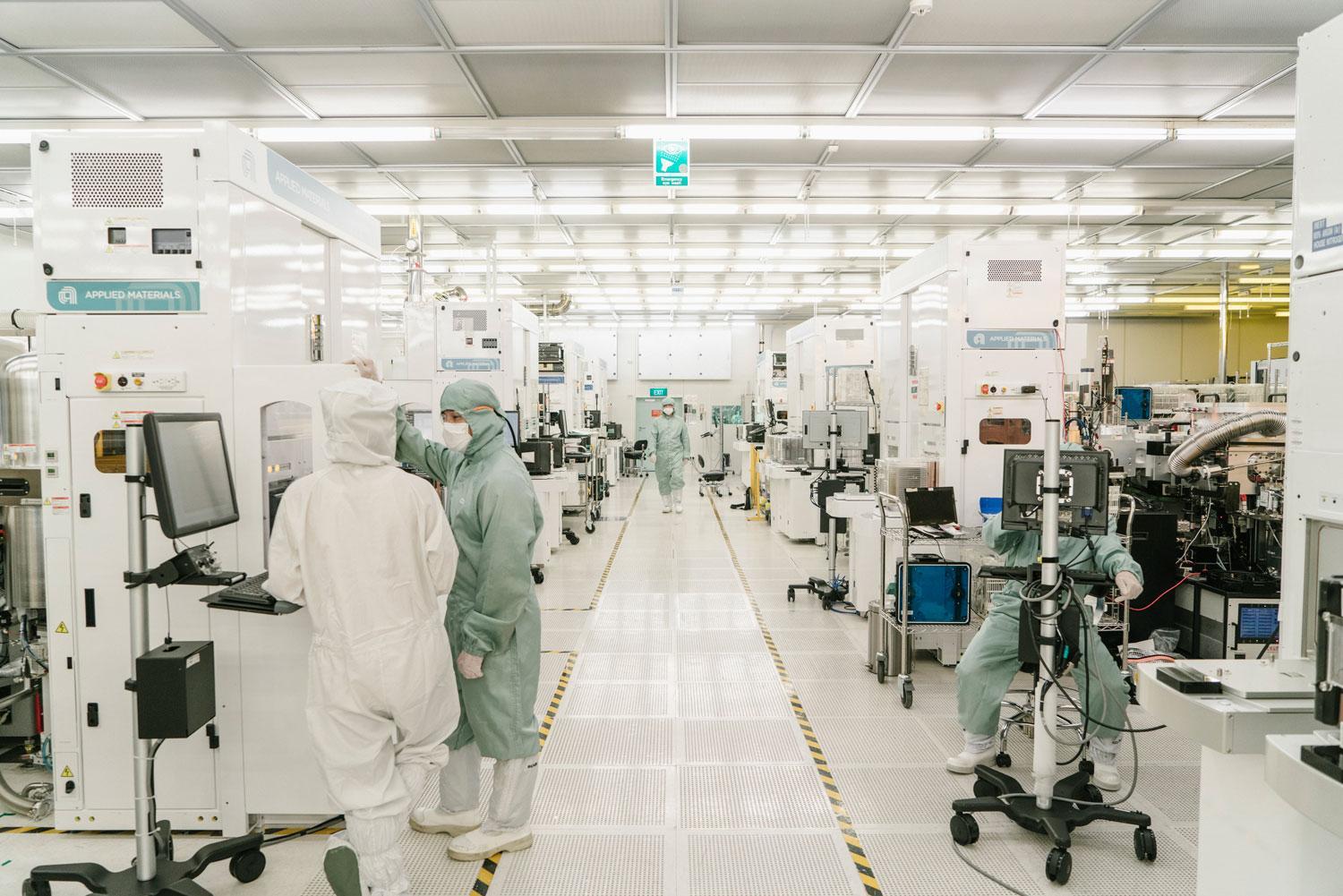
Between the evening of Nov 12 and early morning of Nov 13, 2026 (Beijing Time), Nebius (NBIS) and Applied Materials (AMAT) released their latest quarterly earnings reports.
Both companies benefited from the rapid growth in AI infrastructure demand.
Applied Materials' revenue grew 53% YoY, with strong profit and cash flow performance.
Nebius's revenue surged an impressive 571% YoY, but its massive capex and financing needs remain a key focus.
I. Applied Materials: Revenue +53%, Free Cash Flow Hits Record High
1. Key Financial Data
Q4 FY2026 revenue reached $10.409bn (+53% YoY), setting a new record high.
Gross margin was 50.4%, up from 48.0% in the same period last year, expanding by 240bps.
Operating profit stood at $3.66bn, with an operating margin of 35.1% vs. 25.2% YoY.
Net profit was $2.718bn (+43% YoY), translating to diluted EPS of $3.40.
Adjusted EPS came in at $4.16 (+92% YoY), beating market estimates.
2. Business Performance
Growth this quarter was primarily driven by rapidly rising demand for semiconductor manufacturing equipment.
Semiconductor Systems segment revenue hit $7.996bn (+~64% YoY), becoming the company's main growth engine.
Within this segment, foundry and logic chip equipment accounted for 58% of revenue, while DRAM storage equipment rose to 33% (from 28% YoY).
This indicates that capital expenditure growth in AI chip manufacturing and the storage industry is continuously driving semiconductor equipment demand.
Global Services segment revenue reached $1.896bn (+~26% YoY), maintaining solid growth.
3. Cash Flow & Future Guidance
Operating cash flow for the quarter was $3.3bn, with adjusted free cash flow reaching $2.616bn, also a record high.
The company returned approximately $2.42bn to shareholders through stock buybacks and dividends.
For Q1 FY2027, management expects: revenue of $10.6bn to $11.6bn (midpoint $11.1bn). Adjusted EPS of $4.15 to $4.55.
Management further anticipates that global wafer fabrication equipment market demand will grow over 30% in 2027.
Overall, Applied Materials not only achieved significant revenue and profit growth, but its cash generation capability is also improving in tandem.
II. Nebius: Revenue Surges 571%, Full-Year Guidance Cut, Capex Raised Again
1. Key Financial Data
Quarterly revenue was $981mn (+571% YoY, +68% QoQ).
Operating profit was $50.4mn, turning profitable compared to a $130mn loss YoY.
However, net loss from continuing operations remained at $37.5mn (vs. $120mn loss YoY), showing a narrowing of losses.
Adjusted EBITDA reached $466mn (vs. a $5.2mn loss YoY), with an adjusted EBITDA margin of 47%.
On the surface, NBIS's results are indeed quite impressive. However, a 571% revenue surge does not fully reflect the growth of the company's normalized business.
2. Hidden Concerns Behind Revenue Growth
AI Cloud segment revenue reached $974mn (+643% YoY), accounting for ~99% of total group revenue.
Approximately $325mn of this came from light-asset cooperative projects with strategic partners. This revenue mainly stems from partners using Nebius's tech architecture and AI cloud platform to deploy computing power. It is explicitly categorized as non-recurring income by the company, meaning both the amount and timing of recognition carry uncertainty.
After deducting this portion, the remaining AI Cloud revenue was approx. $649mn. While still growing fast, compared to the 571% group revenue growth rate, the actual operational situation requires more nuanced observation.
On the other hand, the value of remaining performance obligations at the end of Q3 was $38.7bn, representing only a ~3% increase from the previous quarter's $37.5bn.
This suggests that while customer demand remains robust, the growth in contract backlog has not kept pace with the quarterly revenue surge.
3. Delivery Delays & Capex Pressure
This is the most critical part of the earnings report.
The company stated that some third-party data center capacity originally planned for commissioning in 2026 has been delayed to H1 2027. Specifically, New Jersey-based compute capacity related to Microsoft is not expected to be fully operational until Q2 2027.
Management revised its full-year 2026 revenue guidance down to the lower end of the original $30bn-$34bn range. Additionally, the target of achieving a $7bn-$9bn annualized run-rate revenue by December has been pushed to February 2027.
Meanwhile, the company's capex continues to climb.
Capex for the quarter hit $7.3bn, while operating cash flow saw a net outflow of $273mn. Simply put, free cash flow was approx. -$7.573bn.
Full-year 2026 capex guidance was raised from the previous $20bn-$25bn range to approx. $27bn.
For 2027, management expects: full-year revenue of $12bn-$13bn. Capex of $40bn-$45bn. Pre-tax break-even is targeted for Q4 2027.
The company states it expects to cover 75%-85% of 2027 capex through customer prepayments and asset financing based on contracts with high-quality clients.
However, this remains a financing plan and does not imply that future funding pressures have been completely resolved.
4. Other Notable Issues
The company also extended the estimated useful life of servers and network equipment from 4 years to 5 years. This will reduce annual depreciation expenses, impacting current profits and future profitability targets.
The expectation of pre-tax break-even in Q4 2027 is also predicated on this 5-year depreciation assumption.
The company's financing costs are also substantial. Interest expense for the quarter reached $113mn, compared to just $14.7mn YoY.
As debt and data center investment scales continue to expand, future financing costs, equipment depreciation, and capital returns will become key factors influencing profitability.
III. Personal View
These two earnings reports once again prove that current AI infrastructure demand remains very strong, but differences between business models are becoming increasingly apparent.
Applied Materials' report gives me more confidence.
Revenue grew 53% YoY, operating margins expanded significantly, and free cash flow hit a record high, indicating that AI-driven growth has tangibly translated into profits and cash.
However, the semiconductor equipment industry still carries cyclical risks. Even with excellent results, one must consider whether current valuations already fully price in future growth.
Regarding NBIS's report, I believe it's not as pretty as it looks on the surface.
The company's AI compute business is indeed developing rapidly, and customer demand is robust. However, the revenue includes a large scale of non-recurring cooperative income, some data center projects are delayed, full-year revenue guidance sits at the low end of the original range, and capex has been raised further.
I believe the biggest contradiction for NBIS right now isn't a lack of demand, but how to convert that robust demand into timely delivered compute, stable revenue, and true free cash flow for shareholders.
Nvidia recently experienced major management changes. As an AI compute enterprise highly dependent on the Nvidia GPU ecosystem, NBIS is inevitably affected by shifts in market risk appetite.
There is currently no evidence that Nvidia has stopped supplying NBIS, but this undoubtedly adds short-term uncertainty to the AI infrastructure sector.
NBIS's business growth is commendable, but the investment risks at this stage are clearly not low. I wouldn't consider this a report worth chasing solely because of 571% revenue growth.
Rather than continuing to bet on hyper-growth, I'd prefer to see the company gradually improve its cash flow and prove that massive capex can deliver sufficient investment returns.
$Applied Materials(AMAT.US) $Coreweave(CRWV.US) $Nebius(NBIS.US) $NVIDIA(NVDA.US) $AMD(AMD.US) $Broadcom(AVGO.US) $Amazon(AMZN.US) $Alphabet(GOOGL.US) $Microsoft(MSFT.US) $Lam Research(LRCX.US)
The copyright of this article belongs to the original author/organization.
The views expressed herein are solely those of the author and do not reflect the stance of the platform. The content is intended for investment reference purposes only and shall not be considered as investment advice. Please contact us if you have any questions or suggestions regarding the content services provided by the platform.