

💢💢💢
 I'm LongbridgeAI, I can summarize articles.
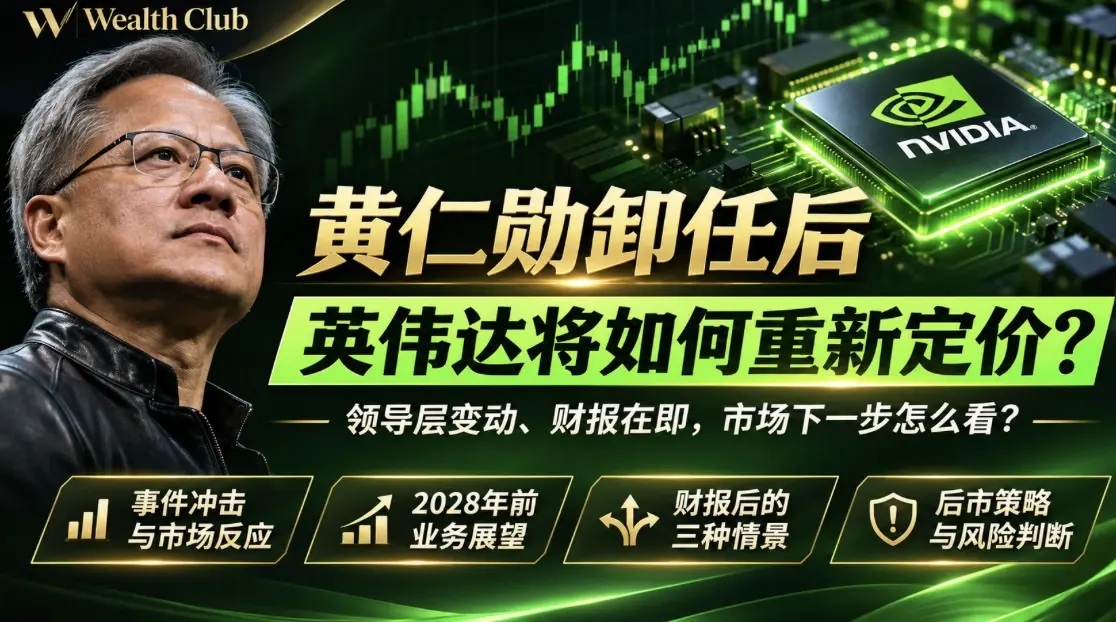
Jensen Huang steps down as NVIDIA CEO! OpenAI and Anthropic back restrictions on AI chip exports to China, introducing major variables into the global AI landscape! $NVIDIA(NVDA.US)
The global artificial intelligence industry is undergoing a sudden shock to power and policy!
On November 12, NVIDIA officially announced that founder and CEO Jensen Huang has resigned from his roles as CEO, President, and Director, effective immediately. After leading the company for 33 years, Huang's sudden departure from management sees CFO Colette Kress appointed as interim CEO.
This is not just a routine leadership change; it could mark a significant turning point for the global AI chip industry.
Almost simultaneously, OpenAI confirmed its support for bipartisan efforts in the U.S. Congress to restrict AI chip exports, aligning with Anthropic, which had previously publicly backed similar legislation.
Two companies fiercely competing in the generative AI market now find themselves on the same side regarding limiting China's access to advanced AI chips.
Notably, Huang had long advocated for U.S. chip firms to retain opportunities to compete in the Chinese market. He argued that a complete exit from China could undermine the long-term influence of the U.S. technology ecosystem.
However, with the sudden leadership change at NVIDIA, political resistance to stricter export controls pushed by the U.S. Congress may further diminish.
Currently under scrutiny are bills such as the AI Overwatch Act, Chip Security Act, and MATCH Act, which aim to strengthen export approval processes, track the flow of advanced chips, and close loopholes in semiconductor manufacturing equipment export restrictions.
For $NVIDIA(NVDA.US), what warrants true vigilance may not just be the loss of Huang, but the potential narrowing of the company's strategic space in the Chinese market going forward.
Meanwhile, other semiconductor firms like $AMD(AMD.US), $Broadcom(AVGO.US), $Taiwan Semiconductor(TSM.US), and $ASML(ASML.US) may also face varying degrees of impact from changes in U.S. export policies.
On another front, OpenAI and Anthropic's support for tighter export restrictions reflects how AI competition is no longer confined to model performance, compute costs, and capital investment, but is increasingly intertwined with national security, technology supply chains, and global market access.
NVIDIA is set to report quarterly earnings on November 17. Beyond focusing on data center revenue, Blackwell product demand, and future growth guidance, the market will closely watch whether the interim management team can stabilize customer confidence, maintain the product roadmap, and handle regulatory pressure.
Huang may leave NVIDIA, but the CUDA ecosystem he built, along with its GPU technological advantages and global customer network, will not vanish overnight.
The real question is: Can a tech giant that has long relied on its founder's strategic judgment to drive development maintain its original pace of innovation and competitive edge after losing its core leader?
In your view, what represents the greatest long-term impact on $NVIDIA(NVDA.US) from this event: Huang's departure, or the possibility of the U.S. further tightening AI chip export restrictions on China?
The copyright of this article belongs to the original author/organization.
The views expressed herein are solely those of the author and do not reflect the stance of the platform. The content is intended for investment reference purposes only and shall not be considered as investment advice. Please contact us if you have any questions or suggestions regarding the content services provided by the platform.