
Babycare breaks 100 million RMB in sales within two hours during Double 11; what kind of maternal and infant products does the market need?
 I'm LongbridgeAI, I can summarize articles.
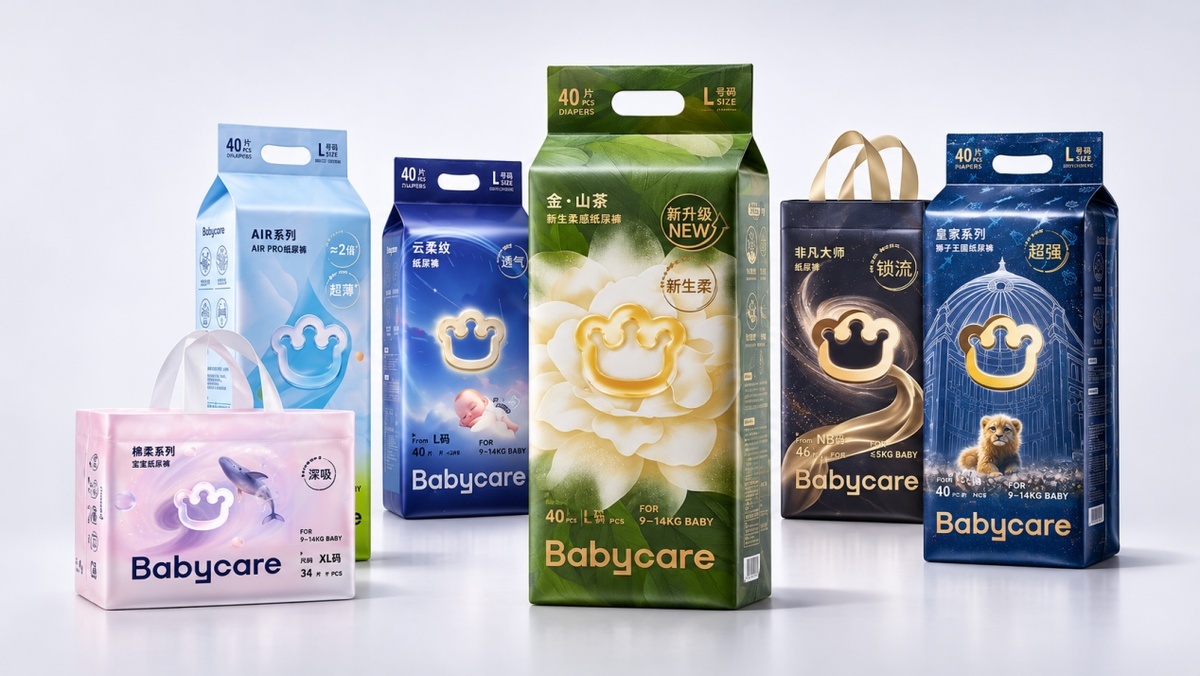
Mother-and-baby consumption has always been a unique market.
From the first diaper of a newborn to wet wipes, bottles, sippy cups, and travel gear used throughout their growth, mother-and-baby products span a family's long parenting cycle. Compared with ordinary consumer goods, this sector demands higher standards for safety, quality, and user experience.
A report by Morjing Insight, '2026 H1 White Paper on New Consumption Potential,' shows that in the first half of 2026, total online sales of the mother-and-baby market reached RMB 119.28 billion, down 2.1% YoY, while the industry average price rose 6.5% YoY. Specifically, sales of infant diapers fell 14.6% YoY, whereas niche categories such as baby travel gear and maternity supplies grew over 12%.
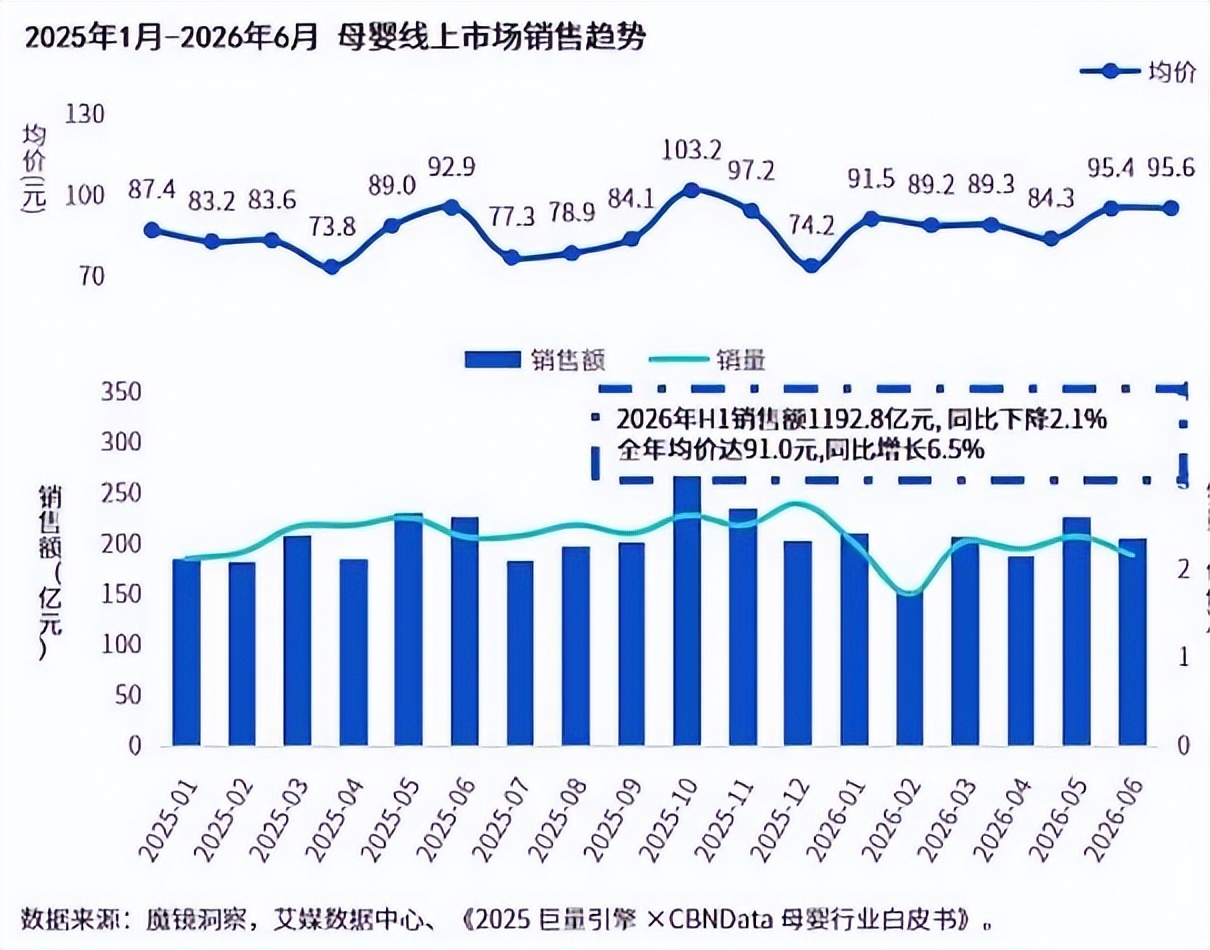
In June, controversy over formamide detection in infant diapers drew widespread market attention. On October 15, a joint investigation team from four departments released verification results, conducting comprehensive spot checks on 168 domestic infant diaper manufacturers, covering 180 brands and 368 batches of finished diapers; none tested positive for formamide.
On the same day, the 2026 Douyin Mall Double 11 Good Goods Festival officially kicked off, with diaper category GMV on the first day surging 113% YoY.
Five days later, Tmall's Double 11 officially launched. Top mother-and-baby brand Babycare broke through RMB 100 million in store sales in just 2 hours and 27 minutes.
With overall market pressure and divergent performance across niches, competition among mother-and-baby brands has entered a phase of hard-power showdowns.
Mother-and-baby consumption: Safety is merely the baseline
The mother-and-baby market faces an apparently contradictory situation.
Newborn numbers continue to decline, yet the market size maintains slow growth. Consumers demand ever-higher product quality but remain price-sensitive. For brands, finding the balance between product upgrades and cost control has become a pressing operational challenge.
Taking infant diapers as an example, the China Household Paper Industry Association's '2025 Annual Report on Household Paper and Hygiene Products' shows that the domestic infant hygiene products market reached RMB 32.89 billion in 2025, up 3.7% YoY; the penetration rate of infant diapers rose from 84.8% in 2024 to 89%. Meanwhile, China's birth population dropped from 9.54 million to 7.92 million.
On the supply side, production and sales volume of the infant diaper industry grew 6.8% and 6.5% respectively in 2025, with exports rising 8.9% YoY. Rising penetration and export growth have provided new incremental drivers for the sector.
However, demand constraints brought by declining birth rates persist, alongside ongoing pressures from overcapacity, price wars, and brand reshuffling.
Shifts on the consumption end have further grounded this competition in the products themselves.
A January 2026 market insight report on diaper products by Shuangpu Consulting surveyed 1,158 consumers. Results showed that when buying diapers, consumers prioritize breathability (22%), absorbency (19%), and soft comfort (17%). In purchase decision factors, product safety accounted for 24%, price discounts 18%, and user reputation 16%.
Price structures also show clear divergence. From January to October 2025, on Tmall, diapers priced under RMB 60 accounted for 65.8% of sales volume but only 24.4% of sales value; those priced above RMB 184 represented just 6.5% of volume but 32.9% of sales value.
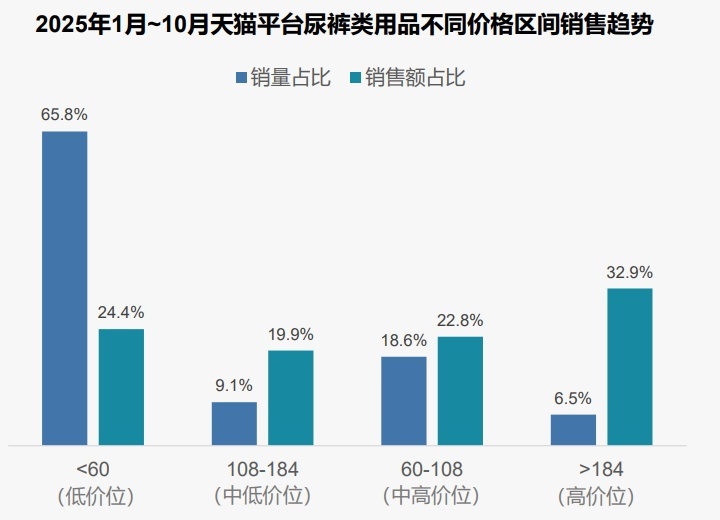
This means that upgrading mother-and-baby product quality does not equate to simple price hikes. Low-end products still drive the bulk of volume, while premium products must justify higher prices through improvements in performance, materials, and user experience.
In this environment, Babycare's diaper business has demonstrated solid competitiveness.
Data from offline retail monitoring agency CPMAS shows that in 2025, Babycare ranked seventh in the offline retail market for infant diapers, with both market share and sales value growing YoY. In January-May 2026, its ranking improved from sixth to third year-on-year, with sales growth nearing 200%.
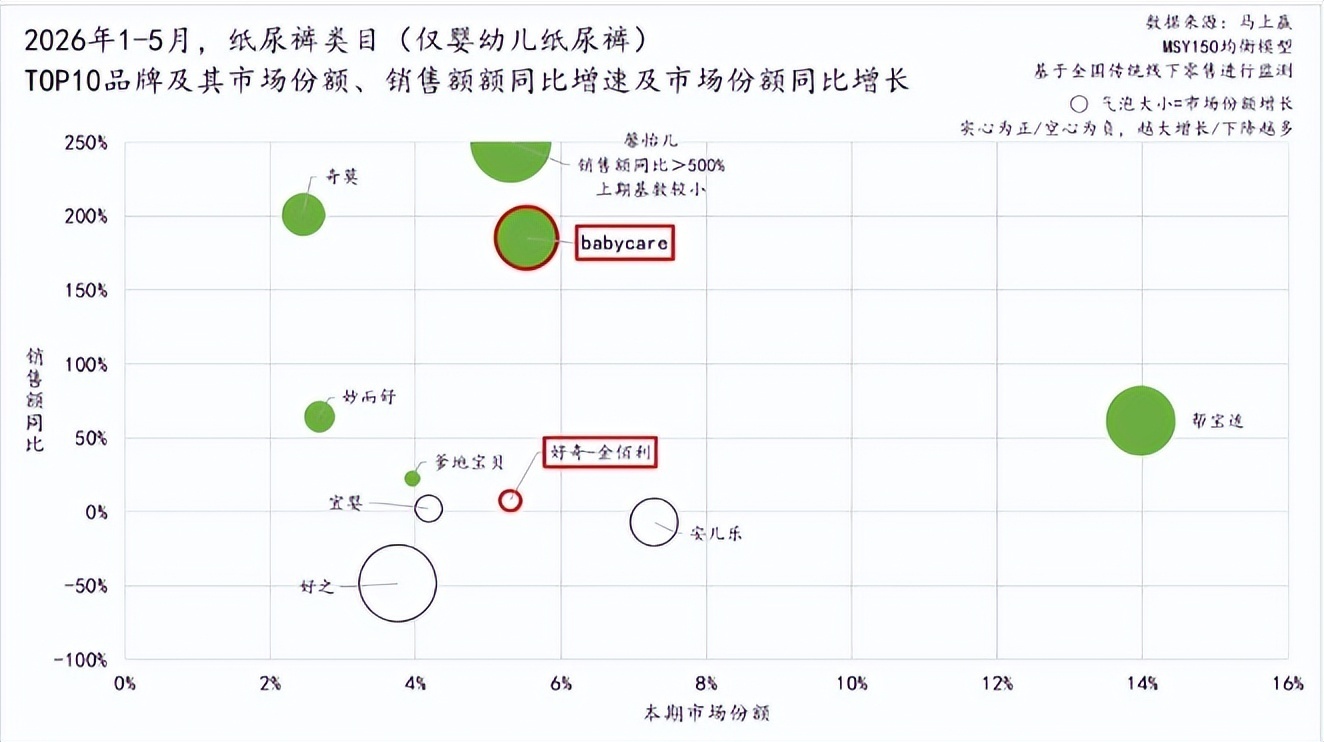
Source: CPMAS
Backing product competition are not just brand and channel investments, but deeper manufacturing capabilities.
Babycare currently operates two self-built diaper factories in Linping, Hangzhou, and Huzhou. In September 2026, its Huzhou facility officially opened to the public, featuring over 550 quality control nodes along its production line and equipped with an AI Cloud Eye intelligent control system for real-time monitoring of processes ranging from material feeding and composite slitting to folding, sheeting, bagging, and sealing.
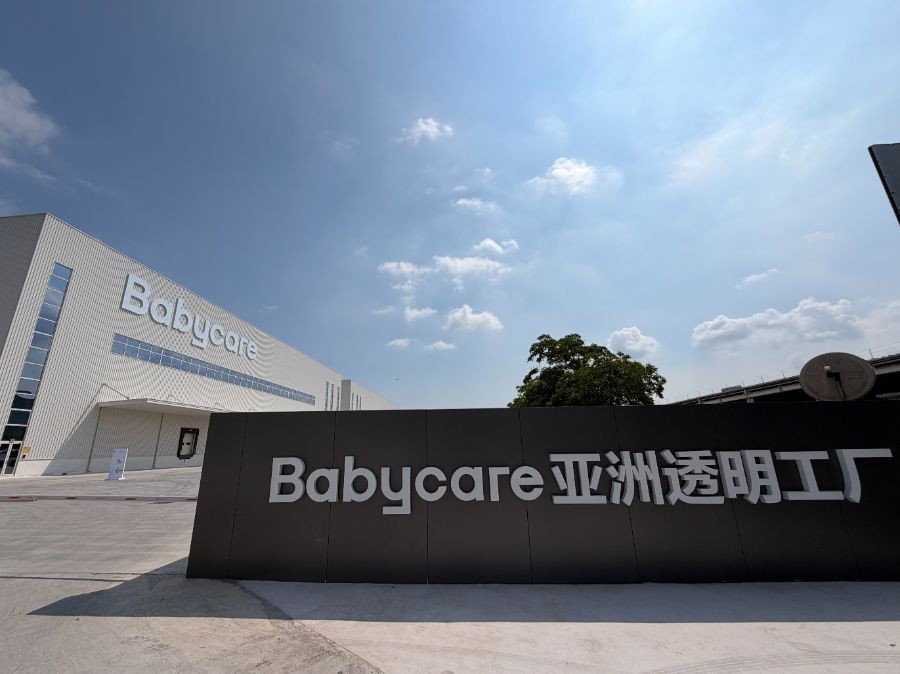
Nie Jing, Vice President of Babycare, previously noted that the company built its own sling factory in 2015 because external suppliers could not meet its craftsmanship requirements; similarly, it established a feeding products factory in 2017 to better control VOC risks in mouth-contact items like pacifiers and teether rings.
The logic behind expanding into diaper manufacturing remains consistent: when external supply chains cannot fully meet R&D and quality control requirements, brands must master more key manufacturing links.
Though diapers appear to be a mature consumer good, they actually involve multiple components including core layers, top sheets, back sheets, elastic bands, waist tapes, and adhesives. The performance and combination of different materials affect final product absorption, breathability, fit, and production stability.
In quality management, Babycare disclosed that its five major diaper series must comply with 35 performance standards under the 'Star-Rated Quality Infant Diaper' benchmark and undergo 2,338 indicator tests covering physical, chemical, microbiological, and reliability assessments. It also conducts routine testing for 292 types of risk substances. Third-party testing costs alone for diapers exceed tens of millions of yuan annually.
This represents a highly valuable link in Babycare's supply chain layout.
For brands, self-built factories mean higher fixed asset and operational investments, but their value lies not just in capacity expansion, but in using in-house facilities to validate materials, adjust processes, and set quality standards before replicating mature solutions with external suppliers, thereby elevating quality control across the entire supply chain.
Rethinking mother-and-baby products
While mother-and-baby products seem diverse, basic items like diapers, wet wipes, and bottles have formed relatively mature markets where consumers do not lack choices.
Simply adding SKUs rarely creates competitive advantage for brands; what truly matters is uncovering unmet needs within existing product lines.
A unique trait of mother-and-baby products is that purchasers and end-users are often different people.
Parents buy and handle daily wear, changes, cleaning, and feeding; infants directly experience the materials, structure, and usability. A good mother-and-baby product must consider why parents buy it while ensuring actual comfort for the baby.
Babycare founder Li Kuo calls this design philosophy 'Grand Design.' He believes design should not merely be aesthetic decoration after functions and structures are defined, but should start from users' genuine needs.
He also proposed the concept of 'existence implies irrationality,' urging teams to re-examine everyday parenting issues that are taken for granted yet poorly solved.
This approach is reflected in specific product refinements.
In 2021, Babycare prepared to launch its softer high-end pull-up pants, the Camellia Gentle Series. To enhance skin-friendly feel, the product base used fluffier, softer spunbound fabric, which reduced the adhesion of the original disposal tabs, causing them to detach easily.
To solve this, Babycare partnered with U.S. materials company Avery Dennison to adjust tab materials and adhesive structures. After multiple prototypes and over 2,000 user trials, both parties redesigned tab length and adhesion methods, extending critical areas to three times the original length. To accommodate the new solution, Avery Dennison spent three months retrofitting its production line.
According to Babycare, approximately 100 million pull-up pants used these improved tabs in 2021 alone.
Wet wipes represent another area where Babycare re-evaluated daily parenting needs.
Compared to diapers, wet wipe parameters are easier for consumers to compare directly—sheet count, weight, liquid content, and per-unit price often drive purchasing decisions. This has led many brands into 规格 (specification) and price wars.
By 2017, intense price competition had emerged in China's infant wet wipe market, with some brands cutting costs by reducing weight and liquid volume. Babycare's research found that some thinner products were prone to tearing and lacked sufficient moisture, compromising actual user experience.
Instead of continuing to slash costs, Babycare decided to focus on fabric and thickness. Its R&D team spent four months screening fabrics, ultimately selecting 100% plant-based fibers. Collaborating with manufacturing partners to upgrade equipment, they doubled the Purple Lid wet wipe thickness to twice the industry average and increased liquid saturation from the common 3.2x to 3.8x.
This approach raised demands on materials and production, giving Babycare distinct product characteristics compared to standard wet wipes.
Market performance confirms this: since launching in 2017, Purple Lid wipes have consistently ranked on Tmall and JD.com's bestseller lists for infant wet wipes. In 2025, Babycare wipes expanded into Japanese channels like Nishimatsuya and Matsumoto Koshi, covering over 8,000 stores, and entered Japan's local 7-Eleven convenience store system.
The bottle market presents a different competitive landscape.
Unlike diapers and wipes, bottles are lower-frequency durable goods. Consumers demand higher safety regarding materials, feeding experience, and brand reputation, with top brands having already established strong market recognition.
Data from Tmall's 2024 Double 11 showed that the top 5 baby bottle brands captured 84.6% of category sales, and the top 10 reached 89.1%. Babycare ranked seventh.
In fact, Babycare began 布局 (laying out) this category as early as 2016, building its own pacifier factory in 2017. After years of R&D accumulation, it launched the 13° Angled Breastfeeding-Mimic Bottle in 2021, seeking differentiation through structural innovation.
To determine this angle, the R&D team observed real breastfeeding scenarios in 150 postpartum households, built a human body database, and performed over 5,000 calculations before settling on the 13° design. This aims to make bottle-feeding posture closer to breastfeeding while improving parental grip comfort.
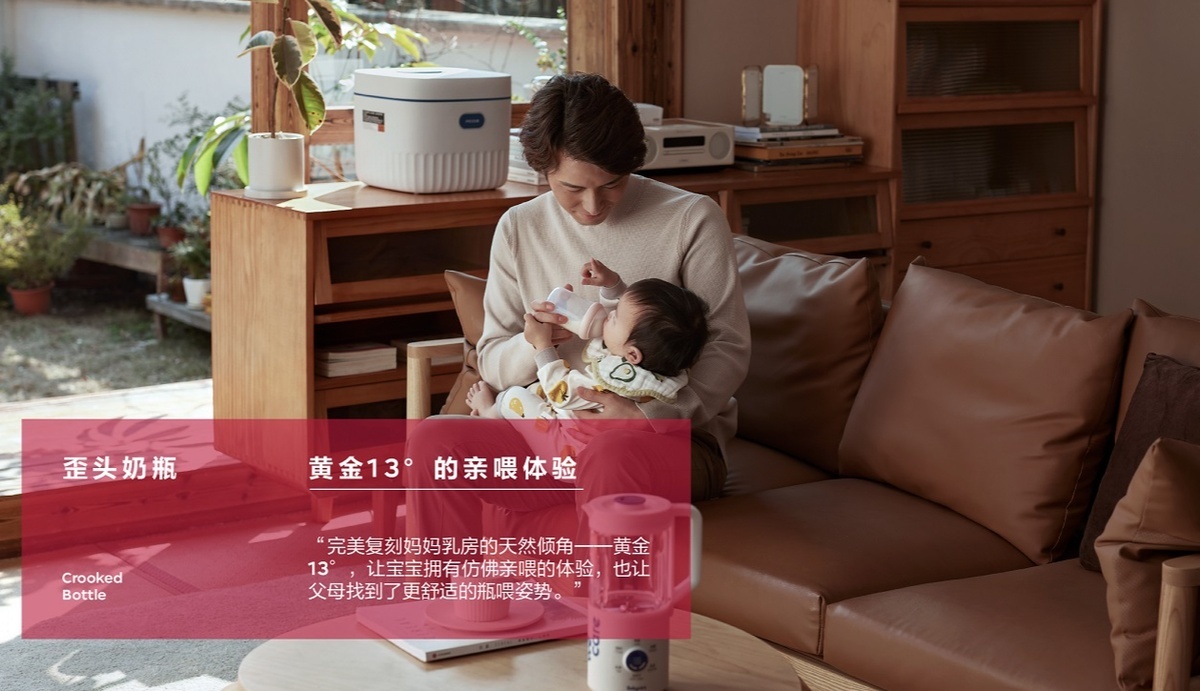
As of July 2026, cumulative sales of Babycare bottles reached 4.15 million units.
Subsequently, Babycare extended R&D to air inlet structures and pacifier materials. The Soothing Master Bottle, launched in September 2026, introduced dual-zone hardness pacifiers and ultra-sensitive anti-colic valves. Meanwhile, the brand invested nearly 10 million yuan to upgrade its proprietary pacifier factory, independently developing a high-precision smart punching production line to improve accuracy and consistency of key parameters like hole diameter and placement.
Thus, Babycare's product R&D consistently revolves around real-world usage scenarios. This capability not only fosters single-product differentiation but also provides clearer development directions when entering new niche categories.
Omni-channel competition is reshaping mother-and-baby retail
Prior to e-commerce, mother-and-baby products were sold mainly through supermarkets and specialized stores. As online platforms developed, e-commerce became a crucial channel. Recently, live-streaming and social commerce have further changed how consumers discover products and complete purchases.
Morjing Insight's '2025 White Paper on New Consumption Potential' shows that online mother-and-baby sales reached RMB 223.78 billion in 2025, up 12.6% YoY. Online sales share rose from 35.1% in 2023 to 46.1% in 2025, while offline share dropped to 53.9%. Online channels have become a key growth driver.
However, the 特殊性 (special nature) of mother-and-baby consumption dictates that online channels cannot fully replace offline ones.
Standardized products like diapers and wipes allow consumers to compare prices, specs, and reviews online. However, items like strollers, car seats, and cribs require hands-on interaction, tactile assessment, and experiential evaluation, making purchase decisions heavily reliant on offline displays and professional guidance.
CBME's '2025 Maternal & Child Industry Trend Report' indicates that 72.8% of consumers touch and feel materials offline, 42.6% seek professional advice via face-to-face interaction, and 60% of mothers believe offline stores provide safer, more reliable solutions.
Nevertheless, offline mother-and-baby retail is undergoing adjustment. CBME data reveals that in 2024, 27% of stores downsized, while only 23% expanded. Sales grew for 39% of stores, remained flat for 37%, and declined for 24%.
Babycare's channel layout offers a sample of how full-category brands adapt to these shifts.
Babycare opened its first standalone brand store in 2020. Store count exceeded 100 in 2023, 180 in 2024, and 260 in 2025. On October 1, 2026, its 300th global store opened at Yifang City, Longhua, Shenzhen.
As a full-category brand offering over 150 sub-categories and ~30,000 SKUs, each store typically curates 800–1,200 SKUs adjusted for local preferences and turnover rates. Displays are organized around parenting scenarios like sleep, feeding, and travel, allowing customers to physically experience strollers and bottles.
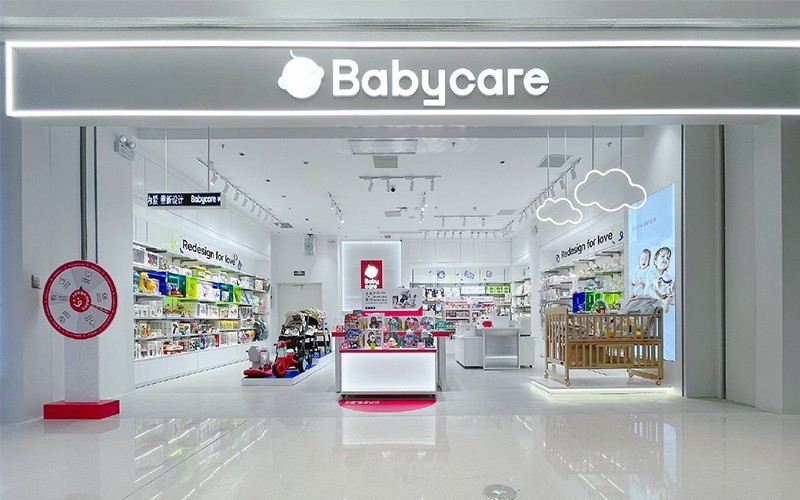
This model retains the richness of a full-category brand while controlling complexity through curated SKUs, enabling offline stores to serve dual functions: product experience and sales conversion.
Meanwhile, instant retail is entering the mother-and-baby channel mix.
High-frequency consumables like diapers and wipes involve both planned purchases and emergency restocking. Instant retail further compresses the time from need generation to purchase completion.
Babycare has now established three instant retail models: brand distribution, offline stores, and self-operated lightning warehouses, covering 31 provinces and 361 cities nationwide, with pilot self-operated lightning warehouses in Beijing, Shanghai, and Hangzhou.
Channel evolution is also evident overseas.
Early cross-border expansion by domestic mother-and-baby brands relied heavily on e-commerce. However, given the close ties between mother-and-baby products and local lifestyles, preferences, and retail systems, simply exporting domestic goods to overseas platforms struggles to adapt effectively.
Babycare's overseas strategy is shifting from online sales toward local retail channels.
In 2022, the brand tested the Japanese market via cross-border e-commerce, then expanded locally through distributors and physical stores starting in 2023.
In November 2025, Babycare partnered with Vietnamese retailer Kids Plaza, bringing its diapers into over 170 stores nationwide.
In 2026, the brand entered JD Europe's Joybuy platform, covering Germany, France, Italy, Spain, the Netherlands, and the UK, while simultaneously stocking 30 T&T Supermarket locations in Canada.
From this perspective, Babycare's development path has indeed aligned with key inflection points in recent mother-and-baby consumption and retail trends.
As birth rates fall and the pool of new consumers shrinks, brands are increasingly focusing on existing families' needs. Babycare started with basic essentials and continuously extended into various parenting stages and scenarios.
Simultaneously, Babycare continues investing in manufacturing, expanding offline stores, and tailoring overseas retail channels to local market characteristics.
From product innovation and quality control to omni-channel operations, Babycare is gradually translating insights into tangible product and channel advantages.
This keen grasp of market shifts, coupled with the ability to continuously expand operational boundaries around family parenting needs, is precisely what makes Babycare noteworthy.
Source: Chaoyang Capital Theory
The copyright of this article belongs to the original author/organization.
The views expressed herein are solely those of the author and do not reflect the stance of the platform. The content is intended for investment reference purposes only and shall not be considered as investment advice. Please contact us if you have any questions or suggestions regarding the content services provided by the platform.