

 Posts
Posts Likes Received
Can Hai Di Lao Escape the Curse of "Falling Stars" in the Catering Industry?

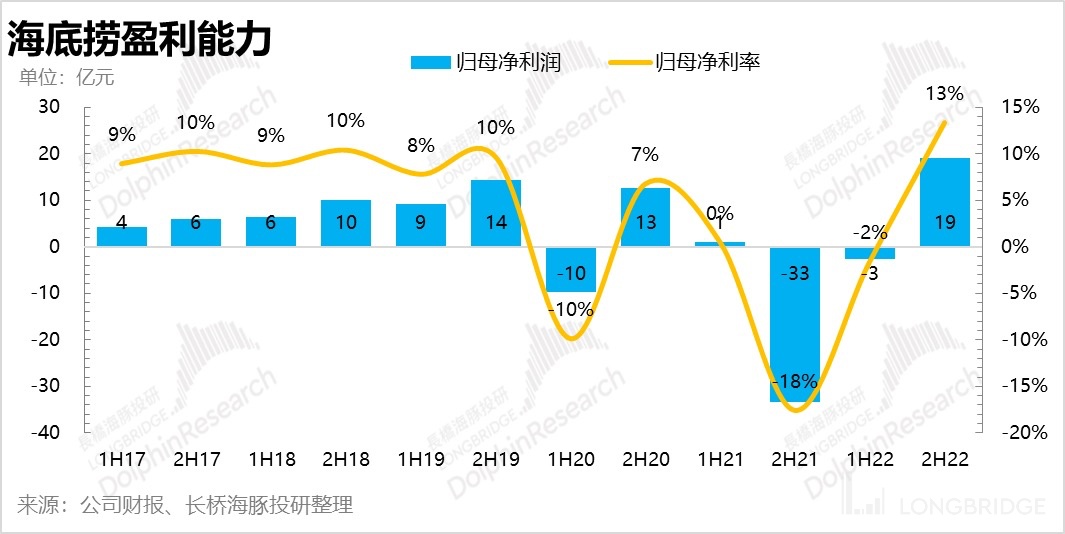
Last month, Haidilao (6862.HK) released its performance report for last year, with a full-year operating revenue of 31 billion yuan, a year-on-year decline of 21%. Net profit attributable to shareholders was 1.37 billion yuan, a significant improvement compared to the huge losses in 2021 (a full-year loss of 4.2 billion yuan).
From a marginal perspective, even if the pre-tax profit of the second half of last year were excluding the impact of other income, the company could still achieve a profit of 1.8 billion yuan, and the profit margin reached 12.6% (the profit margin in the second half of 2019 was 13.4%), almost catching up to the pre-epidemic level. It seems that Haidilao's business has recovered some vitality.
But from the perspective of the company's market performance, although the stock price has rebounded by 50% since the adjustment of epidemic prevention policies began in November last year, it is still far from the peak market value of HKD 480 billion, with a loss of over 70%.
Although the epidemic has certainly had an impact, what has hit investor confidence the most is that Haidilao, which was very confident in expanding its stores before (the management once proposed that it could accommodate 3,000 Haidilao stores nationwide), even in 2020, did not slow down its expansion pace, but under the pressure of huge losses in 2021, had to implement the "woodpecker plan" in a desperate attempt to survive.
From the full confidence at the time of the IPO to the active adoption of transformation now, what has Haidilao experienced in the process?
Not only Haidilao, but also listed restaurant companies seem to have always had similar fates, with their stock prices always going from extreme prosperity to extreme decline, such as Weichuan (China), Cuihua, and Xiabuxiabu. As the leader of the domestic hotpot festival, can Haidilao break this curse?
In this article, Dolphin will explore with everyone "the current development status of China's catering industry", and will also have a more in-depth understanding of this company - Haidilao. In this first part of the Haidilao article, Dolphin will mainly address the following questions:
1. Why do stock prices of listed restaurant companies always go from extreme prosperity to extreme decline?
2. What was the foundation of Haidilao's path toward its peak market value in the past?
3. With gradual business recovery, why has Haidilao's stock price not returned to its former level?
4. Can restaurant companies break the curse of their life cycles?
Dolphin's core conclusion on this is:
1. Due to the diversification of product types and the lack of obvious economies of scale, the catering industry is prone to extreme fragmentation, fast brand aging, and no permanent winner.
2. In the early years, Haidilao stood out with extreme service and actively drove the industry. At that time, consumer purchasing power began to increase, and while meeting food quality requirements, service needs were also gradually strengthening, which just matched Haidilao's differentiated services.
3. After the industry has evolved to a certain extent, the differentiation of services is no longer obvious. And with the changing of the consumer main force, the pain points of the service are also quietly changing. The past advantages may become disadvantages, and being unchanged can often cause a "seven-year itch". 4. Lack of disruptive innovation can lead to a dead end. At this stage, innovative products are needed to resist consumers' "novelty-seeking" psychology, and we need to reexamine consumers' service needs. As an industry that needs to continuously create popularity, both head and tail companies must face the fact that "distance has disappeared, either innovate or die".
Dolphin Investment Research focuses on interpreting global core assets across markets for users, grasping the depth of corporate value and investment opportunities. Users who are interested can add the WeChat account "dolphinR123" to join the Dolphin Investment Research community and learn about global asset investment opinions!
I. Rise and fall of market value
If we divide the listed companies in the consumer sector by industry, we may find an interesting phenomenon: in other consumer subsectors, after years of development, the leading companies gradually reach a market controlling position and form a "one strong, many weak" or "duopoly" or "triopoly" and other market share patterns, which can clearly be seen as a significant scale effect.**
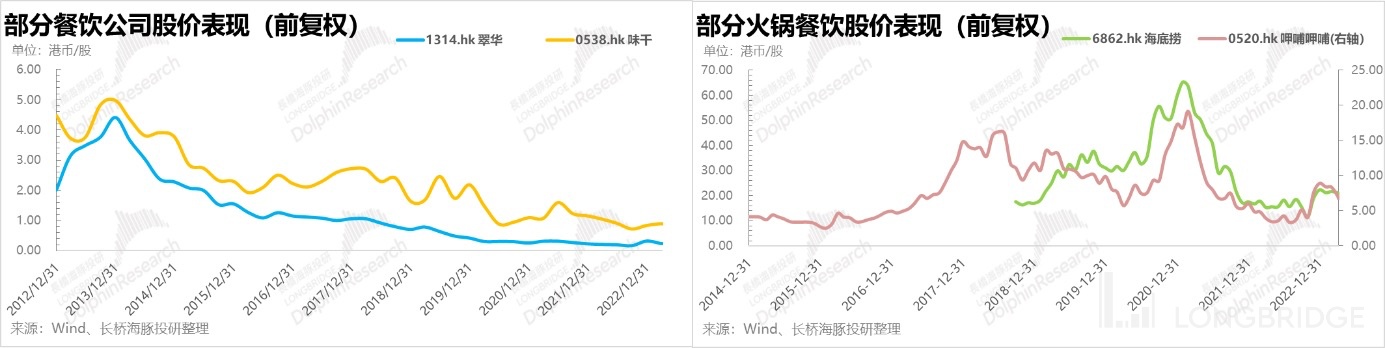
However, related listed companies in the catering sector always have short-lived glory and then rapidly decline. Except for Little Sheep, which was privatized shortly after it went public (it has now been absorbed and merged by Yum China, and its current operational situation is also not good), Xiabu Xiabu, Ajisen Ramen, and Tsui Wah have all caused their stock prices to fall into a quagmire for various reasons (Xiabu Xiabu rebounded to follow Haidilao's success for its second spring in 2020 and is currently back to its original state).
The general rule is that in the early stage of listing, a large amount of financing helps the rapid expansion of chain catering companies. Following the growth routine of Western-style fast food chains like McDonald's and KFC, Chinese-style catering continues to pursue an aggressive expansion model. However, with the same routine and different results, the lack of obvious scale effect causes most Chinese-style catering to die in the process of expansion.
At the same time as the fierce expansion, the decline in operating capacity often occurs. When the operation fails to meet expectations, lucky brands still have the opportunity to implement a contraction strategy and close unprofitable stores. However, most companies end up with a sad outcome of not being able to survive the "big waves" and falling down.
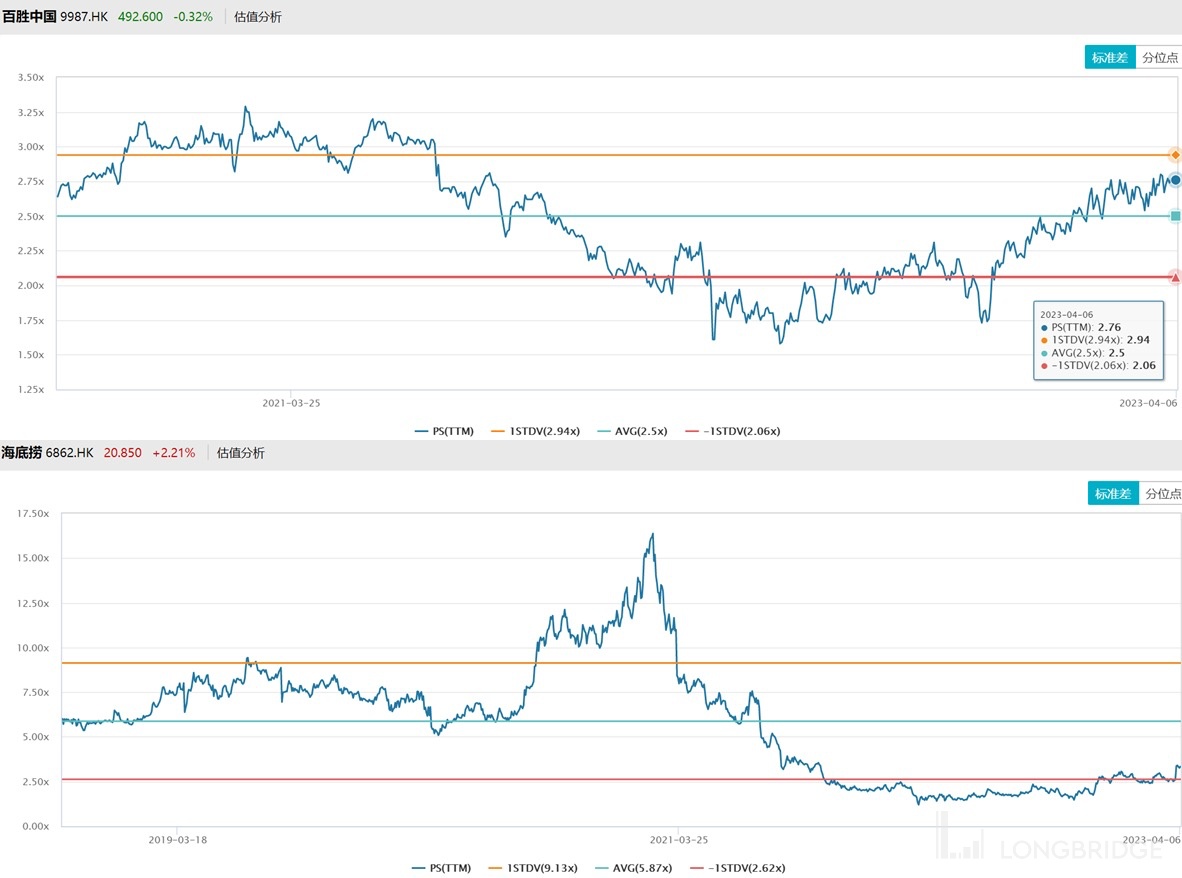
Haidilao enjoys a higher valuation.
Data source: Wind, organized by Dolphin Investment Research.
The industry is extremely fragmented, the rate of chain operation improvement is relatively slow, and the scale effect is not significant. Even with the help of capital, it is difficult to achieve absolute advantages. This is the typical feature of the catering industry.
Although the cycle of fate is roughly the same, for Haidilao, the market still gives special favor. Its valuation has been high since it went public, mainly because the hot pot track has unique advantages.
Two, Out-of-circulation Hotpot
Food is the most essential things for the people, and the catering industry has always held a considerable place in the Chinese consumers' hearts.
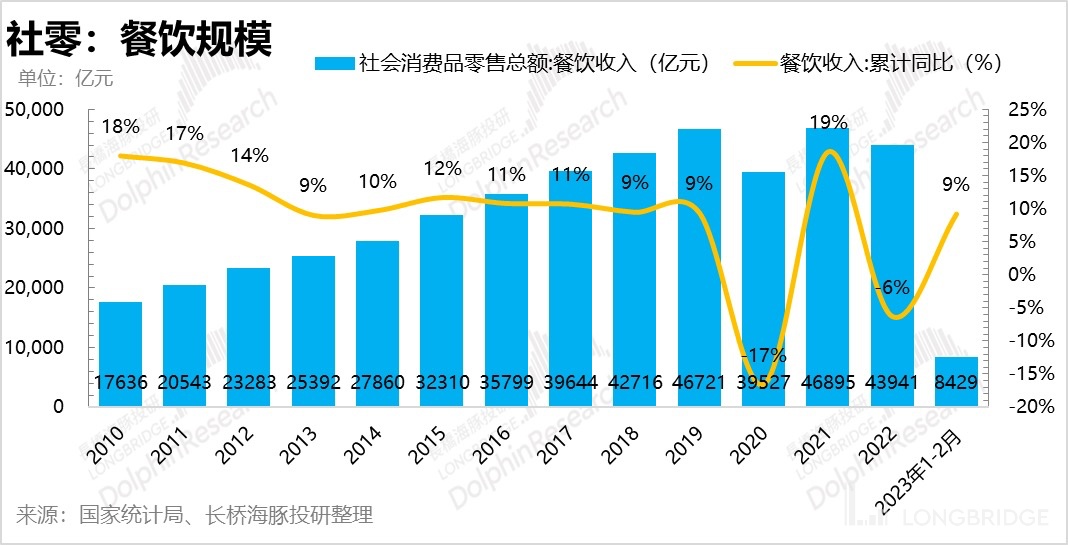
Currently, the scale of China's catering service market has reached 4.4 trillion yuan, except for a significant shrinkage in 2020 due to the pandemic's impact on offline catering and reduced operating hours of dining places in 2022 due to epidemic control. Overall, the industry has shown a considerable growth trend. From 2016 to 2019, the compound annual growth rate of the domestic catering service market reached 8.5%.
In this process, Chinese catering has an unquestionably dominant market position. According to Frost Sullivan's research, the scale of Chinese catering has reached 3.7 trillion yuan, accounting for 78% of the overall catering service market.
Although the percentage seems to have slight slip compared to 81% six years ago and may continue to drop to 76% in the future due to the vigorous development of other types of catering, the long-term compound annual growth rate of Chinese catering potential can still reach 13.3% from 2020 to 2025 (the compound annual growth rate of the overall catering market is expected to remain at 14% due to the drive of Western food and other types of catering).
With a double-digit growth rate, Chinese catering is still a rare good racetrack.

Moreover, China's food is rich in variety, with different regional flavors and abundant food materials. Therefore, market demand is also extremely variable.
And due to the relatively low threshold of the catering industry, operators are relatively free to enter and exit, and due to the characteristics of the industry's capital investment structure (the vast majority of costs are invested in rent and labor costs), it is difficult to achieve economies of scale, so the concentration of the Chinese catering industry is low, and there is hardly any subdivided category that can occupy a significant market share, which makes the industry extremely scattered.
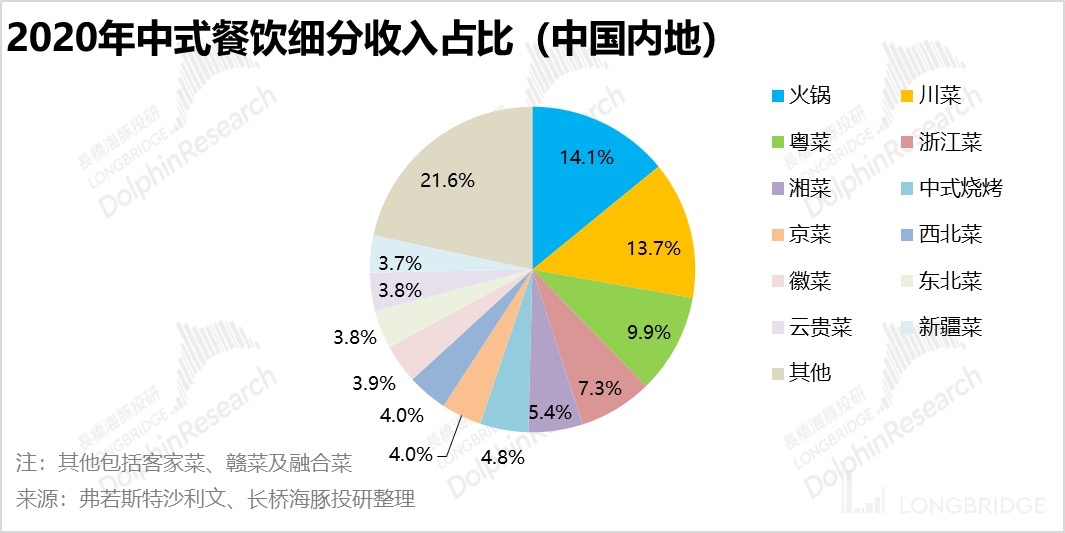
In this, because hotpot has the highest standardization, it has always occupied a relatively high market share in the Chinese catering industry, reaching 14.1% in 2020.
In China, hotpot is basically the most popular dining choice in the Chinese food market, and the industry's scale is close to 500 billion yuan. Before the epidemic, the compound annual growth rate of the industry reached 11% (2013-2019). Due to the shortened business hours of stores, the industry shrank by 20% in 2020. But with the relaxation of epidemic prevention policies, the industry is gradually recovering its normal growth rate.
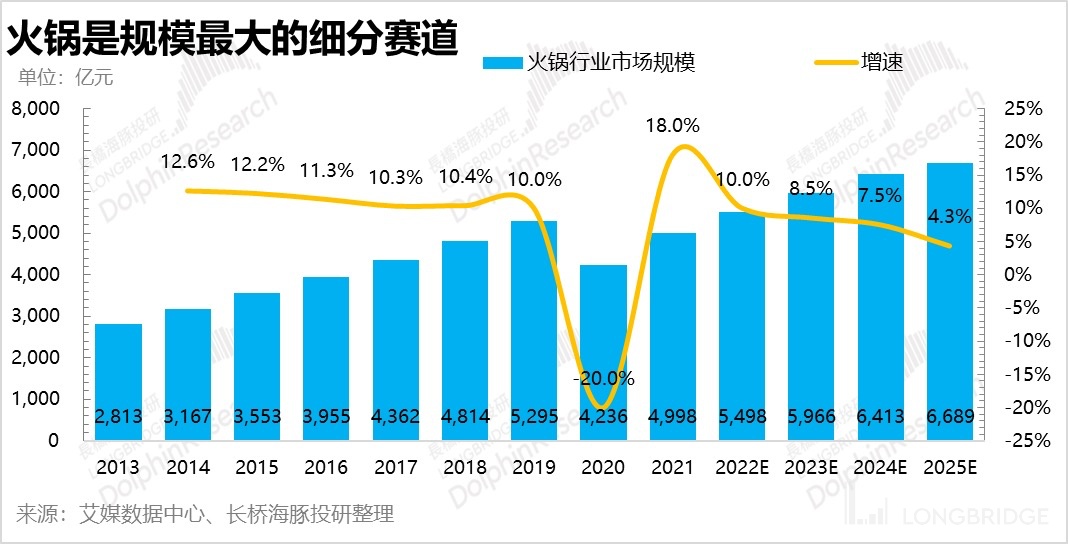
The reason why hot pot can maintain a high proportion in Chinese catering is mainly due to its ability to achieve economies of scale more easily than other catering industries while having a certain addictive nature:
- Standardization brings economies of scale
As mentioned earlier, most of the investment in the catering industry is spent on rent and labor costs, with raw material costs usually accounting for 30% to 40% of revenue (according to industry experience, the gross profit margin generally ranges from 60% to 70%, and stores are difficult to survive if they are below 60%). Given this, there is little room for standardization.
However, in terms of food processing, various types of Chinese cuisine have great difficulty in achieving standardization. This is a natural disadvantage compared to Western cuisine, as it can be difficult for many people to determine the amount or degree of heat needed in Chinese recipes.
Hot pot, on the other hand, almost perfectly avoids this obstacle, with different combinations of base ingredients, dipping sauces and toppings to solve the diversity of taste. At the same time, the product can be standardized and the cooking process is not restricted by the chef's culinary skill, providing a foundation for scaled replication and expansion.
- Addicted to spiciness
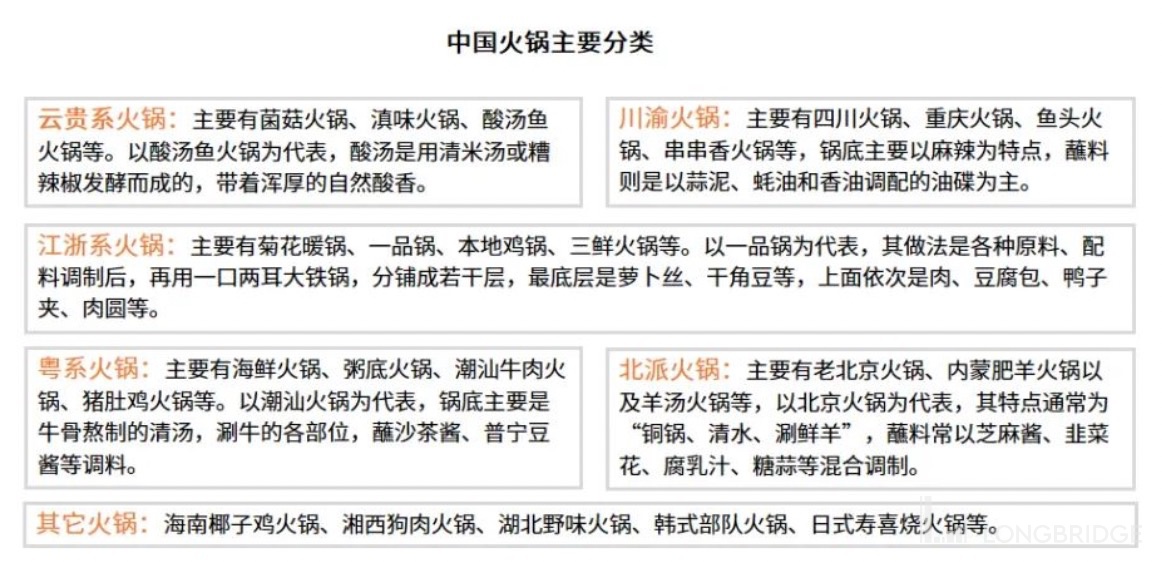
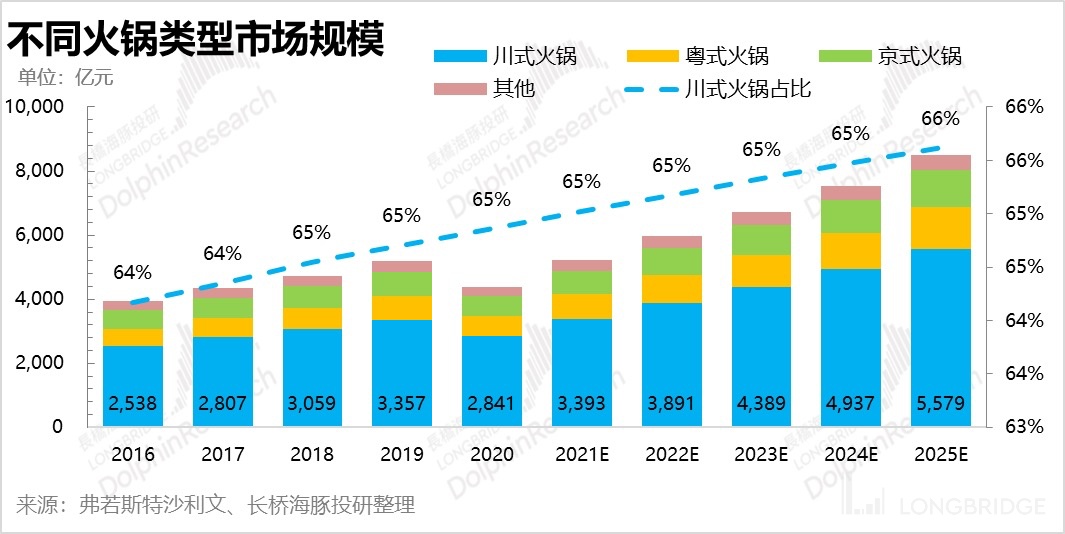
Speaking of taste, although there are also many types of hot pot, spicy Sichuan-style hot pot still dominates, accounting for more than 60%.
Although the consumption of spicy food may bring a certain degree of pain in the initial stage, the process can also release substances such as endorphins to alleviate pain. Endorphins are known as "natural opiates" that can relieve stress, relax the brain, and bring excitement and pleasure, making people more addicted to spicy food.
Moreover, within 2-4 days after eating spicy food, taste sensitivity to sour, sweet, bitter, salty, and other flavors will diminish, and sensitivity to spiciness will also decrease. Regular consumption of spicy food improves the body's acceptance of spiciness. Therefore, customers may repeatedly consume spicy food due to addiction and improved spicy tolerance.
The same logic not only applies to hot pot, but also to Sichuan cuisine, which accounts for 13.7% of Chinese catering and is the most formidable subcategory among regional cuisines.
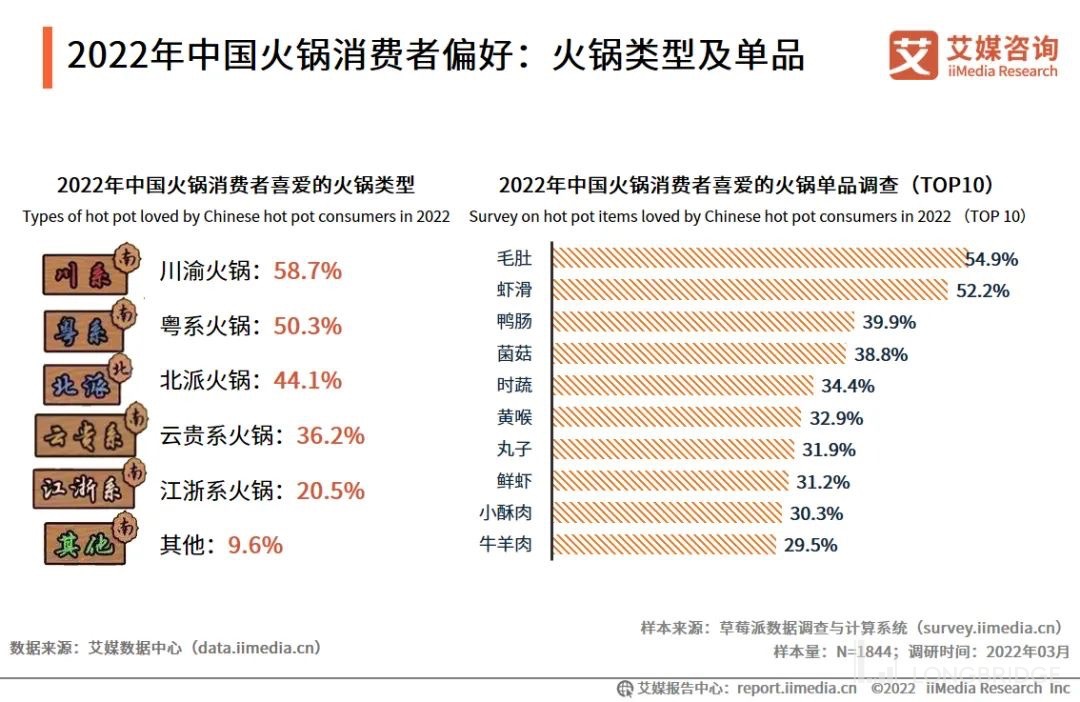 From the perspective of consumer preferences, Sichuan-style hot pot also occupies the highest position. With explosive characteristics while avoiding the barriers of large-scale replication and expansion, hot pot has become the strongest winner in the restaurant industry in the past twenty years.
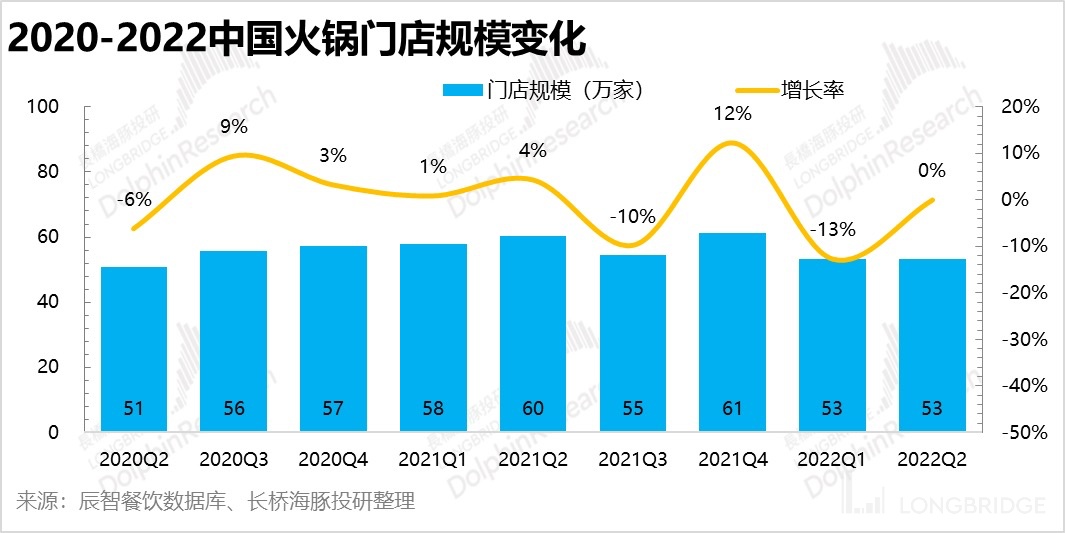
According to the "2022 Hot Pot Category Development Report" released by Meituan and CBNData, the current scale of hot pot stores has reached 550,000. Although the epidemic has to some extent reduced the fragmentation of consumer dining scenes, the growth rate of hot pot stores in 2022 still outperforms the overall catering market.
Thirdly, standing out from the crowd, Haidilao has proactively embraced internal competition.
The domestic catering service market has always been relatively scattered. The most effective means to solve the extremely fragmented market is chain operation. There are relatively large difficulties and challenges in this regard. Self-operated chain restaurants will face pressure from large amounts of capital expenditures, including rent and technical investment. Franchisees will encounter difficulties in maintaining consistent standardized operations and high-quality supply chain management.
Due to the obstacles to the development and management of scalable and standardized restaurant operations, the overall level of chain operation in the domestic catering industry has been relatively low, with only 4.5% of chain-operated restaurants being self-operated and with franchising, the overall level of chain operation is about 20% (the chain operation rate of the US industry is over 50%).
However, driven by the increasing demand for safe and fresh ingredients, the increasing attention to service and food quality, and the increasing emphasis on brand reputation and value, the chain operation rate continues to increase. In the catalysis of the gradual increase in the level of chain operation, Haidilao has proactively embraced internal competition and become a benchmark in the industry with its ultimate service.
I believe everyone knows the first half of the story very well, so the dolphin will not elaborate too much. Friends who are not very familiar can refer to "You Can't Learn Haidilao". Let's look directly at the operating data:
- The highest market share in a fragmented industry.
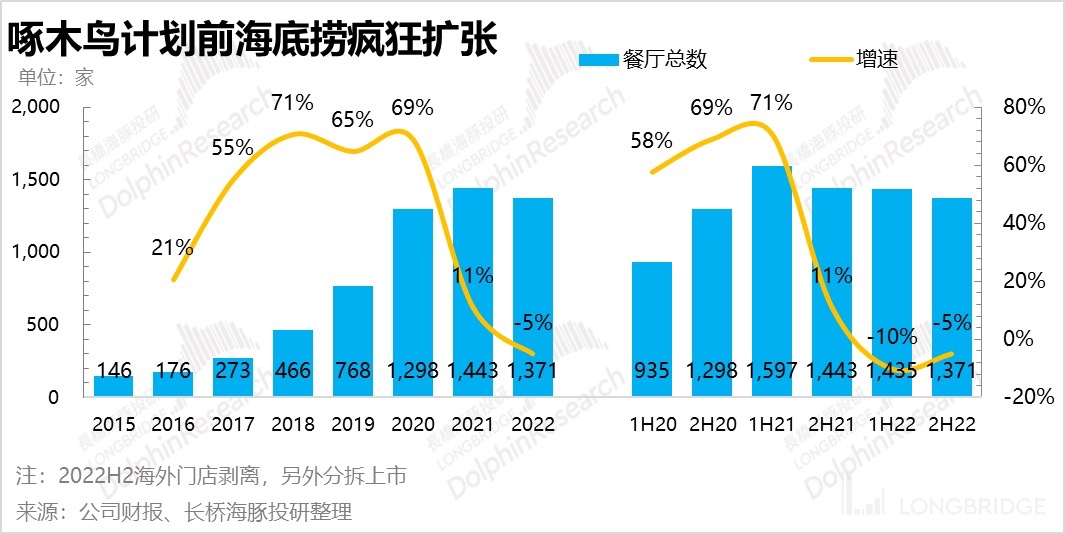
Before implementing the "Woodpecker Plan", Haidilao's expansion speed was very amazing. As the leader of the domestic hotpot festival that has developed for more than 20 years, Haidilao did not slow down its pace of improving its scale after going public. Due to the high level of dispersion of the domestic hot pot catering market, Haidilao, as the company with the highest market share, had a market share of only 5.8% (in 2020).
However, the combined market share of the top five companies in the industry does not exceed 8%. Indeed, compared to Haidilao, its competitors are all younger brothers (the calculation method for market share is based on revenue, not the number of stores, and is influenced by store area and per customer transaction price; Haidilao's single-store sales are far higher than those of its peers). The confident Hai Di Lao, whose scale has grown rapidly for several years, boasted that the national capacity could reach 3,000 stores. From the perspective of waiting for more than an hour for a meal at the time, it seemed that there was no end in sight for Hai Di Lao's store expansion.
At the same time as the rapid expansion of its stores, Hai Di Lao also maintains excellent turnover rates. As a hot pot restaurant, with an average dining time of 1.5 hours, being able to turnover tables twice during lunch and dinner is already a great achievement. Prior to the pandemic, Hai Di Lao had maintained a nearly 5.0 turnover rate for several years, nearly twice that of its peers in the same period.
4.1 Occasional Short-term Pain vs. Cyclical Curse
Compared with the first half in which Hai Di Lao expanded its territory, the Dolphin is more concerned about the second half, the development of Hai Di Lao's continued expansion strategy after 2020. The beginning of the matter was based on the confidence of years of rapid growth, strong post-IPO financial strength, and misjudgment of the duration of the pandemic (Hai Di Lao estimated at about 6 months at the time). In 2020, Hai Di Lao did not slow down its expansion plan, net adding 530 stores, reaching a historical high.
Recommended customers more inclined to refer Hai Di Lao to friends as they are more impressed with the quality of service than the food itself.
However, unconventional expansion is not a new thing, and the industry has had many successful precedents. The hotel and catering industry in 2003 also experienced reshuffling due to the epidemic, which resulted in a huge change in the market share of the service industry. But this time it didn't work.
The dragging effect of time combined with changes in the external macro environment shattered the confidence of operators. In 2020, there was a mentality of withstanding and waiting, but after more than a year, the households of many restaurant owners had no surplus support, and the industry experienced substantial shrinkage. During the pandemic, Hai Di Lao's store size almost doubled, but its turnover rate fell 40%, forcing Hai Di Lao to face reality.
4.2 Unavoidable Cyclical Curse
But is it just the impact of external occasional factors? The Dolphin believes not. The epidemic may only be a catalyst, and the industry itself is quietly changing. Hai Di Lao's popularity has brought in a lot of capital, and the external competitive environment has become more complicated, while the learning ability of competitors has surged. From food development to process management, it is almost impossible to rely on one trick to please everyone.
With changing tastes and zero consumer switching costs, demand orientation will also change with time and consumption capability. The restaurant industry itself is plagued by the difficulty of brands to remain evergreen. Looking around, Hai Di Lao is under considerable pressure:
1) Fickle Customers
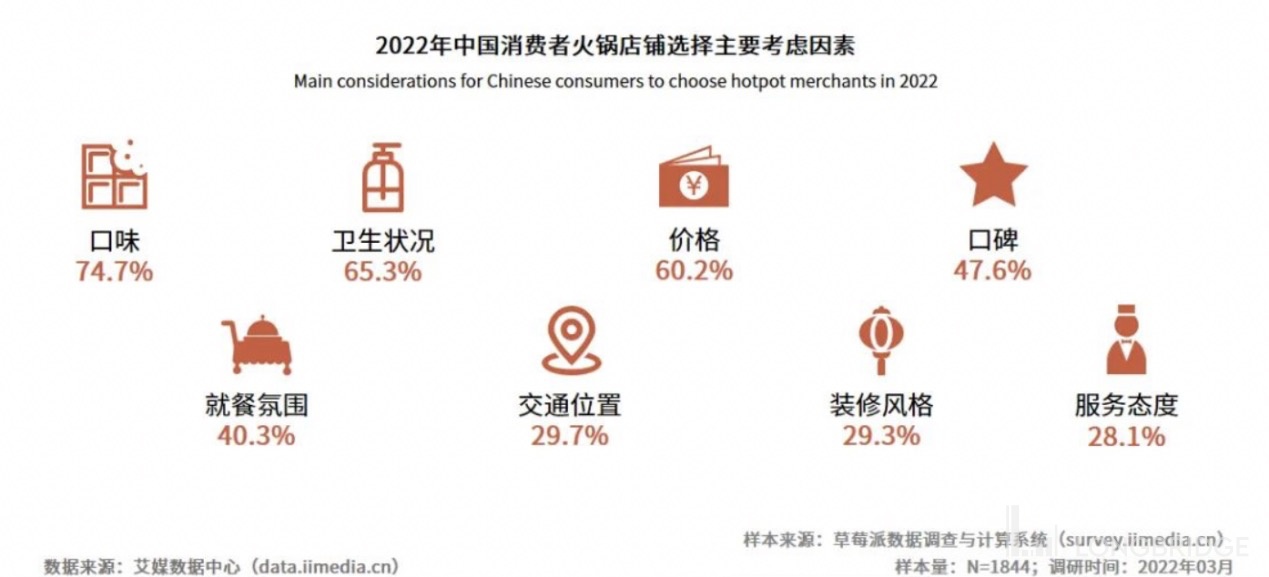
In the early stages of their development, extreme service is novel enough to win customers' favor. While Hai Di Lao builds its reputation, its peers may envy it, but the starting point for truly understanding customer service is to gain their trust. Almost all catering companies are now imitating Hai Di Lao's model. The quality of service has gradually become homogenized, making it difficult for consumers to differentiate brands with warm and thoughtful words. Moreover, with the evolution of the industry, consumers are spending less time receiving "services" due to the rise of self-ordering, online payment, and self-service fruit and drinks options. Therefore, in an environment where sanitation, average customer spending, and service attitudes are relatively homogeneous, consumer preferences are beginning to lean towards taste, which is not a strong suit of Hai Di Lao (a hot pot restaurant chain).
Various themed hot pot restaurants have emerged, offering a wide variety of options, including Chaoshan beef, lamb hot pot, pork tripe chicken, beef offal pot, fish head hot pot, and even snail noodle hot pot.
Focusing on improving product categories is just a traditional approach. The secret to modern consumer patterns is that if they are not connected to social value, they will collapse due to a lack of consumption scenarios. This requires catering businesses to have fresh and innovative themes in order to stand out. Therefore, various brands have resorted to their own unique ways to attract consumers, such as "one store, one scene" and "9.9". Some have succeeded to become industry dark horses. By comparison, Hai Di Lao has been relatively lacking in innovation, which has caused the brand to age.
This is not a problem that can be solved simply by expanding to lower-tier cities. Due to the viral spread of short videos on platforms like Douyin and Kuaishou, the demand for trends in some lower-tier cities is even stronger.
2) Fierce competition from rivals
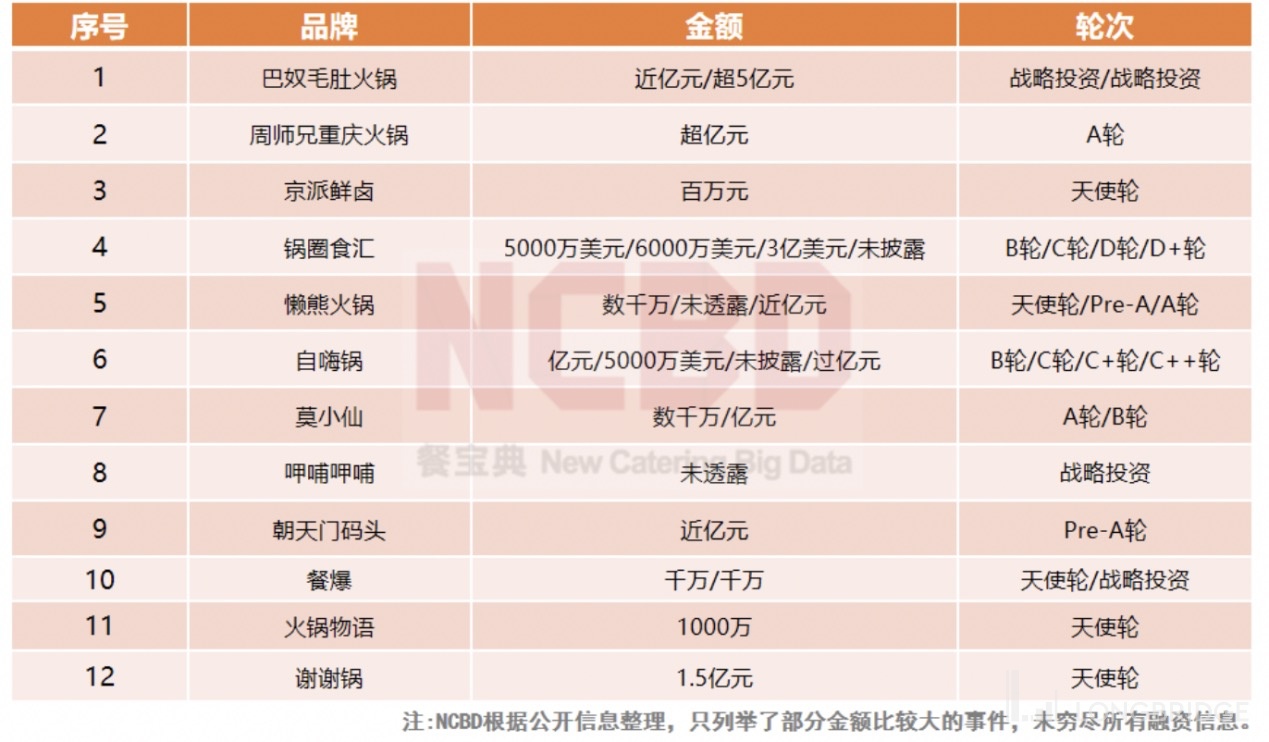
Investors have not overlooked the profitable hot pot market, and Hai Di Lao's success has attracted a rush of capital, even during the pandemic. In recent years, the hot pot industry has seen frequent investment and financing activities. As the leading player in the industry, Hai Di Lao is now facing fierce competition from its rivals.
When Hai Di Lao announced its Woodpecker Plan, Banu, which claimed to be one of the "Three Giants" of hot pot, had just completed a new round of financing with an amount of 500 million yuan. Four months earlier, the investment firm Black Ant had just finished an A-round financing for "Zhou's Brother," who had been named in the Black Pearl Restaurant Guide for three consecutive years. At the same time, the leading Cantonese hot pot chain, Luo Wan, is trying to go public.
5) Survival of the fittest
Whether it is due to external factors such as limited business hours due to epidemic prevention requirements or saturation in terms of the penetration rate of individual brands, at present, Hai Di Lao appears to have entered a bottleneck period for opening new stores. In the face of decreasing expectations from investors regarding future store expansion, it is especially important for them to concentrate on improving themselves.
Pursuing efficiency and prioritizing profitability and operational data are almost always the measures taken by companies during contraction phase. Among them, the primary task is to divest poorly performing stores (as Luckin Coffee has done before).
Currently, Hai Di Lao has two strategies:
====== 1) Woody Woodpecker Plan
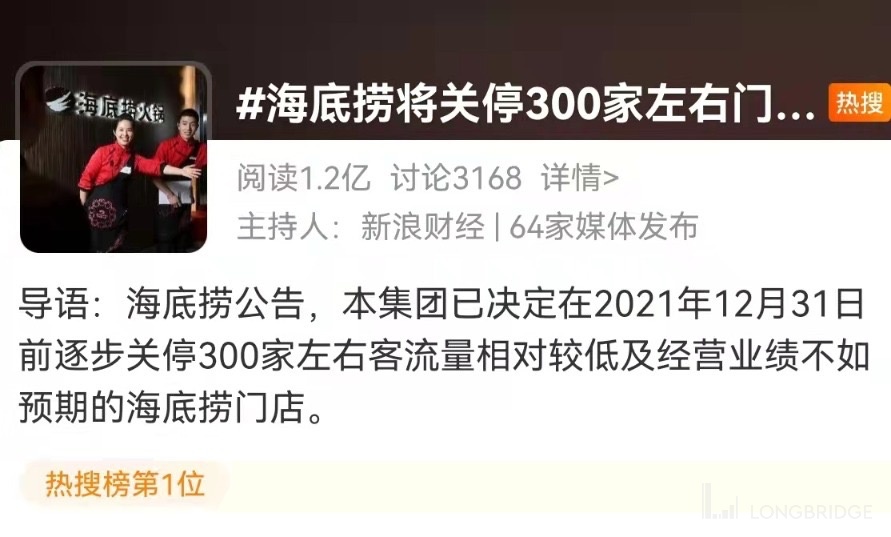
Due to business indicators such as table turnover rate not reaching optimal levels yet, Haidilao has stopped its previous crazy expansion plan. In November 2021, Haidilao announced that it has decided to gradually close down around 300 Haidilao stores with relatively lower customer traffic and lower-than-expected business performance by December 31, 2021 (the closures will not involve staff layoffs).
Due to site selection errors, insufficient matching of store managers, and failed organizational changes, some stores did not perform as expected. The board of directors decided to launch the "Woody Woodpecker Plan" to temporarily suspend such stores and reopen them at a later time, with a maximum period of two years for suspension. If the average table turnover rate is lower than 4 times per day, the group will not plan to open new Haidilao stores as a principle.
This means that Haidilao has directly adopted the approach of restricting scale for the relatively saturated domestic market.
2) TEBA Spin-Off
In addition to the domestic market, Haidilao also has over 100 overseas stores, which have not grown to a self-sustaining level. This is undoubtedly a huge burden for Haidilao at a time when it needs to focus on restoring profits and valuations.

However, Chinese catering still has growth potential overseas, but its current profitability is temporarily weak. Therefore, Haidilao has chosen to spin-off the entire overseas business and find another way out. At the end of last year, TEBA International was listed through physical distribution on the Hong Kong Stock Exchange, and the company is mainly responsible for restaurant operations outside China's mainland and Hong Kong, Macao and Taiwan (referred to as Greater China). The loss-making overseas business was completely spun off from Haidilao.
Addressing both internal and external challenges to solve problems. In addition to the two big moves mentioned above, Haidilao has recently implemented some small measures to improve quality, increase efficiency, and cut costs, such as banning customers from bringing their own ingredients, requiring them to order a hotpot base, and some stores no longer providing free manicure services. Although Haidilao's store expansion has temporarily ceased over the past year and a half, the operating performance of existing stores has reversed and recovered from the second half of last year.
Next: After experiencing ups and downs in the industry, will Haidilao's shrinking strategy be effective? What is the effect of the "Woody Woodpecker" plan as of the end of last year, and what are the effects of TEBA International's successful spin-off for Haidilao's burden reduction after listing on the stock exchange? Faced with the current competitive landscape, what are Haidilao's responses? In the next article, Dolphin will continue to explore the future prospects of Hai Di Lao, discuss the company's potential for growth, and provide a valuation assessment of the company. Stay tuned.
Risk Disclosure and Statement for this Article: Dolphin Research Disclaimer and General Disclosure
The copyright of this article belongs to the original author/organization.
The views expressed herein are solely those of the author and do not reflect the stance of the platform. The content is intended for investment reference purposes only and shall not be considered as investment advice. Please contact us if you have any questions or suggestions regarding the content services provided by the platform.
