

 Posts
Posts Likes Received
Revival of the catering industry: Is "Hai Di Lao" still popular?

In the earlier report on Haidilao's performance (Part I) that Dolphin Jun released, we mainly discussed why the stock prices of listed catering companies always turn from boom to bust, as well as Haidilao's current operation situation (for reference, please see "Haidilao: Can it Escape the Curse of Falling Among the Fallen Stars in the Catering Industry?").
In Part II of today's report on Haidilao, Dolphin Jun will continue to discuss the implementation of the "Woodpecker" plan. After experiencing the ups and downs of the industry, has Haidilao's contraction strategy been effective, and what is the company's future outlook?
Dolphin Jun's conclusion is as follows:
- It is not easy for the restaurant industry to achieve profitability, and a table turnover rate below 3.0 is almost a losing proposition. Companies with stronger economies of scale can relax their table turnover rates to 2.5, and Haidilao is still in a relatively safe position for the time being.
However, the current table turnover rate data is basically disclosed directly by listed catering companies, and the calculation excludes the impact of non-normal business days. Although the adjustment of this caliber is reasonable, the corresponding cost still needs to be borne by the company, which is why the decline in single-store revenue is more severe than the decline in table turnover rate.
A relatively difficult task for the company in the next two years is to fill up the business days while ensuring a certain table turnover rate, at least reaching the position of 3.8-4.0. From the improvement situation in the second half of last year and the current recovery of store operations, the probability of completion is still high.
- After the past three years of trial and error, investors have obviously realized that store expansion is not unlimited. Even without external interference, the speed of store expansion will be greatly affected based on different considerations. For example, considering customer satisfaction to encrypt stores will inevitably affect the table turnover rate. However, according to Haidilao's current pace of store expansion, dozens of new stores can still be accommodated each year (but because the gap with previous expectations is large, the company's valuation will be greatly discounted).
3. The continuous high-speed growth of stores during the epidemic period made the market overly optimistic, and the market's expectations for Haidilao in all aspects were maximized, which was tantamount to walking on a tightrope at a high altitude. Once the pace of opening new stores falls short of expectations (the goal of 3,000 stores is very difficult to achieve, while maintaining a high table turnover rate), it will lead to a complete collapse.
Past cases have shown us that even if the stores are still there, the company's valuation is no longer what it used to be. When investing in catering stocks, the most important logic is valuation. When the pace of expansion slows down, the PE ratio shows a cliff-like decline.
Not only Haidilao, but for any catering company, once the road of expansion is proven to be false, the capital story cannot continue. When the story is no longer sexy, the catastrophic plunge is almost inevitable. Therefore, Haidilao's possible outcome is that the operation slowly recovers, but the valuation is only half of its peak.
- Based on the current situation of industry recovery, we give three different hypothetical scenarios. They are: (1) Guaranteed expectations: the table turnover rate increases slightly, along with a small increase in store openings;
(2) Neutral expectations: the table turnover rate continues to increase to 4.0, followed by a new round of expansion according to the company's plan;
(3) Optimistic expectations: in addition to the neutral expectations, the speed of store openings further improves while maintaining a high table turnover rate.
In fact, from a bookkeeping perspective, Haidilao's cash situation is still good, as long as the company can recover in this year and the next, even without vigorously expanding its stores, it will have a large amount of cash on hand. Therefore, based on the DCF valuation method, the potential value of the company will be quite high. Assuming a WACC of 11.04% and a perpetual growth rate of 3%, Haidilao's valuation is estimated to be HKD 23.16 per share, corresponding to a P/E of 25 times in 24 years.
However, in general, it is difficult for the market to see such a distant future. For a catering listed company that cannot achieve a significant expansion of its stores in the past few years, it will give a relatively low valuation, and it is difficult to achieve a P/E of 25 times (like Haidilao, which is only at 11 times next year).
Based on this, we estimate that Haidilao's relative bottom market value is approximately HKD 86 billion, based on the neutral expectation performance and a multiple of 15 times of the company's free cash flow in 2024, and the corresponding stock price is HKD 15.34.
First, the law of survival for stores: Although the chain rate of the catering industry has continued to grow in recent years, many brands have indeed relied on franchise to expand their scale in a short period of time, while Haidilao, which insists on self-operation, almost all of its income structure is the contribution from restaurant operations. That is, every yuan of income is earned by opening their own stores.
In addition to the restaurant's dine-in income (93%) and take-out income (4%), Haidilao has no other franchise management income, and the restaurant's performance directly reflects in the listed company's income statement. So, how much money can a Haidilao restaurant earn? Next, we will analyze Haidilao based on a single store.
1.1 Single store revenue bottleneck: Looking at Haidilao's single store revenue in the past seven years, it is easy to find the reason why the company's current performance is poor. Before 2019, Haidilao's mainland restaurants could basically maintain single-store revenue above RMB 45 million, but by 2019, due to the reason of expanding their scale, the single-store revenue continued to decrease to around RMB 40 million. (Single store revenue calculation method: revenue/average number of stores at the beginning and end of the period)
In other words, even without the impact of the epidemic, due to the rapid expansion of stores, the single store revenue is also declining. The reason is that on the one hand, the climbing period in the sinking market is slightly longer, and at the same time, the expansion speed of low-tier city stores after 2016 is faster, which has lowered the average level.
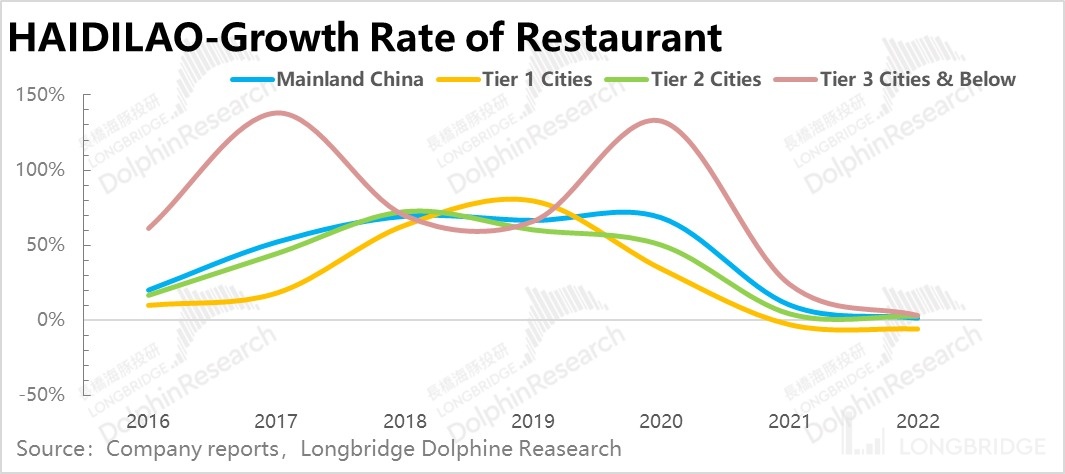
On the other hand, some of the new stores set up in high-tier cities are intended to improve the customer experience, to divert traffic from some stores with long wait times, which naturally affects the single store revenue and turnover rate. However, the company believes that this can bring higher customer satisfaction, and it is worth doing.
Therefore, under the influence of the above two factors, it can be seen that the single store revenue of Haidilao has been declining before the epidemic. This was obscured by the revenue contribution brought about by high-speed expansion at that time, and almost no one thought that there might be risks hidden in it.
Unfortunately, the outbreak of the new crown happened at this time. The sinking speed is relatively fast, and low-tier cities themselves need more climbing time, and the epidemic undoubtedly made the situation more severe at that time. But Haidilao has not stopped expanding, based on the company's judgment, the epidemic may not last too long, and commercial real estate was in a relatively attractive position at that time. At the same time, after the industry was washed by the epidemic, the concentration is probably accelerating.
Therefore, Haidilao's store additions are still ongoing. In fact, other industries also have similar logic, such as hotels. The additions of the three major hotel groups during the epidemic period have not stopped, but the advantage is the obvious contraction of supply in the industry. At the same time, the bigger difference is that the proportion of hotel direct-operated stores is not high, such as Huazhu is less than 10%, and the industry's losses are mostly borne by franchisees, while Haidilao is 100% direct-operated, and the single store revenue has dropped by half compared to before, naturally the loss is huge.
Generally speaking, we prefer to use the turnover rate as an indicator to evaluate the operating conditions of a catering company, which is more intuitive and vivid. However, during the epidemic prevention period, the business hours of some stores are sometimes limited, such as the long-term grid management in Shanghai.
Therefore, some stores have a situation where the business days are not full. However, from the company's calculation of the turnover rate, the impact of this factor is eliminated. This is also why we can see that the turnover rate has dropped from 5.0 to 2.9, a decrease of 40%, but the average single store revenue has dropped by 55% (2016vs2022, opening stores at the beginning or end of the period will also have some impact).
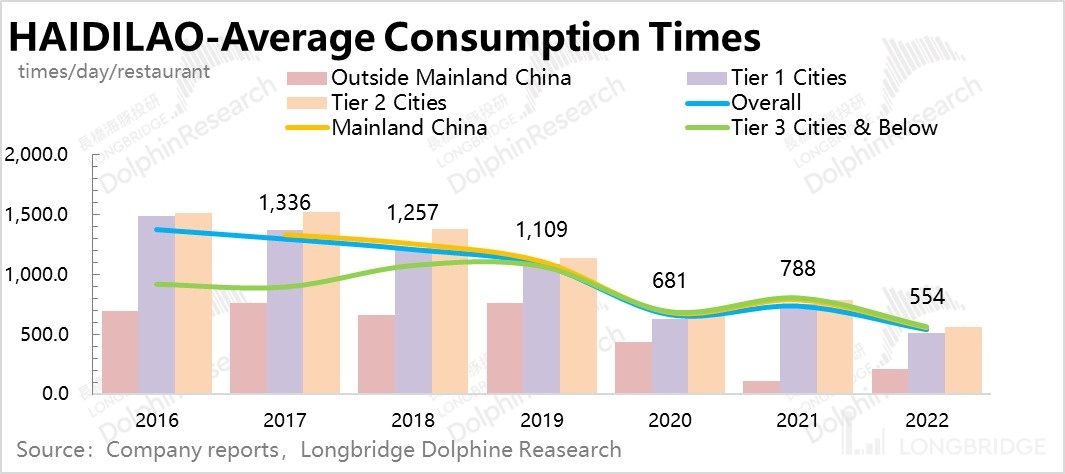
If we calculate the business days according to 365 days in a year, and simulate the calculation of daily consumption based on the average customer consumption provided by the company, it is almost a 60% decline, but because the average customer consumption has increased slightly in recent years, by about 10 yuan, the decline in average single store revenue is slightly converged compared to the decline in single store customer consumption. When it comes to business revenue, the decline in business hours is a more serious problem for the company's income than the decline in table turnover rate. Of course, the original sin is not the company's fault but rather is due to external factors. However, from a business perspective, companies have to deal with this result.
For investors, relying solely on table turnover rate to compare and calculate valuations may lead to deviations. Fortunately, with the adjustment of epidemic prevention policies, this problem has been resolved. Therefore, the very important task for HaiDiLao in the next two years is to increase business hours while maintaining the table turnover rate or even increasing it. Based on recent holiday dining waitlist situations, the likelihood of this happening is very high.
2.1 Self-help Solution
Facing such environmental changes, the company has also come up with many ways. First is the Woodpecker Plan, which reorganizes poorly performing stores. As we can see from the results, the most obvious change in the company is in human cost.
On the cost structure, the proportion of raw materials is roughly around 40%, which has few fluctuations and is mainly related to food materials. Therefore, it is closely related to income and has almost reached the ceiling of economies of scale based on current purchasing volumes.
On the other hand, among other costs, there is a higher proportion and room for improvement in human cost. (According to IFRS, rental fees related to lease contracts are included in depreciation and amortization projects. Apart from this, the project also includes impairment.)
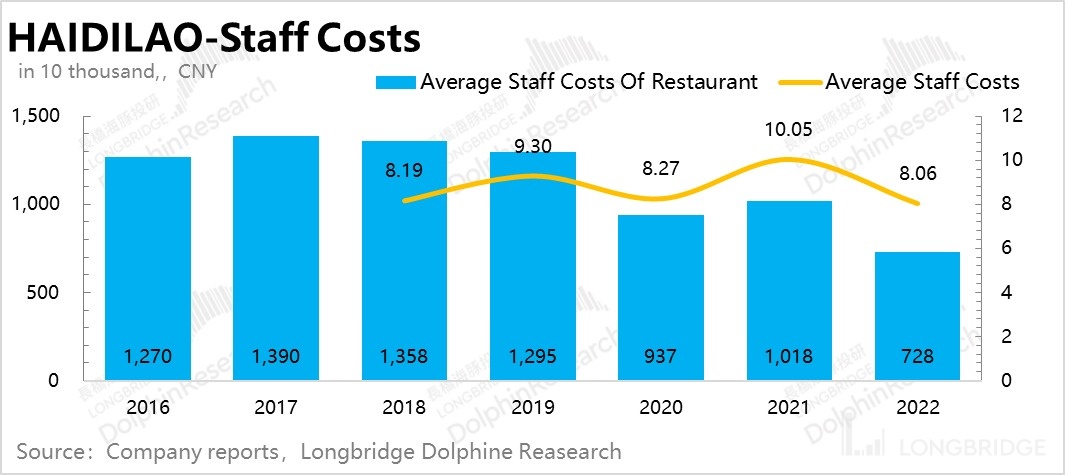
In a normal year, the proportion of human cost is within 30% of revenue (usually 26-27%). In order to keep up with rapidly expanding stores, HaiDiLao has reserved many human resources such as store managers. Therefore, since 2017, the labor cost per store has been increasing year by year.
During the epidemic, after the income was affected until the implementation of the Woodpecker Plan, labor costs were a relatively large burden for the company. Originally, this cost could be absorbed by normal expansion of new stores, but the plan was interrupted by the epidemic.
This is a more difficult problem. Unlike other costs, compressing labor costs requires a long process while also considering social responsibility and public opinion issues. Although the company emphasized "no layoffs in store closures" when announcing the Woodpecker Plan, in terms of results, the number of employees has indeed been greatly reduced. Excluding the impact of Special Hai International's independent listing, the optimized employee ratio is roughly within 30%, which is a comprehensive restructuring of the entire framework rather than just for Woodpecker. Visible results, with employee compensation ratio dropping by 2.7% and amount decreasing by 26%, while the number of employees and per capita labor costs in individual stores both decreased.
After achieving initial success in reform, last September, the company launched the "tough nut" plan after careful review, which involved reopening some previously closed stores. However, the assessment mechanism still employs a relatively strict elimination mechanism, and propagates the "low base salary, high bonus" compensation model. In terms of attitude, they are determined to implement cost cutting measures regarding labor expenses.
Under this kind of control, even if they consider employees' bonus incentives in the future, Hai Di Lao's labor costs will remain at a relatively stable position, making it difficult to exceed 30% like in previous years.
1.3 Turnover Rate Elasticity
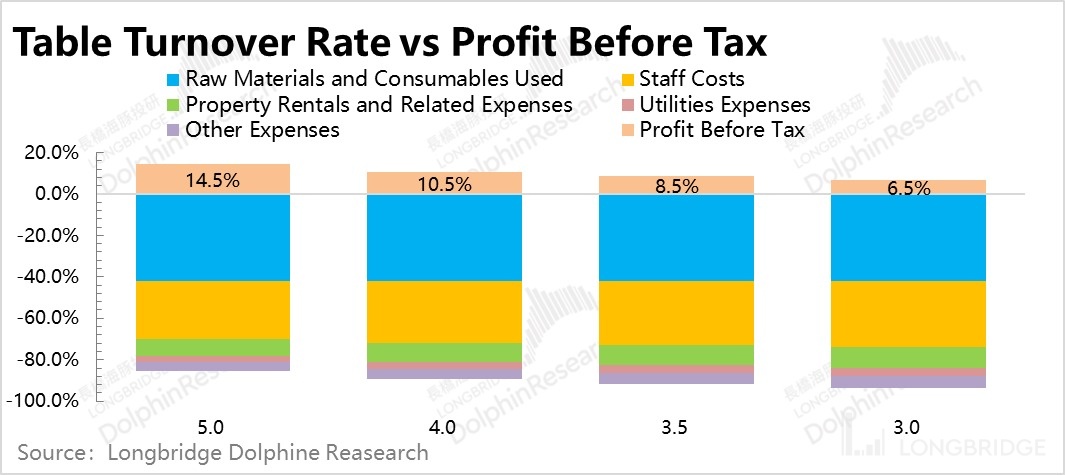
Therefore, according to the reformed model, this profit margin only considers the store level, not including other expenses such as backend management fees, and the turnover rate only needs to reach 2.5 for Hai Di Lao's stores to break even.
If the turnover rate can reach 4.0, it can provide Hai Di Lao with a better profit margin and allow them to continue considering store expansion (365 days per year).
If it can return to the height of its previous business peak, with a turnover rate reaching 5.0, while this scenario is relatively unlikely, it will instantly boost Hai Di Lao's valuation to its historical peak.
Based on Hai Di Lao's current per capita consumption, Dolphin will simply calculate the elasticity of turnover rate: under the circumstances of absorbing management fees and other expenses brought by the group, if the turnover rate can increase from the current 3.0 to 4.0 or 4.5, then the net profit margin can be increased 1 to 2 times.
2. How many stores is the edge of the universe?
2.1 Valuation is the main logic driving stock prices
Apart from whether expanding stores is profitable, for chain restaurant companies, particularly public companies, investors are most concerned about one question: how many stores can they open? After its listing on the Hong Kong Stock Exchange in 2018, Hai Di Lao received over HKD 7 billion in financing, and immediately began an aggressive store expansion campaign, with consecutive three-year store expansion rates exceeding 60%.
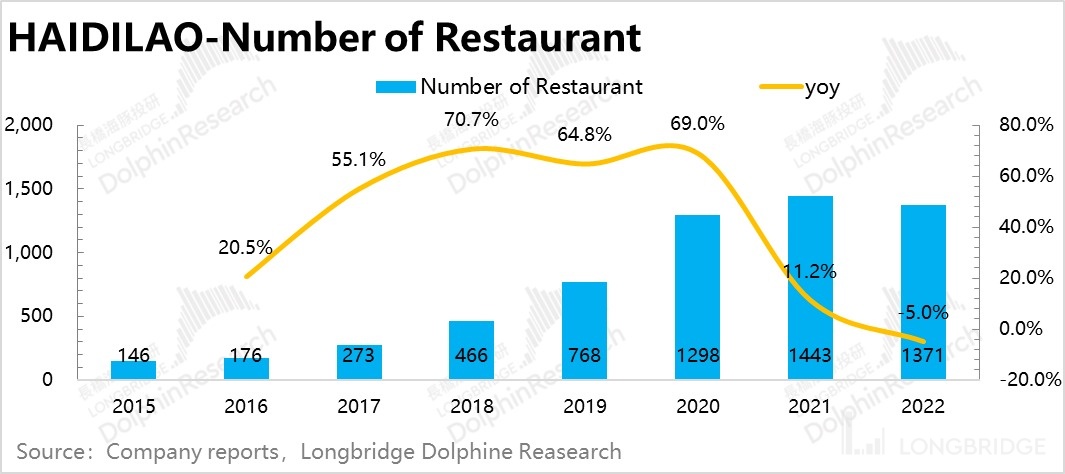
Market expectations also followed its expansion rate, with the general expectation being that the number of stores would double in around three years. However, two years later, in the early stages of the epidemic, market expectations had already skyrocketed to 3,000 stores.
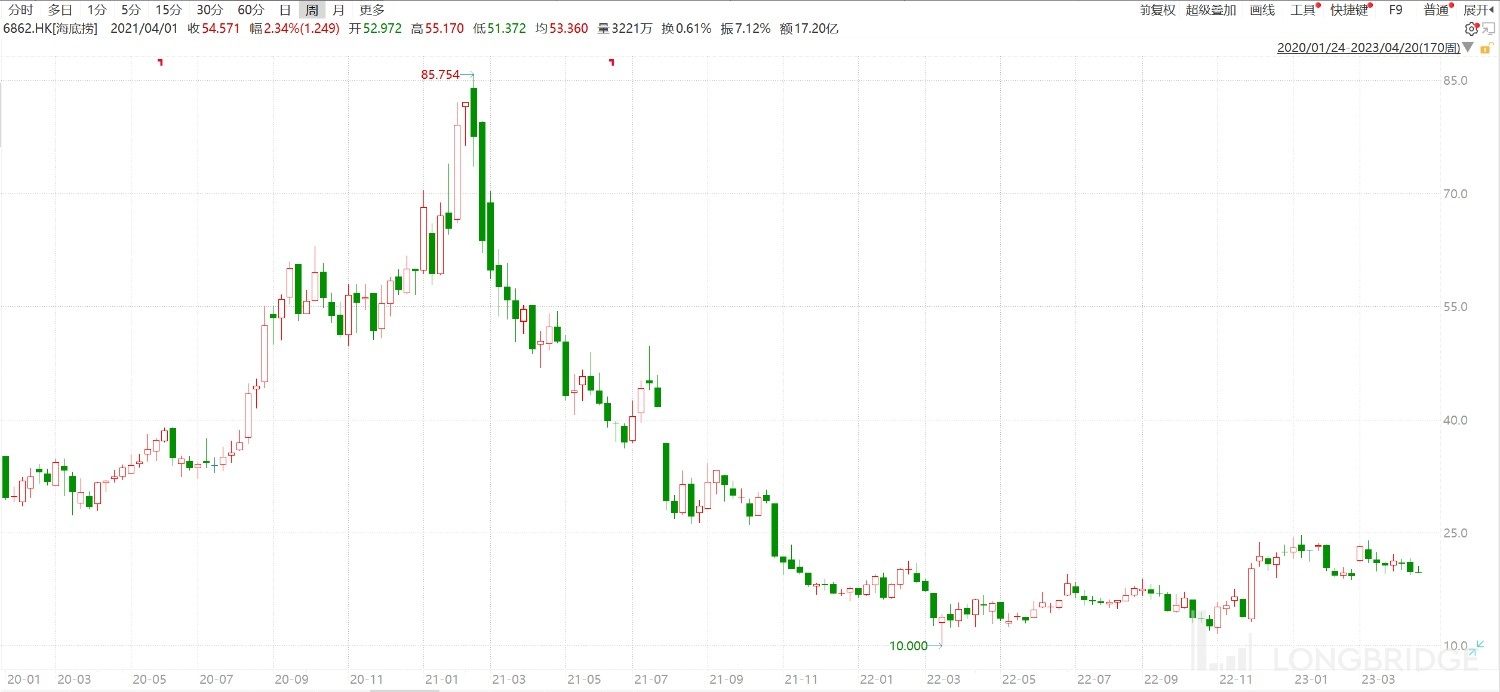
This is also why the market value of Haidilao could reach nearly HKD 500 billion. However, the valuation corresponds to a valuation of HKD 160 million per store when the number of stores reaches 3,000 in the future. Even with a table turnover rate of 5.0 and a maximum net profit margin, the price-earnings ratio would be around 25 times.
Optimism has led the market to have the highest expectations for Haidilao in every aspect, like walking a tightrope in the sky. Once the pace of expanding stores falls behind expectations, which is extremely difficult to achieve the goal of 3,000 stores and a higher table turnover rate, it will lead to a total collapse.
Not only for Haidilao, but for any restaurant enterprise, when the path of expansion is proved to be false, the story of capital cannot continue. When the story is no longer sexy, the towering collapse is almost inevitable. Cuihua, Wakiya, and Xiabuqi are all the same; almost no one can escape the wheels of fate.
For Haidilao, although we are not sure how many stores it can open in the future, according to history, basically 90% of the brands will fall. No matter how red the peak time is, there is no reason for the valuation to remain high.
However, if Haidilao can hold onto its current base, even if it only expands by 20 or so stores a year, as long as it gets through these two years, it will begin to accumulate a lot of cash, and the enterprise will still have relatively good defensive capabilities. The difficulty is how Haidilao can use this money to find the second curve.
2.2 Chain expansion is not easy
Valuation needs a logical reasoning for enterprises to continue opening stores, but in reality, the expansion of catering enterprises is not easy. According to data from Meituan, the total number of stores of brands with a scale of over 10,000 stores only accounts for 1.5% of the entire market, and the market share has only increased by 0.8% compared to four years ago. This mainly includes small restaurant brands that are similar to Yang Guofu's spicy hotpot, which are easy to expand through a franchise model, and Haidilao is clearly not in this category.
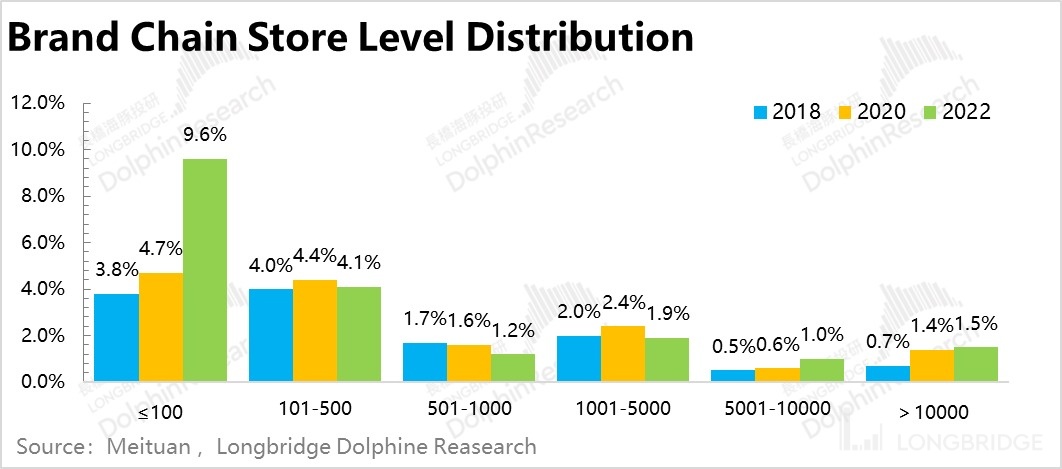
In the range of 1,001-5,000 stores where Haidilao is located, the market share has actually decreased compared to four years ago. The larger changes are in chain restaurants with less than 100 stores, and the market share has increased by 5.8%pts. This is enough to show that some small chain brands are constantly attacking the market and trying to become new dark horses in the new era.
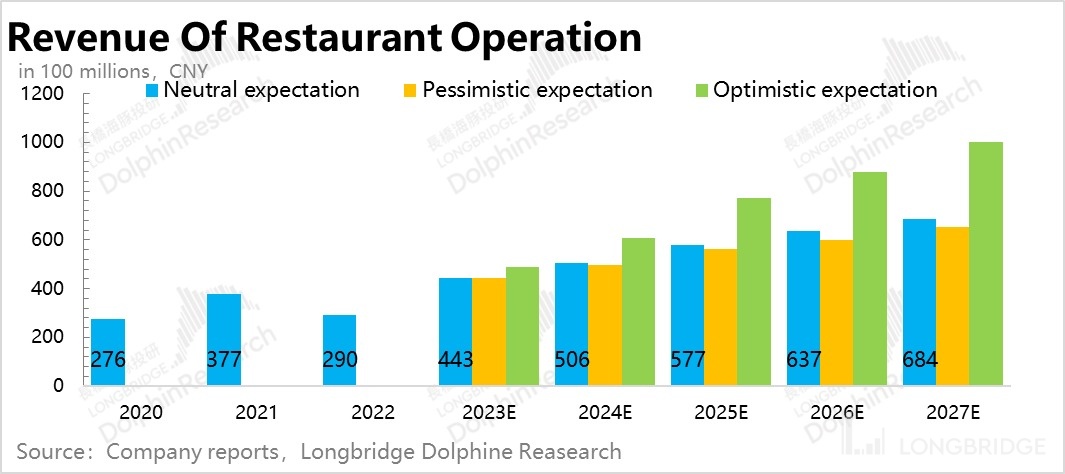
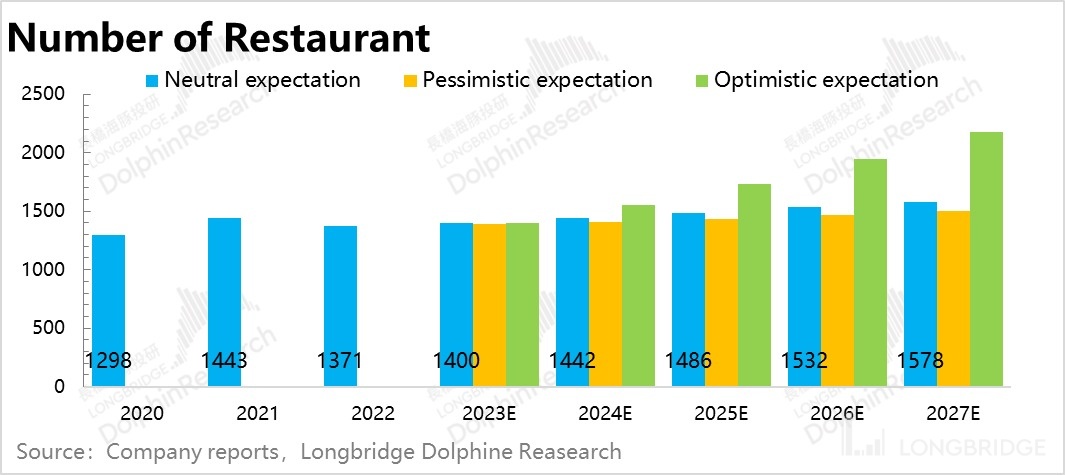
Regarding Haidilao's future store opening plan, the Dolphin thinks that we can make three scenario assumptions based on the company's current expansion plan: 1) Guarantee expectation: maintain the current store operation, slowly increase the table turnover rate to a reasonable level, and then cooperate with a small increase in store openings. This scenario is Haidilao's absolute safety bottom, and the performance bottoming out in the second half of last year also basically indicates that the future operation cannot worsen on this basis, and the net increase in stores per year is expected to be no more than 20. 2) Neutral Expectation: With the company's current "hard bones" plan, a new round of store expansion will begin once the turnover rate reaches 4.0 (the expansion will be larger than the minimum expectation). Although performance is expected to improve, it will no longer be as attractive to investors, and the valuation (from the perspective of the P/E ratio) will be significantly different from its peak. At that point, the annual number of new stores will reach 30-50, increasing year by year.
3) Optimistic Expectation: On the basis of the neutral expectation, the speed of store opening will further increase, while maintaining a high turnover rate, reaching 4.5 or even 5.0. This scenario is unlikely to occur, but it would mark a second spring for Haidilao, which would stimulate endless imagination in terms of opening new stores, with the number of new stores expected to reach 30-70 per year.
III. Limited Extension & Indistinct Second Curve
3.1 Price Increase
Based on the above analysis of Haidilao's business operations, there is an obvious ceiling if the minimum or neutral expectations are met. In terms of restaurant operations, in addition to the above-mentioned number of new stores and customer flow (turnover rate), there is another momentum that has a significant impact on revenue: per capita consumption. This logic makes sense in other service industries, such as the hotel industry, where increasing the price range is feasible. However, it has been a little awkward for Haidilao.
First, hot pot itself is one of the more expensive types of food in many different categories of food and beverage. Secondly, Haidilao's per capita consumption is still on the high side compared to other businesses, even within the hot pot industry. When Haidilao relied on its quality of service to win over customers in the early days of development, consumers were willing to accept this. But since Haidilao began actively competing in the market, emphasizing high-quality service and making it a standard within the hot pot industry, the advantages of service are no longer as evident. Customers have started to return to their focus on taste and value for money.
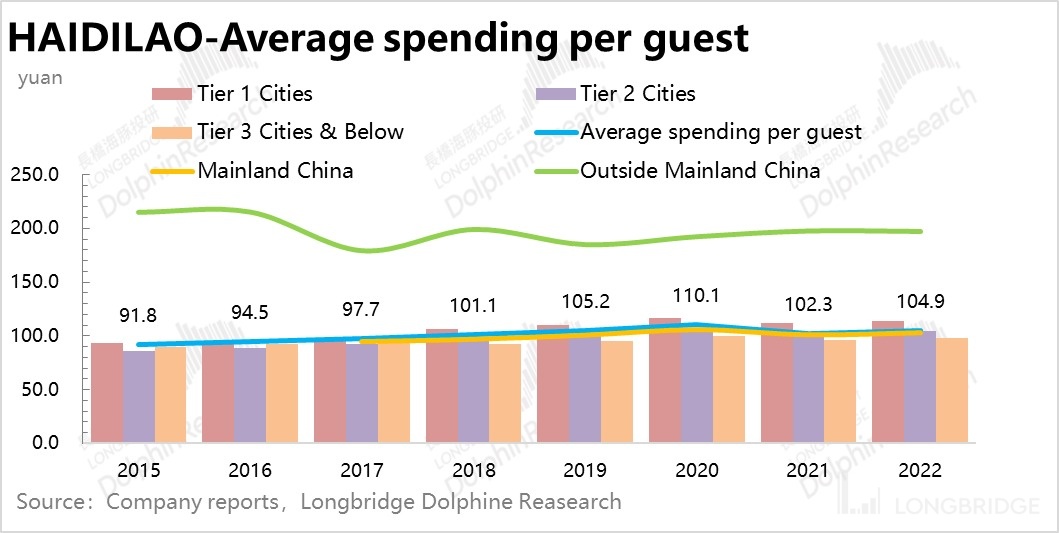
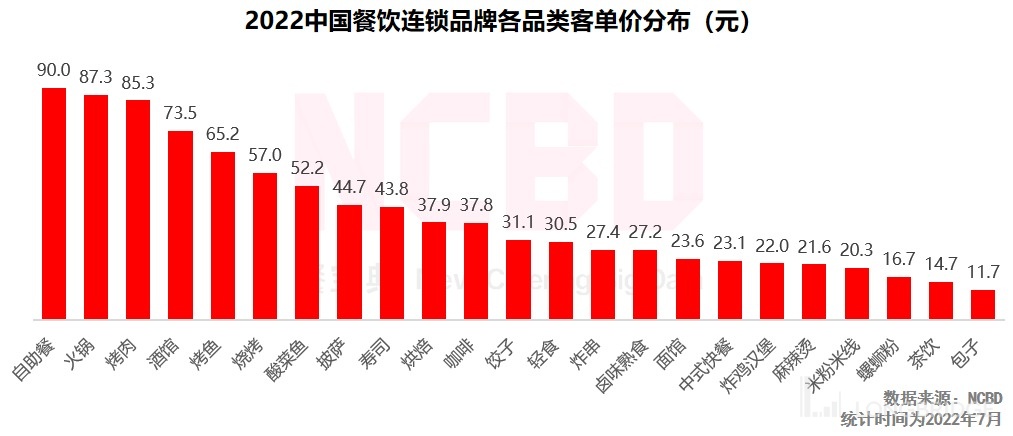
This is basically the per capita consumption standard for modern catering. Haidilao's per capita consumption is generally higher than the industry average. If it continues to deviate, it will cause more resistance or customer diversion. Currently, Haidilao's per capita consumption has returned to the level of four years ago, and its recent price increases have caused numerous complaints from customers. Under pressure, the company has had to roll back prices after a price hike. Investment firms are now hesitant to ask the company how to increase unit prices.
There is a way to avoid this problem, which is to use new dishes to replace direct price increases. New dishes can lead to an increase in ASP, but the effect will be slightly slower (as it takes time for new products to penetrate the market).
3.2 Limited Contribution of Scene Extension
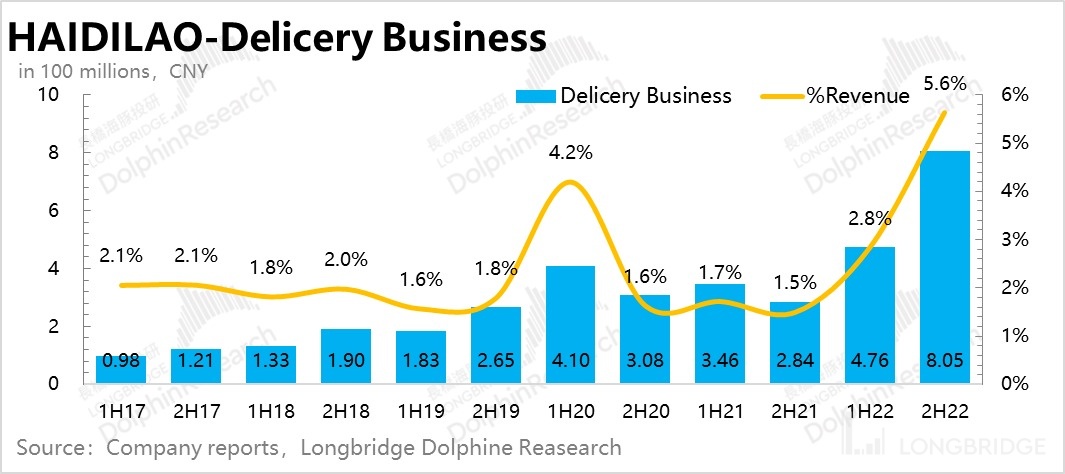 Besides restaurant operations, the company has also focused on developing delivery services during the epidemic, but the contribution to performance has always been limited.
The reason for the faster growth in the second half of last year is that the number of restaurants providing delivery services increased from 450 at the beginning of the year to 1400 at the end of the year, and now it is basically covered. Therefore, the growth rate of delivery services this year still remains a question mark.
3.3 No Second Curve Yet
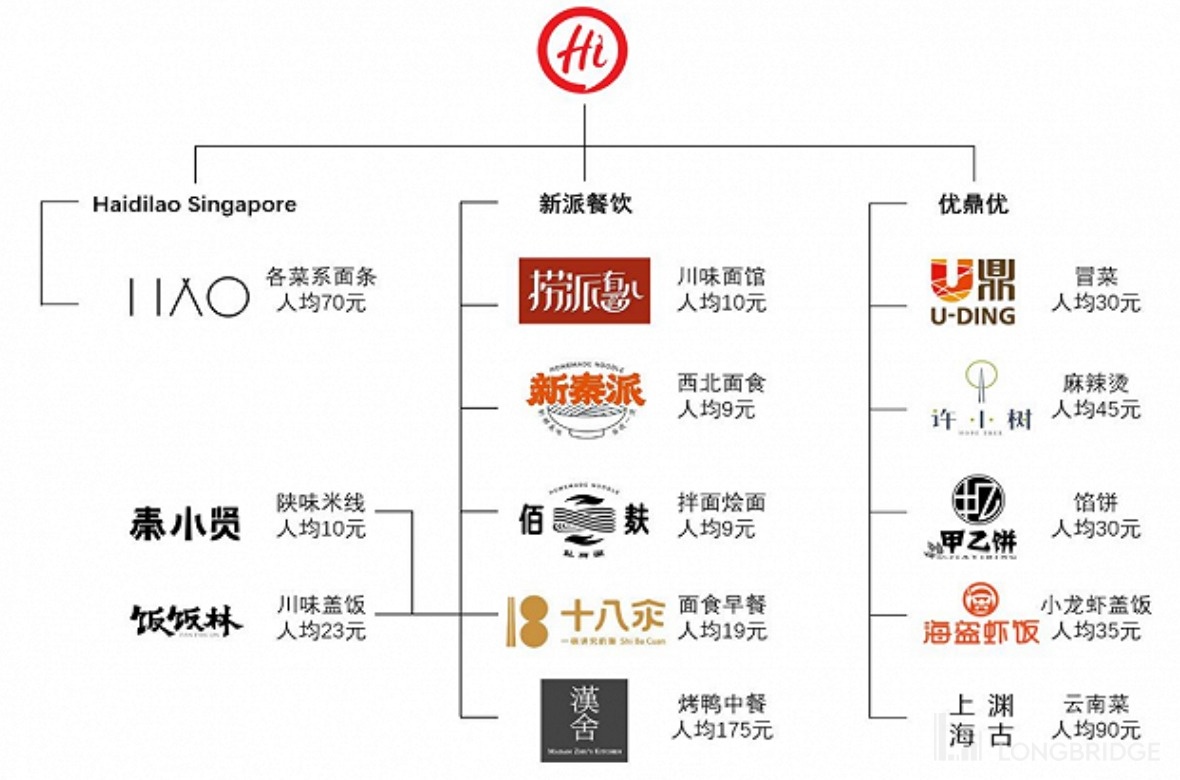
Compared with competing companies that are constantly creating new brands and refreshing consumers' senses, Haidilao seems to have not yet found a second differentiation advantage beyond the service.
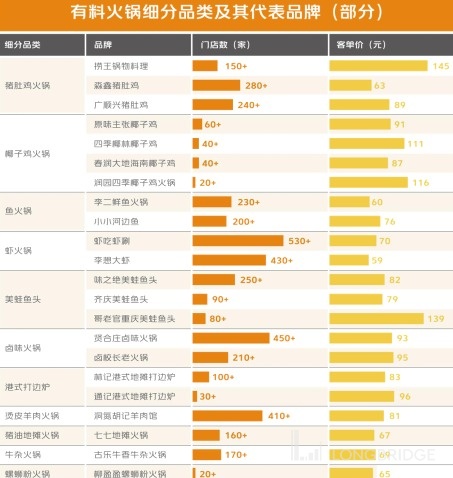
Source: Meituan, Dolphin Research
From some of the projects currently being incubated or acquired by the company, consumers still seem unfamiliar with the company, and it seems that they have not gained any advantages from being affiliated with Haidilao. Haidilao has not shown any outstanding performance in shaping the second differentiation advantage.
IV. Performance&Valuation Estimation
4.1 Revenue calculation
Based on the three possible scenarios for Haidilao's future discussed in Part 2.2 of this article, the future revenues of its restaurant operations can reach the following levels:
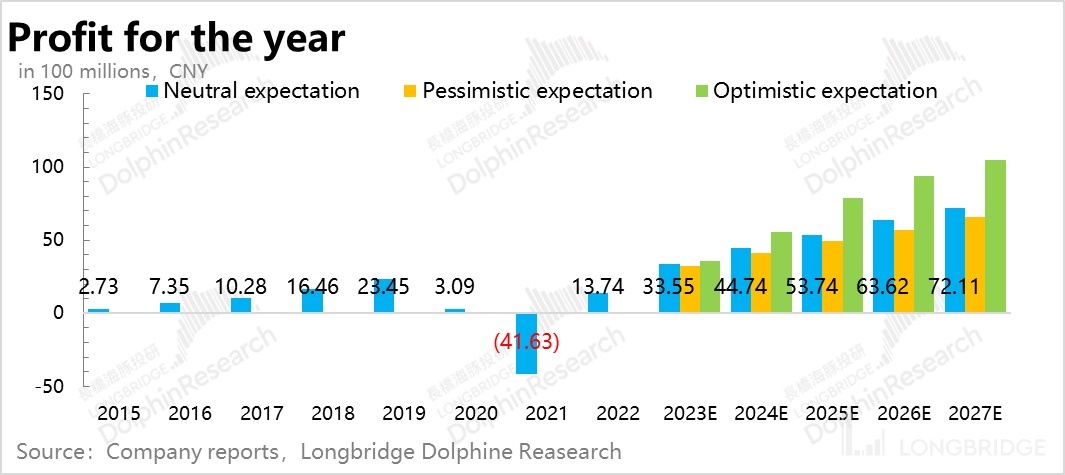
At the same time, considering revenue amplification and dilution effects on various cost rates, the possible net profit levels of the company under different circumstances are:
4.2 Valuation Calculation
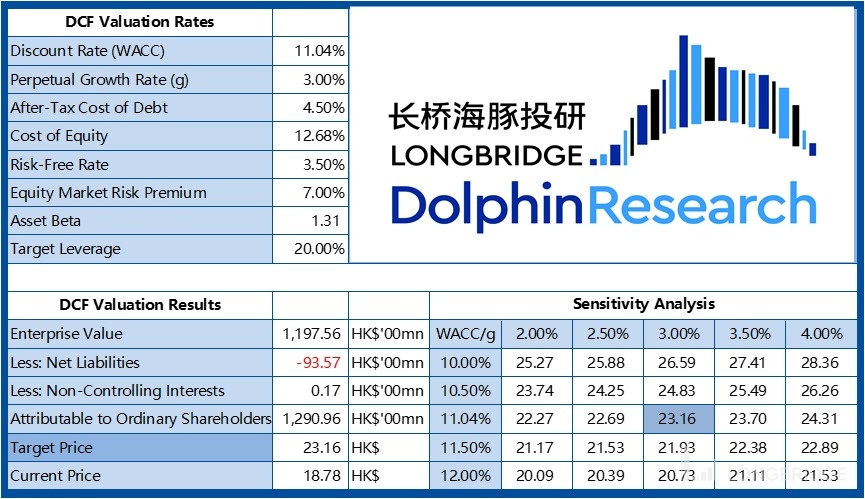
Actually, in terms of cash flow, Haidilao's cash situation is still good. As long as the company can regain its momentum this year and next year, even without massive expansion of new stores, it still has a lot of cash on hand. Therefore, if using the DCF valuation method, the potential value of the company will be relatively high. Based on the assumption of a WACC of 11.04% and a perpetual growth rate of 3%, Haidilao's estimated value is HKD 23.16 per share, corresponding to a 24-year 25x PE.
However, in general, the market is unlikely to see that far. For a catering IPO company that cannot achieve significant expansion in recent years, a relatively low valuation will be given. It is difficult to achieve 25 times (you can refer to Xiabu Xiabu's PE of only 11 times next year).
Based on this, we estimate Haidilao's market value relative to the bottom based on neutral expected performance, and give it a multiple of 15x based on the company's enterprise free cash flow in 2024. The corresponding market value is approximately HKD 86 billion. At this point, we believe that Haidilao is relatively safe, with a corresponding stock price of HKD 15.34, corresponding to a 24-year 16.7x P/E ratio.
Under optimistic circumstances, if the company's table turnover rate gradually recovers to 4.5 before the epidemic and maintains a certain speed of opening new stores, there is a possibility of the stock price reaching HKD 35 (corresponding to a 24-year 30x P/E ratio), but Dolphin Jun thinks that the probability of this scenario is relatively small.
Related reading
Deep
April 11, 2023, deep report "Can Haidilao Escape the Curse of the Collapse of Catering Stocks?"
Risk Disclosure and Statement for this article: Dolphin Research Disclaimer and General Disclosure
The copyright of this article belongs to the original author/organization.
The views expressed herein are solely those of the author and do not reflect the stance of the platform. The content is intended for investment reference purposes only and shall not be considered as investment advice. Please contact us if you have any questions or suggestions regarding the content services provided by the platform.
