

 Likes Received
Tencent and Alibaba released their quarterly reports. When is the best time to bottom-fish Chinese concept stocks?

$TENCENT(00700.HK)
I briefly mentioned the investment considerations for Chinese concept stocks in (China Internet ETF, one-click investment in internet companies across A-share, H-share, and US markets!).
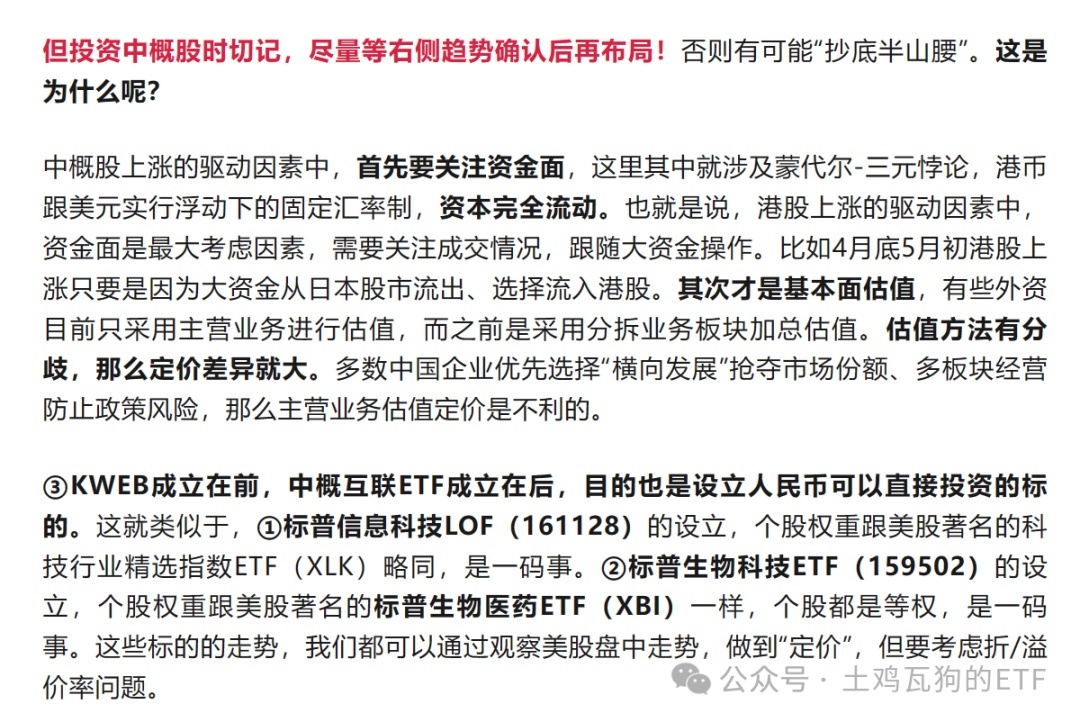
Currently, the two giants of Chinese concept stocks—Tencent($Tencent(TCEHY.US), 00700.HK) and Alibaba($Alibaba(BABA.US), 09988.HK)—have released their earnings reports. How to interpret these reports? Are Chinese concept stocks worth investing in now?$BABA-W(09988.HK)
1. Analysis of the Two Giants' Earnings Reports
1.Tencent($Tencent(TCEHY.US), 00700.HK)
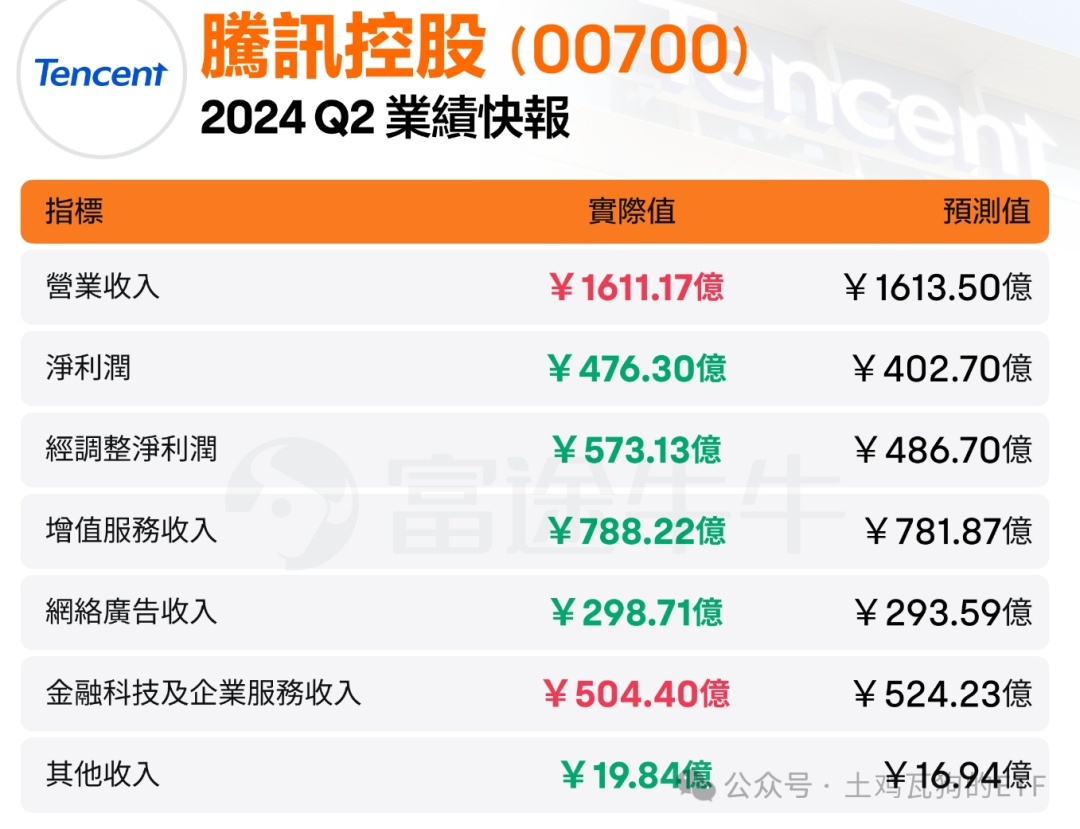
1. Tencent Holdings' Performance Analysis: Q1 showed strong performance, but the stock price did not rise significantly. The market remains cautious about Q2 performance, although DNFM is expected to support decent results. The advertising business shows anti-cyclical trends, with 20% growth in Q2, driven by Video Accounts and mini-program game ads. The gaming business is recovering, with domestic market revenue up 9% YoY, while overseas growth fell short of expectations. Deferred revenue suggests short-term growth potential. Payment services under FinTech and Business Services are under pressure due to macroeconomic conditions, but enterprise services continue to grow. Gross margin improvement continues, but operating expenses are rising, especially R&D investments. Tencent has conducted large-scale share buybacks, and if the current pace is maintained, the total buyback amount will be substantial.
Data source: Futu NiuNiu
2. Business Segment Performance:
1) Gaming Business Recovery:
①Tencent's Q2 net profit exceeded 47 billion yuan, with strong recovery in gaming, both domestically and internationally.
②The success of DNF Mobile drove gaming growth, while overseas markets also performed well.
③Tencent's AI investments and commercialization efforts highlight its potential in tech-driven markets.
2) Advertising and AI Progress:
①Ad revenue grew 19% YoY, mainly driven by Video Accounts and long-form video.
②Tencent launched Yuanbao, an AI app based on its "Hunyuan" model, accelerating AI adoption.
In summary, Tencent shows positive growth in gaming, ads, and AI, maintaining its industry leadership despite macro pressures. Its massive buyback plan reflects confidence in its value.
2.Alibaba($Alibaba(BABA.US), 09988.HK)
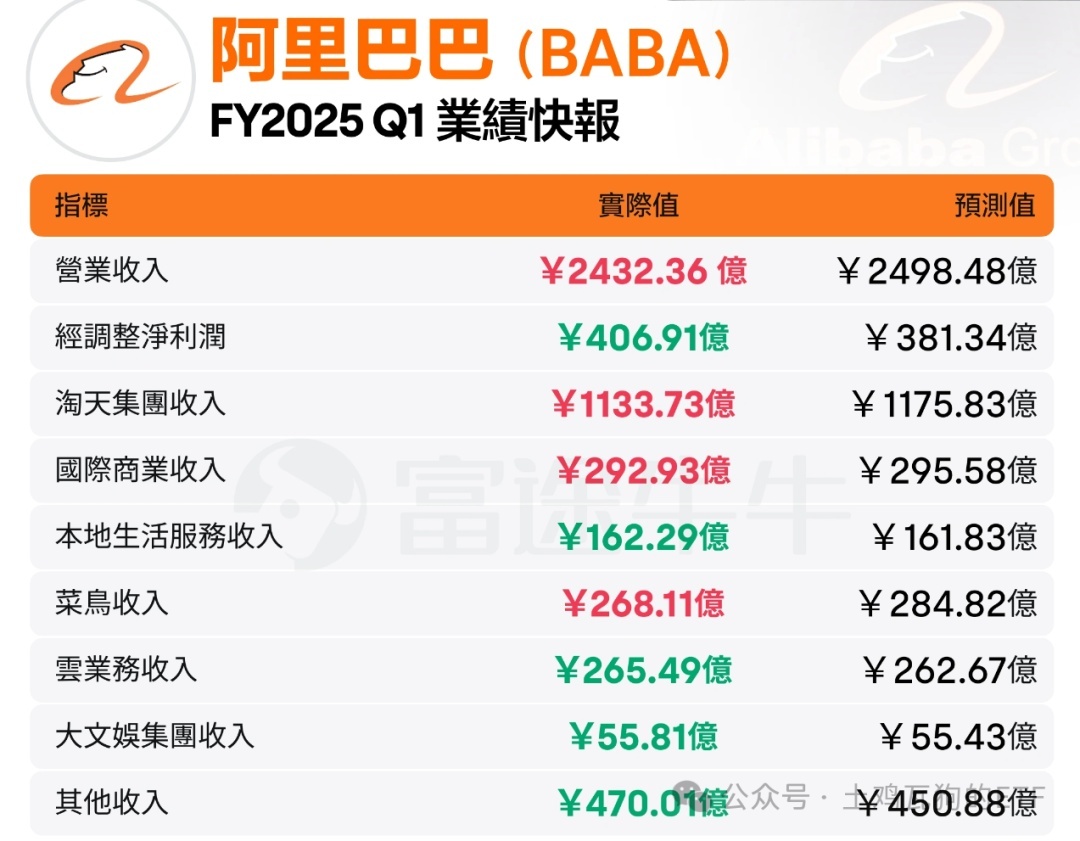
1. Mixed Earnings for Alibaba: While most segments performed well, Taotian Group's underperformance led to revenue and adjusted EBITA missing expectations. Cloud, international commerce, Cainiao, local services, and digital media improved, but Taotian's weight dragged the stock down.
Data source: Futu NiuNiu
2. Fiscal Q1 2025 Results: Revenue rose 4% YoY to 243.24 billion yuan. Adjusted net profit fell 9% to 40.69 billion yuan. Net profit dropped 27% to 24.02 billion yuan. Adjusted EPS was 16.44 yuan, down 5%. Operating cash flow fell 26% to 33.64 billion yuan. Free cash flow plunged 56% to 17.37 billion yuan.
3. Segment Performance:
1) Taotian Group: China commerce revenue fell 2% YoY, with customer management revenue up 1% and direct sales down 9%.
2) Cloud Intelligence: Revenue grew 6%, led by double-digit public cloud growth.
3) International Digital Commerce: International retail revenue surged 38%, wholesale rose 12%.
4) Cainiao: Revenue up 16%, driven by cross-border logistics.
5) Local Services: Revenue grew 12%, supported by Amap and Ele.me orders.
6) Digital Media: Revenue up 4%.
4. International Commerce Growth: Revenue jumped 32% to 29.3 billion yuan, fueled by cross-border and AliExpress Choice.
5. Share Buybacks: Alibaba repurchased 613 million shares for $5.8 billion in Q2 2024, including $1.2 billion in ADS.
6. Stock Impact: Despite solid segments, Taotian's miss weighed on the stock. Markets await whether its new promotion fees can revive growth.
2. Are Chinese Concept Stocks Worth Investing In Now?
1. Earnings are the "best gauge" of momentum, but valuation methods vary.
Tencent and Alibaba's earnings weren’t bad, supporting valuations. But some foreign investors now value only core businesses, whereas sum-of-parts was used before. Divergent methods lead to pricing gaps. Chinese firms often diversify to capture market share and hedge policy risks, making core-business valuations unfavorable.
2.Chinese stocks typically rally post-rate cuts. Why?
1) Most follow domestic fundamentals, like A-shares;
2) Liquidity hinges on Fed policy.
Traded in HK/US, Chinese stocks are priced by global capital flows.
Theoretically, under the Mundell-Fleming trilemma, the HKD’s peg to USD with free capital flows means liquidity is the key driver for HK/Chinese stocks.
For example, HK healthcare is rate-sensitive, as I compared in (S&P Biotech ETF, the "King of Pharma" ultra-sensitive to rates).
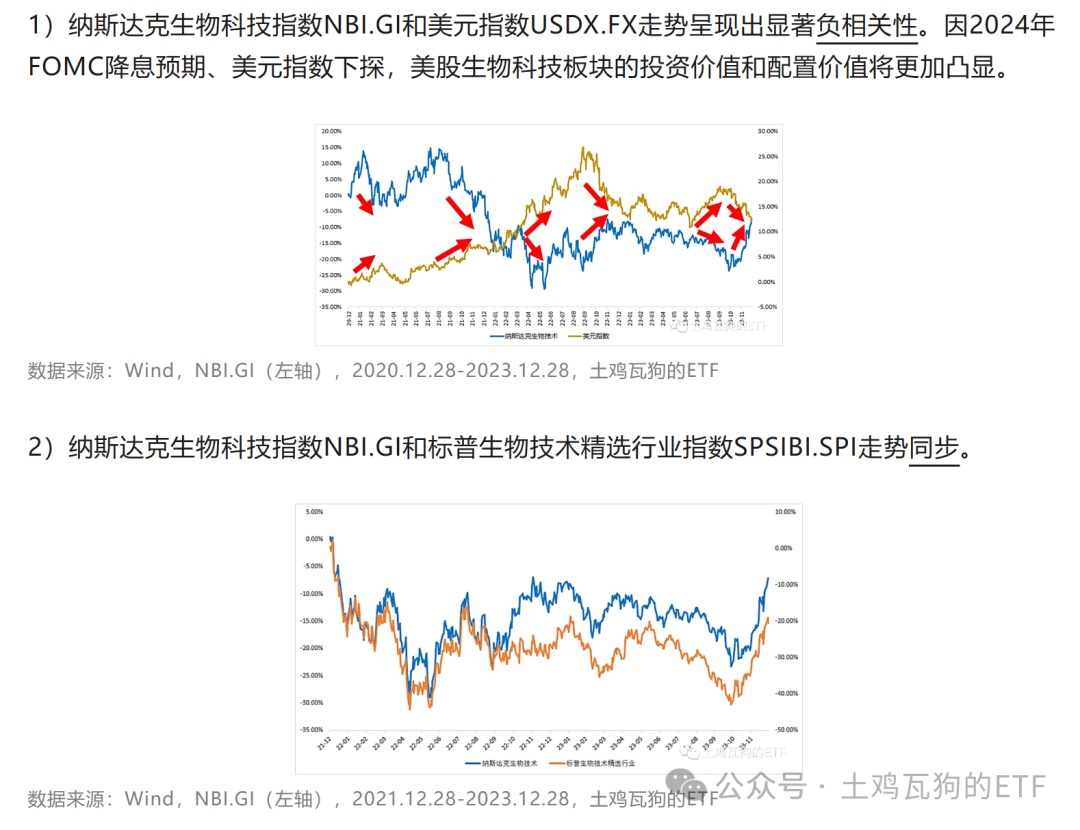
Similarly, Chinese stocks/Hang Seng Tech are sensitive to Fed rates. For instance, 2Y Treasury yields(reflecting Fed policy, as short bonds are more rate-sensitive) and Chinese stocks/Hang Seng Tech show a negative correlation, as shown:
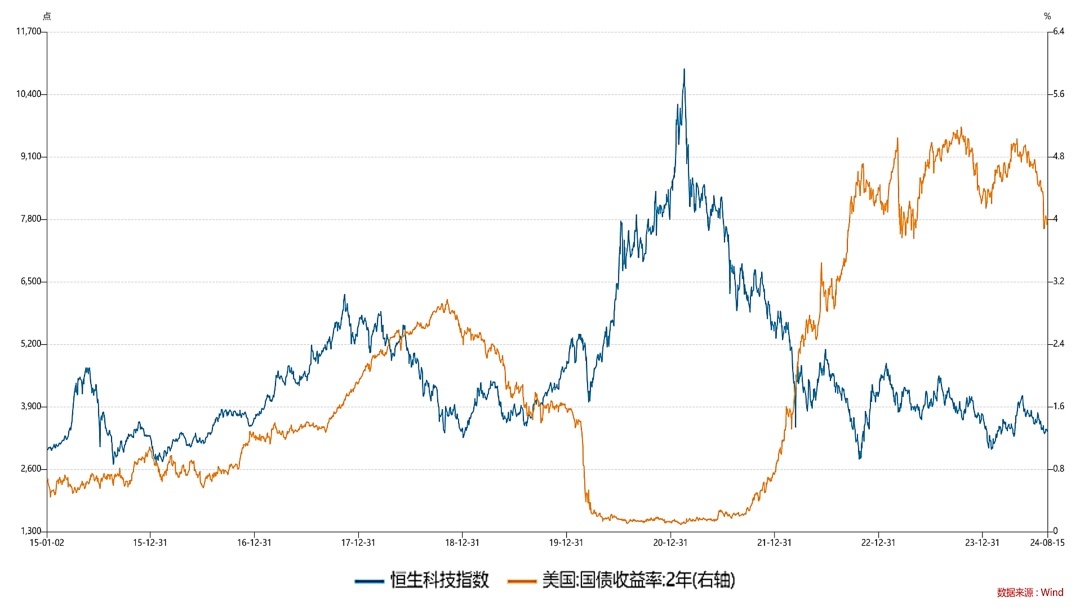
Current data supports a "soft landing," with swaps pricing in a 25bp "preemptive shallow cut" in September. While HK’s big rally may wait post-cut, some institutions are already positioning.
Closing Note: My expertise lies in US/China ETFs, BTC, and AI "era tickets." Knowledge Planet is the only discussion platform.
The copyright of this article belongs to the original author/organization.
The views expressed herein are solely those of the author and do not reflect the stance of the platform. The content is intended for investment reference purposes only and shall not be considered as investment advice. Please contact us if you have any questions or suggestions regarding the content services provided by the platform.
