

 Rate Of Return
Tariff turmoil hits global financial markets, how to respond now?

" Major news often aligns with the line of least resistance. The trend is already established before the news is released."
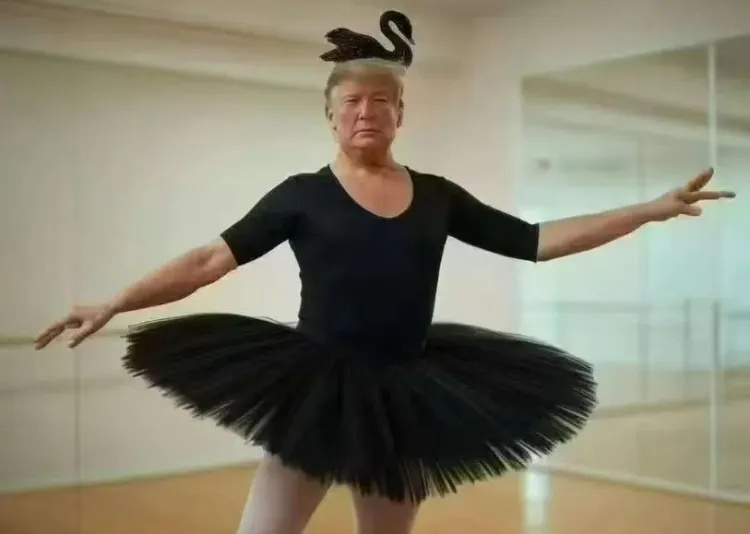
Today is another day to witness history. Global financial markets experienced a "Black Monday" under the impact of the "reciprocal tariffs" black swan event.
Stock markets in multiple countries opened sharply lower, and global stock markets experienced massive volatility, becoming trending topics.
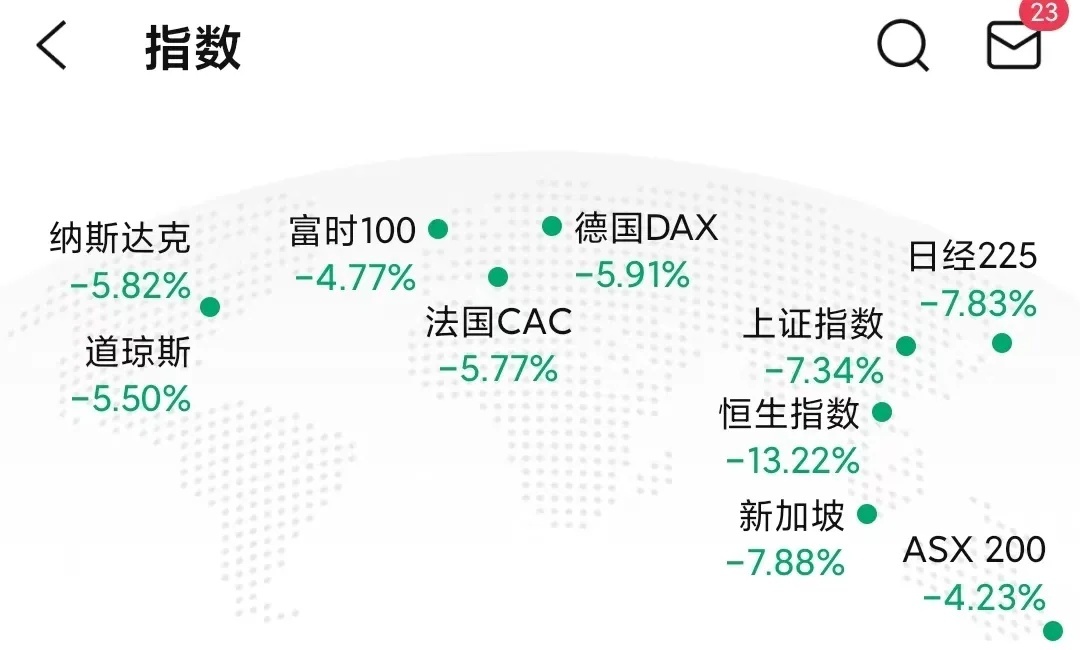
Investment groups were filled with lamentations, with most members reporting their largest single-day losses since they started investing, wiping out a year's profits in just one day...
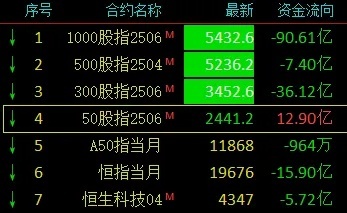
Since I started tracking stock indices, this is the first time I've seen A-share indices nearly wiped out by limit-down moves. Only the A50 index remained resilient under mysterious forces, even showing positive capital inflows.
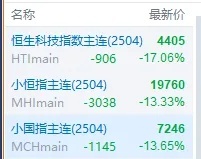
Hong Kong stock indices fared even worse. By the close, the $Hang Seng Index HSI.HK$ and $Hang Seng China Enterprises Index HSCEI.HK$ had plunged over 13%, while the $Hang Seng Tech Index HSTECH.HK$ plummeted more than 17%.
Due to caring for my two-and-a-half-month-old baby, I haven't had time to trade. My main account has been empty for almost a quarter, luckily avoiding this black swan event but also missing the earlier index rally.
My current mindset is calmer than most investors, so let me briefly discuss how to respond to the current situation.
01—Current Response
Personally, I believe profits and losses share the same source. You can't use investment strategies you're not good at to navigate the market and earn stable returns. Therefore, your current response should still align with your strengths.
For example, I currently use a pullback-free swing trading strategy. Market analysis acknowledges all possibilities, waiting for expected movements and strategy signals before entering trades. If signals don't appear, I remain on the sidelines.
Thus, how your strategy handles black swan events determines your current response.
If the market favors short-term speculation now, profit if you succeed, or cut losses quickly if you fail. But if you specialize in long-term strategies, use diversification to handle black swans—don't switch to short-term speculation for risk avoidance, as this often leads to more mistakes.
Every black swan event helps identify gaps, revealing whether your strategy's response is sufficient and logically complete.
This event highlighted the power of trends in indices, confirming a passage from "Reminiscences of a Stock Operator" by Jesse Livermore:
In practice, you'll find that major news released after the close often aligns with the line of least resistance. The trend is set before the news breaks. In bull markets, bearish news is ignored, while bullish news is exaggerated—and vice versa.
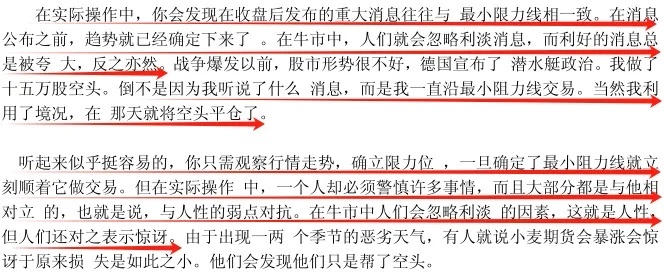
Whether A-share or Hong Kong indices, their recent trends weren't bullish even before the April 2 "reciprocal tariffs" announcement.
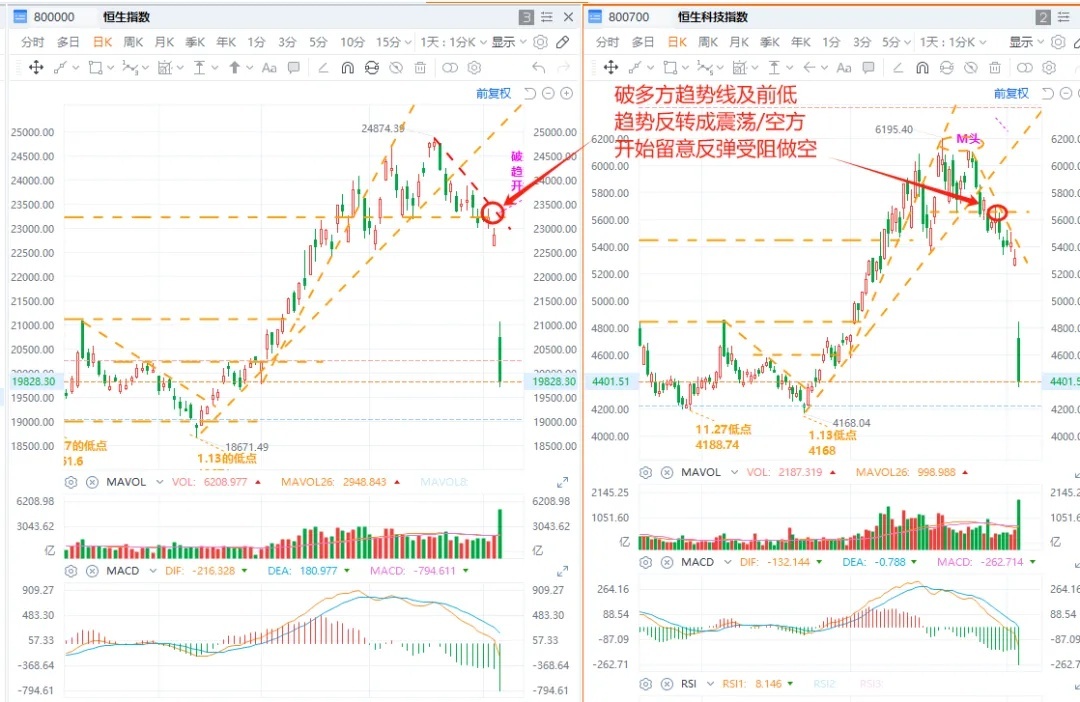
For example, the Hang Seng Tech Index broke its bullish trendline and previous low on March 25 (the Hang Seng Index held stronger, breaking its low on March 31). The rebound then stalled, confirming the line of least resistance had turned bearish.
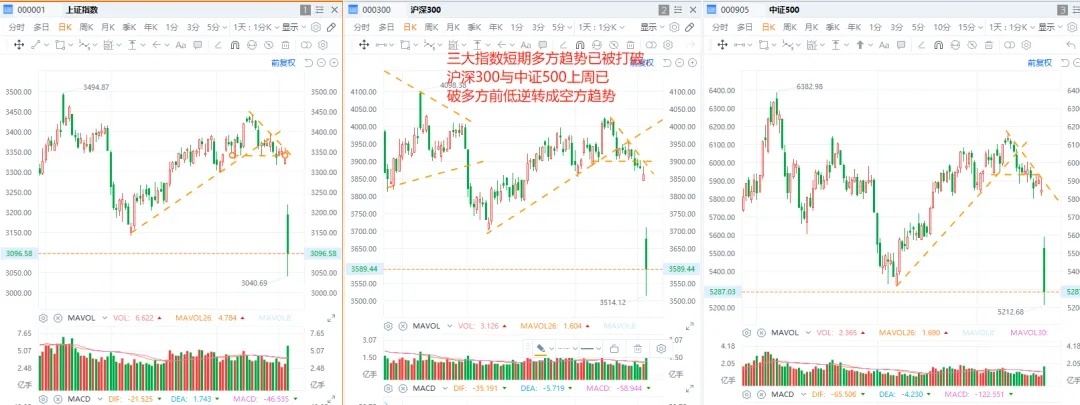
The same applies to China's three major indices. Traders should act immediately once the line of least resistance is confirmed—what some call "drawing the trendline and going with the flow." This means shorting at resistance during rebounds.
For traders who shorted along the line of least resistance before the news, this is an opportunity to close short positions.
This avoids potential rebounds eroding profits but doesn't mean going long here—unless you're speculating on short-term rebounds and consistently succeed.
Otherwise, as a swing trader, wait for clearer strategy signals before going long.
In summary, your response depends entirely on what kind of trader you are and how your strategy handles such events. Don't abandon your strengths because of one black swan.
02—Weekly Market Review
Let's analyze the three major indices I track: A50, Hang Seng Index, and Hang Seng Tech Index.
1. FTSE China A50 Index
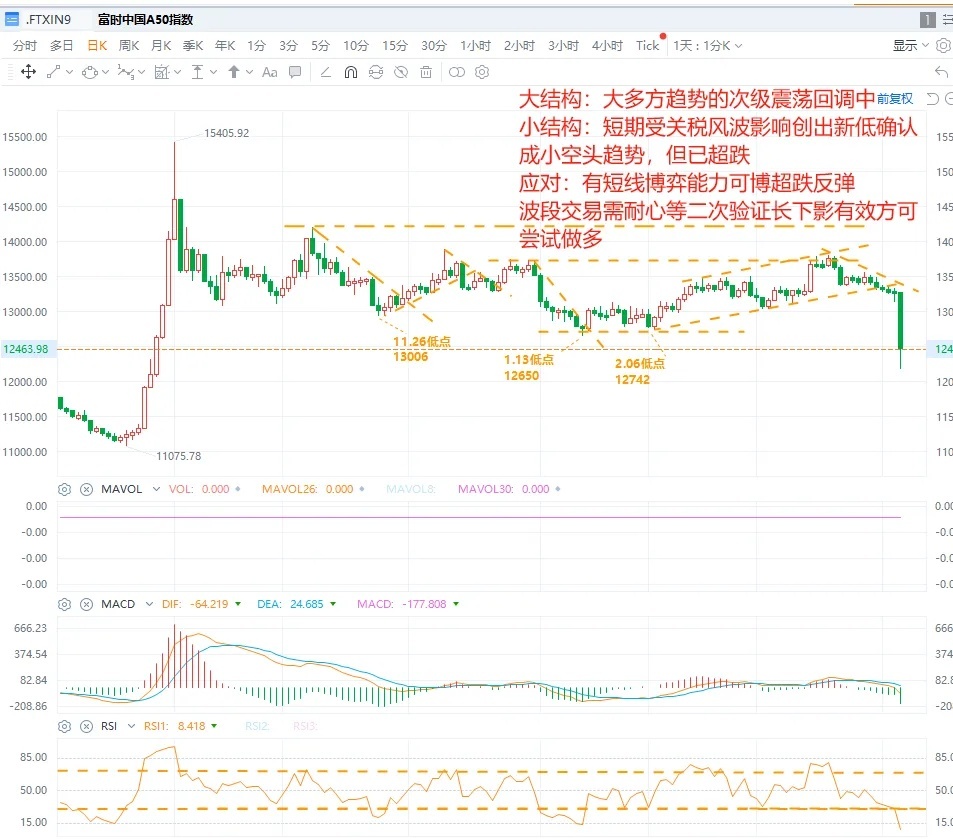
The daily chart shows the A50 remains in a wide-range bullish correction despite the tariff turmoil.
The short-term structure broke the slow uptrend channel, with today's crash breaching previous lows to form a minor bearish trendline.
For swing traders following the line of least resistance, the approach would be to wait for rebound resistance to short.
But the news-driven acceleration and oversold conditions shift the response: those skilled in short-term plays can attempt oversold rebounds, while swing traders should wait for confirmation of Monday's long lower shadow before considering longs.
2. Hang Seng Index
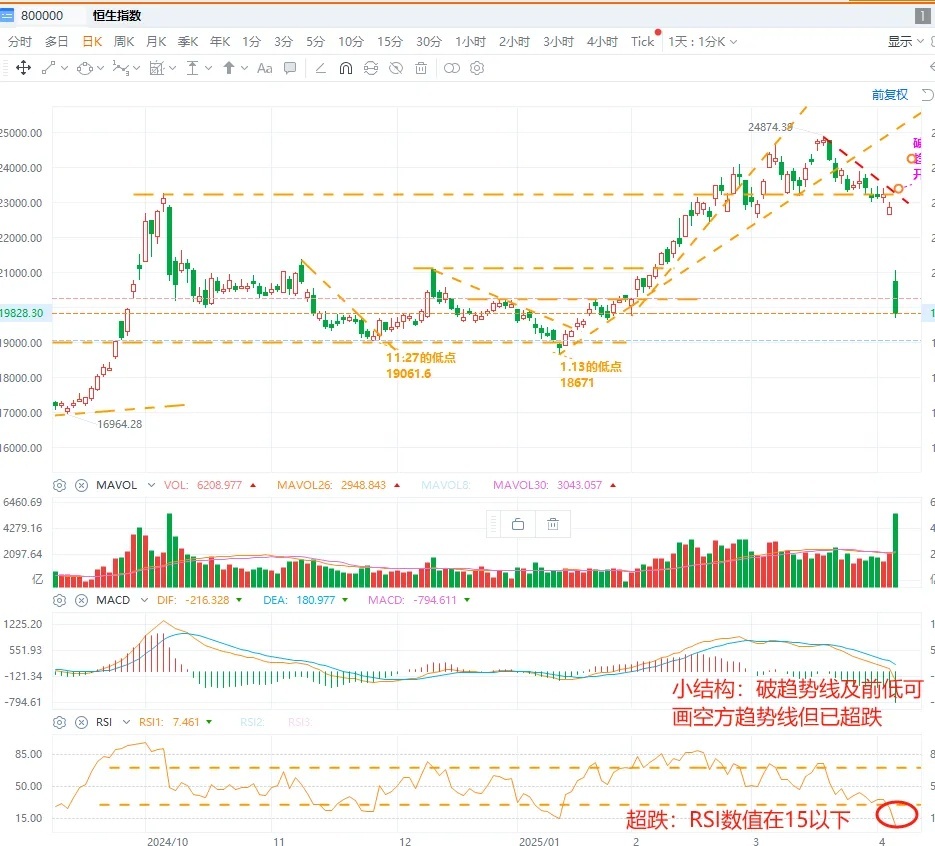
The Hang Seng resembles the A50—its major structure remains in a bullish correction post-second rally as long as the January 13 low holds. The minor bearish trendline is oversold, warranting the same approach as the A50.
3. $Hang Seng TECH Index(STECH.HK)
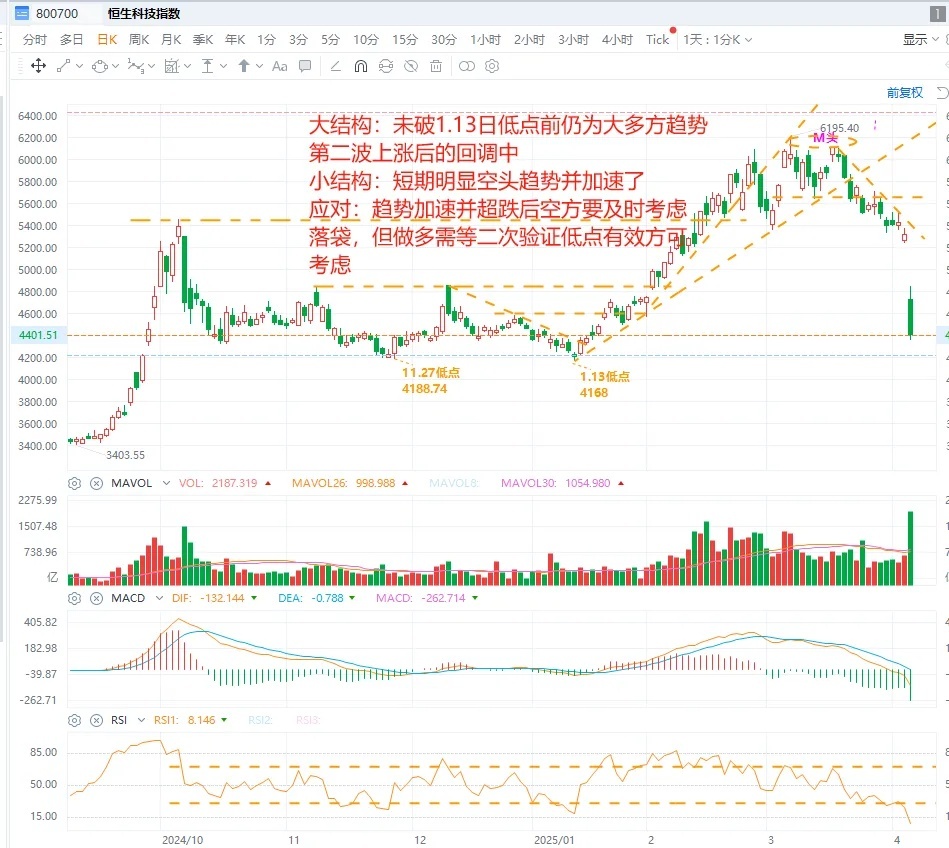
The Hang Seng Tech has underperformed recently. Its major structure remains a bullish correction post-second rally if the January 13 low holds. The response mirrors the Hang Seng, but prioritize the Hang Seng for long positions.
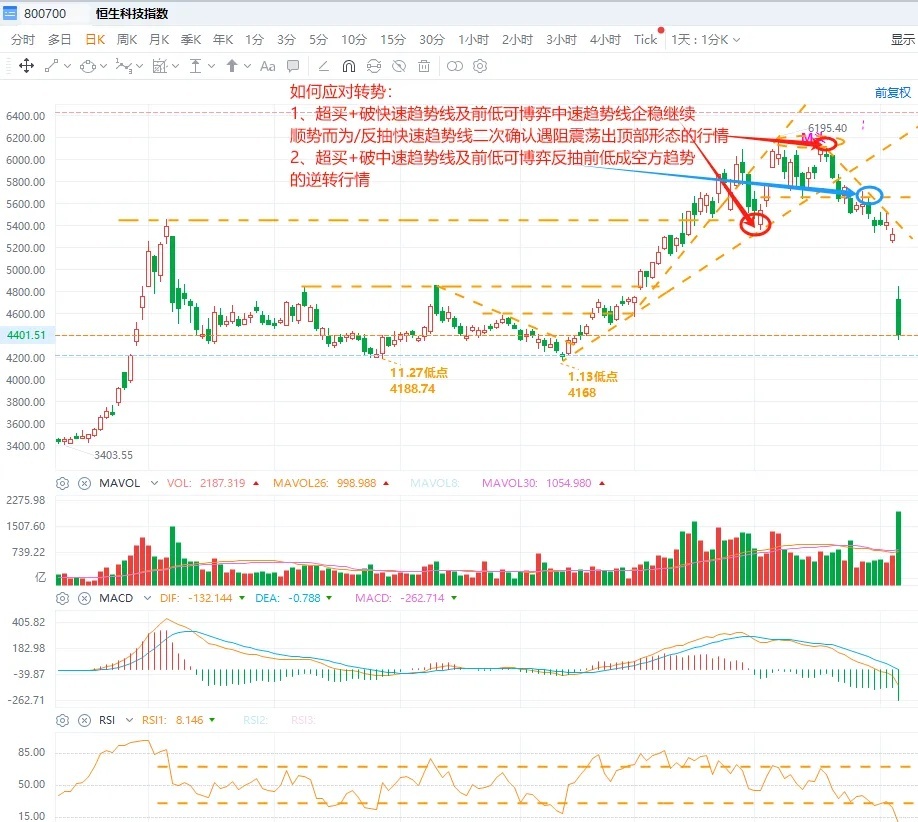
This reversal also demonstrates how swing traders handle trend changes: breaking a fast trendline doesn't end the uptrend but slows it. Resistance at previous highs signals potential reversal. Only breaking the medium-speed trendline and previous lows confirms a full reversal.
The same applies to bearish reversals.
Note: This is my personal analysis as a swing trader—it may be incomplete or incorrect. Please assess rationally.
I hope this helps. See you next time.
Disclaimer: This article shares my trading system philosophy and investment logic, not advice. Any mentioned stocks aren't recommendations. Markets carry risks—invest cautiously.
The copyright of this article belongs to the original author/organization.
The views expressed herein are solely those of the author and do not reflect the stance of the platform. The content is intended for investment reference purposes only and shall not be considered as investment advice. Please contact us if you have any questions or suggestions regarding the content services provided by the platform.
