

OpenAI wants to cut the fat, who will lose a layer of skin?

Recently, OpenAI has made new moves in monetization, predictably targeting two lucrative tracks—short videos and e-commerce advertising. Dolphin Research provides a brief commentary first, and will discuss in detail the impact of OpenAI's accelerated monetization in the upcoming value reassessment study of $Alphabet(GOOGL.US) $Alphabet - C(GOOG.US). Stay tuned.
1. Is AI video content really suitable for "social"?
Let's first talk about the planned video social platform, which is a platform entirely for publishing videos generated by the AI model Sora 2, where users can create video clips up to 10 seconds long. Video content cannot be uploaded from local devices, but users' own portraits can appear in the videos.
The product is currently in the internal testing phase, and employee feedback indicates a good experience. If, as the media claims, this product aims to compete with TikTok, the future monetization model is likely to be advertising. Last week, OpenAI began recruiting to form an advertising team.
But the question is, not to mention whether this cost-benefit can break even, is a purely AI-generated video platform really suitable for high-engagement social interaction?
Moreover, existing short video platforms like TikTok, Reels, and Shorts also contain some AI-generated videos, which are currently mainly used to supplement user content experience. This indicates that "AI-generated videos" cannot become an absolute competitive advantage.
Conversely, a long-term high-engagement social interaction somewhat needs to be built on the foundation of real content. In the AI era, the line between real and fake is already blurred. When more AI content fills a general social platform in the future, it will not only involve ethical issues but also make users pursue real content more.
Therefore, Dolphin Research temporarily holds a reserved opinion on this video social platform but will continue to monitor new developments.
2. Introducing transactions: Ecosystem loop, but focus on traffic
Yesterday, OpenAI announced the launch of the "Instant checkout" feature in the U.S., allowing users to complete the entire shopping process within ChatGPT without needing to jump to external links as before. Esty and Shopify have become the first batch of e-commerce platforms to join.
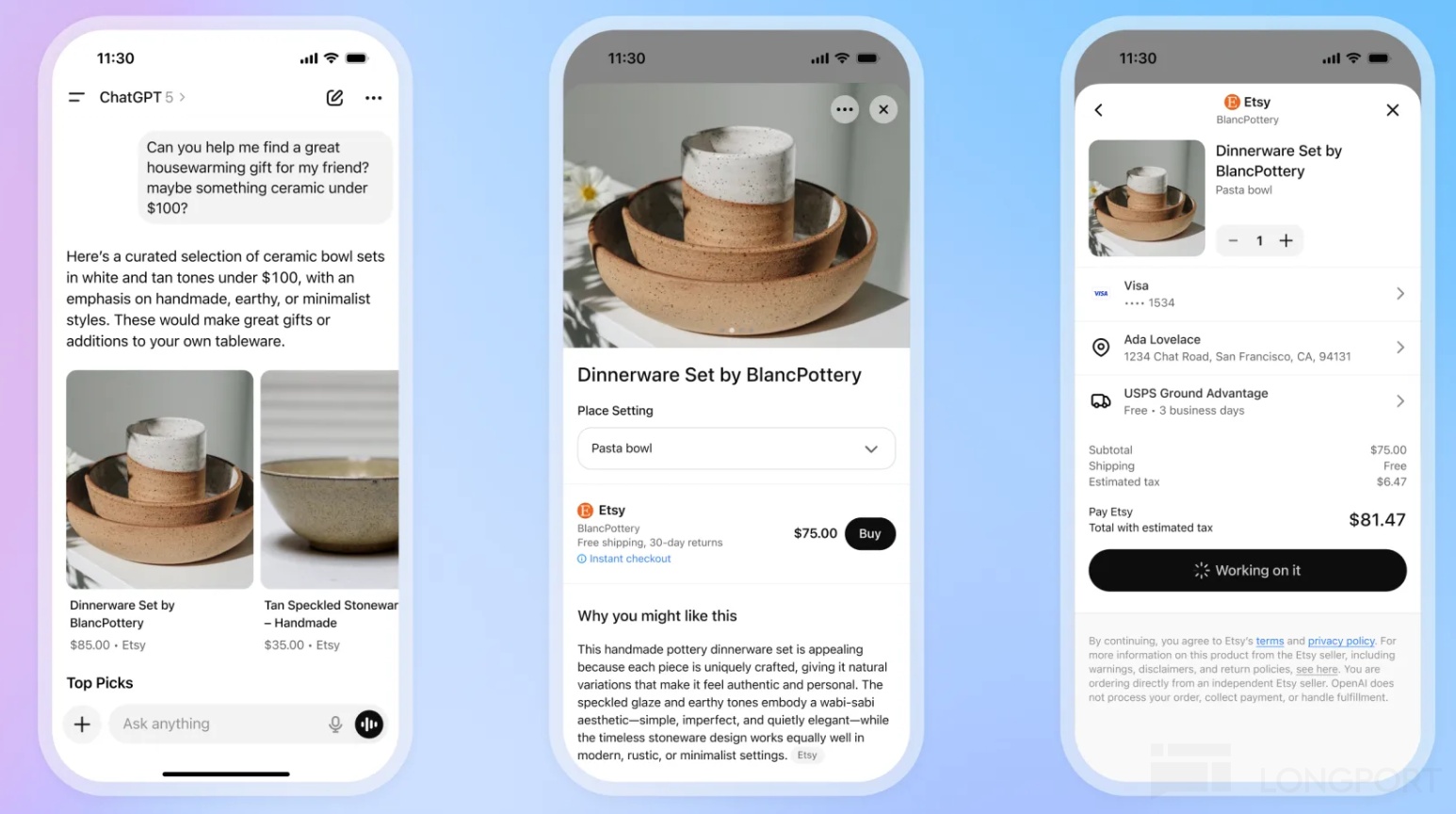
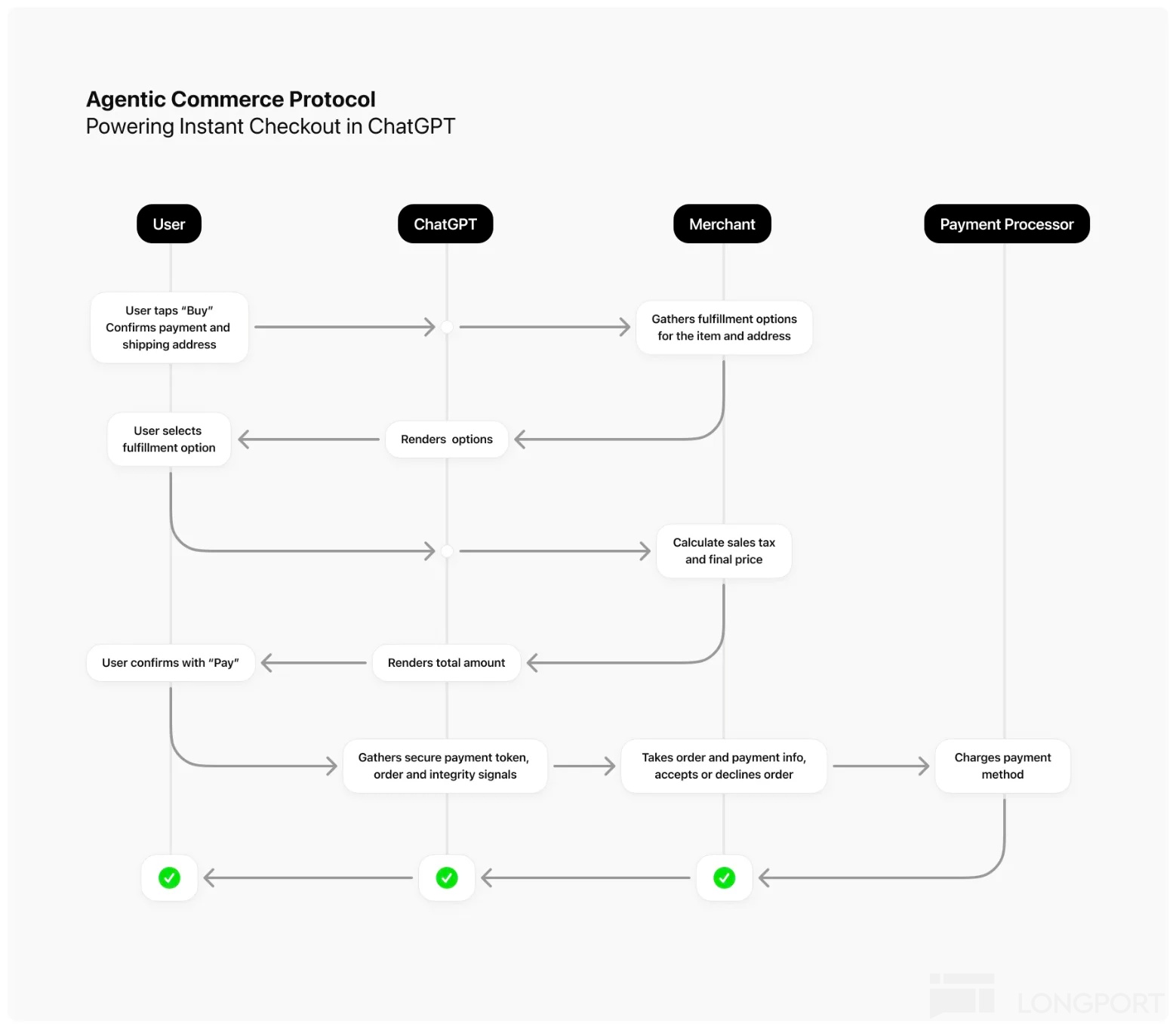
From the cooperation method, OpenAI mainly plays a role in front-end traffic diversion, while the back-end product page display, pre-sales and after-sales customer service, and logistics and other e-commerce infrastructure services are provided by the merchants/platforms themselves.
The core point is in the business model. To avoid affecting the product experience of ChatGPT, OpenAI does not intend to commercialize the sorting of product displays like traditional search engines. Instead, it adopts a more e-commerce-like GMV*take rate to generate revenue, which is the CPS (Cost per sale) business model mentioned by Sam Altman earlier.
3. Impact of shopping ecosystem: Theoretical impact is significant, but there are constraints
This key move by OpenAI, "if" it can gradually expand user penetration and attract more merchants, will inevitably impact the existing competitive landscape:
(1) Impact on the budget share of "traditional CPC, CPM advertising" in the e-commerce field for Google and Meta. Among them, OpenAI theoretically has a greater potential impact on Google, as it also provides product promotion services for users with strong shopping "intent" (Meta, on the other hand, recommends "temporary" consumption based on social relationships).
(2) Impact on leading e-commerce platforms like Amazon. The U.S. e-commerce market is highly concentrated, with Amazon being the absolute leader, having prominent traffic and scale advantages. However, with OpenAI's support, smaller platforms can effectively supplement their traffic weaknesses, and the payment function enhances the overall shopping experience, attracting more users to try and maintain engagement.
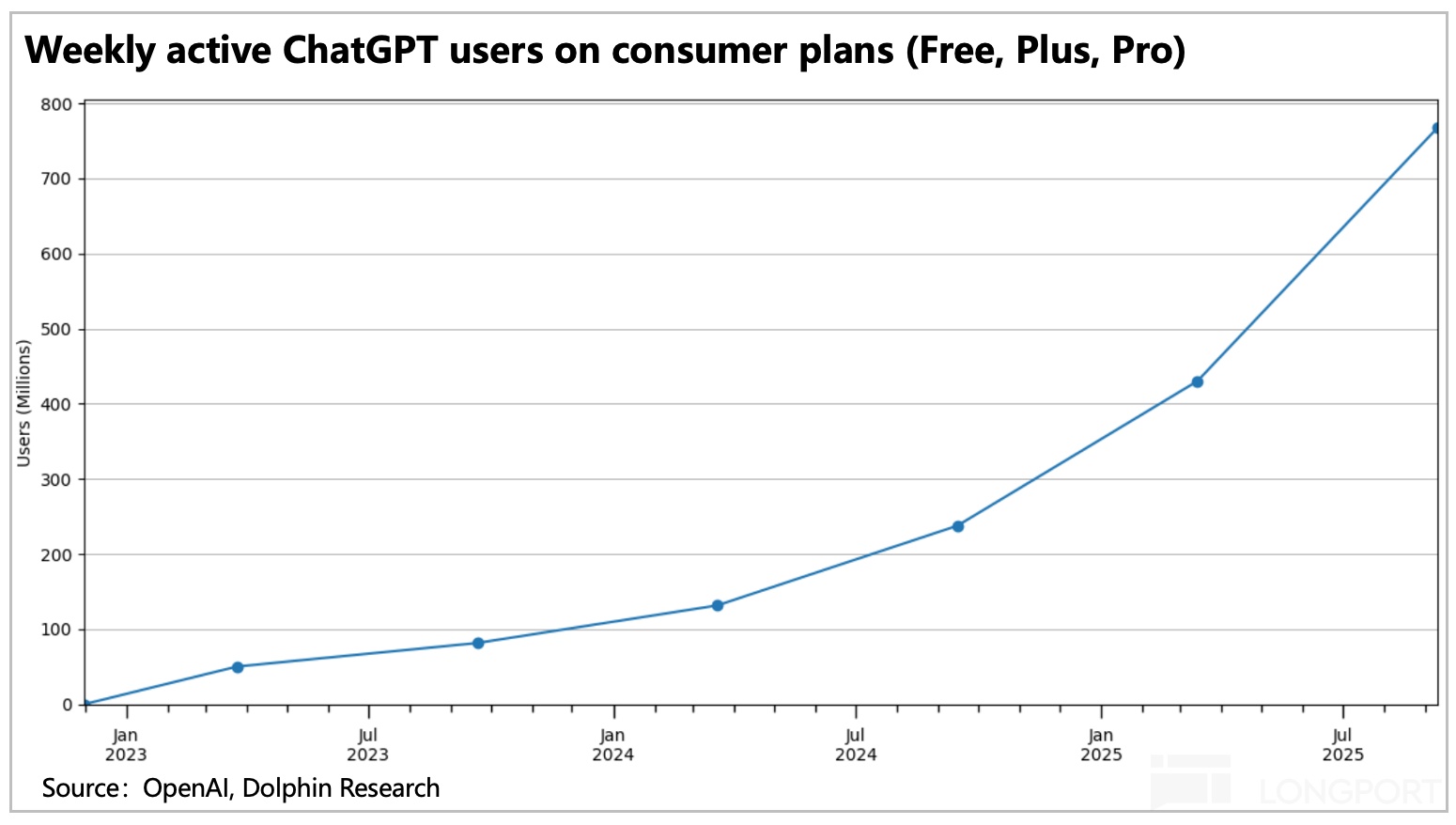
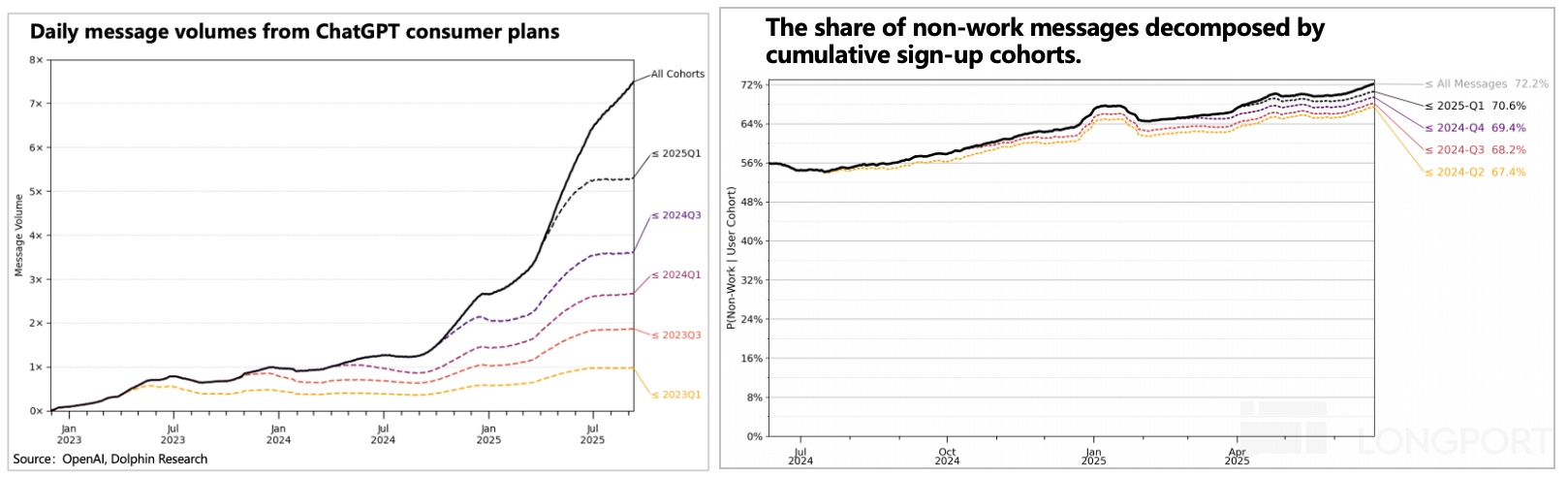
Of course, the key to OpenAI's ability to make an impact lies in its current massive user scale and interaction engagement. Currently, with 700 million weekly users and daily interaction volume growing several times, non-work-related interactions have risen from 56% in July last year to 72%. The later the registration (1Q25), the higher the interaction frequency, and the less work-related it is. This reflects the breakout effect of ChatGPT, expanding from core users in workflows to ordinary user circles.
But the core issue is whether OpenAI can smoothly and continuously expand the merchant ecosystem on the platform:
(1) Integrating payment into high-traffic platforms is not OpenAI's first creation. Google previously pushed "Buy on Google," but closed it in 2023. Coincidentally, Meta also launched a shopping checkout feature with the Shops function in 2020, but gradually phased it out two years later (except for a special cooperation with Amazon starting in 2023, where users can log in to their Prime account within Meta to complete shopping).
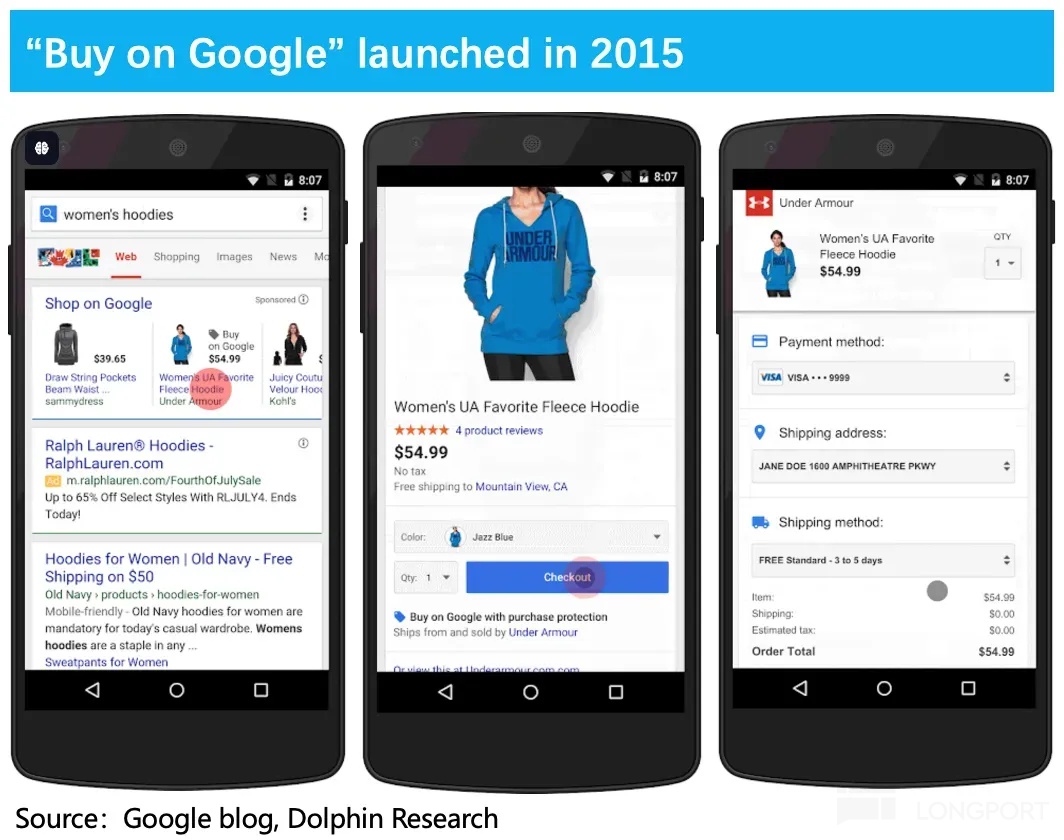
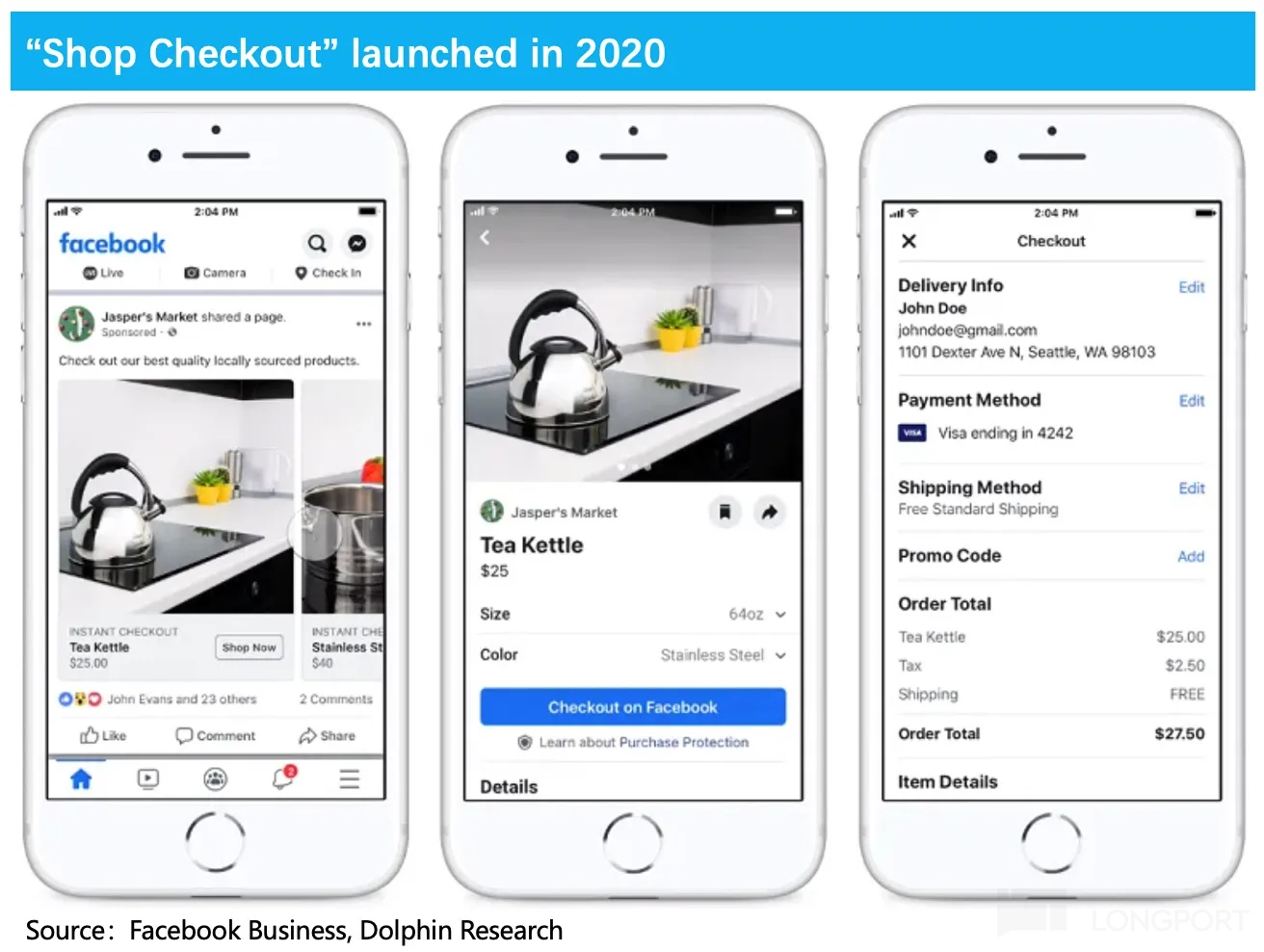
The key factor forcing the two giants to abandon creating a closed ecosystem stems from the "supply less than demand" pattern in the European and American goods market, where brand merchants have more say and mostly prefer independent site models.For merchants, they absolutely do not want to become "vassals"/"service providers" of Google and Meta, and have a stronger desire to control private domain traffic, meaning they are more willing to pay for services that direct traffic to their own websites.
The seamless shopping experience within Google and Meta cuts off merchants' ability to capture data throughout the user conversion process, setting obstacles for their subsequent promotional work, forcing them to purchase additional Ad Campaign tools from Google and Meta.
Conversely, for Amazon, whose own traffic has basically peaked and needs external traffic to penetrate more user scenarios to defend against emerging market players, it can choose to join forces with traffic giants like Meta to maintain existing user satisfaction through a seamless in-platform transaction experience, preventing new players from taking over.
Therefore, as OpenAI, which has a more "user decision guidance" role, the attitude of quality merchants in the short term is likely to remain cautious. But in the long term, it remains to be seen whether they will become more independent or compromise due to inability to resist.
4. AI agent payment may be unstoppable
Although the in-platform checkout feature was closed in search, Google launched the AP2 agent payment protocol in early September, which is also a payment cooperation alliance prepared for AI Agents (covering more than 60 payment organizations worldwide). Therefore, Gemini's invocation of payment functions is also imminent. After OpenAI's shopping payment function is implemented, it is expected that Google will accelerate the introduction of e-commerce platforms and in-platform payments.
The "follow strategy" will also be replicated to other large models or AI Agents, so if AI Agent agent payment becomes an unstoppable trend, merchant compromise may also come faster in the future.
Meanwhile, if Google and Meta subsequently restore shopping payment functions in AI Agents and also refrain from commercializing product display sorting, it is expected to offset the negative impact of traditional e-commerce advertising and even rely on more diverse ecosystem collaborative solutions to maintain competitiveness.
In short, it's all a game. In the U.S. market, the change in merchants' attitudes still requires a considerable amount of time. During this process, the confrontation between OpenAI and giants like Google, Meta, and Amazon will continue to pull—besides cultivating or migrating user mindset, the underlying ecosystem needs to be perfected, so the actual impact size cannot be definitively judged yet.
But it is clear that under the pressure of massive spending, OpenAI's monetization ambition can no longer be hidden. The monetization potential of 700 million weekly users with high-frequency interaction traffic is evidently not small. Currently, the monetization of AI large models has not yet explored the best business model, but OpenAI's actions are undoubtedly an industry benchmark for imitation.
Just as ByteDance can dominate the latter half of the Chinese internet, proving that a platform with massive high-engagement users, regardless of the final business model chosen, because there is enough room for trial and error, will somewhat peel a layer off the existing leaders. As for who loses more or less, who gets peeled in the future, and who gets peeled now, it is a topic worth repeated discussion.
However, the reason giants are giants is that their comprehensive strength should not be underestimated, and short-term success or failure cannot be discerned. Therefore, at present, rather than fearing the theory of giants being overturned, it is those small and beautiful verticals (non-leading OTAs, local life, e-commerce) that can survive or ride the traffic wave of OpenAI, which are more worthy of attention from an investment perspective.
Risk disclosure and statement of this article:Dolphin Research Disclaimer and General Disclosure
The copyright of this article belongs to the original author/organization.
The views expressed herein are solely those of the author and do not reflect the stance of the platform. The content is intended for investment reference purposes only and shall not be considered as investment advice. Please contact us if you have any questions or suggestions regarding the content services provided by the platform.
