

 Posts
Posts Likes Received
In-depth analysis of China-US economic and trade negotiations

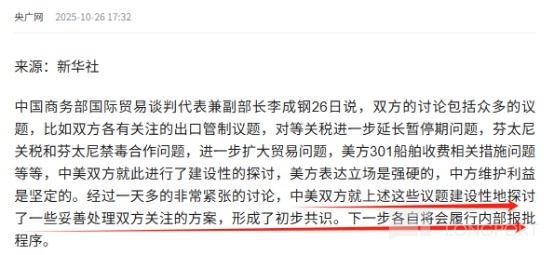
Overall, the results are positive.
Macro Impact:
The core value of the talks lies in stabilizing expectations and avoiding a potential escalation of trade conflicts that could sweep the globe.
Global: Supply Chain Pressure Eases
The most direct impact is that global supply chains have breathed a sigh of relief. If the talks had collapsed and U.S.-China trade friction escalated, logistics costs and uncertainties for almost all goods—from chips and rare earths to daily consumer products—would have risen sharply. The preliminary consensus reached this time is like a temporary "tranquilizer" for global trade, helping to maintain the stability of existing supply chains.
U.S.: Inflation Pressure Eases
The U.S. willingness to return to the negotiating table stems from domestic economic pressures. The U.S. willingness to return to the table was expected. The threat of inflation to the domestic economy has gradually become apparent. If further pushed up by high tariffs, the economy faces the risk of stagflation, which would be a very tricky situation. The U.S. also has concerns about this, which is why this round of tariffs is another classic TACO-style deal.
Inflation Pressure: A new round of tariff wars would directly increase consumer costs for Americans. In the current environment, controlling inflation is one of the top priorities for the Federal Reserve and the U.S. government, and avoiding an escalation of the trade war aligns with this goal.
Industry Voices: For example, U.S. shipping company ACL faces an additional cost of up to $34 million annually due to new port fees on China. This shows that the U.S. unilateral measures are also backfiring on its own companies, and industry pressure is an important driver for negotiations.
China: Consolidating Development Certainty
For China, the results of the talks echo the "steady expansion of institutional opening" emphasized at the recently concluded Fourth Plenum. A stable external environment is conducive to China's advancement of the "15th Five-Year Plan," focusing on internal high-quality economic development and industrial upgrading. At the same time, China's countermeasures on key minerals such as rare earths have been incorporated into the negotiation framework through this round of talks, demonstrating China's determination and capability in safeguarding its core interests.
Stock Market:
At the stock market level, the impact of the talks will show significant structural characteristics. The table below outlines the main beneficiary sectors and areas that still require caution.
Beneficiary Sectors/Areas
Trade-related: Such as shipping and logistics: The easing of trade tensions is expected to boost cargo volumes and route stability, directly benefiting port and shipping companies.
1. Export-oriented industries: Such as home appliances and electromechanical products, where lower shipping costs will help export volumes recover.
2. Commodities/agricultural products: Especially major U.S. export products like soybeans, where expectations for China to resume imports are strongest.
3. New energy and semiconductors: If the two sides reach partial understanding on export controls, it will benefit the stability of supply chains in key industries such as new energy and semiconductors.
Under Pressure Sectors
1. Some domestic substitution concepts: If imports resume, some sectors that have risen in recent years due to the "domestic substitution" logic may face pressure.
2. Rare earths: If China temporarily eases export controls as a bargaining chip, rare earth prices may fall from their highs, putting short-term pressure on related companies.
In-Depth Analysis of Key Sectors
Maritime Logistics and Shipbuilding
This is the focus of this round of games. The U.S. "301 measures" and China's countermeasures have filled this sector with uncertainty. If follow-up negotiations reach a compromise on port fees, the profit expectations of shipping companies (whether Chinese or international liners) will be restored, presenting a potential "distress reversal" opportunity. For the shipbuilding industry, the medium- to long-term competitive landscape will not change, but short-term policy risks have been reduced.
Agricultural Products—The Most Certain Short-Term Opportunity
The resumption of U.S. agricultural imports, such as soybeans, is one of the easiest outcomes to achieve in the talks. This directly benefits China's agricultural import and processing companies, which can obtain cheaper and more stable raw materials. It also benefits U.S. agricultural exporters.
Technology and Advanced Manufacturing—Finding Cooperation Amid Divergence
The technology sector will be a typical case of "friction" and "cooperation" coexisting. The overall blockade stance will not change, but the talks have opened the possibility for limited technical exchanges and product exports in non-core areas. Companies with layouts in areas of mutual interest, such as new energy and AI application layers, are worth watching.
Overall, the results of the U.S.-China Malaysia meeting are optimistic in the short term but require vigilance in the medium to long term.
Short-term: You can actively participate in the valuation recovery of the above-mentioned beneficiary sectors. The shift in market sentiment toward optimism is a good time to reduce cash positions and increase equity asset allocations.
Medium- to long-term: It must be recognized that U.S.-China strategic competition is a long-term trend. This round of talks is a "truce" rather than an "end to the war." In investment portfolios, it is still necessary to allocate a sufficient proportion of defensive assets (such as utilities and consumer staples) and strategic assets (such as hard-tech companies with core technologies).
However, we still need to wait for the conclusion of the APEC summit next week, after which the biggest external uncertainty for the stock market will be officially resolved.
$HSTECH ETF(03032.HK) $Tesla(TSLA.US) $NVIDIA(NVDA.US) $大宗商品(000979.SH) $China United Lines Ltd.(22020.HK) $Port Transportation(20047.HK) $JJ SHIPPING(601083.SH)
The copyright of this article belongs to the original author/organization.
The views expressed herein are solely those of the author and do not reflect the stance of the platform. The content is intended for investment reference purposes only and shall not be considered as investment advice. Please contact us if you have any questions or suggestions regarding the content services provided by the platform.
