

Apple is submitting its results tonight. Can it maintain its $4 trillion market cap? How to position in the Apple supply chain?

Apple will announce its Q4 earnings after the market closes today. Let's talk about Apple and its supply chain today.
First, let's review Apple's performance. In the first three quarters of 2025, Apple's cumulative revenue reached $313.695 billion, with Q3 revenue at $94.04 billion, up 9.6% year-on-year. Notably, service revenue remained strong, reaching $27.4 billion in Q3, effectively offsetting the decline in iPad and wearable revenue.
Focus on whether Q4 will continue this structure: Can the high growth of services continue to compensate for weak hardware sales?
Apple launched the thinnest iPhone 17 in history in September, equipped with the A19 chip. Although its launch at the end of the quarter limited its contribution to Q4 earnings, sales in the first ten days were 14% higher than the iPhone 16, raising market expectations for Q1 2026.
Last quarter, Apple ended seven consecutive quarters of decline in Greater China. However, Q2 2025 data showed that its shipments in the Chinese market still fell by 1 percentage point year-on-year to 15%. In this earnings report, Greater China sales performance remains a key variable.
In early September, a U.S. court ruled that Google could continue to pay Apple about $20 billion annually for default search fees, providing a stable revenue base for services. Additionally, the expansion of the AI application ecosystem is expected to drive continued growth of the "Apple tax."
Apple's narrative in AI remains conservative, with investors watching whether it can drive innovation while controlling costs. Cook recently revealed in Shanghai that Apple Intelligence is being pushed into the Chinese market. Key points in the earnings report: whether AI-related operating expenses are within expectations; whether the approval timeline for AI features in China is clear.
To address tariff risks, Apple continues to shift its supply chain to India and Vietnam. Investors should watch:
The proportion of India-assembled iPhones sold in the U.S. market; whether Vietnam's contribution to Apple's production chain is increasing.
If tariff costs are not passed through as expected, or AI spending exceeds budgets, it could pressure gross margins.
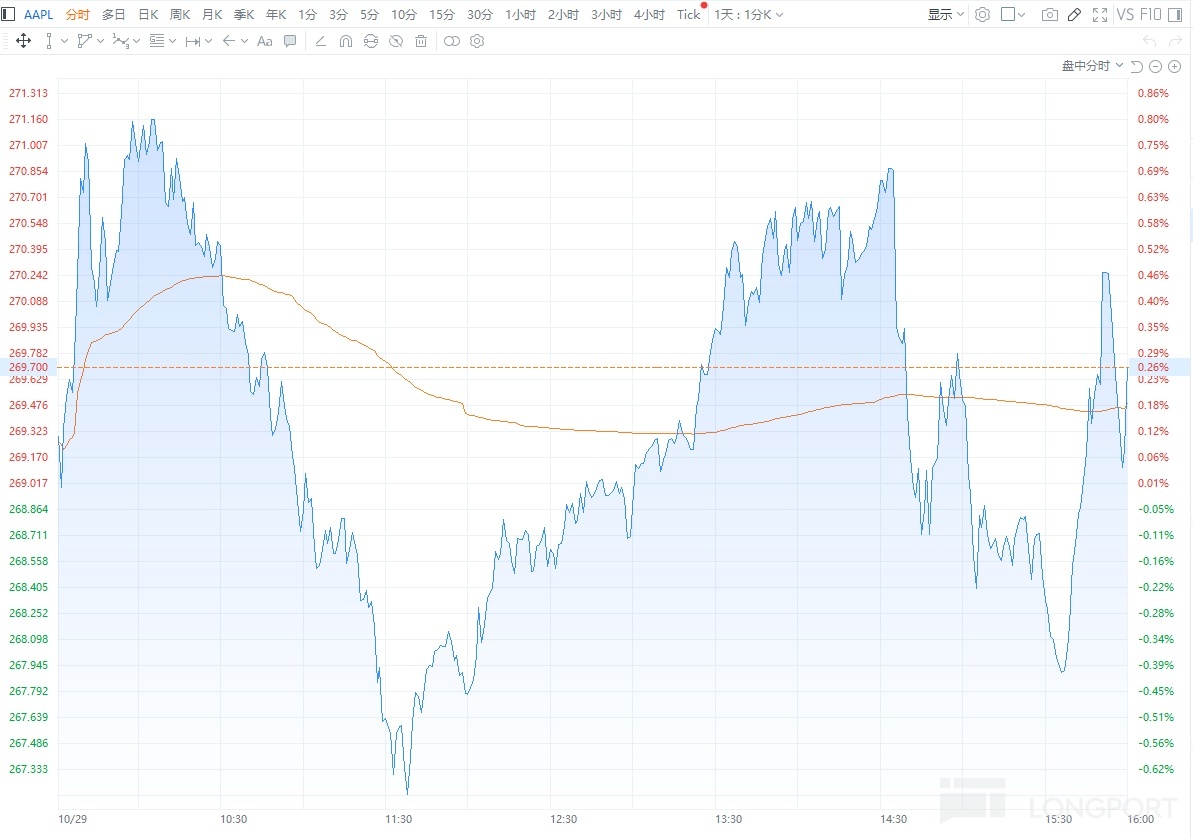
$Apple(AAPL.US) opened higher at 271 on the 30th, fell to 267, then rebounded sharply to 270 in a V-shaped reversal, and closed slightly lower at 269, up 0.26%.
Strong upward momentum, with three consecutive days of gains this week. RSI is in overbought territory, suggesting short-term pullback risks, but MACD golden cross and upward KDJ support a rebound. If it holds above 265 post-earnings, the stock may fluctuate in the 265-275 range.
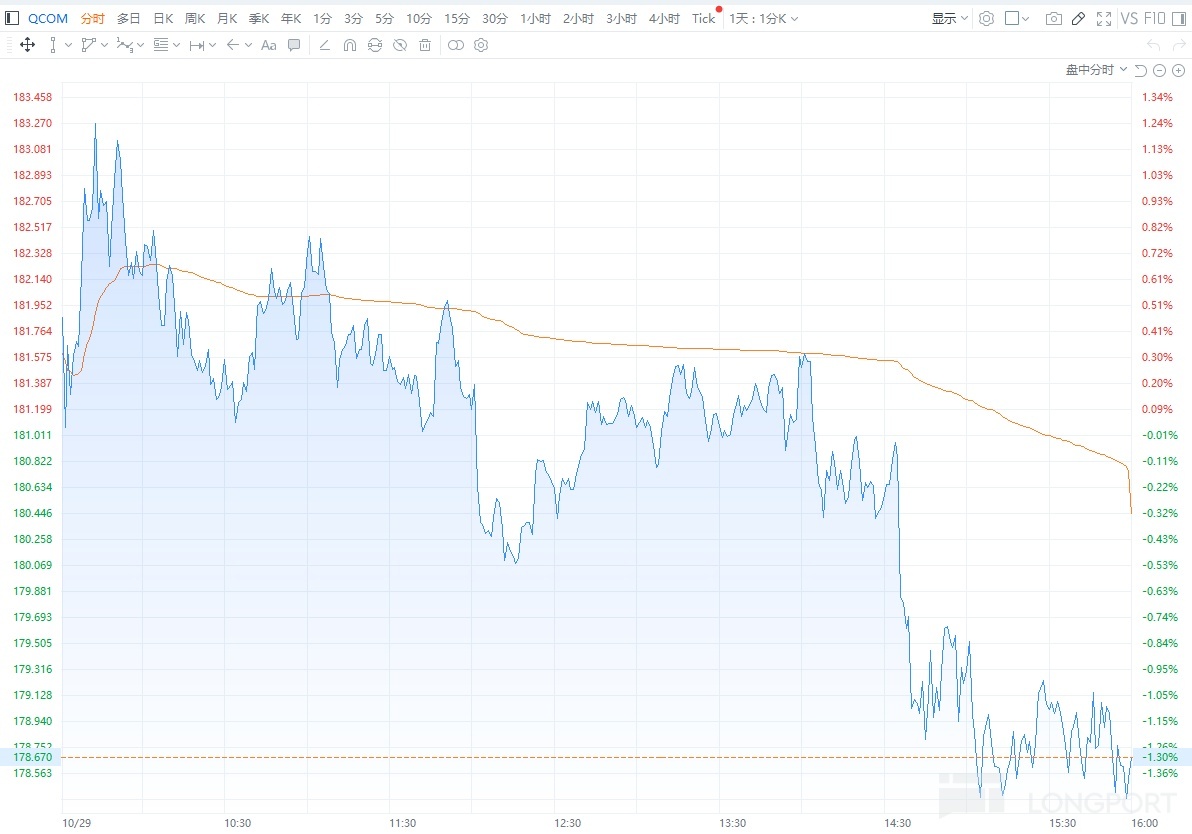
$Qualcomm(QCOM.US) rose then fell on the 29th, opening at 182, peaking at 183 before fluctuating downward, with bears dominating near the close, breaking below 180 to close down 1.30%.
Qualcomm is in a pullback phase after its AI chip announcement. Although part of Apple's supply chain, it may continue to pull back, though there's a chance of support from iPhone 17 orders. Watch support at 175; if stable, consider adding lightly. Below MA60, reduce positions to cut losses.
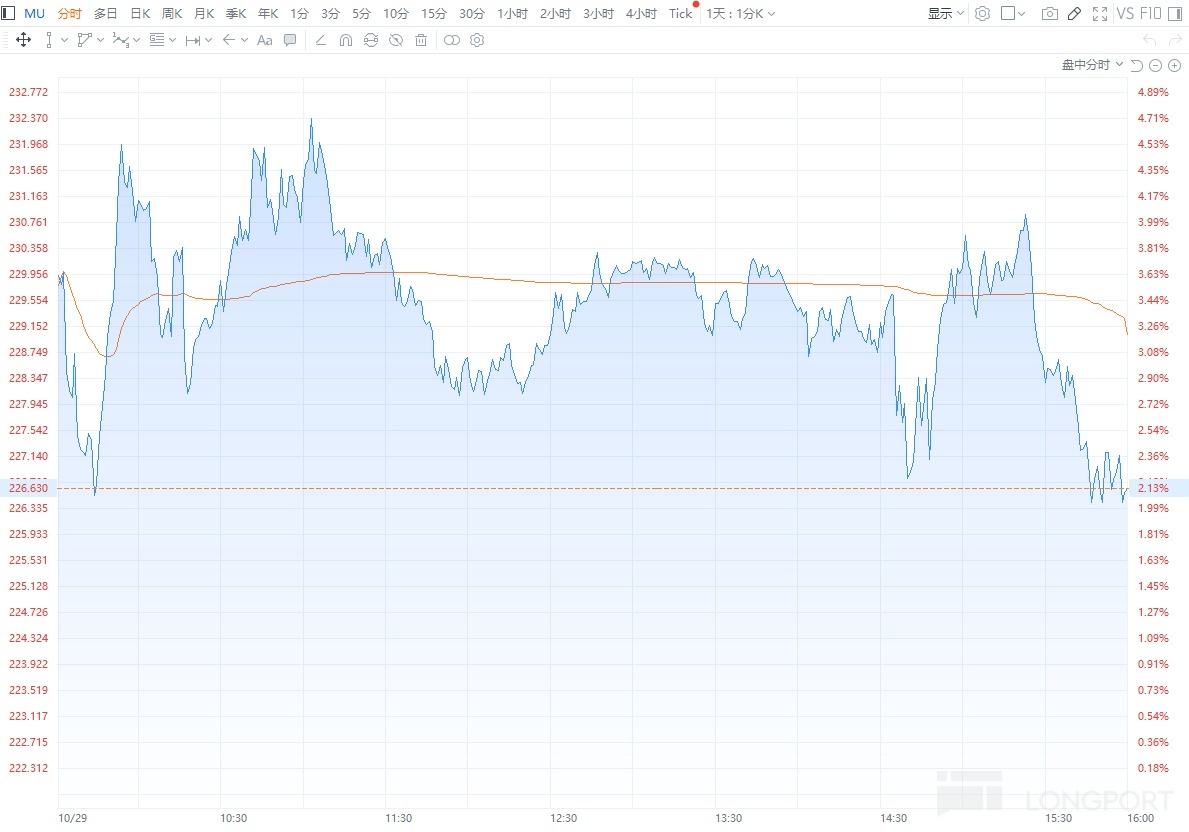
$Micron Tech(MU.US) opened sharply higher on the 29th, with bulls dominating intraday, mostly fluctuating between 229-230, closing weakly up 2.13%.
MA bullish alignment, BOLL opening, smooth upward channel. Micron's uptrend is steady, and as part of Apple's semiconductor supply chain, earnings may have limited impact but some boost. At highs, fewer chances to add; consider call options.
The copyright of this article belongs to the original author/organization.
The views expressed herein are solely those of the author and do not reflect the stance of the platform. The content is intended for investment reference purposes only and shall not be considered as investment advice. Please contact us if you have any questions or suggestions regarding the content services provided by the platform.
