

The Original Sin of the AI Bubble: Is Nvidia the 'Golden Poison Pill' that AI Can't Quit?

Marked by the release of ChatGPT at the end of 2022, the three-year AI frenzy has seen every sector from computing power, storage, networking, manufacturing, power infrastructure, software applications, and even edge devices being repeatedly hyped.
However, by the end of the third anniversary, when the pillars of AI infrastructure announced unprecedented AI mega-infrastructure projects around the third-quarter reports, the market seemed to suddenly lose its soul, starting to worry that AI investment might be a bubble.
Some in the industry are making a fortune, while others are frantically raising funds due to losses. Where exactly is the problem? Why is the financing so dazzling and bizarre?
In this article, Dolphin Research examines the financial statements of core companies in the industry chain to study these issues and attempts to understand whether AI investment has truly reached the bubble stage. If there is indeed a bubble, where lies the original sin of the bubble?
I. Dazzling Financing? Severe Distortion in Industry Chain Profit Distribution
The following diagram is likely familiar to many. The biggest issue with this diagram is that the end users of the entire industry chain, namely OpenAI's users, have a revenue scale that is too small compared to the investment in the entire capital circulation chain and are not depicted in the diagram.
But the core information of the diagram is essentially a simple and ancient supply chain financing method where downstream customers use upstream supply chain money to finance their own business.
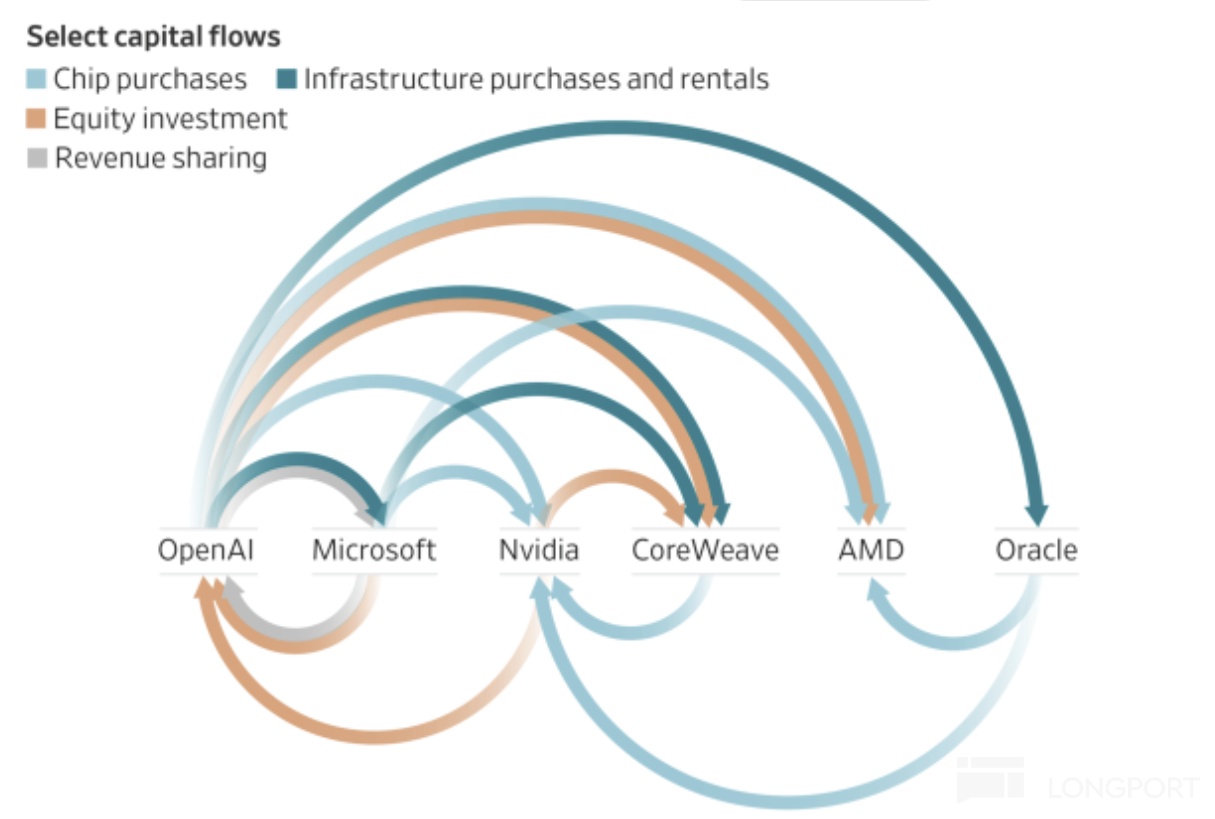
Meanwhile, as supply chain financing occurs synchronously among primary market model giants, secondary market application giants have gradually begun widespread on-balance-sheet and off-balance-sheet bond financing (detailed analysis can be found here).
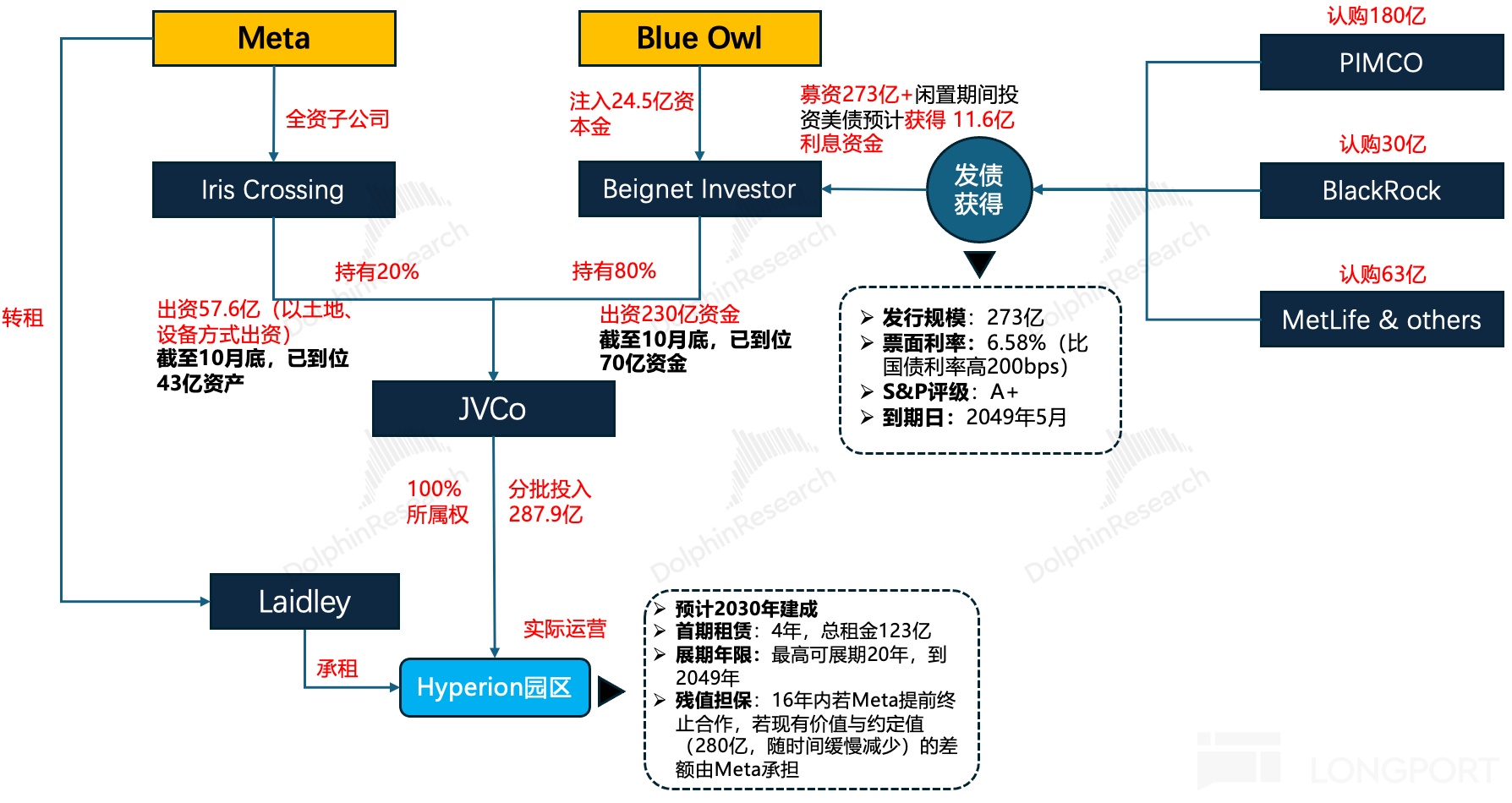
But the question here is, why does OpenAI, the AI pioneer, need to play such a large financing game when chip companies like Nvidia are making a fortune and the entire market is talking about AI as a new technological revolution? Why do originally cash-rich US stock giants like $Alphabet(GOOGL.US), Meta, etc., now need to rely on debt to support future development?
The answer is actually simple: In the early stages of the AI industry, the profit distribution of the industry chain is severely uneven, with upstream players essentially "taking all the benefits."
The main AI industry chain consists of five types of players: wafer foundries ($Taiwan Semiconductor(TSM.US)) — computing power providers ($NVIDIA(NVDA.US)) — cloud service providers ($Microsoft(MSFT.US) ) — model providers (OpenAI) — terminal scenarios divided into five layers.
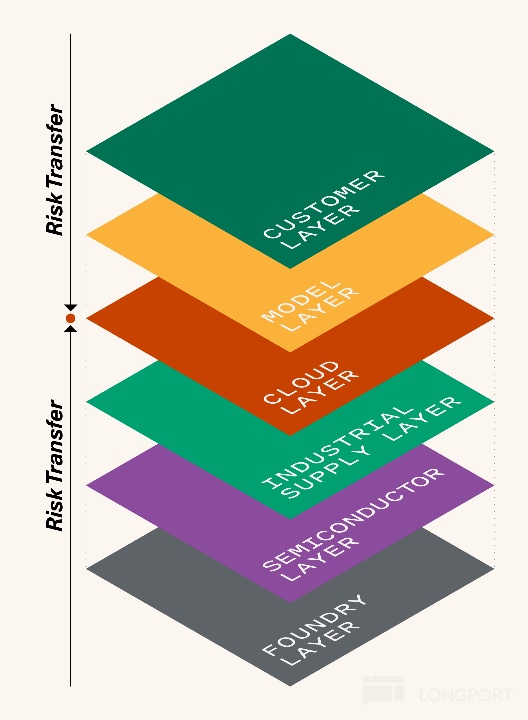
1.1) Starting with the economic accounts of cloud service providers: Who earned the dividends, who earned the fame, and who bore the risks?
A. Economic accounts of cloud service providers: 100 yuan revenue distribution — 55 yuan cost, 10 yuan operating expenses, 35 yuan profit;
Below, Dolphin Research uses a simple economic account of the industry chain to carefully calculate the numbers for everyone, providing a direct sense of the three-year AI prosperity. We know that cloud services are an industry with both high capital barriers and basic barriers. Its first half is like building a house, requiring the construction of factories, cabinets, wiring, cooling, etc., which are considered the hard installation of the data center.
The soft installation involves placing GPUs, CPUs, ensuring internal connections within the GPU, connections between GPUs, and connections with other devices, along with network, broadband, and power, completing the basic soft installation. These elements are combined, and through technical personnel completing the "soul touch-up," it becomes a foundational IaaS service.
From the above elements, it can be seen that although it sounds high-end, it essentially does not escape the scope of the operator's business — combining various heavy assets and technology to form cloud services and making money by leasing cloud services.
The core of this business is that costs must be low enough, for example, once the most expensive GPU is installed, it can be used for ten years or more, unlike photovoltaic power plants where panels need to be replaced every few years.
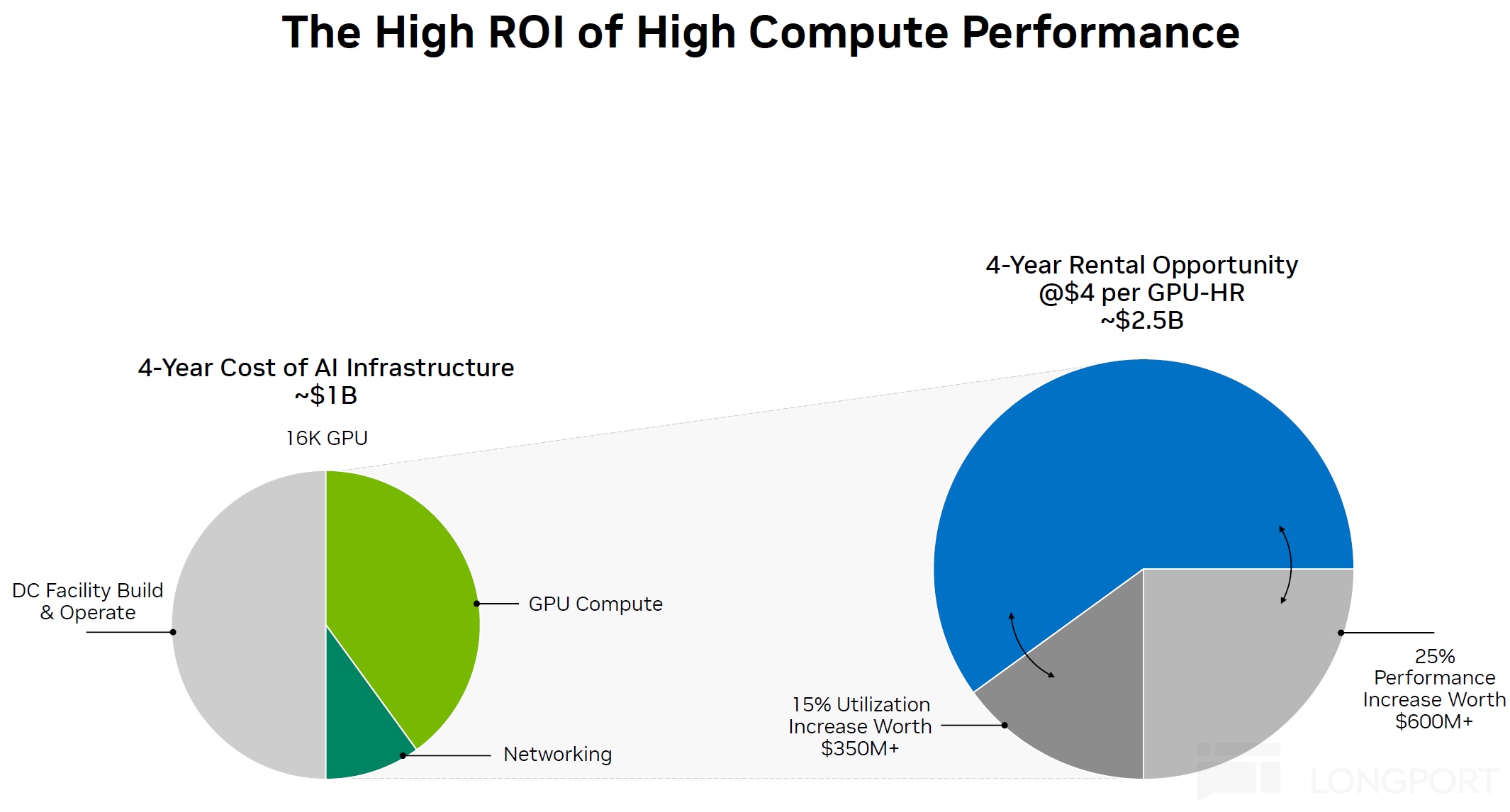
Source: Nvidia NDR materials
According to Dolphin Research's estimates, if cloud service providers use brand new AI capacity to provide AI cloud services, then for every 100 yuan earned, about 35 yuan is depreciation of equipment (such as GPUs), with a depreciation period of five years commonly used by cloud service providers, the capital expenditure is actually 175 yuan.
And if it's Nvidia's GPU, then basically 125 yuan (over 70%) is the revenue provided by the GPU (including network equipment), with the remainder being CPU, storage, network equipment, etc.
In addition to fixed costs, there are energy, bandwidth, maintenance, and other costs, while operating expenses mainly include R&D, sales, and administrative expenses. The final operating profit on the books for 100 yuan of revenue is 35 yuan.
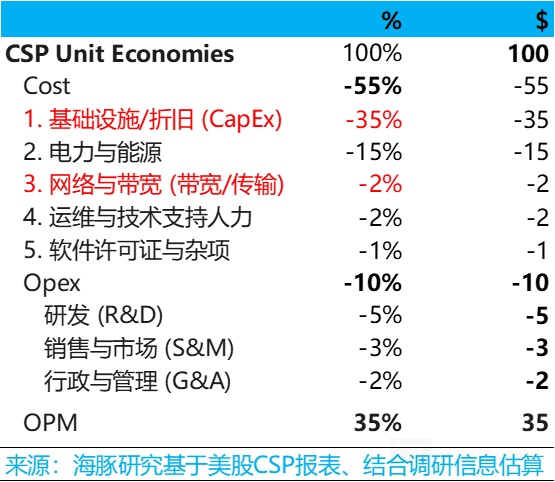
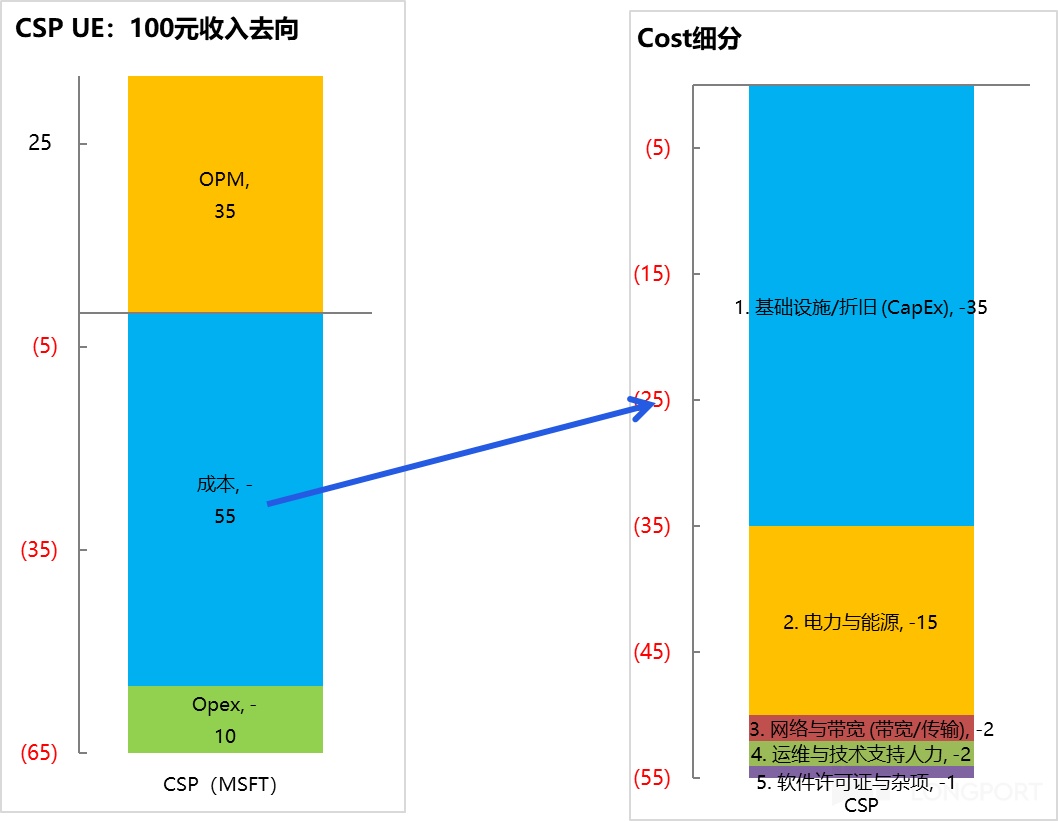
Note: Data is estimated based on AWS and Azure midpoint profit margins, combined with ROI of GPU cloud leasing compared to traditional models.
From these numbers, a very obvious problem can be seen:
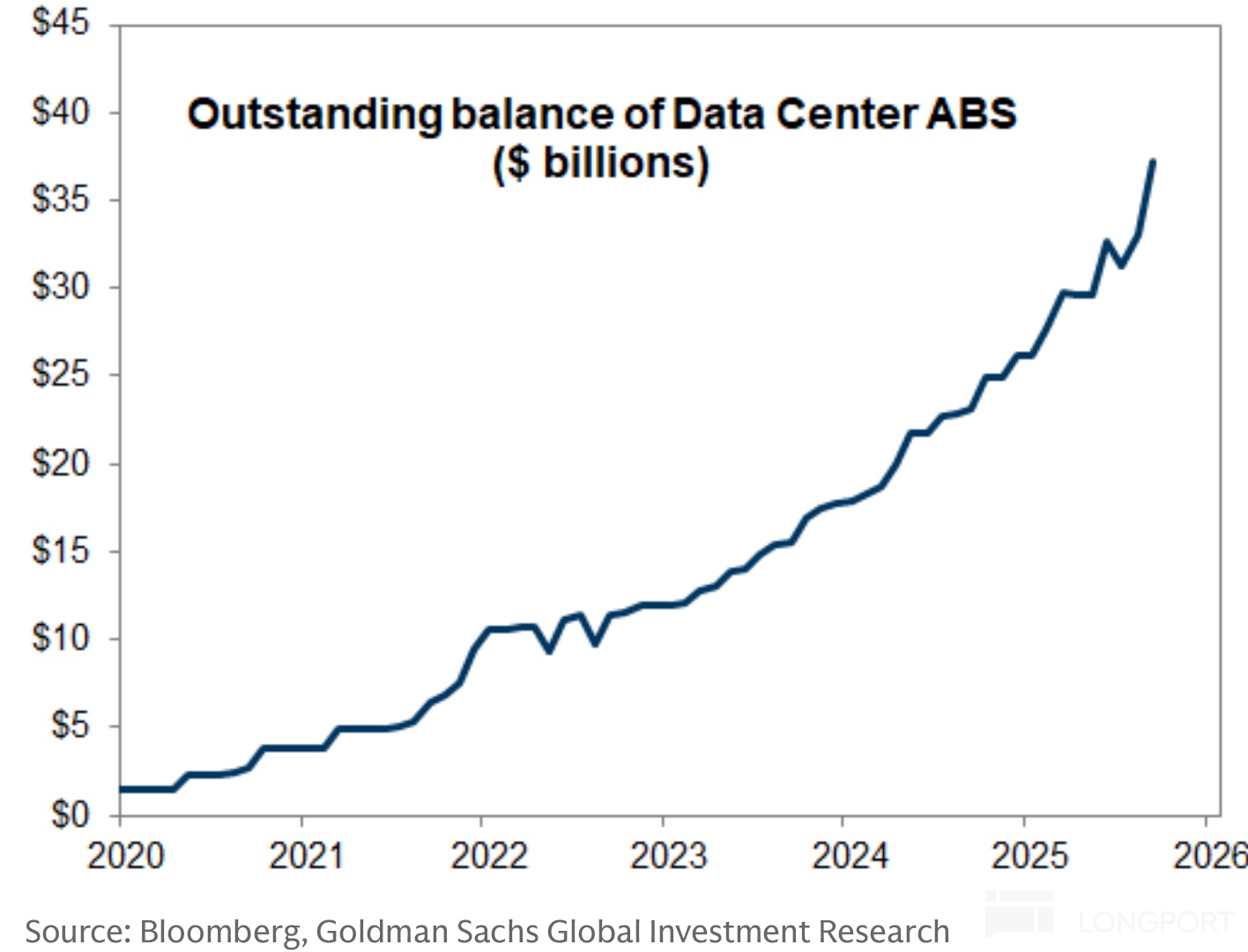
① Early AI infrastructure, cloud service providers only have apparent profits, but are severely short of cash: In this simple model, cloud service providers appear to earn 35 yuan, but in reality, they have already pre-spent their entire 100 yuan revenue, needing to spend 175 yuan to purchase GPU equipment first. In other words, CSPs only earn book profits, with actual investment being a loss.
② Data centers frantically raising funds: Cloud giants originally supported by cash cow businesses now need to issue asset-backed securities to finance cloud services due to the lack of original cash flow businesses, as seen with new clouds like CoreWeave, Nebius, Crusoe, Together, Lambda, Firmus, and Nscale.
B. How does 100 yuan of cloud service revenue flow into Nvidia and OpenAI's accounts?
① Computing power provider (Nvidia) — Profitable equipment stock
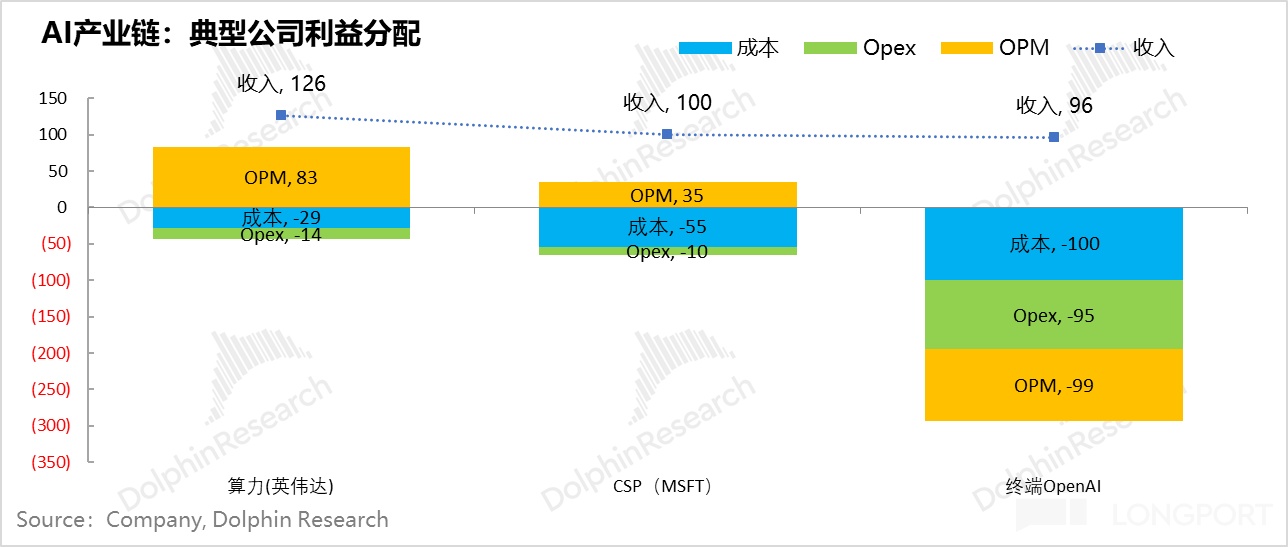
The cost of cloud services is Nvidia's revenue. For every 100 yuan of cloud service revenue, 35 yuan is equipment depreciation, with a five-year depreciation period, requiring the purchase of approximately 175 yuan of equipment to provide these services.
Nvidia's GPUs account for about 70% of the procurement value, meaning that for every 100 yuan of cloud service revenue, 125 yuan has already been paid to Nvidia for GPU equipment procurement.
Clearly, as the largest single value component in the procurement of production materials by cloud service providers, Nvidia has made a fortune during the early AI infrastructure period.
② Current OpenAI — 800 million WAU, but losing money as an application stock
In the entire industry chain, the demand side of cloud services — OpenAI is the source of demand, and its payment ability determines the health of this chain cycle. But from OAI's current revenue ability, after investing so many computing resources, the result can only be described as "golden shovel digging dirt."
Firstly, the 100 yuan GPU leasing revenue of cloud service providers is actually the cloud service cost for OpenAI to provide services to its users. According to media reports on OpenAI's financial status in the first half of 2025, 100 yuan of cloud expenditure corresponds to only 96 yuan of company revenue, and considering the company's R&D personnel expenses, marketing, and management expenses (excluding option incentives) — 100 yuan expenditure results in a basic loss of 100 yuan for the company.
C. Core contradiction: Severe distortion in industry chain profit distribution
Putting the simple economic accounts of these three companies together reveals a stark contrast in industry chain profit distribution: The profit and risk-reward distribution of the industry chain's core players is extremely uneven.
Upstream shovel stocks — represented by Nvidia's computing power assets, are light asset businesses that, due to their monopoly position, not only grow revenue quickly but also have low receivables risk, high profit quality, and make a fortune;
Midstream resource integrators — cloud service providers bear the largest industry chain investment and resource integration, with huge upfront investments, apparent profits but tight cash flow, being the actual largest risk bearers;
Downstream application providers — production materials (cloud services) are too expensive, revenue too little, only able to cover certain cloud service costs, are loss-making application stocks, and the health of application stocks ultimately determines the industry's health.
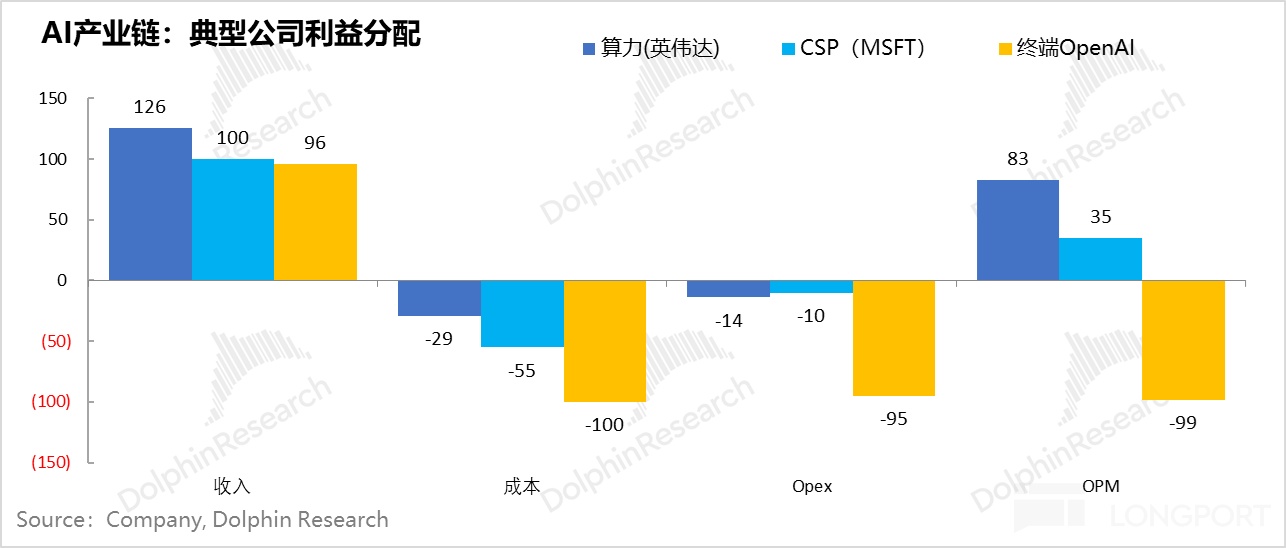
Such continuous transfer of industry chain benefits upstream highlights the growing contradictions among AI industry chain leaders, with the industry's competitive dynamics beginning to shift significantly:
① Computing power — Nvidia
Nvidia, leveraging its monopoly position in third-party GPUs, especially its unique advantage in the training phase, has enjoyed the greatest benefits of the early AI infrastructure period. However, its products sold to customers are not consumables but capital goods that can be used for many years.
Its high growth, from an industry Beta perspective, is mainly concentrated in the AI data center capacity construction period. The company's growth slope will be highly dependent on the capital expenditure growth slope of cloud service providers. When cloud service providers' capital expenditure stabilizes at a new high, no longer growing rapidly, chip companies' revenue will see zero growth, and if the cycle is misjudged, inventory impairment may occur, causing profit margins to plummet.
In the latest quarter, Nvidia's top four customers contributed 61% of the company's revenue, clearly indicating that its revenue is the capital expenditure budget of cloud service providers.
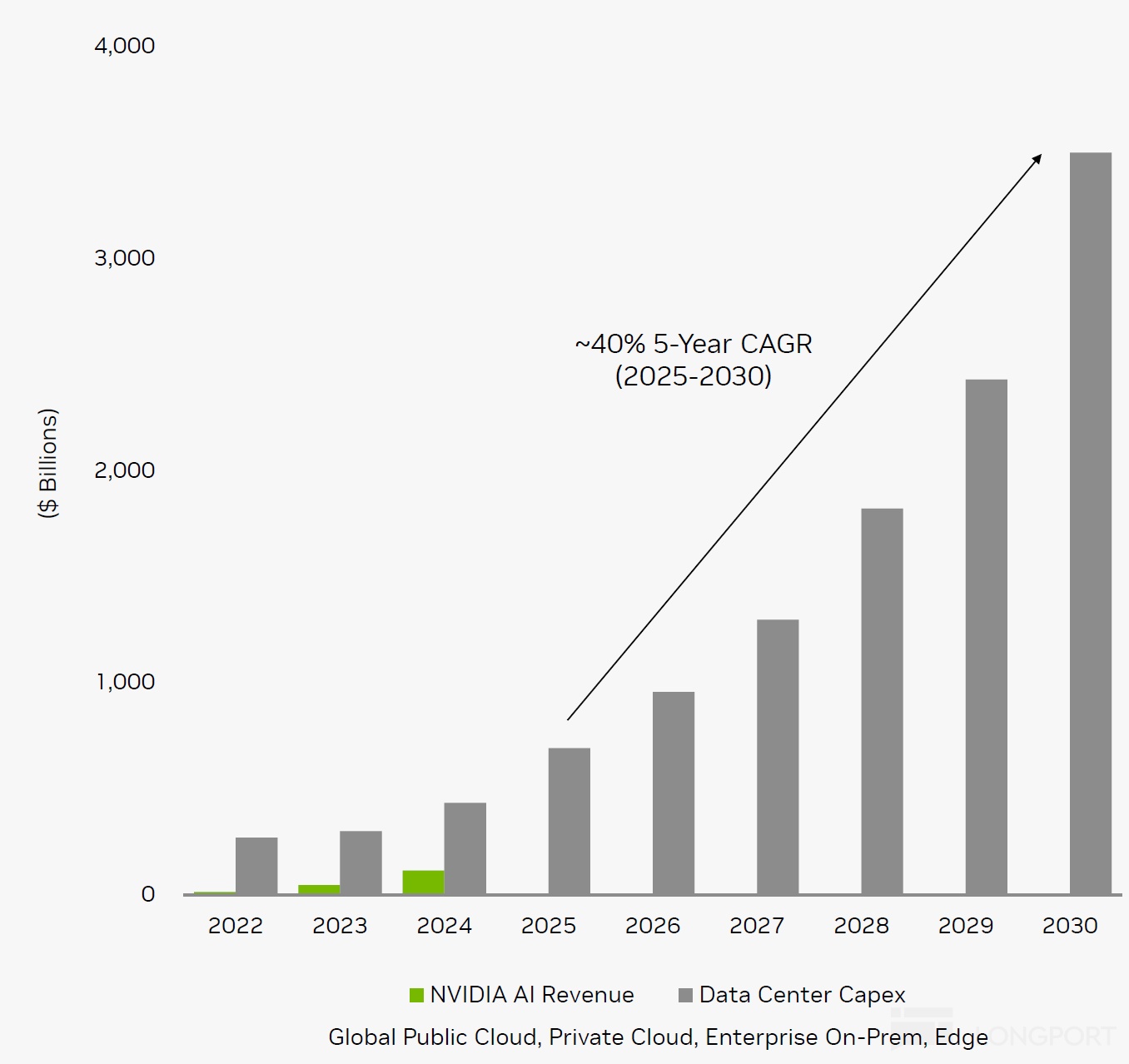
Source: Nvidia 2025 NDR materials
Under the pressure of a 4-5 trillion market cap, Nvidia is under continuous pressure to deliver chips, supporting half of the US stock market. Therefore, its core demand is to continue selling chips, selling more chips, with methods such as:
a. Chip sales expansion to overseas markets, such as Trump leading GPU merchants to sign deals in the Middle East and other regions; meanwhile, losing the Chinese market, causing Jensen Huang to say that the US is losing the AI war.
b. Crazy iteration: Creating demand for cloud service providers to constantly update equipment. Currently, Nvidia basically has a major product series iteration every 2-3 years, with some version iterations even requiring new data center construction standards to configure GPUs.
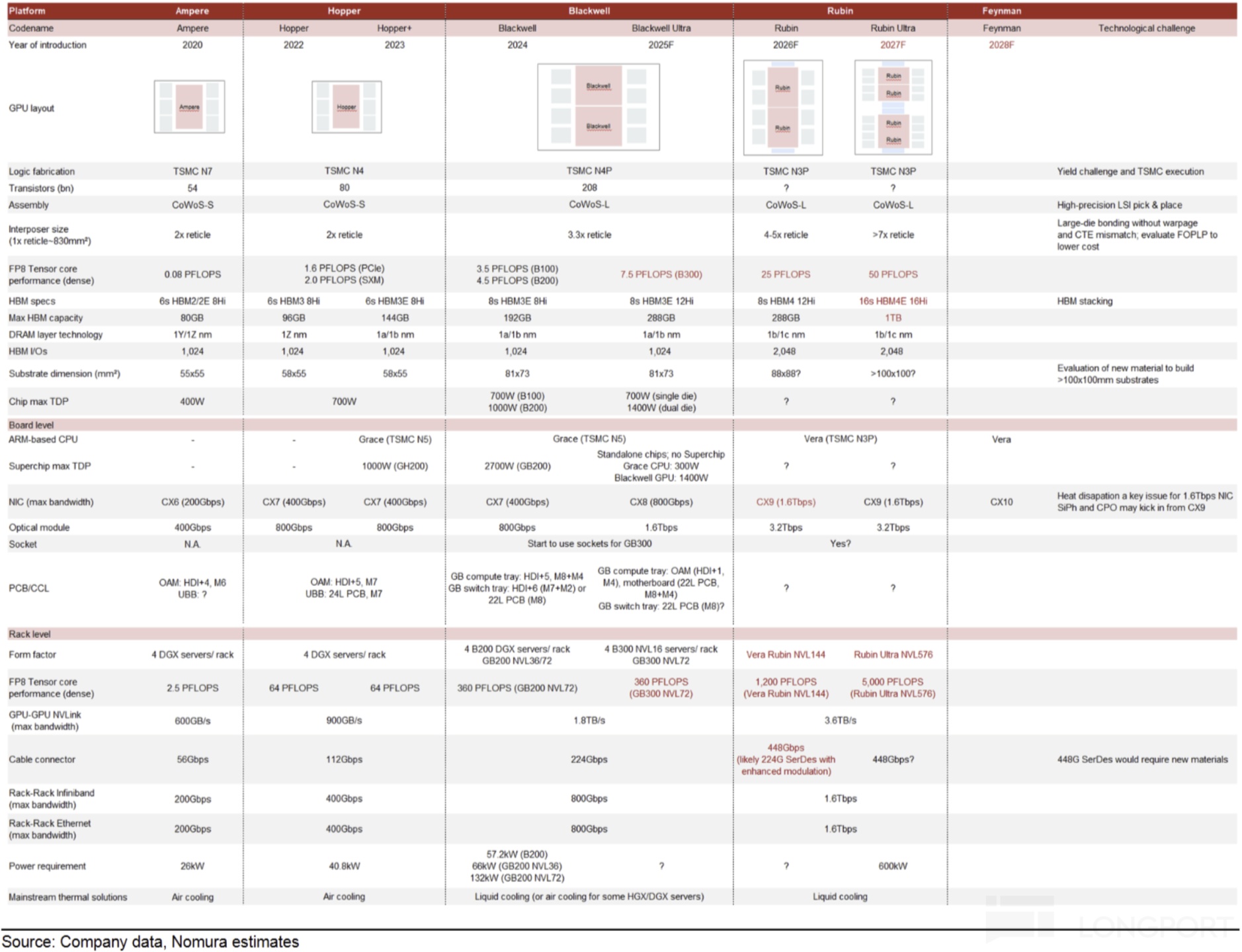
② Cloud service providers — Microsoft: Vertical integration to reduce costs
Cloud service providers currently seem to enjoy industry benefits due to supply not meeting demand, but in reality, they bear the risk of capacity mismatch in the long term, as they undertake the largest capital expenditure. If demand is misjudged, data centers become idle, making cloud service providers the most severely affected industry chain link. Specifically,
a. Short-term: Lower cloud service gross margins
The current short-term issue is that due to GPUs being too expensive, GPU cloud services have lower gross margins than traditional cloud services. According to Microsoft CEO Satya Nadella, the profits generated in AI cloud business are not from GPUs but from other equipment deployments (storage, network, bandwidth, etc.) — in other words, current AI data centers, due to GPUs being too expensive, actually use GPUs to attract traffic and make money by bundling additional products.
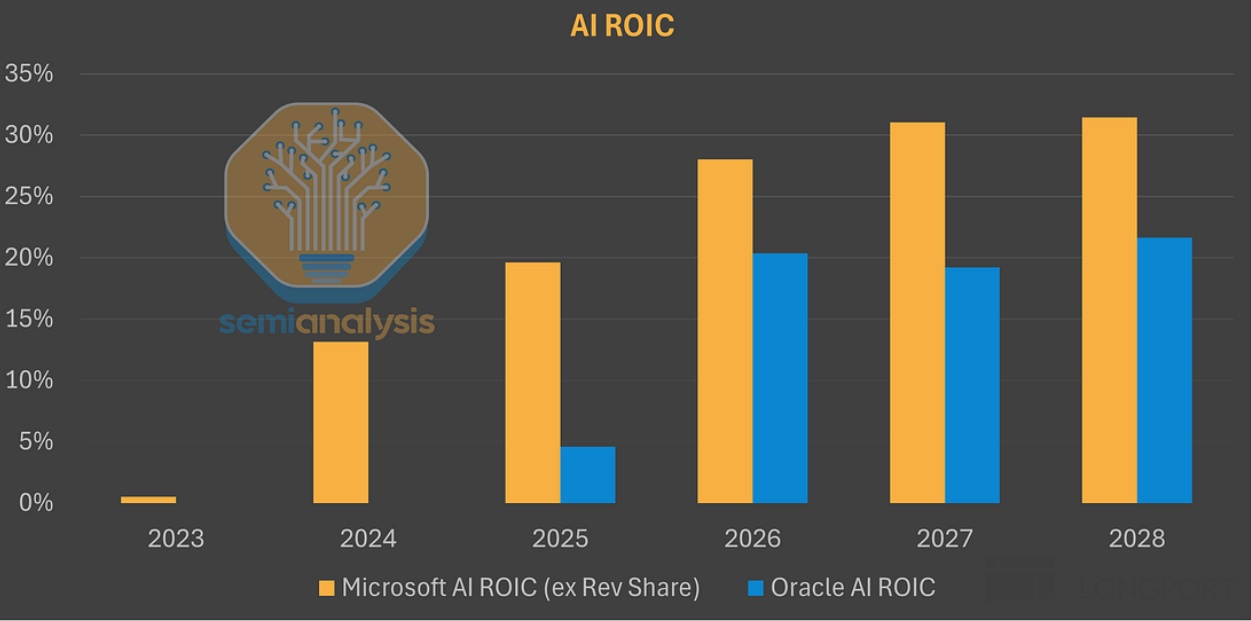
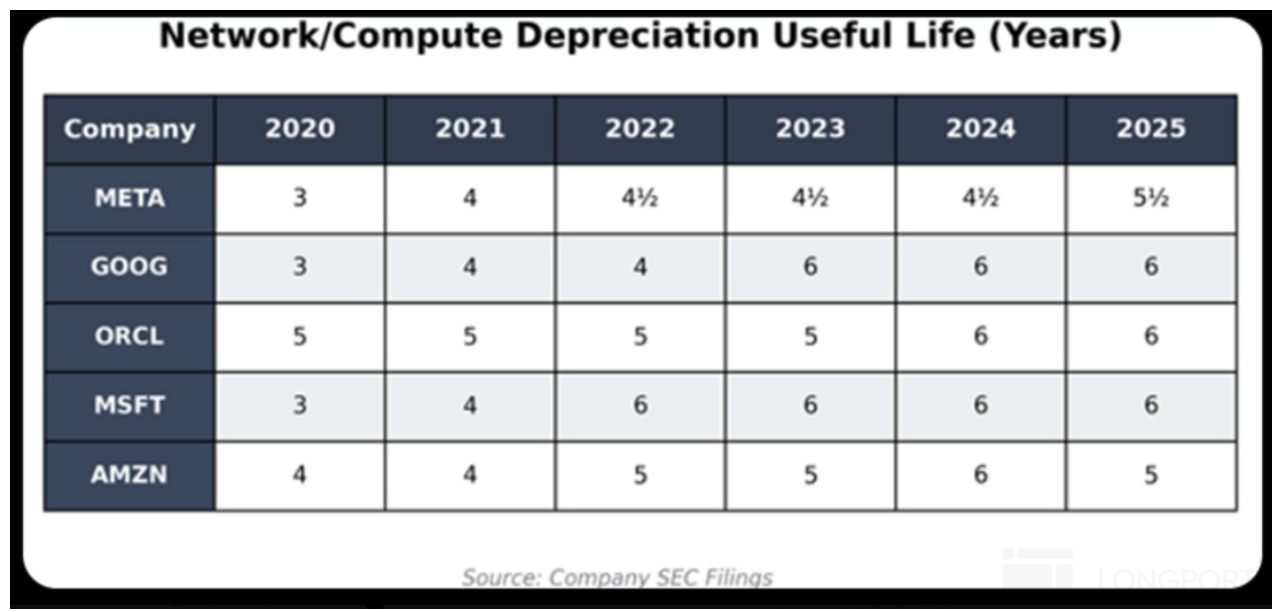
b: AI computing power depreciation risk
Operator business is a heavy asset business, most afraid of production material investment depreciation cycles being too short (wind power plants and telecom operators in the 3G era have had similar issues); Nvidia's rapid iteration (every two years), depreciation period is crucial;
c. Pre-investment risk
Long-term bearing of resource integration and capital risk (capital expenditure); if customer profitability is insufficient, scenario implementation is slow, or sudden nonlinear iteration occurs (such as models becoming lighter, small models completing AI tasks on the terminal side, or software iteration significantly reducing computing power demand), potential subsequent capacity underutilization, leading to cloud service providers misjudging capacity and demand, making them the largest risk bearers of downstream customer failure, reflected not in application receivables but in data center capacity waste.
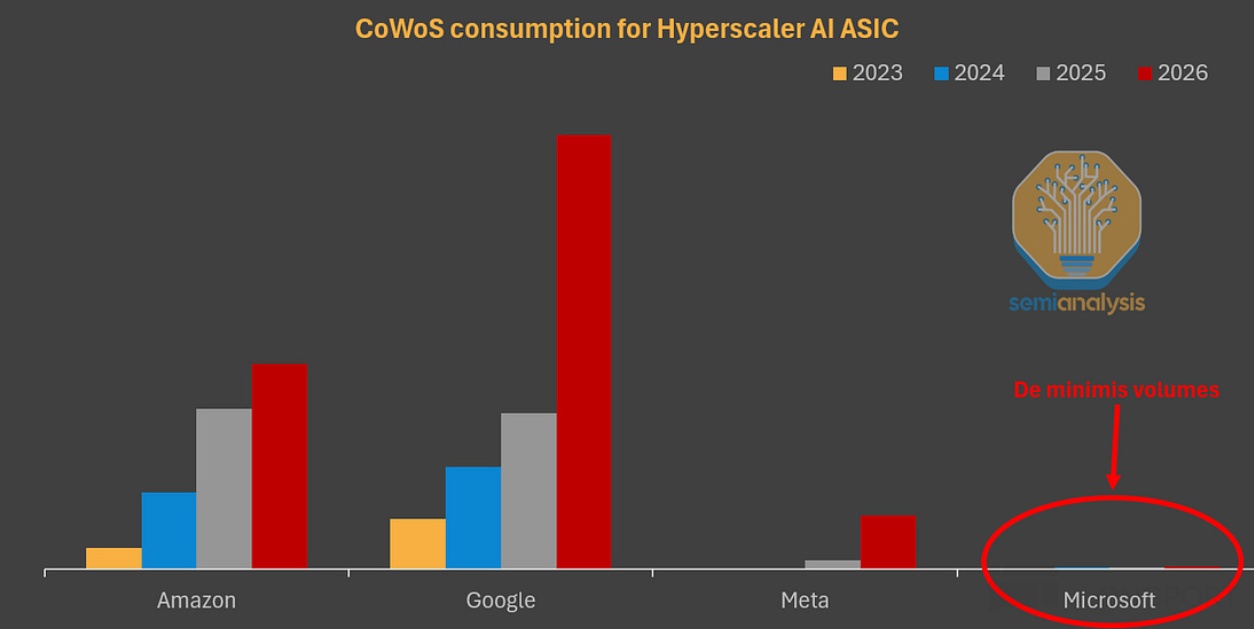
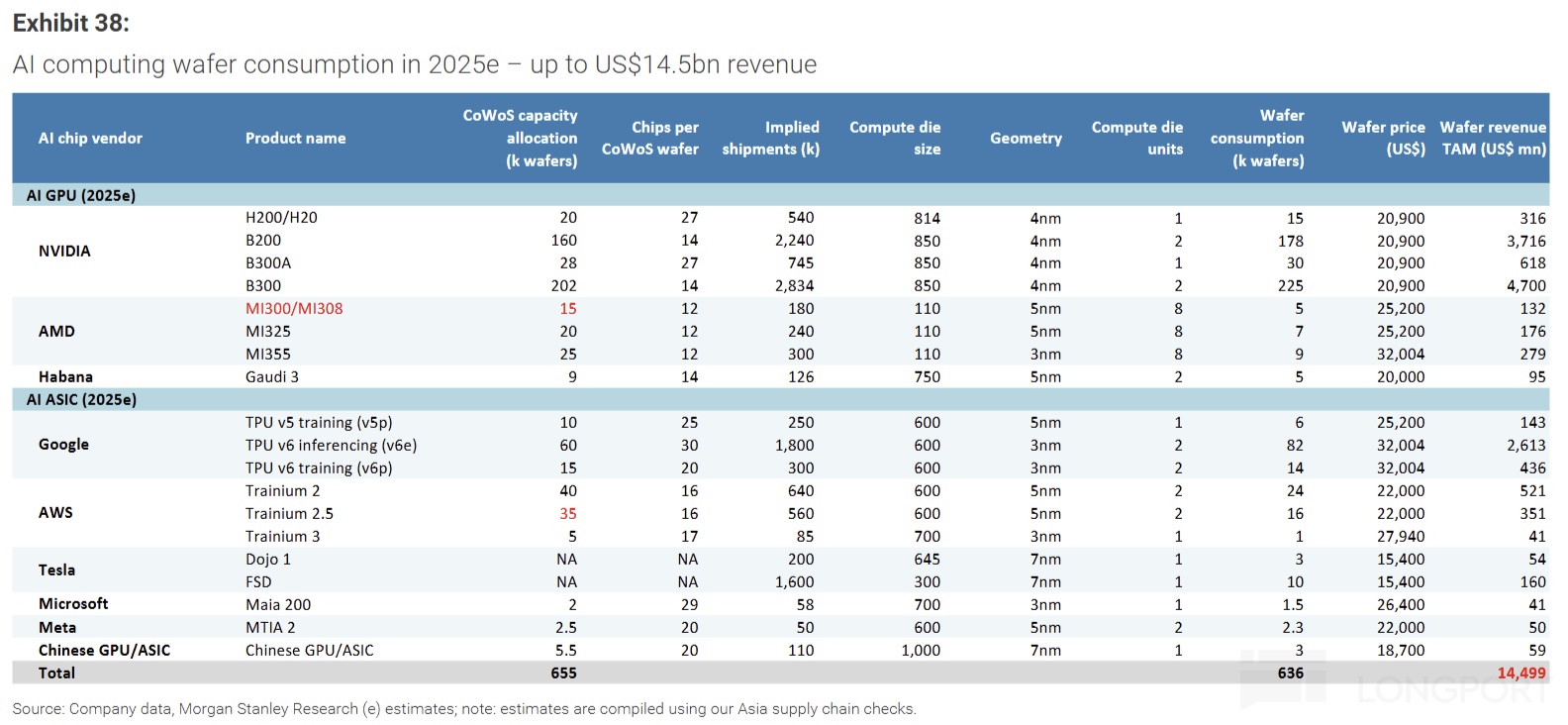
Clearly, from the perspective of cloud service providers, what can be done is to reduce the largest cost item of data centers — GPU costs, such as bypassing Nvidia tax and self-developing 1P computing power chips; although some design work needs to be outsourced to Broadcom, Marvell, and other ASIC design companies, overall costs can be significantly reduced. According to information, building a 1GW computing power center with Nvidia GPUs costs $50 billion, while using TPUs costs about $20-30 billion.
③ Main risks of downstream applications (including models) — Production material costs are too high, revenue does not match, cash flow break risk.
Here, OpenAI is selected as the terminal scenario application stock (including the model layer).
High-speed revenue growth: According to media reports, based on OpenAI's current monthly revenue growth rate, it is expected to reach an annualized $20 billion by the end of 2025, with full-year revenue of $13 billion, a year-on-year growth of 250%;
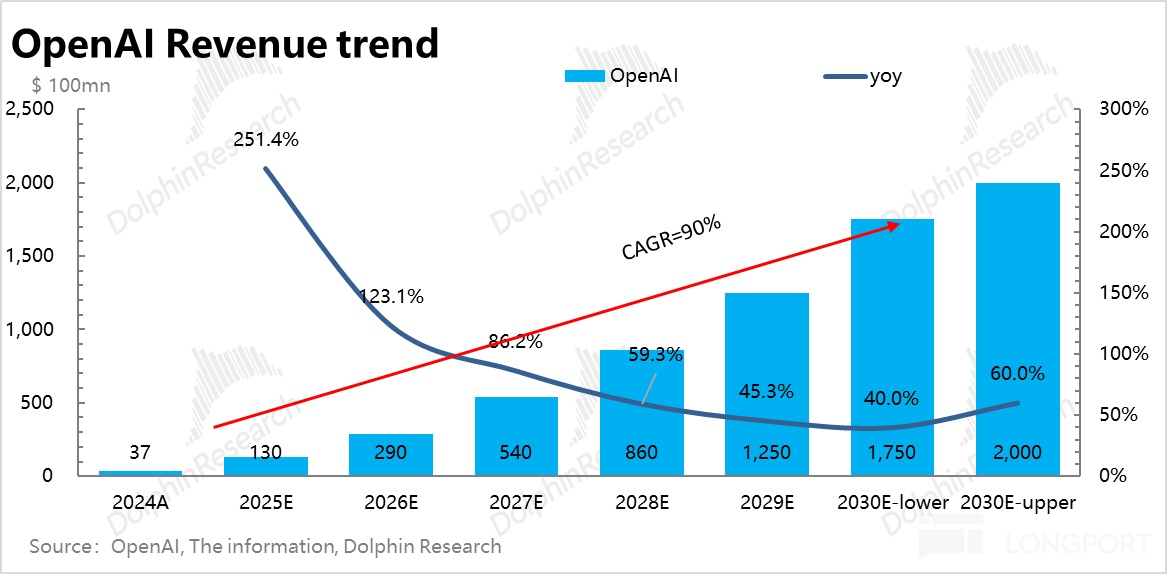
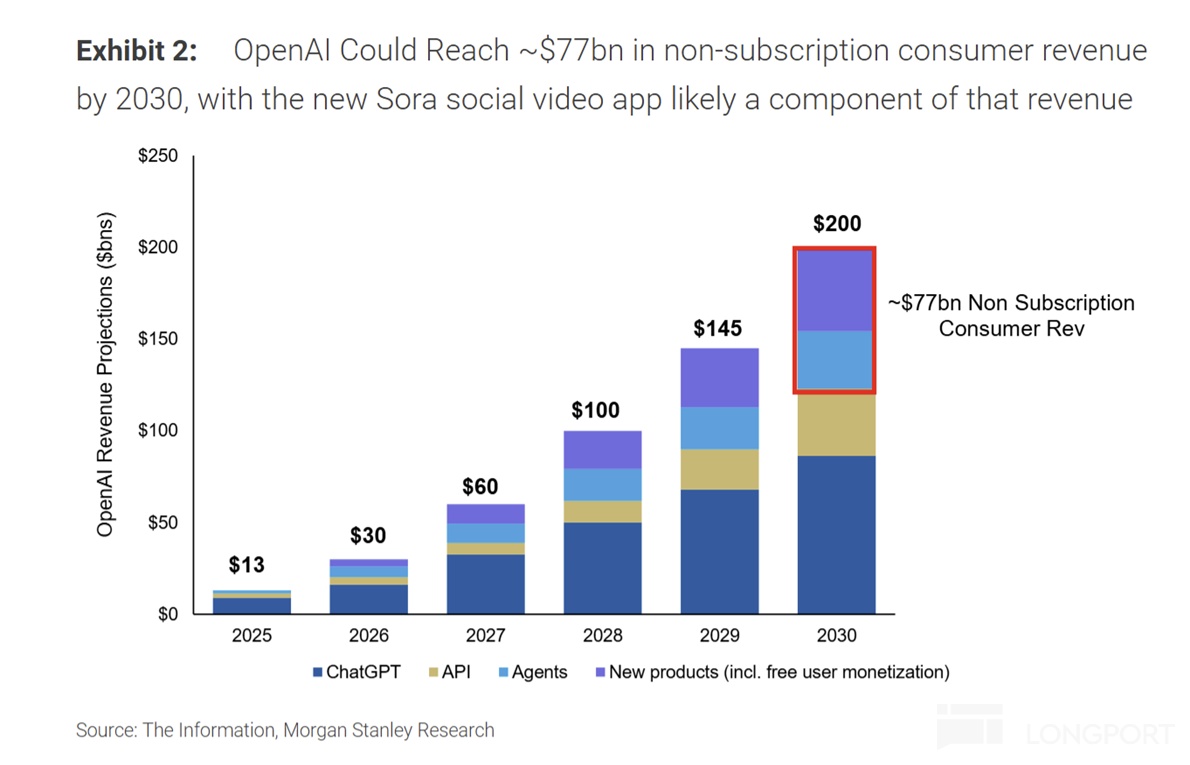
Expenditure soaring even faster: The issue here is that during the high-speed revenue growth process, there is no situation where the loss rate gradually decreases as revenue expands under a normal business model, instead, the growth slope of expenditure is higher than the growth slope of revenue, the larger the revenue, the higher the loss.
According to media reports, with 2025 revenue of $13 billion, losses are estimated to be at least around $15 billion; according to Microsoft's financial report information (based on 40% equity), OpenAI's annualized loss should have exceeded $30 billion.
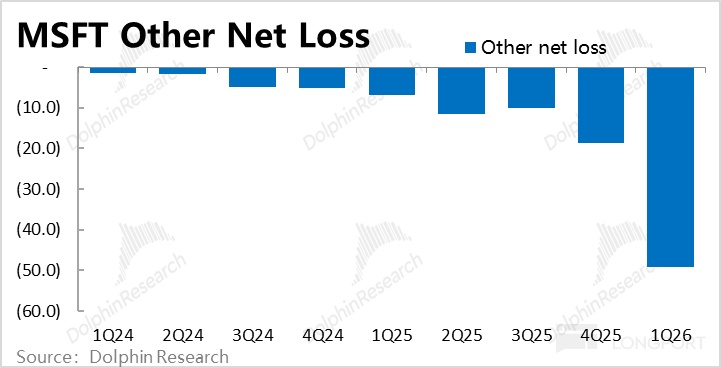
OpenAI's current demand is also very clear, firstly, cloud service costs are too high, leading to uneconomic revenue, the more revenue, the more severe the loss; meanwhile, due to the large revenue gap, the company needs to raise funds while further increasing revenue, and during the process of increasing revenue, cloud services rely on external provision, supplier capacity is insufficient, leading to product launch delays (such as Sora being delayed, OpenAI Pulse's high pricing dragging down penetration rate).
III. AI Industry Chain: Giants Competing for Industry Chain Pricing Power
AI technology (models) iterates fast enough, gradually maturing to a deployable level, but deployment costs are too high — cloud service costs are too high, unable to support rapid expansion of technology in application scenarios.
And the above economic account simulation clearly shows that high costs are due to excessive markup in the industry chain — Nvidia chip gross margin 75% (markup rate 4 times), CSP (cloud service) gross margin around 50% (markup rate 2 times), by the time OpenAI uses it, the shovel cost is already too high, even the fastest-growing applications in internet history cannot cover the faster cost increase.
Thus, industry chain competition begins!
Nvidia, due to its high value and technical barriers in data centers, wants to hollow out the value of cloud service providers, reducing them to GPU contractors. Meanwhile, cloud service providers feel Nvidia's tax is outrageous and want to eliminate Nvidia's excess profits through self-developed chips.
Since Microsoft lifted the restriction that OpenAI could only use Azure as a cloud service provider, OpenAI has clearly expressed its intention to build its own data center, seemingly wanting to eliminate excess premiums at every upstream segment, ideally reducing computing power prices to cabbage prices, promoting application prosperity.
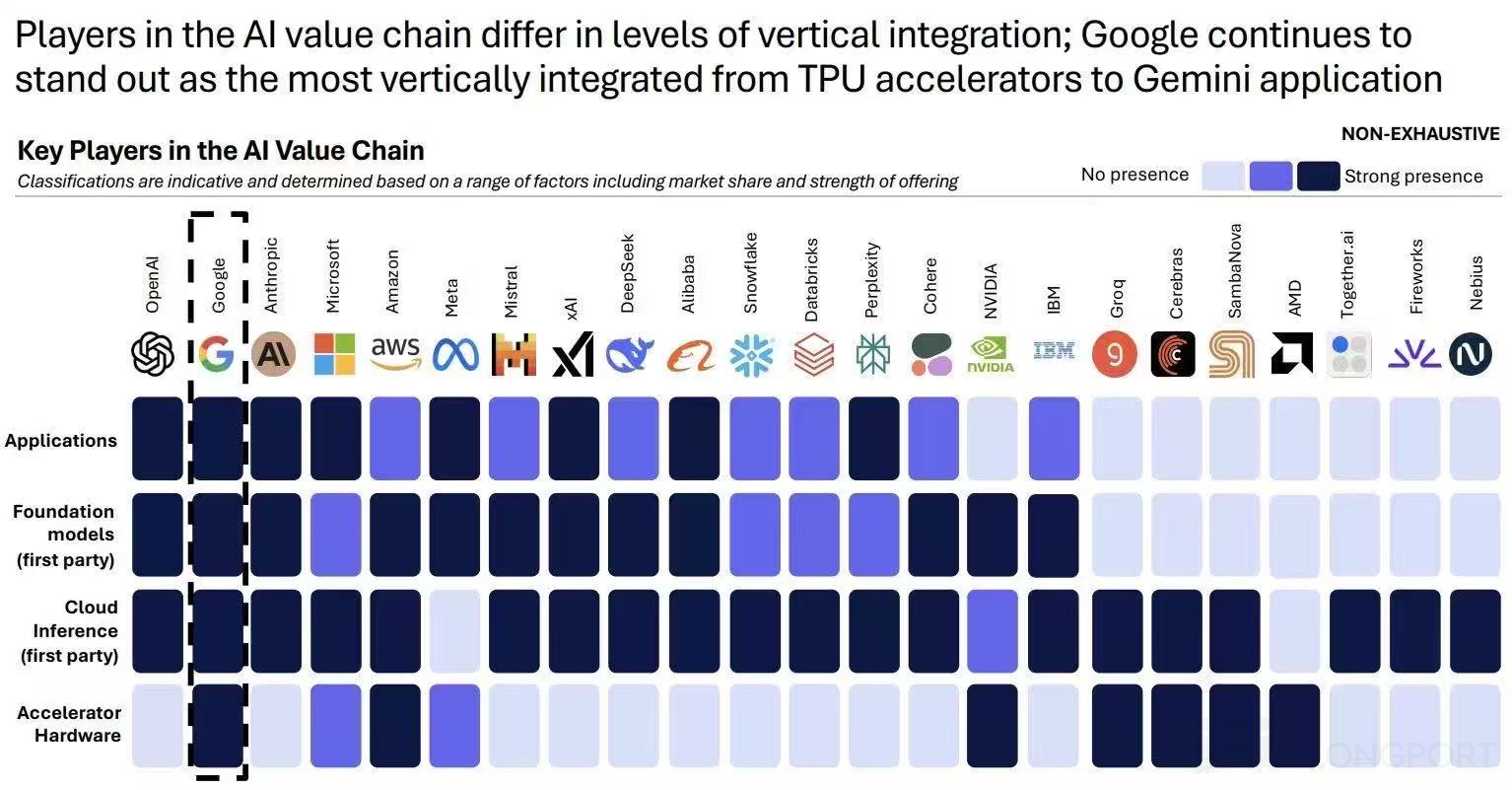
The result is the most favored business model at the end of 2025, and the most popular investment track currently "full-stack AI," which, in essence, is vertical integration of the industry chain. Although the three companies operate differently, they are all striving in the direction of vertical integration:
① Nvidia: Nvidia + new cloud juniors = weakening CSP giant industry position
Relying on GPU's monopoly position, through preferential supply of the latest Rack systems, capacity repurchase agreements, etc., supporting a group of emerging cloud platforms like Coreweave, Nebius, etc., which rely on Nvidia's shipping order, among which Coreweave's repurchase guarantee is most prominent.
These new clouds initially raised large amounts of funds, mostly relying on Nvidia's supply tilt or financing support, ultimately using Nvidia's chips for capacity. Through this operation, Nvidia essentially locks the GPU choice of other small cloud service providers outside of large CSPs.
But regarding this operation, Microsoft CEO Satya Nadella indirectly expressed in an interview, "Some people think providing cloud services is just buying a bunch of servers and plugging them in." Implying that cloud services are a very complex business with high barriers, otherwise the global cloud service market would not be dominated by just three or four clouds.
From this perspective, the newly hyped cloud service providers this year are actually, to some extent, downstream agents (second-hand dealers) raised by Nvidia through preferential distribution rights in the context of GPU supply shortage. If long-term industry supply and demand balance, industry competition logic returns to normal technology, capital, channel, scale-oriented business models, whether these new clouds can still exist is uncertain.
It seems that AI new cloud players appear more like a process product in the industry chain competition during the first half of AI infrastructure, rather than competitors that can compete with cloud service giants in the endgame under supply-demand balance.
② Cloud service providers: Cloud service providers + ASIC design companies + downstream products = weakening Nvidia chip monopoly premium
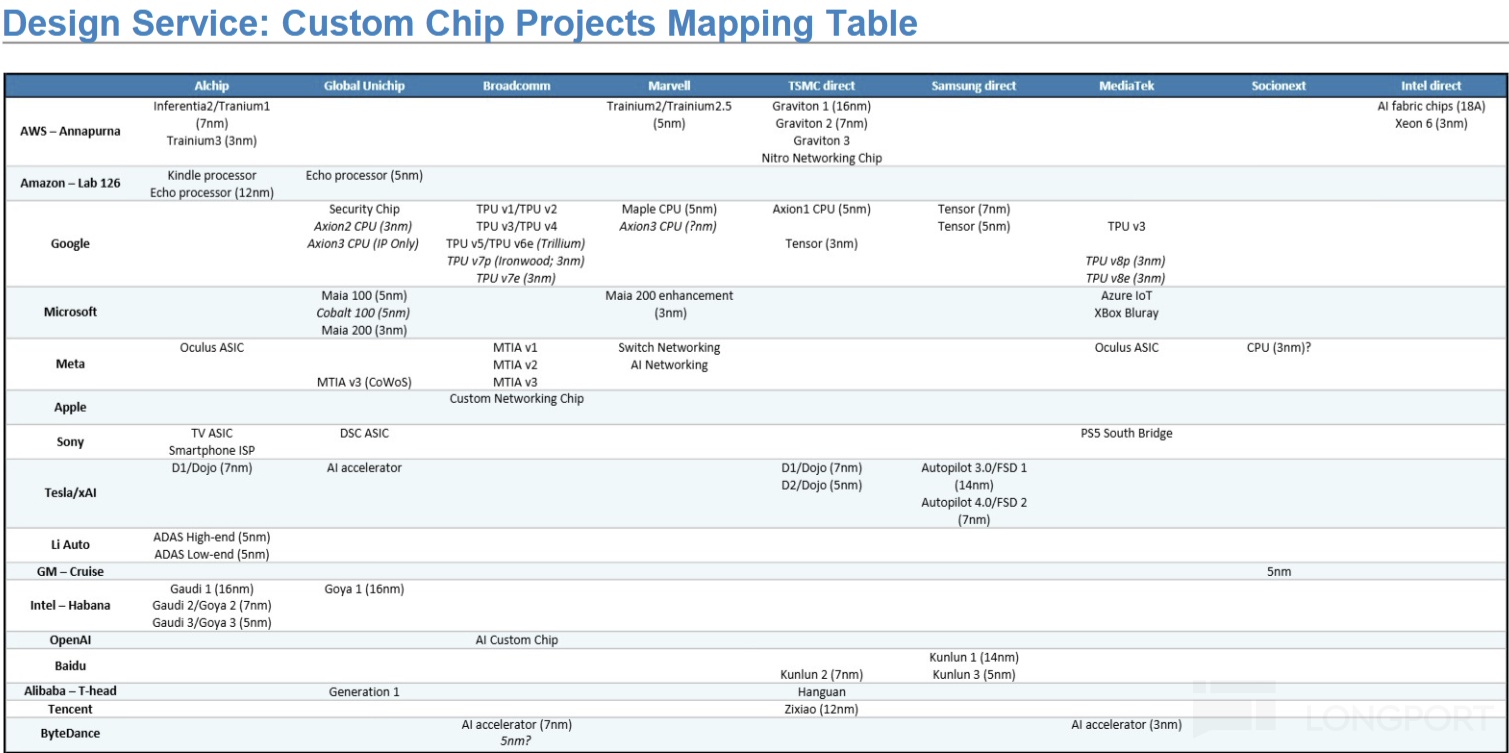
a. Currently, companies with large GPU usage have generally started efforts to self-develop chips, including cloud service providers $Alphabet - C(GOOG.US), Microsoft, and Amazon $Amazon(AMZN.US), as well as some downstream customers with large single usage like Meta, ByteDance, Tesla, etc., are self-developing ASIC chips.
In the ASIC chip self-development sub-industry chain, ASIC design outsourcing companies like $Broadcom(AVGO.US), $Marvell Tech(MRVL.US), AUC, MediaTek, etc., are high-value assets.
b. Bargaining second supply backup value
Self-developed chips, the earliest started and most renowned product is Google's TPU developed in collaboration with Broadcom, directly supplying Gemini 3's development; meanwhile, Amazon also started self-developing GPUs early (training Trainium, inference Inferentia).
According to Nvidia's financial report (Anthropic started using Nvidia cooperation for the first time), Anthropic model development should mainly be based on Amazon's cloud and Amazon's Trainium chips.
Globally, the two leading models Gemini and Anthropic, one without using Nvidia at all, and the other with minimal usage, have trained models to leading positions, already significantly affecting Nvidia's pricing power in the computing power industry.
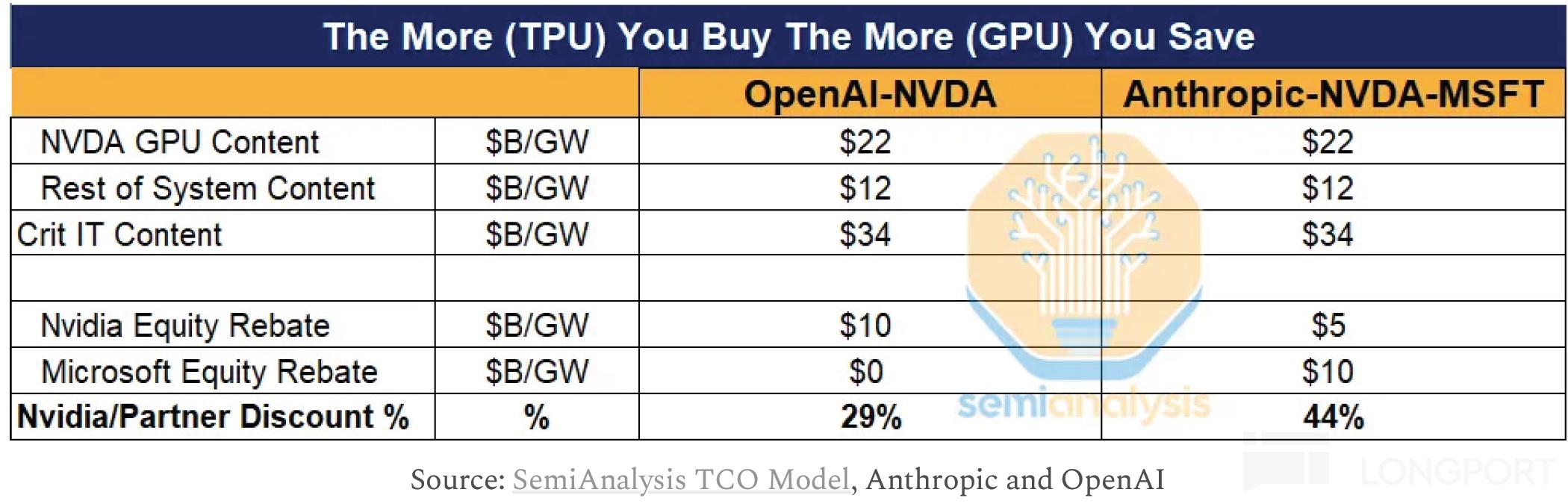
Under the influence of such cases, downstream customers can force Nvidia to indirectly lower prices by threatening to use TPUs (even if not actually deployed), through financing guarantees, equity financing, remaining capacity guarantees, etc., essentially pulling down the cost of deploying GPUs.
These are already actual manifestations of Nvidia's computing power position being threatened.
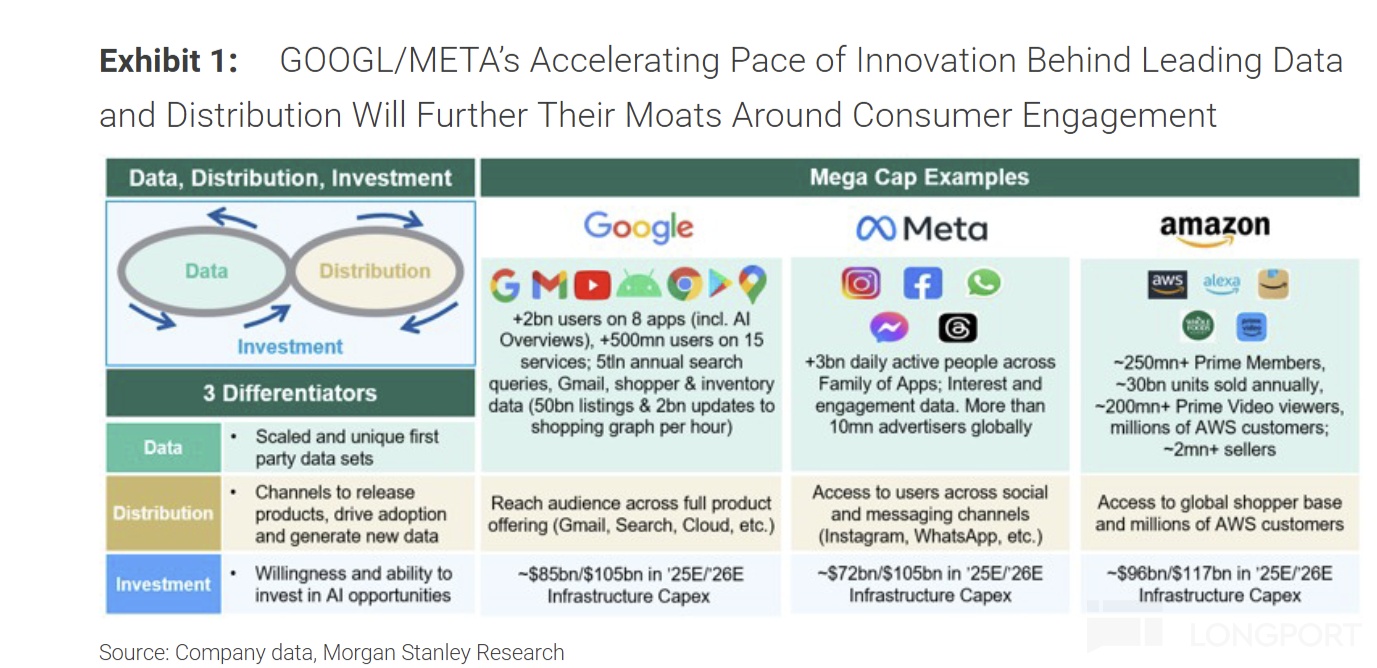
c. Downstream product penetration: Full AI armament of product lines, defending against ChatGPT's rise
These cloud vendors in the middle segment, whose core business mostly involves further downstream models and software application scenarios, not only need to vertically integrate to prevent Nvidia from stealing the cloud business, but also need to arm all their product scenarios with AI to compete with ChatGPT, preventing disruption by ChatGPT.
③ OpenAI: Industry chain autonomy = Stargate
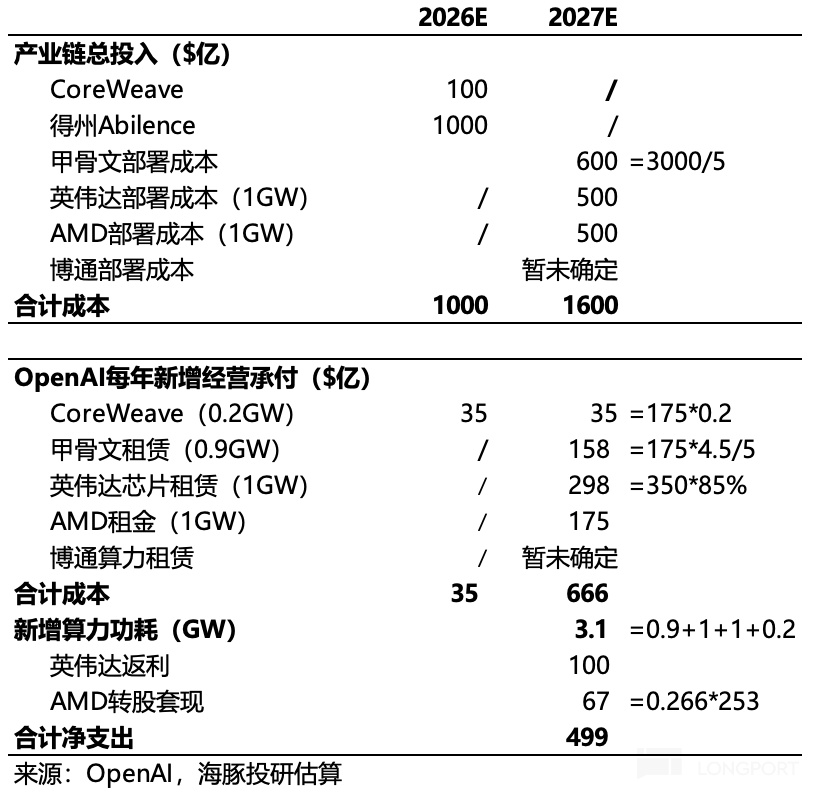
And new companies like OpenAI, located at the model factory and application scenario, are losing money and do not want to be controlled by giants, wanting to use their influence to finance and build a basic autonomous industry chain. OpenAI's general picture is — upstream computing power self-development and external procurement split evenly (AMD's 6GW is backup computing power), midstream cloud services completely obeying itself, helping maintain technological leadership and promoting AI applications.
a. Self-built data center: OpenAI + financing + chip companies + Oracle = Stargate
From the company's equity structure design, Stargate is actually a large emerging cloud company (10GW design capacity) specifically serving OpenAI's computing power needs. OpenAI initially invested in Stargate, holding a 40% equity stake, strengthening its dominance over computing power infrastructure.
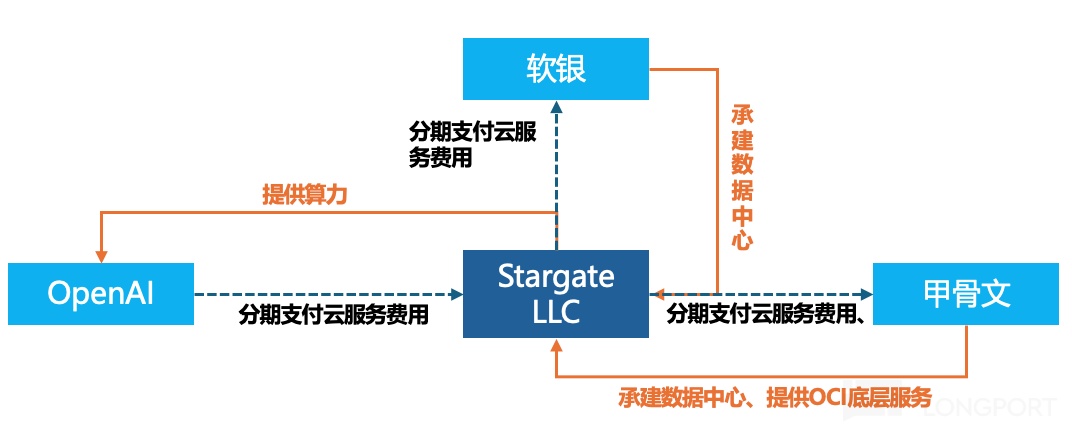
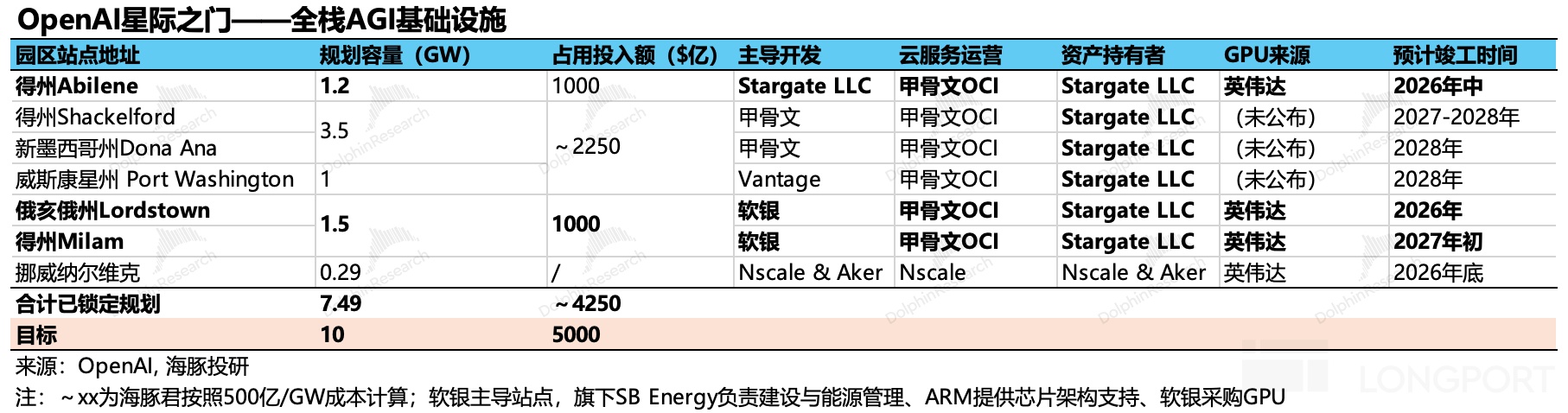
b. Binding orders: As a cloud service terminal customer deeply constrained by high computing power prices and insufficient supply, the most in line with OpenAI's interests is excess and cheap computing power, using upstream suppliers' FOMO psychology, binding all possible capacity, using future revenue expectations as payment ability, locking in chip supply.
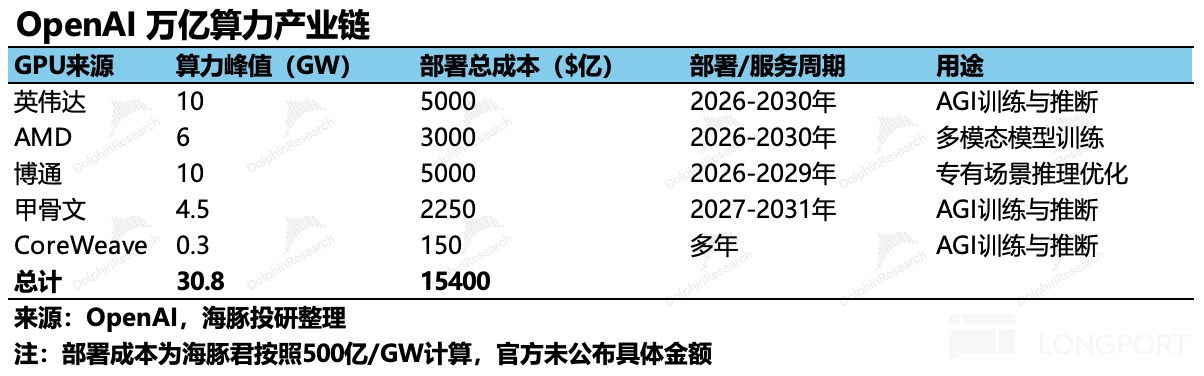
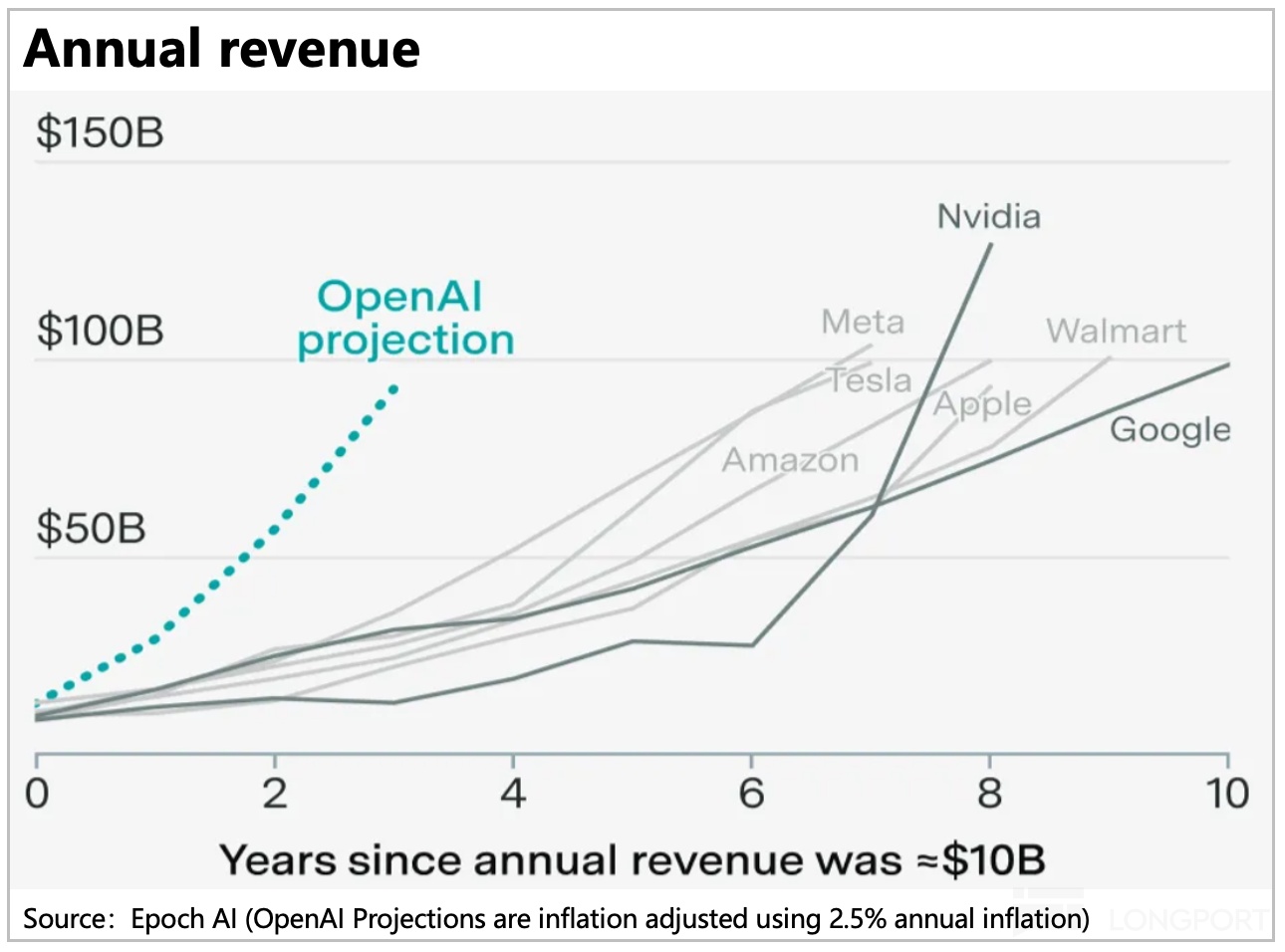
But here, OpenAI's annualized revenue of $20 billion needs to reach $100 billion within three years to truly fulfill these payment commitments. Currently, no giant has achieved revenue exceeding $100 billion within a few years. Dolphin Research reasonably speculates that one of its purposes may be intentionally creating excess supply to reduce computing power costs.
OpenAI CEO Sam Altman, when asked if there would be excess computing power capacity, did not hide his desire for excess computing power: "There will definitely be many rounds of excess computing power, whether it appears in 2-3 years or 5-6 years, possibly several rounds along the way."
IV. Conclusion: 2026 Investment Theme — Structural Excess in Computing Power + Industry Chain Profit Shift?
From the above analysis, it can be seen that the entire AI industry chain currently has profits excessively concentrated upstream (similar to the rise of new energy vehicles, where profits were once highly concentrated in lithium mining stocks like Ganfeng and Tianqi Lithium), leading to downstream scenario applications now resembling using a golden shovel to dig dirt, with production material costs too high, making the output completely unable to match the cost of production materials.
Therefore, under the current industry chain contradictions, the next AI investment is to find opportunities in industry chain profit shift + structural supply excess, only by reducing computing power can downstream prosperity be driven.
The so-called structural excess, for example, traditional power and data center construction speed cannot keep up, leading to computing power idling; while industry profit shift focuses on tracking the speed of model implementation in terminal scenarios, potential impact on SaaS stocks, AI penetration in end-side products, new hardware brought by AI such as robots and AI glasses, etc.
So far, Dolphin Research has already seen some signs of industry chain profit shift, such as Nvidia's customers now being able to use TPUs to threaten Nvidia to offer more favorable supply conditions (actually at the same price, requiring accompanying equity investment, which is an indirect product price reduction).
Below, Dolphin Research provides several judgments that can be continuously tracked and verified:
a. The possibility of Nvidia enjoying another Davis double hit is very small, stock prices can only rely on performance growth, difficult to rely on valuation expansion; this will independently suppress computing power valuation without suppressing TSMC logic.
b. Google's news of selling bare chips instead of higher-profit TPU cloud leasing indicates, on one hand, that Google's own chip production scheduling is not an issue (TSMC capacity arrangement issue).
On the other hand, the industry should have truly shifted to IDC data center construction by 2026 (such as water pollution, power issues in data center construction, etc.), and this part of the investment is not business barrier investment but capacity mismatch investment. It is necessary to constantly monitor the construction pace of new data centers.
c. Startups: The threshold for AI games is too high, new companies like OpenAI, wanting to disrupt giants is not easy, over-betting on assets in the OpenAI chain is not wise.
Because in the long-line competition of vertical integration logic, it is still the giants who master funds, computing power, models, cloud services, and scenarios that are more likely to win.
<End here>
Related articles:
"All on the Same Rope, Is OpenAI a Spiritual Pearl or a Demon Pill?"
"AI Darling Turns into a Spendthrift, Can Meta Make a Comeback?"
Risk Disclosure and Statement of this Article:Dolphin Research Disclaimer and General Disclosure
The copyright of this article belongs to the original author/organization.
The views expressed herein are solely those of the author and do not reflect the stance of the platform. The content is intended for investment reference purposes only and shall not be considered as investment advice. Please contact us if you have any questions or suggestions regarding the content services provided by the platform.
