

2026: US Stocks — From Valuation Frenzy to an Earnings Grind?

Starting in 2020, the U.S. has completed a full fiscal, monetary, and economic cycle. Versus the prior five-year 'miracle,' will U.S. equities still deliver in the new cycle kicking off in 2026? This note from Dolphin Research looks at fiscal and monetary policy as the main lens.
I. A full monetary cycle: five years of debt-driven U.S. growth?
By end-2025, the Fed will have moved from pandemic-era QE to post-pandemic QT, completing the cycle. By H2 2025, the excess pandemic liquidity parked in the Fed’s reverse repo facility will have been fully drained. With the cycle closed, four charts of the U.S. economy become interesting.
1) Outstanding U.S. Treasury debt nearly doubled over 2010–2019 to almost $17tn. From late-2019 through 2025, it jumped again from ~$17tn to ~$32tn, another near-double.
2) The U.S. macro leverage ratio was stably ~251–252% pre-pandemic. By mid-2025 it reached ~257%, structurally above pre-pandemic levels.
3) By Q3 2025, M2-to-GDP implies the 'money intensity' per unit of GDP remains above its historical trend. The money stock per output unit has not fully normalized.
4) The pandemic and AI genuinely lifted private-sector productivity. The nonfarm business output-per-hour index rose from ~105 pre-pandemic to ~116 by mid-2025, outpacing the historical slope.
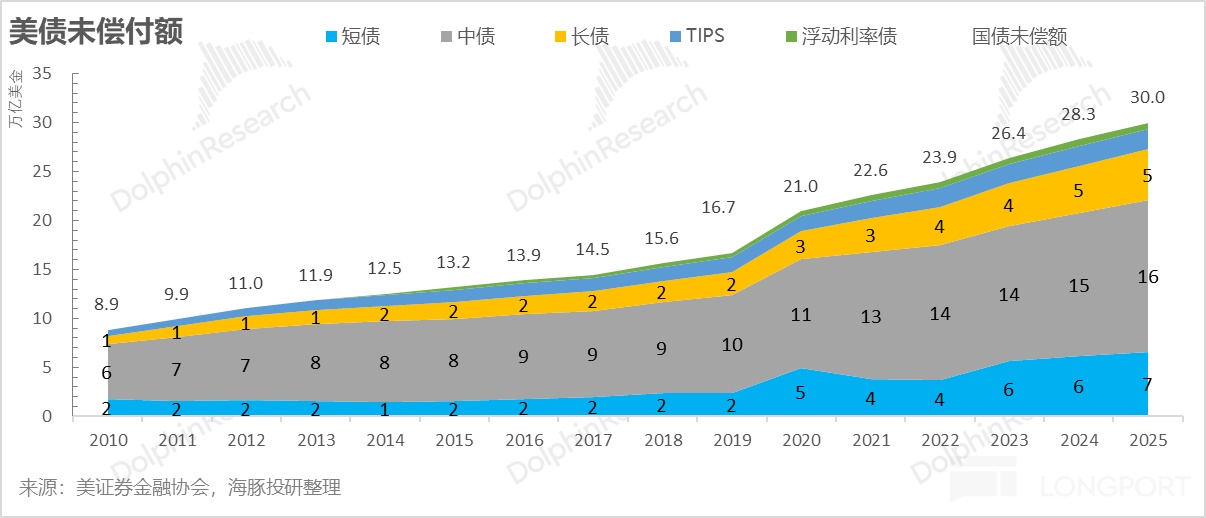
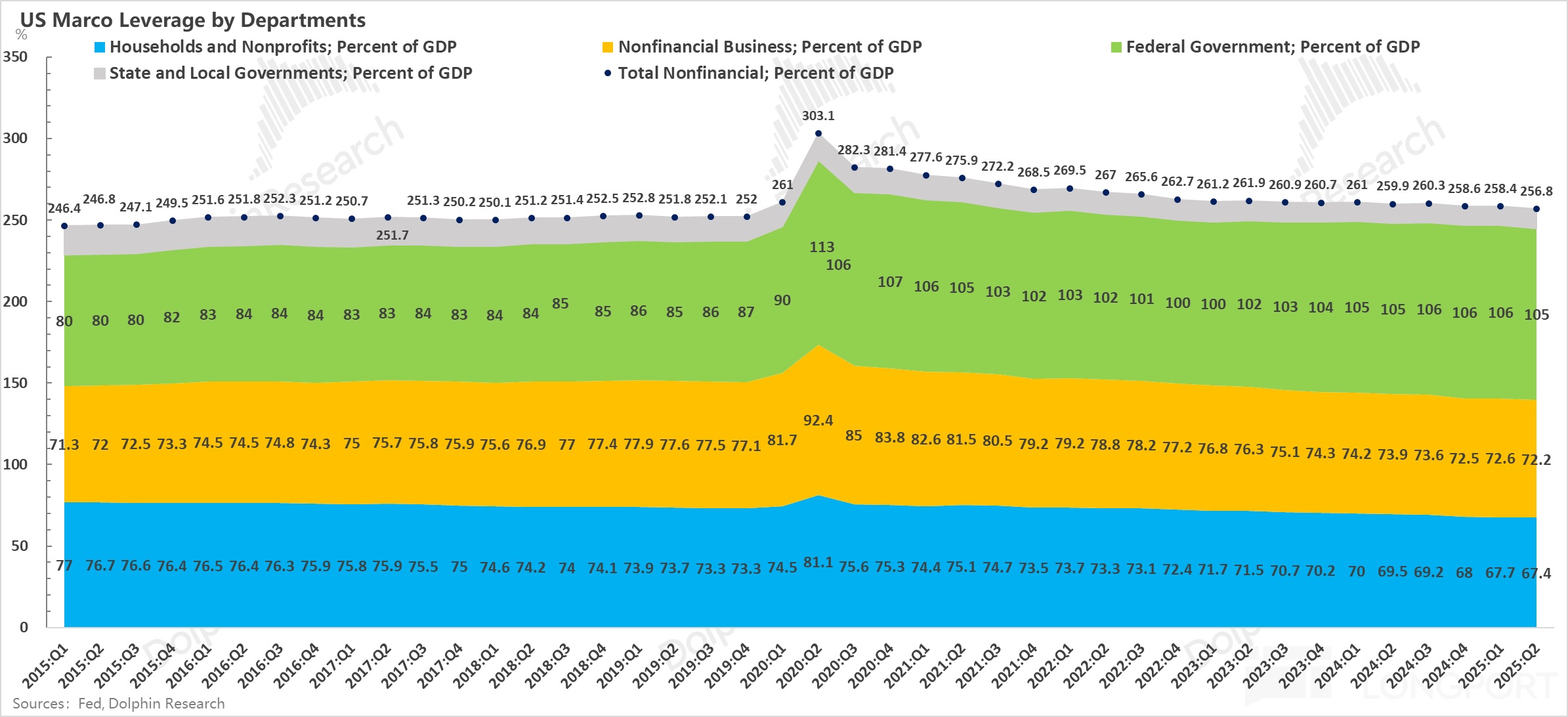
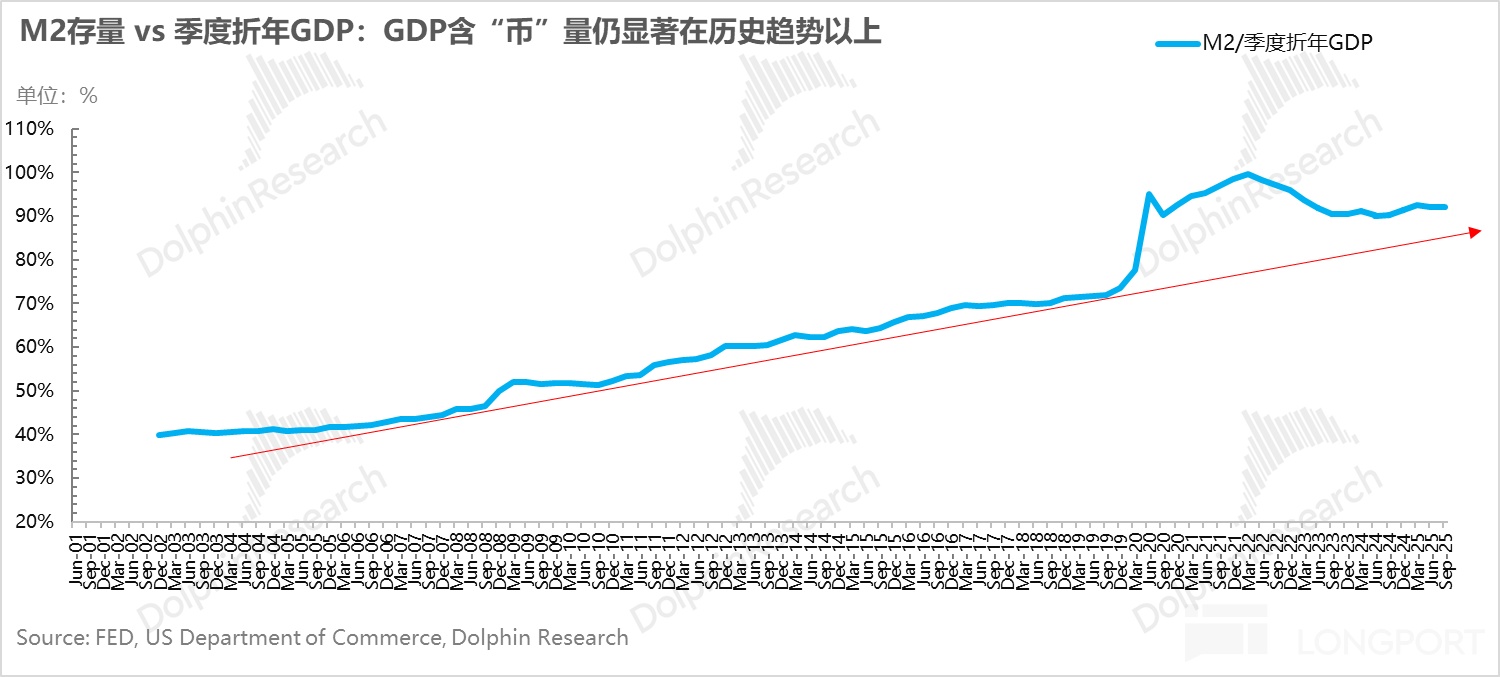
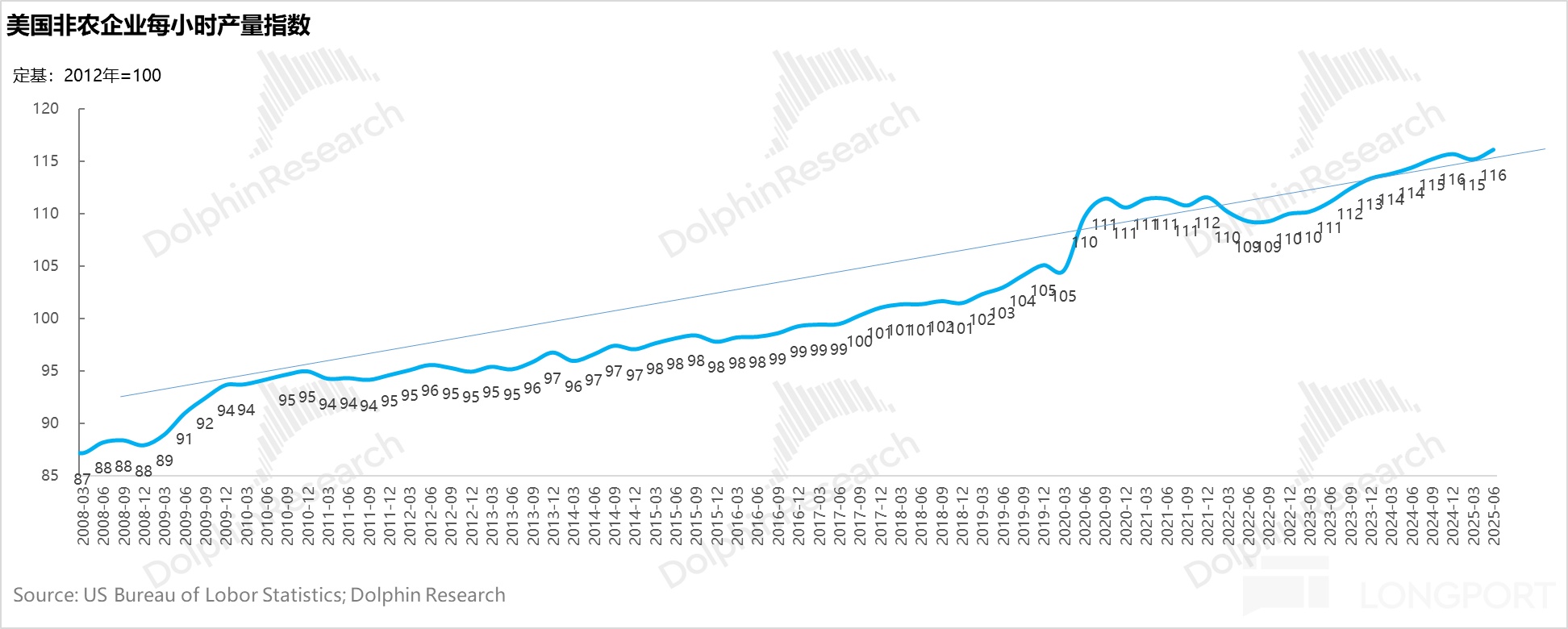
Taken together, these four charts point to two conclusions. See below.
a. Growth over recent years has been driven by debt expansion plus digital/AI-led productivity gains acting in tandem.
b. Yet leverage rose and M2-per-GDP stayed above pre-pandemic levels even after QT, suggesting the efficiency of debt-fueled growth has deteriorated.
II. 2026: a 'fiscalized' Fed and a sweet spot before a second inflation wave?
With 'money intensity' and macro leverage (i.e., inflationary-style growth) still well above pre-pandemic, attention turns to 2026. Bank-system liquidity has been tightening, forcing the Fed to inject short-term liquidity.
From mid-Dec., it added liquidity for two weeks by buying T-bills. By late Dec., it shifted to using the standing repo facility and related tools to ease near-term funding stress.
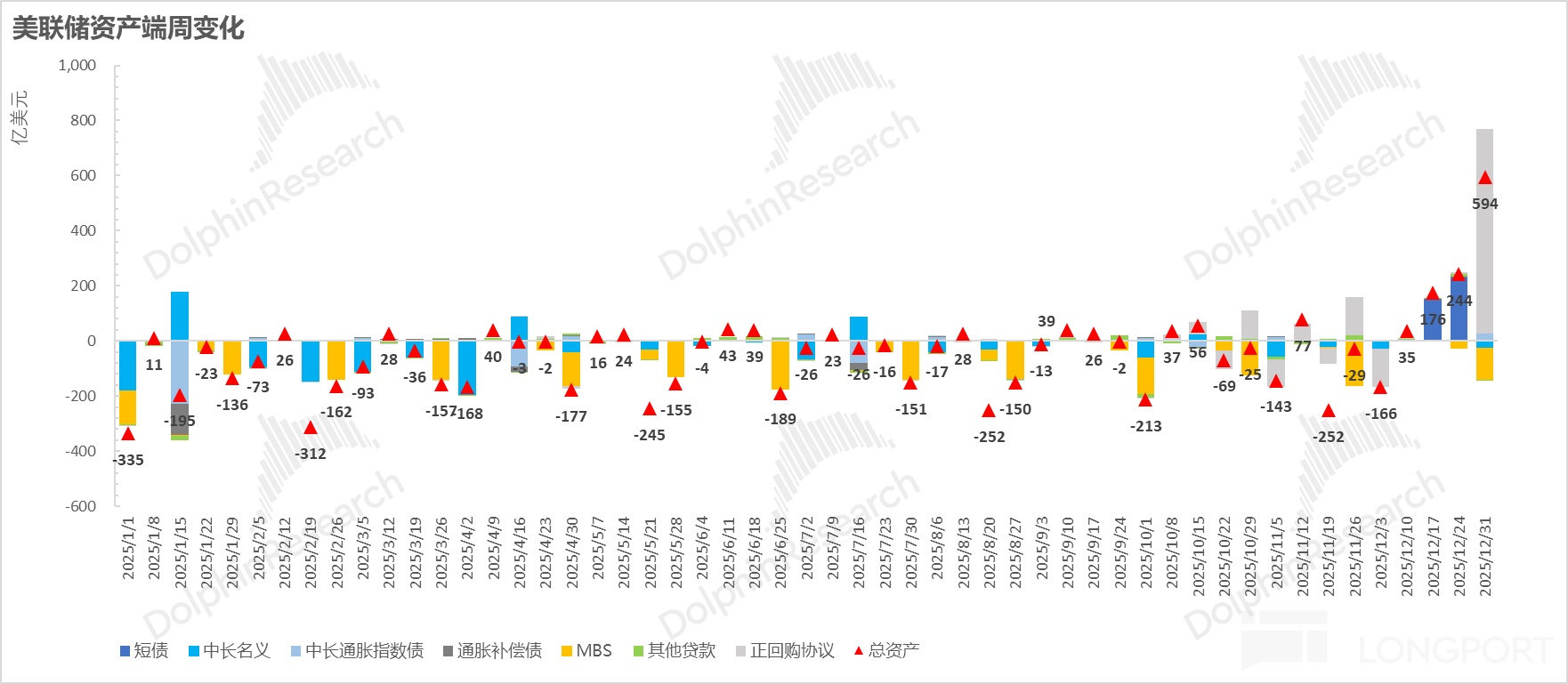
Now consider the largest source of demand in the bond market—the U.S. Treasury. In 2025, net UST issuance was around $2tn, broadly matching the ~$1.6tn fiscal deficit plus roughly $300bn to rebuild the TGA.
2026 is the first year of Trump’s 'Beautiful Act'. Consensus expects a fiscal deficit of about $2tn. With the TGA already above its ~$850bn target, there is little rebuild need, implying at least ~$2tn in net UST financing for 2026.
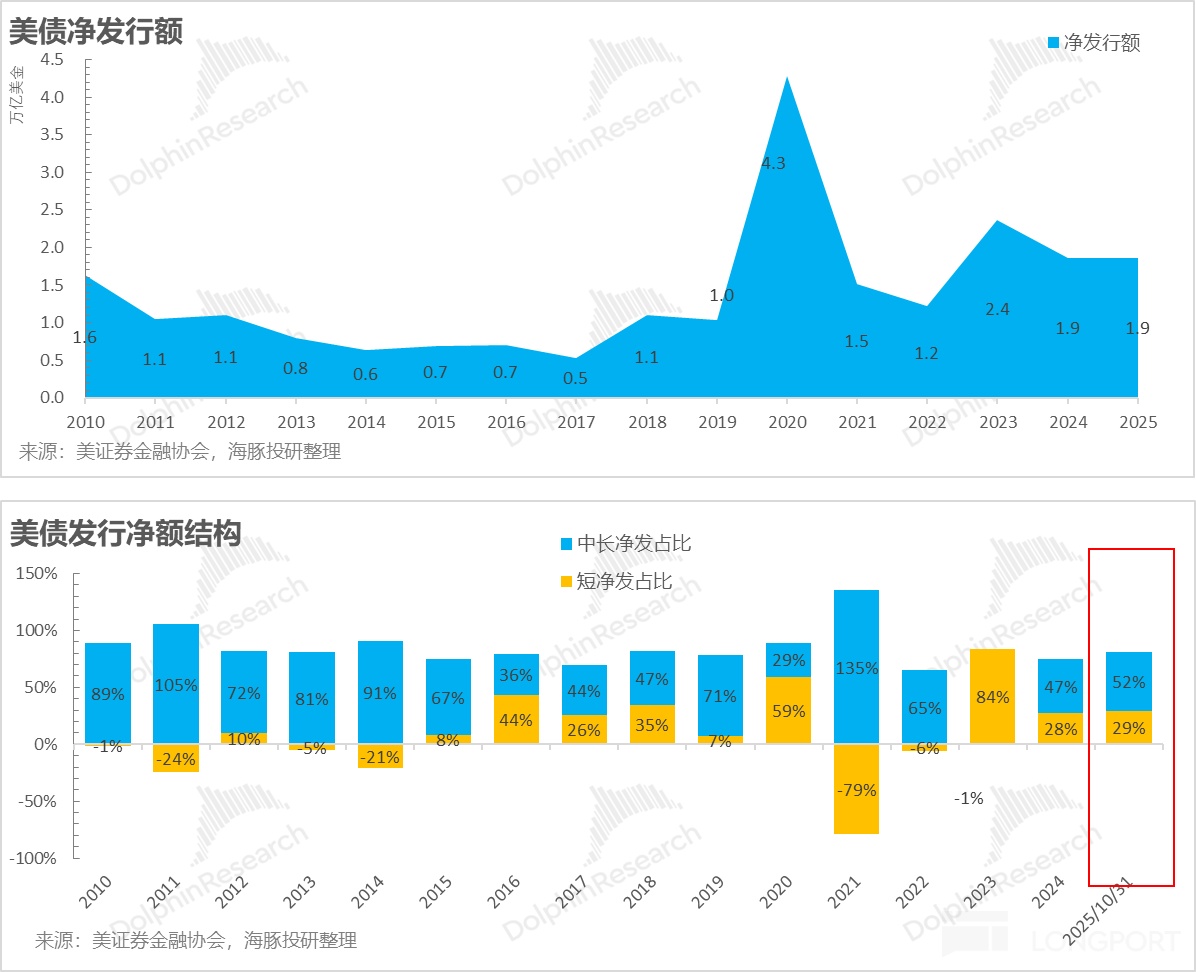
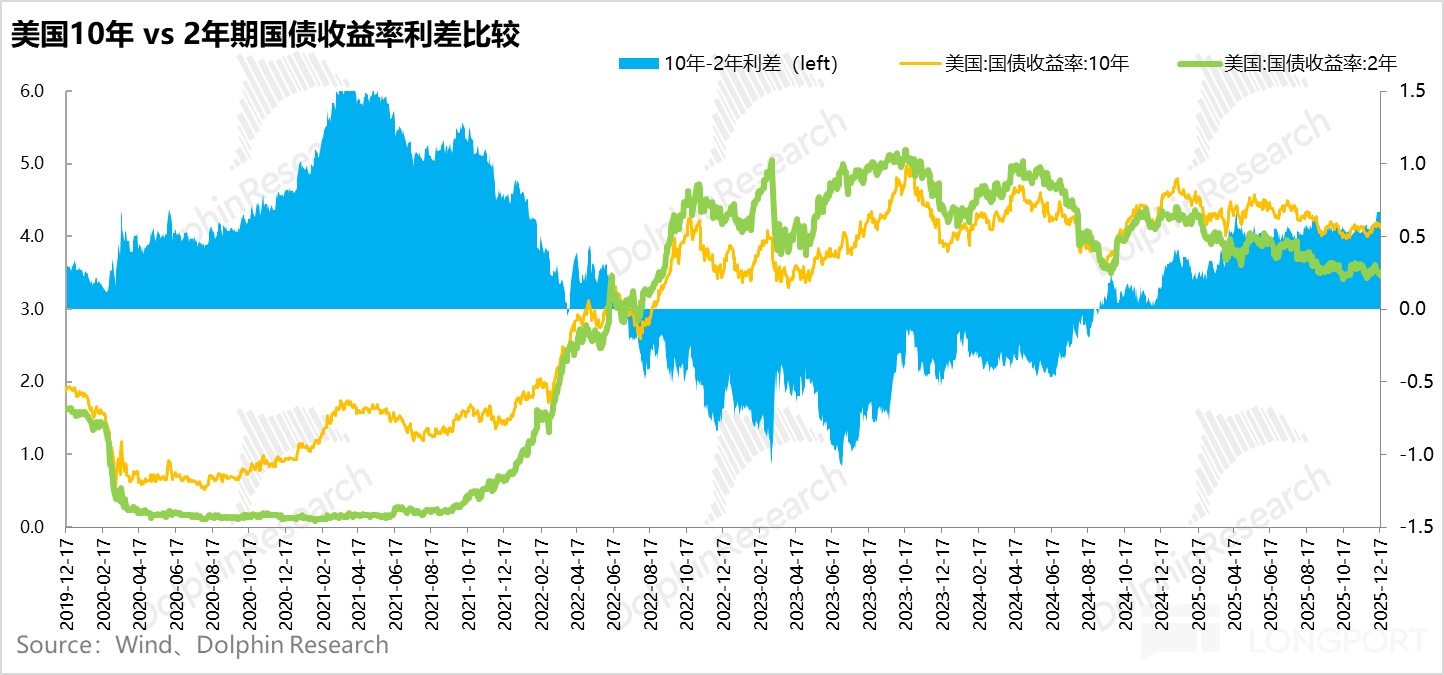
Structurally, >4% yields at the long end remain elevated, while bills are anchored by the policy rate. On top of Treasury supply, AI capex adds new long-end borrowing needs, while the relative cost advantage favors bills.
As a result, Treasury’s ~$2tn net need remains heavily reliant on bills or bill-like liquidity instruments. The short end is doing the heavy lifting.
Will the Fed keep buying bills and deploying repo facilities to indirectly and consistently backstop UST financing? If so, the 2026 policy stance looks clearer on both price and quantity of money.
a) Continued rate cuts: After three consecutive cuts since Sep-2025, the fed funds target is back to 3.5–3.75%. Another 50–75bps in 2026 would bring the policy rate to ~3%, providing cheaper funding during the AI and manufacturing rebuild.
b) 'Mini-QE': To meet financing needs under the 'Beautiful Act', the Fed may keep injecting dollar liquidity to backstop UST demand.
Either way, 2026 likely brings a renewed balance-sheet-driven upswing, led by government borrowing plus private AI investment debt. Growth again leans on the liability side.
Early on, that mix typically means a softer USD, firmer commodities, and a cyclical upturn. For U.S. equities, without open-ended QE, multiple expansion looks harder, but EPS growth still has support.
III. Portfolio performance
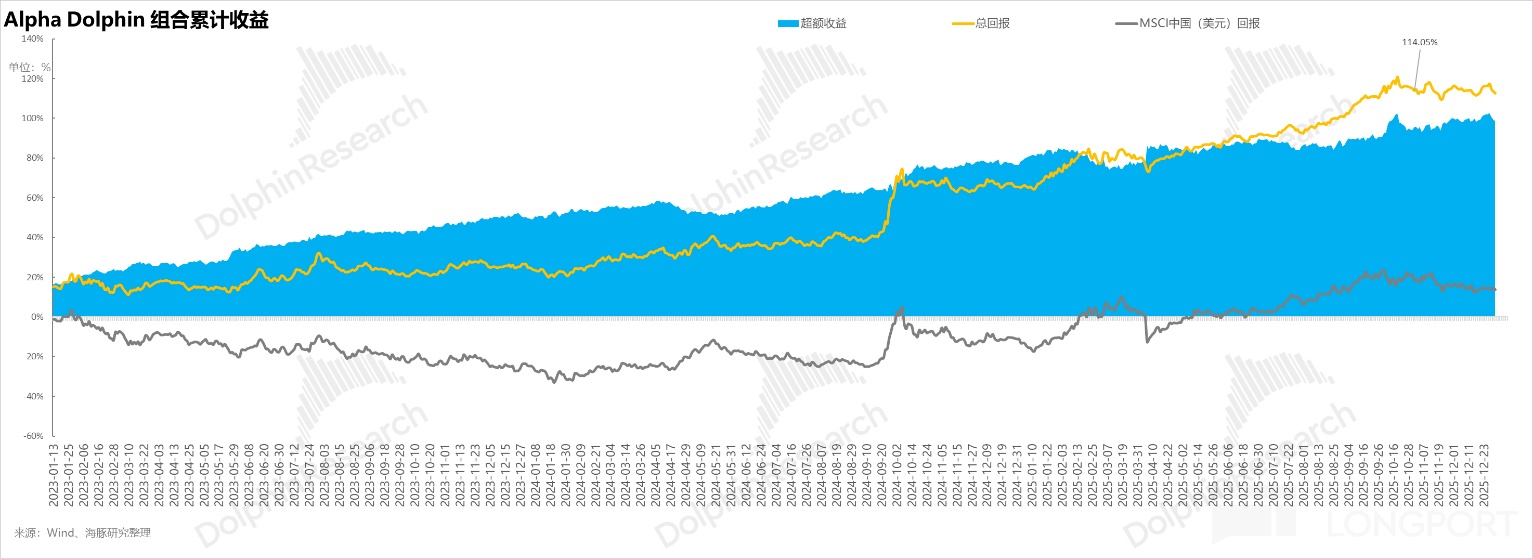
Last week, the Alpha Dolphin virtual portfolio made no changes. It fell 0.92%, lagging the CSI 300 (-0.6%), MSCI China (+1.9%), and Hang Seng Tech (+4.3%), but outperforming the S&P 500 (-1%).
The drag mainly came from gold’s pullback. A few heavyweights also softened after earnings communications.
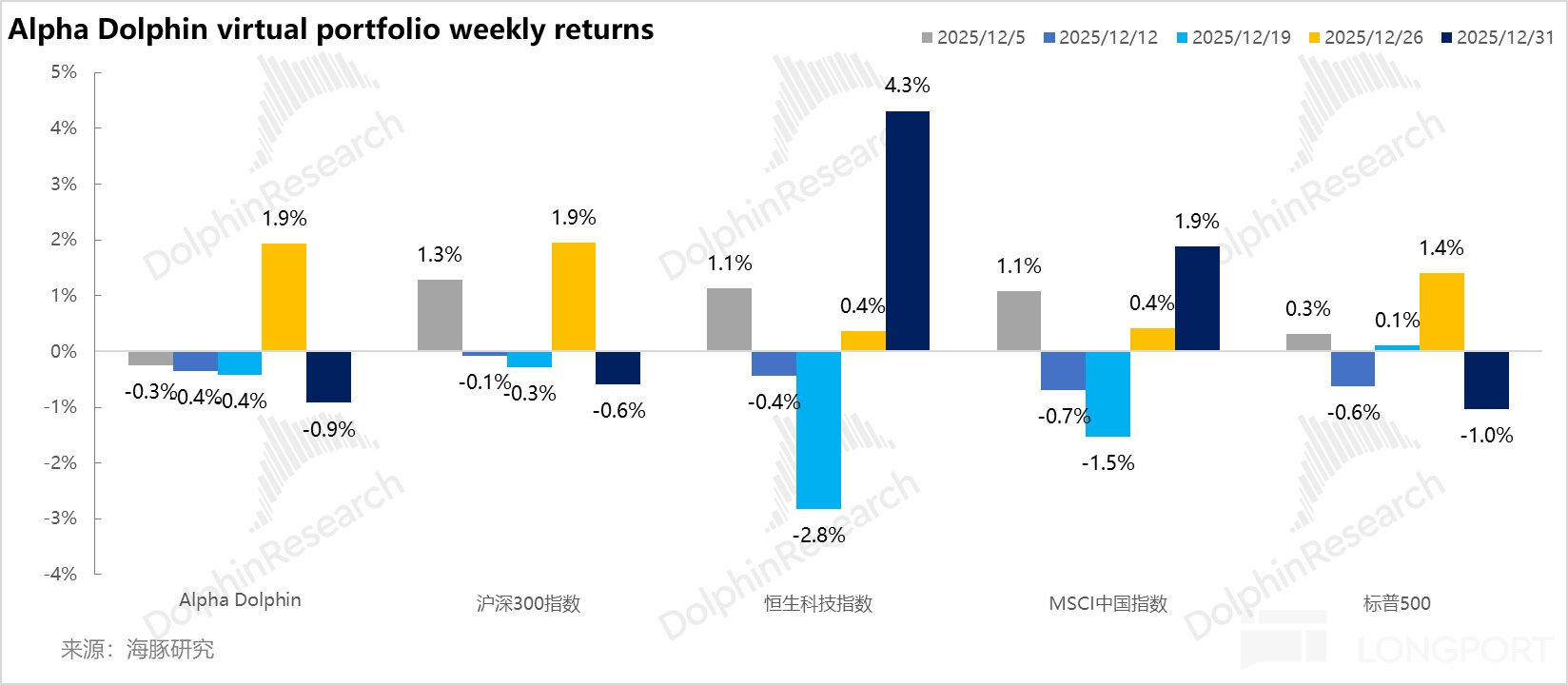
Since inception (Mar 25, 2022) to last Fri., the portfolio delivered a 116% absolute return. Excess return vs. MSCI China was 98%.
On NAV, the initial $100mn virtual capital has grown to over $219mn. Compounding remains intact.
IV. Single-stock P&L contribution
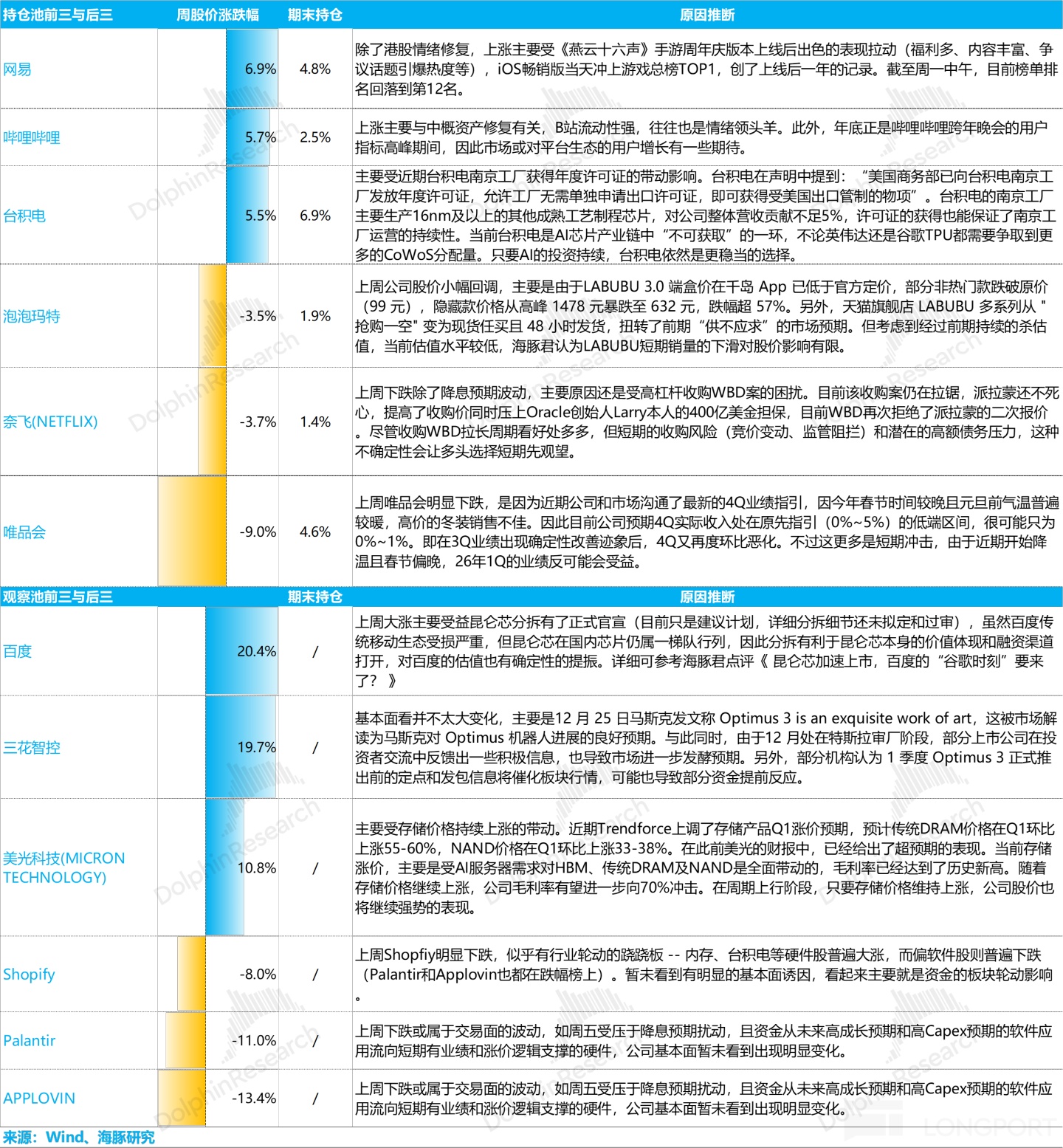
The Alpha Dolphin underperformed mainly because a) several weighted holdings in equities declined, and b) gold retreated. Details follow.
Stock-level moves are analyzed below.
V. Asset allocation
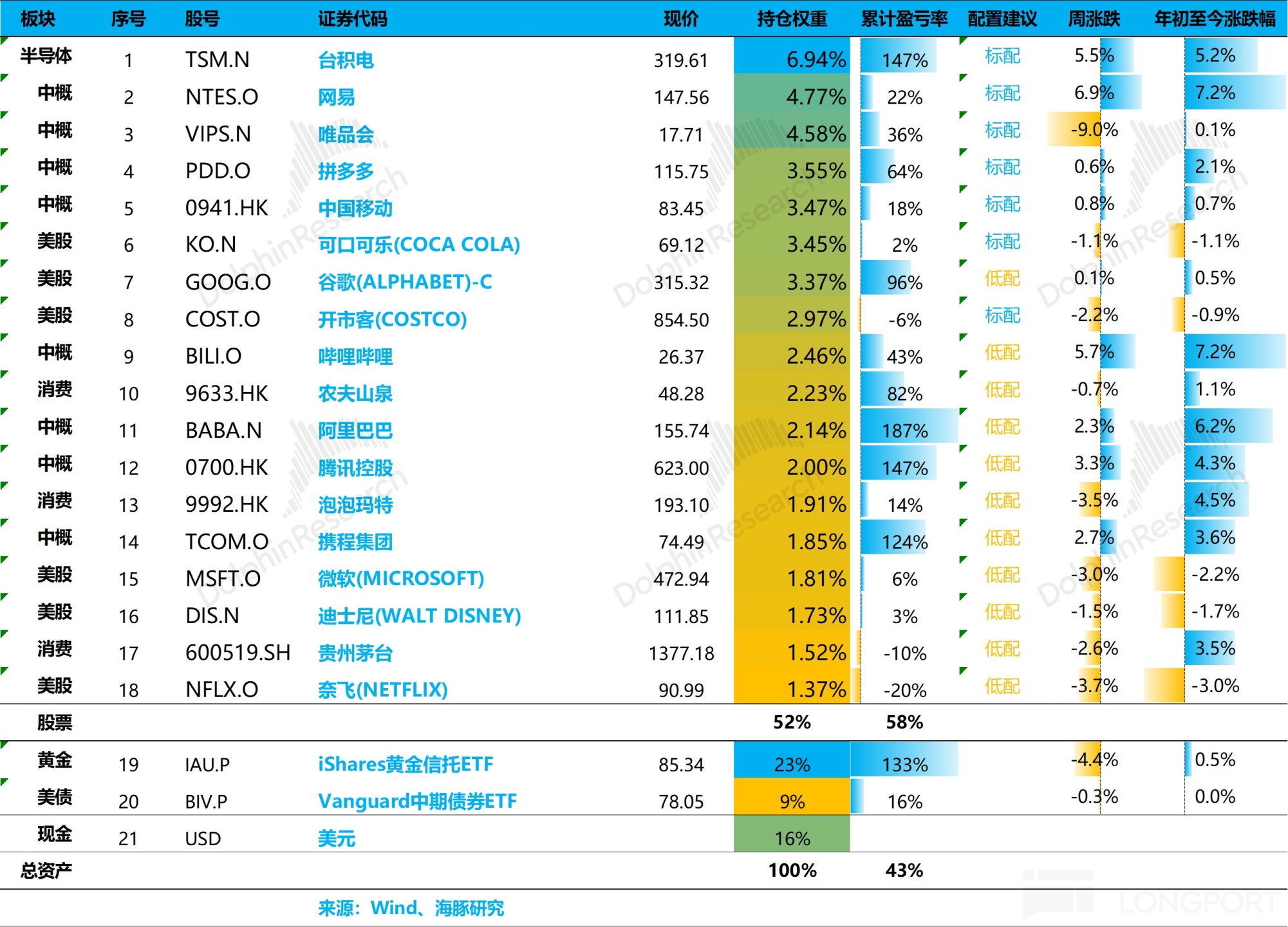
The Alpha Dolphin portfolio holds 18 single names and equity ETFs, with 7 at standard weight and the rest underweight. Outside equities, exposure is mainly in gold, USTs, and USD cash.
The current split between equities and defensive assets (gold/USTs/cash) is roughly 52:48. Positioning stays balanced.
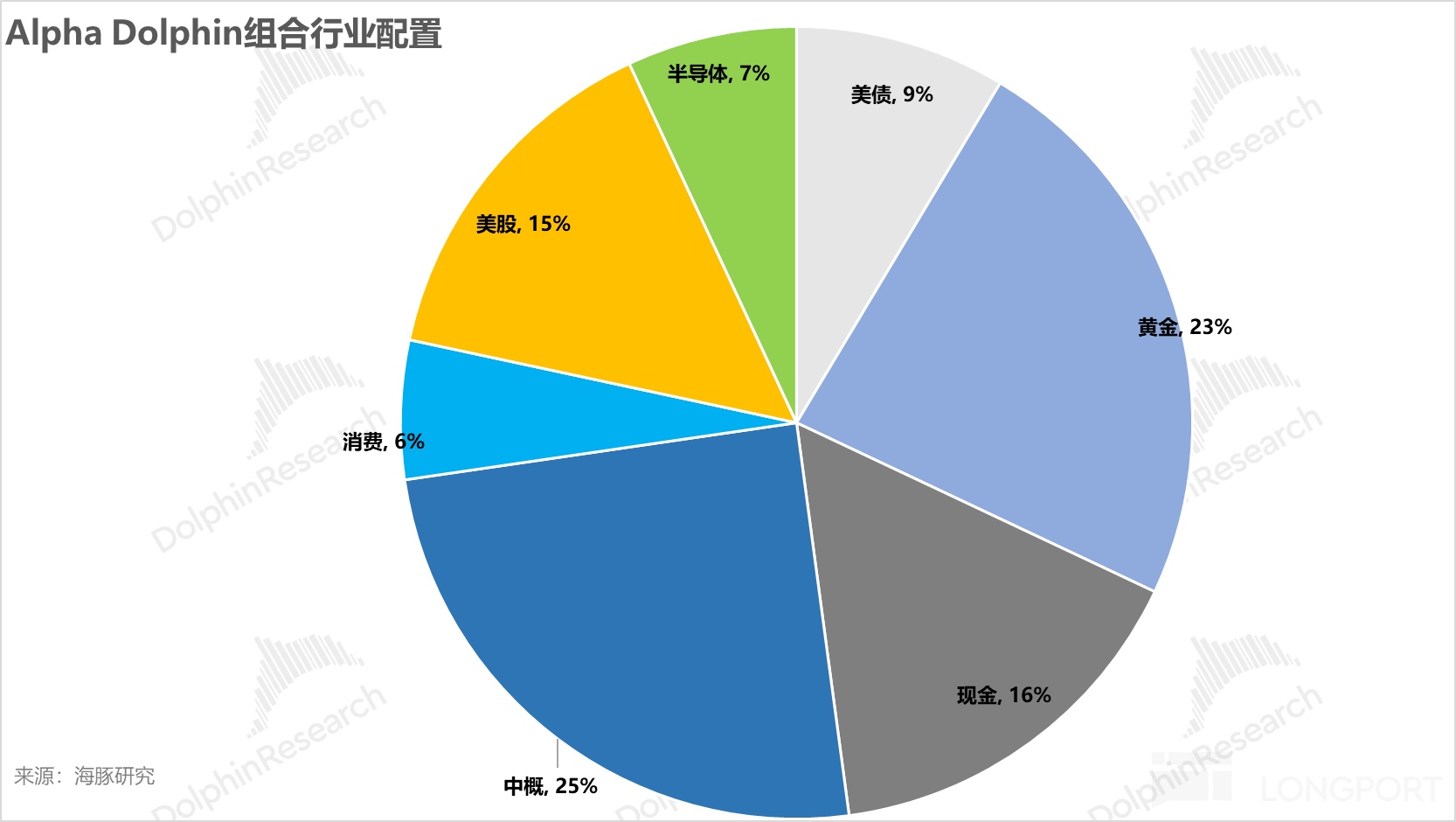
As of last Fri., asset allocation and equity position weights are shown below. See charts for details.
<End>
Risk disclosure and statements:Dolphin Research Disclaimer and General Disclosures
For recent weekly reports of the Dolphin Research portfolio, please refer to:
The copyright of this article belongs to the original author/organization.
The views expressed herein are solely those of the author and do not reflect the stance of the platform. The content is intended for investment reference purposes only and shall not be considered as investment advice. Please contact us if you have any questions or suggestions regarding the content services provided by the platform.
