

NFLX: Will M&A Sink the Hit Factory? Time to Test Conviction

$Netflix(NFLX.US) released its Q4 2025 results after hours on Jan 20 (ET). The print was mixed, and when layered with the planned WBD acquisition, it pits near-term pressure against long-term conviction.
Specifically:
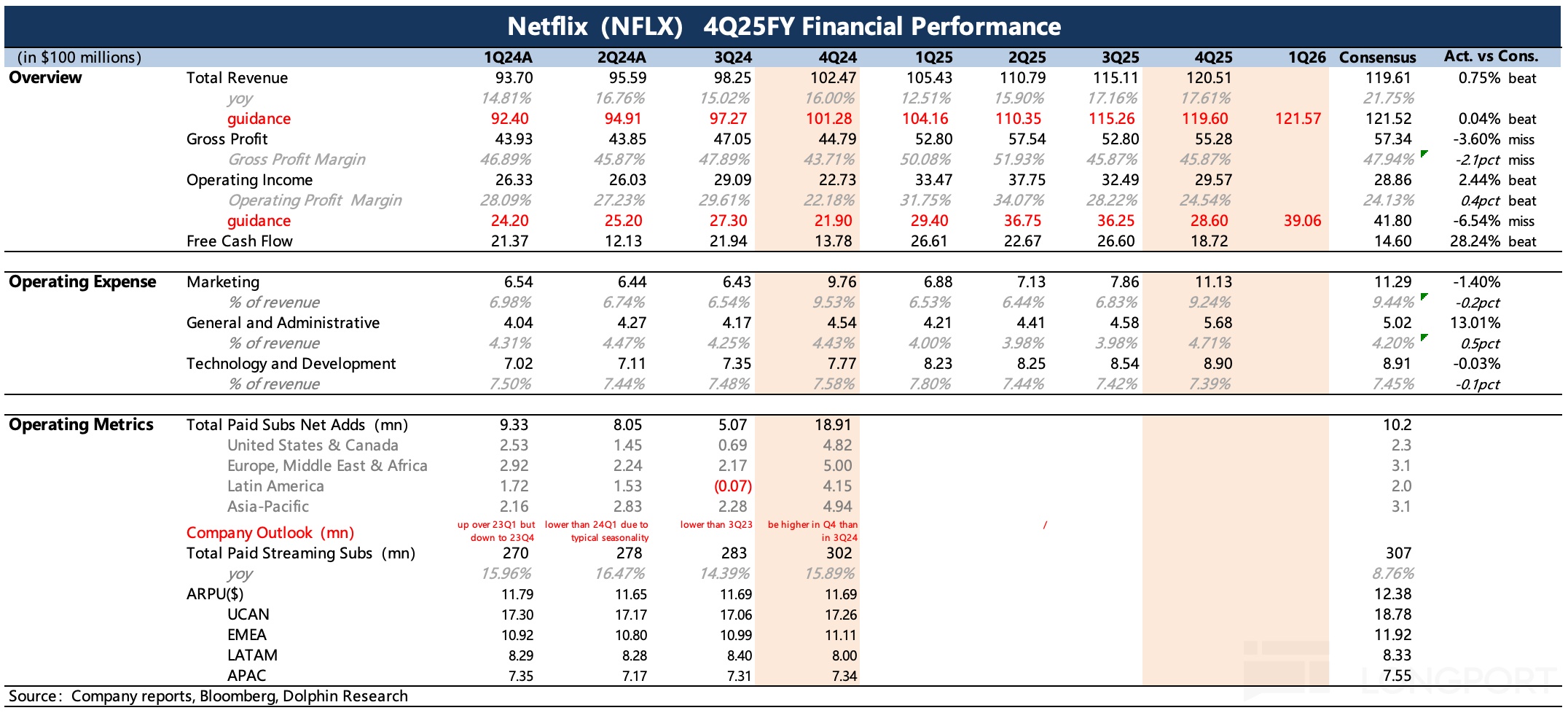
1. Q4 beat: Results for the past quarter came in ahead of estimates on both revenue and profit, despite a timing effect from residual Brazil taxes deferred to 2026. Momentum also looked healthy with signs of acceleration, driven by the final season of 'Stranger Things' in Q4.
Versus the first three quarters, Q4 revenue benefitted more from pricing. Year-end subs topped 325 mn (+~8% YoY), a clear slowdown from ~15% a year ago. Softening user growth is likely why Netflix is pushing hard to acquire WBD, which in turn fuels concerns about its long-term organic growth.
2. Muted guide: With organic growth in focus, the Street looked closely at management’s outlook. Both 1Q26 and full-year 2026 guides are rather muted, merely in line with a not-so-demanding consensus: Q1 revenue growth of 15.3%, and full-year growth of 12–14%.
OPM guidance was a touch below expectations due to acquisition-related costs and remaining Brazil tax catch-up (guide: 31.5% vs. ~32.5% consensus).
3. Ads ramp slower, potential turn this year: 2025 ad revenue exceeded 1.5 bn, in line with Dolphin Research’s view but below many sell-side models calling for 2–3 bn. The macro backdrop is a drag, especially for brand ads sold in more traditional ways.
Netflix is testing programmatic in NA and plans to expand globally in H2, which should drive a meaningful scale-up in ads.
4. Cash flow pressure from the deal: Cash use is mainly content capex and buybacks. In Q4, NFLX repurchased 18.9 mn shares for 2.1 bn, with 8 bn authorization still remaining.
Buybacks will be paused given the all-cash WBD deal. The company guides content spend up ~10%, though we expect, as in this year, some tactical control to ease near-term cash pressure. In fact, last year’s 17.7 bn content spend missed the initial ~18 bn target.
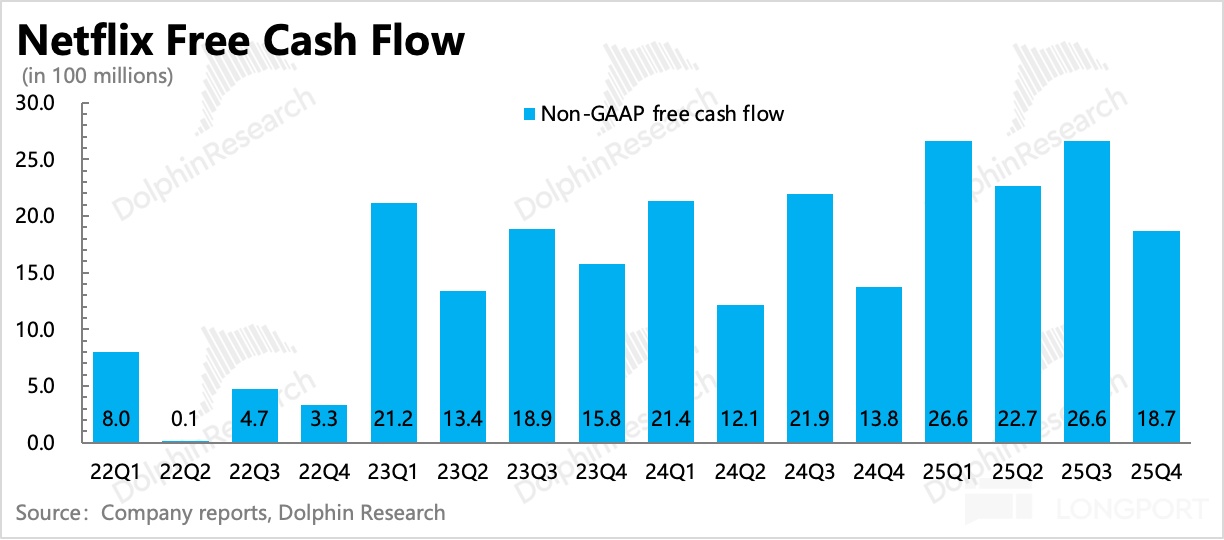
Current FCF is near 10 bn for 2025, with a 2026 target of 11 bn. But net cash at year-end was only 9 bn and ~1 bn of short-term debt comes due over the next year.
Switching to all-cash, Netflix needs more financing: on top of the prior 59 bn bridge loan, it added 8.2 bn, and secured priority unsecured revolving credit lines totaling 25 bn to repay part of the bridge.
That leaves 42.2 bn in bridge debt outstanding, with annual interest likely above the 2–3 bn of content licensing savings post-WBD. If the deal timeline is prolonged by regulatory review or other disruptions, near-term cash pressure will be material.
5. Key metrics at a glance
Dolphin Research view
NFLX underperformed mega-cap tech in Q4, with the WBD megadeal as the spark. Back in Q3 review, Dolphin Research questioned the deal chatter, given Netflix’s long-held preference for builders over buyers.
Management’s apparent resolve to break its own playbook at any cost has amplified uncertainty around long-term organic growth. Compared with growth doubts, the debt burden from a large deal is secondary. In a soft macro tape, that loss of conviction has weighed further on sentiment.
Deal uncertainty alone can keep money on the sidelines, and the latest amendment seems to push Paramount aside, leaving regulatory approval as the key unknown. If Netflix frames its TAM as the broader video market including YouTube, antitrust risk should be lower.
Based on management’s 2026 targets (typically somewhat conservative), a post-market cap of ~$350 bn implies ~26x P/E (15% tax rate), a bit above profit growth (~+20% YoY). The last time multiples fell to this range was 2022 amid high rates and net user losses, so, from a sentiment standpoint, there is little need to get more bearish unless the long-term story truly breaks. For now, we do not see such signs.
From a longer lens, owning WBD would be a high-odds move. While acquired IP once held less appeal for Netflix, today’s environment makes scarce, era-defining IP attractive.
Beyond filling the library, the bigger upside is monetizing those franchises beyond film/TV, across broader entertainment verticals.
Details below
I. Why buy WBD: mature markets near saturation
Q4 revenue was 12.1 bn (+18% YoY), with FX broadly neutral across regions. Ad revenue reached 1.5 bn, strong but shy of many institutional models.
Subs surpassed 325 mn in Q4 (+~8% YoY). Slower user growth, especially in mature markets where price hikes push saturation, underpins Netflix’s urgency to pursue WBD at almost any cost.
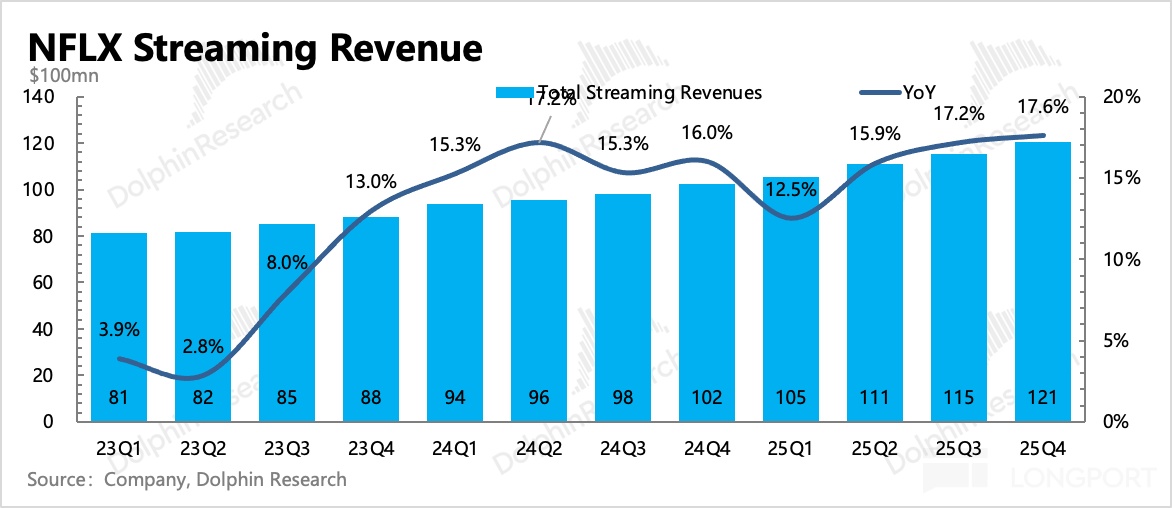
By year-end, Netflix stands at the tail of this content cycle. While hits remain, only a few S-tier new IPs have emerged over the past three years, such as 'Squid Game' and 'Wednesday'.
Much of the frenzy has leaned on legacy franchises like 'Stranger Things', 'You', 'Bridgerton', and 'Money Heist'.
With >300 mn users and ever-higher expectations, sustaining >15% revenue growth and >20% profit growth to support a 30–40x P/E gets harder. The password-sharing crackdown was a one-off, and ads are still a small pillar.
Ultimately, growth hinges on more premium content serving broader tastes and on diversified monetization of IP via games, parks, and other extensions.
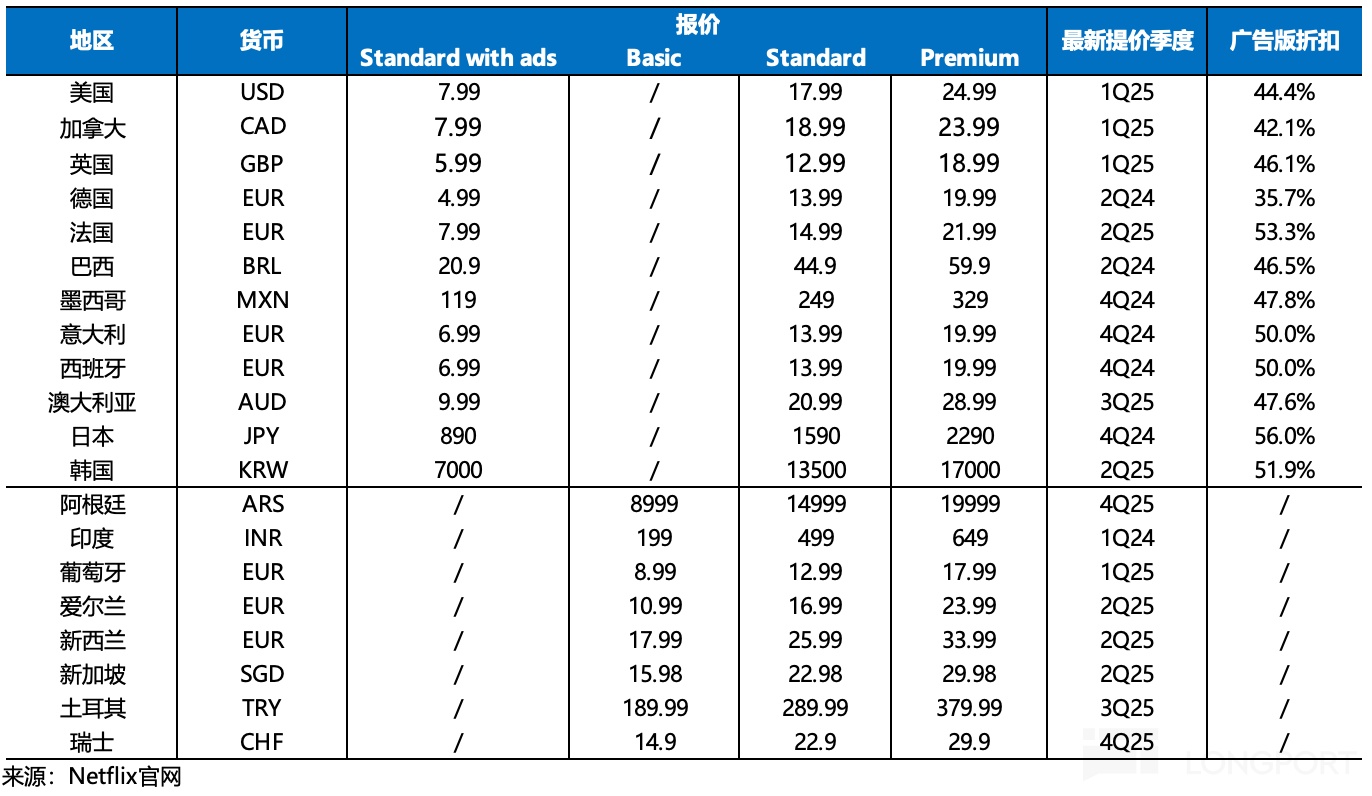
International subs (notably Asia) grew well last year, but ARPU is less than half of NA. Near term, growth still relies on pricing power in mature markets.
Price increases across NA and Europe in early 2025 showed up clearly in Q4. In less mature regions, hikes can easily pressure scale, so Netflix raises prices less frequently; in 4Q25, it hiked Argentina for the third time in a year to offset FX.
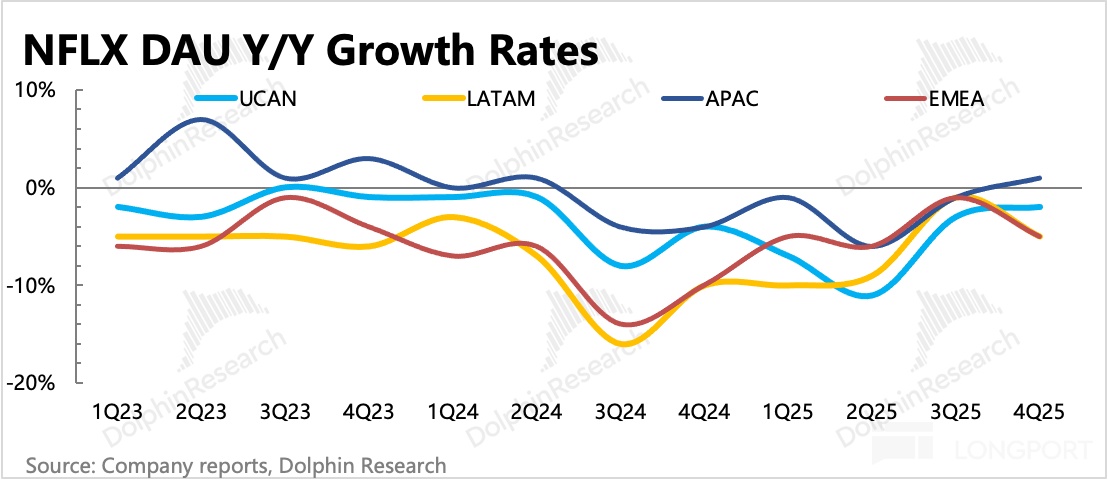
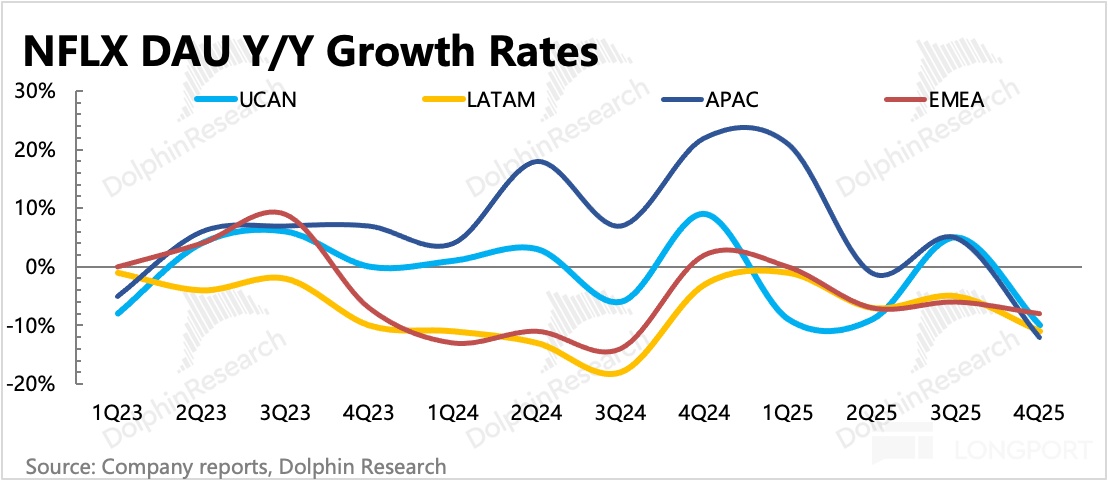

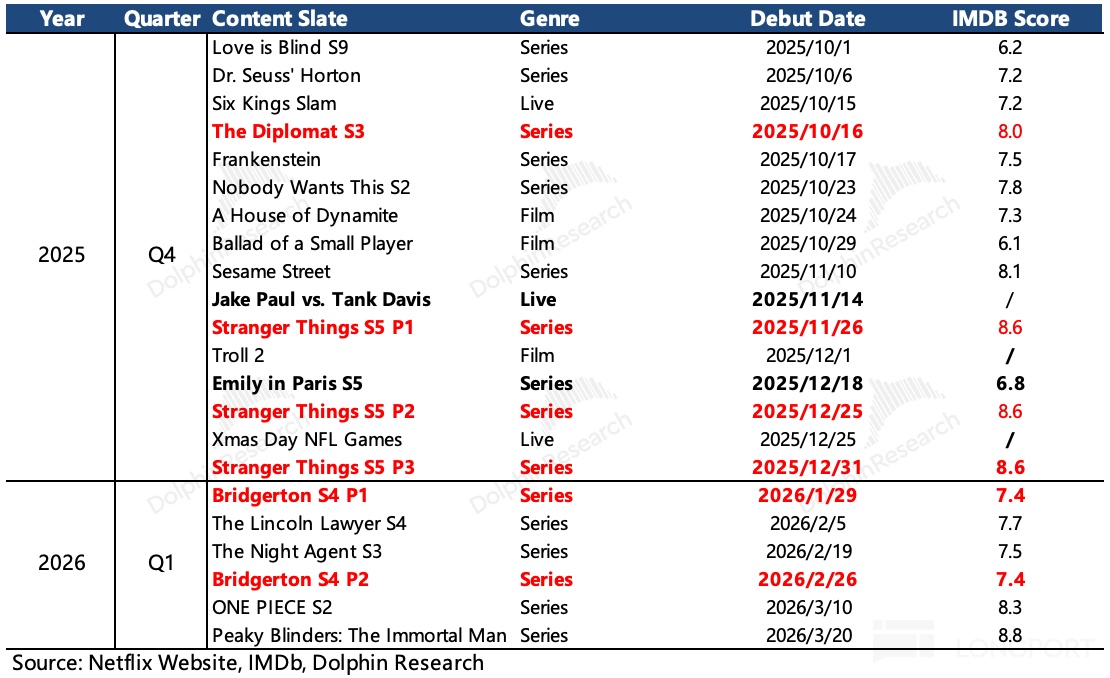
Near-term outlook:
(1) Q1 is seasonally soft, but 'Bridgerton' S4 could lift the quarter. The late Q4 run for 'Stranger Things' should also help carry momentum into early Q1.
(2) In Q2, top-tier IP looks thinner based on current slate. Without new breakout titles, more price actions may be needed in some regions, and non-sub revenue growth in ads/games will matter more.
II. Content spend +10% target, execution may be restrained
As a bellwether, content spend reflects competitive intensity; we track Netflix and Disney closely. Q4 content spend was 5.1 bn, with growth moderating vs. Q3.
Full-year spend was 17.7 bn, below the ~18 bn start-of-year plan. With heavier amortization amid more Q4 tentpoles, content assets rose less than 0.2 bn QoQ.
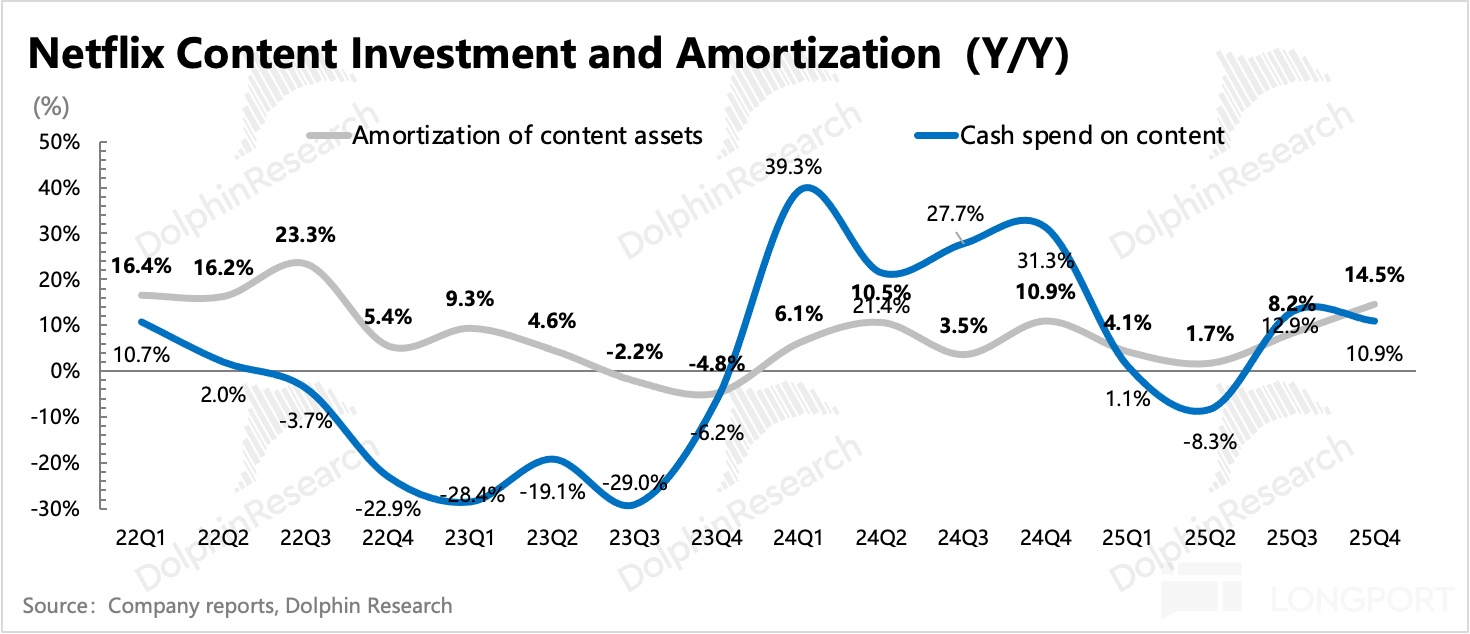
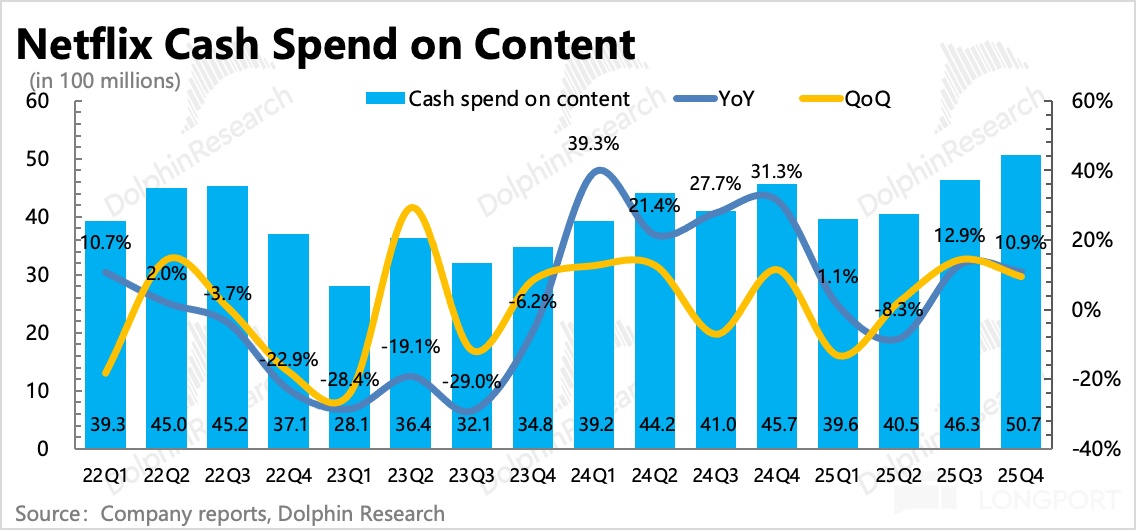
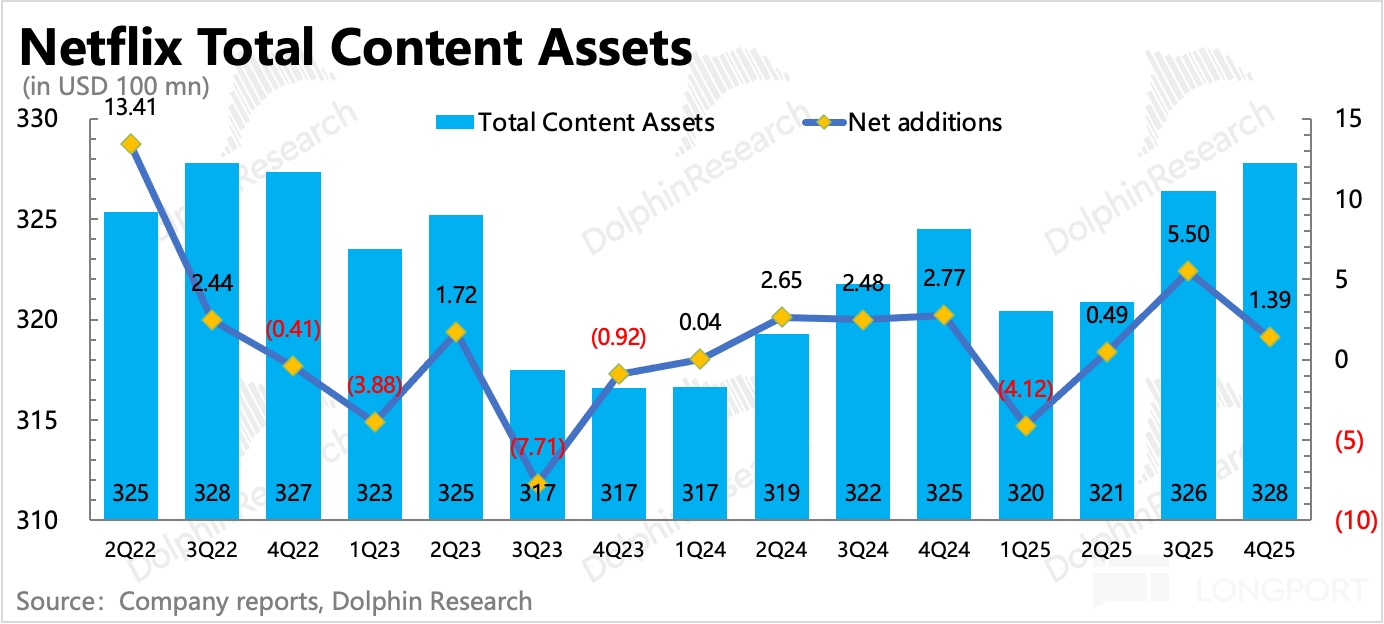
Netflix indicated 2026 content spend will be ~10% above 2025, or ~19.5 bn. Given higher interest and cash needs tied to WBD, we still expect some restraint this year, similar to last year.
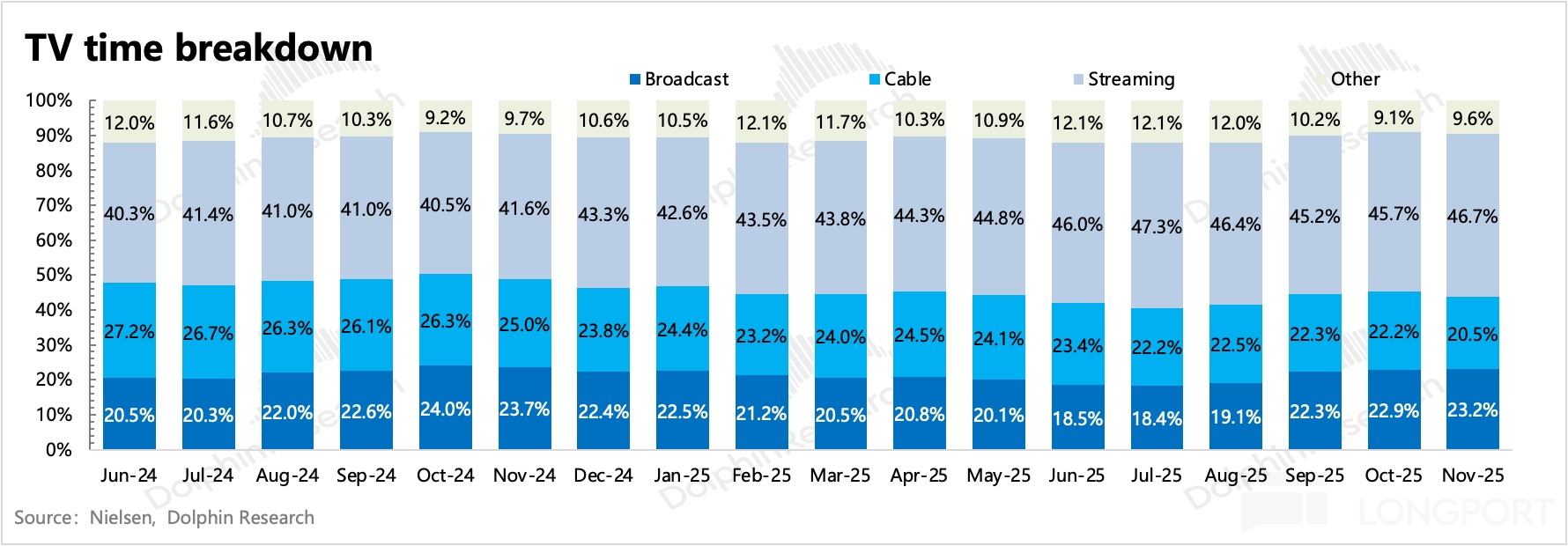
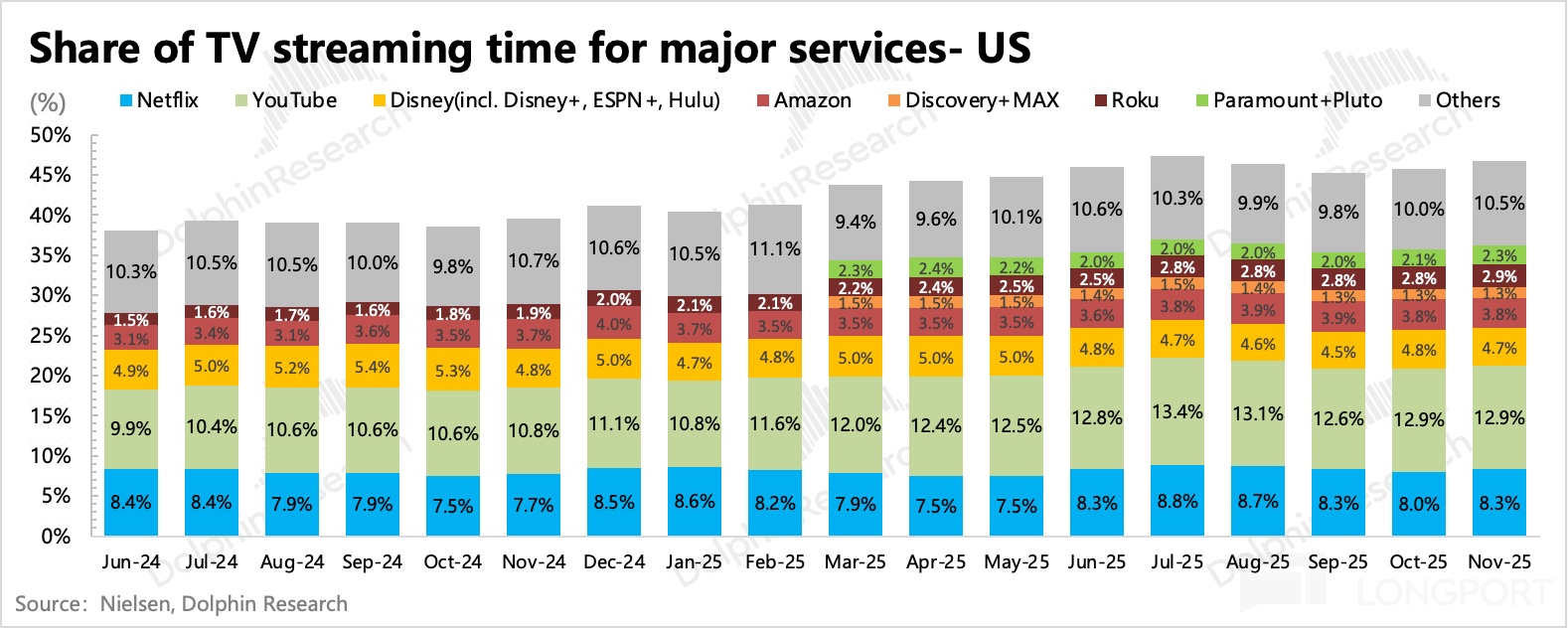
Per Nielsen NA, as legacy media shifts to streaming, cord-cutting continues and streaming share reached 46.7%. Within streaming, Netflix’s share remained stable; stronger H2 tentpoles lifted viewing time +2% YoY, better than H1.
That said, rising user thresholds and competition from YouTube and short video (TikTok, Reels) suggest user growth in NA is hitting limits.
III. Profit to trend higher long term; near-term cash tighter
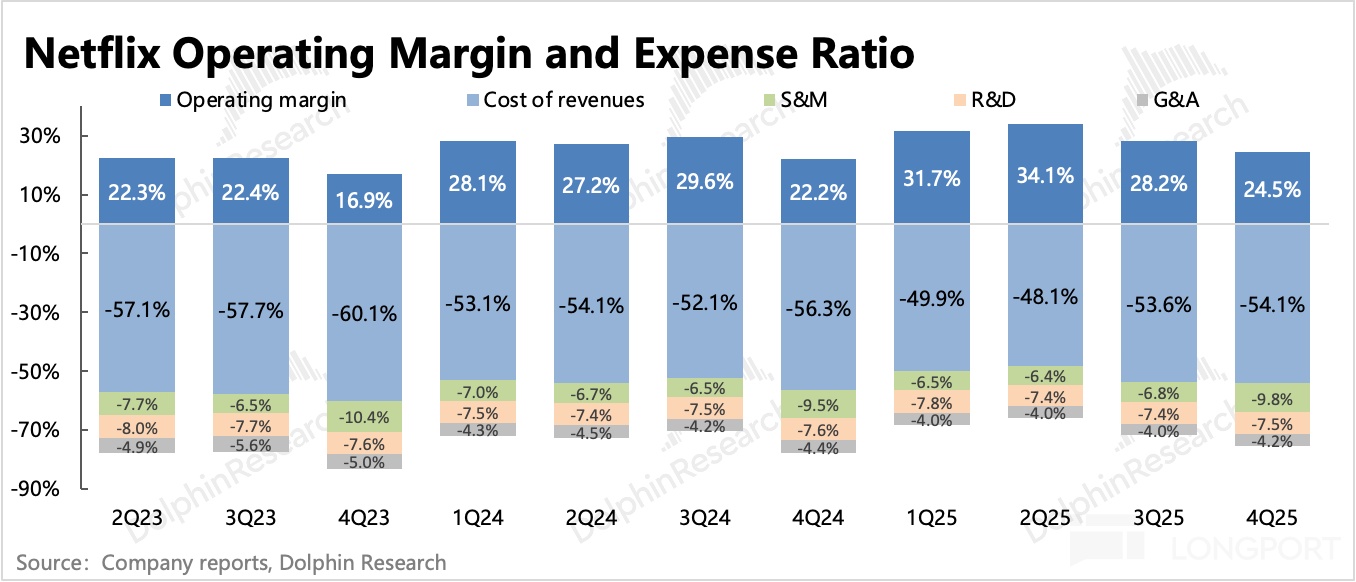
Q4 operating profit was nearly 3.0 bn, beating estimates. Upside was supported by revenue and by deferring the remaining sub-0.2 bn Brazil tax to 2026, which lifts 2025 profit and trims 2026, though the impacts are modest.
Ultimately, profit growth is driven by revenue, so the long-term growth path is the core issue.
Current FCF is near 10 bn for 2025, with a 2026 target of 11 bn. But net cash at year-end was only 9 bn, and ~1 bn of short-term debt matures within a year.
With an all-cash structure, Netflix is raising more debt: in addition to the 59 bn bridge, it added 8.2 bn and secured priority unsecured revolving facilities totaling 25 bn to repay part of the bridge.
Bridge debt stands at 42.2 bn, and the annual interest tab likely exceeds the 2–3 bn content licensing savings post-WBD. If the deal drags, cash pressure will increase.
In Q4, Netflix bought back 18.9 mn shares for 2.1 bn, with 8 bn still authorized. To fund essential content and higher interest, buybacks will be paused.
<End here>
Dolphin Research 'Netflix' archive
Earnings season (past year)
Oct 22, 2025 call Trans 'Netflix (Trans): Programmatic will be a key revenue driver'
Oct 22, 2025 First Take 'Netflix: Another plunge — has the 'King of Series' gone average?'
Jul 18, 2025 call Trans 'Netflix (Trans): Very confident in H2 and 2026 content pipeline'
Jul 18, 2025 First Take 'Netflix: Can the A-student still surprise?'
Apr 18, 2025 call Trans 'Netflix (Trans): Entertainment is resilient when the economy is under pressure'
Apr 18, 2025 First Take 'Netflix: A 'safe harbor' that gets the cycle?'
Jan 22, 2025 call Trans 'Netflix: Investing efficiently; the entertainment runway is long (4Q24 call notes)'
Jan 22, 2025 First Take 'The dream iQIYI can’t catch? Netflix goes on a tear'
Oct 18, 2024 call Trans 'Beyond streaming: Netflix keeps investing efficiently (3Q24 call notes)'
Oct 18, 2024 First Take 'Euphoria at Netflix — how much higher can it fly?'
Hot take
Dec 8, 2025 'Netflix changed: breaking its own rule with an 80 bn bet on the studio leader'
Deep dive
Feb 16, 2022 'The knife fight among consumer internet champs: Meta, Google, Netflix'
Nov 23, 2021 'A U.S.-style long-video melee ahead — trouble for Netflix and Disney?'
Risk disclosure:Dolphin Research disclaimers and general disclosure
The copyright of this article belongs to the original author/organization.
The views expressed herein are solely those of the author and do not reflect the stance of the platform. The content is intended for investment reference purposes only and shall not be considered as investment advice. Please contact us if you have any questions or suggestions regarding the content services provided by the platform.
