

 Likes Received
Private Credit: The Overlooked Trillion-Dollar Market and Delayed Risks

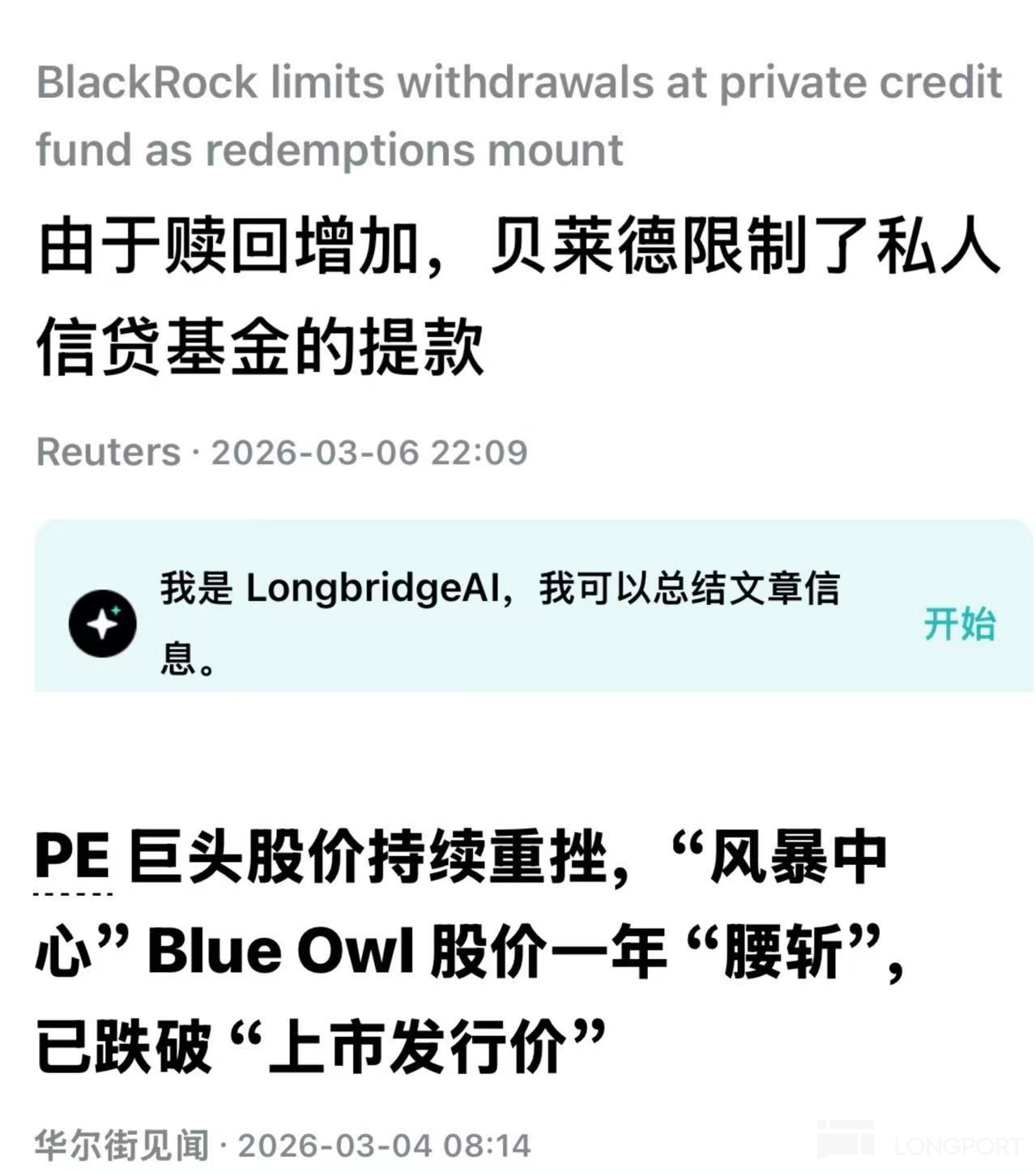
In the past two months, as asset management giants like BlackRock have restricted redemptions from their private credit funds, Federal Reserve Chairman Jerome Powell's speech at Harvard University this week also focused on private credit. So, what exactly is private credit, and why is the entire market paying so much attention? Baike Jun is here to clarify it for you 👇
What is Private Credit?
Private credit is essentially a lending market where lenders directly loan money to companies without going through banks. The lenders here are typically large asset management institutions like Blackstone Group, Apollo Global Management, etc. ($Blackstone(BX.US) $Apollo Global(APO.US)$ARES Management LP(ARES.US)$KKR(KKR.US)$Ares Capital(ARCC.US)$Blue Owl Capital(OBDC.US) ). Suppose you are the owner of a medium-sized tech company today, urgently needing a $30 million loan for business expansion, but the bank's risk control department is very likely to deny your loan application because your industry is considered too volatile with an uncertain future, and the company's cash flow is not very stable. At this point, private credit funds from Wall Street giants like the aforementioned Blackstone and Apollo would approach you, saying they are willing to provide you with this loan, but the terms would be stricter than a bank's: higher interest rates (8%-10%), longer terms, accompanied by equity warrants, etc. It indeed sounds somewhat like a form of usury to a certain extent.
The Underlying Logic Behind the Rise of Private Credit
There are three underlying reasons for the rise of private credit:
First is regulatory arbitrage. After the 2008 financial crisis, traditional banks faced strict regulations like Basel III, with high capital adequacy requirements. For businesses with even a slight risk, banks were unwilling and afraid to touch them, leading to a severe decline in their willingness to lend to small and medium-sized enterprises. This huge vacuum left by the retreat of traditional banks was then swallowed up by private credit institutions not subject to such strict regulations.
Second is the interest rate environment. Due to the long-term low-interest-rate macro environment of the past decade, ultra-large institutional investors like pension funds, insurance companies, endowments, and sovereign wealth funds needed to find investment targets with controllable risk but higher returns. Compared to the 2% annualized return of government bonds, private credit's often 8%-10% annualized return was extremely attractive. It should be added that most of these loans are still senior secured debt, meaning private credit investors have the highest claim on the assets of the borrowing companies. Even if the company goes bankrupt and liquidates, they get the assets first, ahead of all shareholders and general creditors.
Third is the efficiency advantage. For many mid-market companies urgently needing funds for mergers and acquisitions, or those shut out by banks, private credit is like a timely rain. Although the interest is higher than banks, private credit doesn't require the multi-layered approval process of traditional banks. They make decisions quickly and offer flexible terms, making them particularly suitable for scenarios requiring speed, like leveraged buyouts and growth financing.
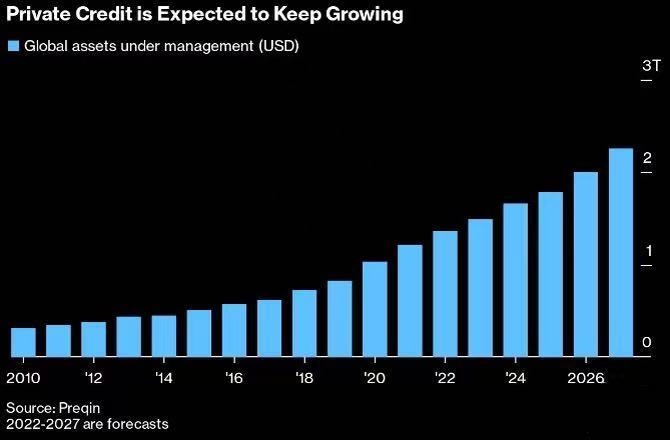
The layering of the above factors has caused the scale of private credit to balloon from about $500 billion in 2015 to $2.1 trillion in 2026, a full fourfold increase.
The Fatal Weakness of Private Credit
Precisely because it was born from businesses banks were unwilling to do, the risk structure of private credit has inherent flaws from the start. First is the "black box mechanism" caused by information opacity. In the public stock market that everyone usually interacts with, stock prices are very transparent. If a listed company's business encounters major problems recently, traders across the entire market would immediately sell off the stock, and its price would plummet accordingly. But private credit is completely different because the money in private credit is lent out privately, not traded on public markets at all. In accounting standards, this falls under Level 3 assets. Due to the lack of market trading prices, its value is calculated by the private institutions themselves using internal financial models. This is a bit like being both the player and the referee; private credit is both the lender and the one scoring and pricing the loans. More specifically, if a private institution doesn't want to admit a loan has gone bad, it only needs to slightly adjust the discount rate or expected cash flow in Excel, and this clearly unrecoverable bad debt can still appear as a high-quality asset on the books.
Another point is the PIK (Payment In Kind) mechanism, which has been increasingly discussed in recent years and is also a major source of risk in private credit. In traditional bank credit scenarios, if a company can't even pay the monthly interest, under normal banking regulations, this is called a substantive default, and the bank's legal department would directly seize assets. But private credit most likely wouldn't do this because once a default is declared, the financial statements of these private funds would look terrible, not only losing management fees but also affecting fundraising for subsequent fund products. Thus, the PIK tool was invented. Simply put, the aforementioned company that can't even pay interest can add this payable interest directly to the loan principal in the form of an IOU. Starting next month, the new loan interest rate will be calculated based on the new, larger loan principal. You may have already noticed that this is essentially an interest compounding tool. Through this operation, the company can survive like a zombie, pretending it hasn't gone bankrupt. Additionally, the fund managers behind these private credit funds not only have no bad debts on their books, but because the principal has increased, the fund's Assets Under Management (AUM) has magically grown. They can even righteously demand more management fees from investors.
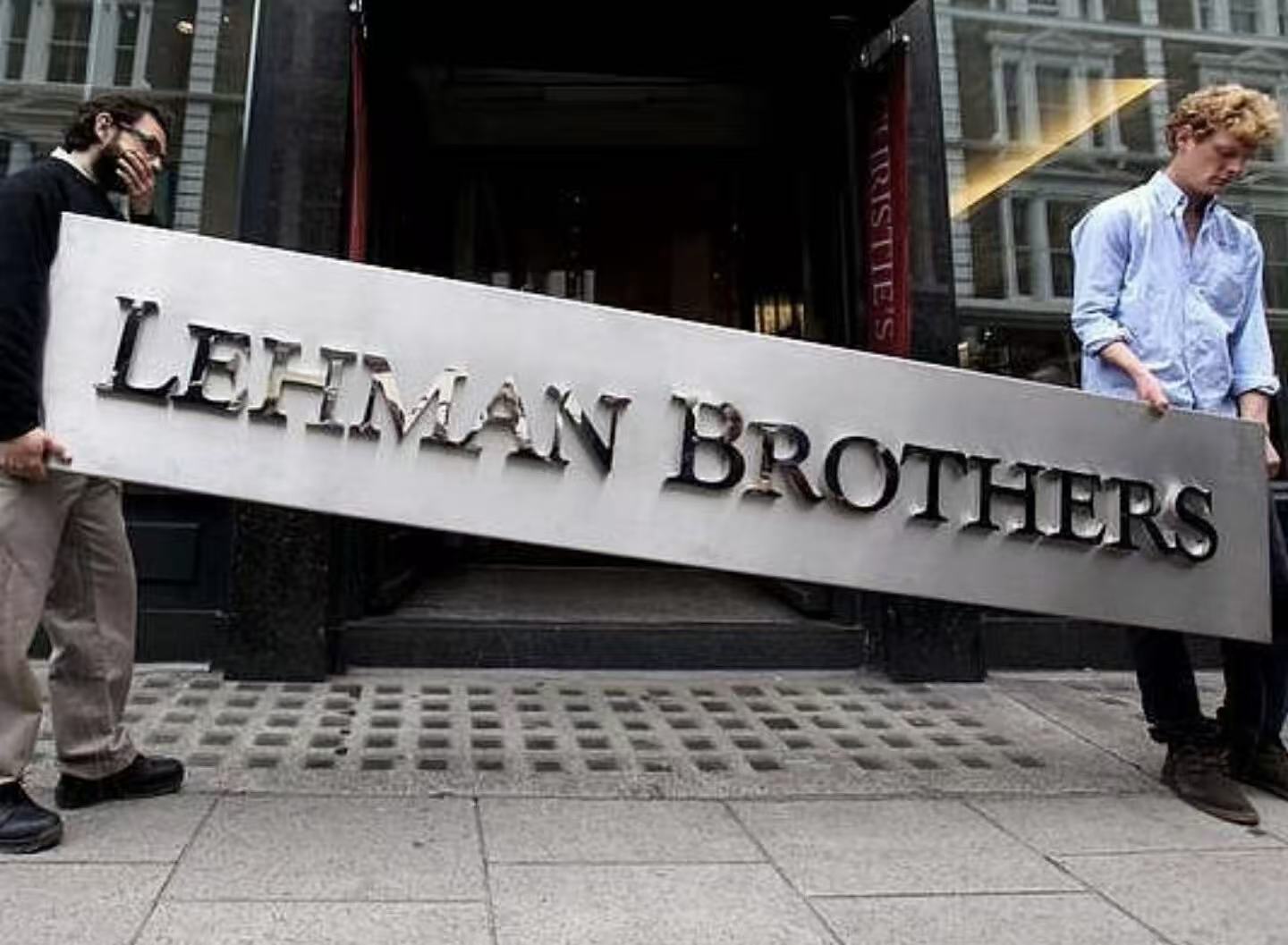
Under the aforementioned risk structure, if the macroeconomy is still growing moderately, companies can barely survive. But once the macroeconomy experiences a hard landing, such as a complete slump in consumption or if the Federal Reserve suddenly raises interest rates and bursts the bubble, then the death spiral will be fully triggered. Moreover, since the investors behind private credit are mainly pension funds and sovereign wealth funds from around the world, if large-scale bad debts truly occur, it would not only be a disaster for a few private equity giants but also a collective shrinkage of societal wealth.
The copyright of this article belongs to the original author/organization.
The views expressed herein are solely those of the author and do not reflect the stance of the platform. The content is intended for investment reference purposes only and shall not be considered as investment advice. Please contact us if you have any questions or suggestions regarding the content services provided by the platform.
