


Netflix Founder – Reed Hastings Biography
 I'm LongbridgeAI, I can summarize articles.
Just yesterday—April 16, 2026—$Netflix(NFLX.US) included an announcement in its first-quarter earnings report: co-founder Reed Hastings will not seek re-election to the board of directors, effective after his term ends this June. This means that from founding the company in 1997 to the present day, the visionary who took Netflix from a DVD-by-mail startup to a global streaming giant has completely relinquished his last seat.
Frankly, Hastings' departure is not surprising. He already stepped down as CEO in 2023, transitioning to executive chairman. But this timing still makes one look back at his entire entrepreneurial journey—because Netflix's story is essentially the history of Hastings' decisions alone.
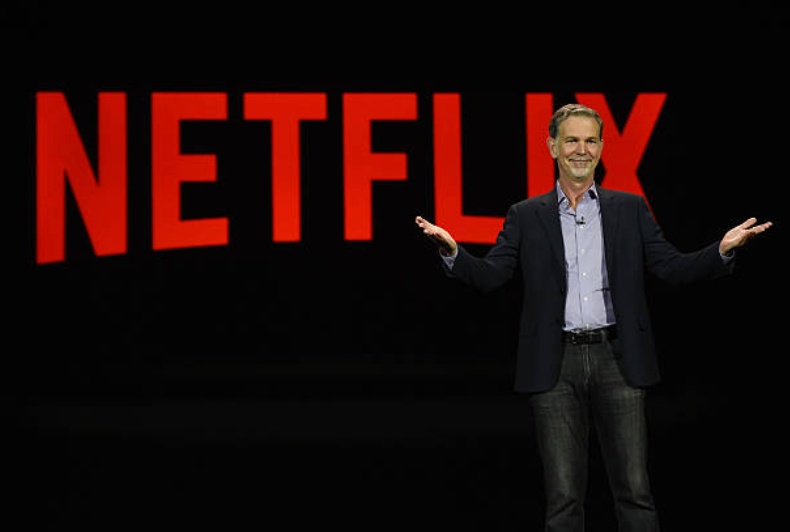
The Prequel to Netflix's Birth
Hastings was born in Boston in 1960. During his gap year before college, he went door-to-door selling vacuum cleaners. After graduation, he first trained in the Marine Corps, then spent two years teaching math with the Peace Corps in Swaziland, and earned a master's degree in computer science from Stanford in 1988. In 1991, Hastings founded his first company, Pure Software. The business was developing software debugging tools to help programmers find and fix bugs. In 1996, Hastings hired Mark Randolph as the company's marketing vice president, marking the beginning of the intersection between the two Netflix co-founders. By the end of the same year, Pure Software was acquired by Rational for $750 million, becoming Silicon Valley's largest M&A deal at the time.
After leaving Pure Software, the two founded Netflix in 1997. The initial business model was simple: choose DVDs online, have them mailed home, with a monthly subscription fee and no late fees. The inspiration reportedly came from Hastings renting "Apollo 13," being six weeks late, and getting charged a $40 late fee. For those born after the millennium, a quick note: in the 1990s, VHS tapes were mainstream. Rentals were typically for 3-5 days, and exceeding that meant paying a late fee.
Three Transformations—Each One Going Against the Grain
The First Big Bet: Killing Late Fees with a Subscription Model (1997-2004)
At the time, the DVD rental market was dominated by Blockbuster, with 9,000 stores and 60,000 employees. One of its key profit sources was charging customers late fees. Netflix did the opposite: unlimited monthly rentals, no late fees, free shipping. This model seems commonplace today, but at the time, it was a massive industry-shaping change.
Just months after the company started, Amazon offered to buy Netflix for $16 million, but Hastings, who owned 70% of the shares, refused. By 2000, although Netflix's user base had grown to 400,000, DVD procurement costs and logistics packaging led to continuous losses. Hastings then approached Blockbuster, proposing to sell the company for $50 million—only to be laughed off.
To ease cash flow pressures, Netflix went public on NASDAQ in 2002, raising $82.5 million for expansion and operations. By 2003, with user growth, economies of scale began to show. Annual revenue reached $272 million, with a profit of $6.5 million, marking Netflix's first profitable year. Then in 2004, after annual revenue doubled, its profit soared to $49 million—a terrifying near 65-fold increase in profit.
The Second Big Bet: Burying Its Own DVD Business (2007-2011)
Around 2005, as U.S. household internet speeds increased and costs decreased, Hastings realized video consumption would shift from physical media to digital streaming. Digital streaming not only saved users the wait for mail delivery but also significantly reduced logistics and inventory costs for the company.
In 2007, Netflix launched its online video-on-demand service. By 2009, Netflix's streaming volume had already surpassed its DVD rental shipments. In 2010, it entered the Canadian market, taking the first step in global streaming services. By 2011, Netflix had become the largest internet streaming platform in North America.
In 2012, Netflix began expanding in Europe, entering the UK, Ireland, Denmark, Finland, and other countries.
The Third Big Bet: Spending Big on Content, Turning Itself into Hollywood (2013-Present)
However, as competitors like Disney+ and HBO Max entered the market, the price of acquiring film and TV rights was driven higher and higher. Moreover, content you paid for could also be bought by competitors. To provide exclusive content and reduce reliance on third-party studios, Netflix began investing in original productions, transforming itself into a film and TV producer.
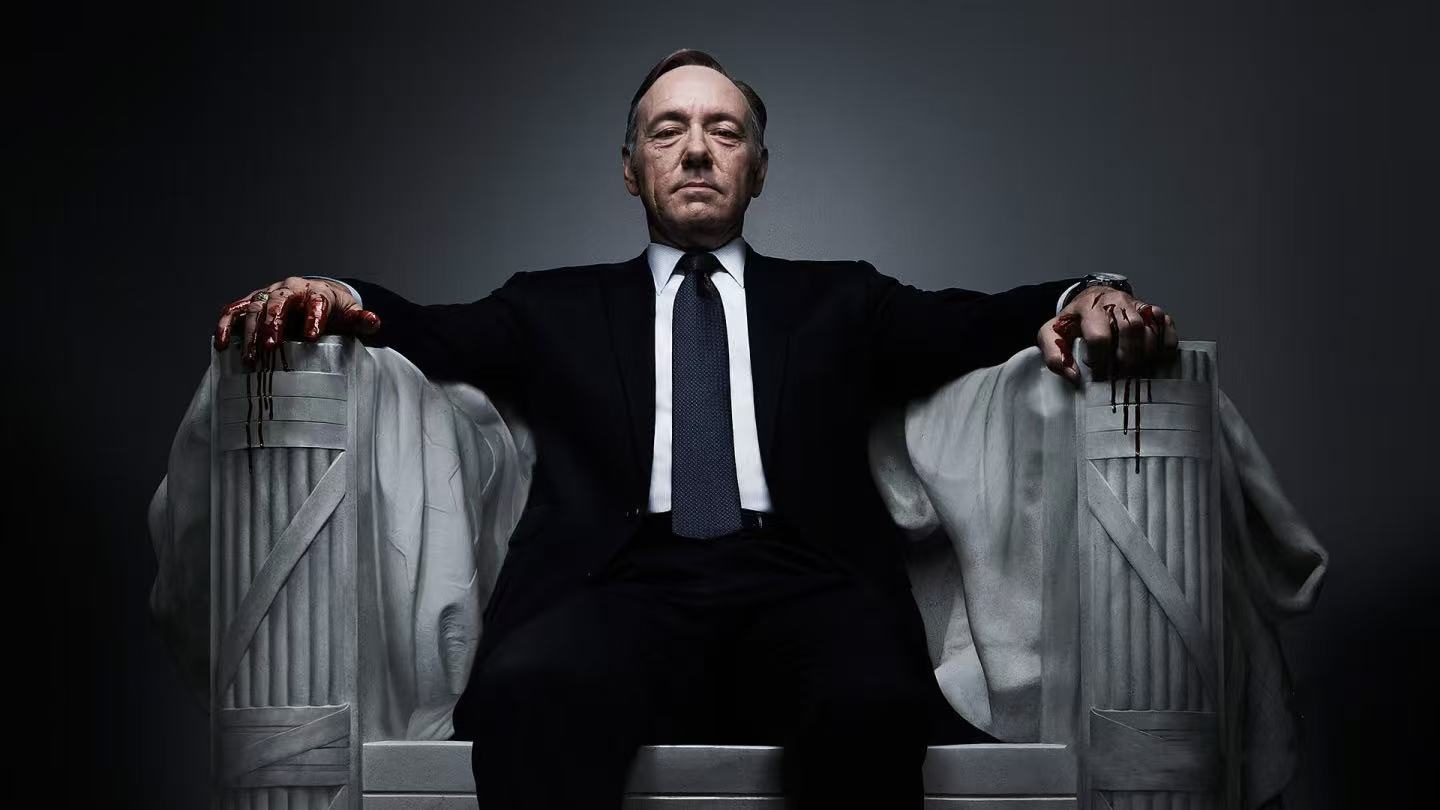
In 2013, Netflix's original series "House of Cards" debuted. Its high-quality content, combined with the model of releasing the entire season at once, fundamentally changed viewing habits. According to Netflix's annual report data, the show's release not only brought Netflix nearly 10 million new paying subscribers but also laid a solid foundation for subsequent large-scale investments in original content. By 2017, the company's paying subscriber base exceeded 100 million, with annual revenue reaching $11 billion, covering over 190 countries and regions worldwide.
In 2018, Netflix's original documentary "Icarus" won the Oscar for Best Documentary Feature, marking Netflix's entry into the core camp of global film and television production.
Today, Netflix has over 300 million paying subscribers worldwide and is a giant among the top 20 global companies by market capitalization. From DVD rentals to streaming, from buying rights to producing original content, Netflix has grown into one of the world's most influential content creation and distribution giants.
Final Thoughts
After highlighting the successes, it's time for a reality check—Netflix now faces no shortage of challenges, and some of them are rooted in Hastings' own "radical culture."
First, the competitive landscape has completely changed. Disney+ achieved in two years the user base that took Netflix over a decade to build. Apple bundles streaming services with its hardware ecosystem. YouTube has higher penetration among global young users. Netflix is no longer the "only choice" but just "one of the options." In 2022, Netflix experienced its first-ever decline in North American subscribers since its founding, forcing it to introduce an ad-supported tier. This shows: the moat isn't as deep as imagined.
Second, the inflationary pressure on content costs is structural. Spending $16 billion on content in 2024, and this number is still rising every year. Once content quality declines or hit rates drop, the high fixed investment turns into a profit black hole. This isn't a "potential" risk; it's an ongoing reality.
Third, the founder himself has left, but a founder's management philosophy is deeply etched into the corporate culture. One of Hastings' most famous views is that "the team is not a family"—he believes a company is more like a sports team, where the goal is to win, not to maintain relationships. This culture is an engine during growth phases (high efficiency, low tolerance), but could it become a hindrance during phases requiring patience and long-term investment? No one has the answer because Netflix has never experienced a true low point without Hastings.
As for how far Netflix can go after his departure, that's a whole new story.









The copyright of this article belongs to the original author/organization.
The views expressed herein are solely those of the author and do not reflect the stance of the platform. The content is intended for investment reference purposes only and shall not be considered as investment advice. Please contact us if you have any questions or suggestions regarding the content services provided by the platform.