

'AI' GOOGL: No Scary Stories, Just a Windfall

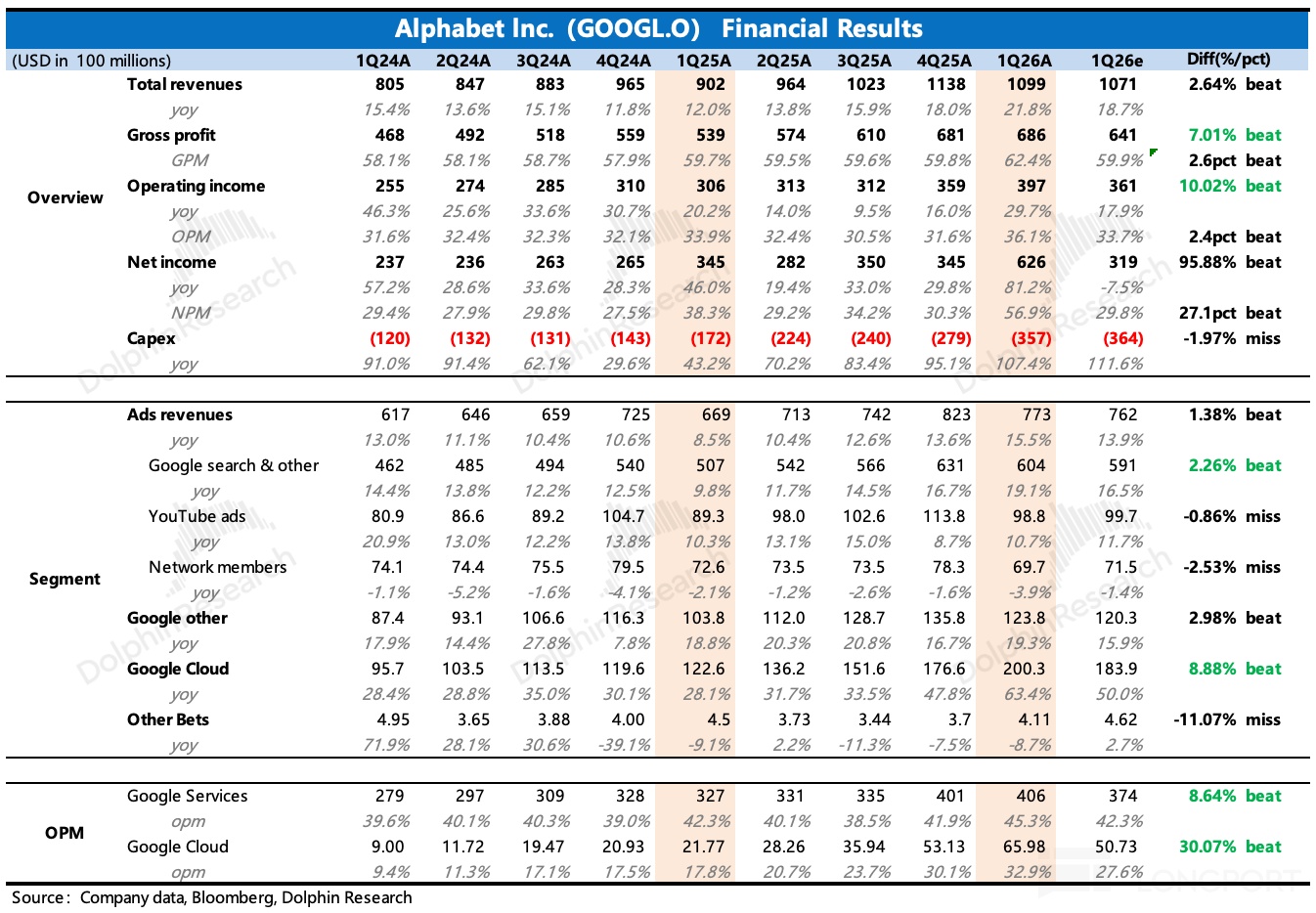
$Alphabet(GOOGL.US) Q1 blew past expectations again. With roughly 40% of incremental revenue now tied to AI-driven cloud, it may be time to drop the 'ad company' label and call Google an AI company.
Key takeaways:
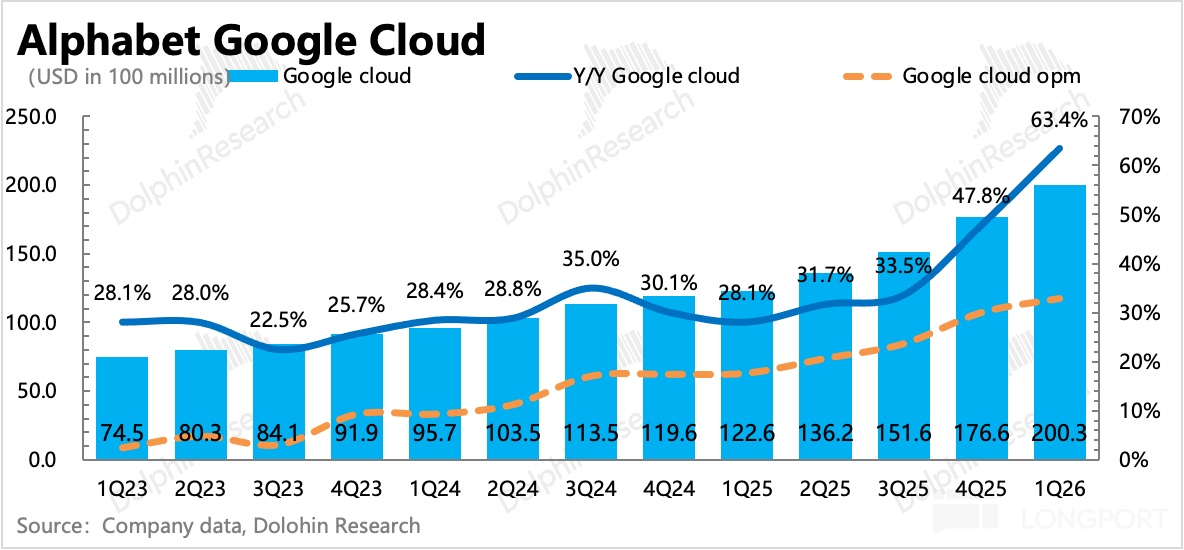
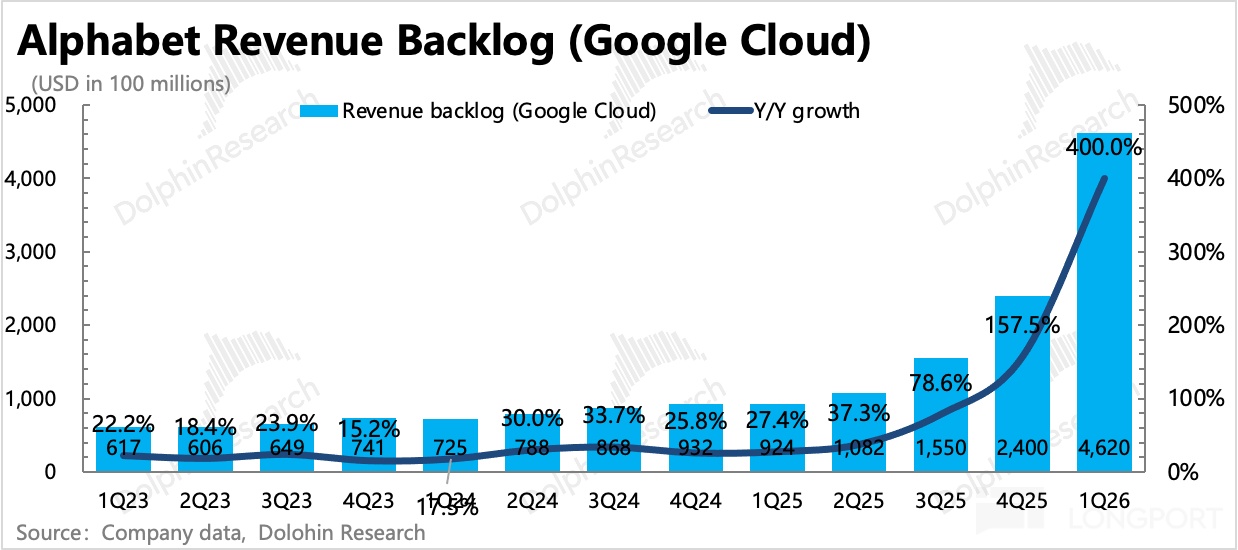
1. Explosive cloud momentum underpins valuation: Revenue reached 20bn, up 63%, a modest beat even vs. the more bullish buy-side view (~+60%) and well ahead of peers. Crucially, remaining performance obligations (RPO) hit 462bn, nearly doubling from 240bn at year-end, mostly from cloud contracts with a smaller share from direct TPU sales for customer-built DCs.
The 220bn net add likely leaned on Anthropic and Meta, alongside multiple newly signed 1–10bn deals and upsells from existing clients. With a deep order book and newly launched 8th‑gen TPUs enhancing the full-stack AI infra offering, high growth looks well supported for 1–2 years (about half of orders convert to revenue within two years).
The company highlighted strong Q1 traction for Gemini Enterprise launched in Q4, with MAU payers up 40% QoQ. Direct API usage also surged, with tokens processed per minute jumping from 10bn at year-end to 16bn.
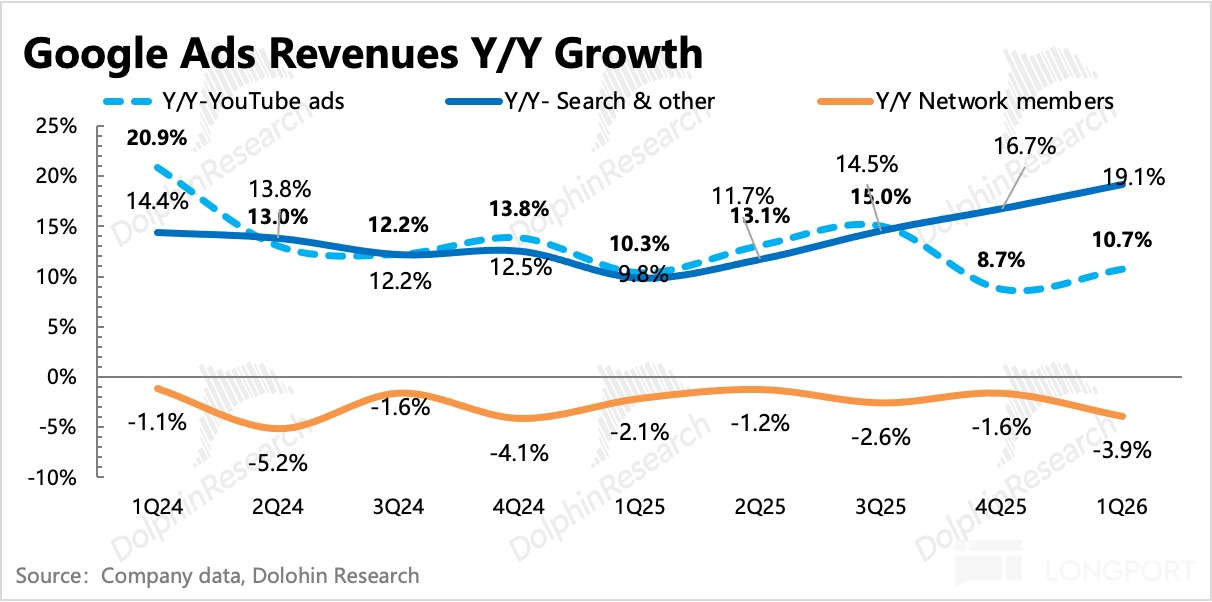
2. No 'horror stories' here—Search remains strong: Revenue rose 19%. Even allowing for a sub‑200bps FX tailwind, there was no QoQ slowdown. This suggests limited near-term AI cannibalization, while AI is still lifting query volumes and conversion, and it fits a resilient U.S. macro backdrop and Winter Olympics-driven brand spend.
3. YouTube ad recovery stays slow: YouTube ads grew 10%, missing consensus again. Sequential trends improved slightly but remain burdened by the long‑form to short‑form transition within the ecosystem. Competition in long‑form instream ads has intensified as Netflix, Disney and Amazon Prime pushed ad tiers, while Shorts is still plugging the growth gap against stronger short‑form rivals Reels and TikTok.
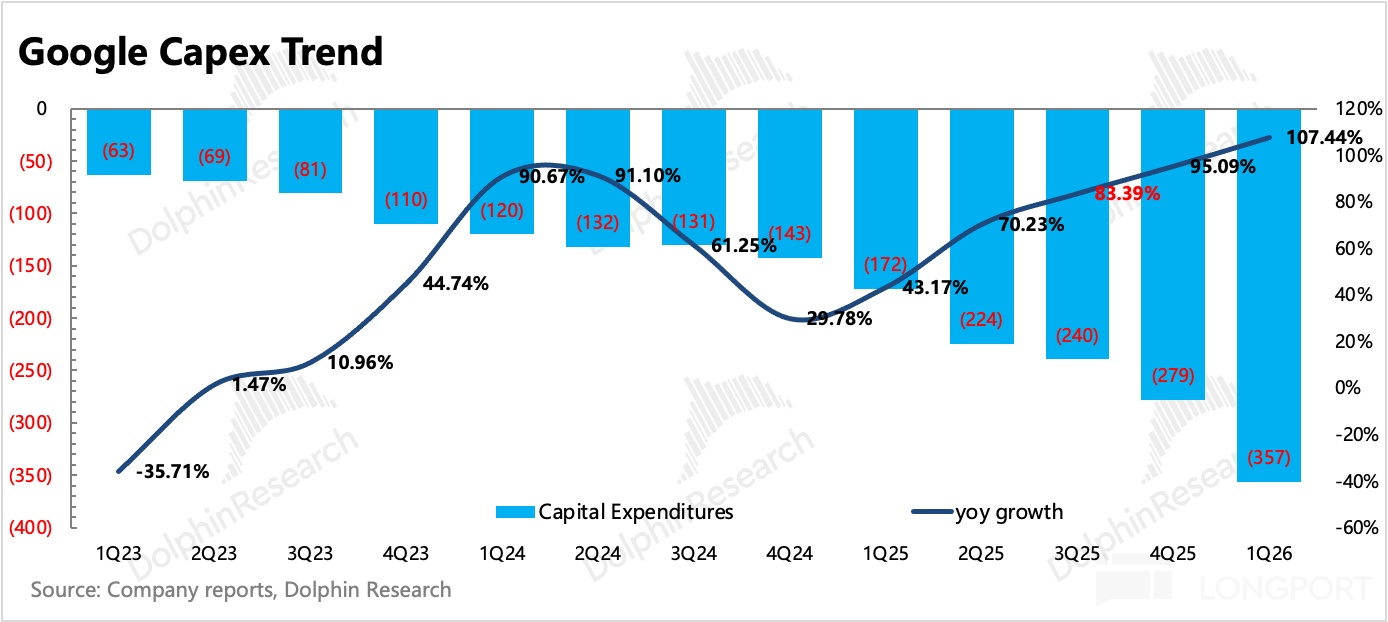
4. Capex nudged higher: FY Capex guidance rose from 175–185bn to 180–190bn, or roughly 2x YoY. Q1 Capex was 35.7bn (+107% YoY), slightly below the 36.4bn consensus. Demand strength implies Capex expansion will persist, and management expects a meaningful step-up even in 2027.
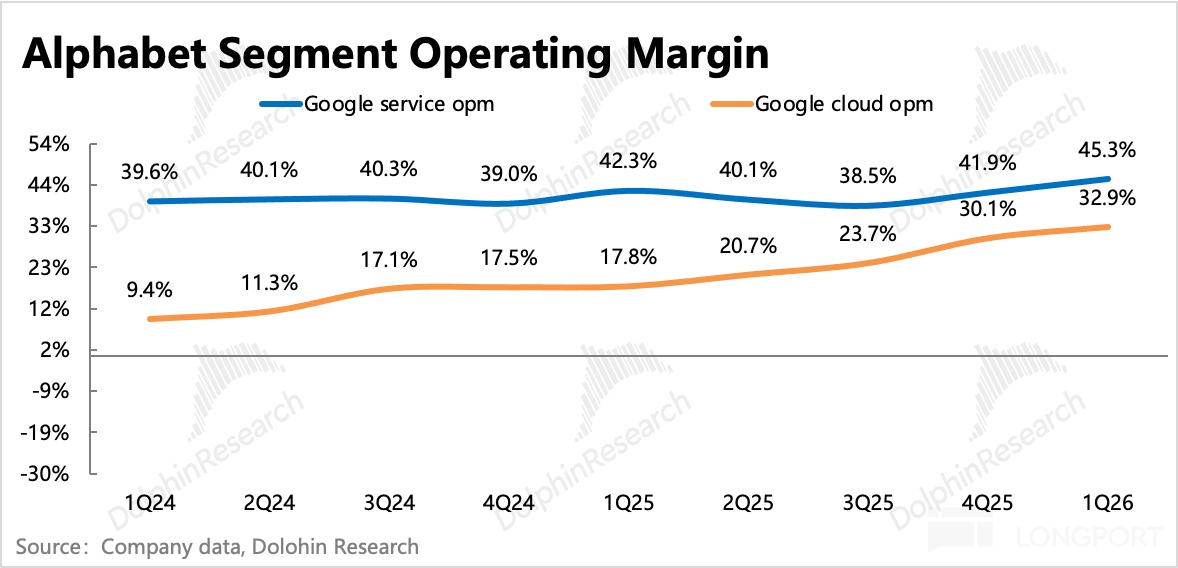
5. A window for margin upside: Q1 OPM climbed to 36%, up 200bps YoY, driven mainly by higher GPM, while OpEx ratio ticked up ~50bps YoY. It’s notable to see margins expand alongside aggressive investment.
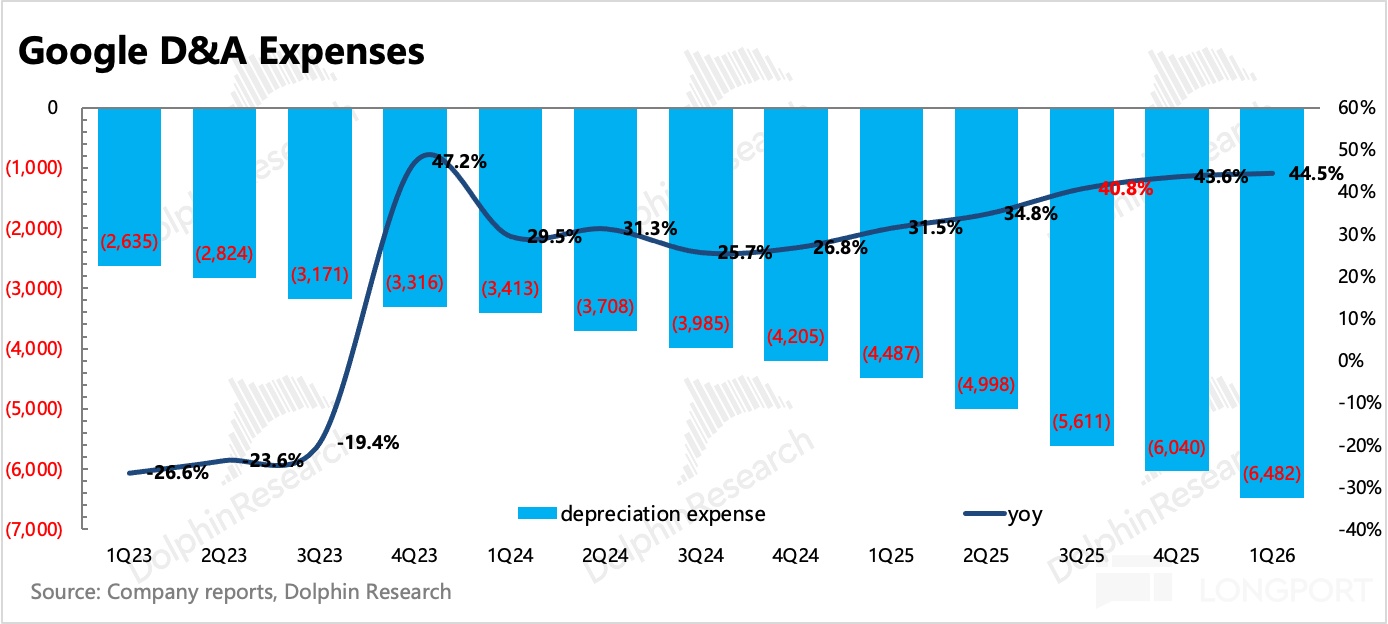
AI-driven demand is already material and accelerating, with cloud accounting for roughly 40% of incremental revenue. Yet Capex that reaccelerated since 2H last year and is set to double this year will flow into D&A progressively, creating a short-term window for margin expansion due to tight supply-demand. From 2H, elevated investment will likely start to cap margin gains unless current strength and tightness widen further, enabling better pricing for cloud vendors.
6. Buybacks paused, dividend up modestly: Given elevated investment needs and a desire to keep ample flexibility for internal and external investments, repurchases were paused in Q1, and the company issued debt. The dividend was raised by ~5% YoY from this year, but payouts remain small in scale.
7. Key metrics vs. expectations
Dolphin Research view
Similar to last quarter, Google’s torrid growth reinforces its AI narrative, while the typically disciplined management signaled firm commitment via much higher Capex, keeping the outlook compelling. We are past the phase where storytelling alone drives multiples—delivering results while investing is what convinces capital.
Thus, today’s Google enjoys both AI‑accelerated topline and solid margin discipline, which is exactly what investors want to see. That said, the margin 'window' may be temporary; whether margins can keep improving will hinge on how AI supply-demand evolves.
We estimate some pressure from heavy investment may show in 2H, with mitigation likely via headcount efficiency and more high‑value products/services. As long as the 'invest for growth' flywheel stays intact, investors may still pay a premium.
However, the +7% after-hours move lifts mkt cap to $4.5tn, implying ~28x/25x P/EBIT on this/next year’s consensus—above the mid‑range vs. Google’s history and current growth.
We are constructive on Google’s outlook and comfortable with the mid‑term thesis. But with potential 2H margin pressure and high-valuation IPOs by OpenAI and Anthropic this year, any disappointment—whether from stronger monetization needs and competition, or from stricter financial scrutiny post‑listing—could spill over sentiment across the group. From a risk‑reward lens, we prefer leaning into dislocations created by such sentiment swings.
Detailed earnings breakdown below
I. Google at a glance
Alphabet’s biz. mix is broad and the reporting structure has changed multiple times. For readers less familiar with Alphabet, here is the current layout.
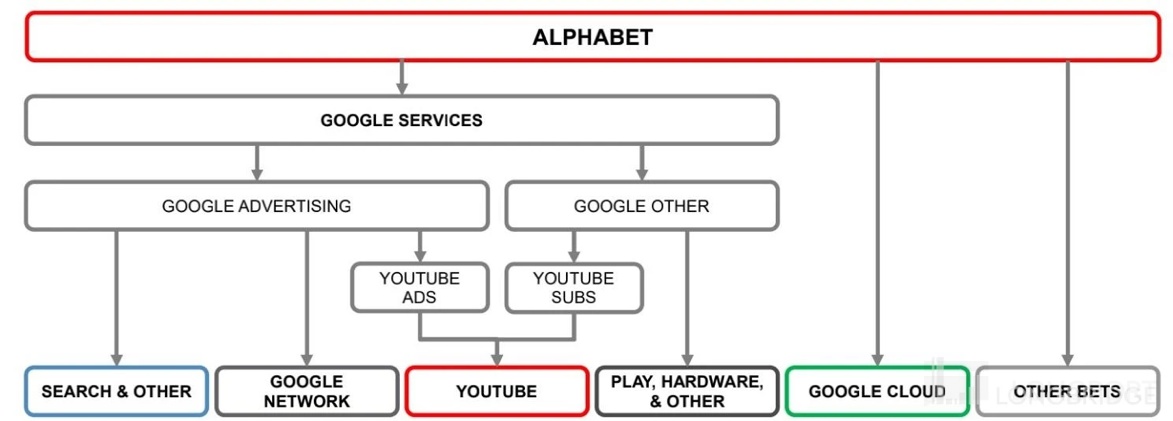
The long-term fundamentals in brief:
a. Ads remain the revenue anchor and profit engine. Search ads face medium‑ to long‑term pressure from feed ads, with fast‑growing YouTube helping to backfill. b. Cloud is the core growth driver and the most direct AI beneficiary.
II. Ads solid overall, Search outperforms YouTube
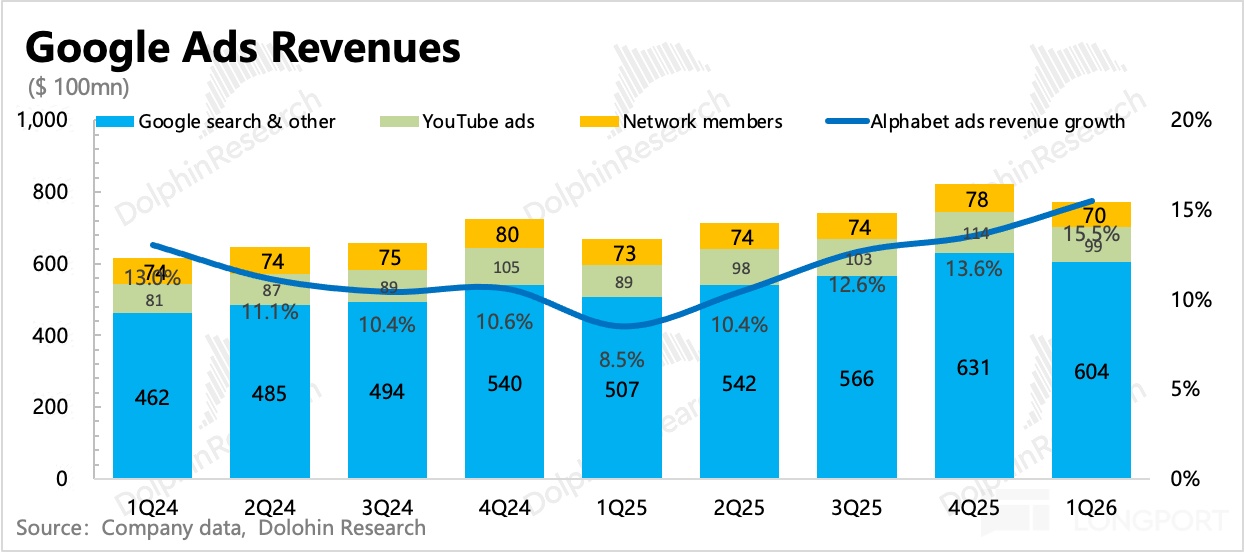
Q1 ad revenue was $77.3bn, up 15.5%. Industry conditions were decent, supported by a resilient macro and Winter Olympics brand budgets, notably in travel and services. Leaders benefited from AI tooling, sustaining healthy growth.
Google core Search accelerated to +19% in Q1, indicating ongoing Gemini 3 traction. But YouTube ads have yet to show a clear recovery, reflecting the growing pains of balancing Shorts with long‑form content under the short‑video consumption trend.
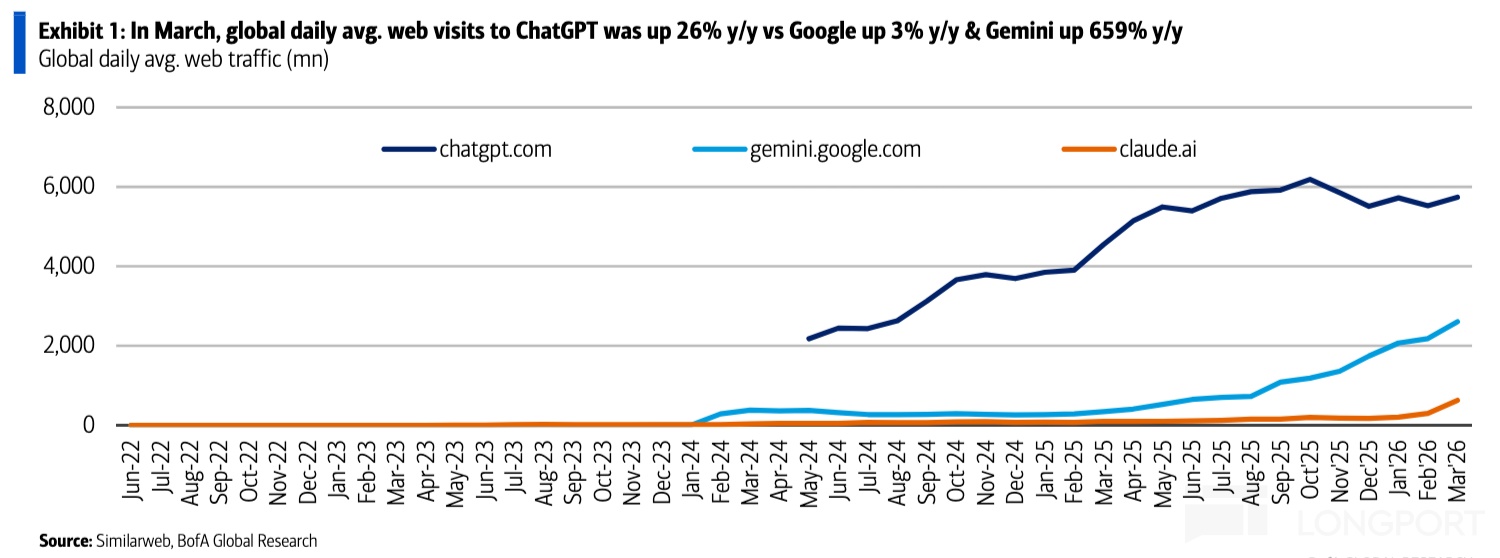
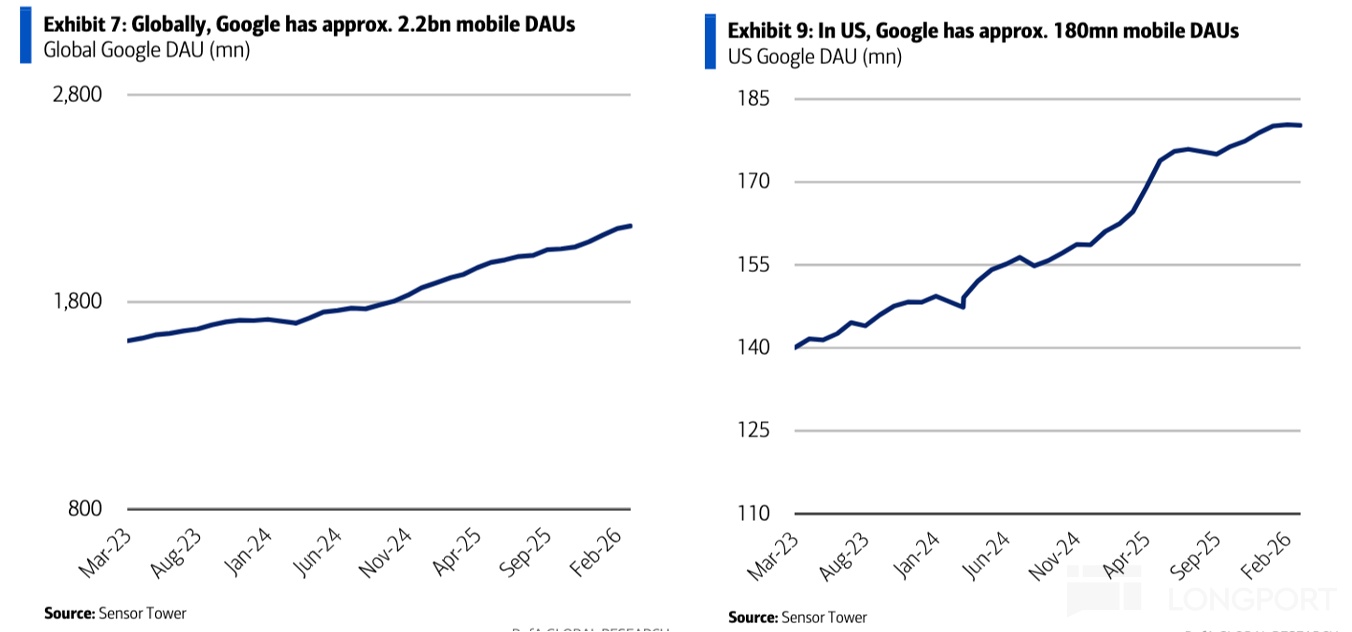
Shorts also trails Instagram Reels and TikTok competitively, and its lower CPM can cannibalize internally in the near term. Q2 could face macro volatility from Middle East tensions, likely impacting performance ads in Search somewhat less. The World Cup from Jun and the U.S. midterms in Q3 should help offset.
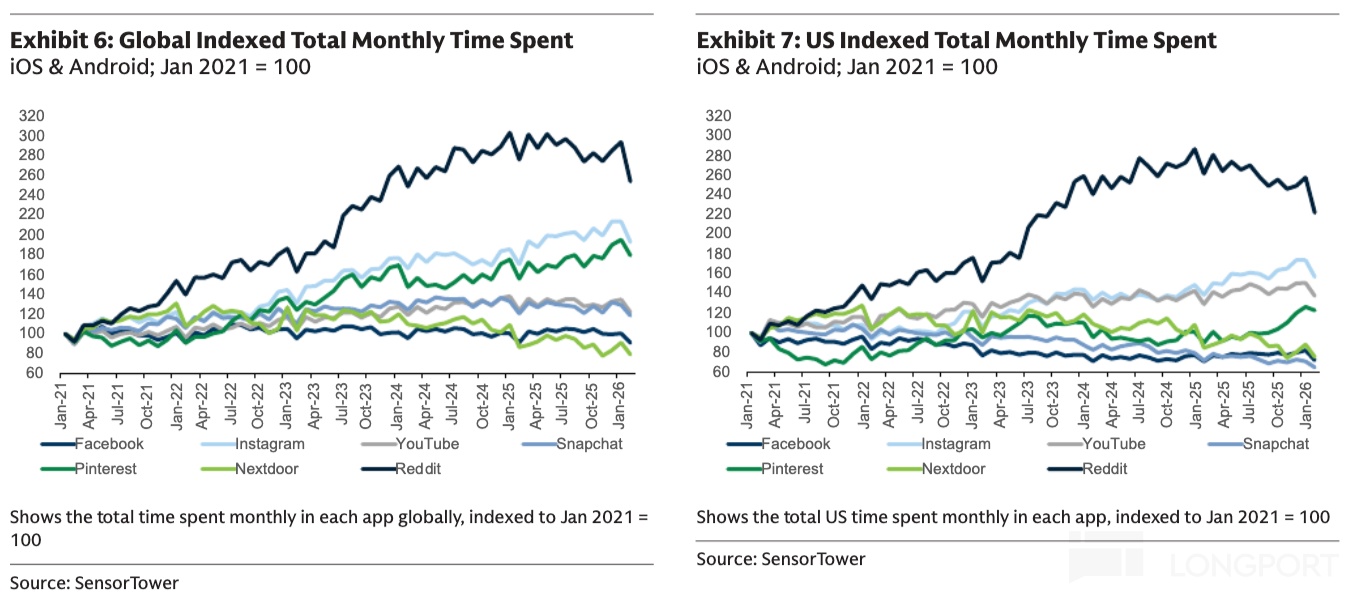
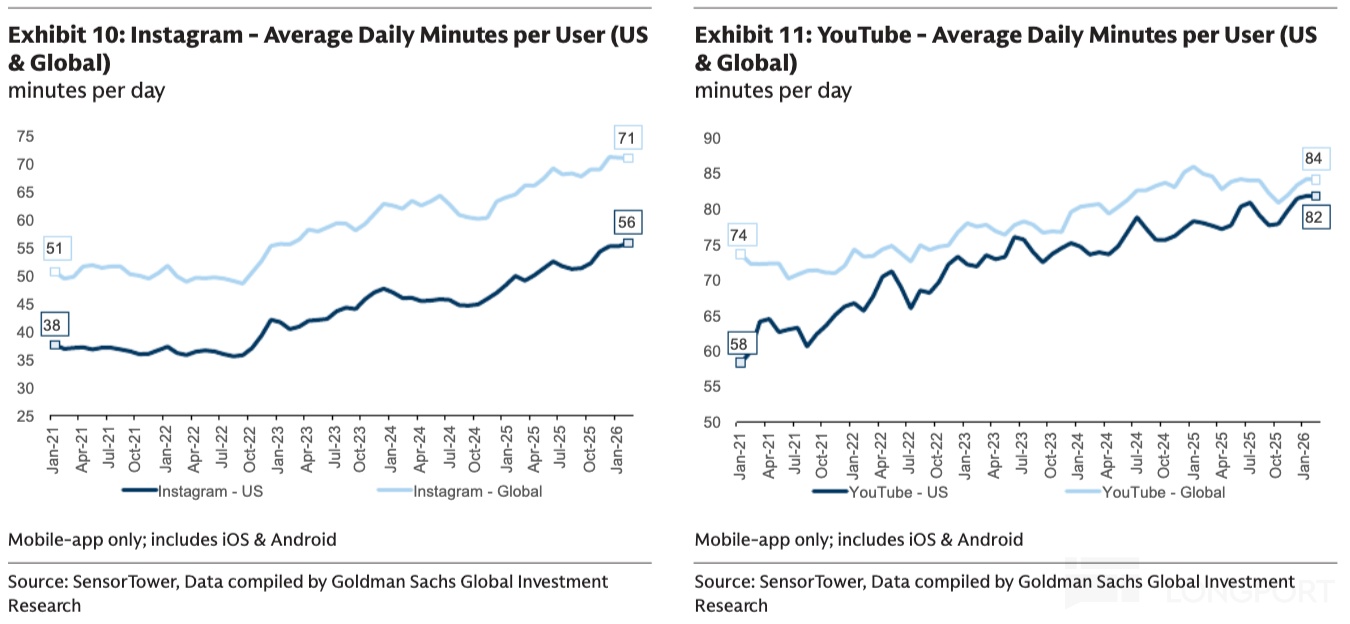
On user metrics, YouTube trails top‑tier Instagram/Facebook but remains solid: users are growing modestly and daily time spent is trending up.
III. Cloud: doubled RPO + steadfast investment confirm red‑hot demand
Cloud underpins Google’s AI re‑rating, and the market is focused on RPO growth. Q1 again beat, with RPO reaching 462bn, up a net 220bn QoQ (implying ~240bn in new signings). Over half is recognizable within two years, providing ample 'stored grain' to support 1–2 years of high growth.
Enterprise AI demand is ramping steeply. At Next, Google disclosed its own models now process 16bn tokens per minute via direct API, vs. 10bn in Q4.
Cloud growth aligns with the AI era, amplified by Google’s enterprise 'full‑stack' advantages across TPU, Gemini foundation models, and Gemini enterprise agents. The newly launched 8th‑gen TPU delivers multiples of v7 performance (higher throughput, larger memory, better bandwidth), further strengthening Google’s end‑to‑end AI infra platform.
(1) Scenario‑specific chips: TPU v8 introduces distinct SKUs for training vs. inference needs—TPU 8t for large‑scale training and TPU 8i for inference/low latency/high concurrency/agentic loads. Google first explored scenario splits in v5 (v5p for very large training, v5e for cost‑efficient mid‑scale and inference), but v8’s segmentation is clearer with differentiated performance traits.
At the die level, TPU v8 adds FP4 support to boost throughput while preserving energy efficiency, and meaningfully expands memory and bandwidth to cut latency.

(2) Stronger interconnect: Versus the 'solo' strength of many GPUs, TPUs excel in 'team play,' stressing interconnect. TPU v8 lifts per‑Pod scale (from 9,216 chips on v7 to 9,600 on 8t) and extends beyond intra‑Pod links to rack‑level ICI/SPOCS, then Virgo, then data‑center fabric Jupiter, and further across WAN—scaling to 134k and even million‑chip clusters.
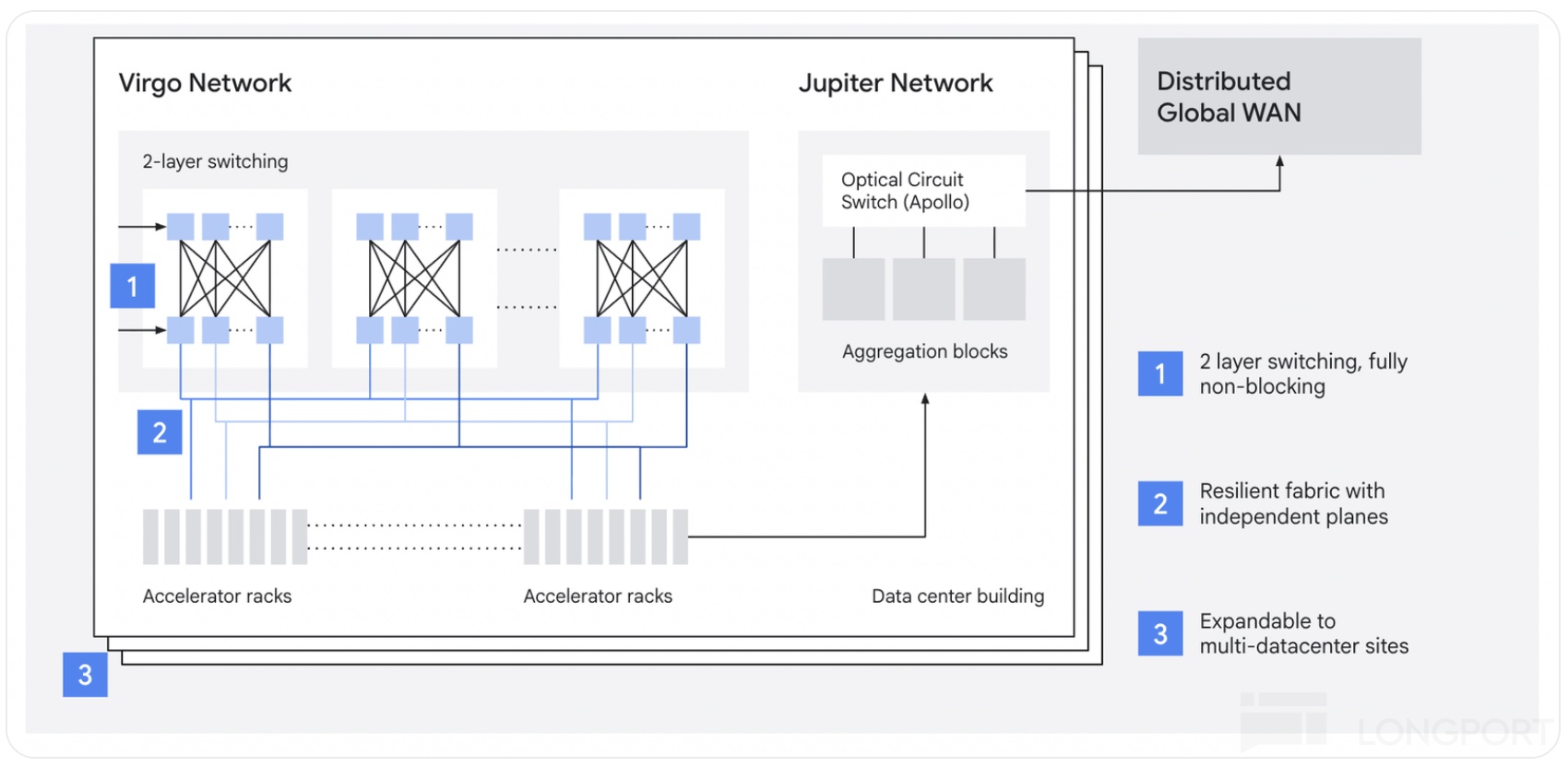
With the full AI infra stack in place (GPU, Jupiter/OCS networking, Hyperdisk/Cloud Storage, Cluster Director, DWS, Pathways, etc.), TPUs can now scale as a credible GPU alternative. Most direct‑sale TPU orders in backlog are set to be recognized in 2027, aligning with first‑party DCs slated by Anthropic and Meta.
In Apr, Google announced a 40bn strategic investment in Anthropic, with an initial 10bn and a 5GW compute commitment over five years. Additionally, multiple 1–10bn deals contributed meaningfully.
Beyond raw compute, most of the order book remains cloud contracts spanning Gemini APIs, Workspace, Vertex AI, and security.
IV. Other bets: CTV & Google One drove another 25mn subs add
This bucket includes YouTube subs (ad‑free, TV, Music, etc.), Google Play, Google One, and hardware (Pixel, Nest). Q1 'Other' revenue was 12.4bn, up 19% YoY, an acceleration that suggests Pixel’s cycle headwinds have faded.
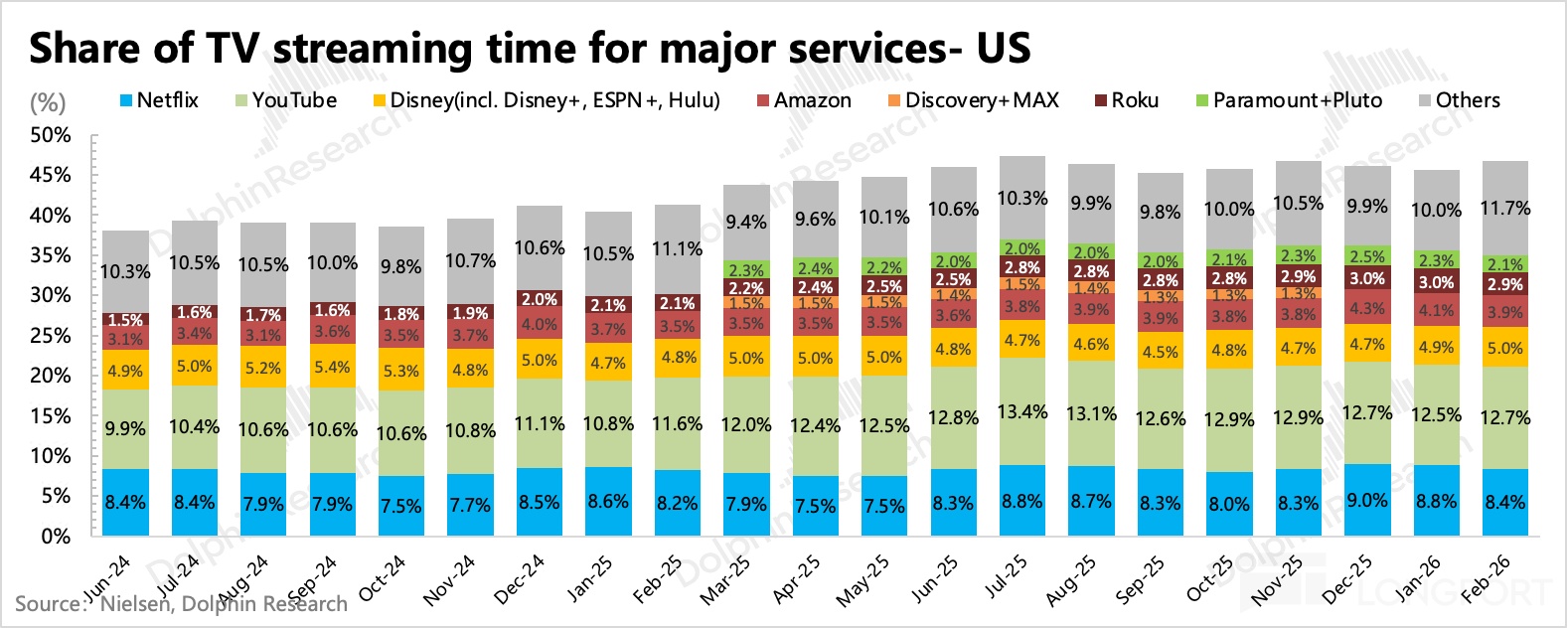
Management noted YouTube and Google One pushed total subs to 350mn, a net add of 25mn QoQ.
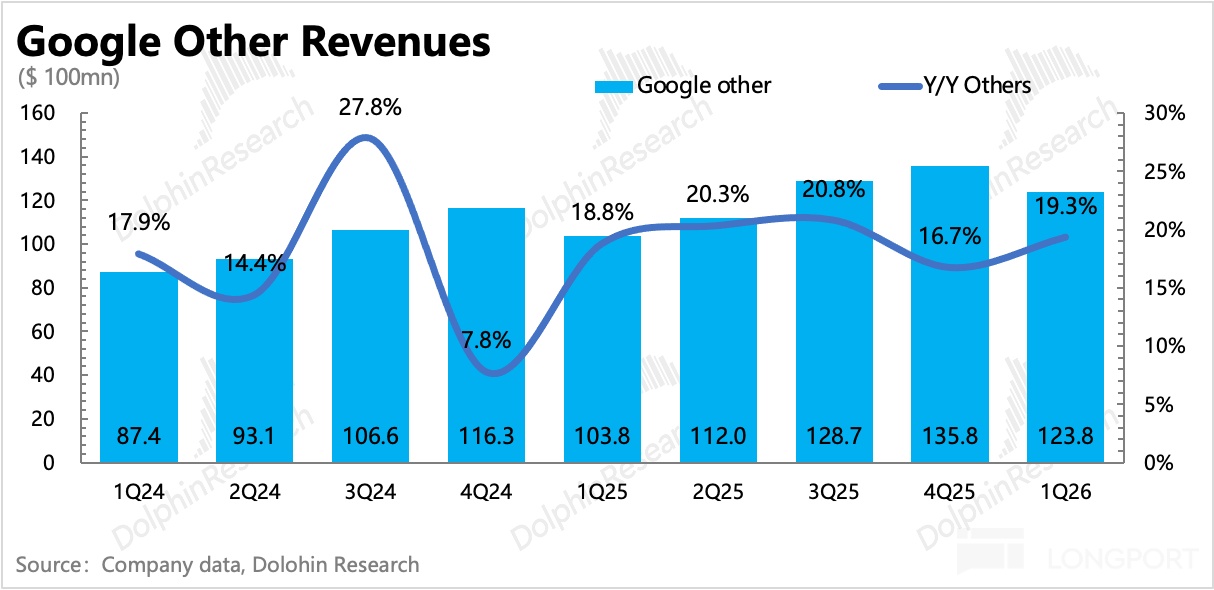
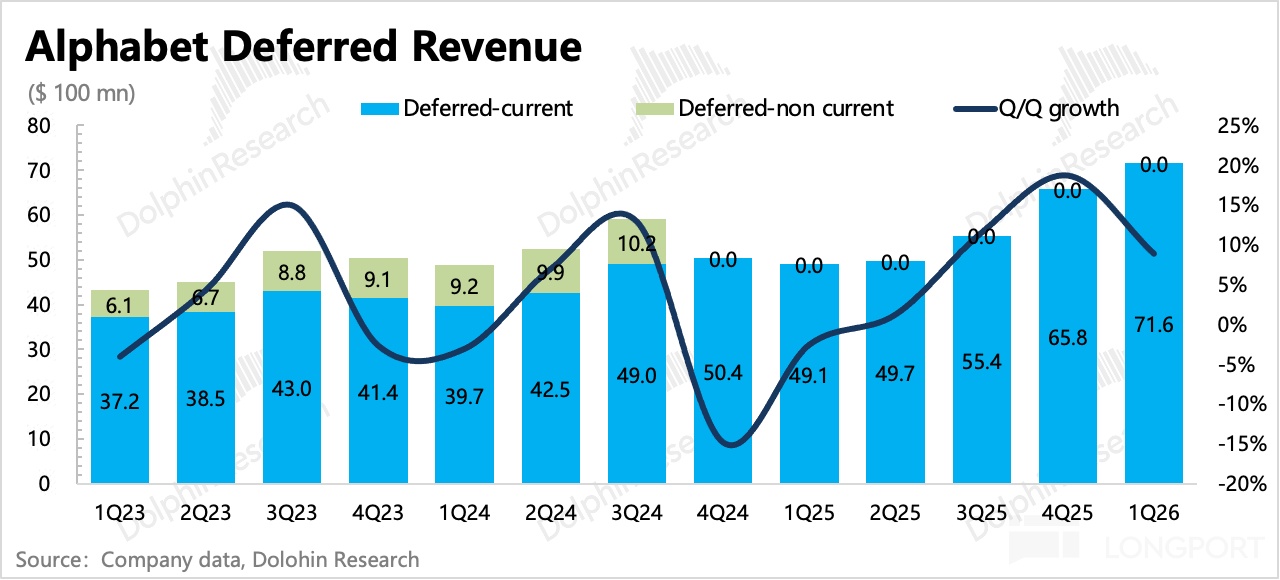
Nielsen data imply YouTube CTV and Google One subs were the main drivers. Deferred revenue trends also point to stronger prepayments from subscriptions.
V. Margins in a favorable window
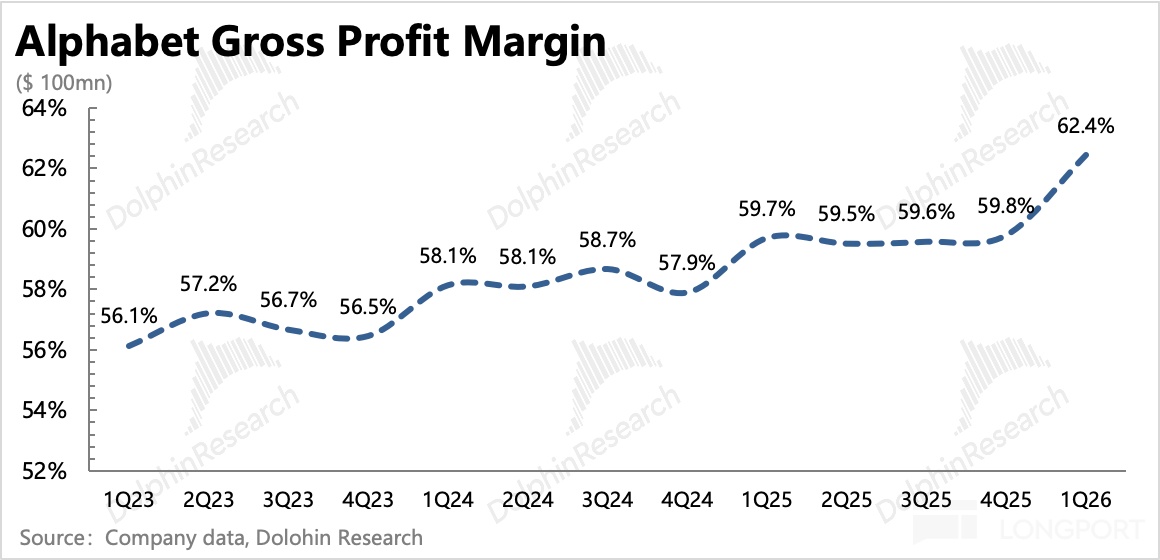
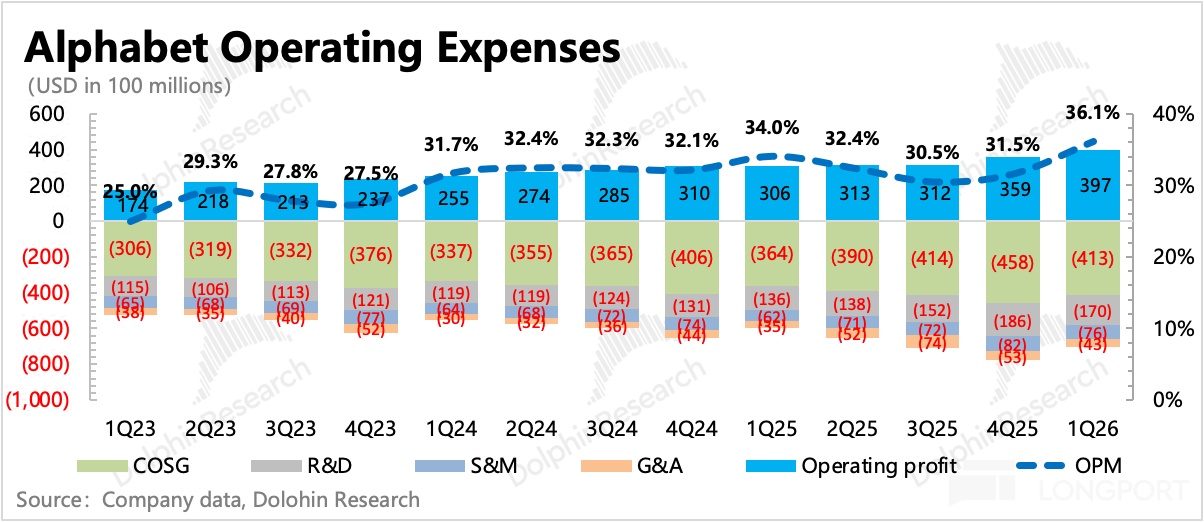
Core operating profit was 39.7bn, with OPM up to 36%. How does Google expand margins while scaling investment?
The beat came primarily from GPM via lower‑than‑feared D&A. There is a timing 'mismatch': demand is ramping fast—especially with Agents/Skills—while higher D&A from recent Capex builds in gradually. During this window, cloud is shifting from pure compute to comprehensive solutions, lifting deal sizes and ARPU, and improving unit economics.
Conversely, from 2H the drag from heavy investment should become more visible, and management also flagged a significant Capex increase in 2027. Unless demand tightness intensifies and enables higher pricing.
By segment, not only did Google Services improve sequentially, but Cloud OPM also rose to 33%, defying expectations for a QoQ dip under investment pressure.
Q1 Capex was 35.7bn, slightly below the Street. But full‑year Capex is guided to 180–190bn, roughly doubling YoY. Two to three consecutive years of firm commitment suggest no cooling in AI demand.
<End here>
Dolphin Research 'Google' archive:
Earnings season
Feb 5, 2026 call notes: Google (Trans): supply of compute (energy, land, supply chain) likely constrained through 2026
Feb 5, 2026 earnings take: Google: the giant also goes all‑in, doubling down on AI
Oct 30, 2025 call notes: Google (Trans): the only full‑stack AI cloud platform
Oct 30, 2025 earnings take: Google’s big reversal: from AI 'sacrifice' to AI 'vanguard'
Hot topics
Dec 19, 2025: Google vs. NVIDIA: is the comeback story credible?
Oct 27, 2025: Google: destiny not decided by OpenAI
Risk disclosure and disclaimer: Dolphin Research disclaimer and general disclosure
The copyright of this article belongs to the original author/organization.
The views expressed herein are solely those of the author and do not reflect the stance of the platform. The content is intended for investment reference purposes only and shall not be considered as investment advice. Please contact us if you have any questions or suggestions regarding the content services provided by the platform.
