


Betting on NVIDIA's earnings report, how to construct a Strangle strategy optimally?

First, let's talk about the operation. The so-called Strangle strategy involves simultaneously buying/selling calls and puts with the same expiration date but different strike prices to go long or short on volatility for profit.
Let's take Short Strangle as an example. Currently, NVIDIA's stock price is around $220. Assuming we believe that after the earnings report is released, the stock price will fluctuate within about 10%, i.e., between 200 and 240, we can then sell a 200 put while also selling a 240 call.
Based on current market conditions, let's assume the combined premium is $280. This strategy only requires a margin deposit of about $6,497, with a margin yield of around 4.3%. This yield may not seem impressive to many options enthusiasts. However, if it can be achieved in just 1 to 2 trading days, with a win rate above 90%, then it becomes a very considerable return (annualized return as high as about 1083%, calculated based on 252 trading days per year). It's also a trade with high cost-effectiveness.
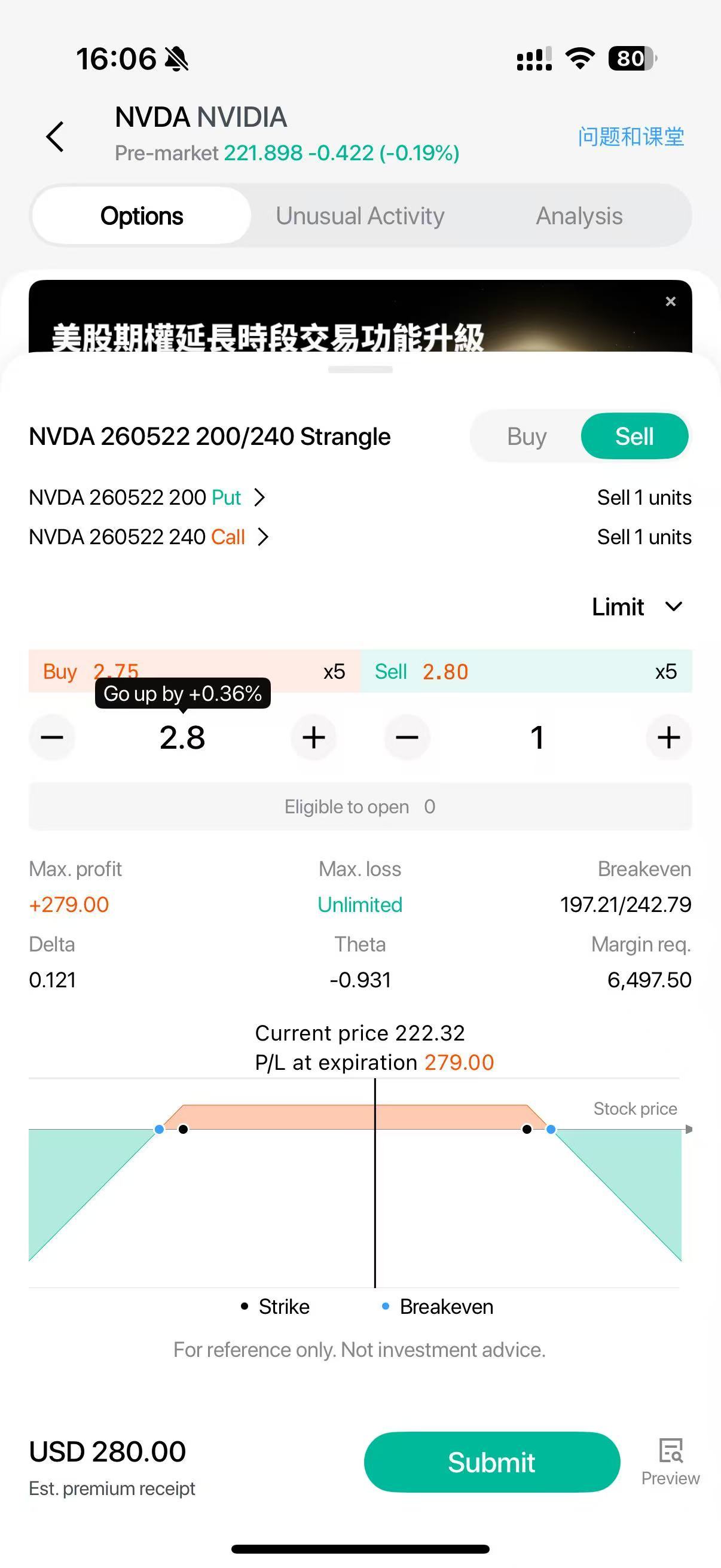
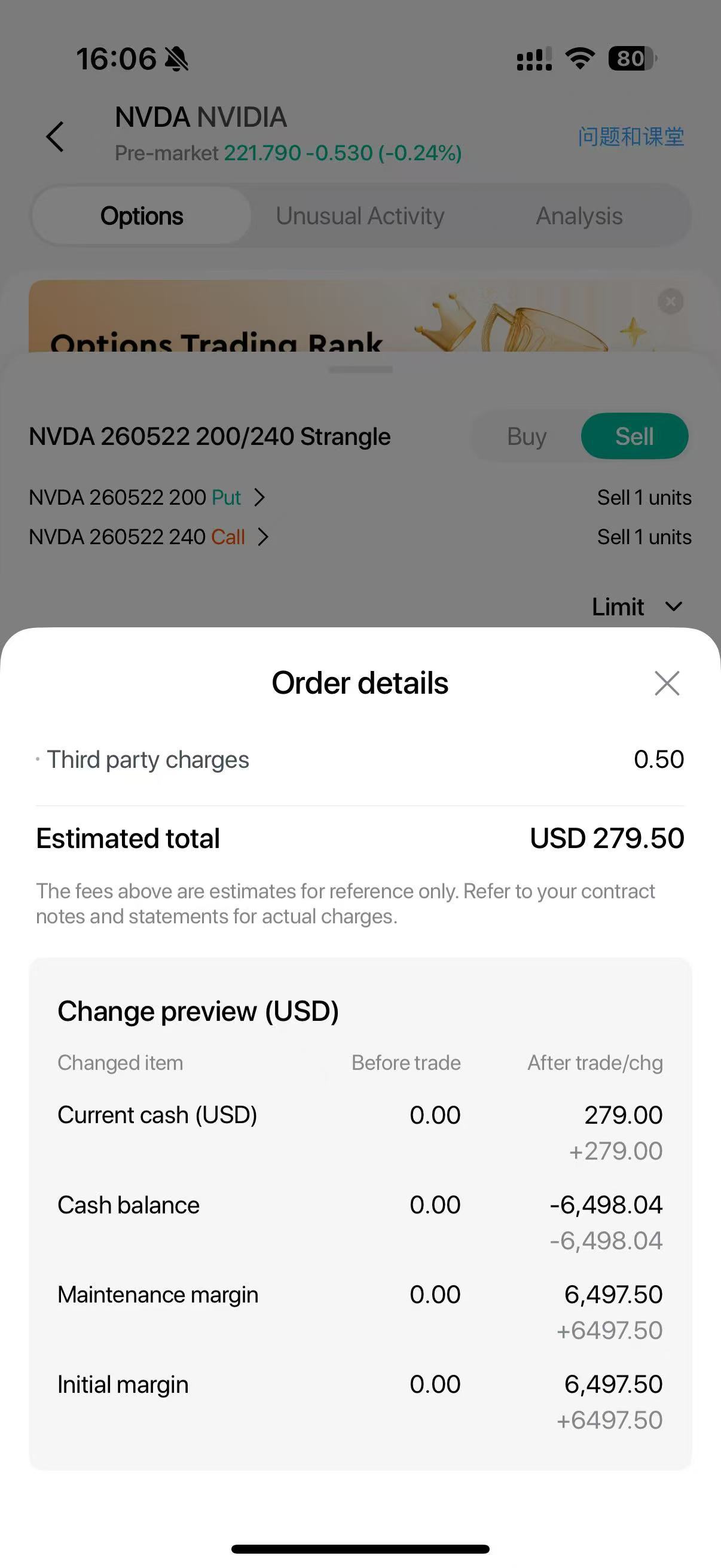
As long as the stock price does not exceed $200 to $240 by the option expiration date, you can net the margin from selling the call and selling the put. Of course, from a trading perspective, most investors using the strangle strategy will close the position immediately after the IV crush occurs on the day the earnings report is released. NVIDIA reports earnings on the 20th. You build this strategy on the 19th and capture the IV crush profit on the same day—a quick in-and-out. This is the standard process for using the strangle strategy to bet on earnings.
Now comes the question. The strangle strategy looks simple, but the key is how to construct it more safely? We all know that option sellers often have limited profit potential and unlimited loss potential. If the stock price fluctuation exceeds the strike price range of the selected sell call and sell put, significant losses could occur. Therefore, the core of a successful strategy construction is the selection of strike prices.
How to choose strike prices for the strangle strategy?
Taking NVIDIA as an example, the historical price volatility of this underlying asset has been relatively regular. Longbridge Academy backtested the stock price volatility data after each earnings report for the past 20 quarters.
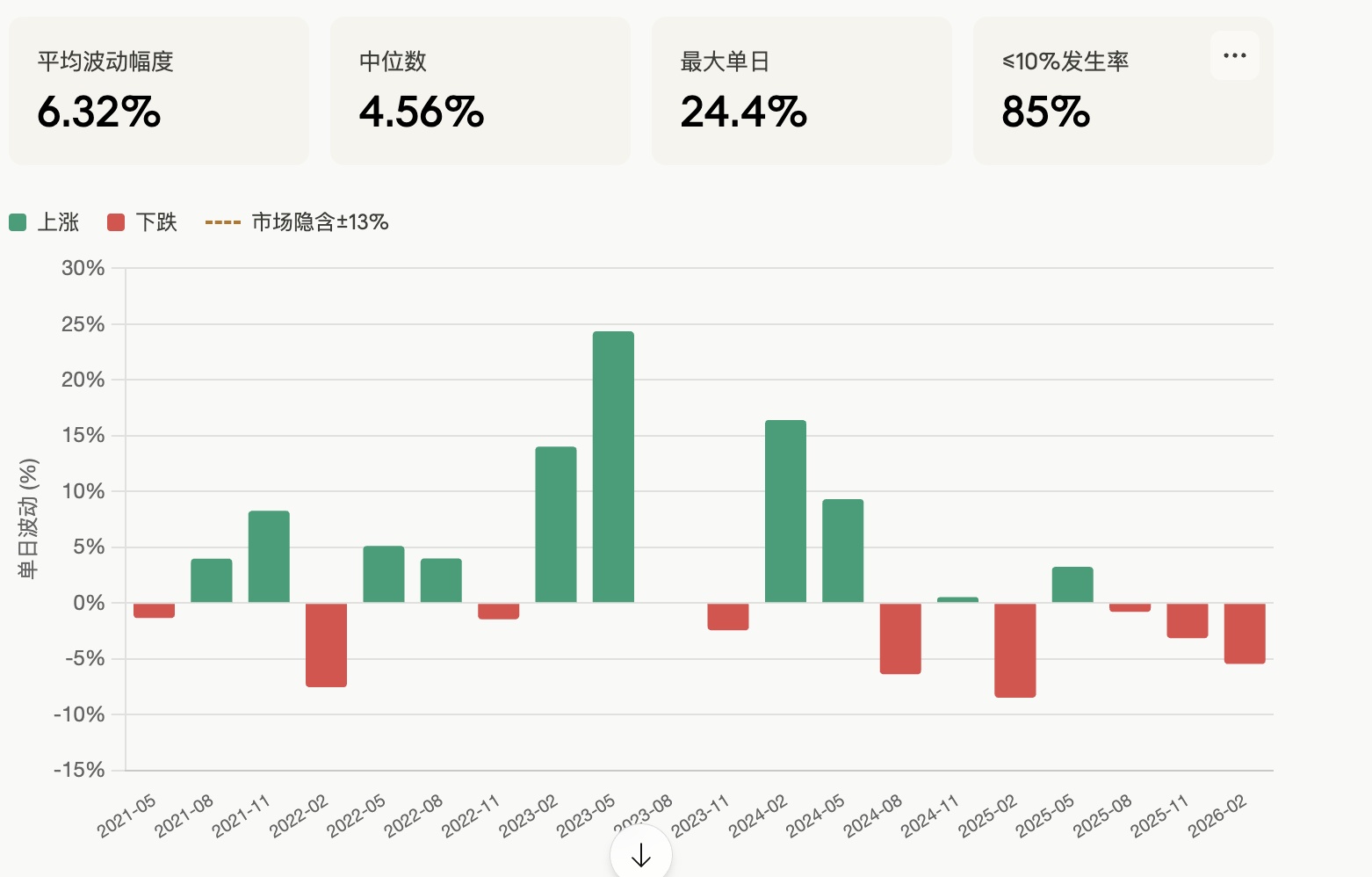
The data from these 20 quarters has thoroughly solidified the logic behind "selling volatility":
The market consistently overprices volatility for NVDA
Actual average single-day volatility: 6.32%
Median: 4.56%
Yet the market prices it at ±9%–13% each time.
This means the implied volatility (IV) of the options market is consistently higher than the actual realized volatility. This is precisely the alpha source for seller strategies.
Of course, based on historical data, there have been instances where post-earnings price volatility breached this 9%–13% range. After all, black swans are everywhere, and tail risk is what sellers most need to guard against. Therefore, the strangle strategy should not be over-leveraged.
But there's a noteworthy detail: All three breaches were to the upside (+24%, +16%, +14%), with none to the downside breaching ±10%.
The maximum downside moves were -8.48% in February 2025 and -7.54% in February 2022—neither touched the -10% line.
This implies that if you want to further optimize, you can implement an asymmetric strangle, choosing a higher strike price for the sell call. Of course, expectations for upward or downward price movement are more based on personal market judgment; historical data can only serve as a reference. Secondly, all the above investment strategies do not constitute investment advice and are for educational reference only.
Friends interested in options trading are welcome to check out and subscribe to Longbridge Academy's Options Introduction and Practical Trading Course
The copyright of this article belongs to the original author/organization.
The views expressed herein are solely those of the author and do not reflect the stance of the platform. The content is intended for investment reference purposes only and shall not be considered as investment advice. Please contact us if you have any questions or suggestions regarding the content services provided by the platform.
