D

 +26
+26
AWS builds its net by buying: who are Trn3's pick-and-shovel suppliers?
Among cloud players developing in-house AI chips, AWS is the outlier. It designs its own silicon. For networking, it buys rather than builds whenever it can.
+26
Among cloud players developing in-house AI chips, AWS is the outlier. It designs its own silicon. For networking, it buys rather than builds whenever it can.
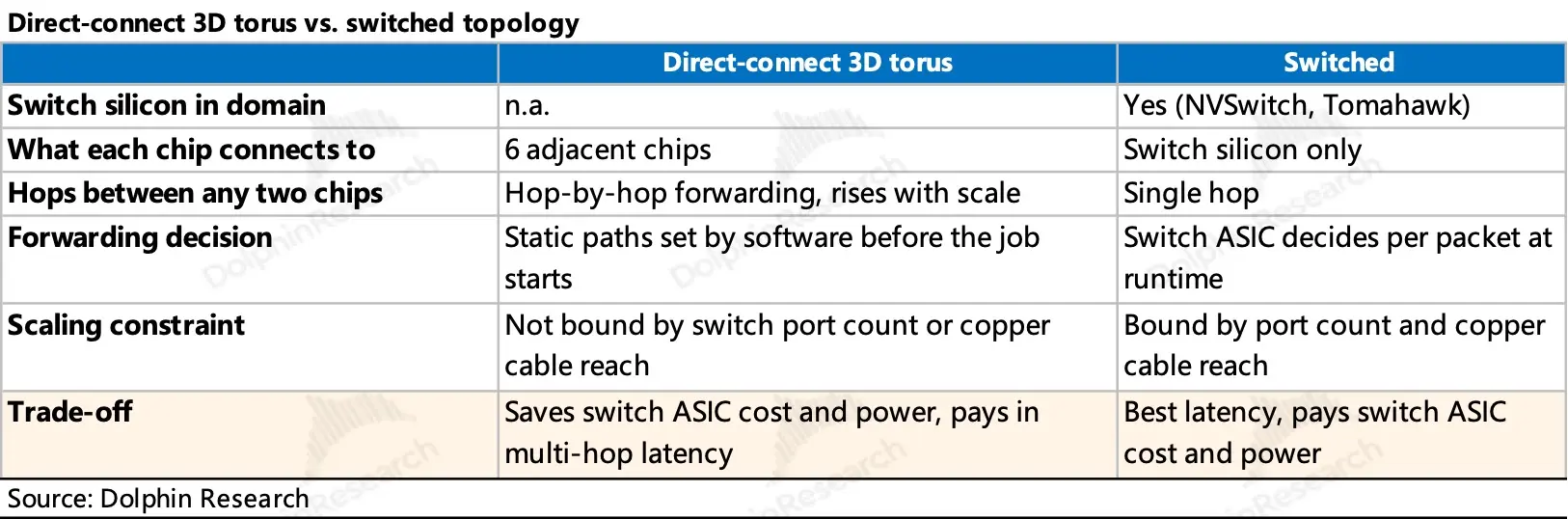
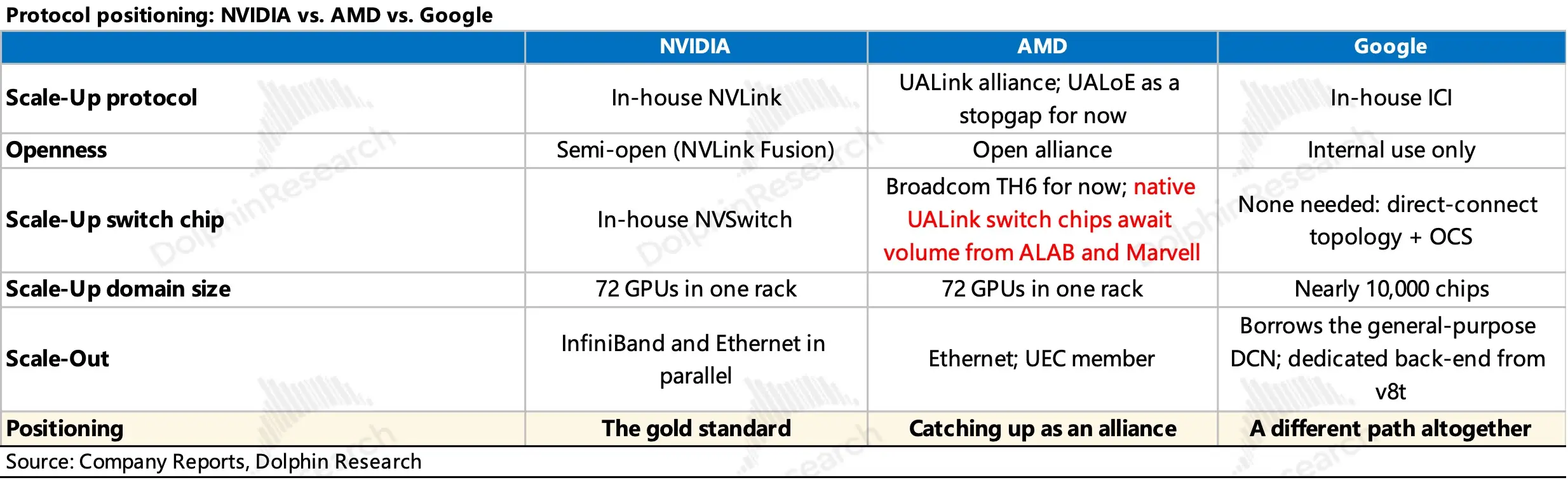
+26In our recent networking series, Dolphin Research reviewed 2D fat-tree switched fabrics. These are exemplified by Nvidia and AMD, while Google represents 3D torus direct-connect topologies.
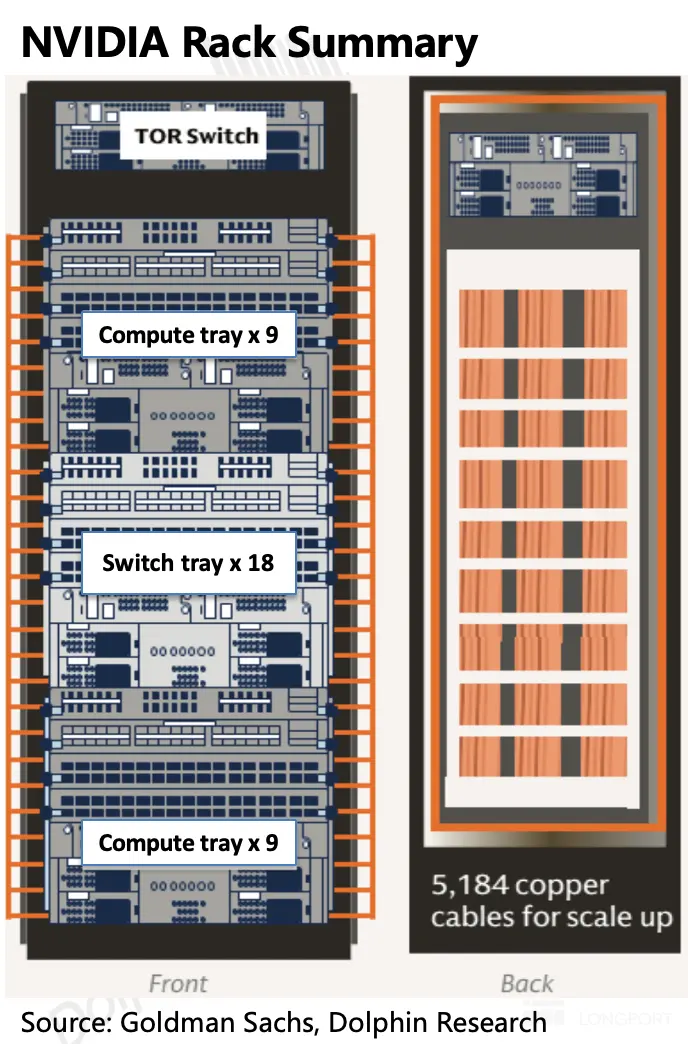
$NVIDIA(NVDA.US) sets the industry benchmark. It develops the full stack in-house across hardware, protocols, and software, with tight HW/SW co-design delivering best-in-class performance. Its road map iterates quickly and in large leaps, prompting rapid shifts in supply-chain dynamics.$AMD(AMD.US) follows Nvidia but competes a generation behind. Helios largely copies the GB300 NVL72 networking architecture...
 +5
+5Most chip designers, including NVIDIA, lay out circuits on a large wafer, then dice it into smaller dies. Those dies are interconnected to build AI accelerators, improving yield by avoiding scrapping an entire wafer due to defects.
One company refuses to follow that path. It treats the whole wafer as a single chip—a 21.5 cm x 21.5 cm square roughly matching the largest rectangle you can cut from a 12-inch wafer—packing 4 trillion transistors and 900k cores; the company is Cerebras. The bottleneck for GPU inference is the 'memory wall'...
HBM prices have surged, and SK hynix shares have jumped as much as 10x over the past six months, but Samsung Electronics and Micron Technology are rapidly grabbing supply-chain share.
In Part 1, we mapped the DRAM/HBM supply-demand gaps and identified the cycle inflection; please refer to that piece. However, an industry upcycle does not guarantee steady profits at the company level.Here we stay focused on SK hynix, analyzing its partnerships with NVIDIA and major ASIC customers. We also compare long-term agreement strategies across the Big Three. We then model forward earnings and assess the current valuation, as incremental memory demand in the AI era is concentrating with a handful of XPU vendors and cloud players...The last two pieces from Dolphin Research outlined the underlying logic and trajectory of the 'memory' rally from a tech lens, while this one shifts back to the company level. It zeroes in on the most representative HBM leader of this cycle — $SK Hynix(SKHY.US).
SK hynix’s current position is delicate. Memory prices have surged and HBM remains tight, driving a step-change in earnings.
The stock at one point rallied ~10x within six months.On the other hand, Samsung and Micron are rapidly plugging into the supply chain of core customers such as Nvidia, shifting Hynix’s edge from exclusive to merely leading.
As a manufacturing company...In two earlier pieces, 'From Leaves to Flowers: How AI Inference Can Revive NAND?' and 'NAND’s Prolific Nature: Why Can SanDisk Defend 80% GPM?', Dolphin Research argued that AI will not only lift NAND demand but could also break its long-standing 'silicon cycle' fate.
Under an inference-led paradigm, NAND is shifting from a peripheral data warehouse to an essential element on the compute path.With the move from training to inference and longer context windows, today’s SSDs have effectively become a 'token battery' that stores compute...In this piece, we continue our discussion and focus on two questions:
1) Why does Scale-across breathe new life into the legacy telecom components business?2) Why is Lumentum entering the low-margin modules business?Storing KV cache is storing compute. SSDs are becoming 'token batteries'.
In the prior piece, Dolphin Research examined the underlying tech to explain why AI's demand for memory capacity 'suddenly' surged and why HBM became the preferred memory for high-performance GPUs. It also outlined the core concepts and rationale of HBM.
As AI advances, how will memory evolve to deliver larger capacity and higher bandwidth? Two seemingly conflicting signals have surfaced recently in the industry.On one side, the HBM roadmap keeps ramping, with stack counts moving from 12 to 16 and 20. On the other hand, per SemiAnalysis...The stock price surged nearly 10x within a year, pushing market cap above $70bn. It drew NVDA to invest $2bn for an equity stake in Mar 2026.


