Options Approval Levels: What Each Tier Requires
Options approval levels determine which trading strategies your broker allows. This guide explains each tier, required margin, and how to qualify for higher access.
TL;DR: Options approval levels are tiers that determine which trading strategies you can use, ranging from covered calls at Level 1 to uncovered (naked) options at Level 4. Each level has specific margin requirements based on your experience and financial profile. Understanding these levels helps you plan your options trading journey responsibly.
Options trading opens the door to a wide range of strategies, from straightforward income generation to complex hedging approaches. Before executing a single options trade, your broker must first grant you access through a structured permissions system known as options approval levels.
These levels exist because options are leveraged instruments: gains and losses can be amplified beyond the initial capital you put in. Brokers assess your profile and assign an approval tier accordingly, ensuring you engage with strategies appropriate to your experience and financial situation. This guide walks you through what each options approval level means, what margin is required, and what you need to qualify.
What Are Options Approval Levels?
Options approval levels are trading authorisations assigned by your broker that dictate which options strategies you may execute. Think of them as a structured gateway: the higher the level, the more complex the strategy you can access, and the greater the margin commitment required.
Brokers implement these tiers in line with regulatory obligations. In the United States, the Financial Industry Regulatory Authority (FINRA) Rule 2090, known as the Know Your Customer (KYC) Rule, mandates that brokers understand their clients' financial profiles before permitting access to leveraged instruments. The underlying principle is investor protection: traders should not be exposed to risks beyond their understanding or means.
Why Levels Matter for Options Traders
Approval levels prevent a new investor from accessing positions with uncapped loss potential before they are ready. They require traders to demonstrate sufficient knowledge and capital before accessing progressively riskier strategies, and they protect brokers from covering losses in a margin account if a trader's position moves against them.
Account Type and Its Role
The type of brokerage account you hold also influences which strategies are available. Individual brokerage accounts (cash or margin) generally permit the widest range of strategies and the highest approval tiers. Retirement accounts are typically restricted to defined-risk strategies, meaning the highest levels involving naked options are usually unavailable regardless of your qualifications.
A Breakdown of Options Approval Levels
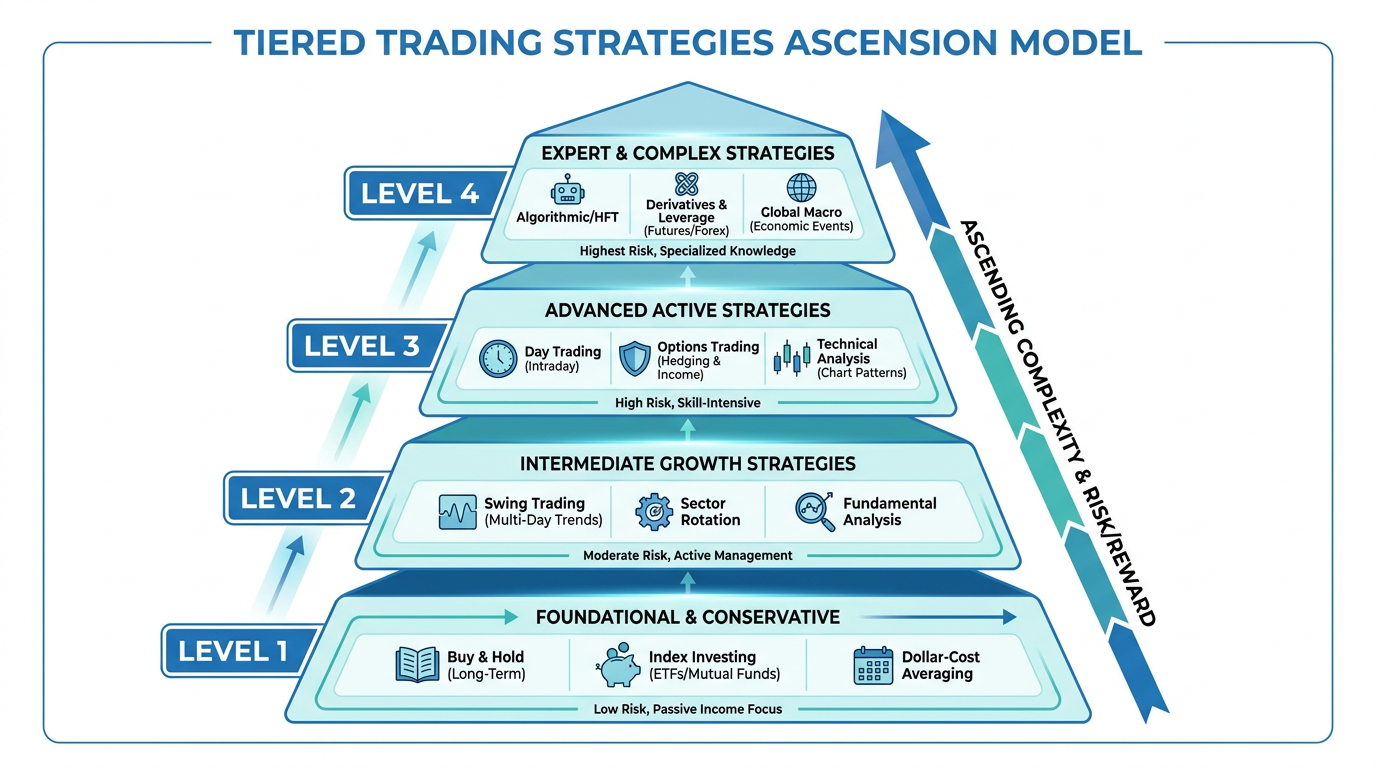
While brokers are free to define their own tier structures (and names may vary), most converge on a broadly similar four-level framework. Some brokers use three levels; others use five. Understanding the common structure helps you know what to expect.
Level 1: Foundational Strategies
At Level 1, you may write covered calls and sell cash-secured puts. A covered call involves selling a call option against shares you already own; a cash-secured put involves selling a put option while holding enough cash to purchase the underlying shares if assigned. These strategies carry well-defined risk parameters and are typically the starting point for investors seeking income from existing holdings. Most brokers grant Level 1 approval readily, provided your application demonstrates basic investment knowledge.
Level 2: Buying Options Outright
Level 2 permits the purchase of call and put options. This allows you to speculate on price movements or protect existing positions. For an option buyer, the maximum loss is defined as the premium paid, though that premium can be lost in full.
Brokers require Level 2 to ensure traders understand core options mechanics: time decay (the erosion of an option's value as it approaches expiry), intrinsic versus extrinsic value, and how strike price selection affects outcomes. If you are exploring these foundational concepts, the Longbridge Academy offers educational resources to build your knowledge. You can also learn more about in-the-money options, exercise, and assignment as part of your preparation.
Level 3: Spreads and Multi-Leg Strategies
Level 3 unlocks spread trading, which involves combining two or more options contracts into a single position. Common spread strategies include bull call spreads, bear put spreads, and iron condors.
Because spreads cap both the maximum gain and maximum loss, their risk profile differs from that of naked options, which carry uncapped loss potential. However, they require a margin account, as the broker must account for the potential difference between the spread's legs. Common account equity thresholds for spread strategies start around USD 10,000, though this varies by broker. Traders approved for Level 3 are vetted for documented experience with options, and brokers may review activity and apply minimum capital requirements.
Level 4: Naked (Uncovered) Options
Level 4 represents the highest tier in most brokers' systems, granting permission to write naked (uncovered) calls and puts. Here, you sell an option without holding the underlying asset or sufficient offsetting positions.
The risk profile at this level is significantly elevated. A naked call exposes the seller to theoretically uncapped losses if the underlying share price rises sharply. As a result, margin requirements at Level 4 are substantial.
As a hypothetical illustration: writing a naked call on a stock trading at USD 50, with a 20% margin requirement on the underlying plus the option premium, would require approximately USD 1,200 margin per contract (100 shares). FINRA Rule 2360 also requires brokers to provide a Special Statement for Uncovered Option Writers at this stage. Some brokers add a Level 5 tier requiring a minimum net equity of USD 100,000 or more in a portfolio margin account.
Margin Requirements Explained
Margin in options trading refers to the collateral your broker requires you to hold to cover potential losses. The amount depends on the strategy you are executing and your approval level.

Cash Accounts vs. Margin Accounts
At Levels 1 and 2, many strategies can be executed in a cash account using only your own deposited funds. From Level 3 onwards, a margin account is typically required, allowing you to borrow from the broker to support positions, which increases both your capacity and your risk exposure.
Important note: Margin is not free capital. Interest charges apply, and if your positions fall below the maintenance margin threshold, you may receive a margin call requiring you to deposit additional funds or close positions.
Regulatory Minimums and Broker Discretion
FINRA Rule 4210 sets minimum margin requirements that all regulated brokers must adhere to, but individual brokers may set "house margin" requirements above these minimums. The actual threshold at your broker could be higher than the regulatory floor. Always verify requirements with your broker before placing trades.
How to Apply for Options Approval
Applying for options trading access involves completing an options application through your broker's platform. The information you provide determines the level of access you receive.
What Brokers Assess
Brokers typically evaluate the following factors:
- Trading experience: Years of trading, frequency of trades, and familiarity with options mechanics.
- Investment objectives: Whether you are seeking income, capital growth, hedging, or speculation.
- Financial profile: Annual income, net worth, and liquid assets available for trading.
- Education and qualifications: Formal finance education or professional certifications can strengthen an application, though they are not universally required.
Applying Honestly and Upgrading Over Time
Providing accurate information on your application is critical for your own protection. Overstating your experience to gain higher-level access can expose you to strategies with risks beyond your understanding.
If approved at a lower level, you can typically request an upgrade after demonstrating trading activity and building a track record. Most brokers allow reapplication once your financial situation and experience have progressed.
Tip: Start at Level 1 or 2 and build experience with covered calls and long options before requesting upgrades. You can also practise strategies without real capital by exploring options paper trading platforms to gain confidence first.
Options Trading at Longbridge
Longbridge provides options trading on US markets as part of its investment product offering. Singapore-based investors can explore the full range of investment products available on Longbridge to understand how options fit within a broader portfolio strategy. The US market hours guide for Singapore investors is also a useful resource for planning your trading schedule.
Note: Options trading involves substantial risk, including the potential to lose more than the initial amount invested when writing uncovered options. Ensure you fully understand the mechanics and risks before trading.
Frequently Asked Questions
What is the difference between options approval levels?
Each level grants access to progressively complex strategies with higher risk and margin requirements. Level 1 covers covered calls and cash-secured puts. Level 2 adds long options buying. Level 3 unlocks spread strategies requiring a margin account. Level 4 permits writing naked options with significant margin obligations and elevated risk.
Do all brokers use the same approval level structure?
No. There is no universal standardisation across the industry. Some brokers have three levels, others have four or five, and the strategies permitted at each tier vary by broker. Always review your specific broker's structure before applying.
How much margin is required for Level 3 options?
Margin requirements vary by broker and strategy. Common account equity thresholds for spread strategies start around USD 10,000. All brokers must meet FINRA Rule 4210 minimums, but may apply higher house margin requirements above this regulatory floor.
Can I trade options in a retirement account?
Some retirement accounts permit options trading, but access is generally restricted to defined-risk strategies such as covered calls and long options. Naked options writing is typically unavailable in retirement accounts due to the uncapped risk exposure involved.
What happens if my options application is rejected?
You can typically reapply at a later date. Use the intervening period to build trading experience, increase account equity, and deepen your understanding of options mechanics. Many brokers are willing to reconsider when an investor's profile has progressed.
Conclusion
Options approval levels are a structured, regulated system designed to match trading strategies to investor experience and financial capacity. From covered calls at Level 1 through to the margin obligations of naked options at Level 4, each tier serves as a checkpoint that protects both the trader and the broker. Understanding where you sit within this framework, and what is required to progress, is an essential part of responsible options trading.
The choice of financial instruments depends on your investment objectives, risk tolerance, market outlook, and experience level. It is essential to fully understand any instrument's mechanics, risk characteristics, and execution rules while maintaining a robust risk management plan. You can learn more about investment strategies through the Longbridge Academy or by downloading the Longbridge App.