amit

amit

0Following49Followers
A
amit

oil down, stocks up

everything RIPPING except Nvidia

shows you how much of a drag oil has been on stocks, obviously certain names are still in huge drawdowns but we haven’t seen WTI sustain $87 for months

imagine if it actually goes down to $75

not horrible for equities

also interesting to note that the market has moved forward today WITHOUT Nvidia, implying that…maybe the market doesn’t need to be this dependent on one company which actually does feel more bullish on the overall health of equities

$NVIDIA(NVDA.US) $SPY $QQQ

Source: amit

A
amit

$NVIDIA(NVDA.US)

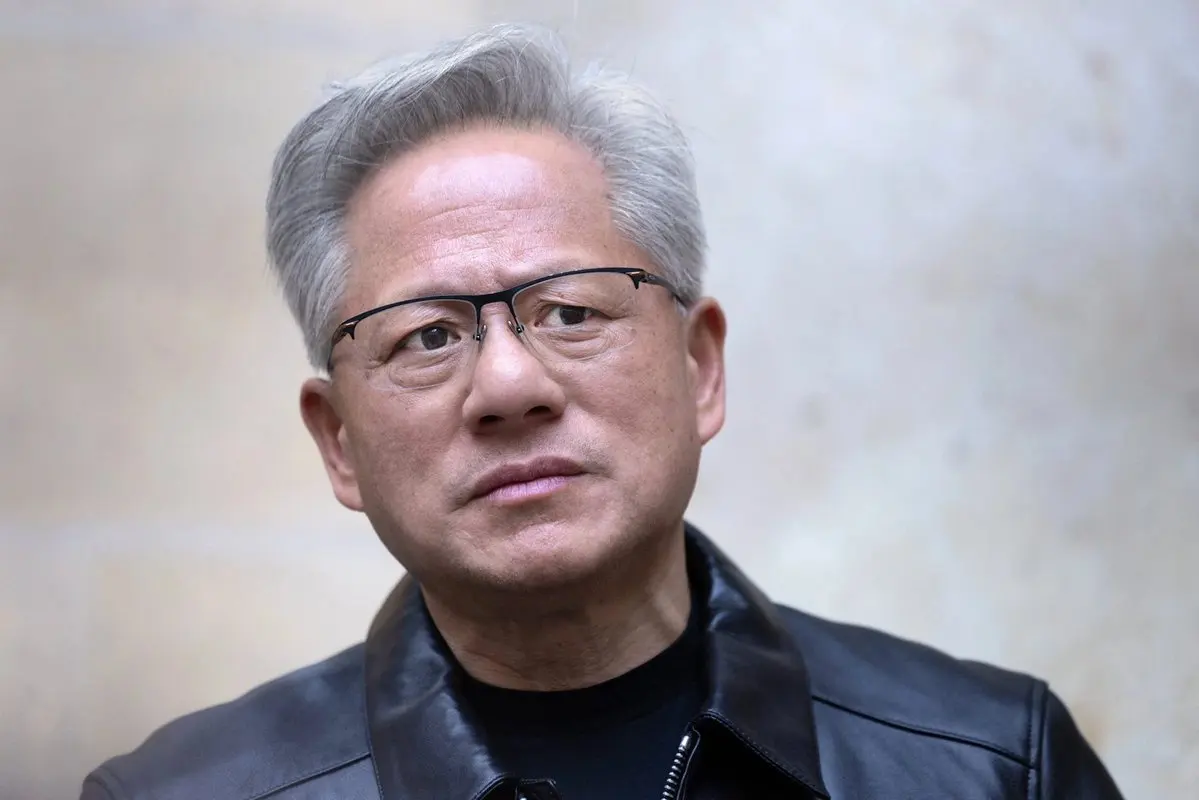
Jensen has admitted to the affair in a memo sent to Nvidia employees today. The company is now beginning an internal investigation.

Jensen:

“I love our country and our company, and I am committed to protecting Nvidia and supporting America’s national security. Leading NVIDIA is the privilege of my life. My responsibility is to serve you and be worthy of your trust. I have fallen short of that responsibility. I am fully committed to NVIDIA and will work to earn back your confidence.”

“Regarding the national security concerns raised in news reports, NVIDIA’s Board of Directors has initiated an independent investigation. I support the investigation and will cooperate fully. I love our country and our company, and I am committed to protecting NVIDIA and supporting America’s national security.”

Source: amit

图片 1,共 1 张
A
amit

OCTOBER NON FARM PAYROLLS:

- 165K jobs vs 70K expected

- 4.1% unemployment rate vs 4.2% expected

Great report, but might make the case for the Fed to hike if they think the labor market being this good is only going to keep inflation sticky.

Source: amit

A
amit

$NVIDIA(NVDA.US)

THE INFORMATION:

- NVIDIA HAS APPROACHED APOLLO ABOUT CREATING A NETWORK OF SMALL AI DATA CENTERS POTENTIALLY SPANNING 20 STATES ACROSS THE US

- NVIDIA IS EXPLORING RETROFITTING OLD TELECOM BUILDINGS FOR AI DATA CENTERS

well, Jensen isn’t going down without a fight

Source: amit

A
amit

Why has today been so bad?

You had multiple sell side analysts on Wall Street come out this morning and basically say the same thing, which is that they are starting to believe capex growth will now peak in 2027. This doesn’t mean capex will stop, but the rate of growth for it will peak in 2027.

This means the rate of growth for semi earnings could be perceived as topping as well.

At the same time, the market doesn’t know if the Fed will continue to be aggressive with their tightening.

Neocloud debt continues to yield higher, with CoreWeave now having yields at 17%.

The result is a market sell off across the board. Nvidia is down 9%.

No one believes in the future earnings or low P/Es because if datacenters can’t come online, the revenue itself won’t be there to justify the capex.

The bright side is that mean hyperscalers pull back capex and FCF goes positive sooner than expected along with yields eventually coming down due to lack of new AI debt, but that means semis continue to sell off in that scenario.

Worst day all year for the Nasdaq.

Source: amit

图片 1,共 1 张
A
amit

A TON OF THINGS HAPPENED IN THE STOCK MARKET TODAY.

Here's a full recap:

1. U.S. stocks had a powerful post-election rally on today, with the Dow Jones surging more than 3%, its strongest day since April 2025, as investors welcomed the removal of election uncertainty following Democrats taking control of both chambers of Congress. The biggest catalyst was a sharp collapse in oil prices, driven by expectations that the new political landscape could increase pressure to resolve the Iran conflict, potentially easing energy costs, reducing inflationary pressures, and improving the outlook for consumers and businesses. Mega-cap technology stocks, including Amazon $Amazon(AMZN.US), Microsoft $Microsoft(MSFT.US), Apple $Apple(AAPL.US), and Alphabet $Alphabet(GOOGL.US), rallied as falling Treasury yields and improving risk appetite supported equities. However, the semiconductor and AI infrastructure sectors moved sharply in the opposite direction, with Micron $Micron Tech(MU.US), Sandisk $Sandisk(SNDK.US), Marvell $Marvell Tech(MRVL.US), and CoreWeave $Coreweave(CRWV.US) facing significant selling pressure. Investors are increasingly concerned that a Democratic Congress could introduce stricter data center regulations, permitting restrictions, and higher costs for AI infrastructure development, potentially slowing the pace of capital investment.

2. President Donald Trump said he is not considering replacing Defense Secretary Pete Hegseth, while defending his administration's military campaign against Iran following Republican losses in the midterm elections. Trump acknowledged that it was “largely true” that Republicans lost because of the Iran war, citing the impact of surging oil and gasoline prices on voters. However, when asked whether the conflict was worth the political and economic consequences, Trump responded “yes,” arguing that the United States had little choice because Iran could not be allowed to obtain a nuclear weapon. On the possibility of ending the conflict, Trump declared that “the Iran war will end whenever I want it to,” signaling that he believes the timing of any conclusion remains under his control.

3. Uber $Uber Tech(UBER.US) delivered strong Q3 2026 earnings, with revenue increasing 10% YoY to $14.8B, beating the $14.69B estimate, while adjusted EPS surged 35% to $0.88, exceeding expectations of $0.86. Adjusted EBITDA jumped 31% to $2.96B, ahead of consensus, while free cash flow reached $2.54B, highlighting continued profitability and cash generation. Gross bookings climbed 20% to $59.82B, supported by 215M monthly active platform consumers, up 14% YoY, and 4.1B trips, up 16%. By segment, Delivery revenue surged 23% to $5.49B, Freight revenue increased 34% to $1.76B, while Mobility revenue declined 2% to $7.52B. Looking ahead, Uber guided Q4 adjusted EBITDA to $3.13B–$3.23B, with gross bookings of $63.25B–$65.25B and adjusted EPS of $0.95–$0.99. Management also highlighted accelerating progress in autonomous transportation, expecting approximately 700 fully driverless vehicles operating on Uber's platform by year-end and more than 2,000 in 2027, as the company increasingly focuses on commercializing robotaxi services at scale.

4. AMD $AMD(AMD.US) has dramatically increased its unconditional purchase commitments to $48.8B, up 4x from $12.2B at the end of 2025 and $30.3B in June, according to its latest 10-Q filing, highlighting the enormous supply chain investments required to support its accelerating AI infrastructure business. Approximately $33.4B of these commitments are due by the end of 2027, primarily covering semiconductor wafers, advanced memory, substrates, and packaging capacity. AMD also disclosed $6.2B in cloud computing commitments, $13.3B in data center leases it expects to assign or sublease to partners, and up to $8.5B in guarantees covering partners' lease and debt obligations. Notably, lease guarantees nearly doubled to $7.7B from $4.1B in June, although AMD reported no partner defaults or guarantee payments to date.

5. Alphabet $Alphabet(GOOGL.US) plans to invest $15B in Malaysia during 2027 and 2028, significantly expanding its presence in Southeast Asia through new data center campuses, clean energy infrastructure, water security initiatives, and workforce training programs, according to Reuters. The investment highlights Google's accelerating commitment to AI and cloud computing infrastructure as demand for computing capacity continues to grow across the region. Beyond data center construction, the initiative will focus on securing reliable electricity, sustainable water resources, and skilled workers needed to support large-scale AI operations.

6. Oracle $Oracle(ORCL.US) has reportedly canceled a $7B AI chip leasing agreement with Chinese technology giant Tencent following pressure from the Trump administration, according to the Financial Times. The proposed five-year agreement would have provided Tencent access to as many as 100,000 advanced AI chips housed in Oracle data centers across Southeast Asia, representing Tencent's largest overseas AI computing arrangement. The deal would have allowed Tencent to access advanced semiconductor technology that remains restricted within China, prompting U.S. officials to raise national security concerns with Oracle. Meanwhile, senior Chinese officials reportedly urged Tencent to prioritize domestic semiconductor suppliers, adding pressure from Beijing. Although overseas AI chip leasing remains permitted under existing regulations, the agreement was reportedly abandoned amid mounting geopolitical pressure from both governments.

7. Coherent $Coherent Corp.(COHR.US) delivered a strong Q1 FY2027 earnings beat, with revenue surging 50% YoY to $2.37B, exceeding the $2.31B estimate, while adjusted EPS jumped 80% to $2.09, beating expectations of $1.97. Non-GAAP operating income reached $550M, ahead of the $527M estimate, while gross margins expanded 184 basis points to 40.6%, reflecting improving profitability. The standout was Data Center & Communications revenue, which surged 79% YoY to $1.95B, exceeding the $1.86B estimate, driven by accelerating demand for optical networking and AI infrastructure connectivity, while Industrial revenue declined 15% to $418.6M. Looking ahead, Coherent guided Q2 adjusted EPS to $2.28–$2.48, above the $2.21 consensus, with expected gross margins of 40%–42%. Management also expects FY2027 pro forma revenue growth to exceed 60% and anticipates achieving its first quarter with non-GAAP gross margins above 45% before the end of 2028, highlighting continued operating leverage as AI data center demand accelerates.

8. The top 10 most active options today by contracts traded were $NVIDIA(NVDA.US) with 6.3M contracts, $Apple(AAPL.US) with 4.7M contracts, $Tesla(TSLA.US) with 4.0M contracts, $Intel(INTC.US) with 2.4M contracts, $Amazon(AMZN.US) with 2.2M contracts, $Micron Tech(MU.US) with 2.2M contracts, $AMD(AMD.US) with 1.4M contracts, $Palantir Tech(PLTR.US) with 1.2M contracts, $SpaceX(SPCX.US) with 1.2M contracts, and $Alphabet(GOOGL.US) with 1.1M contracts.

9. Intel $Intel(INTC.US) CEO Lip-Bu Tan purchased 150,000 shares of Intel stock on November 2 at an average price of approximately $64.73 per share, representing a personal investment of roughly $9.7M, according to an SEC filing. The sizable insider purchase represents a notable vote of confidence from Intel's chief executive as the company continues executing its turnaround strategy, expanding its AI and data center business, and investing in its next-generation foundry manufacturing capabilities. The transaction highlights Tan's willingness to increase his personal exposure to Intel's long-term performance as investors assess the sustainability of its recovery.

10. Big Tech stock buybacks are collapsing as AI infrastructure spending takes priority, with combined share repurchases by Alphabet $Alphabet(GOOGL.US), Amazon $Amazon(AMZN.US), Microsoft $Microsoft(MSFT.US), Meta $Meta Platforms(META.US), and Oracle $Oracle(ORCL.US) reportedly falling to just $4.4B in Q3 2026, their lowest quarterly level since Q3 2017. That represents a staggering 90% decline from the $45.9B peak recorded in Q4 2021, highlighting a major shift in how America's largest technology companies allocate capital. The slowdown comes as hyperscalers commit hundreds of billions of dollars toward AI data centers, GPUs, networking equipment, and power infrastructure, increasingly prioritizing capacity expansion over returning cash to shareholders. The trend signals a significant transformation in Big Tech's capital allocation strategy, with AI investments absorbing cash that might otherwise have supported stock repurchases, potentially reducing an important source of demand for their shares.

11. Goldman Sachs $Goldman Sachs(GS.US) and Apollo Global Management $Apollo Global(APO.US) have reportedly begun marketing portions of SpaceX's $SpaceX(SPCX.US) massive $40B AI chip financing package to institutional investors, with individual allocations reaching as much as $500M, according to Bloomberg. The transaction, described as the largest GPU financing arrangement on record, involves an Apollo-backed entity purchasing approximately $47.3B in NVIDIA $NVIDIA(NVDA.US) GPUs and related equipment, primarily next-generation Rubin chips, funded through roughly $40B in debt and a $7B lease prepayment from SpaceX. The debt package includes an $8.3B senior-secured loan alongside multiple bond tranches, with the financing structured so that the Apollo-backed entity owns the equipment while SpaceX leases the GPUs for approximately five years. The arrangement is designed to keep the financing debt off SpaceX's balance sheet, although the company remains obligated to make lease payments even if equipment is damaged or operations are disrupted.

12. South Korea's exports surged an extraordinary 94% YoY in October to $115B, marking the second-highest monthly total on record and the fastest annual growth rate since January 1974. The country has now recorded five consecutive months of export growth exceeding 60%, bringing total exports during the first 10 months of 2026 to a record $930B. The acceleration was overwhelmingly driven by semiconductors, with chip exports skyrocketing 259% YoY to a record $56B, while computer exports surged 497% amid explosive global demand for AI servers and computing infrastructure. The figures highlight South Korea's increasingly critical role in the global AI hardware supply chain, particularly through memory manufacturers Samsung Electronics and SK Hynix, as hyperscalers continue investing heavily in data centers, advanced memory, and next-generation computing systems.

WALL STREET IS THE GREATEST SHOW ON EARTH.

Source: amit

A
amit

BLUE WAVE FEELS MORE LIKE A GREEN WAVE

NASDAQ AND S&P 500 UP 1.5% 🟢

simply put, the market is remembering there is more to the economy than just semis

and amazing companies like $Uber Tech(UBER.US) $Alphabet(GOOGL.US) $Amazon(AMZN.US) are getting some love

not sure if the bottleneck trade is done or not, but something that most people refused to acknowledge is that it is a trade, not an investment

many of these companies benefit from supply/demand imbalances which is why their earnings were so strong, plenty of other companies benefit regardless of the price of DRAM and the market is easily deciding to rotate into them

i think the selloff on the semis is a bit aggressive, but one thing is clear: the market should be comfortable buying companies that have sustainable growth and aren’t reliant on every nut and bolt of a GPU.

there are many of those companies, and they are the ones that will win regardless of party.

Source: amit

A
amit

If you are wondering why Oil is down 8%…

1. Oil is up because of a war.

2. Trump has no political capital to keep that war going.

3. The country shifted so far blue that they now have a mandate to end this war.

4. If the war ends, even with refinery issues, oil prices will come down.

5. If oil goes down, so does inflation. If inflation goes down…stocks benefit.

The semis are down due to datacenter sentiment but the broader market seems to like this setup.

Basically, arbitrary oil induced inflation seems to be coming to an end as even Trump last night acknowledged he wants to get a deal and Vance today said the Iran war was a mistake.

Source: amit

A
amit

This is becoming a Blue Tsunami, not just a Blue Wave…

- EARLY EXIT POLLS SHOWING DEMS WILL WIN THE SENATE AND HOUSE DECISIVELY

- PREDICTION MARKETS SHOW A 95% CHANCE FOR DEM SENATE CONTROL, 99% CHANCE FOR HOUSE CONTROL JUST 15 MIN AFTER FIRST POLLS CLOSE

Market’s reaction even after knowing for the past month that democrats had a very strong chance of winning?

$QQQ Nasdaq down 1.25%. I guess the market didn’t expect it to be this blue.

Source: amit

A
amit

$AMD(AMD.US)

AMD DELIVERS A MASSIVE PRINT.

Q3 2026 EARNINGS:

- Revenue $13.4B, +45% YoY

- Adjusted EPS $2.09, +74% YoY

- Data Center Revenue $8.55B, +97% YoY

- GAAP Operating Income $2.83B, +123% YoY

- Adjusted Operating Income $3.92B, +75% YoY

- Adjusted Net Income $3.47B, +77% YoY

- Free Cash Flow $554M

- Q4 Revenue Guidance ~$17B, +66% YoY

AMD CEO Lisa Su:

“We delivered a record quarter with revenue exceeding the high end of our guidance as Data Center segment sales nearly doubled year-over-year. With our leadership product portfolio and deep customer and supply chain relationships, we are confident in our ability to sustain very strong revenue growth and expanding profitability over the coming years.”

Source: amit

图片 1,共 1 张
A
amit

$Palantir Tech(PLTR.US)

Palantir TCV concerns are absolutely silly and the bears are becoming desperate.

First, every analyst on the street increased their PTs. You usually don't have analysts, that react to price movements, increase their targets when the stock is going against their bullish call. This quarter was SO good that every single one of them ignored what the stock was doing and told their clients that they think it's going higher.

Even Rishi from RBC (Motel 6) had to FINALLY raise his target into the $100s, upgrading Palantir from $90 to $130. You know the numbers were that good when Rishi has to upgrade by $40.

Second, this 6% TCV YoY growth completely misses what management said during the call.

"We signed multiple 8-figure deals in the quarter that were shorter in duration than usual, as customers rapidly adopted initial Sovereign AI capabilities in their enterprise," noted CFO David Glazer.

This also explains why RPO was flat QoQ:

"As a reminder, RPO is primarily comprised of our commercial business, as it does not take into account contracts with an initial term of less than 12 months and contractual obligations that fall beyond termination for convenience clauses, both of which are common in most of our government business."

I mean the bears have really lost their minds to interpret low TCV and RPO growth as a reason why this quarter was bad. What Palantir is actually saying is they are signing customers that want to get started with deploying Sovereign AI ASAP. That means to get a shorter contract signed so the work can begin and as the value is created, those 8-figure deals can begin to expand out many years...because Palantir is not one of those companies that will get paid and deliver nothing. If anything, I see it as a sign of incredible strength that management is willing to sign contracts on a shorter term basis and immediately begin proving how transformational the Sovereign movement can become and earn their ability to extend those contracts. The fact that the top average revenue per top 20 customer is up from $83M a year to $146M a year, +76% YoY, shows how much value this company is creating and why net dollar retention is now 165%.

Customer count at 1090 customers is EXCITING, not a red flag, this is a company that is growing FASTER and more efficiently than any other software company on the planet, and doing so with less than 1100 customers...you would have to genuinely be desperate to think that that is bearish when in reality that means the relationships they have with their partners are truly transformational and they aren't just signing customers to sign them but rather every time they get someone in the door, they can keep them for a VERY long time and monetize that relationship better than any other software company because that customer is actually receiving the value they pay for.

Bears, you need a better bear case to take down one of the single greatest companies the market has ever seen.

Please, try harder.

Source: amit

图片 1,共 1 张
A
amit

$Grab(GRAB.US)

Grab had an exceptional Q3.

- $1.12B of revenue, the first billion dollar quarter

- 57M monthly users, fastest QoQ growth since 2022

- EBITDA margins now highest in history of the company at 21%, up 565 basis points YoY

- Raised EBITDA guide from 45% growth to 60% growth YoY

- Total quarterly active advertisers on self-serve platform grew 39% YoY, and average spend of these advertisers grew 13% YoY

- Adjusted FCF now $533M, doubling YoY

- Financial services is now profitable

- Bought back $400M of stock, CEO bought $30M himself.

11B marketcap, 5B in cash, doing $4.2B of revenue and growing the bottom line 60%.

Listening to the call, looks like Meta chose Grab to be one of the first partners to integrate with Muse in Singapore. It is not easy for a company to do $1B in revenue every 90 days and it is also not easy to have 7% of the entire SEA population using your products, while growing that number 20% YoY. Network effects compounding with operating leverage is the simple thesis, unfortunately oil has been the headwind but this was an outstanding quarter for the company.

Source: amit

图片 1,共 1 张
A
amit

A TON OF THINGS HAPPENED IN THE STOCK MARKET TODAY.

Here's a full recap:

1. Palantir $Palantir Tech(PLTR.US) delivered an extraordinary Q3 2026, with revenue surging 96% YoY to a record $2.31B, marking its first quarter above $2B, while U.S. commercial revenue skyrocketed 148% YoY to $984M, surpassing U.S. government revenue of $953M for the first time in company history. Total U.S. revenue grew 119% to $1.94B, while adjusted EPS reached $0.44 and GAAP net income climbed to $1.13B. Profitability remained exceptional, with adjusted operating income of $1.43B, representing a 62% margin, and adjusted free cash flow of $1.22B, representing a 53% margin. Palantir achieved a remarkable Rule of 40 score of 158%, closed 64 deals worth at least $10M, and grew U.S. commercial remaining deal value 79% YoY to $6.52B. Management also significantly raised FY2026 revenue guidance to $8.53B, representing 91% annual growth, while projecting U.S. commercial revenue growth of at least 143% and adjusted free cash flow of $4.8B–$5B. CEO Alex Karp emphasized that the accelerating sovereign AI movement is creating unprecedented demand for Palantir's AIP, Foundry, and Ontology platforms, as governments and enterprises increasingly seek to deploy AI using their own proprietary data and infrastructure.

2. Meta $Meta Platforms(META.US) and Oracle $Oracle(ORCL.US) are preparing major capital raises as the world's largest technology companies continue securing funding for their expanding AI infrastructure investments. Meta is reportedly targeting at least $20B through a U.S. dollar- and euro-denominated bond offering, potentially spanning five dollar tranches and six euro tranches, with Citigroup $Citigroup(C.US) and Morgan Stanley $Morgan Stanley(MS.US) coordinating investor calls. Meanwhile, Oracle is reportedly preparing a nearly $10B equity offering at an approximately 11% discount, alongside a six-part U.S. dollar investment-grade bond offering and a newly filed mixed shelf registration. Fitch estimates Oracle's combined capital raise at approximately $20B, including $10B in equity.

3. Grab $Grab(GRAB.US) delivered strong Q3 2026 results, with revenue increasing 27% YoY to $1.11B and adjusted EBITDA surging 73% to a record $237M, while its adjusted EBITDA margin expanded 565 basis points to 21.3%. Monthly transacting users reached a record 57.2M, up 20% YoY, as Grab added 3.3M users during the quarter, its strongest quarterly addition since Q1 2022. On-Demand GMV grew 18% to $6.84B, while Financial Services revenue surged 124% to $201M, with the segment achieving adjusted EBITDA profitability for the first time at $12M. Grab also raised its FY2026 revenue guidance to $4.15B–$4.20B and adjusted EBITDA outlook to $790M–$800M, reflecting accelerating profitability across its ecosystem. The company generated $286M in quarterly adjusted free cash flow, repurchased $400M in shares during September and October, and retains another $500M in buyback authorization, highlighting improving operating leverage and increasing shareholder returns.

4. President Donald Trump and Vice President JD Vance expressed growing optimism about a potential U.S.–Iran agreement, with Vance saying he feels “good about the prospects” of a deal following several productive discussions with Iranian officials. Vance confirmed that no deadline has been established for resuming military strikes, while Trump said negotiations are “coming together nicely” and suggested that progress toward an agreement has contributed to falling oil prices. Trump also said Iran wants to reach a deal, reiterated Tehran's assurances that it would not develop nuclear weapons, and indicated that the U.S. would refrain from further strikes against Iranian leadership. Meanwhile, Qatari mediators are reportedly traveling to Tehran to meet Foreign Minister Abbas Araghchi and discuss a revised agreement that has been under negotiation for eight days, according to Reuters. However, Iranian state-linked Fars News pushed back against reports of a breakthrough, citing a source who said no meaningful progress has occurred and that Tehran will not move forward until Washington satisfies Iran's seven conditions.

5. The top 10 most active options today by contracts traded were $NVIDIA(NVDA.US) with 4.7M contracts, $AT & T(T.US)esla(TSLA.US) with 3.7M contracts, $Intel(INTC.US) with 2.1M contracts, $Micron Tech(MU.US) with 1.8M contracts, $Amazon(AMZN.US) with 1.8M contracts, $Apple(AAPL.US) with 1.6M contracts, $Alphabet(GOOGL.US) with 1.0M contracts, $AMD(AMD.US) with 1.0M contracts, $SpaceX(SPCX.US) with 1.0M contracts, and $Oracle(ORCL.US) with 768K contracts.

6. Anthropic is reportedly facing pressure from institutional investors to price its upcoming November IPO at a $1.5T–$1.6T valuation, down from earlier expectations approaching $2T, according to the Wall Street Journal. The more cautious outlook follows the recent technology selloff and growing concerns over the sustainability of massive AI infrastructure spending, despite Anthropic reporting $17B in Q3 revenue, up from $11.6B in Q2, even after approximately $600M in pricing reductions and customer discounts. The company has also disclosed an extraordinary $895.4B in combined AI computing purchase and lease commitments, including $447.5B expected before 2031, with most remaining obligations extending through 2045. Anthropic could begin its IPO roadshow next week, with trading potentially starting before Thanksgiving, although the final valuation, offering size, and share price remain undetermined.

7. Marvell $Marvell Tech(MRVL.US) announced a massive $115B all-stock acquisition of Lumentum $Lumentum(LITE.US), creating a new powerhouse in AI networking, optical connectivity, and custom silicon. Under the agreement, Lumentum shareholders will receive 4.5 Marvell shares for each Lumentum share, valuing Lumentum at approximately $1,132 per share, a 23.9% premium to its unaffected closing price. Following the transaction, Marvell shareholders will own 67% of the combined company, with Lumentum shareholders owning 33%. The merger combines Marvell's expertise in custom AI chips, switching, and electrical interconnects with Lumentum's leadership in lasers, optical transceivers, and optical circuit switching, positioning the combined business to address an estimated $550B total addressable market.

8. U.S. equity funds recorded $6.7B in net outflows during the week ending October 28, marking their largest weekly withdrawal since mid-September and reversing the $5.1B and $13B in inflows recorded over the previous two weeks. Meanwhile, global equity funds attracted $10.2B, extending their inflow streak to six consecutive weeks, although demand slowed considerably from $25.1B and $19.8B in the preceding weeks. Asian equity funds led global inflows with $9.9B, down from $11.6B the prior week, while European equity funds attracted another $4.5B.

9. Disney $Disney(DIS.US) is reportedly preparing to eliminate thousands of jobs as part of a major cost-cutting initiative, with some managers instructed to target 20% in annual cost savings across their operations. The reductions are expected to come from a combination of workforce layoffs and lower operating expenses, with certain business divisions facing deeper cuts than others. Disney, which employed approximately 231,000 people worldwide at the end of its last fiscal year, plans to redirect a portion of the savings toward film and television programming, technology, theme parks, and cruise operations.

10. Bloom Energy $Bloom Energy(BE.US) and California Resources Corporation $Citigroup(C.US)RC signed a non-binding memorandum of understanding to explore the development of more than 1 GW of power generation capacity in California, combining Bloom's solid-oxide fuel cell technology with carbon capture and storage infrastructure. Under the proposed partnership, Bloom would provide its on-site power generation systems, while CRC's Carbon TerraVault would handle CO2 transportation and permanent underground storage. The projects, being evaluated across Central and Northern California, could supply electricity to AI data centers, utilities, and industrial customers, with the companies estimating that up to 3 million metric tons of CO2 annually could be available for capture and storage.

11. AST SpaceMobile $AST SpaceMobile(ASTS.US) and AT&T $AT & T(T.US) announced the first successful handoff of an active cellular connection between a terrestrial network and a satellite network using an unmodified smartphone, marking a significant milestone for direct-to-device satellite connectivity. The test successfully transferred an active connection between AT&T's ground-based cellular infrastructure and AST SpaceMobile's BlueBird satellites, leveraging networking technology from Ericsson $Ericsson(ERIC.US) and Nokia $Nokia Oyj(NOK.US). The achievement demonstrates progress toward enabling ordinary smartphones to transition between traditional cell towers and satellite coverage without requiring specialized hardware. AT&T said the next step will involve real-world beta testing ahead of a potential commercial rollout, bringing AST SpaceMobile closer to delivering satellite-based cellular coverage in areas where conventional networks are unavailable.

12. Piper Sandler believes a potential SpaceX $SpaceX(SPCX.US) and Tesla $AT & T(T.US)esla(TSLA.US) merger proposal is now more likely than not, as both companies have reportedly established independent special committees to evaluate a possible combination. The firm expects Elon Musk to retain more than 70% voting control of the combined entity under most potential transaction structures, allowing him to maintain significant influence over the businesses. A merger could bring together Tesla's electric vehicles, autonomous driving, robotics, and energy infrastructure with SpaceX's satellite connectivity, launch operations, and AI computing capabilities, potentially creating one of the world's most vertically integrated technology companies.

WALL STREET IS THE GREATEST SHOW ON EARTH.

Source: amit

A
amit

$Palantir Tech(PLTR.US)

PALANTIR SURPASSES $2B IN QUARTERLY REVENUE FOR THE FIRST TIME IN HISTORY.

- Revenue of $2.31B, +96% YoY

- U.S. Commercial Revenue $984M, +148% YoY

- U.S. Government Revenue $953M, +96% YoY

- $1.12B GAAP net income, 49% margin

- Net Dollar Retention 165%

- Rule of 40 Score 158%

- FY26 Revenue Guidance Raised to $8.53B

Palantir CEO Alex Karp:

"This moment, remarkable as it is for us, remains the first scene of a first act. It is our firm and unwavering intent to take the entire market, the whole thing. We think it is more likely than not that our raw concentration of creative and technical talent will continue to define the genre and craft the definitive story of software itself over the coming decades."

Speechless.

Source: amit

图片 1,共 1 张
A
amit

the market being this choppy and $SMH actually going red on a day where oil is down 7% is pretty crazy

not even oil tanking is helping right now

Source: amit

A
amit

this $Marvell Tech(MRVL.US) and $Lumentum(LITE.US) deal looks horrible lol

- using all stock which creates a ridiculous amount of dillution

- wont even close till 2028, talk about a overhang on these stocks for the next year

- lumentum ceo said they were sold out till 2029, stock was on fire, now they decide to just give it all up

is it just me or is this weird

Source: amit

A
amit

IRAN PRESIDENT PEZESHKIAN:

- SUPREME LEADER HAS GRANTED THE GOVERNMENT CERTAIN AUTHORITIES REGARDING NEGOTIATIONS

- WAR WILL NOT FORCE IRAN TO SURRENDER

- IRAN IS COMMITTED TO DIALOGUE

doing their best to get this market to stop bleeding lol

i do think if there is a real, serious peace proposal and ceasefire post midterms, regardless of a blue/red wave, the market will like it

the question is...if we actually get a deal

Source: amit

A
amit

the irony of all of this is big tech is increasing their capex spend

but the capex beneficiaries (semis) aren’t being rewarded like they were earlier in the year

at the same time, big tech has to dillute and take on debt to afford to even spend the capex, which is causing issues in the credit market

and then you have the iran war which doesn’t help with oil

ultimately, I think there needs to be more evidence of a catalyst to create a structural sustained selloff given earnings/growth/labor market doesn’t support it, but it feels very obvious that the credit markets don’t want to support all this AI buildout

and everything feels like a falling knife so few people are willing to step in and buy until there is meaningful technical recovery

which is getting discounted into the semi’s valuations AND the hyperscalers

so the question is…what’s the better buy?

to me, it is obviously the hyperscalers on sustainability of earnings/growth but with more debt and dilution, their stocks have the risk of continuing to stay flat until fcf comes back to being positive

gold and bitcoin also are participating as risk is being taken off across the board

and then the fed raising rates makes it even harder for neoclouds to justify their ability to take on debt

long term, i think there are many names that are fundamentally undervalued given their growth and prospects but sentiment across the entire market, even after record big tech earnings, is just not good

nasdaq wiping out $1.5T of market cap today

Source: amit

图片 1,共 1 张
A
amit

today's after hours is the ugliest print of Q3 earnings so far

amazon, that small $2.7T company, wicked down 12% within seconds of the print

intel went down 17%

pinterest, roblox, reddit all down 15-20%

then binance rumors of getting hacked for $2B and $btc wicks below $79K for the first time since september

ugly

Source: amit

图片 1,共 1 张
A
amit

so…what are folks thinking about $googl

i thought the stock would get on earnings because of dilution like $meta but instead it got hit because of search is dying fears that lasted from 2023-2025

are those fears really enough to keep it below $300? you’d imagine berkshire steps in after putting in $10B at $350…

is anyone buying yet or would rather wait and see?

Source: amit

图片 1,共 1 张
A
amit

GOOGLE:

- NO CHANGE TO OUR 2026 CAPEX GUIDE OF $205B

- WE EXPECT TO SIGNIFICANTLY INCREASE CAPEX IN 2027

- Missed on EPS & Revenue, stock is down 10% for the first time since March

$Alphabet(GOOGL.US)

Source: amit

A
amit

BLOOMBERG: MARVELL $Marvell Tech(MRVL.US) IN ADVANCED TALKS TO BUY $Lumentum(LITE.US) LUMENTUM HOLDINGS

is this how they get to $1T as Jensen said a while back?

both in the optics business…

Lumentum $82B marketcap…Marvell $220B

this is a weird one

$Lumentum(LITE.US) +12% $Marvell Tech(MRVL.US) -10%

Source: amit

A
amit

A TON OF THINGS HAPPENED IN THE STOCK MARKET TODAY.

Here's a full recap:

1. Robinhood $Robinhood(HOOD.US) reported Q3 2026 revenue of $1.4B, up 12% YoY but slightly below the $1.42B estimate, while EPS of $0.51 missed expectations of $0.56, including a $0.07 per-share unrealized investment loss primarily tied to Robinhood Ventures Fund I. Net income declined 14% to $476M, while adjusted EBITDA increased 9% to $808M. Transaction-based revenue grew 19% to $867M, partially offset by a 9% decline in net interest revenue to $415M. Meanwhile, total platform assets climbed 19% to $396B, funded customers increased 7% to 28.7M, and Gold subscribers surged 34% to 5.2M, supported by $15.7B in net deposits. Robinhood now has 14 business lines generating over $100M in annualized revenue, with Rothera surpassing $100M in its first full quarter. CEO Vlad Tenev emphasized that customers are entrusting more assets to the platform as Robinhood expands its financial services ecosystem, although earnings growth continues to lag revenue growth.

2. SoFi $SoFi Tech(SOFI.US) delivered a strong Q3 2026, with revenue surging 44% YoY to $1.4B, while adjusted EPS increased 64% to $0.18 and adjusted EBITDA jumped 70% to $469.8M, highlighting accelerating growth and improving profitability. Total members climbed 35% YoY to 17.1M, reflecting continued expansion across SoFi's financial services ecosystem. Looking ahead, the company issued bullish FY2027 guidance, projecting $6.4B in revenue versus $6B expected, EPS of $0.90 versus $0.82 expected, adjusted EBITDA of $2.24B, and net income of $1.28B. CEO Anthony Noto emphasized that SoFi is attracting more members, increasing the number of products used per customer, and generating more revenue per product, reinforcing management's confidence in the company's long-term growth and profitability trajectory.

3. Chinese technology giants Alibaba $Alibaba(BABA.US), Tencent, and ByteDance are reportedly seeking long-term memory supply agreements with Samsung Electronics and SK Hynix, according to Korean media, as demand for AI data center infrastructure continues to accelerate. While traditional memory supply contracts typically span 3–5 years, some Chinese cloud service providers are now requesting 10-year agreements extending through 2035 to secure access to critical DDR5 and LPDDR5 memory. The unusually long contract terms highlight growing concerns over future memory availability as hyperscalers expand AI computing capacity and compete for limited supply. The development could provide Samsung and SK Hynix with greater long-term revenue visibility and reinforces the structural demand outlook for the broader memory industry, including Micron $Micron Tech(MU.US).

4. Meta $Meta Platforms(META.US) has reportedly upsized its Class A common stock offering to $25B from $22.5B, pricing the shares at $625 each as the company raises additional capital to support its massive AI infrastructure expansion. Notably, NVIDIA $NVIDIA(NVDA.US) is investing $3B in the offering, while AMD $AMD(AMD.US) is committing another $1B, giving two of Meta's major AI chip suppliers direct equity exposure to one of their largest customers. The expanded offering highlights Meta's increasingly aggressive capital-raising strategy as it prepares to spend $135B–$145B on capital expenditures in 2026. The participation of NVIDIA and AMD also underscores the growing financial interconnectedness of the AI ecosystem, with semiconductor suppliers investing directly in the hyperscalers purchasing their hardware.

5. Qualcomm $Qualcomm(QCOM.US) and Anduril are teaming up to launch BlueChip, a new venture focused on manufacturing rugged, waterproof, American-made laptops for the U.S. military, government agencies, law enforcement, and first responders, according to the Wall Street Journal. The devices will be assembled at Anduril's Arsenal-1 facility in Ohio and powered by Qualcomm Snapdragon X processors manufactured by TSMC in Arizona. Anduril founder Palmer Luckey said approximately 90% of the planned components already come from the U.S. and allied countries, with the long-term goal of producing the entire laptop domestically, including displays and other components currently sourced overseas. The initiative prioritizes secure computing, fully traceable supply chains, and reduced dependence on foreign manufacturing for national-security applications. The first laptops are expected in 2027, with pricing estimated at roughly 20% above conventional high-end PCs.

6. President Donald Trump made two major statements, reiterating his administration's decision to replace the terms “Artificial Intelligence” and “AI” with “Super Intelligence” and “SI” in official executive-branch communications, following a September executive order. Separately, Trump suggested that Venezuela could eventually become the 51st U.S. state, floating the possibility of replacing its presidency with a governorship during remarks in Corpus Christi, Texas. Trump also celebrated the U.S. military intervention in Venezuela and its subsequent oil agreement, describing the operation as a historic victory and highlighting expanded American access to Venezuelan oil reserves.

7. Tesla $Tesla(TSLA.US) rallied approximately 4% on Tuesday to $407.46, extending Monday's 5.2% gain as shares broke above key technical resistance levels. The rally was primarily fueled by Barclays upgrading Tesla to Overweight and raising its price target to $450 from $370, citing improving automotive demand, accelerating energy storage growth, and a potential merger with SpaceX $SpaceX(SPCX.US) that could create a premium for Tesla shareholders. Meanwhile, Tesla's robotaxi expansion continues to gain momentum, with its Texas fleet reportedly exceeding 1,050 vehicles, Cybercabs outnumbering Model Ys, and additional service areas planned, including Dallas. Investors are also responding to improving FSD adoption, strong demand for energy storage from AI data centers, and signs of stabilization in Tesla's core automotive business.

8. Brazil's stock market experienced an extraordinary selloff on October 26, with the iShares MSCI Brazil ETF $EWZ plunging 19.8% in a single session, representing an estimated 8.4-standard-deviation move based on its historical daily volatility. Over the past 20 years, EWZ has averaged a daily return of approximately 0.04%, with a standard deviation of 2.36%, making Monday's decline an extreme statistical outlier. Under a theoretical normal distribution, a move of this magnitude would have an exceptionally small probability, illustrating just how unusual the selloff was relative to historical volatility. However, actual financial markets exhibit fat-tailed return distributions, meaning extreme declines occur more frequently than conventional statistical models predict. The plunge highlights the severity of the selling pressure in Brazilian equities and the risks associated with sudden market shocks.

9. Alphabet's $Alphabet(GOOGL.US) Waymo is expanding its fully autonomous ride-hailing service by nearly 250 square miles across five existing U.S. markets over the next week, further accelerating its commercial robotaxi rollout. In Los Angeles, Waymo is extending service along the coast into the South Bay, including Torrance, while San Diego coverage will expand north to La Jolla, connecting riders to UC San Diego, the VA, and University Town Center. In Nashville, the company is expanding south to include Nashville Zoo, while Orlando will see its eastern service area nearly double alongside improved downtown coverage. The San Francisco Bay Area will also gain additional southern coverage, including a connection to Berryessa BART Station. The expansion increases Waymo's geographic reach and the number of destinations accessible to existing riders, rather than representing launches in five new cities, as Alphabet continues scaling its autonomous transportation network.

10. The top 10 most active options today by contracts traded were $NVIDIA(NVDA.US) with 2.4M contracts, $Tesla(TSLA.US) with 2.3M contracts, $Apple(AAPL.US) with 1.2M contracts, $SoFi Tech(SOFI.US) with 944K contracts, $SpaceX(SPCX.US) with 852K contracts, $Amazon(AMZN.US) with 833K contracts, $Micron Tech(MU.US) with 716K contracts, $Meta Platforms(META.US) with 709K contracts, $Alphabet(GOOGL.US) with 529K contracts, and $AMD(AMD.US) with 529K contracts.

11. Amazon $Amazon(AMZN.US) is reportedly working to reduce its reliance on Anthropic's AI models as the cost of operating Alexa+ continues to climb, according to Business Insider. Internal projections estimated that Alexa+ cloud computing expenses could reach approximately $1.7B in 2026, nearly triple the prior year's costs, prompting Amazon to explore routing more AI requests through its own lower-cost models and infrastructure. The company also considered delaying or scaling back Moonraker, its advanced AI agent initiative, which was projected to require more than $100M in GPU spending this year. The developments highlight the growing pressure on major technology companies to improve AI inference economics, reduce dependence on third-party model providers, and balance increasingly expensive AI capabilities with sustainable profitability.

12. U.S. stock market breadth is improving significantly, with the S&P 500 Equal-Weight Index outperforming the traditional market-cap-weighted S&P 500 by 4.0 percentage points in October, putting it on track for its second-strongest monthly relative performance since April 2009. The equal-weight index has gained 4.3% this month, compared with just 0.3% for the S&P 500, marking a sharp reversal from September, when equal-weight stocks underperformed by 4.7 percentage points, their worst relative month since March 2020. For comparison, the equal-weight index outperformed by 4.2 percentage points in April. Year-to-date, the Equal-Weight Index is up 13.4% versus 12.1% for the S&P 500, suggesting market leadership is broadening beyond the largest technology and AI companies as more sectors and individual stocks participate in the rally.

WALL STREET IS THE GREATEST SHOW ON EARTH.

Source: amit

A
amit

the $meta selloff due to equity dilution is really annoying

but at the same time...can we really blame them?

meta and google both did equity raises this year for about $100B each. they are the greatest businesses in the world.

google is flat ytd and meta is now red after peaking at $780.

they have both been opportunity costs, but not because they are small spec plays that you took a chance on...these are some of the greatest businesses in the world.

the problem is, they need capital. they dont have fcf anymore. they levered up their balance sheets. the only thing left is equity to offer. if we want them to be the giant compounders that the global economy depends on, they need capital for their AI buildout and that capital will come from dilution which unfortunately keeps their stocks stuck.

ever since google did their raise, they have gone nowhere but flat to down, even berkshire is bagholding 10b of $googl they bought at 350.

the $meta $25b offering today at $625 was 5x oversubscribed, just like google's was, which means smart money obviously knows these are amazing discounts/valuations to pay...but the street isnt going to easily let these names run with the threat of more shares entering into the market.

the fact that $nvda and $amd had to invest in $meta today also shows how much the chipmakers realize that these companies need cash and they will have to participate in financing these companies to make sure their chip sales are disrupted.

this all doesn't work if the capex isn't going to lead to an roi. if it will, then i expect them to continue diluting and that means we might have to deal with the hyperscalers potentially being stuck if the street can't get over their constant dillution.

now, $amzn and $msft haven't tapped equity markets yet...which means if they do, we know the playbook for how the street may react. if they don't, then they might have a better chance of avoiding that stagnation, but ultimately if you believe in the AI buildout, these companies need money and that money will have to come from shareholders.

we just get the opportunity, even if prolonged, to buy them at what are historically the lowest multiples they've ever had relative to their growth with the eventual ROI from all this capex coming over the next few years.

Source: amit

A
amit

markets finally gave us a day off from the chop and gave us a taste of a bit of green lol

- trump iran headlines leaning towards an end to the war (if you believe them)

- consumer confidence huge beat this morning

- midterms will be a clearing event and allow us to move past it

- big tech earnings this week will be good even if the capital raises via debt/equity are keeping their stocks down, ultimately people just have to be okay with $meta diluting now to grow in the future

- anthropic numbers not as bad as expected

- neocloud sentiment the worst it’s been, if there is any positive news then these companies get a bounce

- $sofi smashed earnings and the guide even with rate hikes expected, good for financials if a company at their size and grow that fast within a bad macro for rates

- high beta names like $tsla back above $400, not fully indicative of risk on but you don’t see that during risk off periods

- companies with great earnings that got sold off initially starting to retrace upwards like $amkr and $be

what do we think…fake rally or enough capitulation to mark some form of a short term bottom?

Source: amit