

Global stock markets plummeted in panic. Here are three reasons why you should short now instead of buying the dip.

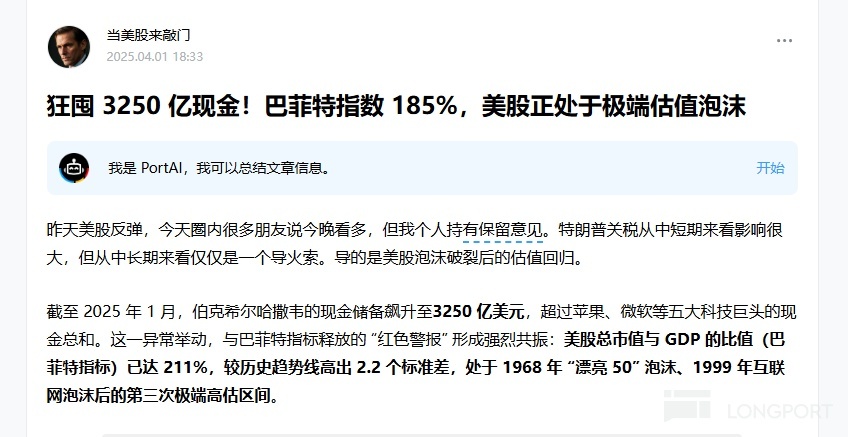
The impact of Trump's tariffs continues to unfold. Today, the $NASDAQ Composite Index(.IXIC.US) fell 5% in the night session, with a slight rebound in pre-market trading, down 4% from the previous day's closing price. Since March 26, the Nasdaq has fallen nearly 20%. A stock market crash is here.
Now, there's only one question on everyone's mind: buy the dip or cut losses? Hope you find this article helpful.
As mentioned before, Trump's tariffs are just a trigger. The essence is the valuation regression of U.S. stocks due to overvaluation. Everyone understands the logic, but the key is whether the regression has reached its limit.
1. Valuation Position
First, look at the absolute position. From the Nasdaq's point level, it is now at the level of January 2024, erasing all the gains from the entire year's bull market.
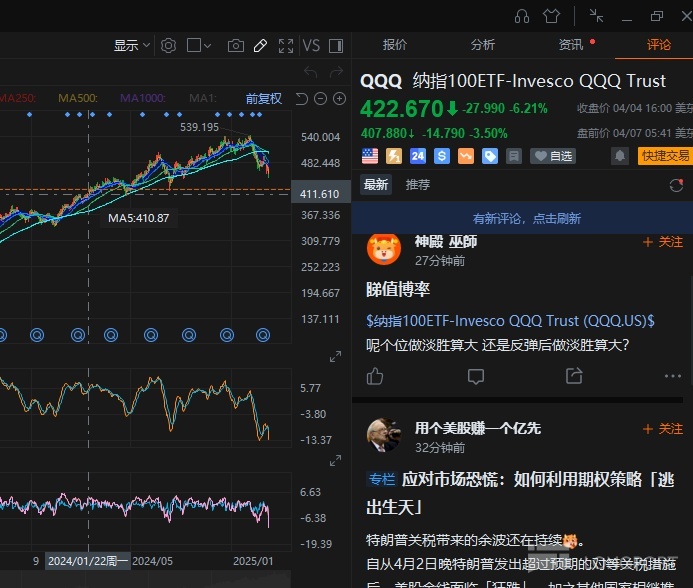
Buy the dip? Be careful not to get caught in a trap.
During a bull market, the booming market conditions often make investors overlook risks. For example, it took the Nasdaq two years to recover from the highs of late 2021. From the Buffett Indicator perspective, the U.S. GDP in 2024 is $29.18 trillion, and with today's drop, the total market capitalization of U.S. stocks is approximately $47.5 trillion, with a Buffett Indicator of around 1.6.
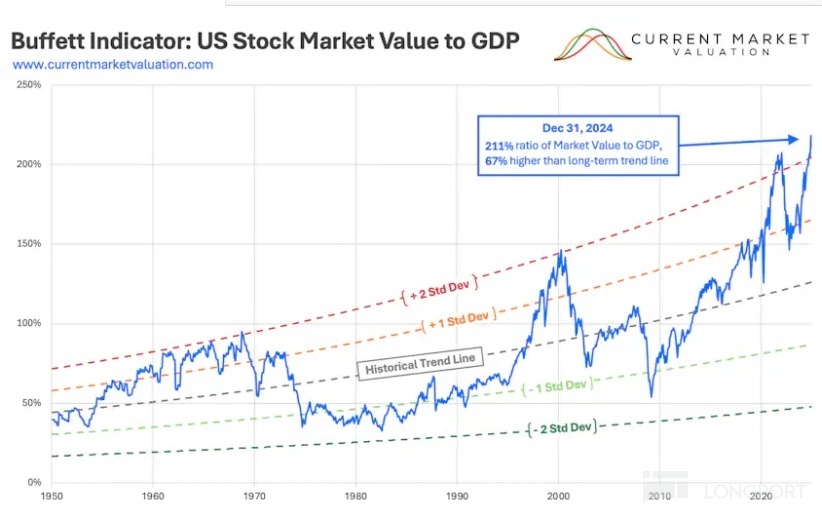
Compared to the highs earlier this year, it has indeed fallen significantly. However, as shown in the chart above, 1.6 is still near one standard deviation, leaving room for further decline. Buying the dip now is quite risky.
2. Macro Signals
There's a theory online that Trump's tariffs are meant to pressure the Fed into cutting rates. According to the overnight rate swap market trends, Wall Street traders believe the Fed will cut rates by 125 bps this year, whereas before Trump's policy announcement, the expectation was only 75 bps.
Are rate cuts good for the stock market? Yes, they are. But even if these 125 bps of cuts materialize, will the stock market really recover? Not necessarily.
Goldman Sachs' latest report predicts a 45% probability of the U.S. entering an economic recession, up 35% from last week. Rate cuts will indeed lead to a stock price rebound, but the economic cycle is the fundamental factor. If the economy confirms a recession, the rebound from rate cuts becomes an ideal entry point for shorting, not for going long.
Additionally, while I said tariffs are just a trigger, their actual impact cannot be ignored. On the contrary, today's global stock markets are in a panic sell-off. The Hang Seng Index, which we care about the most, plummeted 13.22%, and the Shanghai Composite Index dropped 7.33%. (Investors with full positions hitting the limit-down say: "So boring, nothing to do.")
A global stock market crash is here. Are you still thinking of buying the dip?
3. How to Operate
Never go against the trend unless you have ample capital and are a big player, testing the waters with small positions and then averaging down.
For small and medium-sized investors like us, ask yourself one question before buying the dip against the trend: Why should the market rebound just because you entered after a big drop?
Therefore, I believe the current strategy should focus on shorting. When the short market enters an overbought zone, that's our opportunity to go long.
The chart below uses $MSTR 2X Short ETF(MSTZ.US) as an example. The circled areas are entry and exit points. If you get the direction right, even using just the KDJ indicator in a clear market, you can make money.
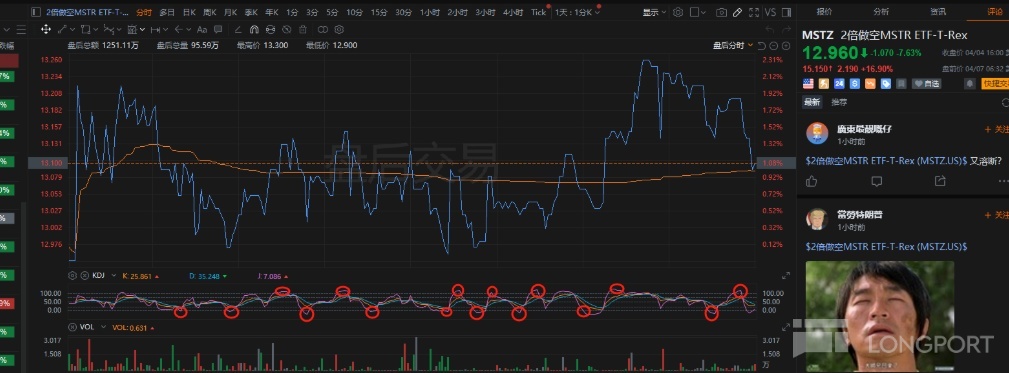
Today's pre-market rebound is likely due to short-covering and some investors averaging down. Increased rate cut expectations? If rates are cut, it means admitting the U.S. economy is in recession, and the early stages of a rate-cut cycle often see more declines.
So, what about you? Are you buying the dip or shorting?
$S&P 500(.SPX.US)
The copyright of this article belongs to the original author/organization.
The views expressed herein are solely those of the author and do not reflect the stance of the platform. The content is intended for investment reference purposes only and shall not be considered as investment advice. Please contact us if you have any questions or suggestions regarding the content services provided by the platform.
