

Tencent 2025 Q1 data analysis - Tencent's AI offense and defense


Brief Comment
On May 14th, Tencent Holdings released its Q1 2025 earnings report, demonstrating steady performance with solid results.
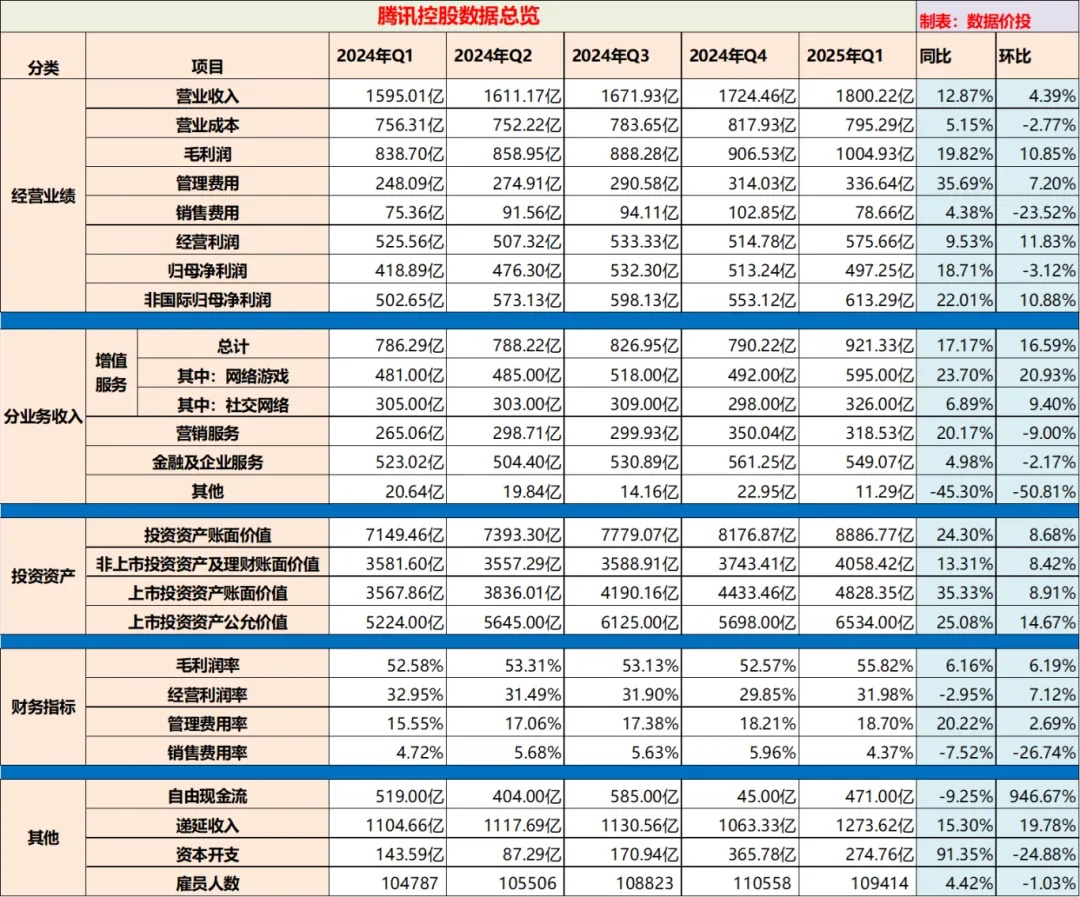
We won't delve into the details of the quarterly report but will focus on the most talked-about topic—Tencent's offensive and defensive strategies in AI.
Since Deepseek emerged earlier this year, nearly all Chinese internet companies have ramped up their investments in AI, while also benefiting from the valuation boost driven by growth expectations in AI.
AI investment is undoubtedly a double-edged sword. On one hand, it may drive significant future growth, but on the other hand, it currently puts pressure on profitability.
1) Growth Driven by AI:
There's no doubt that AI investments are still in the early stages, and the extent of future growth remains to be seen.
For Tencent, compared to other internet companies, its AI investments are yielding tangible contributions more quickly. As mentioned in the report: "AI capabilities have already made substantive contributions to performance advertising and evergreen games."
i) Gaming:
Applying AI in "evergreen" games has improved user retention and driven revenue growth.
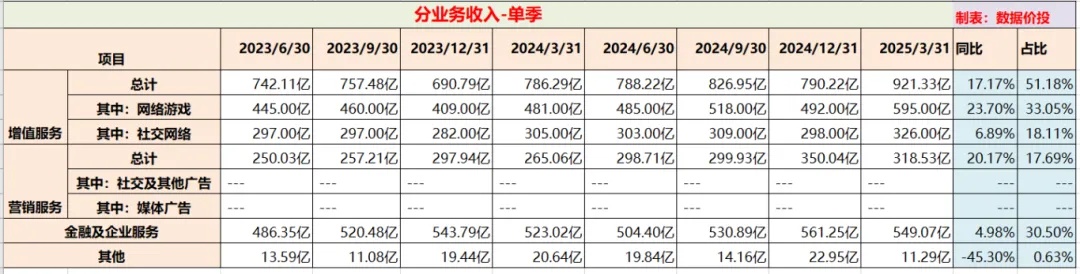
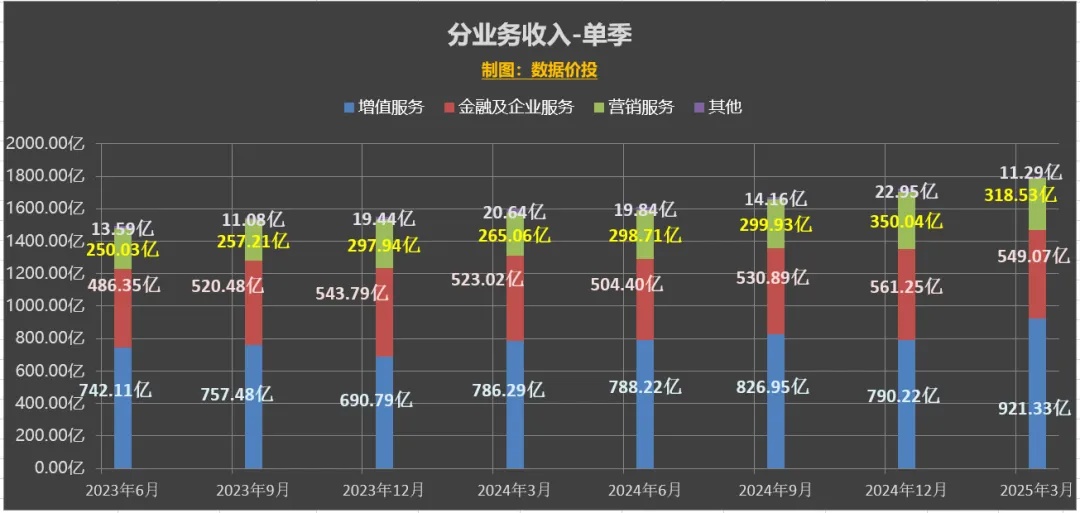
As a result, domestic game revenue grew 24% YoY in Q1 2025, while overseas game revenue rose 23% YoY, marking a return to over 20% growth.
ii) Advertising:
By leveraging AI:
- More precise ad targeting has boosted ad revenue.
- Better content recommendations have increased user engagement, further driving ad revenue.
Ad revenue in Q1 2025 accelerated, growing 20% YoY.
While it's hard to quantify AI's exact contribution, it has undeniably accelerated revenue growth in Tencent's two core businesses.
iii) Cloud Services:
Since Q4 2024, Tencent has significantly increased capital expenditures in AI. The GPUs purchased were initially for internal use but will gradually be deployed in computing infrastructure, APIs, and platform solutions, contributing more to cloud revenue.
In these three areas, AI investments have boosted revenue growth. Meanwhile, gross margins have actually improved, indicating that Tencent's AI spending hasn’t eroded profitability.
Specifically:
Value-Added Services (Gaming) gross margin rose from 57% to 60%.
Marketing Services (Advertising) gross margin increased from 55% to 56%.
FinTech & Business Services (Including Cloud) gross margin climbed from 46% to 50%.
2) Pressure from AI Investments:
i) Rising AI Capital Expenditures:
During the earnings call, Tencent's management stated: "In 2025, we will continue to increase capital expenditures, expected to be in the low double-digit percentage of revenue," roughly estimating RMB 80–100 billion.
In Q1 2025, capital expenditures reached RMB 27.476 billion, up 91.35% YoY. Although this is down from Q4 2024, spending remains substantial.
Operating profit for Q1 2025 was RMB 57.566 billion, up 9.53% YoY, below expectations.
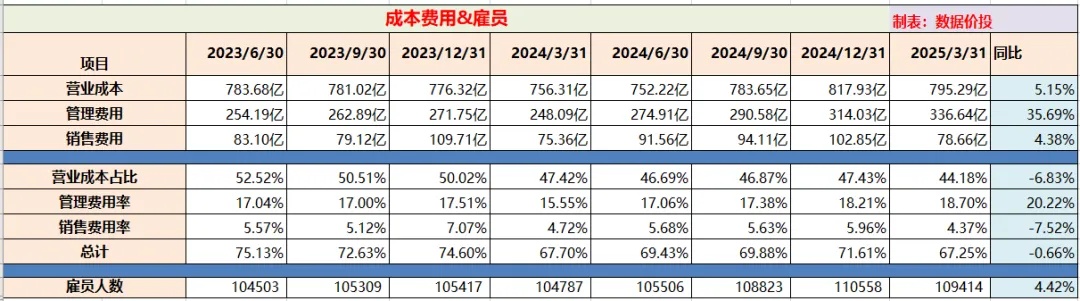
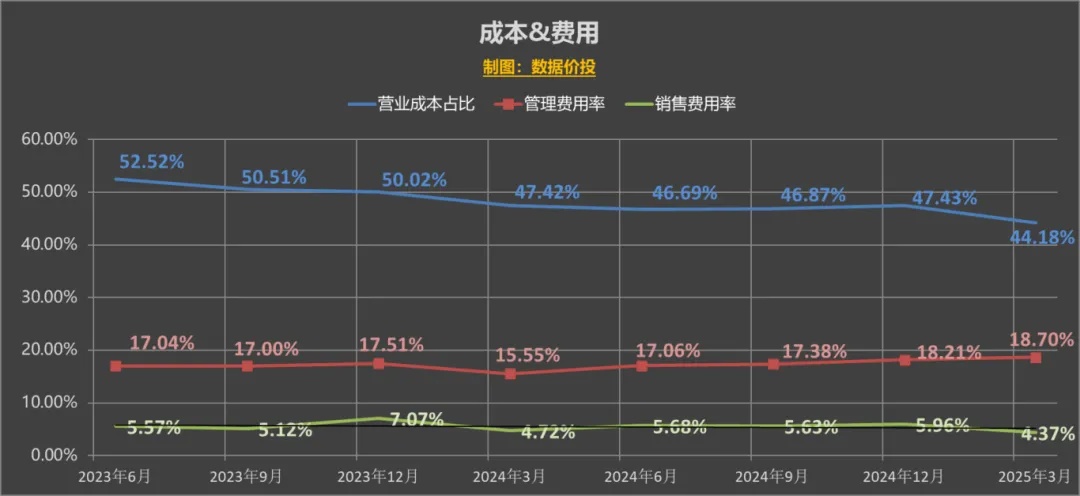
This reflects the pressure from AI spending, mainly due to administrative expenses of RMB 33.664 billion, surging 35.69% YoY.
However, it's worth noting that the increase in administrative expenses is partly due to higher R&D costs to support AI-related businesses and partly due to a one-time share-based compensation expense of RMB 4 billion (related to an overseas subsidiary, Ubisoft).
Excluding this one-time impact, operating profit would have been RMB 61.566 billion, exceeding expectations. This further suggests that Tencent's AI investments have limited impact on profitability.
ii) AI Spending vs. Share Buybacks
Increased AI investments in 2025 have slightly reduced shareholder returns, though they remain at a high level.
In 2024, Tencent announced a minimum buyback plan of RMB 100 billion, ultimately repurchasing RMB 112 billion. For 2025, the company has set a minimum buyback target of RMB 80 billion.
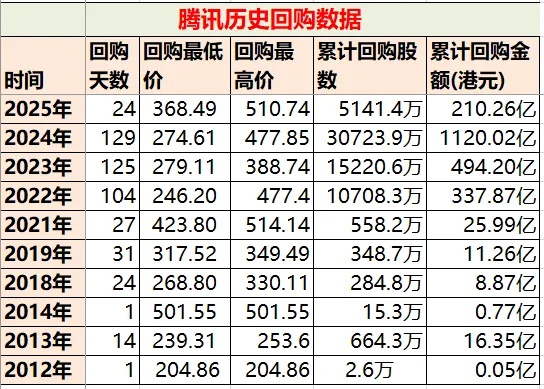
As of the Q1 earnings release, Tencent has repurchased shares on 24 days, totaling 51.414 million shares for RMB 21.026 billion HKD. In the same period last year, buybacks amounted to RMB 22.844 billion, maintaining a similar level.
Post-Q1, based on historical data, there are about 100 trading days left for buybacks. To meet the annual target of RMB 80 billion, daily buybacks need to average nearly RMB 600 million.
iii) Significant Increase in Long-Term Debt
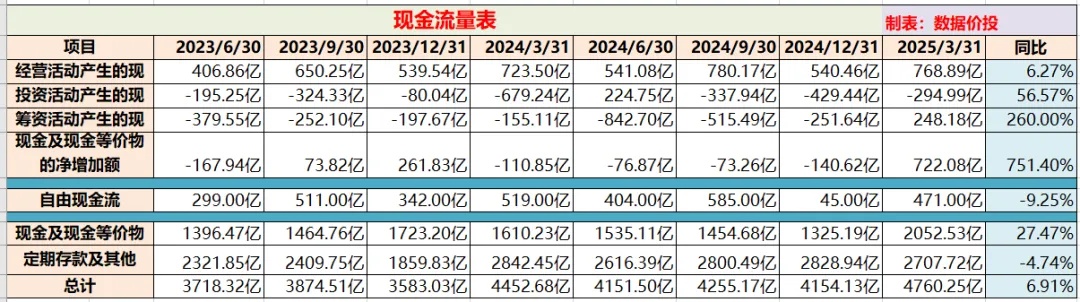
In Q1 2025, long-term debt jumped from RMB 146.5 billion at the end of 2024 to RMB 209.1 billion, a sharp increase of RMB 62.6 billion. The rise was mainly in RMB-denominated loans with interest rates ranging from 2.52% to 3.9%, correspondingly boosting Tencent's "cash and cash equivalents" from RMB 132.5 billion to RMB 205.3 billion.
The reason for this sudden debt surge is unclear, but it may be to lock in low rates for future AI capital expenditures. Further observations over the coming quarters are needed.
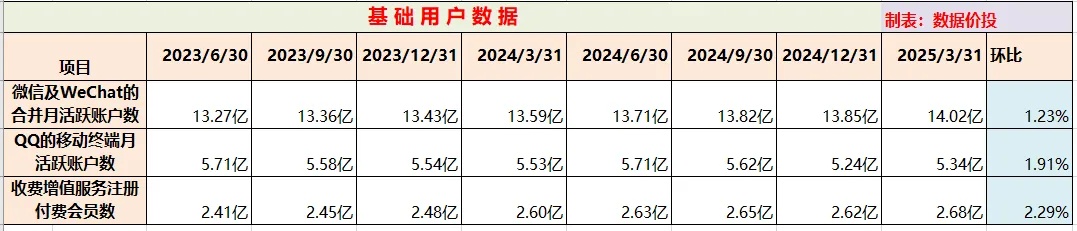
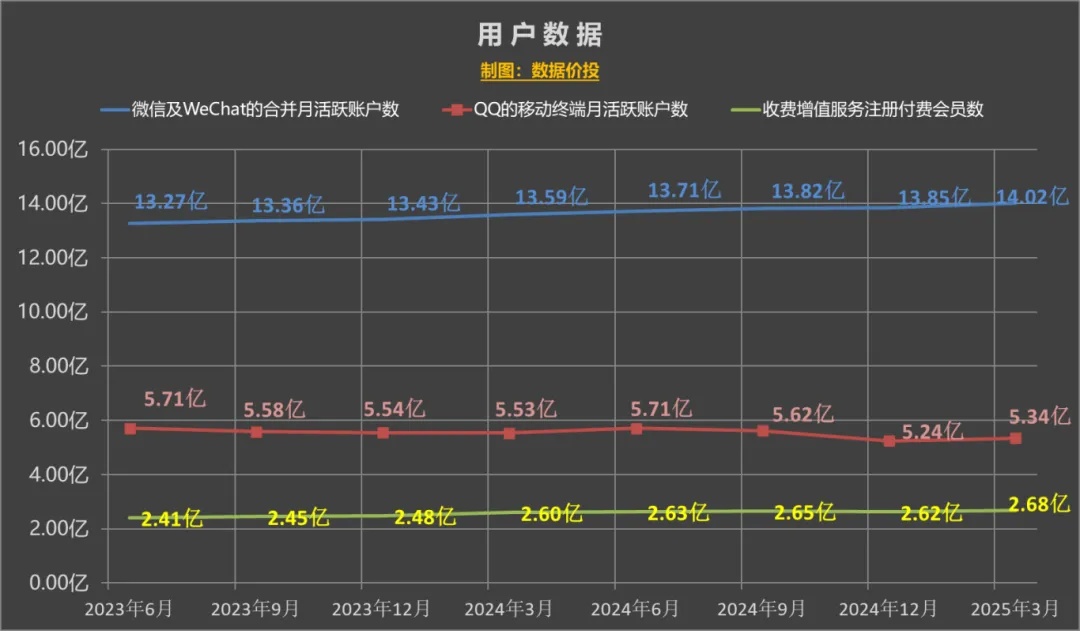
I. User Data
II. Operational Performance
1. Operational Performance - Quarterly
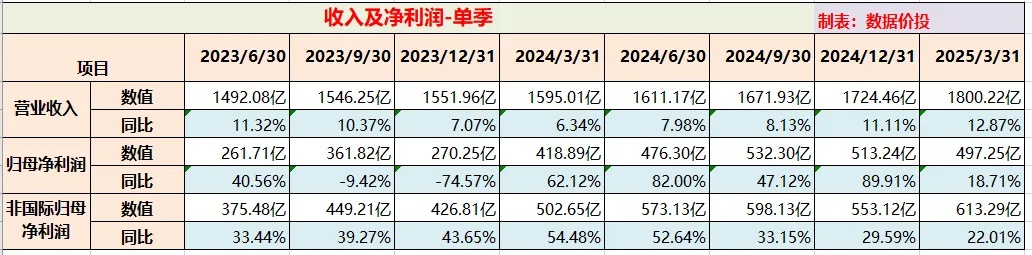
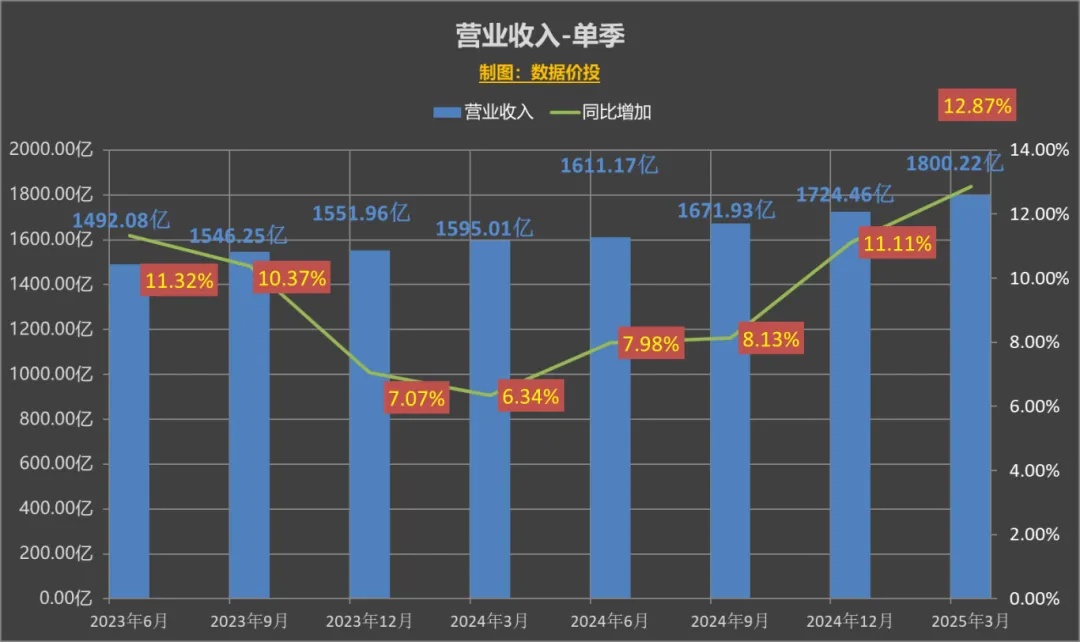
Revenue
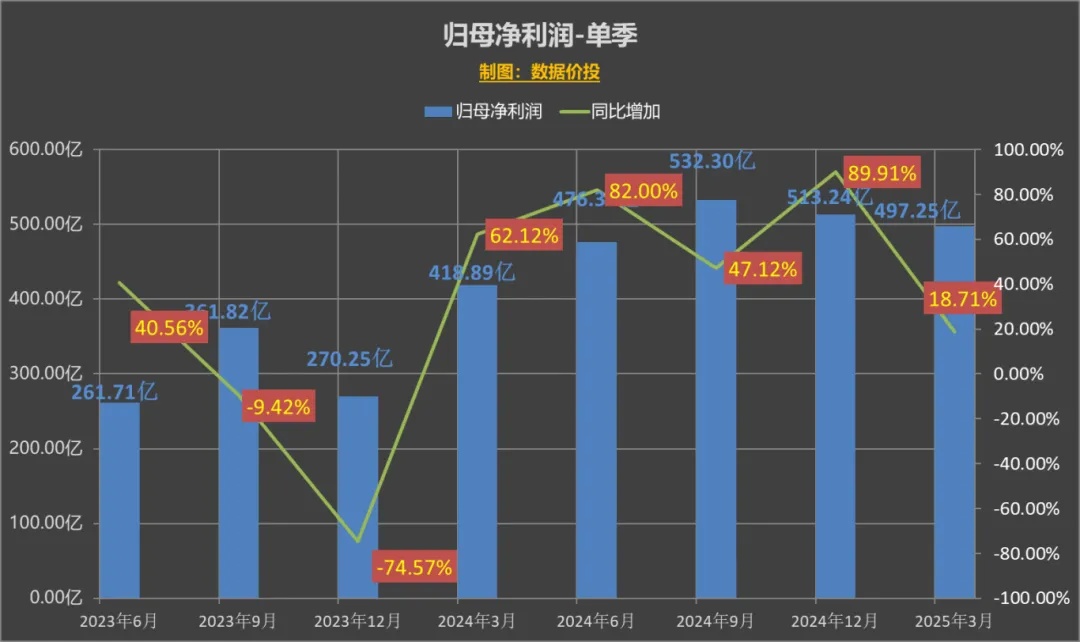
Net Profit Attributable to Shareholders
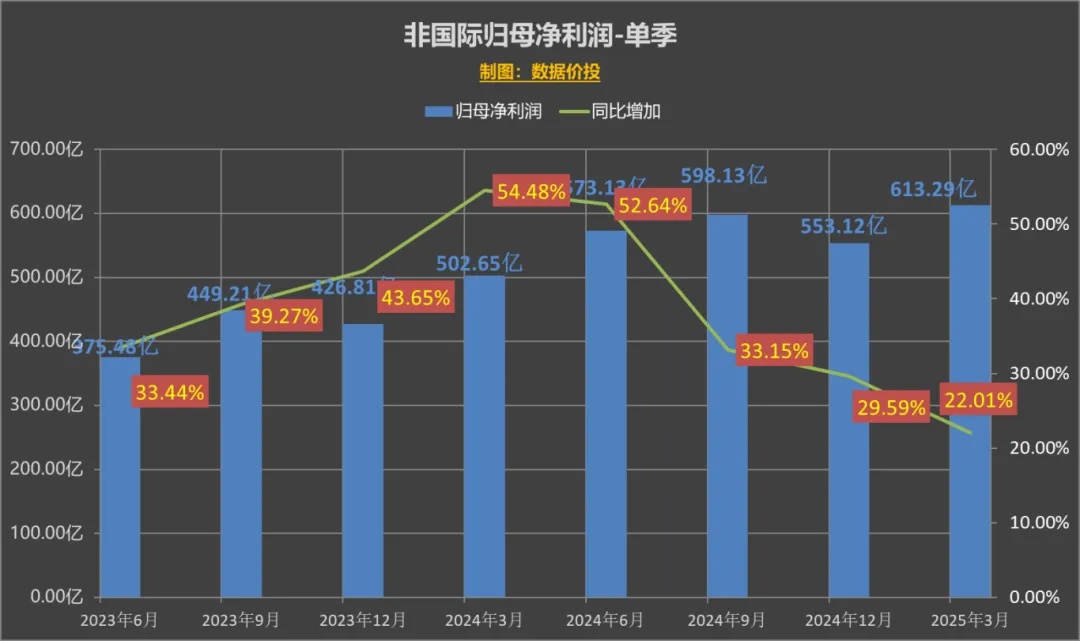
Non-IFRS Net Profit Attributable to Shareholders
III. Segment Revenue Breakdown
Deferred Revenue:

IV. Cost Efficiency
V. Investments
Investment Assets
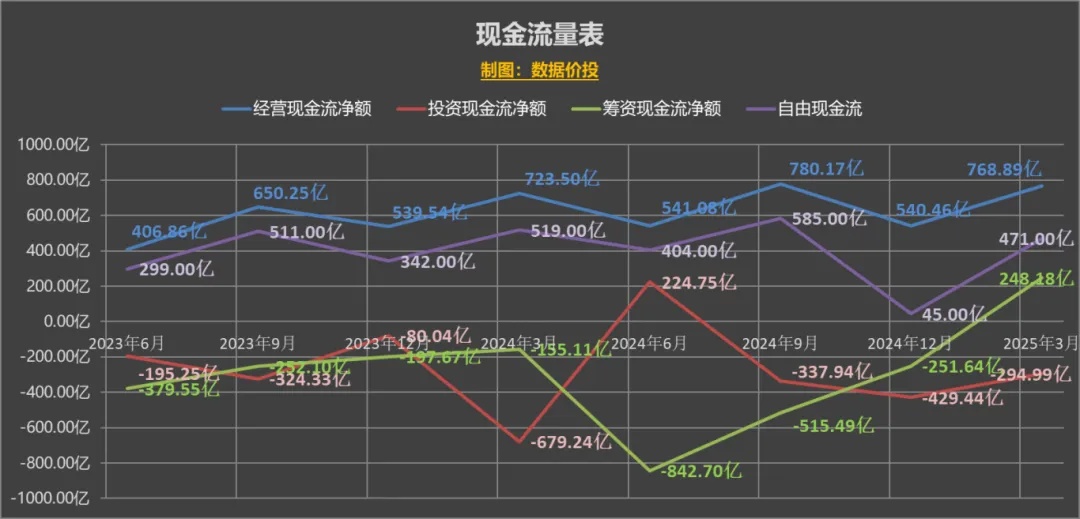
VI. Cash Flow
$Krne Csi China Internet(KWEB.US) $TENCENT(00700.HK) $Tencent(TCEHY.US)
The copyright of this article belongs to the original author/organization.
The views expressed herein are solely those of the author and do not reflect the stance of the platform. The content is intended for investment reference purposes only and shall not be considered as investment advice. Please contact us if you have any questions or suggestions regarding the content services provided by the platform.
