

Uber launches driverless cars, is Waymo 'jumping the gun' on Tesla? The Robotaxi competition is in full swing!

Recently, if you hail a $Uber Tech(UBER.US) in Atlanta, USA, you might encounter a taxi with "no one" inside—no driver, no safety officer, truly fully autonomous. This isn't science fiction; it's Waymo's officially launched Robotaxi service through Uber.
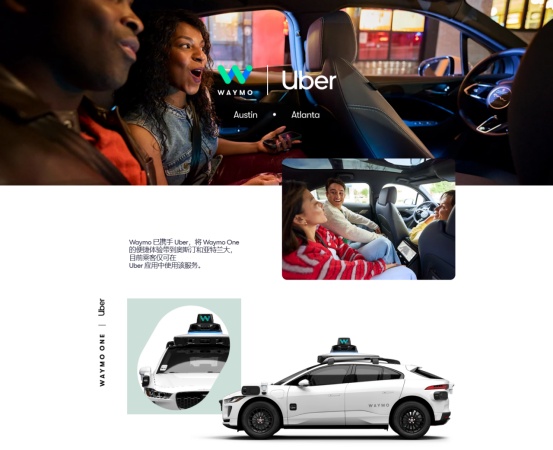
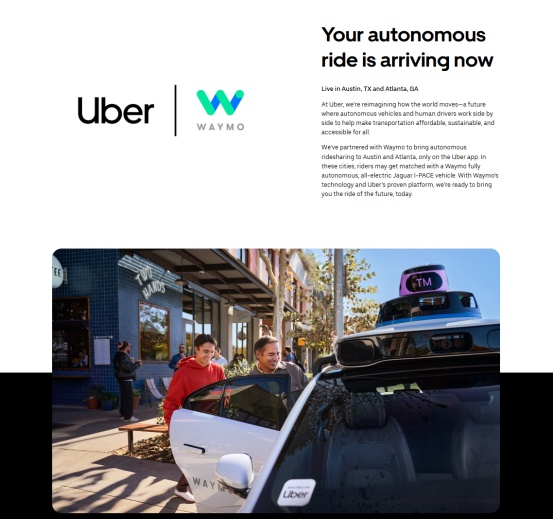
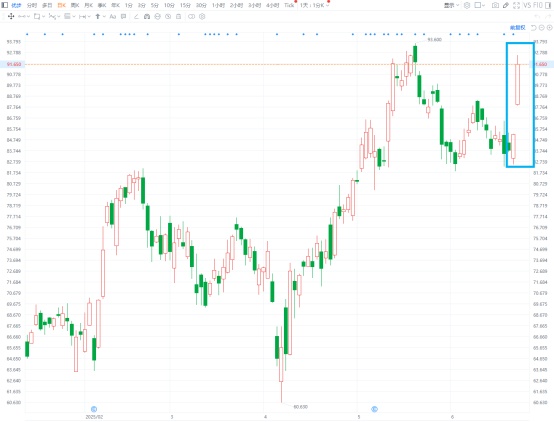
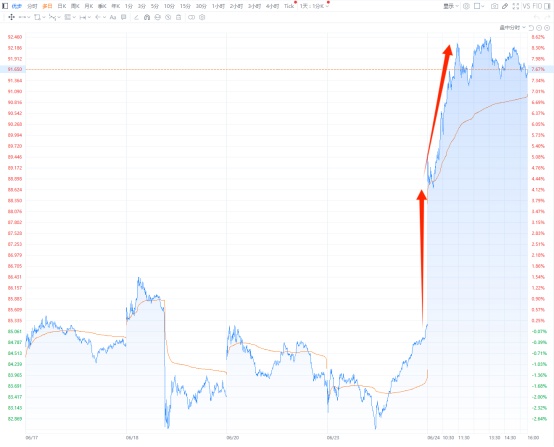
In fact, Waymo and Uber had already piloted this in Austin, Texas, back in March. Now that Atlanta is online, it shows they're not just testing the waters but seriously scaling up. The news caused Uber's stock to surge immediately. Meanwhile, $Tesla(TSLA.US)... the scene is a bit quiet, even slightly "awkward."
Waymo's spotlight is Tesla's pressure
While Waymo is making waves, Tesla isn't idle. Recently, it also tested its Robotaxi in Austin, but leaked videos show mixed results: some cars entered wrong-way lanes, others braked abruptly, and some were so "confused" even police couldn't figure out their intentions. The result? The NHTSA launched an investigation. While no major accidents occurred, market skepticism about its safety has reignited.
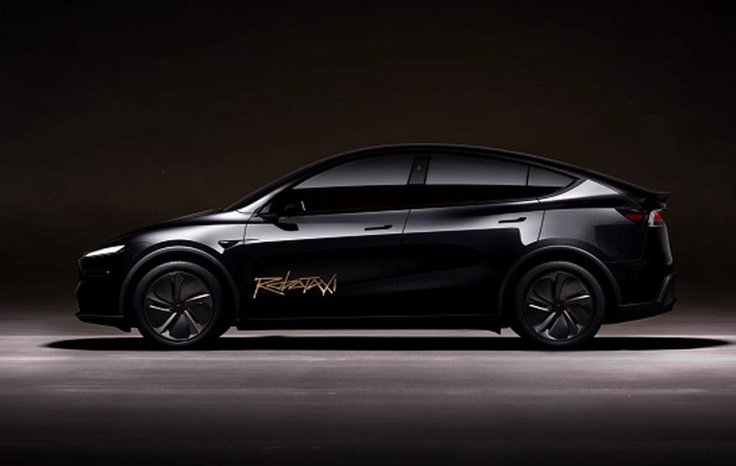
Simply put, Waymo and Tesla represent two entirely different autonomous driving approaches. This Robotaxi battle isn't just about who commercializes faster—it's a fierce "technology route war."
Two routes, two worlds
Waymo's approach is conservative but prioritizes safety. It uses LiDAR, high-definition maps, and a full suite of sensors to scan the environment clearly. While costly and slow to deploy, the upside is stable operation—even without a safety officer.
Tesla relies purely on vision: no radar, no maps, just cameras and AI models to "understand the world" and make decisions. The idea: train cars like humans, and they'll eventually "drive like humans." It sounds cool, is theoretically cheaper, and scales faster—but the trade-off is higher error rates and extreme AI training demands.
For now, Waymo's route is landing earlier and commercializing faster. Partnering with Uber saves marketing costs and validates the business model. Tesla, meanwhile, insists on building its own platform, lagging behind and seeming like it's "reinventing the wheel."
Social media "sides," endless debate
If you've been following, you've seen the heated debates about which approach is more reliable. Tesla supporters emphasize human-like flexibility, algorithmic potential, and vast data; Waymo backers argue "no safety officer is the real deal," claiming Waymo is more dependable.
For example:
- Ride experience: Tesla feels more human and flexible; critics say it sometimes ignores traffic rules, while Waymo is "steadier."
- Technology: Tesla leverages real-world data from millions of cars to train the "ultimate AI"; opponents say vision-only systems have blind spots in extreme weather.
- Cost and scalability: Tesla's approach might "go global" someday, but Waymo is operational now—not a dream, but reality.
In short, it's a choice between "believing in now" or "believing in the future."
My take: Waymo wins now, Tesla aims for the future
I'm a long-term Tesla supporter, but I admit—for now, Waymo is ahead.
But Tesla's potential lies in scalability and future business models. Once it overcomes the "safety stability" hurdle, its upside is exponential. Waymo, despite early adoption, is weighed down by LiDAR costs and map dependency, hindering global replication.
This is a clash of "current results" vs. "technological faith." Short-term, Waymo wins a round, but long-term, I'd still bet on Tesla.
Personal view: Waymo for the present, Tesla for the future
For short-term gains, Uber (Waymo's partner) is worth watching, as market sentiment and execution could drive immediate gains—already reflected in the stock.
For long-term investors, Tesla's "hardware-to-algorithm loop" holds immense potential. Once FSD breaks through, Robotaxi becomes a viable business model, not just a concept.
In short:
For short-term gains, watch Waymo;
For long-term potential, don't give up on Tesla.
To summarize:
Autonomous driving isn't a sprint—it's a marathon, or even a triathlon of "tech + capital + execution." Waymo started fast but may not go far; Tesla started slow but has a bright future.
We're closer than ever to "driverless cars everywhere," but the winner isn't decided yet. As Uber's Robotaxi hits the streets, Tesla's answer can't afford delays.
$Alphabet - C(GOOG.US) $Alphabet(GOOGL.US) $NVIDIA(NVDA.US) $Circle(CRCL.US) $Alibaba(BABA.US) $Coinbase(COIN.US) $AMD(AMD.US) $Apple(AAPL.US)
The copyright of this article belongs to the original author/organization.
The views expressed herein are solely those of the author and do not reflect the stance of the platform. The content is intended for investment reference purposes only and shall not be considered as investment advice. Please contact us if you have any questions or suggestions regarding the content services provided by the platform.
