

 Rate Of Return
Cognitive breakthrough, sharing some thoughts.

It's been raining every day in Shenzhen recently. My favorite thing is curling up at home with a good book on rainy days. I just finished a new book, and Shelly is sharing some thoughts. There are actually many more great books, which I'll share with you gradually.~~~~

"The truth of the world is that 99% of hardworking but cognitively limited people support 1% who reap the benefits without effort."
Ordinary people believe in the principle that hard work pays off, thinking diligence can lead to wealth and effort will eventually be rewarded. If this were true, the most diligent workers in society should be the wealthiest, but the reality is that wealth never belongs to these people.
Wealth is not acquired solely through hard work but is built on cognition, choices, and actions. The essence of trading is the same. Those who truly make money in the market are often the ones who see the situation clearly and understand the rules.
From "Discourses on Salt and Iron": "Wealth lies in strategy, not in labor; profit lies in positioning, not in toil." This means that the secret to creating wealth is mastering the rules and methods, not just relying on physical labor. The key to significant profits lies in assessing the situation and identifying opportunities, not in sheer hard work.
There are four fundamental paths to acquiring wealth: information asymmetry, cognitive gap, execution gap, and competitive advantage.
Shelly will analyze each of these in the context of the stock market.
1. Information Asymmetry
In the stock market, information asymmetry is an eternal theme. What you know, others don't; or you know it earlier than others, giving you a first-mover advantage. The internet has made information dissemination more accessible, but the information gap has grown wider. Some information is monopolized by the wealthy, while other information is blocked by people themselves because they tend to accept information they like and ignore what they dislike or don't care about, ultimately trapping themselves in an information cocoon. In the information age, breaking the information gap gives you more opportunities.
In this wave of AI, NVIDIA is undoubtedly the protagonist, frequently making waves in the market since 2023. But those who truly caught this trend had already quietly positioned themselves through information analysis and market intuition when the AI concept first emerged, rather than chasing the rally after Jensen Huang's speeches, widespread news coverage, and stock price surges.
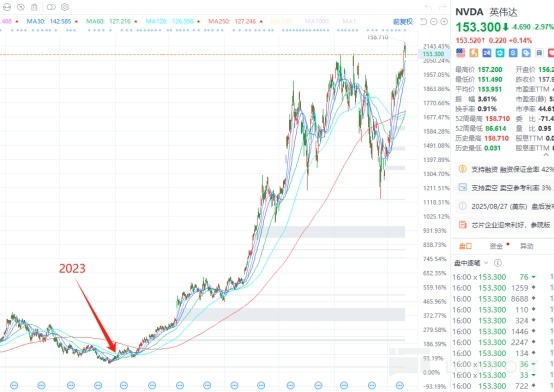
Another example is when the cloud computing concept first emerged years ago. Many people had only heard of "the cloud" but didn't realize it was driving the growth of tech giants like Amazon, Microsoft, and Google. If you could spot these trends earlier than others and invest in these stocks, you could capture profits in the market.
2. Cognitive Gap
Information asymmetry is just the first step. The democratization of information has made the cognitive gap an even bigger hurdle. Zhang Yiming once said, "Your understanding of an event is your core competitiveness." You can never make money beyond your cognitive limits. What we need to do is read more to build our knowledge system, think more from different perspectives, and engage with people at higher cognitive levels. This will elevate your cognition, and wealth will follow. Making money through cognition is a shortcut accessible to everyone. Every upward mobility in life is the cumulative effect of cognition. Remember, wealth is compensation for cognition, not a reward for diligence.
Everyone has access to public financial reports, but why can Warren Buffett find value in them while others blindly follow trends? The difference lies in cognitive disparity. Can you uncover undervalued growth potential behind a seemingly ordinary financial report? Can you discern the true flow of funds amid market sentiment fluctuations? This requires not just technical skills but a deeper understanding of the market's underlying logic.
During the 2020 pandemic, the Federal Reserve launched massive quantitative easing, flooding the market with liquidity. Many were still worried about an economic recession, failing to realize that this wave of money printing would directly drive up tech and growth stocks. Those who understood this policy logic had already positioned themselves in stocks like Tesla, Amazon, and Apple. By the time most people caught on, these stocks had already doubled or even multiplied several times over.
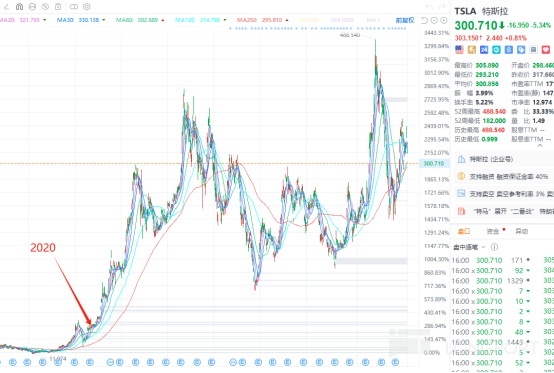
The core of the cognitive gap is whether you can adopt a higher perspective, look beyond short-term market fluctuations, and see long-term trends and logic.
3. Execution
Even if you have information asymmetry and cognitive advantage, without execution, it's all just talk. The third way to make money is through the execution gap: I know, you know, but I act while you don't.
Many people fail to make money not because of information or cognitive gaps but because they lack execution. They come up with profitable business ideas but scare themselves off with imagined problems before even starting. They always want to be fully prepared before taking action. Shelly's favorite saying is: Starting is more important than perfection. Instead of getting stuck in endless hesitation, take the first step, and the answers will reveal themselves over time. In the market, the ones who truly make money are often not those who know the most but those who dare to act.
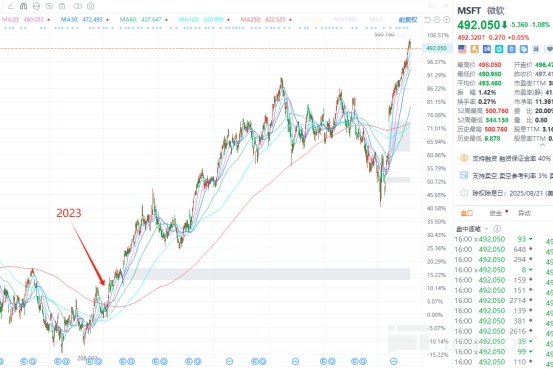
The explosive popularity of ChatGPT in 2023 made Microsoft, the backer of OpenAI, a market focus. At the time, Microsoft's stock price rose steadily driven by AI, but few dared to buy the dip. Most chose to wait for the "perfect" entry point, missing the entire rally. In trading, the deadliest mistake isn't misjudging the direction but indecision. The ones who make money are always those who act amid uncertainty.
4. Competitive Advantage
As market competition intensifies, standing out and making more money requires a competitive edge—something others don't have but you do. Even if there's no gap in information, cognition, or execution, if your overall ability is stronger, you'll come out on top.
What everyone has isn't scarce. The market is a zero-sum game; every profit you make means someone else's loss. In this increasingly competitive market, to win, you must have an advantage others lack. Whether it's more precise technical analysis, deeper fundamental research, or stronger risk control, only when your overall ability surpasses most can you remain unbeatable in competition.
In 2022, when the Fed began its rate-hiking cycle, the market panicked, and many sold their tech stocks for defensive sectors. But truly competitive investors chose to buy quality assets at the peak of panic, hedging risks with options, and ultimately reaped huge profits when the market recovered. This kind of competitiveness isn't built overnight but through long-term trading experience and cognitive accumulation.
In summary, trading and investing are never simple manual labor but a practice of cognition, information, and execution. Information asymmetry lets you see opportunities, cognitive advantage helps you understand them, execution lets you seize them, and competitive advantage ensures you outperform others in the same opportunities.
$NASDAQ Composite Index(.IXIC.US) $WUXI BIO(02269.HK)$NVIDIA(NVDA.US) $Tesla(TSLA.US) $NASDAQ Composite Index(.IXIC.US) $SPDR S&P 500(SPY.US) $Hang Seng Index(00HSI.HK) $Hang Seng TECH Index(STECH.HK)
The copyright of this article belongs to the original author/organization.
The views expressed herein are solely those of the author and do not reflect the stance of the platform. The content is intended for investment reference purposes only and shall not be considered as investment advice. Please contact us if you have any questions or suggestions regarding the content services provided by the platform.
