

 Likes Received
 Posts
PostsWe are on the eve of an efficiency revolution.

In the movie "Oppenheimer," the actor playing Danish physicist Bohr had a line:
"Quantum mechanics is not just a step forward, but a whole new way of understanding reality. Einstein opened the door, and now we are peering into another world, a world made of energy and paradoxes."

Now, the door to AI has also been opened, and we are on the eve of an efficiency revolution.
At the beginning of 2025, DeepSeek emerged out of nowhere, and in March, Manus became wildly popular topic, attracting fervent attention from Silicon Valley investors. Clearly, this is different from the "metaverse" concept sparked by Zuckerberg in 2022. AI brings to human society a tangible "Third Industrial Revolution."
However, not all AI possesses the social value that humans need. To distinguish the genuine from the fake is actually quite simple: the key is whether users are willing to pay for it with real money.
In 2023, we witnessed a wave of large model and infrastructure startups. The "AI Six Tigers" replaced the earlier "AI Four Dragons" represented by SenseTime and CloudWalk, becoming the new paradigm of AI entrepreneurship. At the time, many star startups raised early funding at the scale of $1 billion, and equity in large model companies seemed like "tickets to the future."
But when DeepSeek's open-source models could match or even surpass the capabilities of these models, users—whether in B2B or B2C—had no reason to stay on the original platforms, instead flocking to DeepSeek's servers. This also indirectly validated a point made by MiniMax founder Yan Junjie: "In the AI era, it's not about traffic, it's about technology."
The biggest difference between traffic and users is that traffic only chases current trends, while users can accompany you for a long journey. As a byproduct of the mobile internet era, deliberately chasing traffic will only lead to being consumed by it, lost in self and an endless game of trend-chasing.

True value lies in creating traffic, not chasing it.
Once, a journalist tried to interview Lei Jun, but he politely declined, saying he had already been on three hot searches and couldn't possibly accept another interview.
At its core, this is an ability to create topics and attract attention. While other car companies are still struggling to find spokespersons and spending heavily on marketing just to grab some traffic, Lei Jun has already saved Xiaomi billions in marketing expenses. As the saying goes, "Eliminate the middleman, I am my own spokesperson."
According to limited statistics, about 1% of people are willing to become your paying users, while most are just there to show support. When the hype fades, fortunately, 1% are willing to stay, but unfortunately, that's roughly the limit.
Music and office software have relatively higher conversion rates—WPS and NetEase Cloud Music achieve 10% and 20%, respectively—but this is also the ceiling for SaaS subscriptions.

Back to AI: how many people are willing to pay for subscriptions is the key metric for its success.
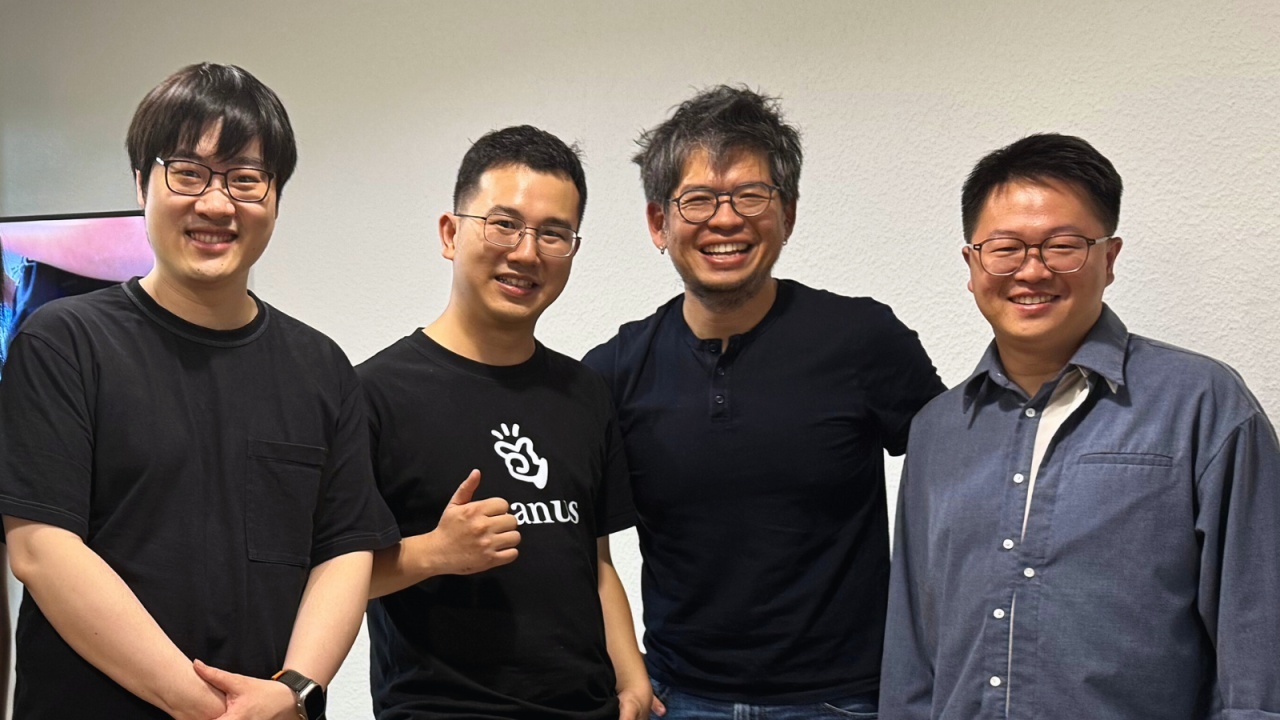
Manus's cleverness lies in its product positioning from day one: targeting the global C-end market. Overseas users have stronger willingness to pay, making it easier to validate AI's product-market fit (PMF) in the B2C space.
4Paradigm's B2B order revenue also surpassed 5 billion in 2024, providing AI SaaS solutions to top-tier financial institutions, telecom operators, and other users.
Without actual performance as support, ordinary people participating in AI investments still face significant risks. Zhu Xiaohu of GSR Ventures once stated that "large model startups have no business model," and frontline VCs/PEs often debate this endlessly.
The essence of business lies in balancing efficiency and scalability.
We've seen Xiaomi's success, which boils down to efficient product development speed and the ability to create hit products. Thus, the market is willing to grant it some premium even before its performance materializes—after all, it's hard to find similar consensus in the market for products like the SU7 & YU7.
AI has brought visible efficiency improvements, but scalability remains an unanswered question. This is also why the market is chasing and hyping the concept of AGI. Even today, industry insiders haven't reached a consensus on the definition of AGI.
On the eve of an efficiency revolution, there are opportunities and traps. Grasping the core of business is the simplest way to navigate change.
July 7, Mars at Qinghe.
$PHANCY(06682.HK) $UNISOUND(09678.HK) $XIAOMI-W(01810.HK)
The copyright of this article belongs to the original author/organization.
The views expressed herein are solely those of the author and do not reflect the stance of the platform. The content is intended for investment reference purposes only and shall not be considered as investment advice. Please contact us if you have any questions or suggestions regarding the content services provided by the platform.
